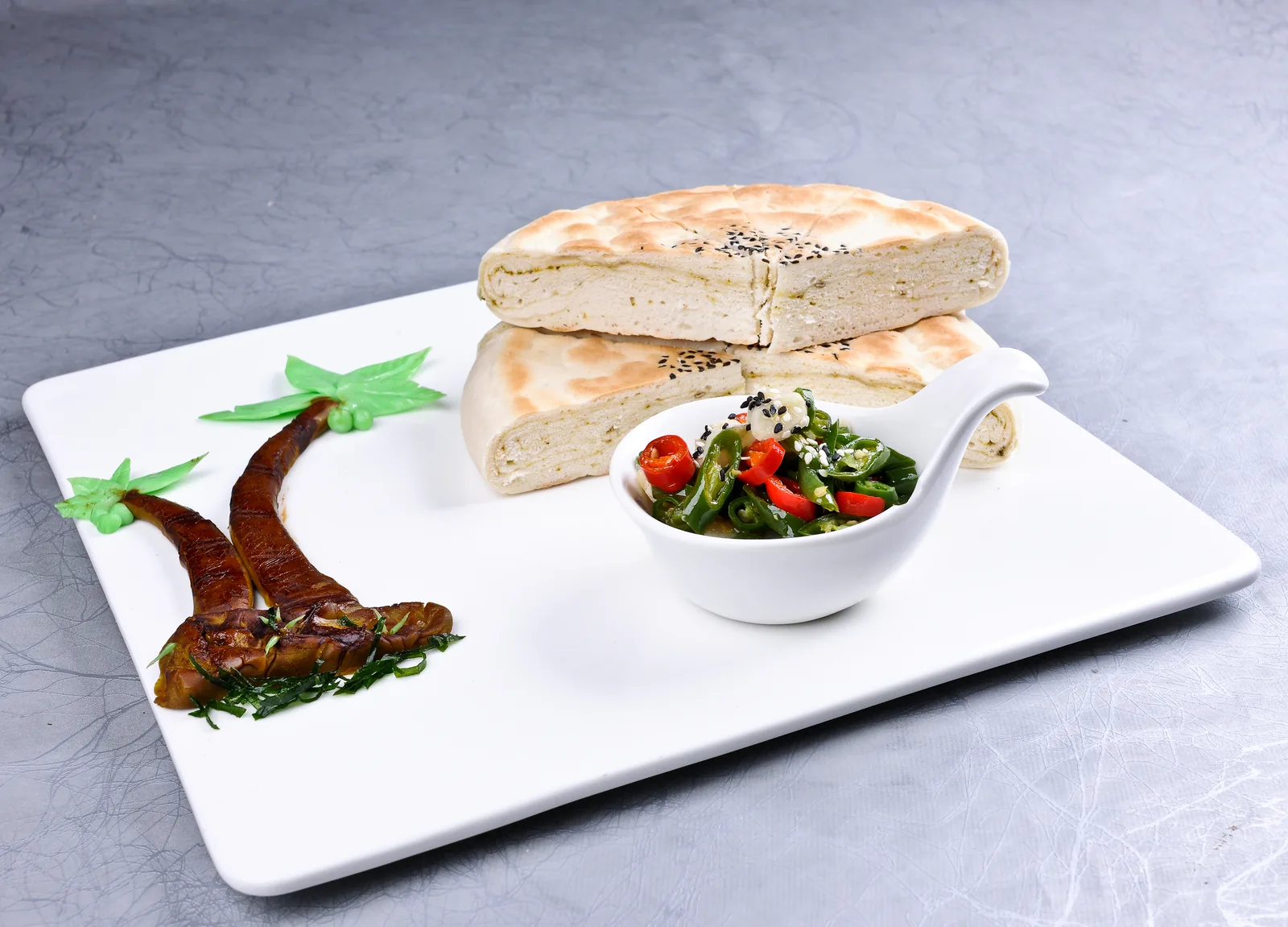
Northwest Chinese food is a corridor of distinct tables
Compare concrete places and techniques; the historical Silk Roads explain contact, not one timeless recipe book.
| Place | Evidence to read | Boundary |
|---|---|---|
| Xi'an and Guanzhong | Wheat breads, noodles, vinegar, chili, lamb broths and urban Muslim quarters meet on an irrigated plain. | Xi'an street food represents all of Shaanxi or the wider northwest. |
| Lanzhou and Gansu | Clear broth, hand-pulled noodle specifications, radish, chili oil and fast service form a precise city system. | Every beef noodle sold as Lanzhou follows one recipe or halal practice. |
| Ningxia and Hui routes | Halal practice, irrigation agriculture, wheat and lamb must be read through named Hui communities. | Hui food and northwest food are synonyms. |
| Xinjiang cities and oases | Uyghur, Kazakh, Hui, Han and other tables draw differently on pasture, oasis agriculture and urban markets. | Cumin lamb and big-plate chicken summarize Xinjiang's peoples. |
Mountain, desert, plateau and river valley make different kitchens
The northwest includes the Loess Plateau, Hexi Corridor, Yellow River irrigation zones, Qinghai-Tibetan Plateau and Xinjiang's oases. Rainfall, altitude, pasture and irrigated land change what can grow and how food moves. Wheat is prominent but maize, millet, barley, rice in irrigated pockets, legumes, fruit and tubers complicate the picture. Lamb and beef matter, yet so do vegetables, tofu and preserved foods. A compass direction this large becomes useful only when the next sentence names a land system and the people working within it.
Xi'an's snacks are an urban grammar, not a checklist
Roujiamo, paomo, liangpi, saozi noodles and oil-splashed noodles are often sold as a single Xi'an tasting list. Their real value lies in different structures: bread absorbs chopped braise; torn bread thickens a mutton broth; rice or wheat sheets carry acid and chili; hot oil releases aroma over noodles. That variety shows a city turning staple craft into fast, modular meals. Order fewer items and inspect the interaction between grain and liquid. A photograph of ten bowls proves tourism stamina; one correctly read texture proves understanding.
Beef noodles are a service choreography
Lanzhou beef noodles depend on more than a cook stretching dough. Dough condition, pull count and noodle shape meet a clear beef broth, white radish, green herbs, red chili oil and rapid assembly. The familiar color mnemonic is a useful description of the bowl, not a guarantee of quality or origin. Watch whether the noodle thickness matches its name and remains alive in broth. I care less about theatrical pulling than whether the final strand, soup and service timing behave as one system.
Oases and the Yellow River put fruit and vegetables beside grain
The desert image can make northwest tables look meat-and-bread only. Irrigation tells another story. The Yellow River supports agricultural belts in Gansu and Ningxia; Xinjiang oases produce grapes, melons, nuts and vegetables; valley systems create local rice and vegetable traditions. Dried fruit is not merely a caravan souvenir but one response to harvest, climate and transport. Ask how water reaches the field. That question connects food to settlement and labor more honestly than saying the Silk Road brought 'exotic flavors' from an undefined elsewhere.
Lamb changes when cut, vessel and community change
Skewered lamb grilled over coals, mutton simmered with hand-torn bread, thin slices cooked in broth and whole pieces eaten with the hand belong to different tables. Cumin can matter, but it is not the northwest's universal perfume. Fat treatment, animal age, cut and serving format tell us more. Pastoral knowledge also appears in dairy and preservation, especially in plateau and Central Asian-connected communities. Do not use one Uyghur skewer to illustrate Hui, Tibetan or Kazakh food. Similar livestock economies do not erase religious, linguistic and culinary boundaries.
The Silk Roads moved habits, but cities did the editing
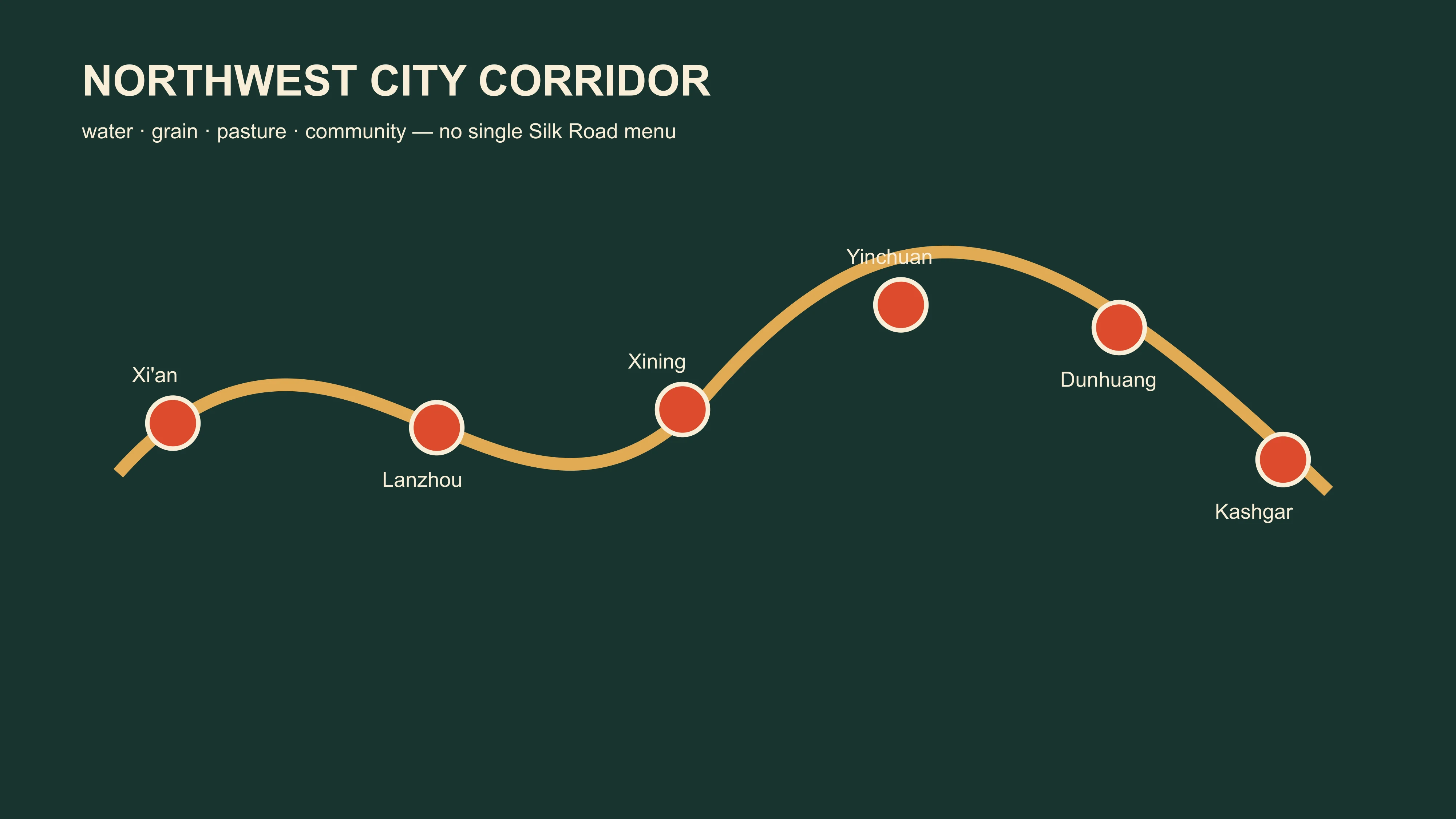
UNESCO's Silk Roads program identifies cities as markets and supply points that gave routes momentum. That is a better food model than imagining recipes traveling intact on camelback. Traders, soldiers, pilgrims, farmers and migrants carried ingredients and preferences; local cooks adapted them to fuel, water, crops and customers. Xi'an, Lanzhou, Xining, Yinchuan, Dunhuang, Turpan, Kashgar and Urumqi are not stops on one menu. Each edits movement differently. The Silk Road is a question about contact and institutions, never a magic origin certificate for sesame, noodles or kebabs.
Halal cannot be reduced to no pork
Hui and other Muslim communities make halal practice central to sourcing, slaughter, handling and trust. Restaurant language such as qingzhen signals a community and institutional context, but travelers should still ask about the exact kitchen when the consequence matters. A northwest collection must not imply that all regional food is halal, or that every Muslim community follows identical local practice. This page maps geography; the Hui page handles religious and community boundaries more directly. Keeping both pages is not duplication. It prevents location from swallowing belief.
Xi'an, Lanzhou, Xining and Kashgar ask different first questions
In Xi'an, begin with grain format and the division between citywide snacks and Muslim-quarter institutions. In Lanzhou, begin with broth and noodle specification. In Xining, plateau contact, wheat and lamb meet another urban mix. In Kashgar, oasis produce, Uyghur baking, grilling and market life demand their own vocabulary. Urumqi adds a large, modern, multiethnic city network. A regional guide succeeds when it gives readers different questions for each city. If every answer is 'lamb, cumin and noodles,' the guide has described its own limited attention.
Choose a grain transformation before a meat centerpiece
Start with one bread or noodle whose method is named, one vegetable or legume dish that shows the local agricultural system, and one broth, grill or braise. Add fruit or tea if it belongs naturally to the place. This order resists the restaurant habit of turning the northwest into a lamb feast. Compare vinegar, chili oil and raw aromatics as structural seasonings rather than measuring heat. A good meal should reveal how dry grain becomes tender, how broth carries it and how acid resets the palate between dense bites.
Bring back the city, script and noodle shape
Northwest dishes are frequently mistranslated into generic 'handmade noodles' or 'Muslim lamb.' Save the Chinese, Uyghur or other local name when available, note the city and photograph the cross-section or noodle width. East Moment will use those details to connect routes without declaring them interchangeable. Return as the map gains broth types, bread structures and community-specific terms. The goal is not the longest dish list; it is a sharper ability to see when two similar-looking meals belong to different histories.