Yunnan food by ecology and community
These routes show why one provincial menu cannot represent tropical valleys, terraces, plateau cities and mountain pastoral zones.
| Route | What it reveals | Boundary |
|---|---|---|
| Kunming plateau city | A provincial capital gathers rice noodles, mushrooms, flowers and migrant dishes into a modern urban market. | Kunming restaurant menus equal the whole province. |
| Honghe terraces | Hani water management links forest, village, terrace and river to rice production and community governance. | A terrace photograph proves one recipe or all Hani food practice. |
| Xishuangbanna | Dai and other communities use tropical herbs, grilled foods, rice and sour or aromatic preparations in a low-latitude border ecology. | Lemongrass makes a dish generically Southeast Asian. |
| Pu'er and northwest highlands | Tea agroforestry, multiple ethnic communities, altitude and trade connect food to different mountain systems. | Tea or yak products alone summarize Yunnan's uplands. |
Altitude changes the pantry faster than the provincial border
Yunnan descends from high plateaus and snow mountains toward tropical river valleys. Temperature, rainfall and growing season can shift dramatically across short horizontal distances. Rice terraces, maize fields, potato-growing highlands, tea forests and tropical fruit zones therefore belong to the same province. Altitude also changes preservation, transport and market access. This is why a single adjective—fresh, spicy, herbal or wild—fails. The first question should be elevation and watershed, followed by community and season. The menu begins with a landscape, not with a list of unusual ingredients.
Honghe rice is a water-governance story
FAO describes the Hani terrace landscape as forest, village, terrace and river, with community roles for maintaining channels and allocating water. That system matters to food because rice is not an isolated crop planted against a beautiful backdrop. Water, forest litter, fish or other integrated resources and collective labor support the table. A travel photograph can show terraces; it cannot prove the identity of a cook or the details of a dish. Use the institutional record for the landscape claim, then name the community source for culinary practice.
Wild fungi demand knowledge and restraint
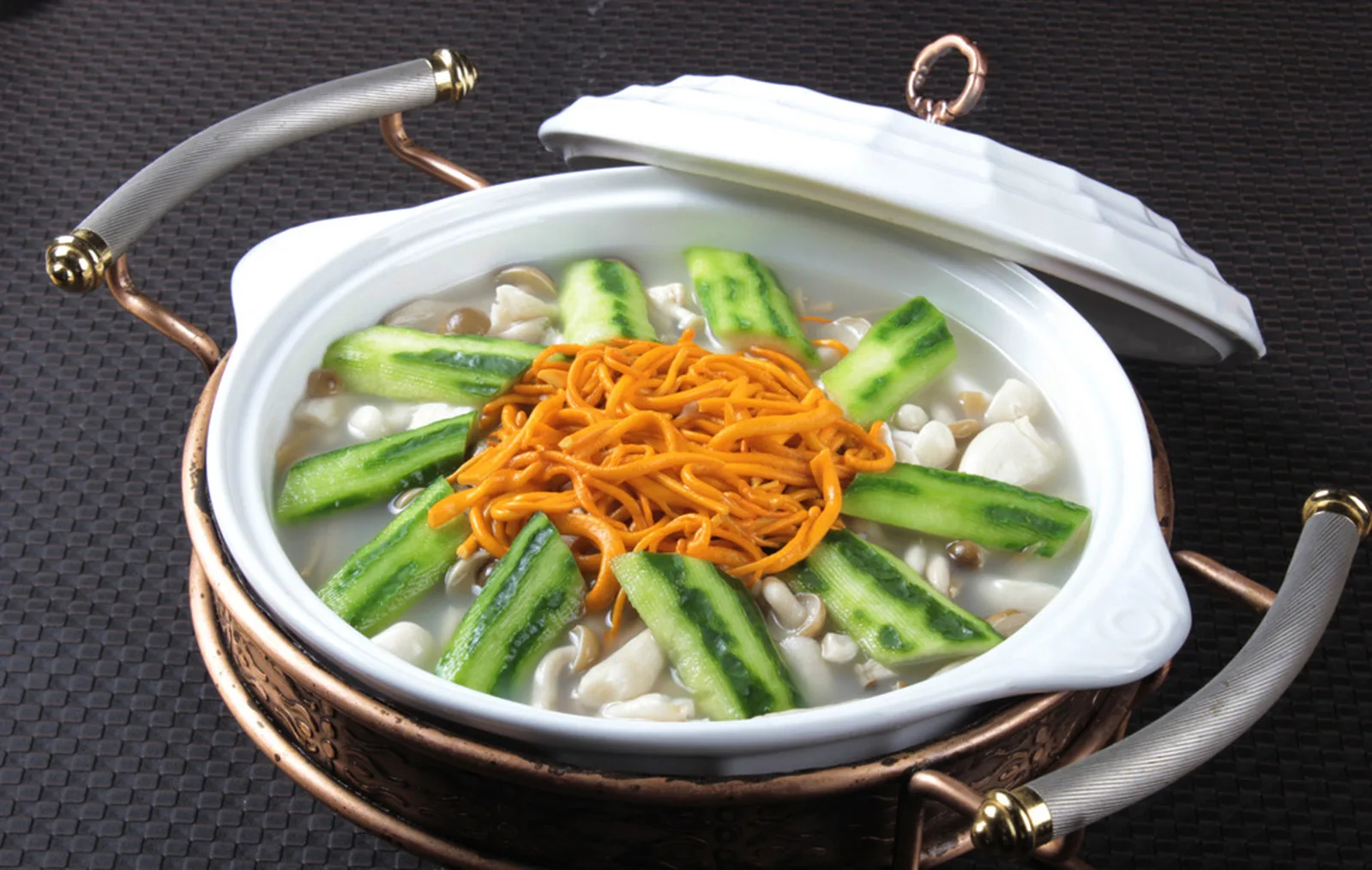
Yunnan markets are famous for wild mushrooms, and summer rains create intense seasonal attention. Species identification, habitat, handling and thorough cooking can be consequential. A food article must not turn visual excitement into foraging or safety advice. Restaurant diners should rely on reputable suppliers and trained kitchens, not photographs or folk names translated loosely into English. The culinary fascination is still real: different fungi bring crispness, perfume, meatiness or bitterness. Respect begins by refusing to call an unknown mushroom merely 'wild Yunnan mushroom' and pretending that mystery is a virtue.
One bowl can reveal migration, service and broth politics
Crossing-the-bridge noodles are internationally famous, but Yunnan rice-noodle culture is much larger. Mixian thickness, fermentation, broth, toppings and serving temperature vary by city and shop. Some bowls arrive with separate raw ingredients for a hot broth; others are mixed, soured, cold or fast. The legend attached to one dish is less useful than the service choreography in front of the diner. Watch what the broth cooks, which toppings stay raw or crisp and how chili and pickles are adjusted. That is where a famous story becomes practical understanding.
Dai food is not 'Chinese Thai food'
In Xishuangbanna and other southern areas, Dai food may use glutinous rice, herbs, grilled fish or meat, banana leaves, sour flavors and chile within local Buddhist, agricultural and market life. Shared plants and techniques across borders reflect connected ecologies and peoples, not a derivative relationship to a modern national cuisine. The same caution applies to Wa, Hani, Lahu, Blang and other community foods. Name the people whose practice is being described. 'Southeast Asian influence' is too vague when the community already has a name.
Bai, Naxi and Tibetan-connected highlands change the register
Dali's Bai food traditions, Lijiang-area Naxi practices and the Tibetan plateau zone around Shangri-La bring different grains, dairy, cured foods, herbs and ritual contexts. Tourism often combines them into one photogenic highland menu. Resist it. A cheese or butter-tea image needs an identified community and place. Market adaptations may be genuine contemporary foods, but they should not be presented as timeless village practice. The strongest regional writing shows how altitude, herding, agriculture and tourism interact while allowing each community to define its own table.
Pu'er is an agroecosystem before it is a luxury cake
FAO's Pu'er Traditional Tea Agrosystem record connects ancient tea resources, biodiversity and multiple ethnic communities in the Lancang River basin. That evidence is a corrective to a market that talks only about age, mountain names and price. Tea also participates in hospitality, trade and household economies alongside food. A compressed cake cannot stand for the whole region, and an expensive label cannot authenticate origin. Read tea with the forest, village and processing chain, then return to the meal around it.
Southwest kinship does not make Guizhou a Yunnan appendix
Yunnan and Guizhou share mountain ecologies, ethnic cross-border connections, chiles, sour fermentation and migration routes, yet Guizhou has its own county and community food systems. Sour soups, fermented chiles and rice traditions require specific Guizhou contexts. A combined collection may help travelers compare the southwest, but it must hand the reader to a dedicated Guizhou route rather than absorbing it under the larger Yunnan keyword. Similarity is the beginning of comparison. Difference is the reason the comparison deserves a page.
Choose one ecology, not every novelty
At a Yunnan restaurant, ask which city or community anchors the menu. Then choose a staple, a seasonal vegetable or herb, one fermentation or preserved note, and a protein or mushroom dish appropriate to the kitchen's expertise. Do not order an entire table of flowers, insects and wild fungi simply because they look unlike familiar Chinese food. Novelty is a weak editor. A better meal shows how rice noodles, cured meat, grilled fish, pickles or tea work together within one ecological and cultural route.
Return with altitude, season and community attached
A useful Yunnan evidence record names more than a dish. Save the city or county, approximate altitude if relevant, season, community label used by the source and cooking method. For mushrooms, do not guess a species from an image. East Moment will expand the map through verified market and menu terms while preserving food-safety limits. Return because season changes the province: the mushroom, flower, herb and harvest calendar can transform a table, and reader evidence can show that change without converting living communities into an exotic ingredient cabinet.