The right way to buy Pu-erh tea is style first, storage second, traceable batch third and age last. Choose raw sheng or ripe shou by the cup you want. Then inspect the actual leaf, smell it dry and wet, and taste at least three infusions. A famous mountain, an old date and a convincing wrapper cannot rescue dirty storage or tea you do not enjoy.
Pu-erh tea: the 60-second buying decision
If you are choosing your first Pu-erh, ignore the collector theatre for a moment and answer four questions in order:
- Do you want tension or softness? Choose young raw Pu-erh for bitterness, aroma and returning sweetness; choose ripe Pu-erh for a darker, rounder and more immediately mellow cup.
- Does the tea smell clean? Reject persistent mildew, sour dampness, perfume, fuel or an odor that makes you pull away.
- Can you trace the actual batch? Ask for producer, raw or ripe style, production or pressing year, storage location and photographs of the tea being sold.
- Does a sample still taste good after three infusions? Buy the sample before the cake and the cake before the case.
This order matters. Buyers often reverse it: they begin with age, prestige and packaging, then try to forgive what appears in the cup.
What legally defined Pu-erh begins with
Pu-erh is not simply any tea that has been compressed into a cake. China's official GB/T 22111-2008 Pu-erh tea record ties the protected product to a defined Yunnan production area, Yunnan large-leaf tea material, sun-dried green tea and specified processing routes.
The common foundation is shaiqing maocha, sun-dried green rough tea. Fresh leaf is picked, spread, heat-fixed, rolled and sun-dried before it is sold loose, compressed as raw tea or sent through the managed pile fermentation used for ripe tea. Each step leaves consequences that time cannot magically remove: burnt fixing, smoke contamination, excessive breakage and poor drying remain part of the material.
This is the first distinction an overseas buyer can easily miss. “Pu-erh style,” “dark tea” and “tea cake” are useful descriptions, but none automatically proves the protected identity of a product.
Raw versus ripe Pu-erh: two products, not two ages
I reject the lazy ladder that places raw tea above ripe tea and old tea above young tea. That hierarchy makes the buyer pay for status before deciding what kind of cup they actually enjoy. A clean, well-made ripe Pu-erh is not a failed raw cake, and a young raw tea with energy and clarity is not an unfinished antique.
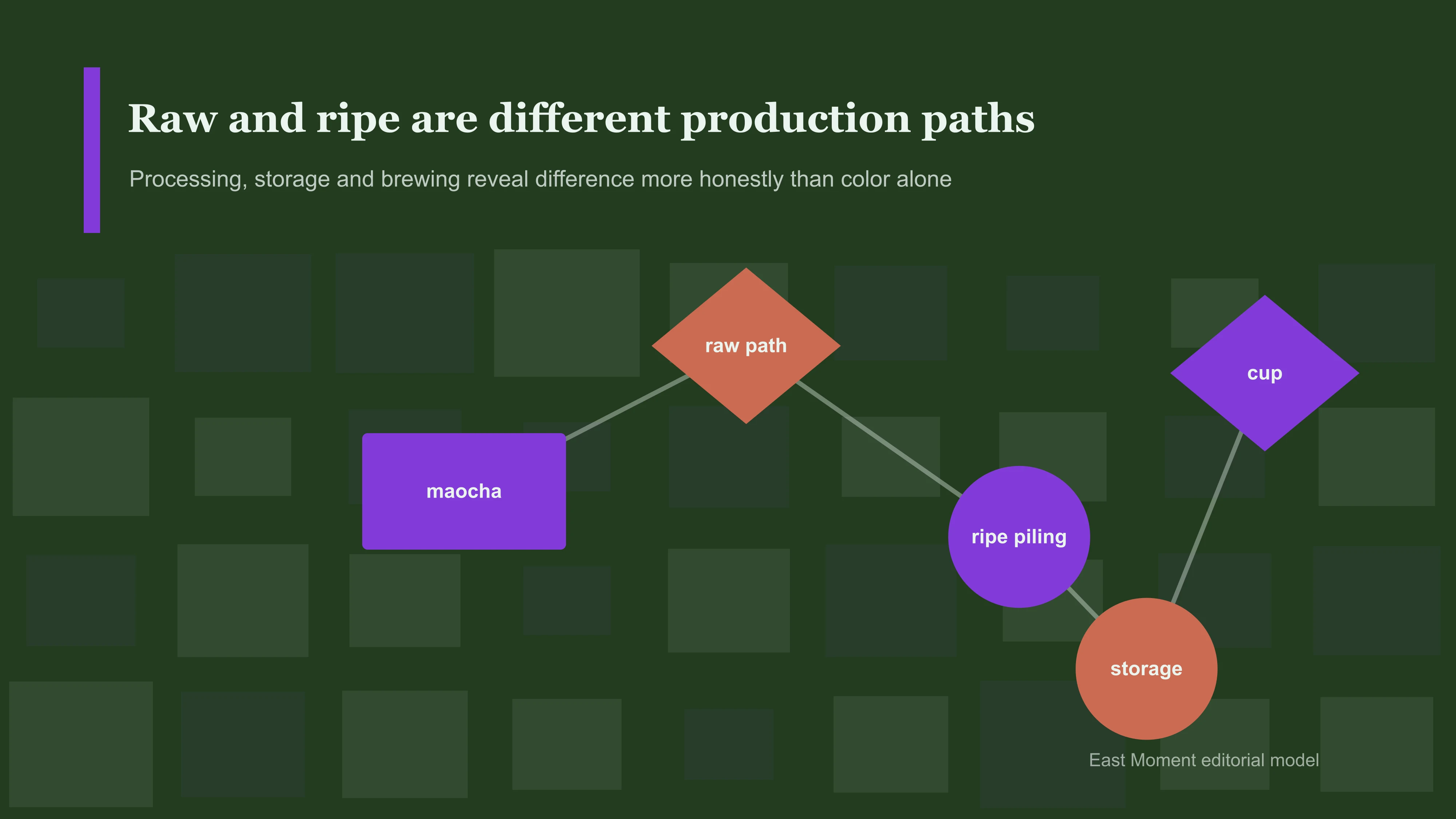
Raw and ripe Pu-erh share a raw-material framework, then take different routes. Ripe tea is not merely raw tea that became dark faster, and raw tea is not unfinished ripe tea.
Within the broader dark-tea collection, Pu-erh needs its own decision path because protected identity, raw-versus-ripe processing and storage evidence cannot be reduced to liquor colour.
| Decision point | Raw Pu-erh, sheng | Ripe Pu-erh, shou |
|---|---|---|
| Defining route | Sun-dried tea remains loose or is compressed, then changes gradually in storage | Sun-dried tea undergoes managed pile fermentation before sorting and finishing |
| Young cup | Often floral, fruity, herbaceous, bitter and astringent, with sweetness returning after the swallow | Usually red-brown, woody, nutty, date-like or earthy, with lower obvious astringency |
| What darkness means | An older-looking raw tea may reflect storage, processing or photography; color cannot verify age | Dark leaf and liquor are expected results of ripe processing, not proof of decades of age |
| Beginner fit | Best if you enjoy structure, changing infusions and some bitterness | Best if you want a rounder cup with less sharpness from the start |
| Main buying risk | Paying for unverifiable year, village or tree-age claims | Excusing fishy, sour or dirty fermentation as normal “earthiness” |
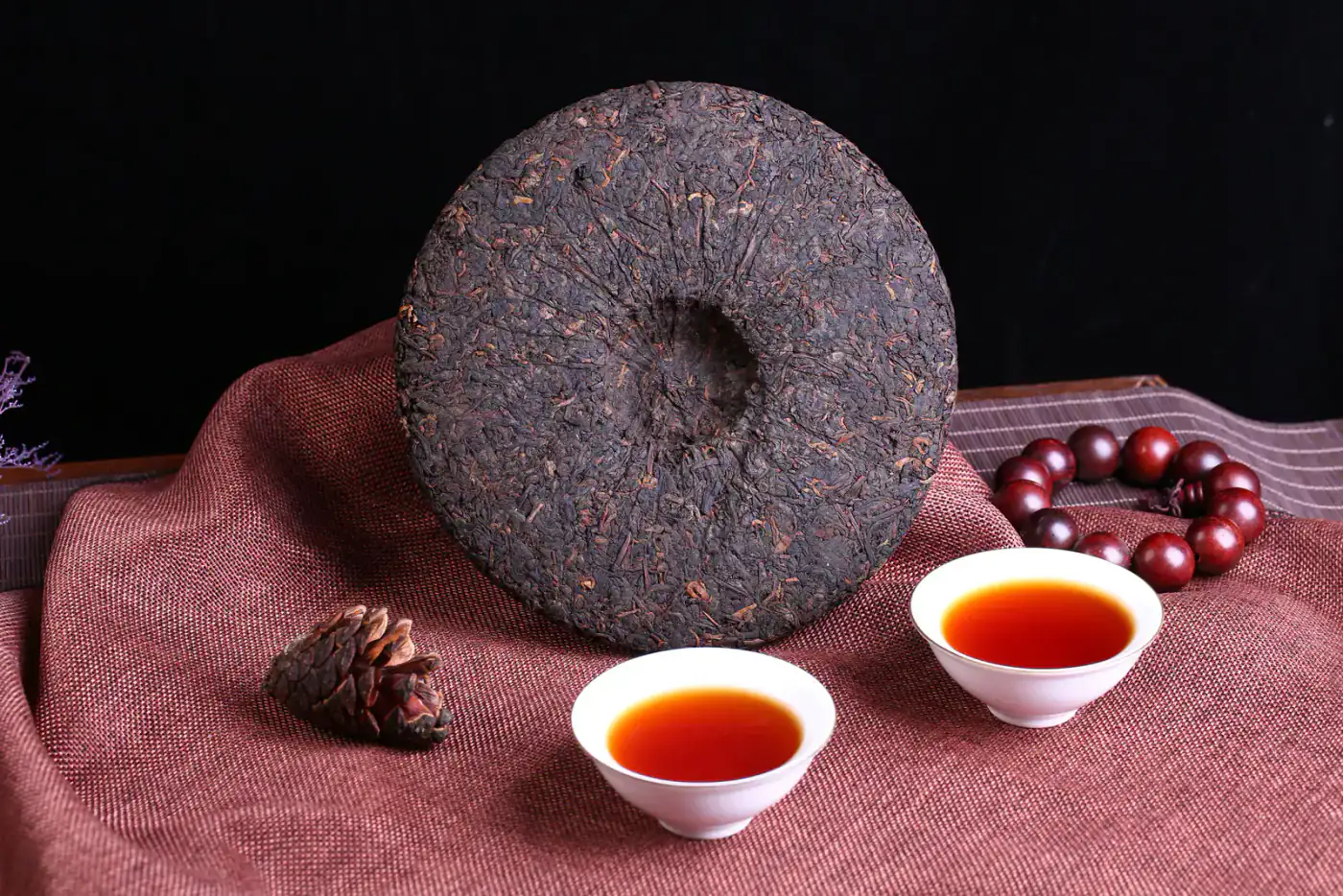
Color is supporting evidence, never identity. A pale-looking cake can have dark material inside; a dark cake can be ripe tea, stored raw tea or simply photographed under warm light. Confirm the seller's stated style, then use aroma, liquor and wet leaf to see whether the tea behaves consistently with that claim.
Why ripe Pu-erh is dark
Ripe Pu-erh uses wo dui, usually translated as pile fermentation. Moist tea is gathered into a managed pile in which heat, water, oxygen and microbial activity drive chemical and sensory change. Producers monitor and turn the pile before drying, sorting and sometimes compressing the tea.
The process is not fake aging. It is its own production route, capable of excellent and poor results. A 2024 peer-reviewed review of ripe Pu-erh fermentation describes pile fermentation as an interaction among microbial communities, process conditions and chemical change. That evidence supports careful process language; it does not support the claim that one microbe, one flavor or one health compound defines every ripe tea.
For a drinker, the useful conclusion is simpler: ripe Pu-erh should taste dark without tasting dirty. A little fermentation character in a newly finished tea may settle, but persistent fishiness, sharp sourness or a damp-basement smell is not a badge of authenticity.
Cake or loose tea: choose by the evidence you can inspect
I dislike intact cakes being treated as automatically more serious. Compression is packaging and production history, not a certificate of honesty. If a loose sample lets me inspect the actual leaf, brew it evenly and refuse a bad purchase, that transparency is worth more than an immaculate wrapper.
Compression is a storage and transport format, not a quality grade. A cake may contain intact leaves, broken material or a deliberate blend. The attractive surface may not represent the center.
| Format | What it gives you | What it hides | Best use |
|---|---|---|---|
| Loose tea | Easy aroma inspection, even weighing and fast brewing | Less information about how a cake was blended or compressed | Learning a style and comparing small samples |
| Complete cake | Original wrapper and compression are preserved; economical if you already know the tea | Interior material, uneven storage and tightness until opened | Rebuying a verified batch you intend to drink |
| Cake sample | Access to the interior and a lower-cost cup test | A tiny edge fragment may not represent the whole cake | First purchase from an unfamiliar seller |
My preferred first purchase is 25-50 grams from the actual cake, not a blind full cake. Ask the seller to include material from more than the decorative face. A useful sample contains identifiable flakes or layers, not only dust swept from a tray.
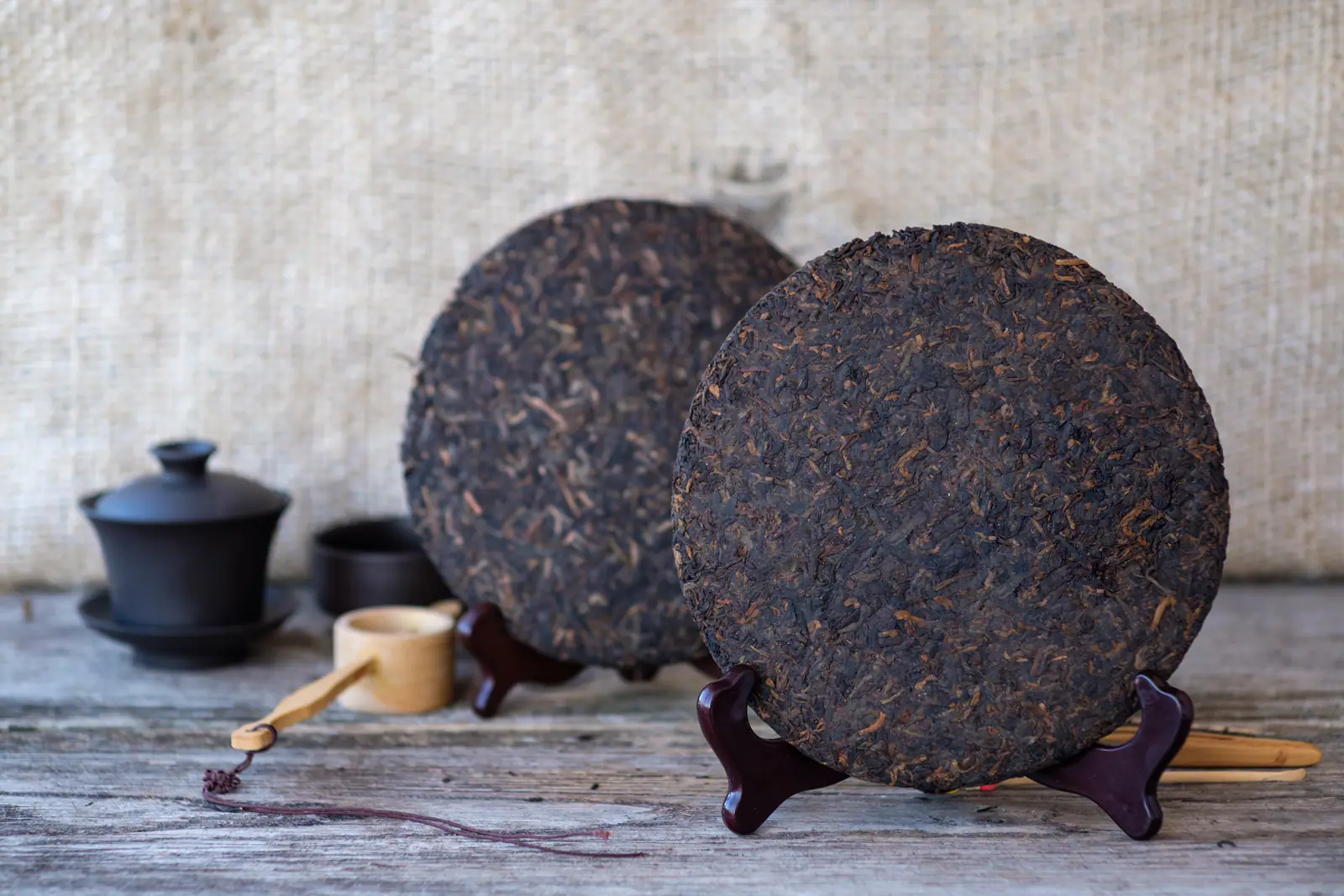
Inspect a Pu-erh cake inside and out
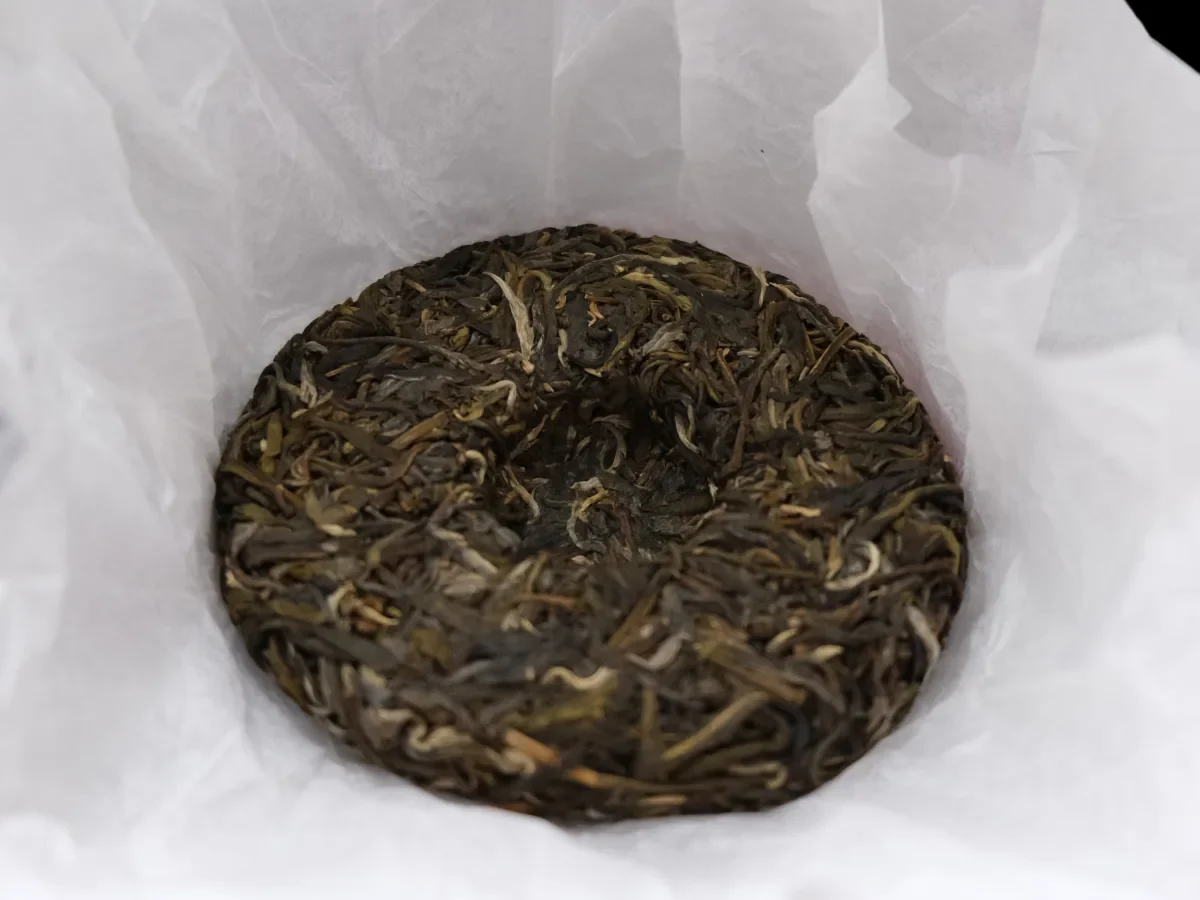
Do not stare at the wrapper and call that inspection. Use a stable table, keep the supporting hand out of the tool's path and ease a tea pick between natural layers. The goal is to separate a flake, not drill through the cake.
Work through five views:
- Wrapper and label: record what is claimed--producer, batch, raw or ripe, origin and year. Treat this as the seller's statement, not the conclusion.
- Front, back and edge: look for abnormal wet patches, foreign matter, concentrated surface decoration or a center that appears very different from the face.
- Freshly opened interior: compare leaf size, breakage, color and smell with the surface. A blend can be legitimate; undisclosed mismatch is a reason to ask.
- Liquor across three infusions: watch whether cloudiness clears, whether an off-odor fades and whether bitterness or earthiness resolves into a coherent finish.
- Wet leaf, hot and cool: cooling often makes sour, dirty-cloth or storage odors easier to notice.
This sequence matters more than an isolated glamour shot. A photograph can show leaf form, mold-like growth or obvious damage, but it cannot establish microbial safety, production year, village or tree age. Do not ask social media to declare a questionable cake safe from one screen image.
The three-cup storage test
“Dry storage” and “humid storage” are trade categories, not complete histories. Temperature, humidity, airflow, wrapping, household odor and seasonal movement all affect a tea. Instead of trying to reconstruct twenty years from a sales paragraph, test what the storage has left in the cup.
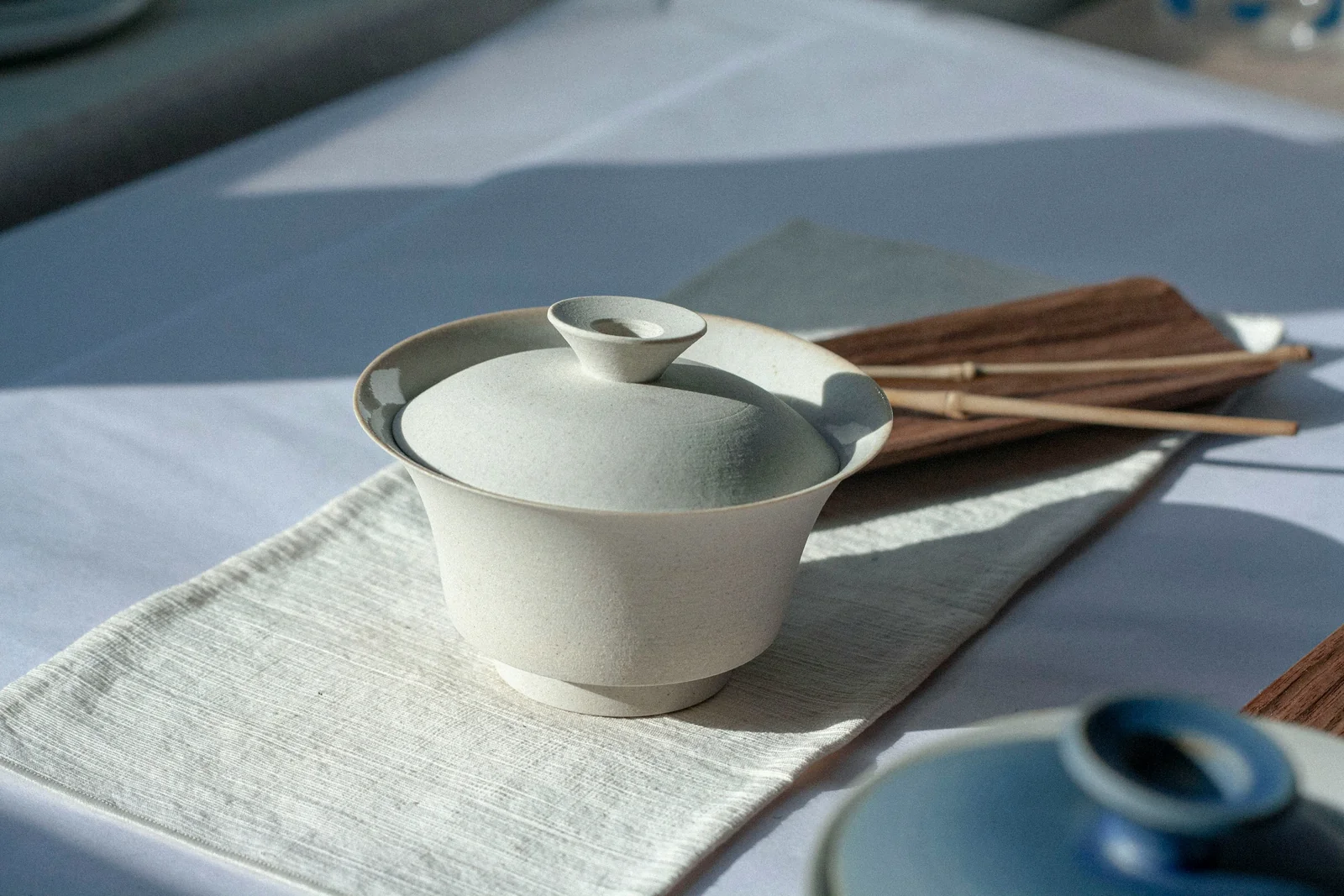
Use one clean porcelain gaiwan, 5 grams of tea, 100 milliliters of water at about 98°C / 208°F, and complete pours at 10, 15 and 20 seconds. This is an East Moment comparison protocol, not a universal brewing rule. Keep leaf, vessel and water constant so the changing tea is the main variable.
| Checkpoint | What to notice | Continue | Stop and question |
|---|---|---|---|
| Dry leaf | First aroma after the sample rests in a clean cup | Wood, hay, dried fruit, herbs, gentle fermentation or little aroma | Mildew, perfume, fuel, sour dampness or heavy foreign smoke |
| Cup one | Dust, compression and the strongest storage impression | A rough or closed cup that begins to clear | An odor that becomes more repellent with heat |
| Cup two | Core style and mouthfeel | Bitterness or earthiness integrates; finish becomes cleaner | Persistent fishiness, dirty-cloth aroma, chemical scent or unpleasant throat response |
| Cup three | Stability after the chunk opens | Aroma and sweetness become clearer or remain coherent | The center releases a stronger sour, moldy or contaminated character |
| Cooled wet leaf | Residual storage and fermentation aroma | Tea-like, woody, fruity, herbal or cleanly fermented | Rot, mildew or an odor that makes another infusion undesirable |
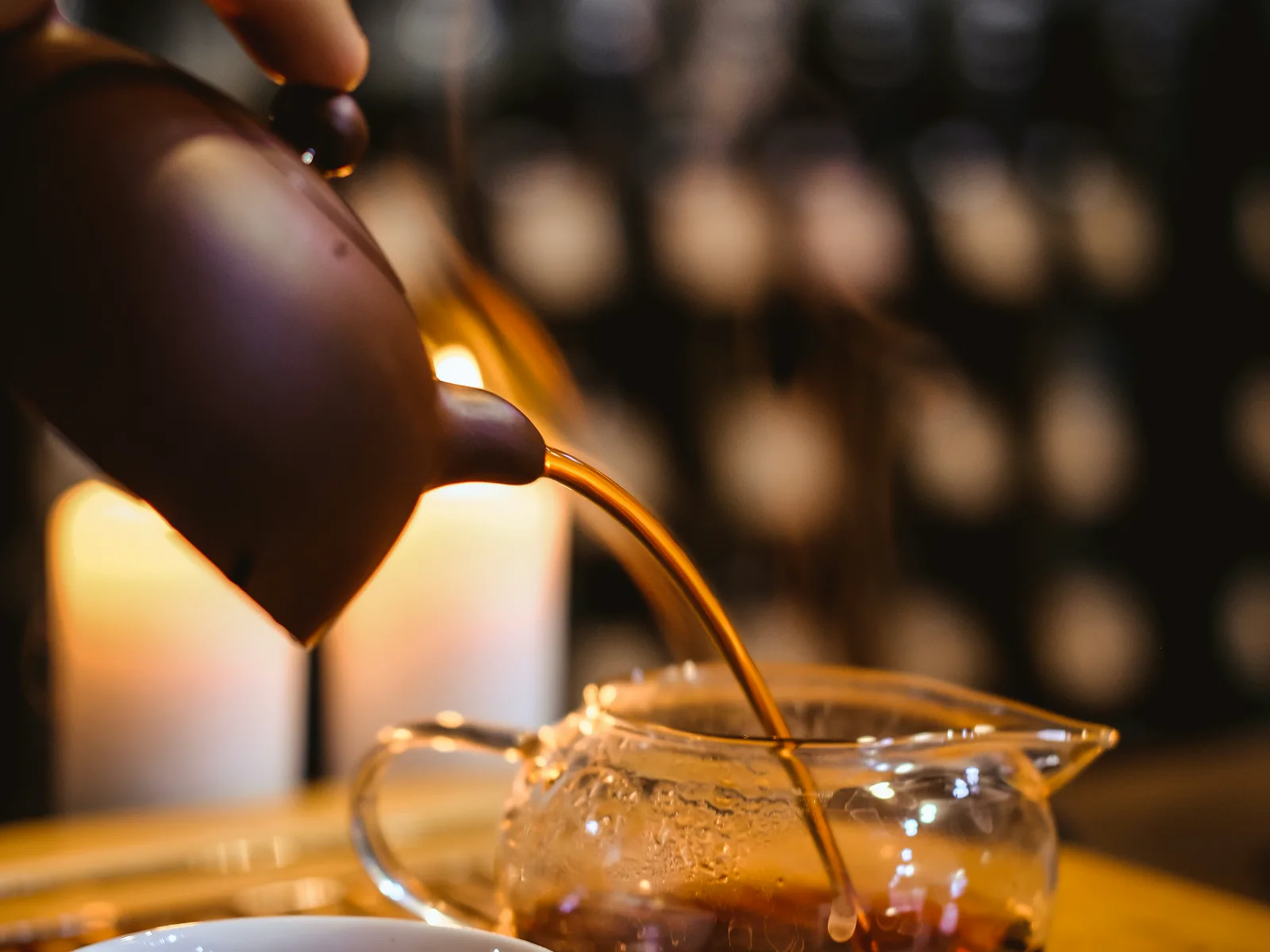
The rinse is not a safety reset. It can remove loose dust and start opening a compressed flake; it cannot make contaminated tea sound.
Age claims versus storage evidence
Time changes Pu-erh, but no single flavor proves a year. A 2025 raw Pu-erh volatile and sensory study followed samples from the same manufacturer across reported storage times of 7-21 years and found changes in sensory aroma and volatile compounds. The careful reading is that aroma can change materially during storage under that study's sample conditions. It is not a universal clock that lets a buyer smell “camphor” and certify a twenty-year-old cake.
I insist on judging the tea in front of me before admiring the date printed behind it. “Old” is one of the easiest words to sell and one of the hardest claims for an ordinary buyer to verify. If the cooled wet leaf smells dirty or the liquor collapses after two cups, the age story has already lost.
Use this evidence ladder:
| Evidence level | What it can establish | What it cannot establish alone |
|---|---|---|
| Wrapper date | Printed product claim | Genuine year, contents or storage path |
| Factory and batch record | A more traceable production identity when records match | Condition after leaving the factory |
| Seller's storage account | A history to investigate | Clean storage without physical and cup evidence |
| Actual cake photographs | Surface, edge, wrapper consistency and visible damage | Taste, hidden interior, microbial safety or exact age |
| Opened sample and three-cup test | Current aroma, extraction, interior consistency and drinkability for you | Ancient-tree age or village origin |
| Independent provenance documents | Stronger chain of custody when specific and internally consistent | Whether you personally enjoy the tea |
Age therefore belongs near the end of the buying decision, not the beginning. The cup can contradict the story; the story cannot overrule the cup.
Mountains, villages and borrowed prestige
Names such as Lao Banzhang, Yiwu and Bingdao command high prices and invite substitution. A village name on paper does not prove garden location, season, tree age or leaf purity. “Single origin” is also incomplete unless the seller defines whether it means one village, garden, harvest or production lot.
Ask for the narrowest claim the evidence can support:
- Who produced the tea, and can the factory or maker be identified?
- Is the date a harvest year, fermentation year, pressing year or later rewrap date?
- What exactly does the origin name cover?
- Is “ancient tree” documented beyond the wrapper and price?
- Did the seller store the tea, or are they repeating a previous owner's account?
Visual inspection cannot verify centuries of tree age. When the premium depends mainly on a claim the seller cannot define, buy the cup quality at an ordinary price or walk away.
A buying decision tree that ends in “no”
Follow this sequence before paying for a full cake:
- Is the style identified as raw or ripe? If no, stop. If yes, compare it with the cup you actually want.
- Can you buy a representative sample? If no, do not make an expensive first purchase. If yes, request material from the actual cake.
- Are producer, batch or year and storage account specific? If the answers remain vague, price the tea as an unverified tea, not a collectible.
- Do dry aroma, three infusions and cooled wet leaf stay clean? If no, reject it. Do not negotiate with an off-odor because the wrapper is famous.
- Does the tea offer something you want to drink again? If no, a low price is still wasted money.
- Does the premium depend on provenance? If yes, require stronger provenance than a seller's adjectives.
The best beginner basket is not one old cake. It is a controlled comparison: a young raw sample, a clean ripe sample and, if budget allows, one well-documented stored raw sample. Brew them with the same vessel and water. That teaches more than buying three anonymous cakes at random.
Brewing without hiding the tea
The complete Pu-erh brewing guide separates young raw, stored raw, ripe, loose and compressed material. For evaluation, begin with porcelain or another neutral glazed vessel rather than a seasoned clay pot that may soften differences.
- Young raw: start around 5 g / 100 ml, 95-98°C / 203-208°F and 8-12 seconds.
- Ripe: start around 5 g / 100 ml, 98-100°C / 208-212°F and 10-15 seconds after an optional quick rinse.
- Stored raw: start around 5-6 g / 100 ml, about 98°C / 208°F and 10-15 seconds.
Compressed chunks open unevenly. Keep early rounds brief, pour completely and extend only after the center loosens. Broken ripe leaf extracts quickly; reduce time before reducing water temperature. If a tea is thin, check whether the chunk has opened before adding more leaf. If it is harsh, shorten the next infusion first.
Home storage: stable, clean and boring wins
Home storage is not a miniature warehouse experiment. Keep tea away from sunlight, kitchen heat, incense, perfume, coffee and spices. Do not seal a damp cake in plastic, and do not add uncontrolled moisture in pursuit of faster aging. Inspect periodically for odor transfer, condensation, visible growth and packaging damage.
For most drinkers, the smart strategy is to buy tea that already tastes good and preserve it carefully. A speculative twenty-year closet project makes little sense if you have not learned what sound stored tea tastes like today.
My storage preference is deliberately unromantic: clean, stable and boring. I would rather preserve a modest cake well than turn an expensive one into a humid experiment for the sake of feeling like a collector.
What not to claim from Pu-erh
Pu-erh contains caffeine. Fermentation and age do not make it caffeine-free. Dark liquor is not evidence of medical strength, and research on isolated compounds, microbes or animal models does not prove that a retail cake detoxifies the body, cures disease or guarantees weight loss.
The same restraint applies to cultural prestige. Scarcity, auction price and famous paper may matter to collectors, but none is a tasting note. Drink a sample before buying a cake, and drink the cake before imagining the case.
I reject any Pu-erh sales story that becomes less specific when the price rises. Better tea deserves clearer evidence, not grander fog.
The conclusion: buy the tea's present condition
Pu-erh is fascinating because material, processing and storage continue to interact after production. That same long timeline makes the category unusually easy to romanticize.
My hierarchy is fixed: desired style, clean present condition, traceable batch, then age and origin premium. Raw versus ripe tells you what journey the tea entered. The opened interior and three cups tell you where that journey has actually arrived.
When you share a cake in China Moments, include the stated style and year, seller or producer, dry leaf, opened interior, three liquor colors and your storage-aroma notes. That turns a beautiful wrapper into evidence another reader can compare.
Continue with the practical Pu-erh brewing guide, compare equipment in the Chinese tea set guide or return to the Chinese tea guide.