Separate family, region, process and storage before discussing age
Dark tea becomes understandable when four different claims stop being bundled into one romantic word: aged.
| Claim | Evidence that matters | The sales shortcut to reject |
|---|---|---|
| Tea family | Manufacture includes piling fermentation or another documented post-processing route associated with dark tea. | A brown liquor, compressed shape or old wrapper proves hei cha. |
| Regional identity | Named place, producer and product standard connect the tea to Yunnan, Guangxi, Hunan or another specific tradition. | Pu-erh is a universal translation for all post-fermented Chinese tea. |
| Storage history | Location, humidity management, packaging, odors, inspection and ownership history are disclosed as far as possible. | A printed year proves clean aging or continuous custody. |
| Drinkability now | The leaf smells clean, opens normally and produces a cup without mouldy, chemical or persistently choking defects. | Dark color, smoothness or medicinal language makes a suspect tea safe. |
Hei cha is larger than Pu-erh, and Pu-erh is more specific than a cake
International retail often uses ‘dark tea,’ ‘post-fermented tea’ and ‘Pu-erh’ as if they were three spellings of the same thing. They are not. Hei cha is a broad Chinese production family. Pu-erh is tied to Yunnan material, regional history and defined production routes, including raw and ripe forms that develop differently. Liu Bao has its own Guangxi history and characteristic basket storage. Fu brick tea is associated with compressed production and the celebrated golden-flower fungus, but visible specks alone do not authenticate a brick. A useful directory must preserve these distinctions before it compares flavor.
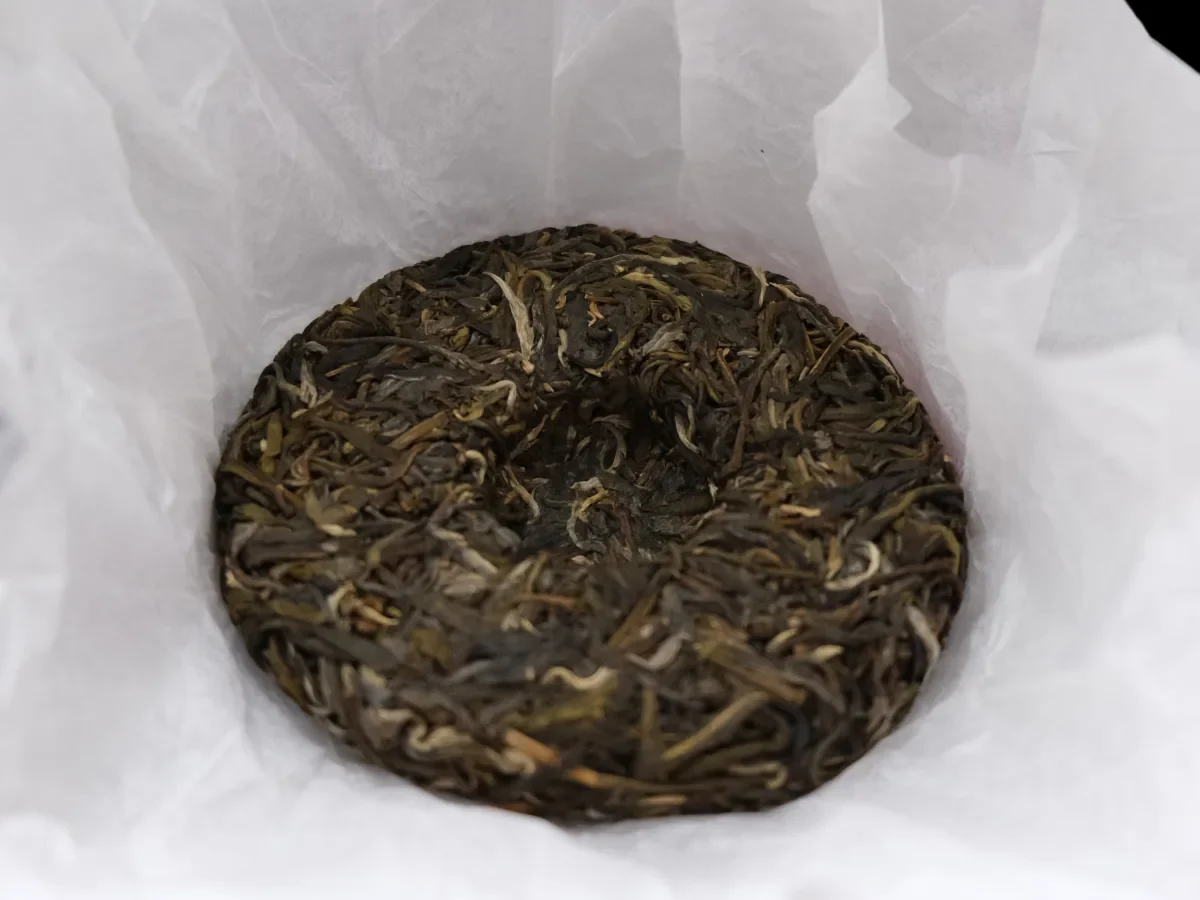
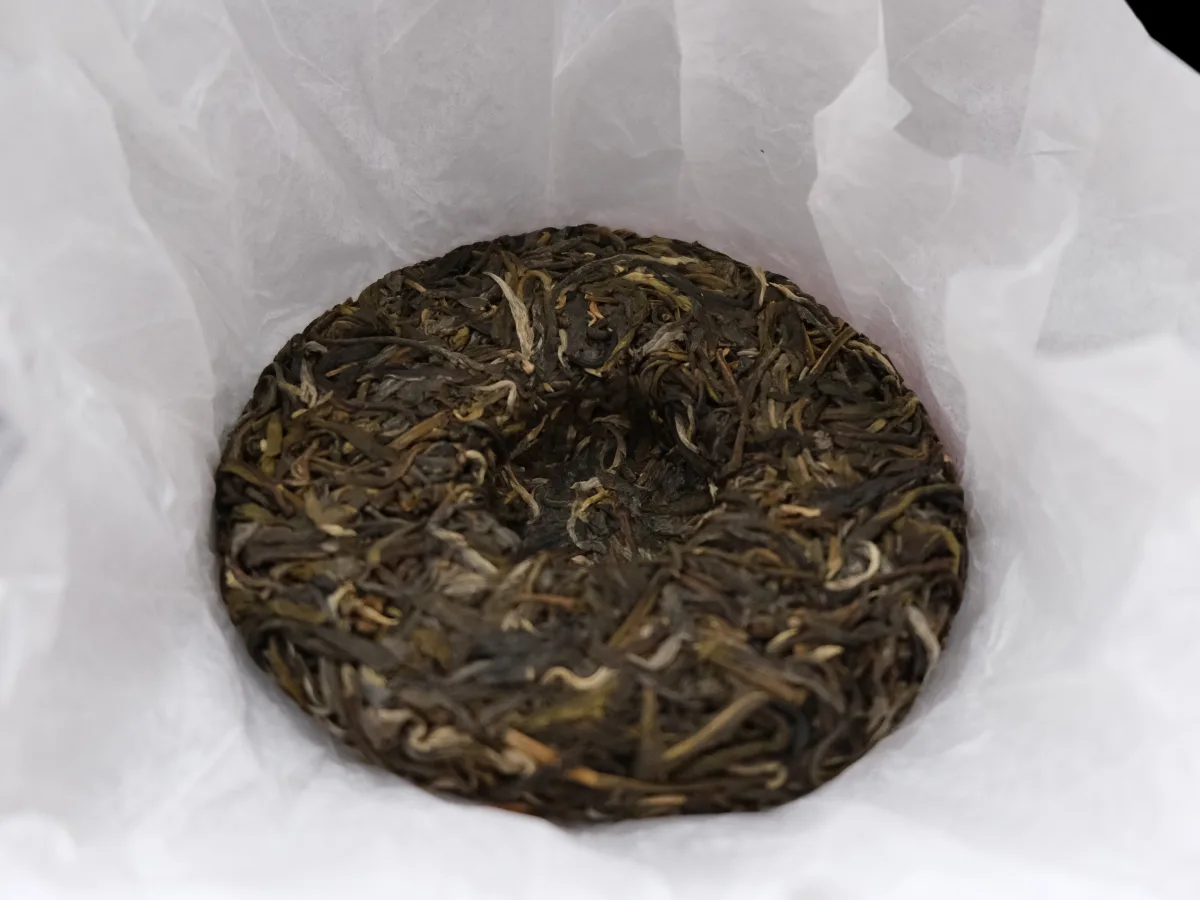
Compression is another trap. Cakes, bricks, bowls and logs are formats, not families. White tea, green tea and other materials can also be compressed. The wrapper’s shape may tell you how the producer intended to store and distribute the tea, but it cannot classify the leaf by itself. I start with manufacture and named origin, then treat form as a practical variable affecting breakage, airflow and brewing.
The warehouse does not merely preserve dark tea; it changes it
Temperature, humidity, airflow, packaging and surrounding odors continue to shape a dark tea after the factory work ends. This is why labels such as dry storage, wet storage, Hong Kong storage or Kunming storage matter but remain incomplete. They may describe climate, intent, commercial style or only a seller’s preferred vocabulary. The decisive questions are concrete: Where was it kept? Was humidity controlled or simply endured? Did it remain in original packaging? Was it exposed to incense, cooking, smoke, cleaning products or damp walls? Can the seller describe custody rather than recite a storage genre?
Chinese discussion about storage is valuable because drinkers describe failures with brutal sensory clarity: basement damp, straw-mat odor, throat constriction, flat sweetness and dusty wrappers. Those descriptions are not laboratory tests, but they are warnings that invite inspection. My position is firm: if a tea smells mouldy, chemical or persistently dirty, nostalgia has no vote. Do not drink a defect to prove sophistication.
A date printed on paper is the easiest part of an old tea to fake
Age can soften, deepen or reorganize a tea, but only when the starting material and storage support that development. A weak tea does not become profound merely because years pass. Bad storage can erase fragrance, introduce contamination or turn complexity into generic darkness. The phrase ‘can improve with age’ is therefore conditional, not a promise. Every old-tea claim needs a chain: production identity, packaging consistency, custody, storage evidence and a cup that makes sense.
I do not advise beginners to begin with expensive old cakes. Start with clearly identified young or middle-aged material from a seller who offers samples. Learn how clean leaf smells when dry, warmed and rinsed. Learn how compression loosens, how the liquor changes over several infusions and how your body responds without turning the response into medical folklore. Once those references exist, age becomes observable rather than mystical.
Pu-erh begins in living tea forests, not in an auction catalogue
FAO’s Pu’er Traditional Tea Agrosystem record places tea inside a landscape maintained by Blang, Dai, Hani and other communities. Ancient and cultivated tea trees, forest structure, crops, livelihoods, beliefs and the Tea-Horse Route belong to the history behind the leaf. That context matters because the global market often takes ‘ancient tree’ as a luxury adjective while erasing the people and land management that give the phrase meaning.
An old-tree claim on a wrapper proves almost nothing by itself. Tree age, garden identity, harvest management and material separation are difficult to audit from a finished cake. The responsible response is not to repeat the biggest number. It is to name what the official heritage record establishes about the regional system, then narrow the commercial batch claim to whatever traceable evidence actually survives.
A clean test protects you better than a collector’s vocabulary
Break compressed tea carefully and sample material from more than the easy outer edge. Smell the dry fragment, warm vessel and first rinse separately. Use boiling or near-boiling water when the tea’s structure calls for it, but shorten early contact so intensity does not conceal defects. Watch whether the leaf opens, whether the liquor clears, whether off-odors fade or persist and whether later infusions still carry structure. Record what happens instead of forcing every sensation into ‘qi,’ ‘aged fragrance’ or another prestige term.
My final rule is simple: buy dark tea that is convincing now, in a quantity you can store responsibly, from someone who answers storage questions without theatre. Future improvement is a bonus. If a seller needs twenty imaginary future years to justify today’s price, the product is an investment story wearing a tea wrapper.
Dark tea is a drink, not a permission slip for health claims
Fermentation language encourages sellers to jump from microbial activity to sweeping promises about digestion, weight, cholesterol or detoxification. That jump is unacceptable. A production process can be described from standards and manufacturing records; an individual health outcome requires clinical evidence, dose, population and risk context. Personal comfort after a meal is a real experience, but it is not a universal treatment claim. East Moment keeps those two statements apart.
Anyone pregnant, managing medication, sensitive to caffeine or dealing with symptoms should treat dark tea as a caffeinated food product and use qualified medical advice for the medical decision. The strongest reason to drink it remains the simplest one: a well-made, cleanly stored tea can be delicious, socially generous and culturally revealing. It does not need pseudo-medical pressure to matter.