How to test a Chinese yellow tea claim
Move from the family-level process to the exact batch. Each checkpoint narrows uncertainty without pretending a photograph can certify provenance.
| Evidence checkpoint | What to look for | What it still cannot prove |
|---|---|---|
| Production logic | Early enzyme inactivation followed by a controlled yellowing stage and final drying. | The duration, wrapping material, temperature or skill of this producer’s batch. |
| Named origin | A traceable producer, place declaration, production date and specific product identity. | Authenticity when the seller offers no documents or verifiable chain of custody. |
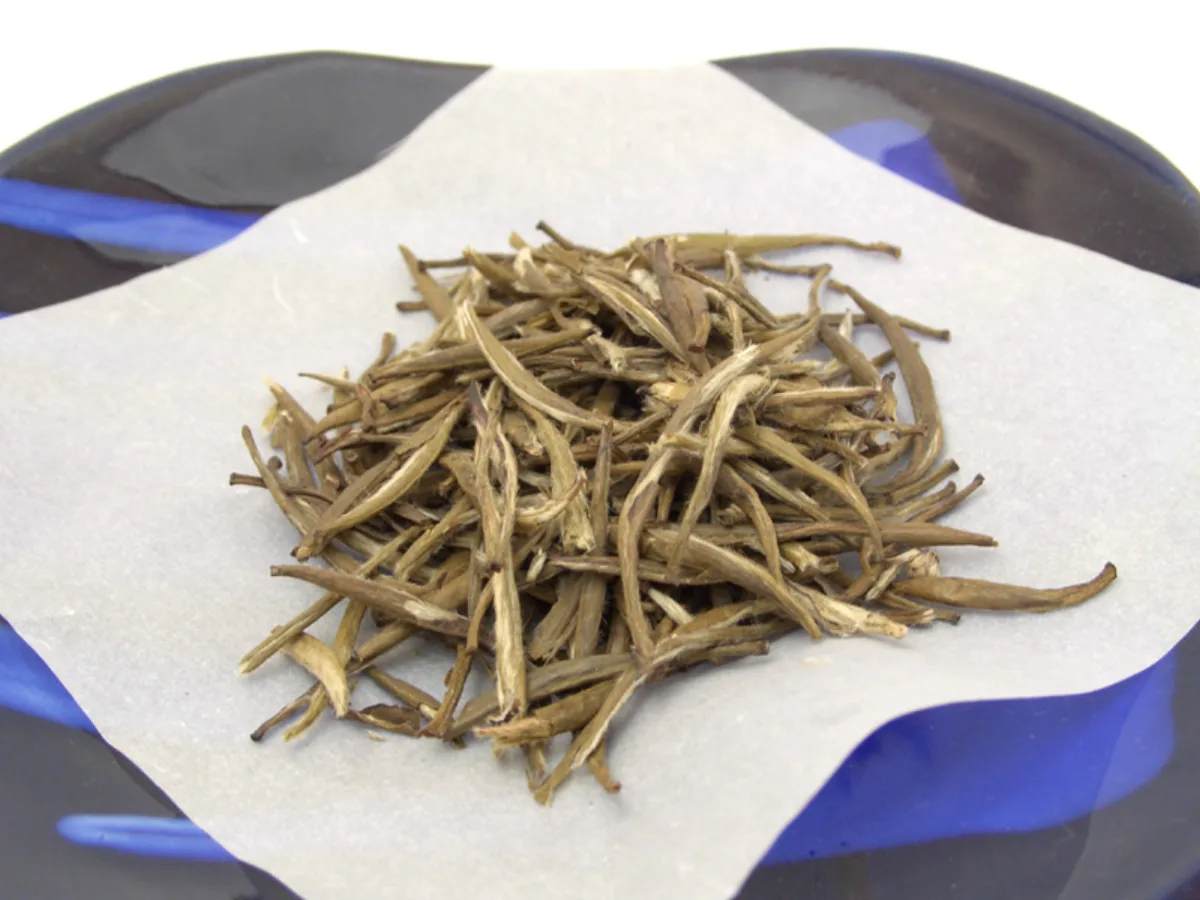
| Dry and opened leaf | Material, breakage, consistency and how buds or leaves open across repeated infusions. | Protected origin, pesticide status, age or absence of flavoring. |
| Cup result | A controlled brew that reveals sweetness, grain-like warmth, astringency and stability over infusions. | That every yellow tea should taste identical or that softness alone proves quality. |
Yellow tea begins where the simple oxidation ladder breaks
The lazy diagram places green, white, yellow, oolong, black and dark tea along one smooth line from least to most oxidized. Yellow tea exposes why that diagram is inadequate. Its makers first use heat to suppress the fresh leaf’s enzymes, as green-tea makers do, then deliberately manage warmth and moisture so the leaf yellows before final drying. The defining intervention is therefore a sequence, not a percentage. ISO 20715 names enzyme inactivation, rolling or shaping, yellowing and drying as the notable production logic. That sequence is a much stronger classification test than liquor color.
The Chinese term men huang is often translated as sealed yellowing or sweltering. Translation makes it sound like one standardized step, but practice can involve wrapping, heaping, covering, resting and repeating under different local conditions. A reader should learn the principle without assuming every producer follows one clock. Heat, leaf moisture, pile thickness and timing all matter. When a seller explains none of them and talks only about imperial tribute, the history story is doing the job that batch evidence should do.
Rarity is partly production reality and partly a sales weapon
Yellow tea occupies a narrow market because the category has fewer famous producing areas, smaller output and a process that is easy to simplify, mislabel or abandon when demand favours green tea. Chinese discussion repeatedly returns to this awkward fact: needle-shaped material from a yellow-tea place can be made with a greener process, while a consumer may still buy the place name and assume the family. That tension matters more than repeating that yellow tea is ‘rare.’ It explains why category, style and origin have to be checked separately.
Rarity does not automatically produce excellence. It can produce stale inventory, inflated prices and buyers who are afraid to admit that the cup is flat. I reject reverence as a tasting method. A rare tea still has to smell clean, open coherently, carry flavor through more than one cup and justify its cost against a fresh green tea or a carefully made white tea. If it fails, rarity is merely the reason the mistake was expensive.
Needle shape is evidence of form, not a passport from Junshan
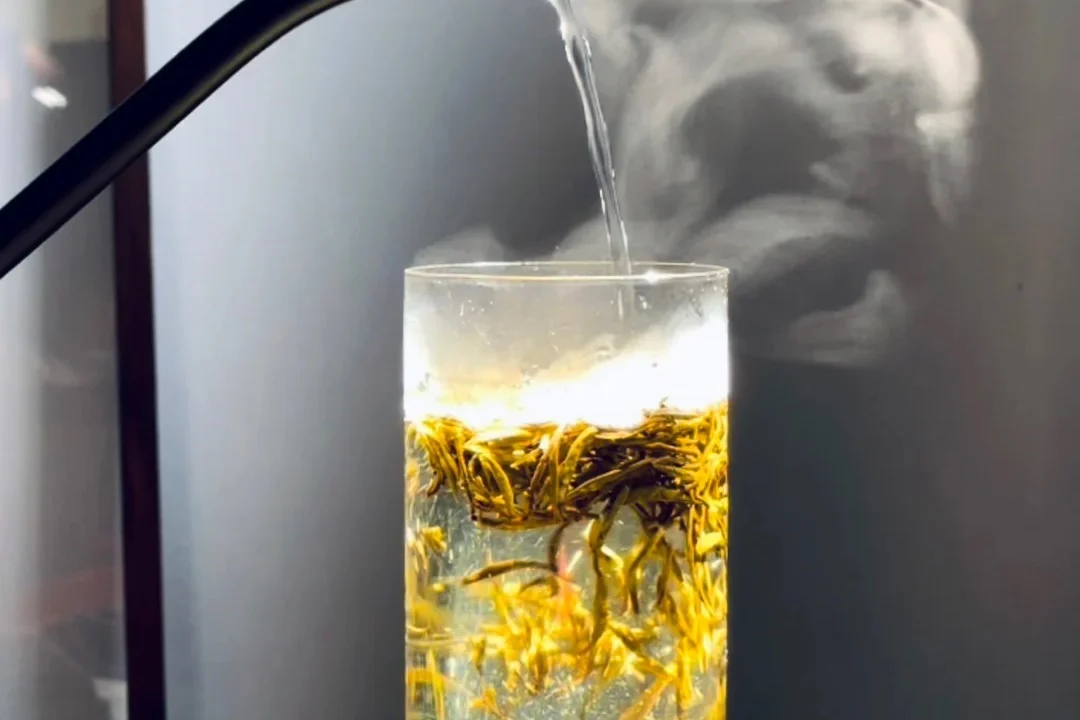
Junshan Yinzhen is associated with Junshan Island in Dongting Lake, Hunan, and with carefully selected bud material. The upright movement of buds in a glass is visually memorable, which makes it irresistible in sales videos. Yet the performance in water proves neither geographic origin nor a yellowing process. Similar-looking bud teas can be produced elsewhere, and a tightly graded green-style tea may also stand or fall. A glass can show density, movement and opening; it cannot show an invisible supply chain.
The useful reading order is place, maker, process, date, dry leaf, then cup. Ask whether the product names a real producer and harvest, whether yellowing is described, and whether opened buds match the claimed material. Buy a sample before a full tin. Brew once in glass for observation and once in a neutral gaiwan for control. The second test often removes the theatre and reveals whether the liquid has depth after the first aromatic impression.
Do not punish delicate material with a performance brew
Yellow tea is frequently shown in tall glassware because the buds are part of the pleasure. That does not mean one glass recipe fits every sample. Begin with water below a rolling boil, a modest leaf load and enough room for the material to open. Record dose, water temperature and time. If the first cup is thin, increase leaf before extending the steep into harshness. If the cup turns dull or cooked, lower temperature and shorten contact. The goal is not to obey a ceremonial number; it is to hear what this batch can actually say.
I prefer a two-vessel test when the tea is costly: glass for appearance, white porcelain gaiwan for flavor. The glass answers how the material moves and opens. Porcelain exposes aroma, liquor and aftertaste without asking clay to soften the evidence. A seller who discourages neutral testing is protecting the story, not the tea.
Buy yellow tea for its process and cup, not for the privilege of rarity
A good yellow tea can combine the lifted clarity associated with early heat treatment with a softer, rounder register created during yellowing. That balance is the point. It should not be reduced to ‘less grassy green tea,’ because the best examples have their own grain, chestnut, floral and mellow tensions. At the same time, flavor vocabulary varies by batch and drinker. The honest claim is structural: the cup should remain clean and coherent, not that every authentic yellow tea must reproduce one tasting note.
My buying rule is hard: if the seller cannot explain the production family, identify the batch and let me start small, I leave. Yellow tea is too interesting to be protected by politeness. The category will survive through makers who show their work and drinkers willing to judge the liquid, not through collectors repeating imperial legends over anonymous buds. Rarity may earn curiosity; it never earns a free pass.