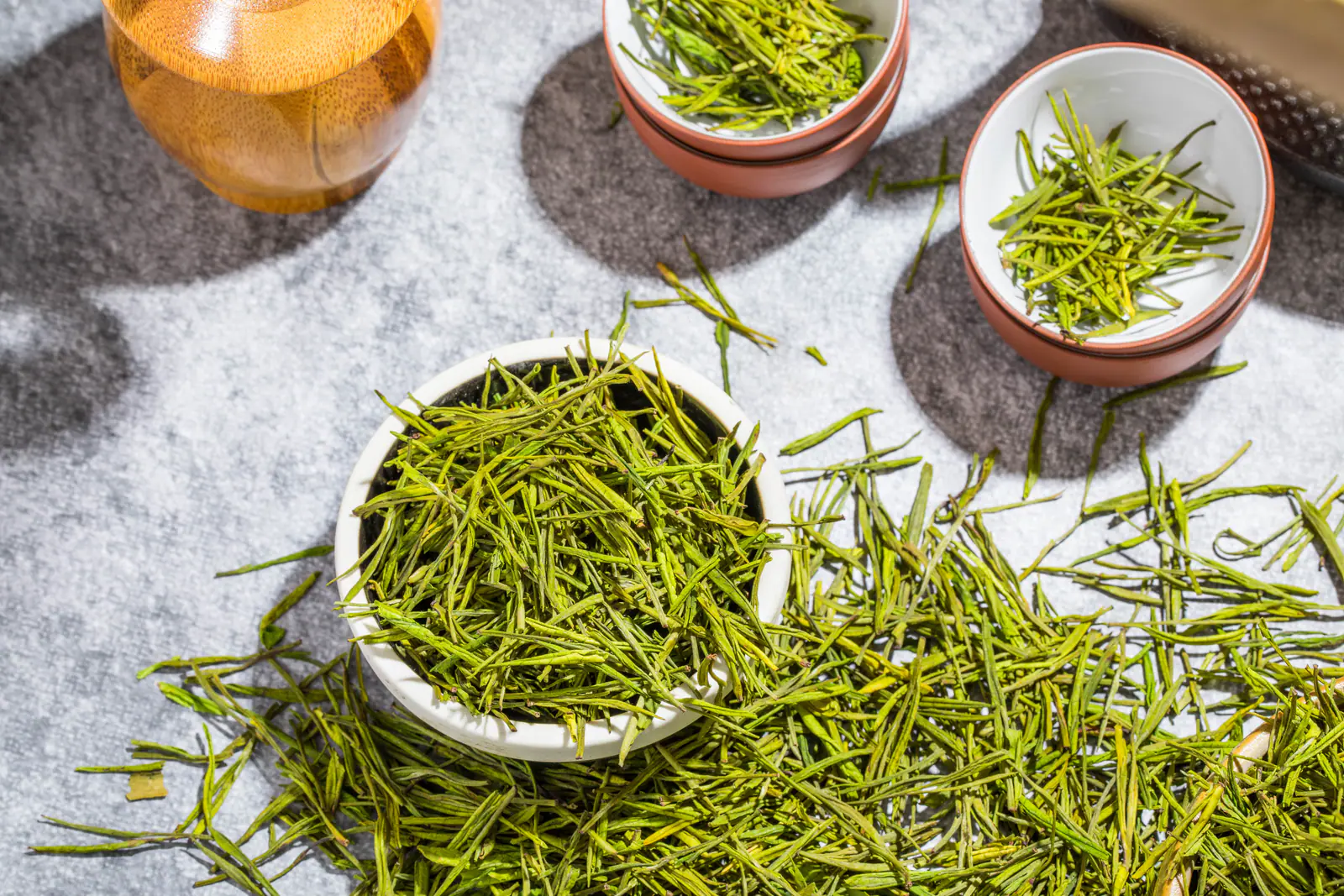
Four Chinese green-tea routes that should never collapse into one taste
Use the leaf and process checkpoint to choose a route. Treat origin, grade and season as separate claims that still need proof.
| Tea route | What makes it legible | What the name alone cannot prove |
|---|---|---|
| Chinese green tea | Early heat limits enzymatic oxidation; dry leaf, liquor and opened leaf should tell a coherent freshness story. | That green liquor means green tea, or that every green tea wants cool water. |
| Longjing | Flat leaves and pan-fired chestnut notes point toward the style; protected origin and harvest still require traceability. | A flat leaf, the word Dragon Well or a high price proves West Lake origin. |
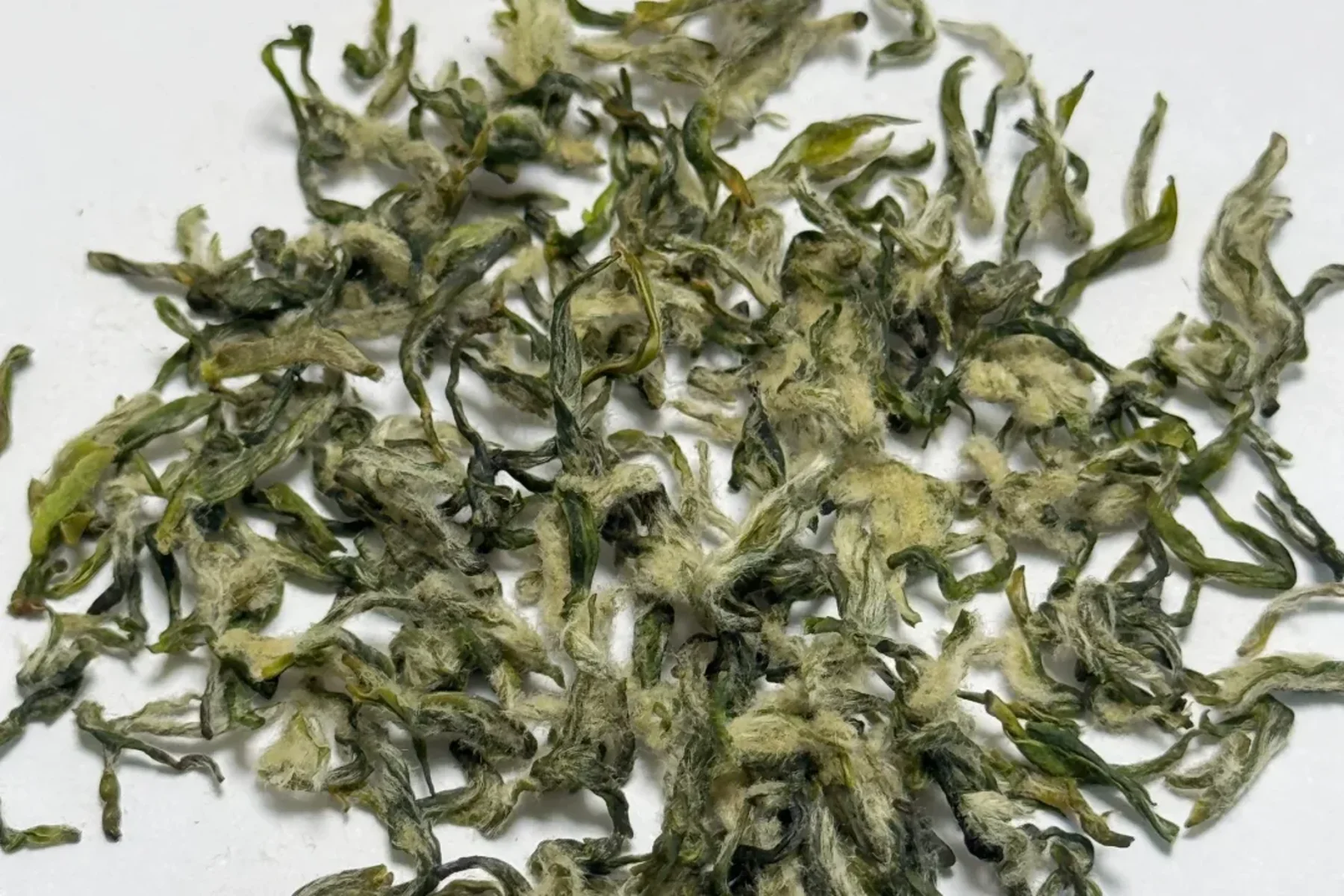
| Biluochun | Fine curls, visible down and a tender pluck help identify the style before the leaf opens. | Heavy fragrance or a tiny spiral proves authentic Dongting Mountain material. |
| Huangshan Maofeng | Loose pointed shoots and a bud-and-leaf pluck distinguish it from flattened and tightly curled styles. | Every fuzzy pointed tea comes from Huangshan or shares one grade. |
Green tea is the decision to stop oxidation early, not the promise of a green drink
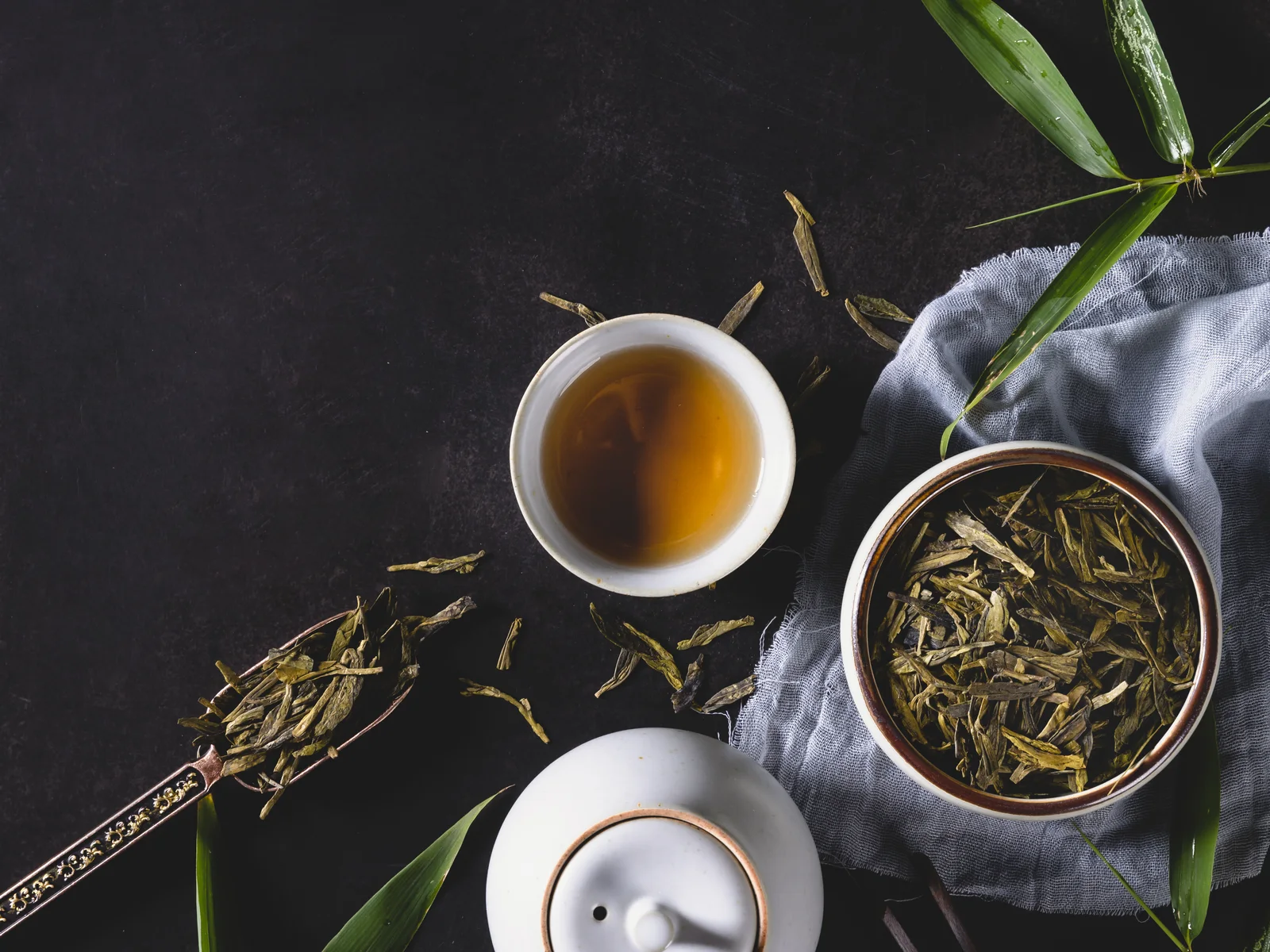
ISO tea classification gives the useful starting point: green tea comes from Camellia sinensis and is processed so enzymatic oxidation is inhibited. In China that usually means heating the fresh leaf relatively early, often by pan firing and sometimes by steaming or other methods. The heat changes the leaf immediately. It removes raw grassy volatility, fixes color imperfectly and begins building the nutty, bean-like, chestnut or marine notes people later describe in the cup. The family name tells us this production direction. It does not tell us the mountain, cultivar, grade, pesticide record or whether the packet is still fresh.
That distinction sounds technical until a shopper meets a luminous neon-green powder, a bag of broken leaf or a product called Dragon Well with no harvest information. Color is unstable under light, storage and photography. A deep olive tea can be excellent; a bright tea can be stale beneath editing. I trust a connected chain: dry leaf shape, aroma after warming, behavior in water and the opened leaf. When those parts disagree, the marketing photograph loses the argument.
Longjing is a hand-and-pan language before it is a luxury label
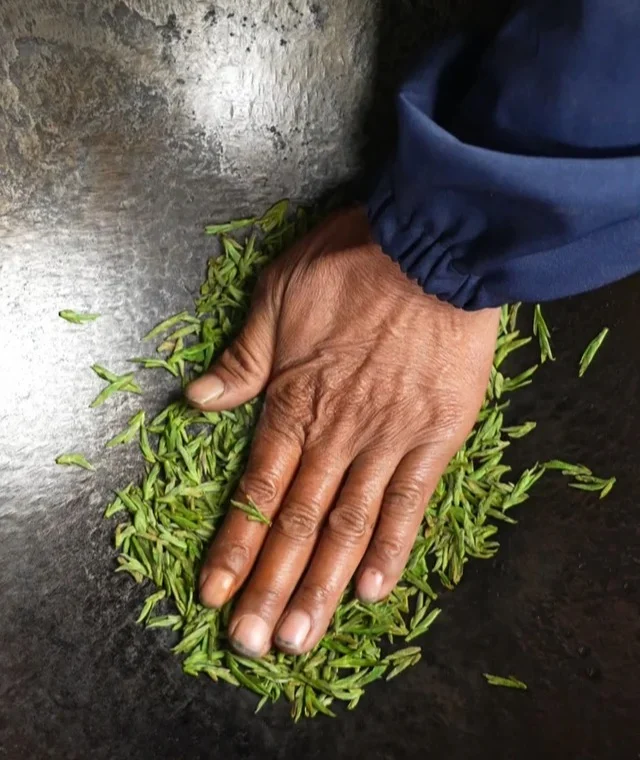
Longjing became the international shorthand for Chinese green tea because its flat form is immediately recognizable and its best cups can hold sweetness, roasted seed, chestnut and a soft green freshness at once. The form comes from repeated contact between leaf, hand and heated surface. Pressing, tossing, grasping and smoothing are not decorative gestures; they regulate moisture and build shape. A credible flat leaf should open into recognizable plant material, not dissolve into a pile of scorched fragments. The cup should have structure after the first fragrance fades.
The name is also one of the market's easiest costumes. West Lake Longjing is a protected geographic claim, while Longjing-style manufacture extends beyond its most famous core area. A seller who offers only emerald color and a story about emperors has given atmosphere, not provenance. Ask for producing area, harvest period, cultivar when known and packaging date. Then brew a small sample. I would rather drink a clean, honestly labeled Zhejiang green tea than pay for an imaginary village printed in gold.
Biluochun should smell alive without becoming perfume theatre
Biluochun's fine curls and pale down make it visually different from Longjing before water touches the leaf. Tender material is rolled into compact spirals, creating a high surface area that releases aroma quickly. A good cup may feel floral, fruity, sweet and brisk, but those words are observations, not an authentication code. Sellers know the style's perfume is famous, so fragrance can be exaggerated in description and sometimes confused with contamination, blending or poor storage beside scented goods.
Warm a clean glass or porcelain vessel, smell a small amount and then watch the leaf descend and unfold. The movement is useful because it reveals broken material, uneven plucks and the relationship between down, bud and leaf. Do not demand a choreographed tea dance; demand coherence. The dry aroma, wet leaf and taste should belong to one plant story. If the scent shouts while the opened leaf is exhausted after one infusion, beauty has become a sales trick.
Huangshan Maofeng is easiest to understand after the leaf stops posing
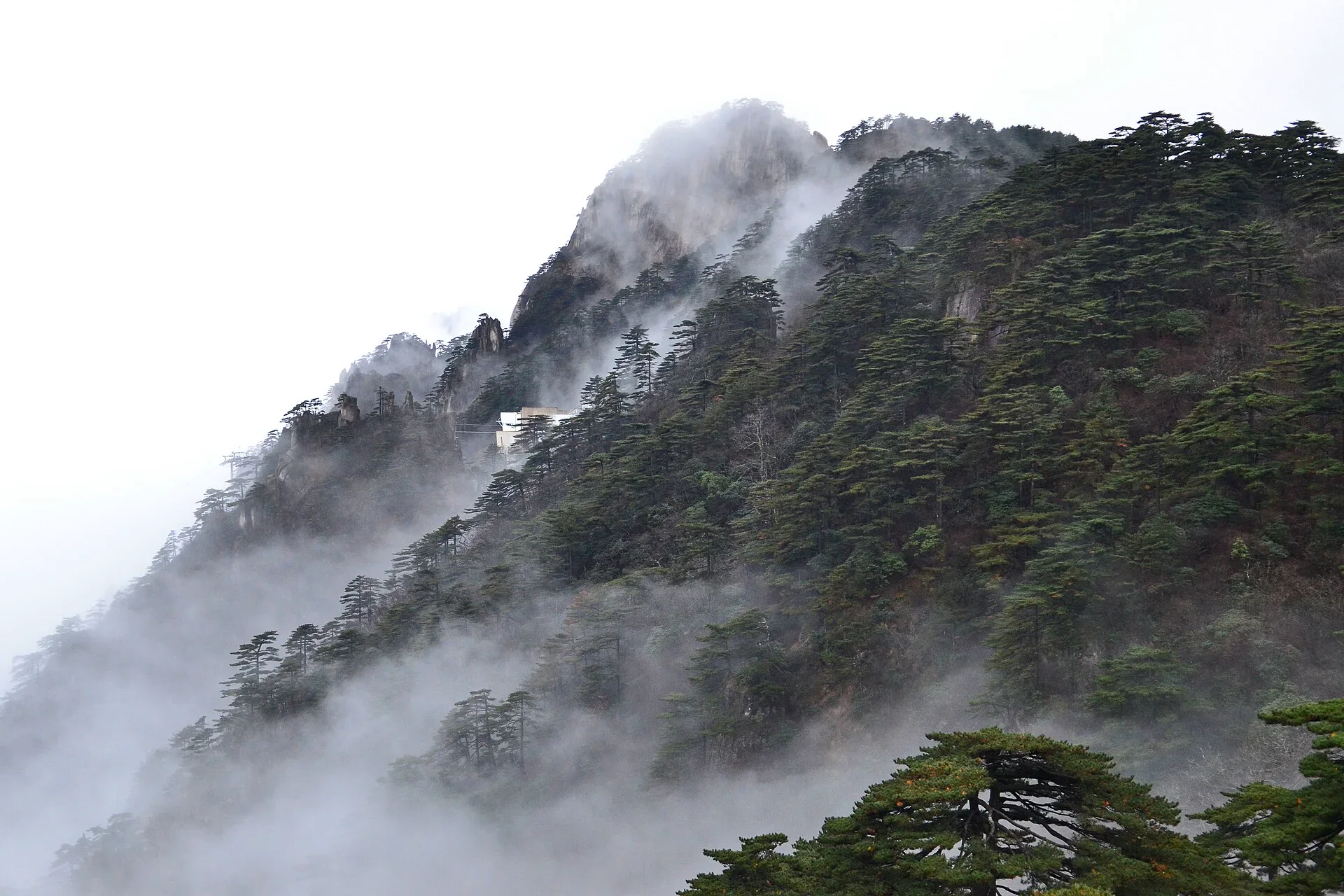
Huangshan Maofeng is commonly represented by tender, slightly curved shoots with visible buds and leaves rather than Longjing's pressed plane or Biluochun's tight spiral. The famous mountain landscape matters to its cultural identity, yet a misty photograph cannot grade tea. Put the leaf in water. Does the pluck open with reasonable consistency? Are the stems, buds and leaves compatible with the seller's description? Does the liquor keep sweetness and clarity, or does harshness arrive before character?
The opened leaf is wonderfully democratic. It does not care how expensive the box looked. It shows coarse replacements, excessive breakage and uneven material more honestly than a dry-leaf glamour shot. East Moment therefore treats wet leaf as evidence rather than waste. The page does not ask readers to memorize poetic shapes; it teaches them to compare what the name promised with what the water revealed.
Boiling water is not a crime; careless contact time is the real problem
Green-tea advice often becomes a single temperature number copied across every leaf. That is lazy. Tender spring material, later leaf, broken tea, a tall glass and a small gaiwan do not extract in the same way. Cooler water can slow bitterness and preserve delicate top notes, while hotter water can reveal depth and flaws quickly. Leaf quantity, vessel geometry and contact time move with temperature. The correct method is a controlled test, not obedience to a sacred 80°C.
Begin with water that tastes clean on its own. For tender leaf, try roughly 75–85°C in glass or porcelain and watch rather than abandon it. If the cup is thin, raise temperature or time. If it becomes rough before sweetness appears, shorten contact or reduce leaf. Record one change at a time. My goal is not the gentlest possible cup; it is the clearest account of what the tea contains.
A spring date matters only when storage carries the leaf to your cup
Green tea is vulnerable to heat, oxygen, moisture, light and strong odors. A real harvest date can still end in a tired cup after months in a warm transparent jar. Conversely, careful cold, sealed storage can preserve material far better than the romantic image of a paper pouch on an open shelf. Ask when the packet was sealed, how it travelled and how the seller stored it. Once opened, keep a working portion small and the reserve tightly sealed, dry and odor-free.
Freshness also becomes a weapon for inflated pre-Qingming prestige. Early harvest can mean tender material and scarce labor, but earlier is not automatically better for every cultivar, region or taste. Weather and development matter. I will not call a thin, expensive cup superior merely because the calendar flatters it. The tea must still offer aroma, texture, return sweetness and clean persistence. Time is evidence only when the cup confirms it.
Buy four small samples, not one heroic tin
The fastest education is comparative. Put a Longjing, Biluochun, Huangshan Maofeng and one honestly labeled everyday green tea beside each other. Use equal dry-leaf weight, the same water and similar vessel conditions. Photograph the dry leaves, note the first warm aroma, taste at comparable strength and spread the opened leaves on a pale plate. The differences in form and material become physical instead of remaining vocabulary.
A sample set also limits the cost of disappointment. Green tea loses its best edge while a large tin waits for attention. Buy enough for several trials, not enough to defend a purchase for a year. Price should follow traceability, material and pleasure—not force the drinker to invent complexity. This is my bluntest green-tea rule: no name deserves loyalty before the second cup.
Tenderness, uniformity and famous harvest windows are clues—not a universal ladder
Green-tea grades can refer to plucking standard, date, size, shape, producing area or a company system. The same word may not travel cleanly between two teas. Bud-only or bud-heavy material costs more to pick and can offer fine texture, but a well-developed bud-and-leaf pluck may produce the fuller cup a drinker actually prefers. Uniformity can show careful sorting while also removing the variation that would reveal a broader batch. The label needs a definition before the buyer can compare it.
Pre-Qingming and pre-Guyu language belongs to a seasonal and regional calendar, not a magic spell. Weather does not obey a marketing deadline, and harvest timing affects cultivars differently. Ask what was picked, where and when; then taste whether the material has enough development to carry flavor. Scarcity can justify cost. It cannot order your mouth to admire a tea.
Green tea contains caffeine, and color cannot tell you how much
Green tea is repeatedly advertised as low-caffeine, detoxifying or uniquely slimming. Processing family alone cannot settle an individual cup's caffeine. Cultivar, leaf material, dose, water, time and repeated infusions all matter, while health outcomes require evidence far beyond a tea story. A pale cup can still contain caffeine; bitterness is not a caffeine meter. Anyone sensitive, pregnant, managing medication or dealing with symptoms should use qualified guidance rather than a product slogan.
The cultural pleasure needs no miracle language. A glass of tender leaf can sharpen attention, mark spring and create a quiet pause. Those are meaningful experiences. I protect them by refusing to sell them as treatment. When a tea page distinguishes lived effect from medical claim, its human voice becomes more trustworthy, not less.
Fresh green tea works best when the table does not shout over it
A delicate green tea can disappear beside aggressive smoke, sugar or chili, while a fuller pan-fired tea may hold its shape with savory snacks. There is no compulsory pairing. Begin by drinking the tea alone, then test simple foods one at a time: nuts, lightly seasoned pastries, fruit or a local snack connected to the tea's region. The purpose is to notice interaction, not to invent a luxury ceremony.
Green tea also belongs to ordinary bottles, office glasses and family tables, not only spring tasting rooms. Long leaves floating in a transparent tumbler can be a daily Chinese image of work and conversation. Record that use alongside famous origin. Culture survives because people repeat it without waiting for a perfect occasion.