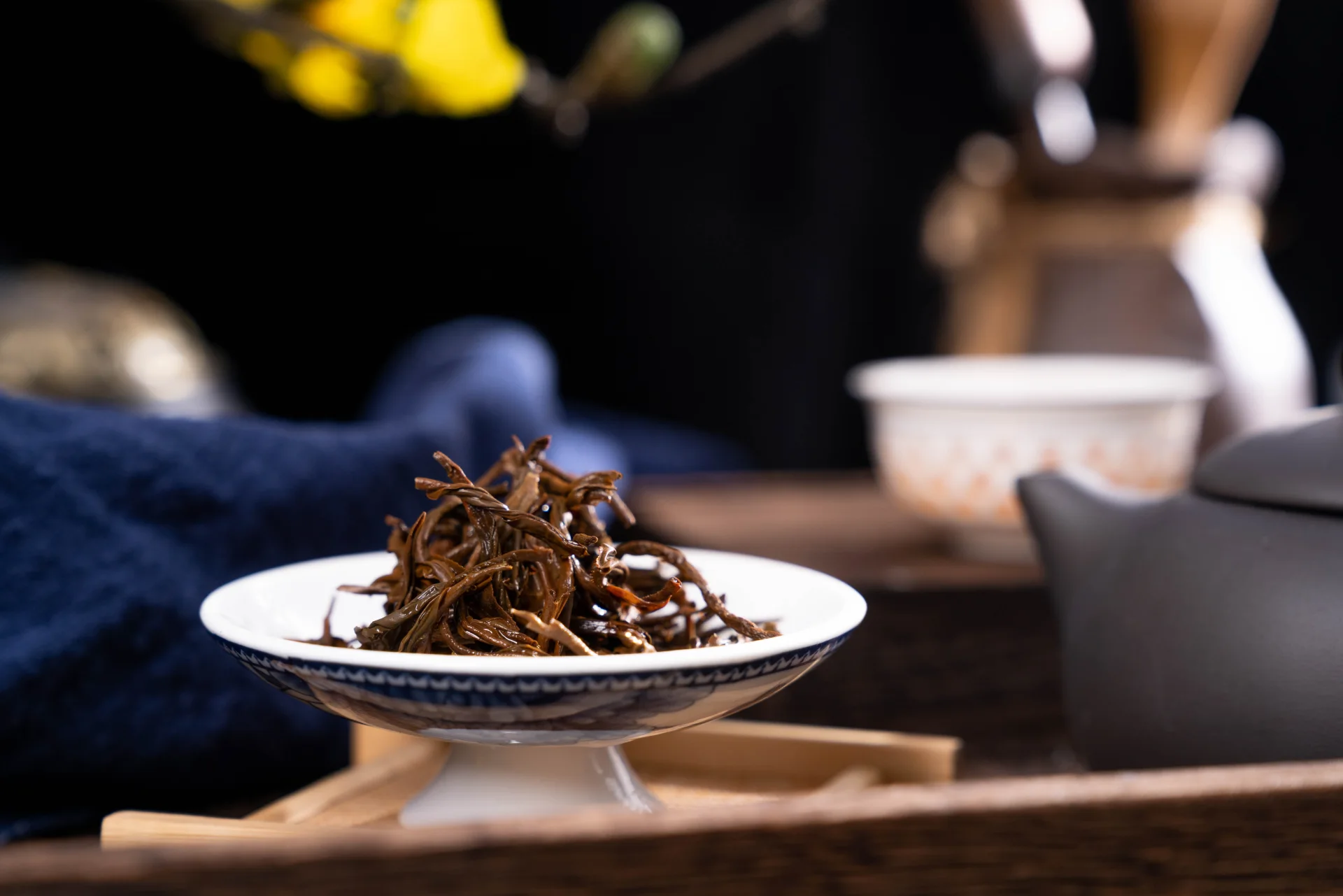
Four famous Chinese black teas and the claim each one demands
The useful difference is not simply strong versus mild; it is leaf material, place, manufacture and intended expression.
| Tea | What to inspect | What appearance cannot settle |
|---|---|---|
| Chinese black tea | Substantial oxidation before drying places the tea in hong cha, distinct from post-fermented hei cha. | Dark liquor means more oxidation, higher quality or more caffeine. |
| Keemun | Anhui origin, cultivar, grade and made-leaf style support its floral, fruit, cocoa or wine-like range. | Every fine dark strip or English Breakfast blend contains traceable Qimen tea. |
| Dianhong | Yunnan material, leaf size and bud proportion help explain malt, honey, body and the opened leaf. | More gold tips always mean a better or more authentic Dianhong. |
| Jin Jun Mei and Lapsang | Tender versus larger leaf, Tongmu or wider origin, and smoked versus unsmoked processing must be named. | A gold-black leaf proves Jin Jun Mei, or pine smoke proves the oldest style. |
Hong cha is red tea in China; hei cha is the dark tea English often confuses with it
Chinese naming follows the reddish liquor and infused-leaf character of hong cha, while English black tea follows the dark dry leaf. Neither language is wrong, but translation creates a serious collision: hei cha literally means dark or black tea in Chinese and refers to a different post-fermented family. A reader shopping across languages can therefore ask for black tea and receive two different categories.
The fix is simple and should appear near the top of every responsible guide. Say hong cha for the substantially oxidized family represented by Keemun and Dianhong; say hei cha for post-fermented traditions such as many Hunan dark teas. Pu-erh requires its own regional and processing precision. This one vocabulary boundary prevents more confusion than a page of tasting poetry.
Keemun is quiet until a clean cup gives its fragrance room
Keemun can express rose, dried fruit, cocoa, honey, wine-like acidity or a polished sweetness, depending on material and manufacture. Those notes helped it enter famous export blends, but the blend history should not erase the origin tea. Fine grades, broken grades and different production styles behave differently. A product that says Keemun only as a romantic flavor word has not completed the identity.
Use porcelain and taste it without milk first. Watch whether fragrance appears in the warm leaf and cooled cup, whether the liquor has shape through the middle, and whether astringency sharpens or frames the finish. Delicacy is not weakness. Yet a thin cup sold as refined is still thin. I want Keemun to whisper something exact, not rely on its historic export reputation to fill silence.
Dianhong makes leaf material visible in the body of the cup
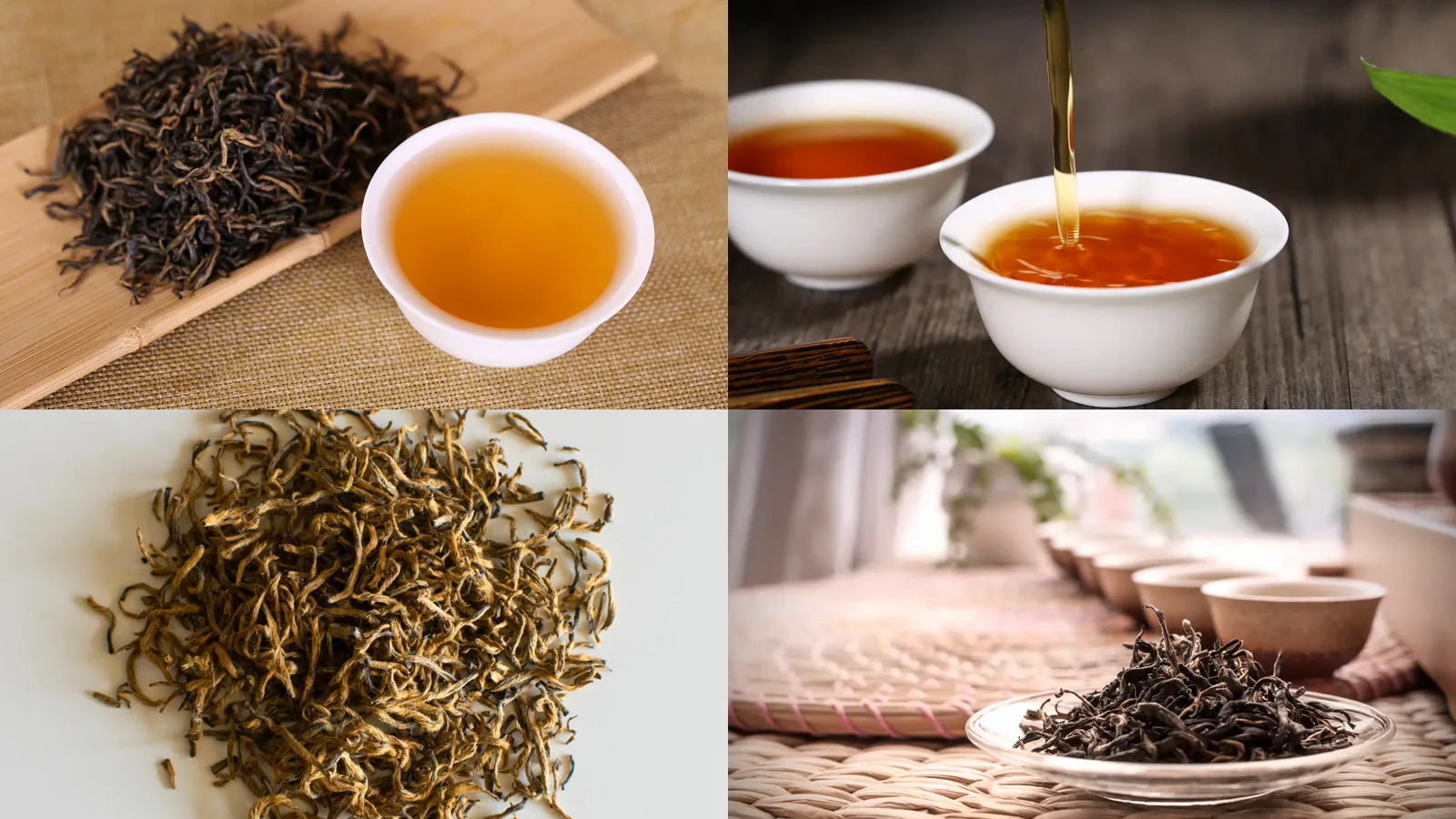
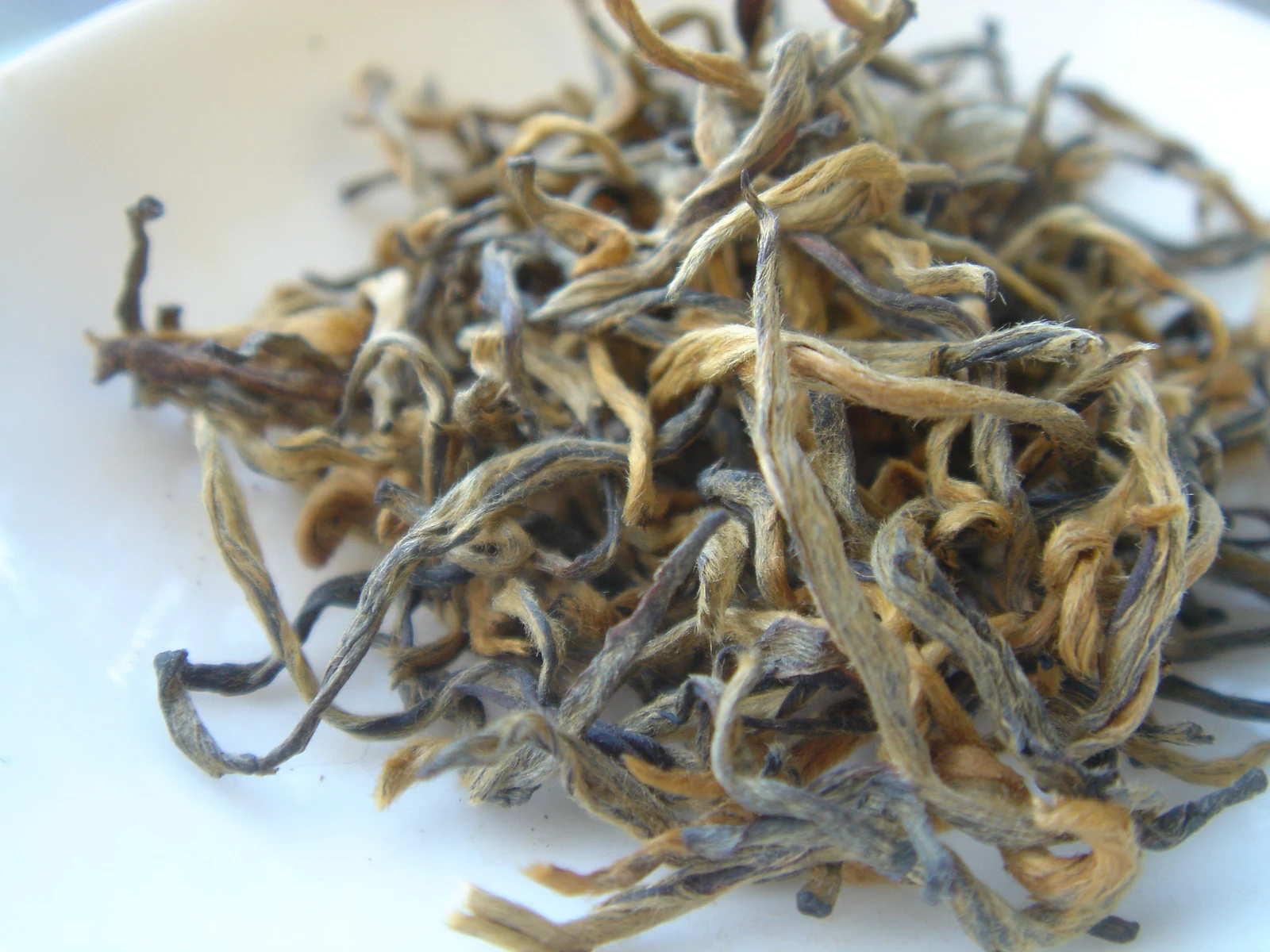
Yunnan's tea biodiversity and larger-leaf materials can give Dianhong a broad, malty, honeyed and sometimes cocoa-like presence. Bud-heavy versions may show gold color, while leafier material can provide depth and structure at a lower price. The market often photographs golden tips as if they were coins. They are a plucking and processing clue, not a universal quality score.
Opened leaf tells the harder truth. Are buds intact? Are larger leaves compatible with the description? Does the cup retain sweetness after the first malt impression? Compare one bud-heavy sample with one balanced leaf-and-bud sample. Many drinkers discover that the visually expensive tea is not the one they want every morning. That is not a failure of taste. It is the moment marketing loses control of the cup.
Jin Jun Mei is a narrow claim living inside a very wide market
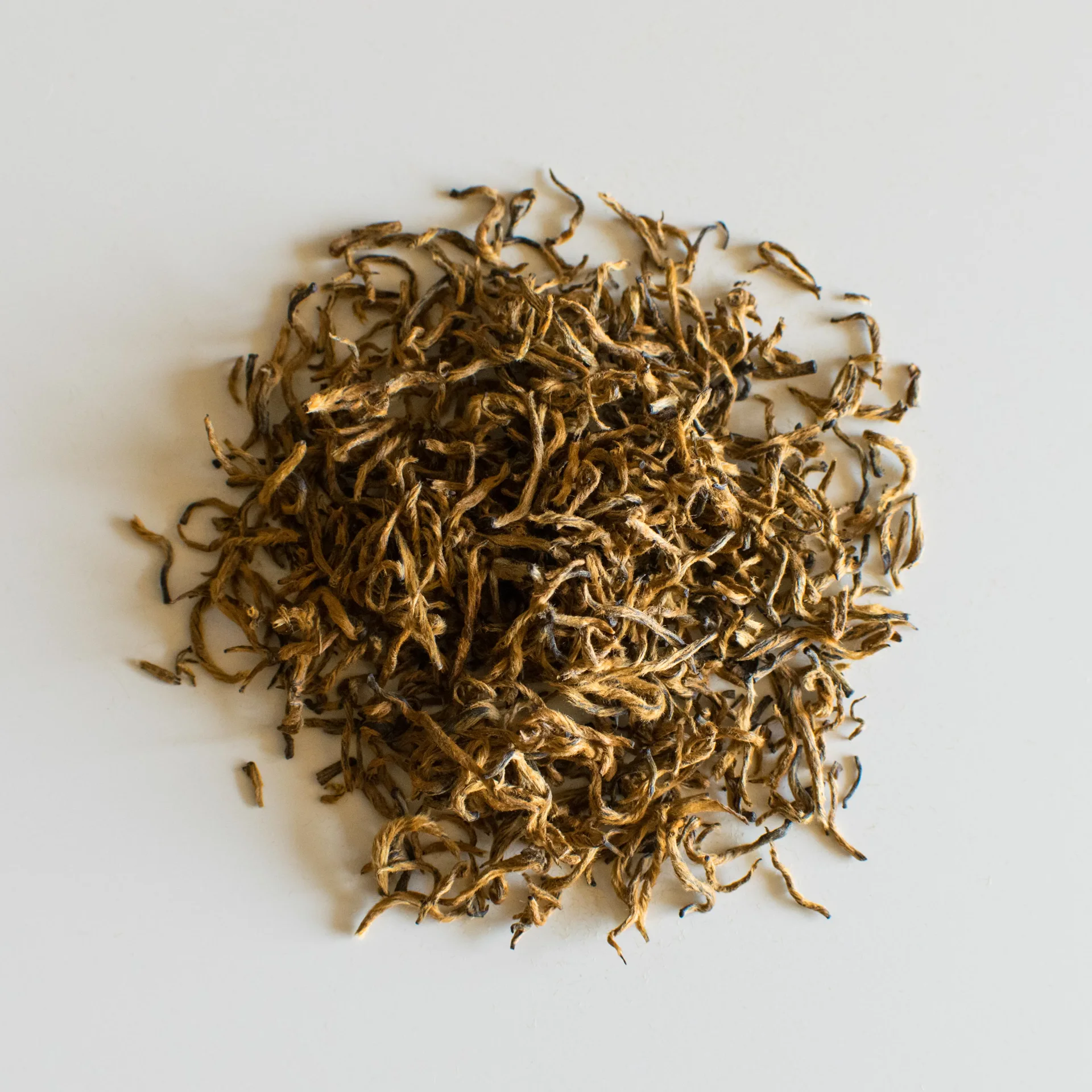
Jin Jun Mei is associated with tender spring buds and Tongmu in the Wuyi area, and its success produced a flood of gold-and-black lookalikes. Appearance alone is hopeless for authentication. Origin, material standard, maker or supplier chain, price logic and sensory coherence must align. Even then, certainty has limits unless documentation is unusually strong.
This is where I become deliberately skeptical. A seller who invokes rare buds but cannot name the producing area beyond Wuyi is asking the buyer to finance vagueness. Buy a sample. Inspect the opened buds, taste for clean sweetness, structure and endurance, and compare it with honestly labeled Wuyi hong cha. Prestige should survive a blind cup. If it does not, keep the less famous tea and the rest of your money.
Lapsang Souchong is not born inside a bottle of artificial smoke
International memory often reduces Lapsang Souchong to campfire intensity. Pine-smoked versions are real and historically important, but unsmoked Zhengshan Xiaozhong and subtler smoke relationships also belong to the tradition and modern market. Smoke level, source, leaf quality and origin should be named. A blunt flavoring effect can cover broken or exhausted material just as easily as it creates drama.
Brew the tea at more than one strength. Strong smoke should open into fruit, wood, sweetness or texture rather than remain a flat wall. Smell the cooled cup and wet leaf. If ash is the only story, the tea has become a special effect. I enjoy smoke when it creates distance and memory—winter clothes, old timber, fruit near a fire—but emotion does not excuse crude manufacture.
Adding milk is a use decision, not an insult to China
Some Chinese black teas are delightful alone; others have the strength and tannin to carry milk or sugar. Export history, British blending, Hong Kong milk tea and contemporary cafe culture all created legitimate drinking contexts. Purity policing hides that movement. The useful question is whether the addition reveals a chosen structure or rescues a poor cup.
Taste the tea plain first so you know what is being changed. If milk creates a rounder drink while aroma and tea character remain, the combination works. If it turns flavorless beige, the base was too weak or the ratio was wrong. Culture travels through use. Respect means naming that route, not pretending everyone must drink one Chinese tea in one approved way.
Four cups teach more than forty tasting notes
Place Keemun, Dianhong, Jin Jun Mei or an honest Wuyi hong cha, and smoked or unsmoked Lapsang Souchong on one table. Use equal weights and comparable strength in neutral porcelain, then adjust individually in a second round. Record leaf size, tips, warm aroma, liquor color, body, astringency, finish and opened leaf. The first round reveals difference; the second reveals how each tea wants to be treated.
Do not score elegance against power as if one must win. Ask which cup belongs to breakfast, focused tasting, milk, cold weather or repeated small-vessel brewing. Chinese black tea becomes memorable when it enters a real life. My final judgment is certain: the best collection is not the most prestigious set, but the set in which every tea has a distinct reason to return.
Broken leaf can be purposeful; hidden identity is the real defect
Whole-leaf orthodox teas, smaller broken grades and tea prepared for blending extract at different speeds and serve different markets. A small particle is not automatically poor, and a beautiful whole leaf is not automatically flavorful. The useful label tells us whether the tea was designed for quick strong infusion, repeated small-vessel brewing, a breakfast blend or another use. Grade language must be tied to a system rather than borrowed as decoration.
Blends also deserve honest respect. Historic and modern breakfast teas may use Chinese material beside teas from elsewhere to create consistency and strength. That is a real product with a real drinking culture. The problem is not mixture; it is a vague front label that makes one famous origin carry a composition it barely contains. Read the ingredients and supplier information, then judge the blend for the job it claims.
Black tea is forgiving, not immortal
Hong cha generally tolerates storage better than fragile green tea, but oxygen, moisture, heat, light and kitchen odors still flatten it. Fine fragrance in Keemun or Jin Jun Mei can disappear long before the leaf looks damaged. Smoked tea can contaminate neighboring packets and also lose its own top notes. Keep teas sealed, dry and separated by strong aroma; buy quantities that match actual drinking.
A date is useful when paired with packaging and storage. Old black tea is not automatically valuable, and stale fruit notes should not be romanticized as mature. Rebrew a newly opened sample after one and three months. If the cup becomes dull, the lesson is about quantity and container, not personal failure.
A darker liquor does not measure stimulation
Chinese black tea contains caffeine, but the amount cannot be read from liquor color, malt aroma or oxidation. Leaf material, cultivar, dry dose, extraction and total cups matter. Bud-heavy teas are not guaranteed to be gentler, and adding milk does not remove caffeine. The only precise claim requires appropriate testing for the actual product and brew.
Use ordinary caution instead of fear. Shorten contact, reduce leaf, avoid late sessions or choose a smaller serving when sensitivity matters. If medical, pregnancy or medication questions are involved, seek qualified advice. Black tea earns its place through flavor and company; it does not need unsupported wellness promises.
A useful personal note records the product, dose, vessel and time of day. It can guide the next cup without being promoted into advice for strangers. This small discipline lets the article keep human experience while refusing to turn sensation into a cure or warning label.
Return to the note before buying again. Memory exaggerates the spectacular cup; a dated record preserves the ordinary cup that actually became part of life.