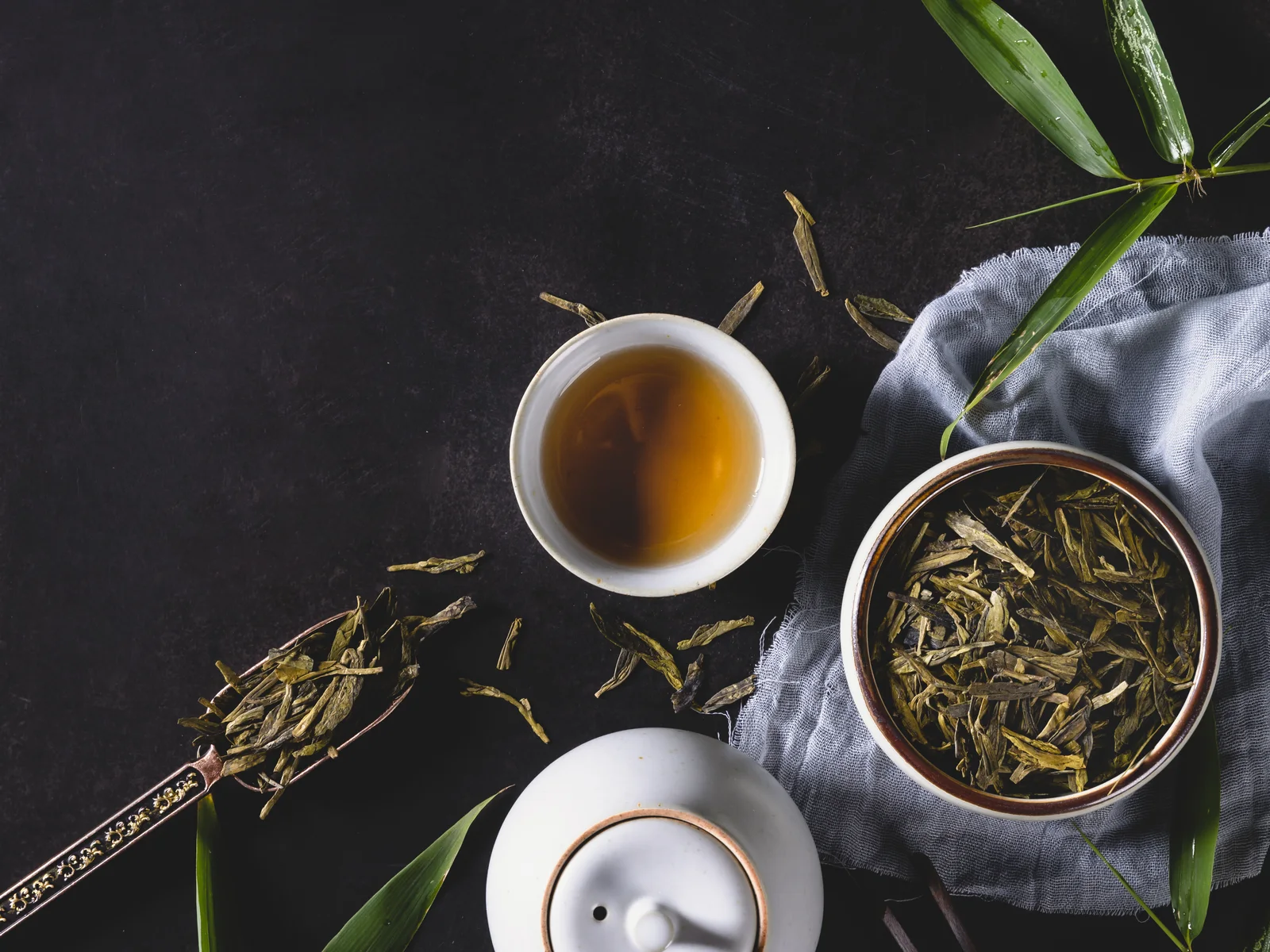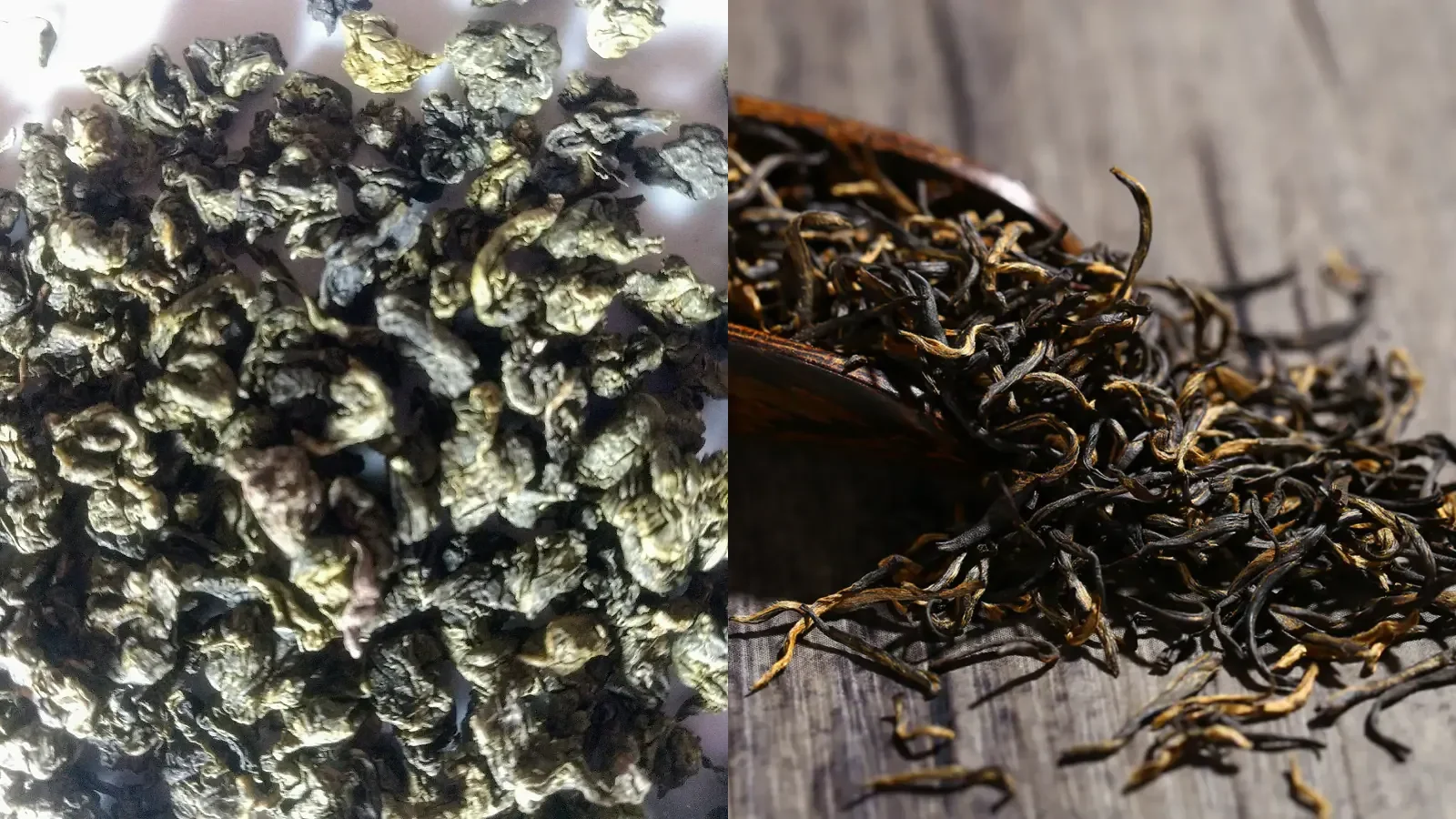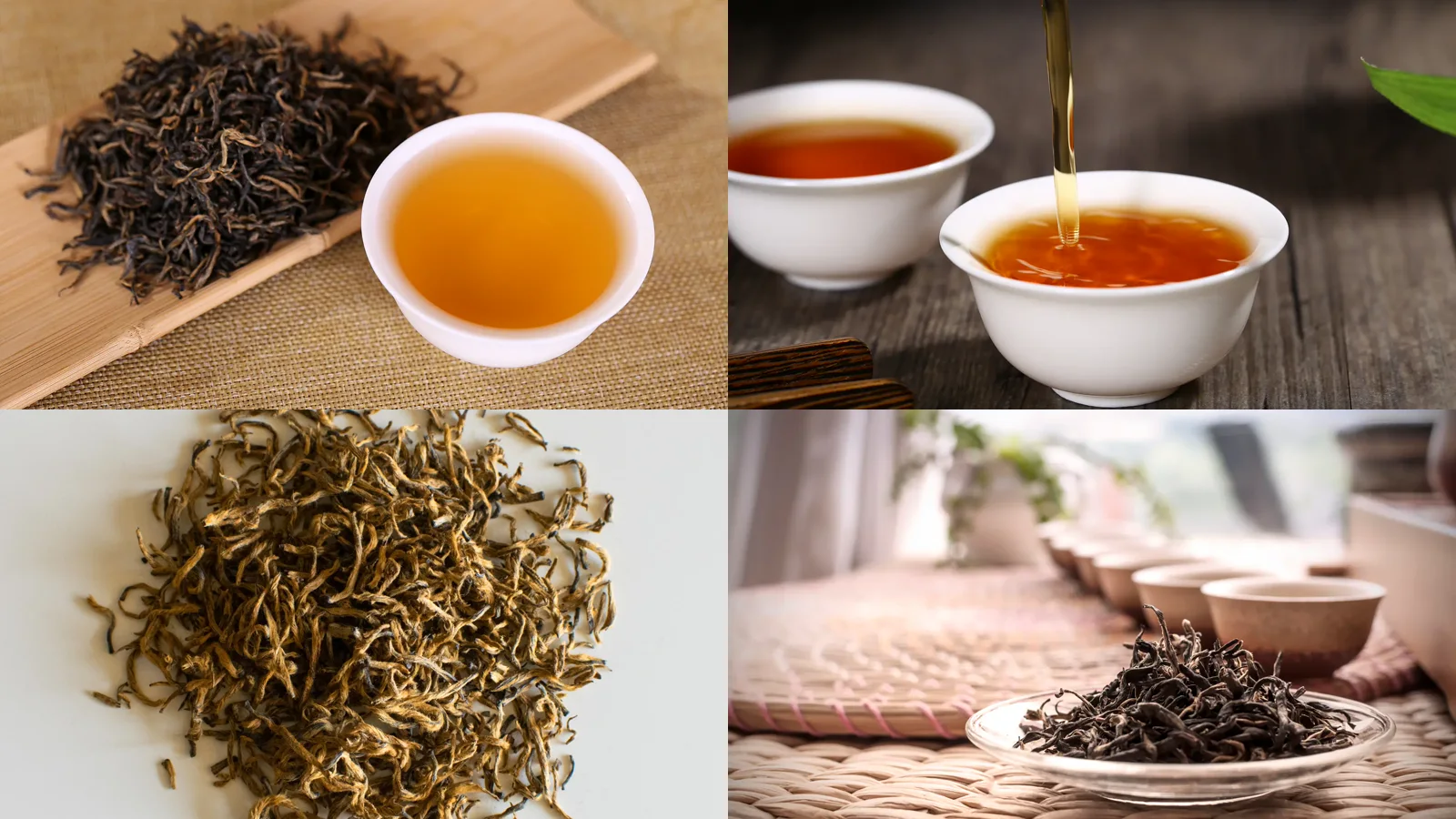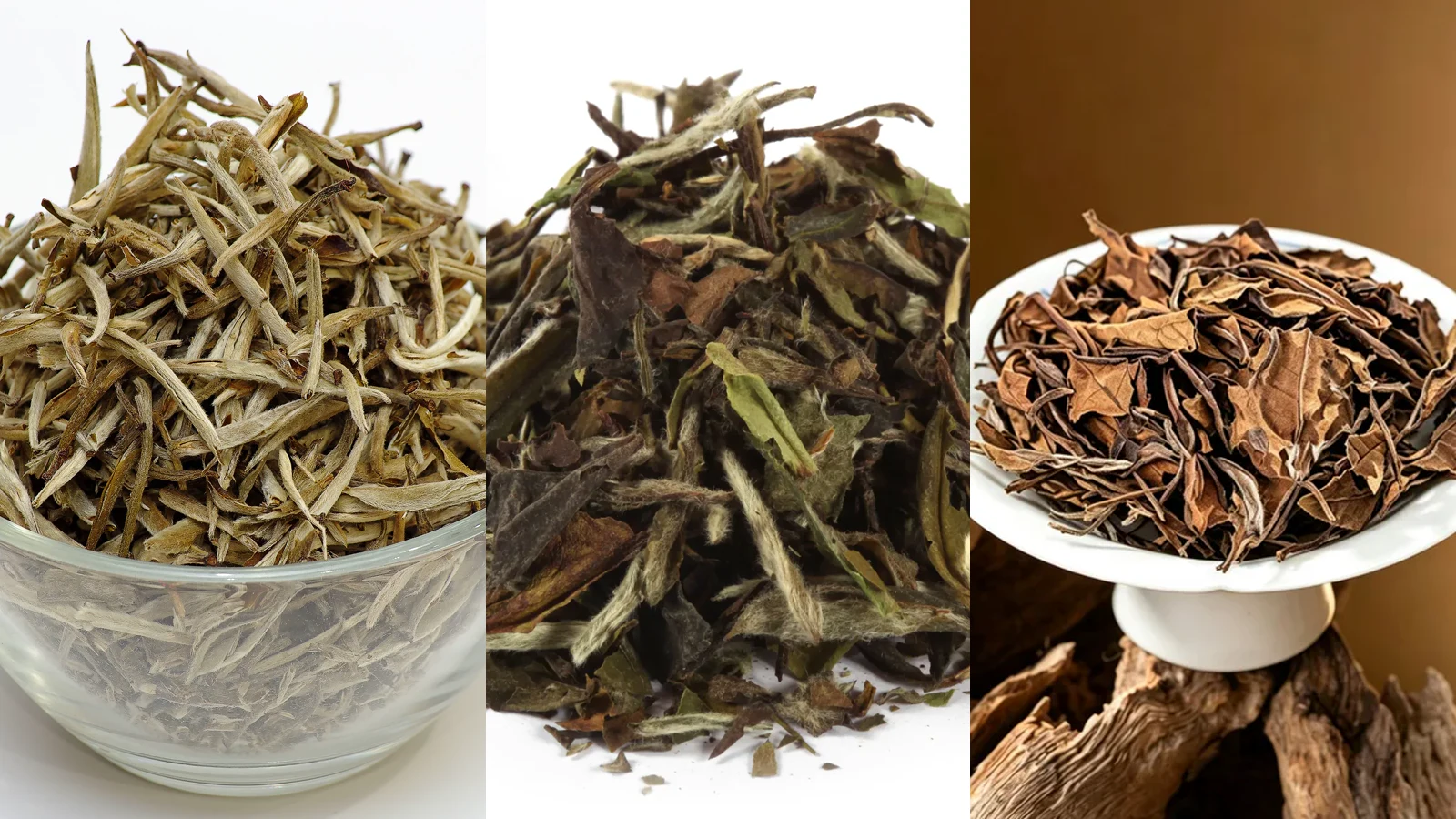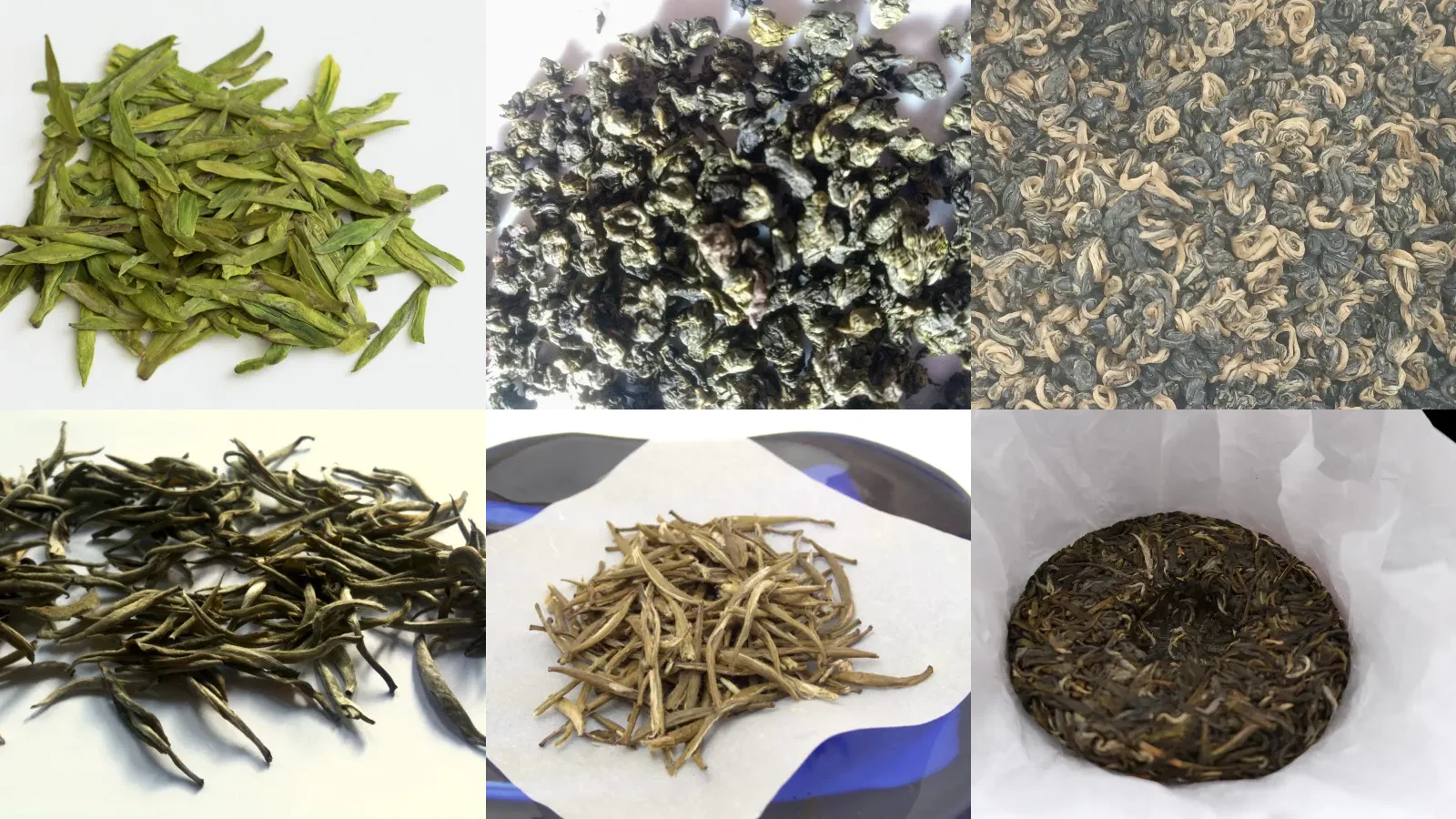
Six families, six classification checkpoints
Use the checkpoint to place a tea provisionally, then verify the named origin, cultivar, process and batch separately.
| Tea family | Classification checkpoint | What the family name does not prove |
|---|---|---|
| Green tea | Heat is applied early to limit enzymatic oxidation before the leaf is dried and shaped. | Freshness, low caffeine, sweetness or a protected place name. |
| White tea | Withering and drying do most of the structural work, with less handling than many other families. | That the tea is unoxidized, automatically delicate or improved by age. |
| Yellow tea | Early heating is followed by controlled moist resting or sealed-yellowing stages. | That any yellow liquor or yellow label belongs to this rare family. |
| Oolong tea | Withering, agitation, oxidation control, fixation and often roasting build a wide regional family. | One oxidation percentage, one aroma or one universal brewing method. |
| Black tea | The leaf is substantially oxidized before final drying; Chinese calls the family hong cha, red tea. | That it is the same category as hei cha, Chinese dark tea. |
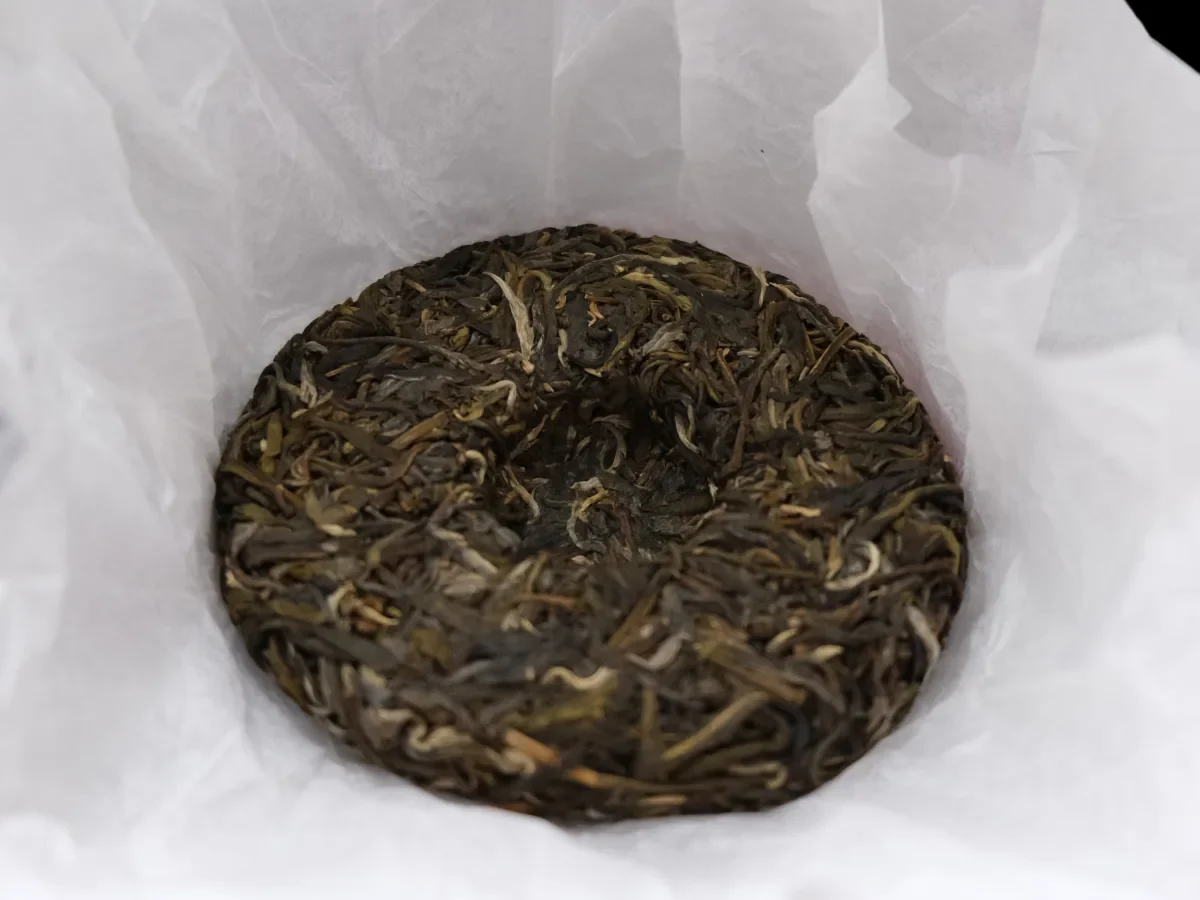
| Dark tea | Post-processing and microbial transformation continue after the leaf's initial manufacture. | That every compressed, brown or old tea is Pu-erh or beneficially aged. |
Begin with the plant, not the drink's nickname
ISO 20715:2023 establishes a classification for teas made from Camellia sinensis and explicitly excludes infusions made only from other herbs or fruits. That botanical boundary solves the first common error: chrysanthemum, ginger and jujube drinks can belong to Chinese hospitality and everyday life without becoming a seventh basic tea family.
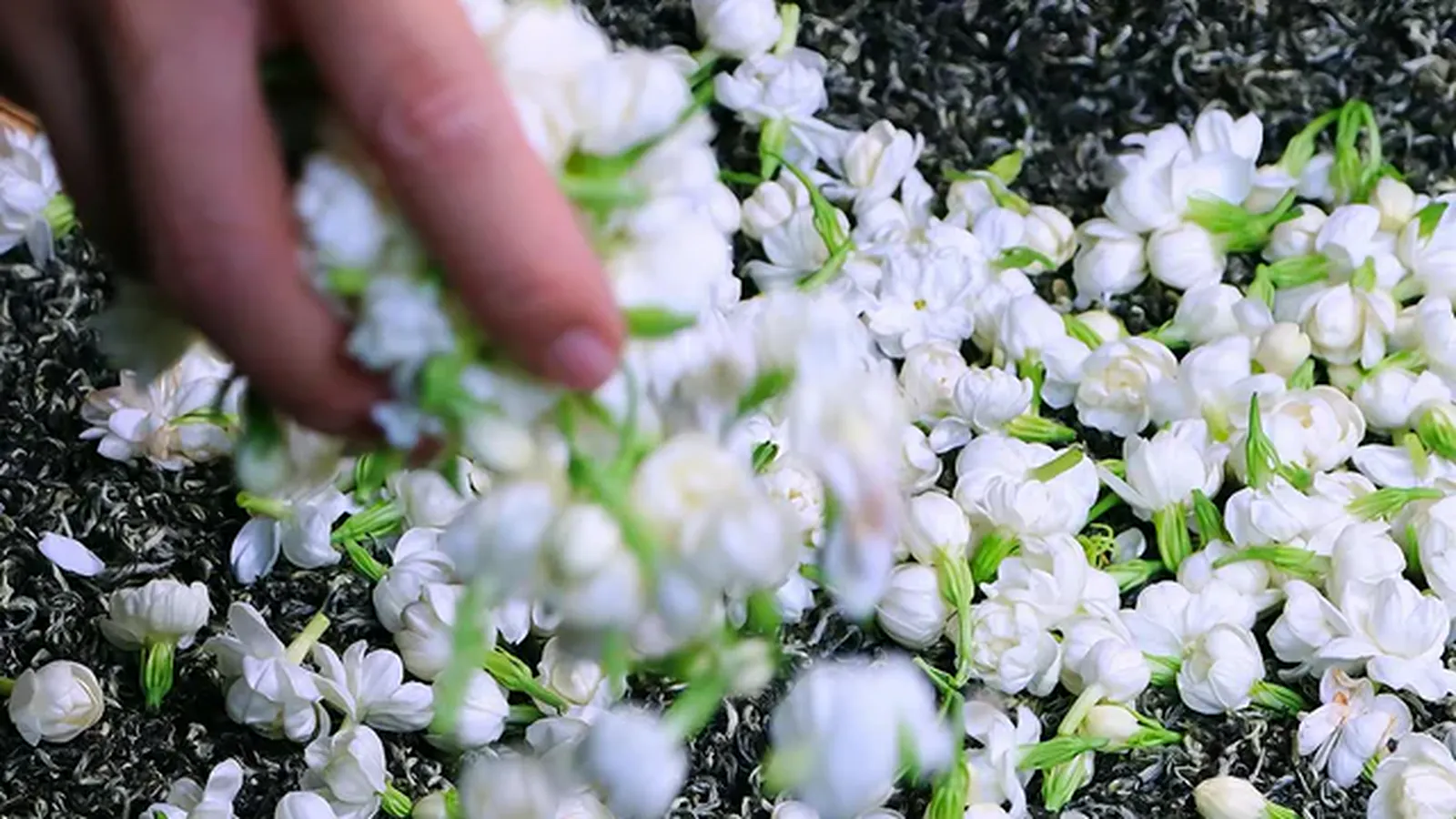
Jasmine tea requires a second distinction. It normally begins with a true base tea and gains fragrance through scenting, so the base leaf still has a family while the finished product also belongs in scented or reprocessed tea. Classification works best in layers rather than by forcing every cup into one box.
Color is the clue; process is the evidence
Leaf and liquor color can begin an observation, but they cannot finish an identification. Roasting can darken oolong. Storage can deepen white tea. Raw Pu-erh and green tea may both look fresh when young even though their production logic and expected development differ. A seller's color word is therefore evidence of naming, not proof of category.
The familiar least-to-most-oxidized diagram is also too neat. Yellow tea is not merely green tea with a little more oxidation, white tea is not simply a point between green and oolong, and dark tea cannot be placed at the end of the same fresh-leaf oxidation slider. The branches differ because heat, moisture, handling and later microbial activity enter at different stages.
Read a tea name from broad family to exact batch
A useful label moves from broad to specific: tea family, named place or style, cultivar or plant material when relevant, processing detail, harvest or production date, form and storage history. Each layer answers a different question. Oolong identifies a processing family; Wuyi rock tea narrows the regional tradition; a cultivar name narrows the plant material; roast and harvest details describe the batch.
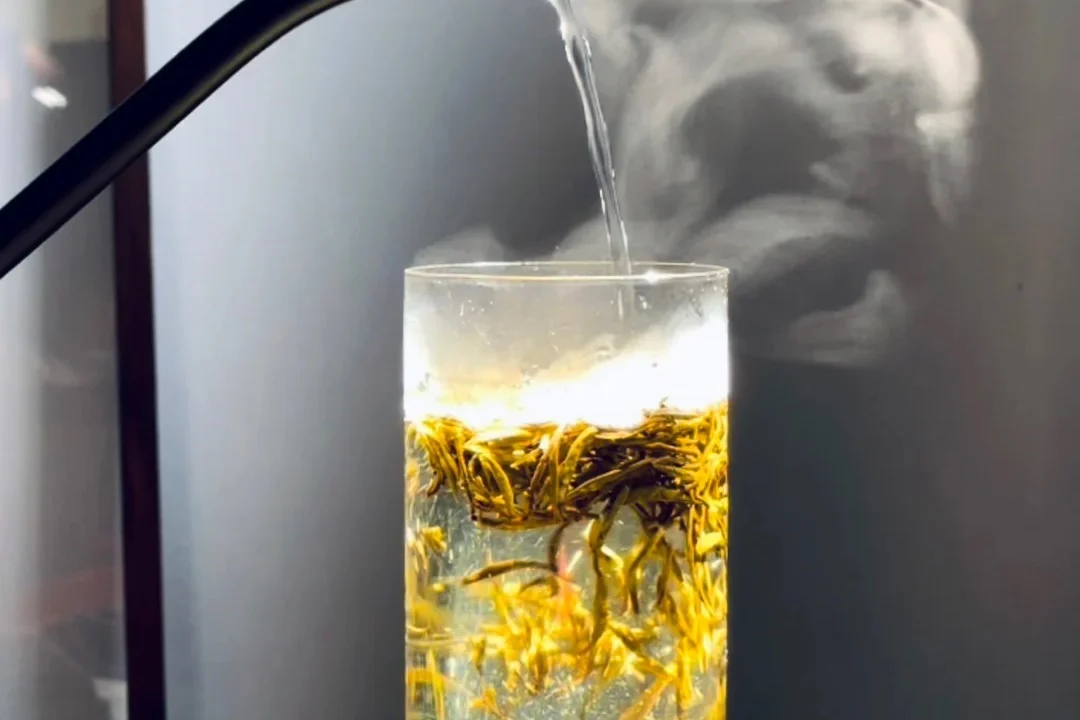
This order also exposes unsupported claims. A gold-colored bud does not authenticate Dianhong. A brown unglazed pot does not authenticate Yixing, and a compressed cake does not authenticate Pu-erh. Category guides should help readers ask for provenance rather than reward a visual stereotype.
Classification should preserve ambiguity when evidence is missing
Commercial labels such as blue tea, milk oolong, aged tea or flower tea can describe several different products. The correct response is not to guess from a photograph. Ask what plant is present, whether flavoring was added, which production stages were used and whether the claimed origin has documentation.
The same restraint applies to aging. A stored white tea remains white tea, and a roasted oolong remains oolong. Time changes aroma and chemistry, but it does not erase the production history that established the family. When storage or processing cannot be verified, describe what is visible and what the cup does instead of manufacturing certainty.
A family name is the beginning of a purchase, never the verdict
Once the family is correct, the questions become more demanding. Green tea can be spring-picked or later-picked, pan-fired or basket-fired, famous-origin or merely famous-shaped. Oolong can be lightly baked, repeatedly roasted, tightly rolled or long and twisted. Dark tea can arrive clean, humid, smoky, flat or contaminated depending on manufacture and storage. No classification table can convert those batch-level differences into a quality score. I distrust any shop that uses the grandeur of ‘six tea families’ to avoid showing the leaf, date, origin and storage that belong to the actual product being sold.
The practical move is to buy a small amount, brew it consistently and keep three photographs: dry leaf, liquor and opened leaf. That evidence will not prove a protected origin, but it exposes broken leaf, artificial-looking uniformity, poor opening and claims that contradict the material. The purpose of classification is not to make the buyer sound educated. It is to stop the buyer paying for a category word while receiving an anonymous batch.
Chinese tea survives because people do things with it
UNESCO’s record is useful because it refuses to reduce tea to chemistry. It joins planting, picking and hand processing to drinking, sharing, hospitality, weddings, temples and relationships between families and neighbours. That is the scale East Moment wants to preserve. A perfect taxonomy with no farmer, host, guest, kettle or table is only a warehouse catalogue. A warm family cup with no respect for the leaf’s name and origin becomes sentimental fog. The subject needs both craft precision and social life.
This is also why I will not call every elaborate tea table a timeless ‘Chinese tea ceremony.’ A Chaozhou gongfu session, a wedding act of respect, a shop demonstration and tea poured into a work thermos can all be Chinese tea practice. Their meaning comes from the people, place and purpose, not from how photogenic the tray looks. Classification should help us notice these differences rather than polish them into one export-ready performance. Precision is a form of respect because it leaves every practice with its own people and purpose.