Identify the drink before deciding how to use it
Four English labels can point to different plants, caffeine levels and risk questions.
| Drink type | What identifies it | Boundary to keep visible |
|---|---|---|
| Flower infusion | Named flower material such as chrysanthemum, rose or osmanthus is infused without tea leaf. | The word tea proves Camellia sinensis, caffeine content or a health effect. |
| Fruit or root infusion | Every ingredient—ginger, jujube, goji, citrus peel or another food—is listed and recognizable. | A family recipe is suitable for every body, medication or medical condition. |
| Liang cha | A specific southern herbal-drink tradition or commercial formula is named rather than translated as generic iced tea. | All formulas share ingredients, effects or preparation. |
| Scented true tea | A Camellia sinensis base remains present and has been scented or blended with aromatic material. | Jasmine tea and jasmine-flower water are interchangeable. |
A cultural tea can still be botanically not tea
ISO 20715 draws a clean production boundary: its six tea families are made from Camellia sinensis, and infusions made only from other herbs or fruits are outside the standard. That statement does not insult chrysanthemum, ginger or jujube drinks. It simply stops one English word from concealing different plants. The cultural meaning can remain rich while the botanical classification stays exact.
This distinction matters in ordinary decisions. A reader avoiding caffeine may choose a flower infusion and accidentally buy jasmine green tea. Another may assume every product called ‘herbal tea’ is caffeine-free even though a blend contains black tea. Read the ingredient list, not the front-panel mood. When ingredients are absent or translated vaguely, do not invent certainty.
The open flower is beautiful evidence, but only of the material in front of us
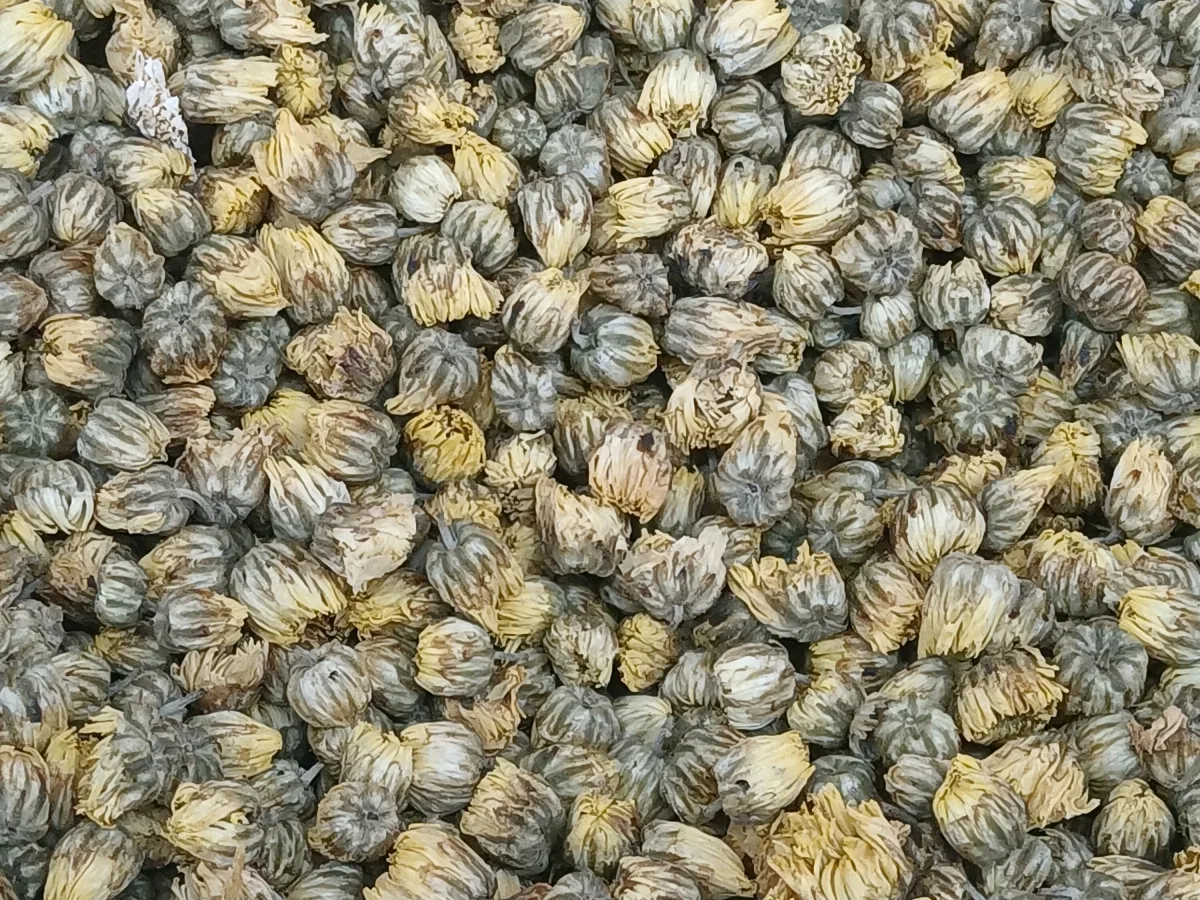
Dried chrysanthemum buds and flowers vary in size, color, closure and aroma. Hot water opens them into a visual record that readers can inspect. A photograph can show whole versus broken material, foreign debris, browning and how the flower rehydrates. It cannot identify a protected place, pesticide residue, sulfur treatment or medicinal suitability. East Moment captions the visible evidence and refuses to smuggle invisible conclusions into it.
Brew a small amount in glass, smell before sweetening and note whether the cup is clean, floral, bitter or stale. Honey, rock sugar, goji or jujube can be part of a household preference, but each addition changes the drink and may matter to someone managing sugar or allergies. A recipe should state its ingredients rather than presenting one family combination as a national prescription.
‘Cooling tea’ is a regional cultural system, not a cold beverage category
In Cantonese and southern contexts, liang cha refers to herbal preparations associated with ideas of heat, balance and seasonal discomfort. It may be sold in specialist shops, packaged commercially or prepared through family knowledge. Translating the term as cooling tea can mislead international readers into imagining iced tea or one fixed recipe. The temperature of service is not the classification.
The cultural concept deserves explanation, but historical use does not prove every modern health claim. Formulas differ, concentrated products differ from food-like home infusions, and ingredients can matter for pregnancy, medication or illness. My rule is strict: describe the tradition, list the formula when known and direct medical decisions to qualified care. Romantic vagueness is not cultural respect.
A family drink carries memory without becoming universal evidence
Many people remember ginger water on a cold day, jujube in a thermos, chrysanthemum after a heavy meal or a grandmother combining ingredients by sight. Those memories are part of Chinese everyday culture because care is communicated through making and serving. They should be written with warmth. They should also be written with the humility to say whose household, which region and what situation.
I can agree with the emotional truth—someone felt cared for, warmth returned, a familiar smell made home present—without claiming that the same cup treats a reader’s symptoms. The human voice becomes stronger, not weaker, when it stops pretending to be a medical trial. A precise personal story gives culture a face; a universal cure turns that face into advertising.
Loose flowers need the same evidence discipline as tea leaves
Buy from a seller who names the ingredient, origin at an honest level, packing date and storage guidance. Avoid material with unexplained moisture, insects, chemical odor or excessive discoloration. Keep it dry, sealed and away from light and strong smells. Small quantities are usually wiser because delicate aromatics fade and repeated opening introduces humid air.
Do not let perfect appearance become another trap. Uniformly bright flowers may photograph well while revealing little about handling. Natural variation can be normal; contamination can also be invisible. The correct conclusion from a picture is narrow. When residue, identity or safety matters, use supplier documentation and appropriate testing rather than visual confidence.
Keep the tenderness, remove the miracle language
I love the ordinary generosity of someone placing a few flowers or slices into hot water for another person. That gesture is worth recording exactly because it is small. It does not need detox claims, five-element charts or a promise to fix the reader. The cup already contains season, household habit, smell, color and care.
The strongest page therefore does three things at once: names the plant, preserves the human situation and states the limit. If a product cannot survive that clarity, it was depending on confusion. If a tradition can, clarity lets more people approach it without being misled.
Translate the ingredient before translating the belief around it
A useful English page gives the common English name, Chinese name when relevant, plant identity when confirmed and the form actually used—flower, fruit, peel, root, seed or prepared blend. Only then should it explain ideas such as heat, dryness, season or family care. Reversing the order leaves readers with an evocative theory and no idea what is in the cup.
Names also move across regions and shops. The same English phrase can refer to different formulations, while one ingredient may have several transliterations. When identity remains uncertain, photograph the package and narrow the claim. Guessing a plant from an attractive dried fragment is not expertise; it is a safety problem.