Read a scented-tea label in four layers
The layers prevent a flower name from hiding the tea underneath it.
| Layer | Useful evidence | What to refuse |
|---|---|---|
| Base tea | The label identifies green, white or another Camellia sinensis base and preferably its grade or place. | ‘Jasmine’ alone tells you what leaf was scented. |
| Scenting work | Fresh-flower handling, timing, moisture control, flower removal and drying are described as a process. | A large number of scentings guarantees balance or quality. |
| Added aroma | The seller states whether natural flowers, extracts or flavorings are used and the cup remains coherent over infusions. | A powerful dry aroma proves traditional scenting. |
| Finished cup | Fragrance, base-tea taste, bitterness and persistence are tested with a measured neutral brew. | Visible petals, pearls or an expensive tin prove the cup. |
The flower gives aroma; the tea base still carries the drink
English labels often make the flower the whole identity. In manufacture, the base matters just as much. Its plucking standard, firing, moisture and storage decide whether it can receive fragrance without becoming flat or bitter. A thin base covered by a loud top note may impress when the bag opens and collapse in the cup. A stronger base can keep texture and sweetness after the highest floral notes fade. That is why a serious buyer asks what tea was scented before asking how many flowers were used.
ISO’s classification keeps scented tea outside the six basic families as a further-processed product while still recognizing the family of the base. That layered answer is more accurate than inventing a seventh ‘flower tea’ family. It also protects readers from confusing jasmine-scented green tea with a caffeine-free jasmine blossom infusion. The names sound close; the plants, caffeine and production are different.
Jasmine scenting is a night-shift relationship between two harvests
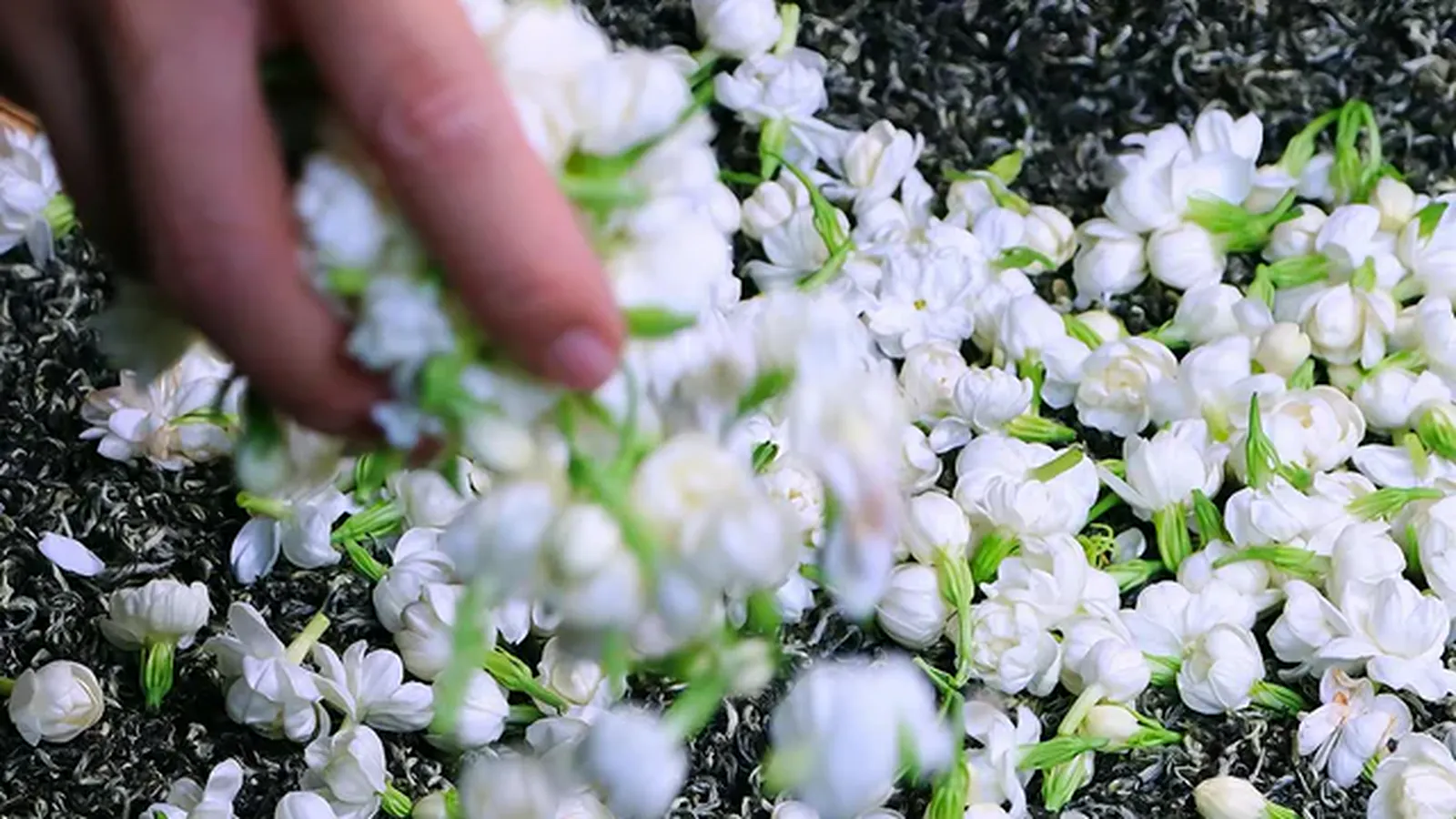
FAO’s record of the Fuzhou Jasmine and Tea Culture System matters because it connects tea gardens, jasmine cultivation and urban craft rather than treating fragrance as a factory additive. Fresh blossoms open on their own schedule. Workers must judge readiness, mix flowers with prepared tea, manage heat and moisture, separate exhausted flowers, cool or dry the leaf and decide whether another round is justified. The labor is repetitive because aroma absorption is biological and material, not a switch.
Chinese makers and drinkers often describe jasmine work as costly, exhausting and easy to romanticize after the fact. That human detail sharpens my judgment: the point of repeated scenting is not to print the largest number on a box. Each round must add clean fragrance without wetting, cooking or exhausting the base. Once balance is lost, more labor does not rescue the cup.
The most visible flower is often the least useful evidence
Traditional scenting usually removes much of the spent floral material. A few petals may remain or be added for appearance, but their visibility does not measure how deeply aroma entered the leaf. Pearls are also a shape, not a quality grade. Rolling can slow opening and create an attractive service ritual; it cannot repair poor base tea or artificial aroma. I distrust any product page that shows only white blossoms and perfect spheres while hiding dry leaf, opened leaf and the name of the base.
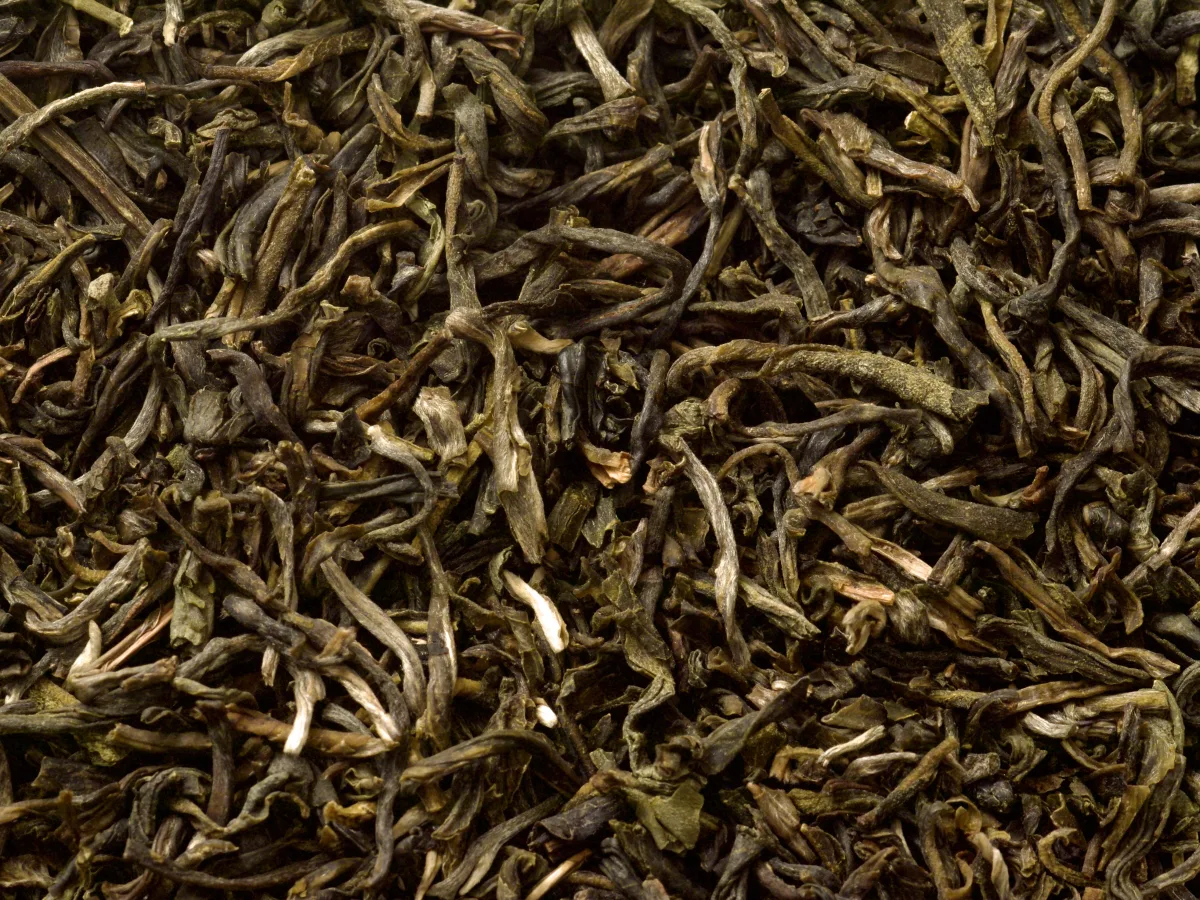
A better visual test uses three frames. First, inspect the dry leaf for breakage, excessive dust and added material. Second, photograph the liquor in white or clear neutral ware. Third, open the leaf and see whether the base looks coherent after brewing. These images do not authenticate Fuzhou origin, but they force the sales story to meet a real object.
Fragrance should travel with the tea instead of shouting once
Use water hot enough to open the base but not so aggressive that bitterness overwhelms the aromatic structure. Start with a measured dose, short contact and neutral porcelain or glass. Smell the warm leaf, lid, liquor and emptied cup separately. If the dry leaf is explosive but the liquor becomes hollow immediately, the aroma may be superficial, the base may be tired or storage may have damaged integration. If fragrance remains clean while sweetness and texture continue, the work is convincing.
Do not turn one tasting note into a universal definition. Some jasmine teas are cool and high, others fuller or more chestnut-like because the base differs. The test is not whether every cup resembles a stock description. It is whether the aroma feels clean, the base remains legible and the relationship survives more than one infusion.
Pay for disclosed work, not for perfume vocabulary
Ask for the base tea, production year, scenting location, whether flavoring is added and a sample size. A responsible seller may not reveal every workshop secret, but should be able to explain the product without hiding behind ‘ancient method’ or ‘imperial grade.’ Treat scenting-count claims as producer statements unless independently documented. Taste two products blind when possible; a lower count with a stronger base can beat a grander number.
My final position is personal and definite: good jasmine tea is not a lesser tea for people who dislike tea. It is one of China’s most demanding acts of transformation when the base and flower are allowed to remain distinct. Bad jasmine tea is equally obvious—perfume without structure. I will celebrate the first and refuse to flatter the second.
Fragrance disappears first when storage is careless
Scented tea is especially vulnerable to air, heat, light, moisture and neighboring odors. A beautiful paper packet beside spices or incense can lose its high notes while absorbing the room. Buy in quantities you will finish, keep the tea sealed in a clean opaque container and avoid repeatedly opening a large reserve. A stale scented tea may still smell from the bag yet produce a lifeless cup because volatile aroma and base freshness have not declined at the same rate.
This is why production date and package size matter more to me than a gift-box story. Scented tea should be drunk while the relationship between flower and leaf remains vivid. Hoarding it for an imagined prestige future usually preserves packaging better than pleasure.