Buy Keemun tea by three separate claims: protected origin, leaf style or grade system, and intended use.
Keemun aromais not a quality certificate. A fine tea for plain drinking must connect fragrance to body and a clean finish as the liquor cools; a broken or blending grade must deliver clean strength without dust, sourness or stale-cardboard character.
I do not trust a Keemun that needs a cloud of hot steam to remain impressive. Steam is flattering: it lifts every easy floral word towards the nose and lets a thin liquor borrow drama for thirty seconds. The cup at room temperature is less polite. It exposes cardboard, metallic water, detached perfume and the awkward moment when a famous aroma has no body beneath it.
That is why Keemun is the quietest and, to me, one of the most revealing famous Chinese teas. Phoenix Dancong can arrive like perfume; Da Hong Pao can arrive wearing fire. Keemun has nowhere useful to hide. Its pleasure is composure: fragrance settles into the liquor, briskness holds the middle, and the last cool mouthful is cleaner—not sadder—than the first hot one.
Keemun tea should become clearer as it cools
Keemun is the established English trade spelling of Qimen, the Anhui county associated with Qimen black tea. The name alone does not tell you whether a packet is a protected-origin product, which grading vocabulary it uses or whether it was designed for plain drinking, milk or blending.
Separate those questions before comparing prices:
| Claim | Useful evidence | What it does not prove |
|---|---|---|
| Origin | Named producer and production area; geographical-indication or other batch traceability | Fine grade, freshness or a guaranteed aroma |
| Style or grade | Traditional congou, Mao Feng, Xiangluo, Jinzhen, Hao Ya or an export grade, with the seller's definition | One universal quality rank across producers |
| Intended use | Plain drinking, small-vessel tasting, larger-pot service, milk or blending | Inferiority merely because the leaf is broken |
For a first purchase, choose a recently packed 20-50 gram sample from a seller who answers all three. Do not buy a large decorative tin because the description promises orchid, wine or Keemun fragrance. The fastest useful answer to “what does Keemun tea taste like?” is not a list of perfume notes: it is a clean hot-to-cool sequence with enough body to carry them.
Keemun and Qimen name the same tradition, but not every retail claim
Keemun preserves an older trade romanization; Qimen is the modern pinyin spelling. Historical accounts generally place the black-tea industry's development in the Qimen area in the 1870s, when methods influenced by Fujian were adapted in a region previously associated with green tea. Founder stories differ, so it is more accurate to describe a regional transformation involving farmers, technicians, merchants and refiners than to force one inventor narrative.
Anhui's DB34/T 1086-2026, Geographical Indication Product Quality Requirements — Qimen Black Tea was released on June 3, 2026, took effect on July 3 and replaced DB34/T 1086-2009. The national GB/T 13738.2-2017 covers the wider congou black-tea category. Together they show why congou black tea, Qimen product and Keemun on an overseas packet are related but not interchangeable claims.
The local standard is an authoritative product requirement, not a remote authentication service. A landscape photograph, dark twisted leaf or rose-like aroma cannot prove that an unknown packet came from the protected area.
Grade language is not one ladder
The most expensive-looking name is not automatically the best tea. Keemun labels mix product forms, processing directions, domestic names and export sorting vocabularies.
| Label you may see | What it usually communicates | The question to ask |
|---|---|---|
| Traditional congou / Gongfu | Refined Qimen black-tea tradition; gongfu here refers to skilled manufacture, not automatically gongfu brewing |
Which official or producer grade applies to this lot? |
| Mao Feng | A relatively long, visibly intact style in modern retail use | Is this a defined producer style or only a shape description? |
| Xiangluo | A curled or spiral-shaped modern style | What material and process make it different from this seller's Mao Feng? |
| Jinzhen / golden needle | A needle-like presentation, often with visible golden material | Does the appearance match the delivered tea, and what origin is documented? |
| Hao Ya A / B | Fine export-oriented Keemun terminology used by some sellers | Whose grading specification defines A and B? |
| FOP, OP, BOP and longer export acronyms | Leaf size and sorting language within export systems | Is this a house/export grade, and is the tea whole, broken or blended? |
These terms are useful only inside a declared system. Mao Feng and Hao Ya A cannot be placed on a universal ruler without knowing how the producer uses them. Broken leaf can be an intelligent choice for a brisk breakfast cup; it becomes a problem when a seller photographs long whole leaf and delivers dustier material while charging for the story.
Processing, not one magic molecule, makes the fragrance
Keemun belongs to the congou black-tea family: withering makes the leaf pliable, rolling disrupts cells, controlled oxidation develops black-tea chemistry, drying stabilizes the tea, and refining separates size and form. Each stage can change what reaches the cup.
A 2022 study compared natural, sun and warm-air withering. Gas chromatography, olfactometry, relative odor activity and sensory work found different aroma-active patterns among the three experimental samples. Sun withering was associated with higher floral and fruity expression in that set, while warm-air withering strengthened a roasty direction. This supports a practical conclusion - withering method matters - but it does not make sun withering universally superior or identify the method used for a retail lot.
A 2023 open-access study compared traditional congou with Jinzhen, Mao Feng and Xiangluo products. Across those samples, the four manufacturing approaches produced different volatile concentrations and proportions of flowery, fruity or sweet-associated compounds. The study is evidence that these are meaningful processing styles, not proof that one name always outranks another.
Research published in 2021 also found grade-related differences in volatile profiles, identifying 110 volatile components across its Keemun samples and using sensory evaluation plus chemometrics rather than aroma poetry alone. A 2026 Food Chemistry paper, volume 504, article 148016, examined glycosidically bound volatiles associated with Keemun produced in the Qimen region. These studies explain why fragrance can be distinctive; none turns Keemun aroma into a guaranteed checklist for every packet.
A famous fragrance must earn a middle and an ending
Keemun can suggest flowers, ripe or dried fruit, honey, cocoa, malt, warm bread, wine-like depth or restrained wood and smoke. Treat those as comparisons, not ingredients or compulsory notes.
The decisive structure is simpler. I want a Keemun to speak in complete sentences rather than throw attractive nouns at me:
- Hot: the aroma is clean and recognizable rather than perfumed, dusty or scorched.
- Warm: the liquor has enough body and sweetness to carry the aroma.
- Nearly cool: the finish stays clean; fragrance, fruit or cocoa may become clearer, while sourness and stale storage become harder to hide.
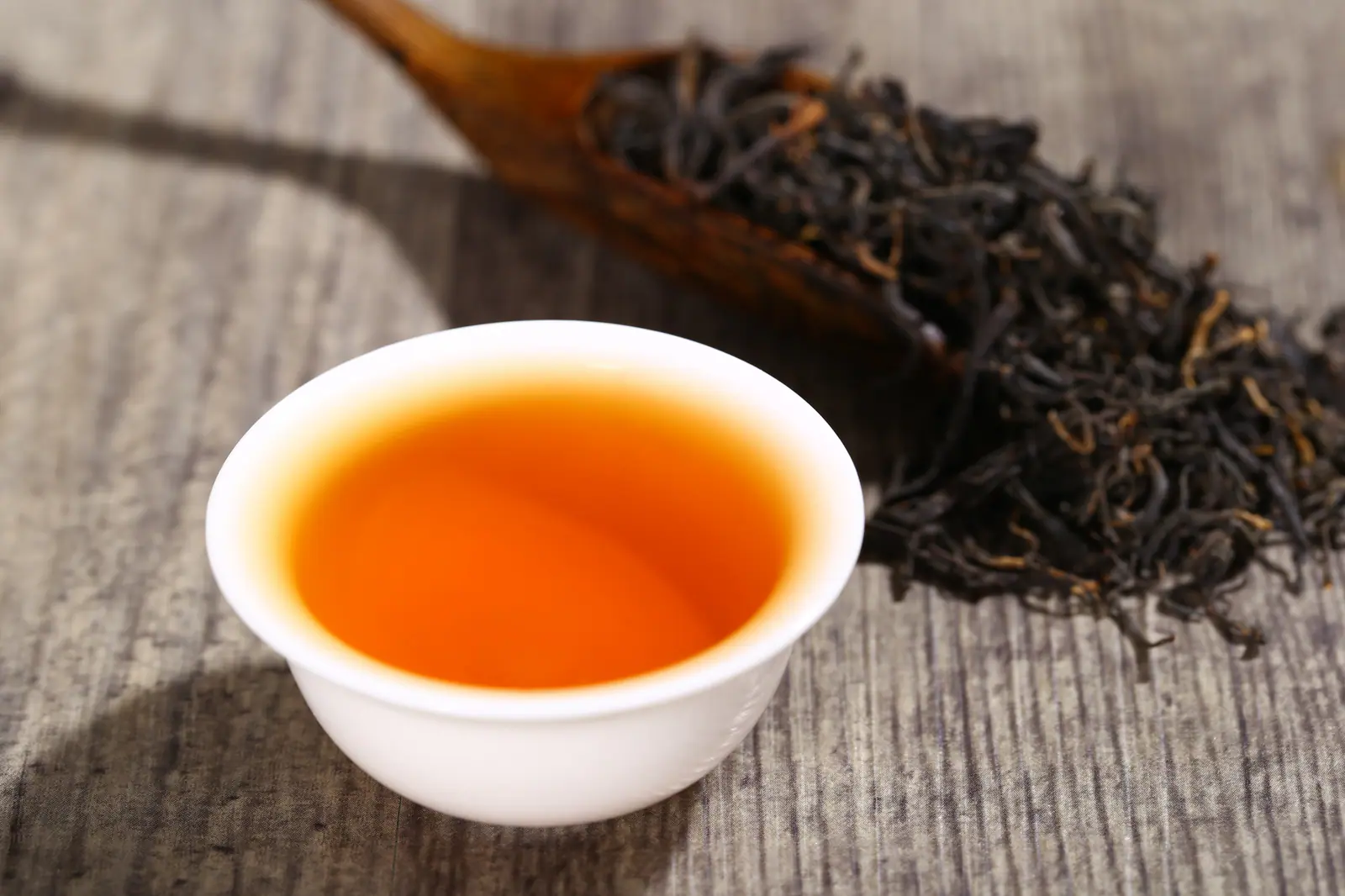
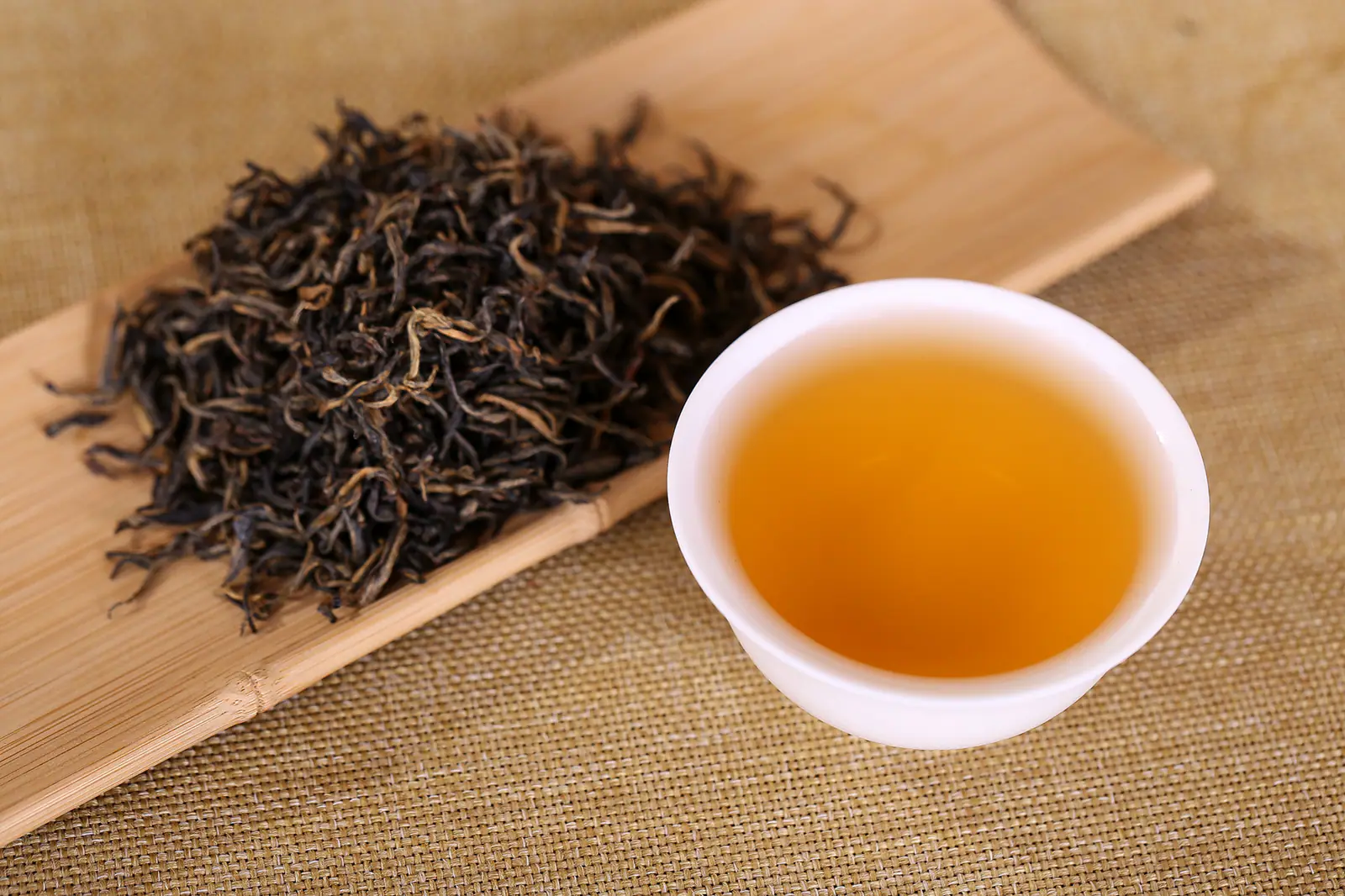
Color is not a grade chart. Cup depth, lighting, water, dose, leaf size and steeping time all change darkness. A brilliant copper-red cup can still be thin, stale or rough.
Run one controlled two-sample test
Do not compare one tea brewed stronger or several seconds longer and call the difference a grade result. Use two samples with a similar intended use and hold the controllable variables still.
Set the test
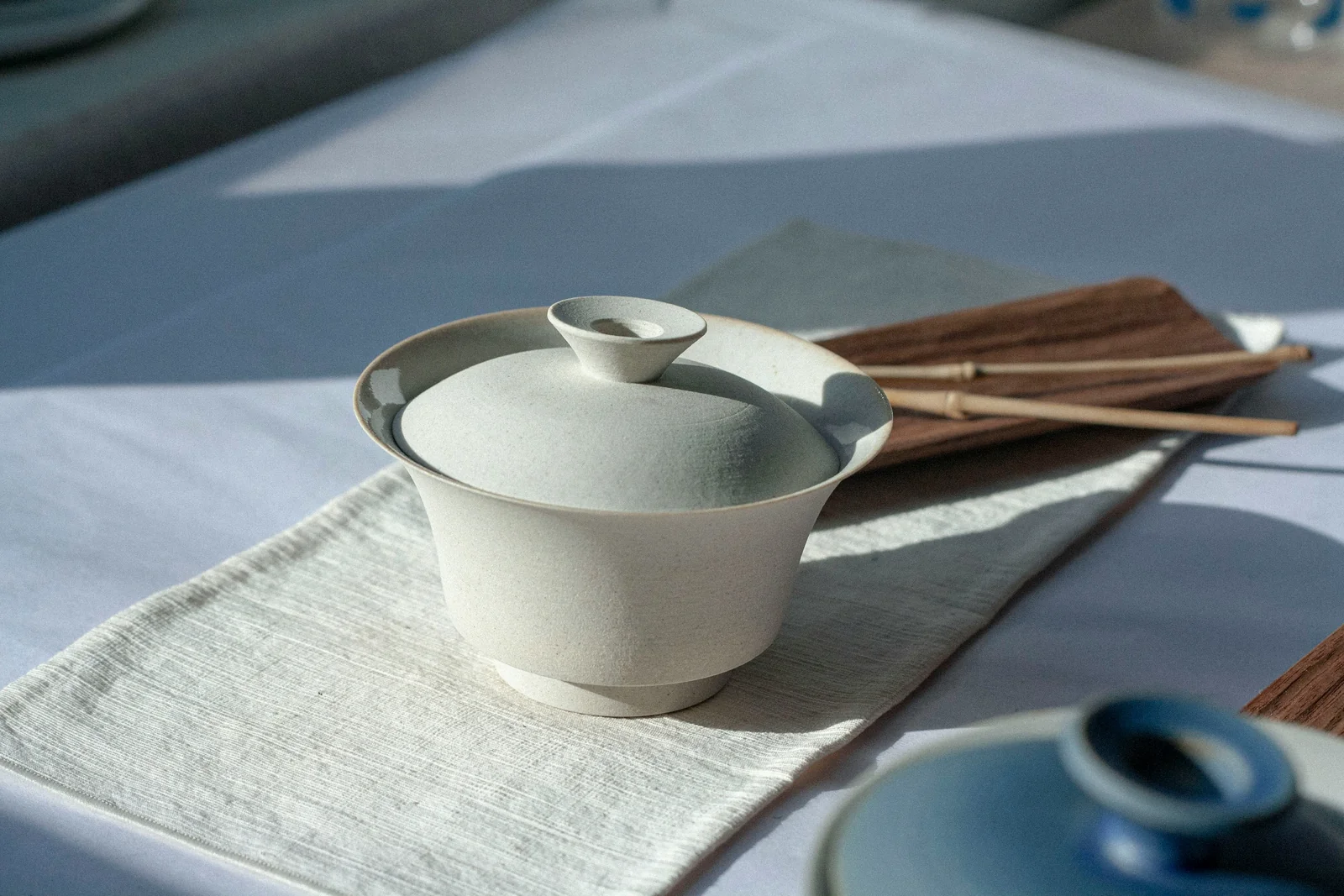
- Use two neutral porcelain gaiwans or covered cups with the same working volume.
- Use the same water, freshly boiled and cooled to 95°C / 203°F.
- Weigh 4.0 grams per 100 milliliters of working volume for each sample.
- Start timing when water first touches the leaf and record when each decant finishes.
- Pour completely into equal cups; do not let one gaiwan continue steeping between comparisons.
- Keep milk, sugar, food and scented rooms out of the first test.
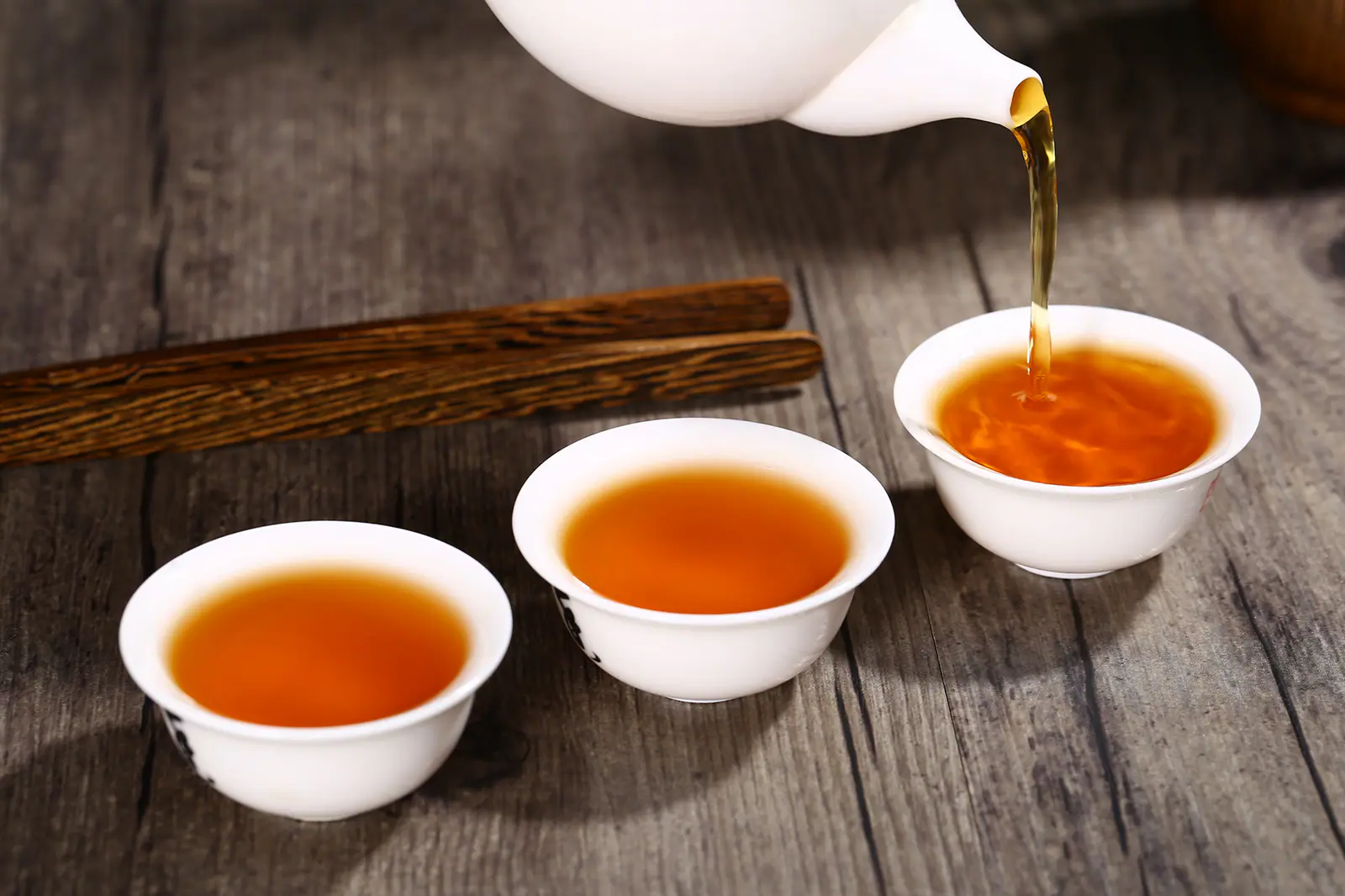
Read three infusions
Start at 15, 25 and 45 seconds. These are editorial starting points, not a universal factory protocol.
| Infusion | Primary question | Passing evidence | Warning |
|---|---|---|---|
| One | Is the opening aroma clean? | Floral, fruit, malt, cocoa or warm-toast directions without perfume or cupboard odor | Loud fragrance over watery liquor |
| Two | Does the tea have a middle? | Body, sweetness and briskness remain connected | Rough dryness or color with no flavor |
| Three | Does it finish rather than collapse? | A clean, changing aroma and recognizable finish | Hot water, sourness or metallic thinness |
| Nearly cool liquor | What was heat hiding? | Clean aftertaste; no stale paper or dirty storage | Cardboard, dust, sour fruit, metal or persistent throat roughness |
If the samples have visibly different leaf sizes, record that fact. Broken leaf exposes more surface area and usually extracts faster. The same recipe is still useful as a screening comparison, but it tests how the products behave under equal conditions, not which would win after individual optimization.
Optimize only after the equal test
- If a fine whole-leaf tea is clean but quiet, increase the dose by 0.5 gram next session before extending every infusion.
- If broken leaf becomes rough immediately, shorten contact time first; do not lower dose, temperature and time together.
- If both teas are flat, retest with fresh low-odor water and clean porcelain before blaming both packets.
- If one sample remains sour, dusty or cardboard-like under the retest, reject it rather than brewing around a storage fault.
Choose a recipe by purpose
Fine or whole-leaf tea for plain drinking
Use 4-5 grams per 100 milliliters, 90-95°C / 194-203°F water and a complete first decant at 15-25 seconds. Add time gradually. A gaiwan makes cooling aroma and successive infusions easy to compare.
Larger-pot cup
Use 3 grams per 250 milliliters at about 95°C / 203°F for 2.5-3 minutes. Taste before adding milk. If the liquor is already dry at 2.5 minutes, a longer steep will not restore missing fragrance.
Broken grade or blend
Begin at the shorter end of the larger-pot recipe and strain completely. A clean, brisk broken grade may work better with milk than a delicate aromatic whole-leaf tea. That is fitness for purpose, not a lower cultural status.
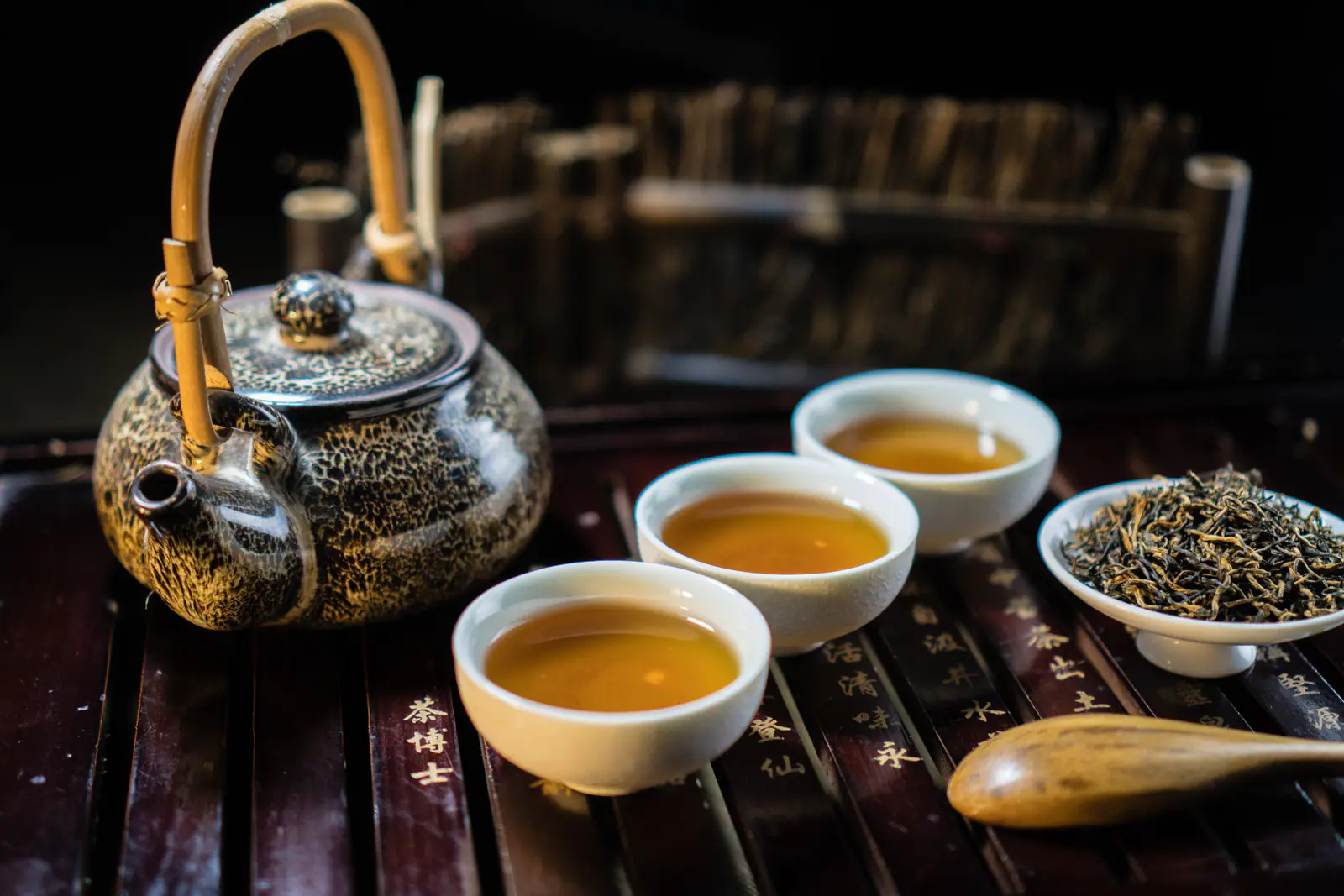
Diagnose the cup before changing it
| Symptom | Likely possibilities | Next controlled move |
|---|---|---|
| Fragrant steam, thin liquor | Low dose, surface aroma or weak material | Add 0.5 gram next session; reject if the middle remains empty |
| Immediate rough dryness | Broken leaf, long contact, hard water or processing fault | Shorten time, then retest with softer water |
| Dust or cardboard | Open storage, odor transfer, old packaging or low-grade dust | Retest in clean porcelain; reject if it persists warm and cool |
| Sourness as the cup cools | Water, vessel, storage or processing problem | Change only water/vessel; reject persistent sourness |
| Metallic edge | Water chemistry, vessel residue or tea fault | Use fresh water and neutral porcelain |
| Dark color, little aroma | Over-extraction, stale tea or a strength-oriented blend | Shorten time; do not add more leaf until storage is ruled out |
| Fine aroma, clean body, short finish | Young/simple style or under-extraction | Extend the next infusion slightly and judge continuity |
Smell the cooled opened leaf for sourness, smoke contamination or cupboard odor. Observe whether it opens evenly. Do not infer Qimen origin, cultivar, grade or age from spent-leaf color.
Freshness is a purchase question, not a printed slogan
Black tea is more storage-tolerant than tender green tea, but it is not immortal. A 2021 metabolomics study specifically examined how storage time related to Keemun metabolites and taste quality; that research supports treating storage as a quality variable. It does not justify one universal household shelf life for every package, moisture level or seal.
Ask for:
- harvest or production year;
- packing date and seal type;
- whether the tea was stored in bulk before retail packing;
- how an opened packet should be closed;
- the producer's recommended drinking window.
Store Keemun sealed, dry, dark and away from coffee, spice, incense and perfume. Prefer several small sealed packs to one half-empty decorative tin. If adding more leaf creates only darker color and tannin, the missing top aroma is probably not coming back.
Ask seven questions before paying a premium
- What exact origin is claimed for this batch? Protected Qimen product, wider Anhui tea, Keemun-style tea or a disclosed blend?
- Which product or grade system is being used? Local standard, producer grade or export sorting vocabulary?
- What does Mao Feng, Xiangluo, Jinzhen, Hao Ya or the acronym mean for this seller?
- Is the tea intended for plain drinking, a larger pot, milk or blending?
- Do the listing photographs show the actual delivered leaf form?
- What are the production and packing dates?
- How was the finished tea sealed and stored?
Reject or downgrade the offer when:
Keemun aromais used as proof of protected origin;- the longest export acronym is presented as a universal quality crown;
- a Qimen premium has no producer, batch or area traceability;
- the leaf photograph does not match the delivered grade;
- the seller gives perfume notes but no production or storage information;
- a comparison changes dose, vessel or timing between samples;
- a giant gift tin costs more than a useful quantity of well-described tea.
Compare black teas without erasing their differences
Dianhong often brings larger-leaf material, malt, honey and a fuller straightforward sweetness. Jin Jun Mei is a modern tender-bud product with Tongmu associations and a different claim problem. Lapsang Souchong requires smoke process, origin and product type to be separated.
Keemun's useful place in that comparison is not the most fragrant. It is the possibility of fine lift, brisk structure and a composed cooling finish in the same cup. Buy 15-25 gram samples at a similar price, brew them under equal conditions and decide which structure suits your actual drinking.
Leave one honest cooling-cup record
Keemun became internationally important because it could be both distinctive on its own and useful in blends. That history should make the category easier to understand, not easier to romanticize.
A serious Keemun description tells you where the tea comes from, what product or grade language means, and what the leaf was made to do. A serious cup keeps working after the first aroma: fragrance becomes body, body becomes finish, and cooling exposes cleanliness rather than stale storage. If the seller or the tea cannot complete that sequence, the words Keemun aroma are decoration.
Write three lines before the cup is gone: what rose from it hot, what held together warm, and what became impossible to ignore near cool. Add the exact label language and brewing numbers, then post that compact record to Moments. Return after the packet has been open for two weeks and repeat it. Keemun is one of the rare teas where a short cooling record can tell you more than a long origin romance.
Continue through the Chinese black tea collection, review the Chinese tea brewing guide or return to Chinese tea culture.