A glass teapot is useful because it refuses to hide the brew. You can see leaves open, stems rise, color deepen and the last infusion thin out. That transparency is not automatically beauty. It is a practical tool for learning what heat and time are doing.
Why use a glass teapot for Chinese tea?
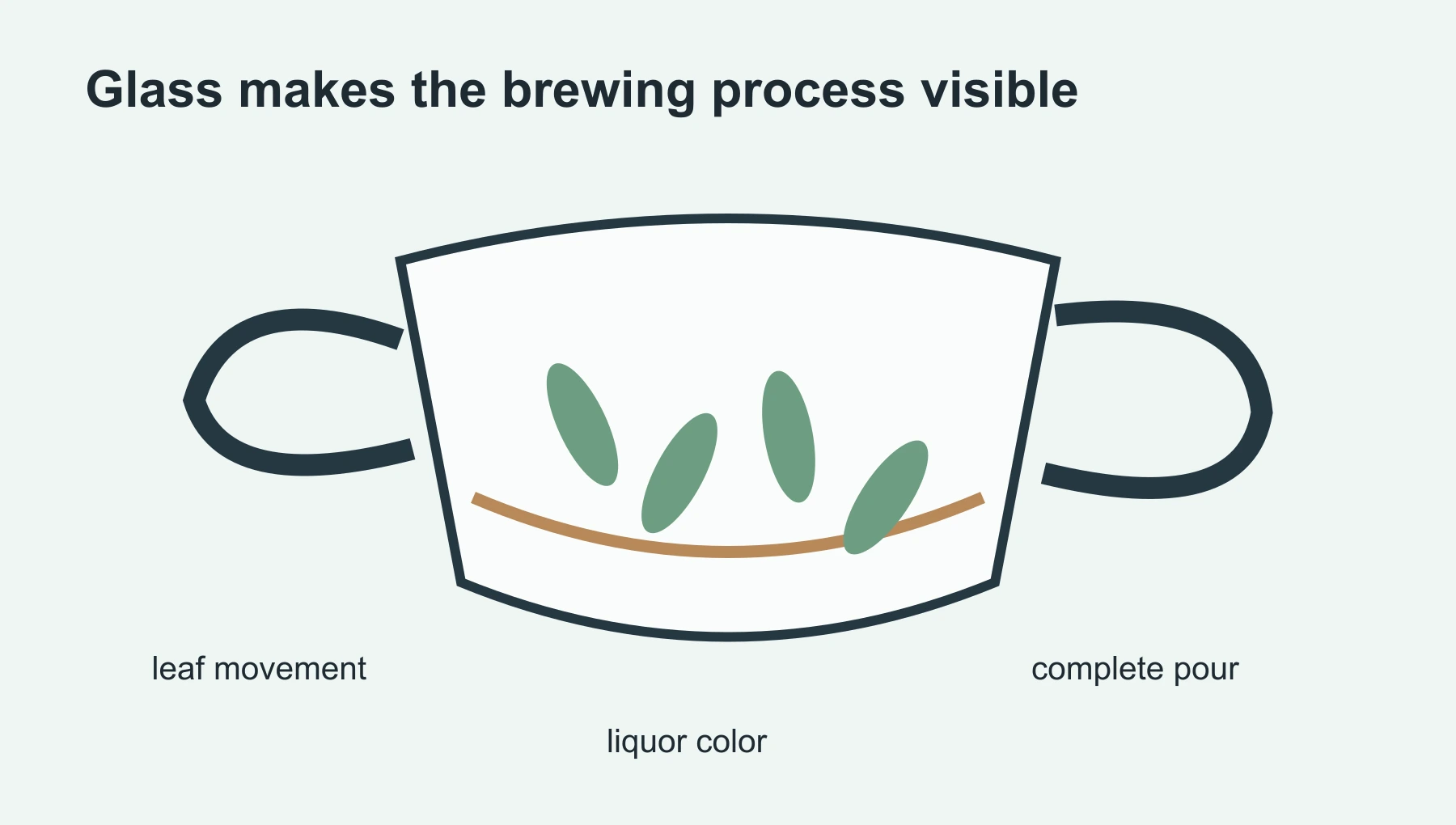
Glass makes three things visible: leaf movement, liquor color and sediment. This is especially helpful for green tea, white tea and flowering tea, where a new drinker may not yet know what “opening” or “softening” looks like.
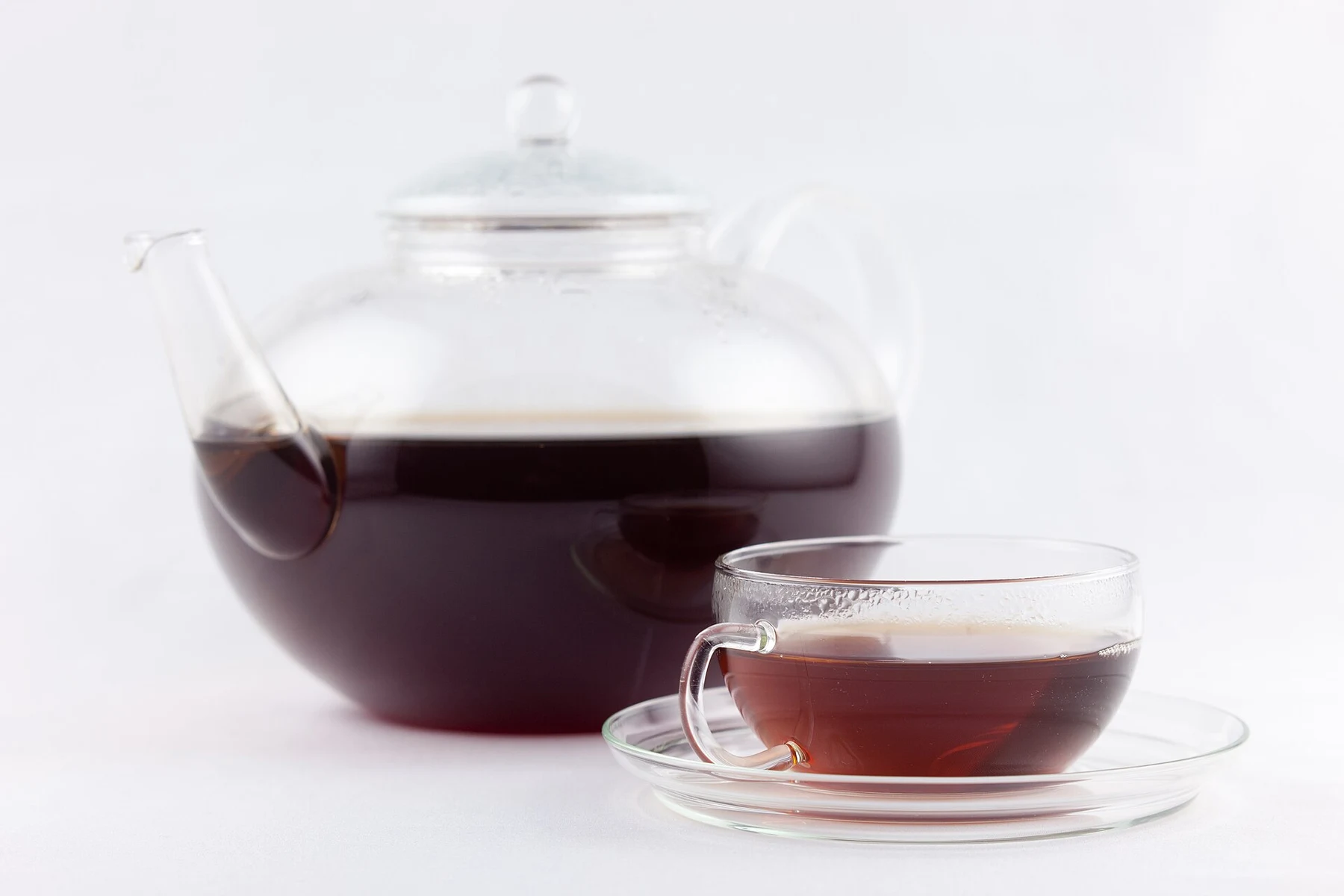
The clear body also exposes mistakes. A pale tea may be under-extracted, or it may be intentionally delicate. A dark tea may be concentrated, roasted or simply left too long. Glass shows the result; it does not explain the cause. Taste still has to decide.
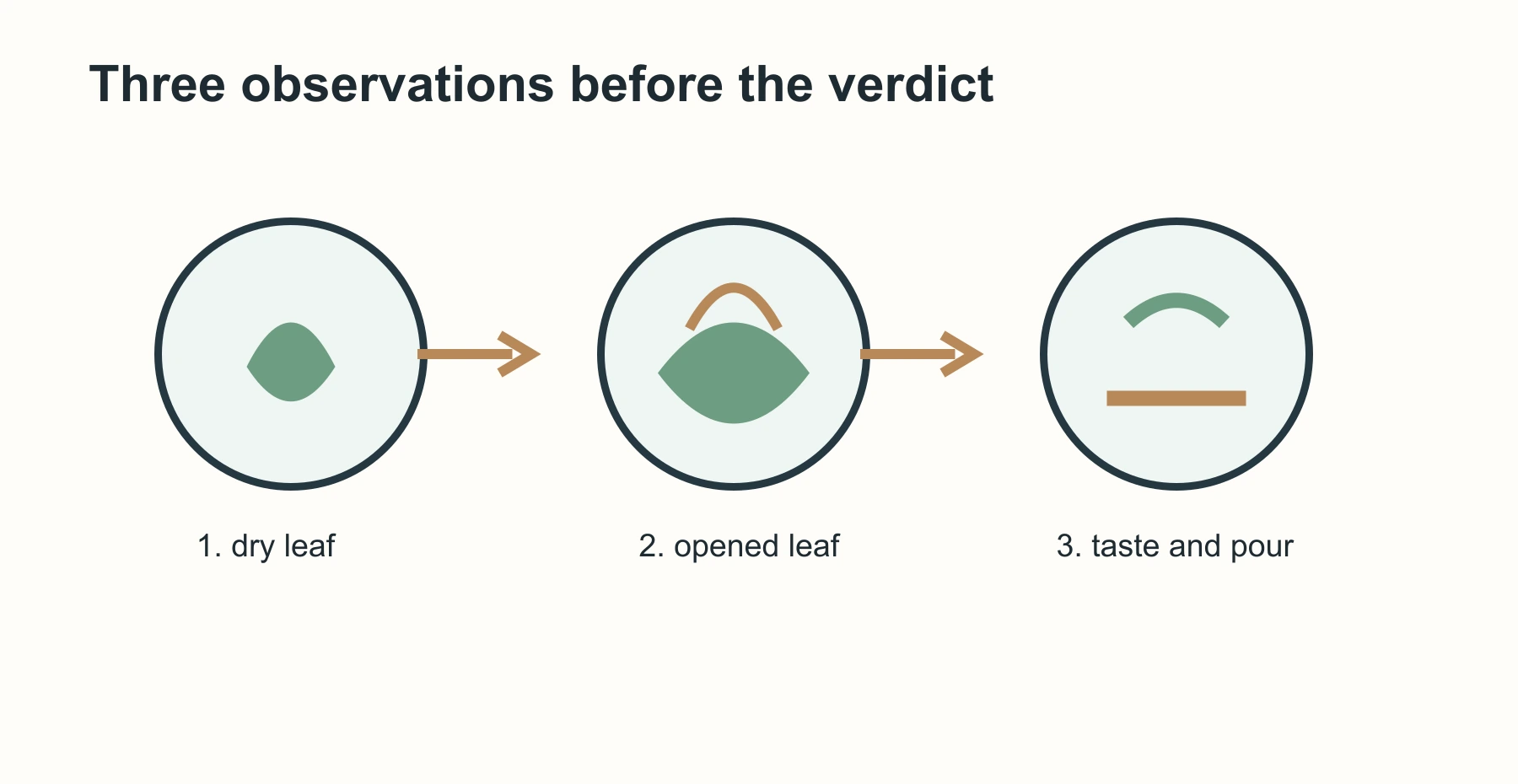
This is the reason I recommend glass to people who are still learning to describe tea. The vessel gives the eye a sequence to report: the dry leaf sinks or floats, the leaf opens, the liquor changes, and the final pour either clears the pot or leaves a concentrated remainder behind. It does not turn a beginner into a taster, but it gives the beginner better evidence to bring to the first sip. When that question has been answered, porcelain or clay may become the better next vessel; transparency is a method, not a permanent identity.
What to look for before buying
| Feature | Better sign | Question to ask |
|---|---|---|
| Glass type | Heat-resistant glass identified by the maker | Is it intended for boiling water or only warm tea? |
| Handle and lid | Stable grip, lid that does not slide during a pour | Can you pour one-handed without touching hot glass? |
| Spout | Clean flow without a long drip | Does the last stream land on the tray? |
| Filter | Removable, easy to rinse and large enough for leaves | Will whole leaves clog it? |
| Working volume | Measured usable capacity, not only decorative size | How many cups does it actually serve? |
| Base | Stable and insulated from sudden cold contact | Can it move from kettle, tray and table safely? |
The capacity printed on a box may include headspace. Measure the working volume with water. Our Chinese tea hub and Chinese teapots guide explain why usable capacity matters more than a nominal number.
Which teas suit glass?
Green tea
Glass is excellent for watching flat leaves, buds and tender stems open. Use water below a full boil when the tea is delicate, and avoid judging quality by the brightest green color alone.
White tea
Silver needle and other white teas make a beautiful visual case: buds float, settle and expand slowly. The image can tempt you to over-brew. Taste the liquor before adding more time.
Flowering tea
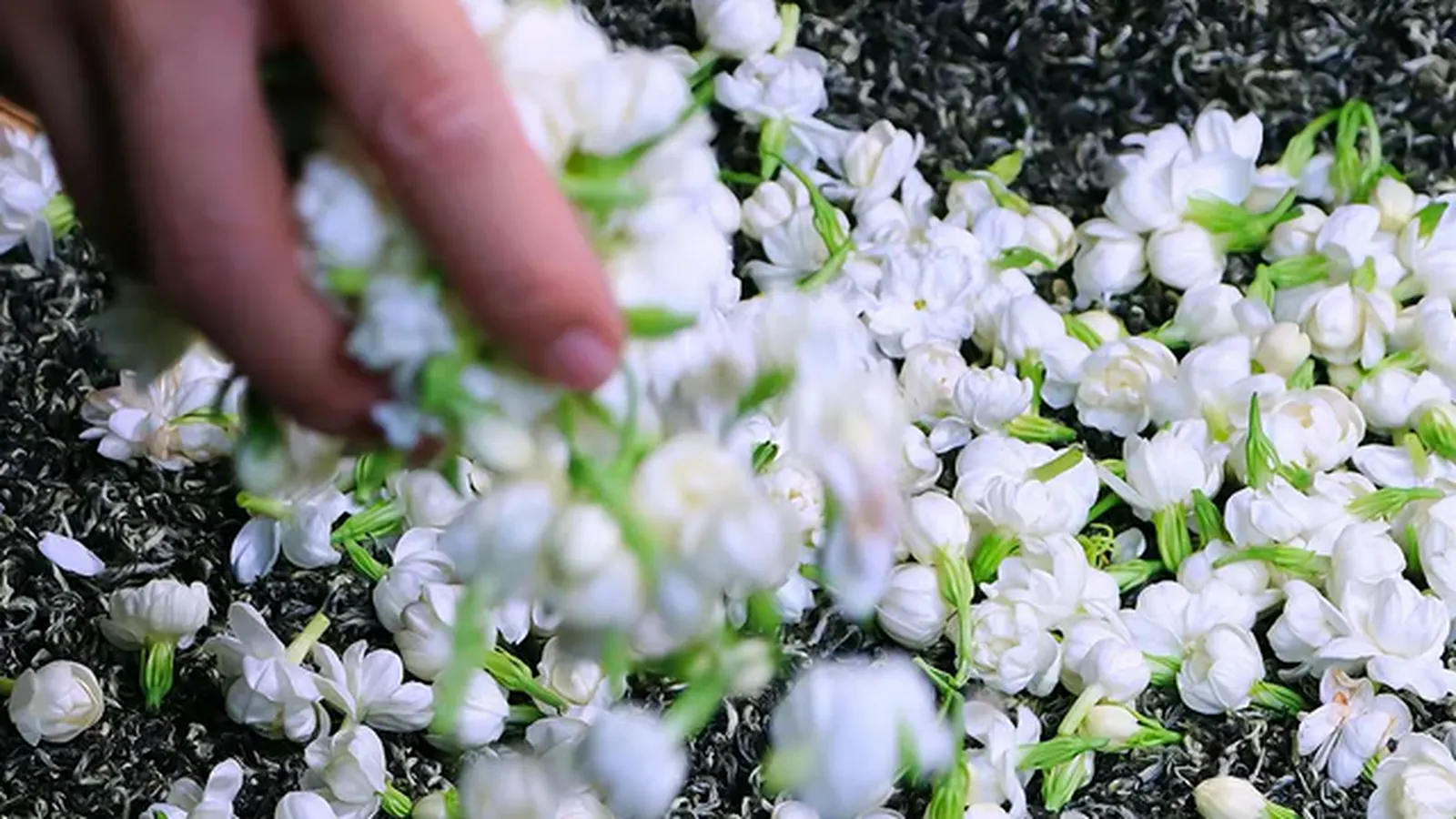
The visual performance is part of the point, but a flower bundle should still taste clean. A large vessel can make a decorative tea seem weaker than it is because the dosage is designed for a shared pot.
Oolong and black tea
Glass can work well for rolled oolong, black tea and lighter roasted teas when you want to observe the leaf. It is less forgiving of temperature mistakes because the vessel does not hold heat like thick clay. Adjust water and timing rather than blaming the material.
A simple glass-teapot brewing sequence
- Warm the pot with hot water, then empty it.
- Add a measured amount of tea.
- Pour water at a temperature suitable for the leaf.
- Watch the first change: float, sink, curl, bloom or color release.
- Pour completely so the leaves do not continue stewing.
- Compare the second infusion with the first.
The complete Chinese tea brewing guide explains water, dose and timing in more detail. Glass is a learning instrument, not a shortcut around those decisions.
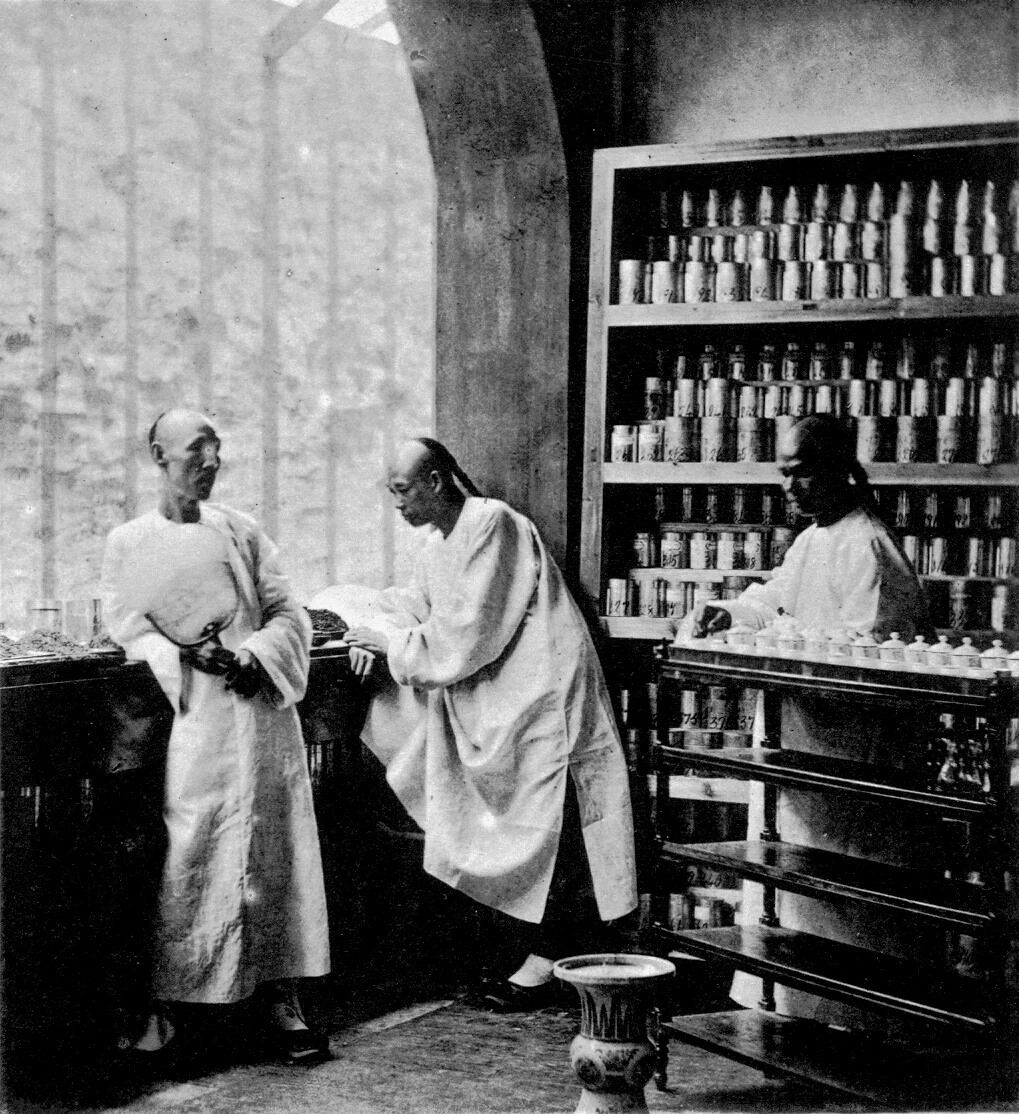
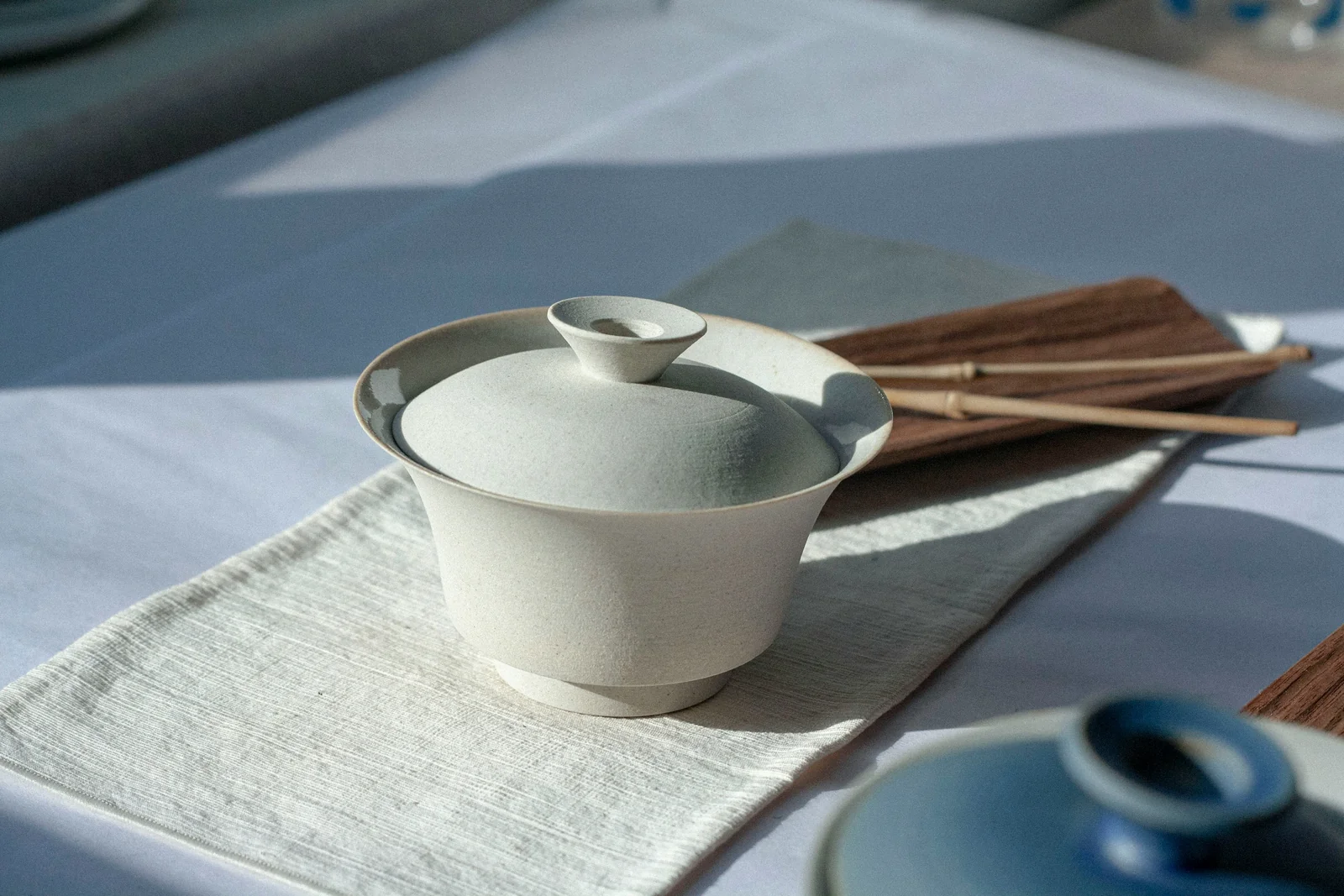
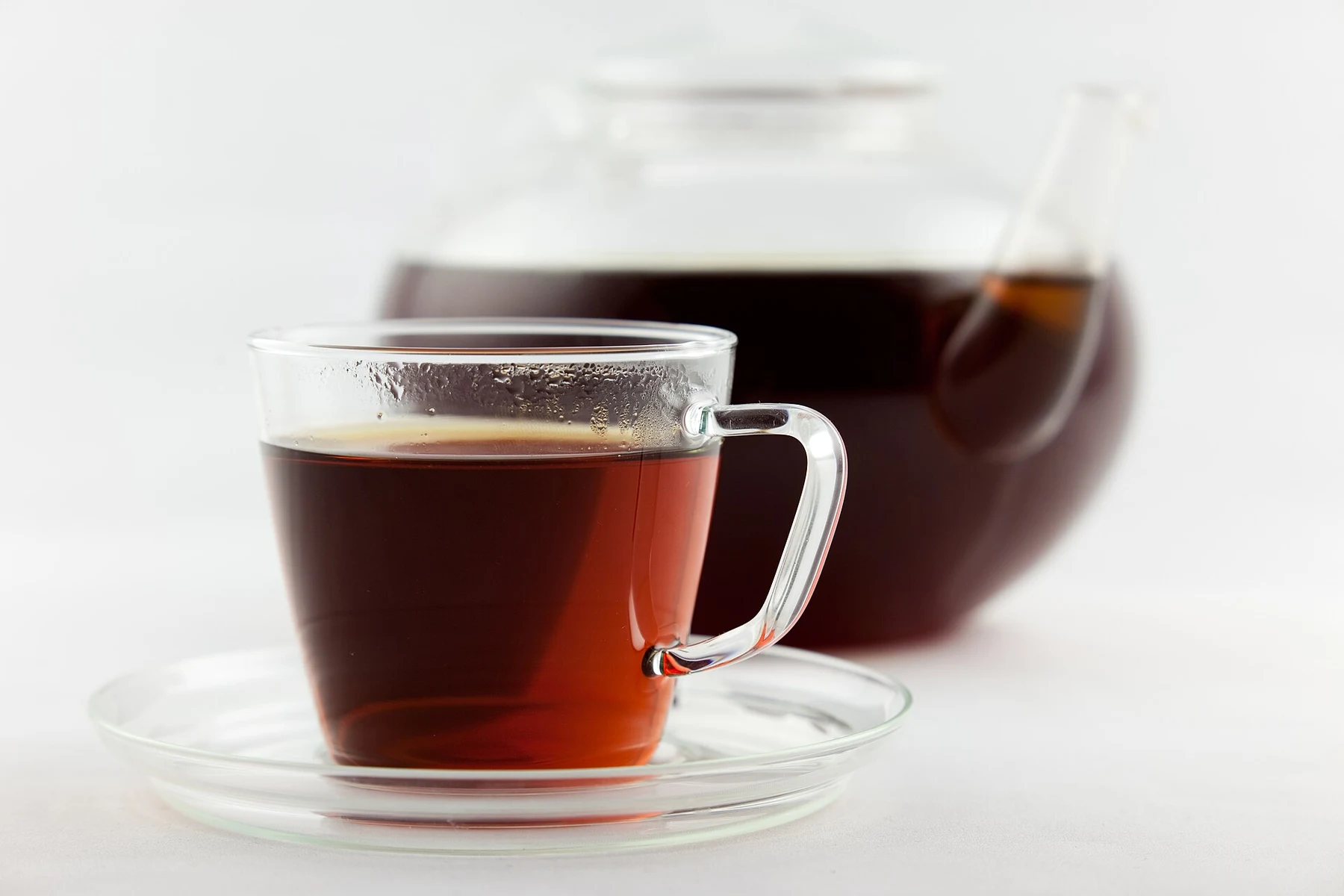
The photograph is not proof that every glass vessel is heat-safe. It does show the visual reason people choose glass: the leaves and liquor remain part of the brewing record instead of disappearing behind opaque walls.
Glassware is often discussed as a solo novelty, but Chinese tea is also a social practice. A shared table changes the useful size of the pot, the speed of pouring and the meaning of “finished.”
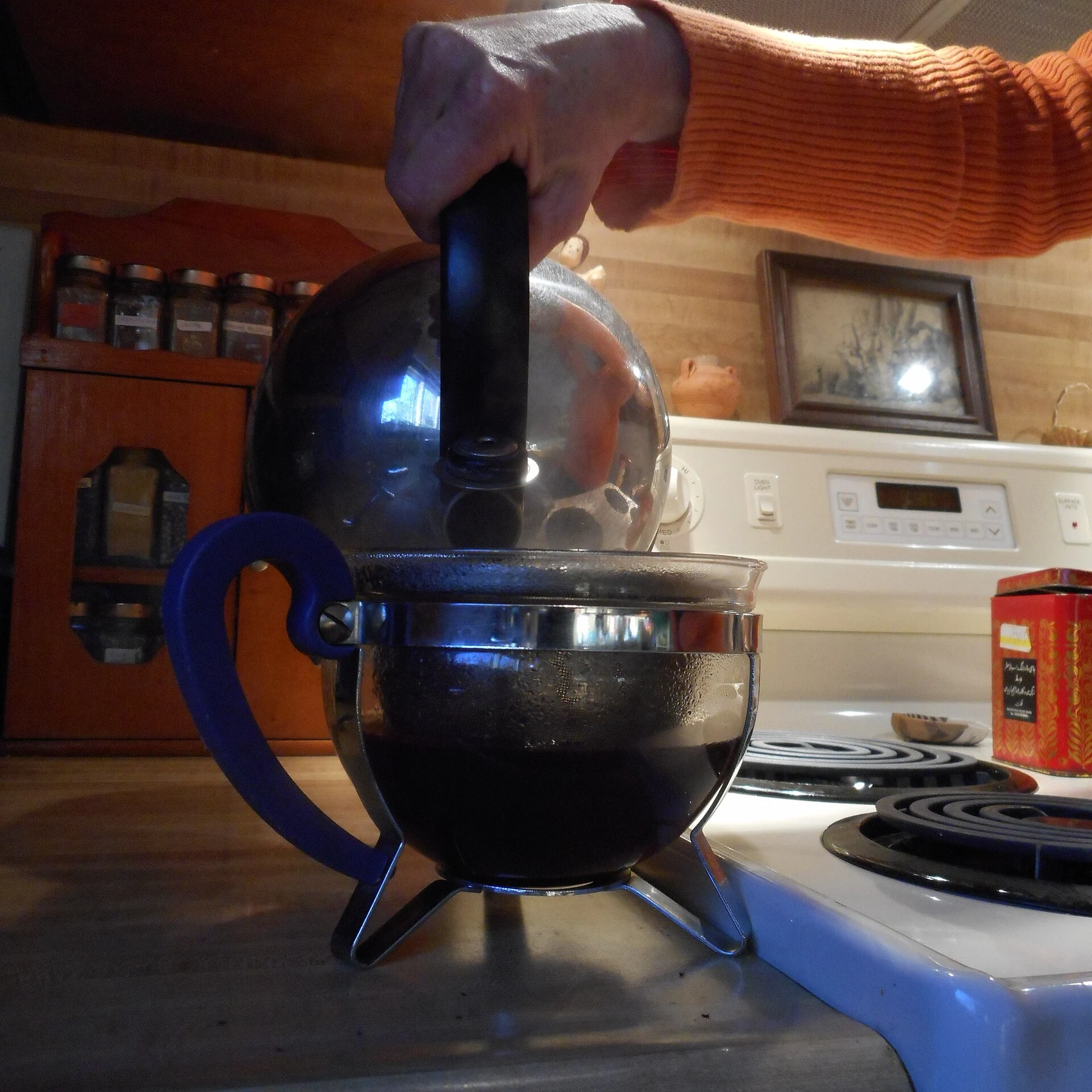
Color can tell you that extraction changed; it cannot tell you whether the tea is good. Taste, aroma and the condition of the opened leaf still matter.
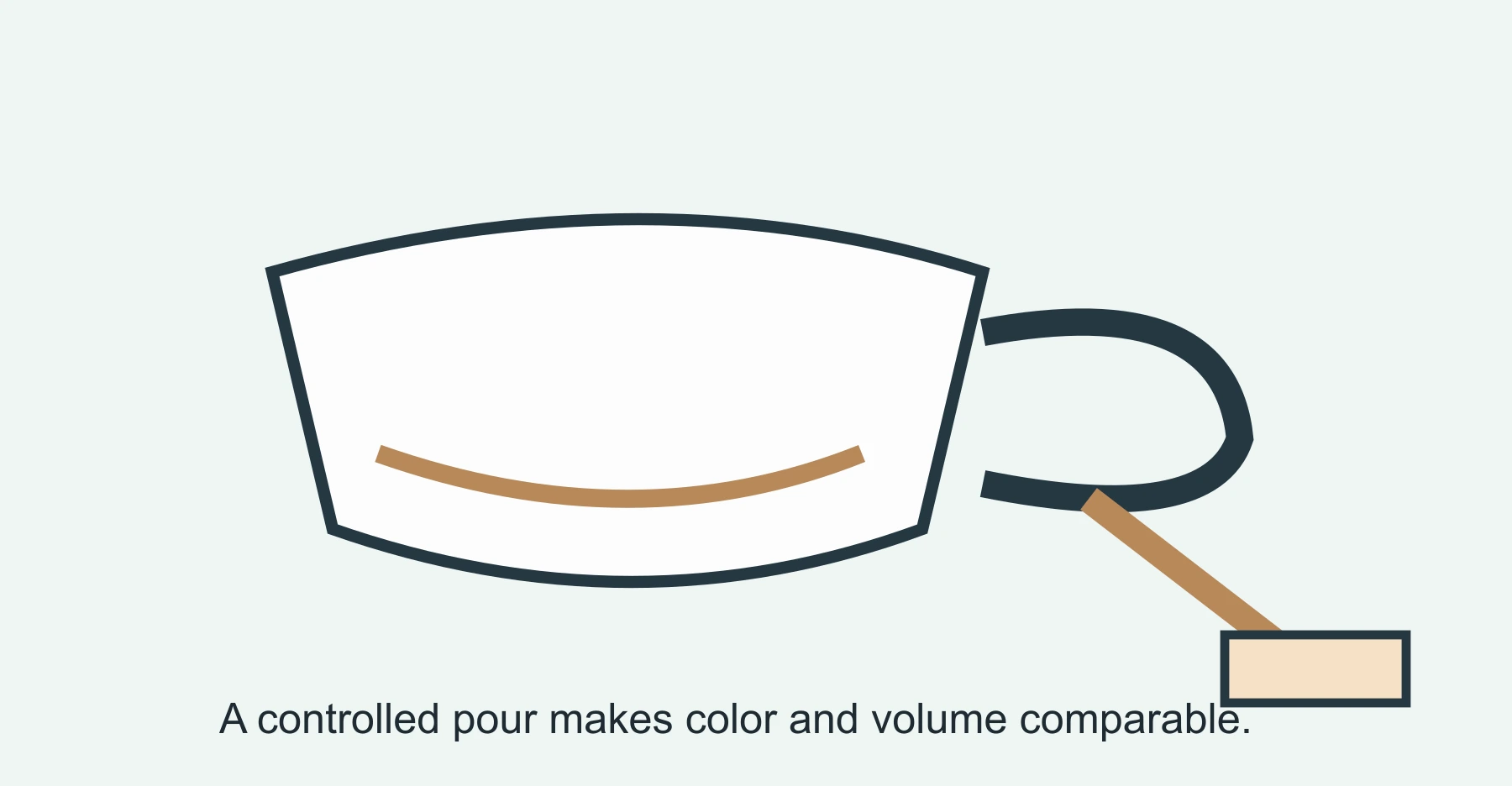
The pour is where the practical risk begins. Follow the maker's heat guidance, warm a cold vessel gradually and keep the pot away from sudden temperature changes. A pretty image does not make a fragile pot safer.
For a first comparison, keep a small log rather than relying on the photograph. Write down the tea, water temperature, dose, first contact time and whether the second infusion gained or lost structure. This makes the transparent pot useful after the novelty fades. It also gives you a concrete way to compare a glass pot with a gaiwan or clay pot later.
Glass versus porcelain and Yixing clay
| Vessel | Strength | Limitation |
|---|---|---|
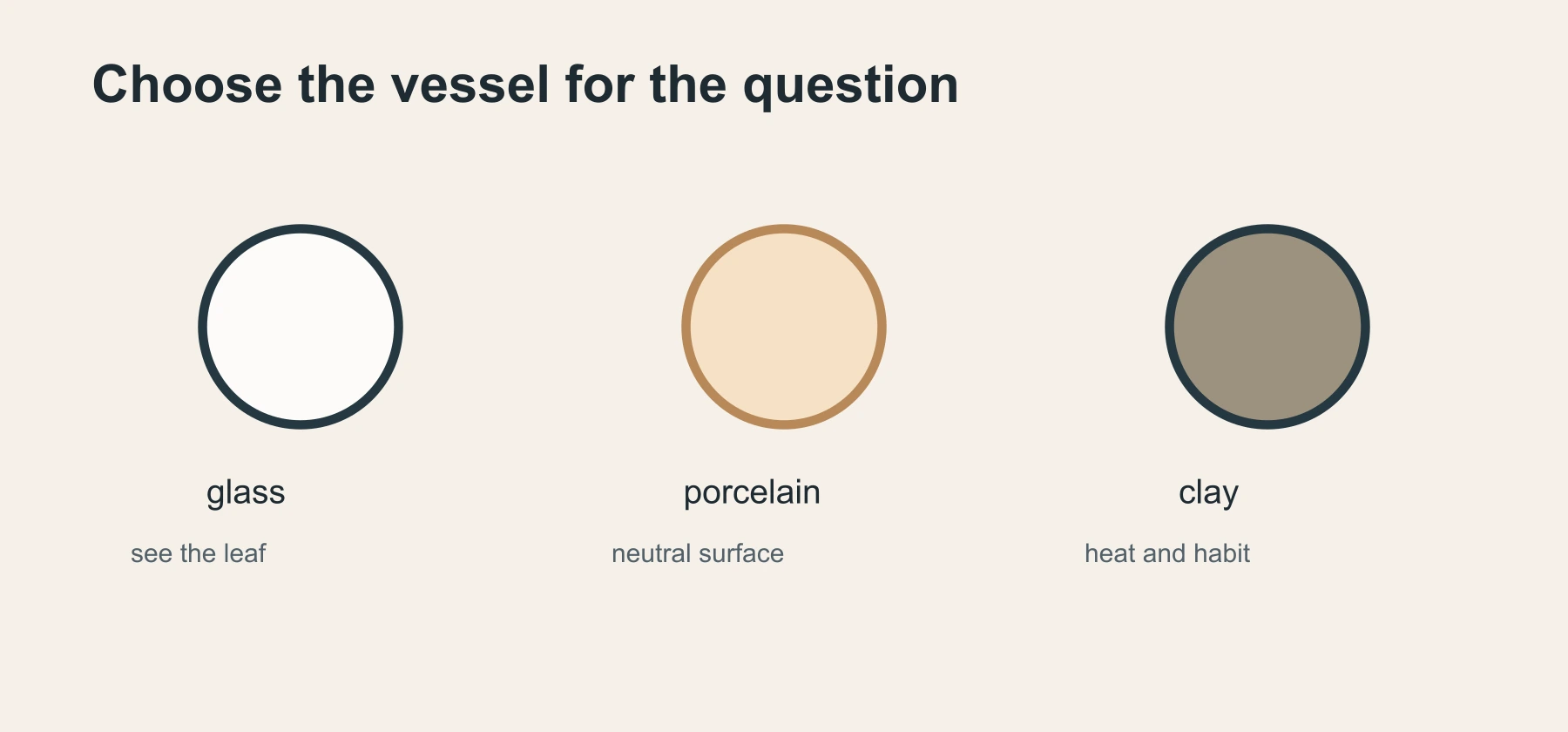
| Glass | Visibility, neutral flavor, easy inspection | Heat loss, glare and thermal-shock risk |
| Porcelain | Neutral surface, stable pouring and elegant control | Leaves are less visible |
| Yixing clay | Heat feel, hand comfort and traditional association | Seasoning and tea separation demand discipline |
| Gaiwan | Direct control, easy decanting and broad versatility | Requires a comfortable grip and practice |
I would choose glass when teaching someone to notice the leaf, porcelain when I want a neutral everyday brewer, and clay only when I am willing to keep the tea category under control.
Glass teapot size and serving rhythm
Choose the smallest working volume that fits the people drinking. A 300–500 ml pot is easier for one or two people to finish before the leaves over-extract. A larger pot can be useful for a flowering tea or a shared breakfast, but it encourages long holding times and makes weak dosing look like a tea problem.
The pot should be judged with water, not the box photograph. Fill it to the practical level, pour into the cups you actually use and record how much remains in the filter chamber or spout. A beautiful vessel that leaves half the liquor trapped is less useful than a plain one that decants cleanly.
When glass is the wrong choice
Glass is not the best answer for every tea session. A windy outdoor table can cool the liquor too quickly. A dark roasted tea may be more comfortable in a vessel that holds heat. A formal gongfu session may favor a gaiwan because the lid, rim and decanting action give more direct control.
The Chinese teapot guide compares these tradeoffs in more detail. The point is not to build a collection for its own sake. Buy the vessel that solves the brewing problem you actually have.
Care, mineral scale and everyday use
Hard water leaves a pale ring inside glass. Rinse after each session and remove scale according to the manufacturer's instructions. Never hide a crack under a decorative sleeve. If the lid, filter or handle becomes loose, treat that as a safety problem rather than a minor cosmetic defect.
Glass also changes the social rhythm of tea. Guests can see the leaves and ask questions, which makes it useful for teaching children or overseas friends who have only seen tea in a bag. Transparency becomes part of hospitality: the brewer can show what is happening without turning the table into a lecture.
The visual test is not the taste test
A leaf that opens beautifully can still produce a thin or bitter cup. A tea that looks plain can taste deep and balanced. Use the glass teapot to make a prediction, then drink the liquor and see whether the prediction survives.
| What you see | Possible reading | What to taste next |
|---|---|---|
| Leaves remain closed | Water may be too cool, the leaf may be tight or the dose may be dense | Does the liquor lack aroma or simply need another infusion? |
| Color darkens quickly | High leaf dose, hotter water or longer contact | Is the finish sweet, drying or harsh? |
| Leaves fill the body | Whole-leaf tea is expanding normally | Does the next infusion still have structure? |
| Fine particles appear | Broken leaf, dust or a small filter opening | Do the particles create bitterness or only visual cloud? |
| Aroma rises then disappears | Volatile fragrance has moved quickly | Does the cooled cup retain sweetness? |
This method keeps glass from becoming a stage prop. The vessel shows a process; the palate decides whether the process worked.
Glass teapot etiquette for shared tea
Place the pot where everyone can see the pour, but do not make a guest wait while a photograph is arranged. Decant fully before passing the pot. Wipe the base if water has collected, and warn people before touching a metal handle or hot lid. If children are present, use a lower table, smaller volume and a stable tray.
For a formal tea gathering, explain whether the pot is being used for one tea only or rinsed between teas. A transparent vessel makes residue visible, which can be reassuring when serving guests with allergies or strong flavor preferences, but it does not replace ingredient knowledge.
Glass, tea color and photography
Photographs often exaggerate liquor color through warm lamps, colored trays and post-processing. Use a white cup or neutral background when comparing brews. Do not call a tea “better” because it photographs amber or emerald. A camera records the light reaching its sensor; it does not record mouthfeel, bitterness or aftertaste.
A glass teapot buying checklist
Before buying, check the working volume, lid fit, filter opening, spout angle, handle temperature and the maker's heat instructions. Search for replacement lids or filters if the pot is intended for daily use. A beautiful one-piece shape can become disposable when one small part breaks.
For a first pot, choose a form that is easy to wash and easy to hold with a towel. Avoid a narrow decorative neck that traps leaves or a handle that forces the wrist into an awkward angle. The best glass teapot is the one you can pour completely while the tea is still at its best.
Pair the vessel with a simple log: tea name, dose, water temperature, first pour, second pour and the flavor that changed. After three sessions, you will know more than a product page's adjectives can tell you.
If you are comparing vessels, continue from the Chinese teapots guide to the gaiwan guide, then test the same leaf with the how to brew Chinese tea guide. Those three pages answer different questions: material, hand control and repeatable brewing. A glass teapot earns its place when it improves your observation without making safe pouring or cleaning harder.
Safety and cleaning
Never place hot glass on a cold stone surface or pour boiling water into a vessel that is cold, damaged or not rated for heat. Inspect the rim, handle, spout and filter. Stop using a pot with a crack, chip or clouded stress line.
Rinse promptly. Tea oils and mineral scale can accumulate around filters and spouts. Use a soft brush and the maker's cleaning instructions; abrasive tools can create scratches that make later damage harder to see.
Frequently asked questions about glass teapots
What tea is best in a glass teapot?
Green tea, white tea, flowering tea and many lightly oxidized teas are visually rewarding in glass because leaf expansion and color change remain visible. A glass teapot can also brew oolong, but the material does not automatically improve every tea.
Can you use boiling water in a glass teapot?
Only if the specific vessel is designed and labeled for that heat. Borosilicate glass is commonly used for heat-resistant teaware, but thermal shock, defects, cold surfaces and sudden temperature changes can still break glass. Follow the maker's instructions.
Is glass better than a Yixing teapot?
Neither is universally better. Glass shows the leaves and is easy to neutralize between teas; unglazed clay can create a different heat and pouring experience but requires more disciplined tea separation. Choose by the tea and your purpose.
Transparency is a method
The best glass teapot is not the prettiest one in a product photograph. It is the one that lets you pour safely, measure honestly, see the leaf and clean the vessel without anxiety. Use it to learn, then decide whether the tea wants more visual openness or a quieter material.