Buy Biluochun tea only when three things agree: the origin claim, the condition of the dry leaf and the cup after it cools. A spiral shape, white fuzz or a story about fruit trees cannot authenticate Dongting Biluochun. A worthwhile tea should open cleanly, carry fragrance into the liquor and finish without stale hay, oily-seed odor or rough heat damage.
That rule matters because Biluochun is unusually easy to sell through appearance. Tiny green curls and pale down look expensive before the kettle is switched on. The water is less sentimental: it reveals whether the fragrance has body, whether the leaf is fresh and whether the seller's story survives a repeatable brew.
I judge Biluochun by what happens after the first charming minute. If the dry leaf is beautiful but the cup becomes thin, rough or perfumed in a way that never turns into taste, I do not care how lyrical the packet is. Conversely, a modest-looking sample that opens into clean sweetness and holds its composure as it cools earns my attention. This is why I prefer a small side-by-side brew to a grand claim of “top grade”: origin matters, but the cup still has to carry the promise.
Biluochun tea: first decide what the name means
Biluochun means “Green Snail Spring,” a useful description of the tea's color, curled form and spring association. It is also used loosely in the market. These are not the same claim:
| Label | What it should mean | What to ask for |
|---|---|---|
| Dongting (Mountain) Biluochun | Tea represented under the protected geographical product name associated with the Dongting areas beside Lake Tai in Suzhou | Production area, harvest year, producer or packer and the basis for the geographical claim |
| Biluochun from elsewhere | Curled green tea made in a Biluochun style outside the protected area | Exact province or county and a label that does not borrow Dongting provenance |
| Biluochun-style green tea | A commercial shape or flavor category with uncertain origin | Honest origin disclosure and a price based on the tea in the cup, not borrowed prestige |
China's official standard record for GB/T 18957-2008 is titled Product of Geographical Indication—Dongting (Mountain) Biluochun Tea. The narrow wording is the point: a shape is visible, but a protected origin needs traceability. Tea made elsewhere can still be enjoyable. It simply should not be sold as evidence from Dongting.
Suzhou's official account places the historic production landscape around Dongshan and Lake Tai. Orchards, villages, lake weather and tea gardens belong to that cultural setting. They do not turn every packet with a lakeside photograph into Dongting tea.
The dry leaf is a screening test, not a certificate
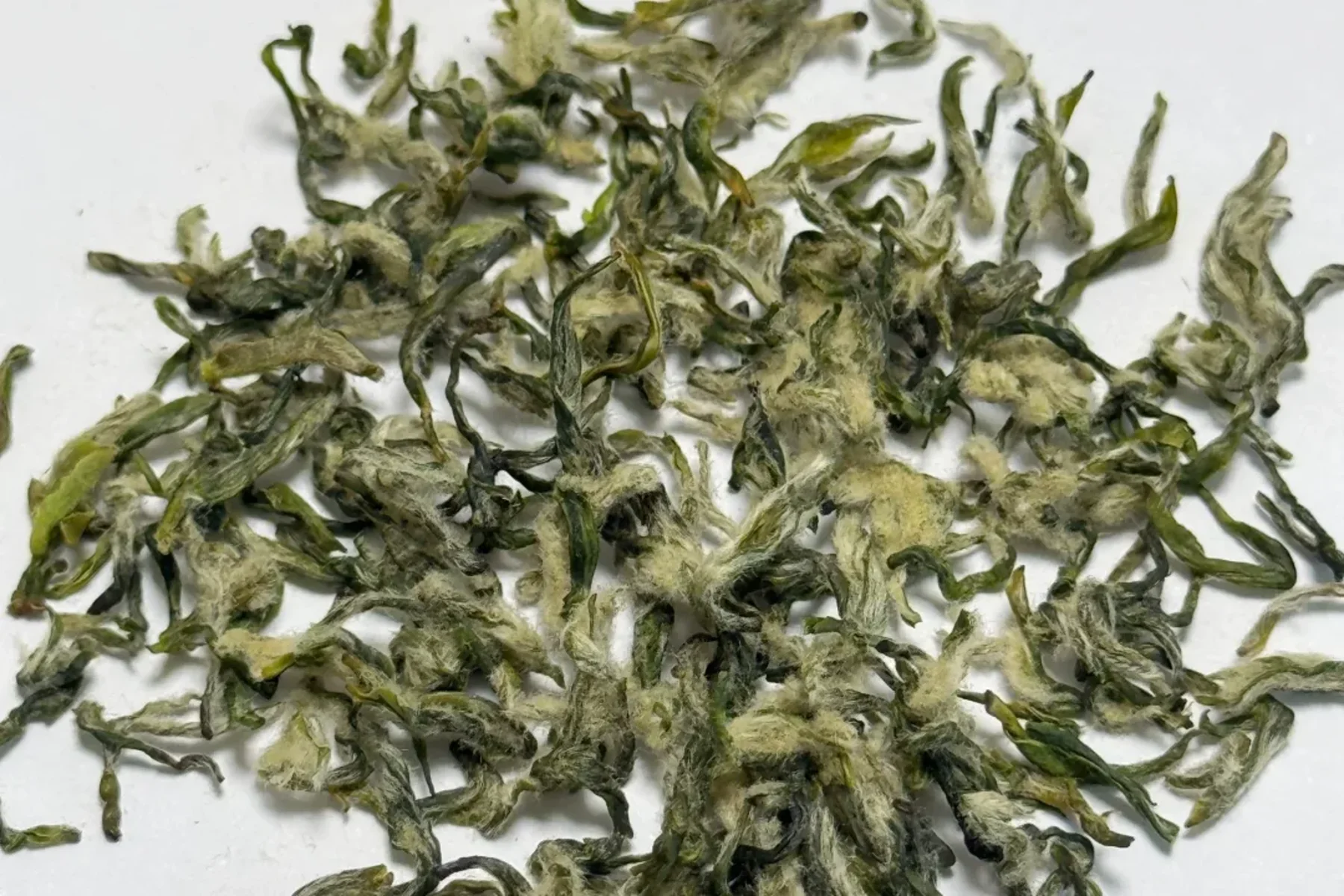
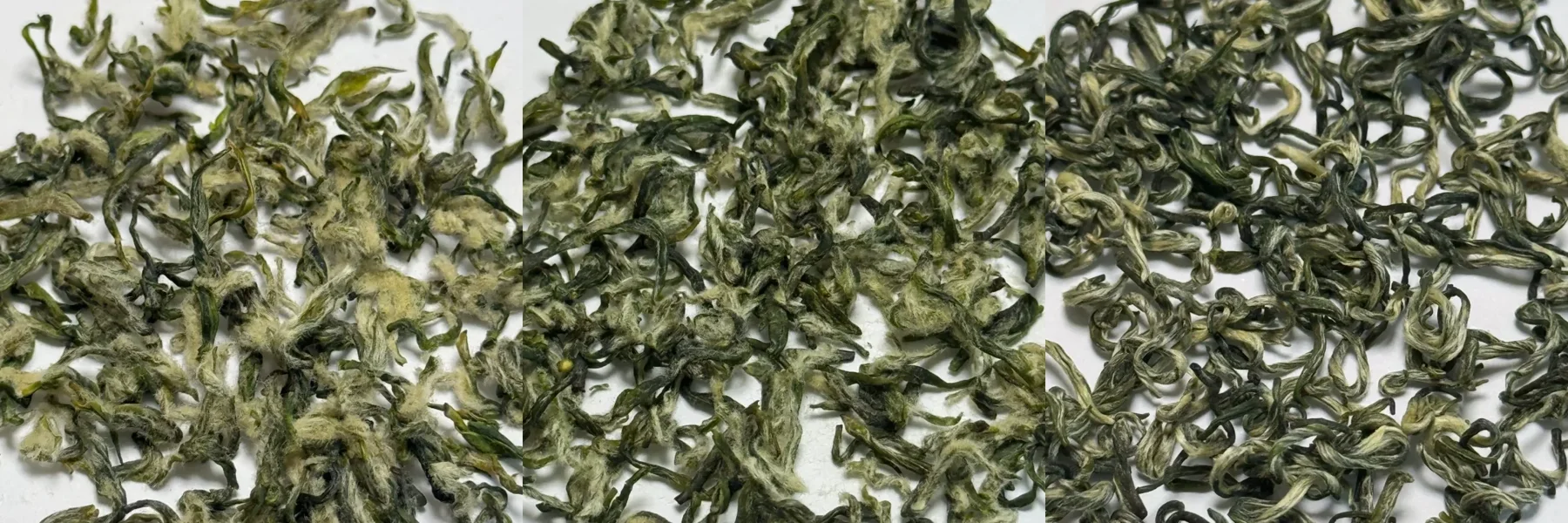
Tender Biluochun is commonly fine, curled and visibly downy. The hero photograph shows these features in one retail sample. Yet all three can vary with picking standard, processing, breakage and storage, and all three can be imitated by tea from another place.
Use the leaf to reject obvious problems before you use it to admire craftsmanship:
- Smell first. Fresh green, soft floral or light fruit impressions are plausible. Cupboard, cardboard, oily seed, cooked grain gone stale or heavy perfume are reasons to stop.
- Look for coherence, not perfect uniformity. A credible lot can contain natural variation. Excessive powder, many snapped fragments or dramatically mixed material needs an explanation.
- Treat white down correctly. Trichomes belong to tender buds and leaves; they can enter the liquor. Their presence does not prove Dongting origin, and more fuzz is not automatically better tea.
- Do not authenticate from green color. Photography, lighting and processing alter color. An unnaturally vivid image is marketing evidence, not tea evidence.
An authorized consumer comparison photographed three retail samples under one visual setup. It is useful because it shows how much curl, particle size and visible down can differ in products sold under the same broad name. The samples' harvest dates and production origins were not independently verified, so the image cannot rank authenticity.
Fruit aroma is not proof that blossoms scented the leaf
The orchard story is one of Biluochun's most appealing explanations: tea grows among fruit trees, so nearby blossom perfume enters the leaves. Keep the landscape; reject the shortcut.
Aroma in finished tea is shaped by cultivar, growing conditions, leaf maturity, fixing, rolling, drying and storage. Wang and colleagues' comparative aroma work found that processing technology, geographical origin and variety all influenced green-tea volatile profiles. It does not establish direct transfer of orchard blossom scent into Biluochun leaves.
“Fruity” remains valid tasting language when you actually perceive it. It is not an ingredient statement, a Dongting detector or permission to accept an aggressively perfumed packet.
Run one controlled glass test before changing the recipe
The fastest way to understand Biluochun is not to collect ten brewing tips. It is to hold four variables still and observe one cup from hot to nearly cool.
East Moment baseline
- Leaf: 3.0 g
- Water: 150 ml
- Temperature: about 80°C / 176°F
- Vessel: plain heat-safe glass of known capacity
- Water: the same low-odor drinking water for every comparison
Add the water gently, then the leaf if the material is exceptionally tender, or pour down the glass wall over the leaf. Either sequence can work; it is not an authenticity test. Start the clock when leaf and full water volume meet.
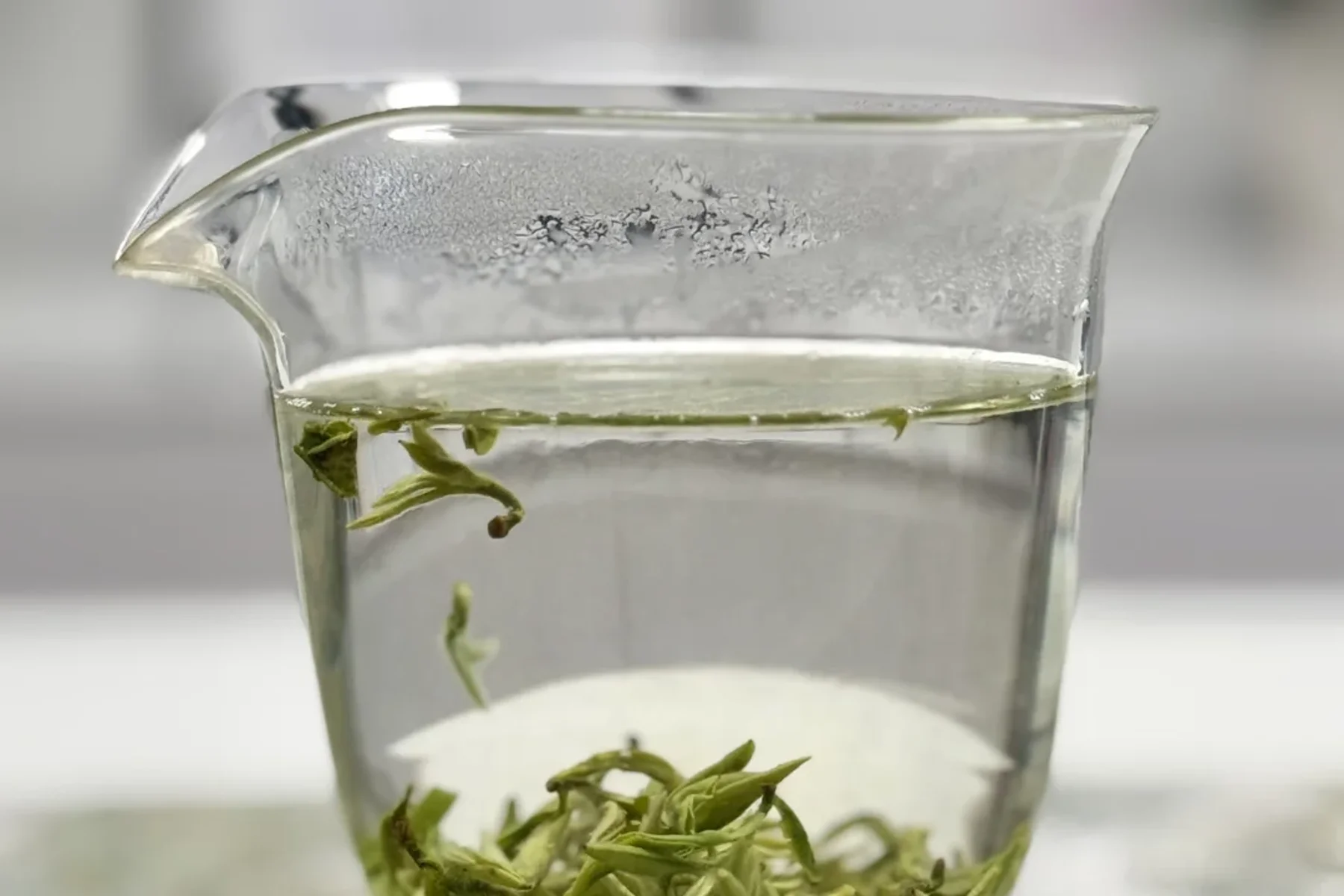
Record three moments:
- At contact: Does the aroma look clean and does the leaf wet evenly, or does dust dominate immediately?
- At about 60 seconds: Taste a small spoonful. You are establishing the center, not finishing the whole glass.
- After drinking to one-third: Add water only if the first cup was clean. Complete drainage is essential in a gaiwan; in a glass, avoid leaving a strong, cooling concentrate indefinitely under the leaf.
Then taste the liquor hot, warm and nearly cool. Heat can make aroma seem larger and hide roughness. The warm cup shows whether fragrance is connected to sweetness and body. Near cooling, stale storage, harsh astringency and hollow perfume become easier to notice.
Diagnose the cup one variable at a time
Do not lower temperature, reduce leaf and shorten time together. If you change everything, you learn nothing about the tea.
| Result | Most likely first cause | Change for the next cup | When to suspect the tea |
|---|---|---|---|
| Bitter and drying | Water too hot or contact too long | Keep 3.0 g and 150 ml; lower to 75–78°C or taste 15–20 seconds earlier | Roughness remains at gentler heat and does not resolve as the cup cools |
| Thin but fragrant | Too little extraction | Keep the dose; raise temperature by about 3–5°C or extend contact modestly | Aroma sits above water with no body or finish across sensible settings |
| Strong first sip, flat finish | Over-extracted surface material or aroma-only tea | Shorten contact and assess the warm cup | Fragrance never connects to sweetness or persistence |
| Murky liquor | Fine trichomes, broken leaf or contamination | Let the cup settle and inspect aroma and particles | Grit, foreign odor or dirty residue accompanies the haze |
| Cooked or dull | Excess heat | Cool the water and pour more gently | The dry leaf already smells baked, stale or empty |
| Muted and cupboard-like | Storage damage | Confirm with a clean vessel and fresh water | The same stale odor appears dry, warm and nearly cool |
The popular advice to “use cooler water” is incomplete. Cooler water can reduce bitterness, but it can also make weak tea taste pleasantly empty. The target is not maximum softness. It is the setting where aroma, liquor weight and finish stay connected.
Compare samples under identical conditions
If choosing among packets, brew them with the same dose, water, temperature, vessel shape and contact time. Do not give the expensive tea a cooler, shorter infusion and the cheaper tea a boiling, forgotten one.
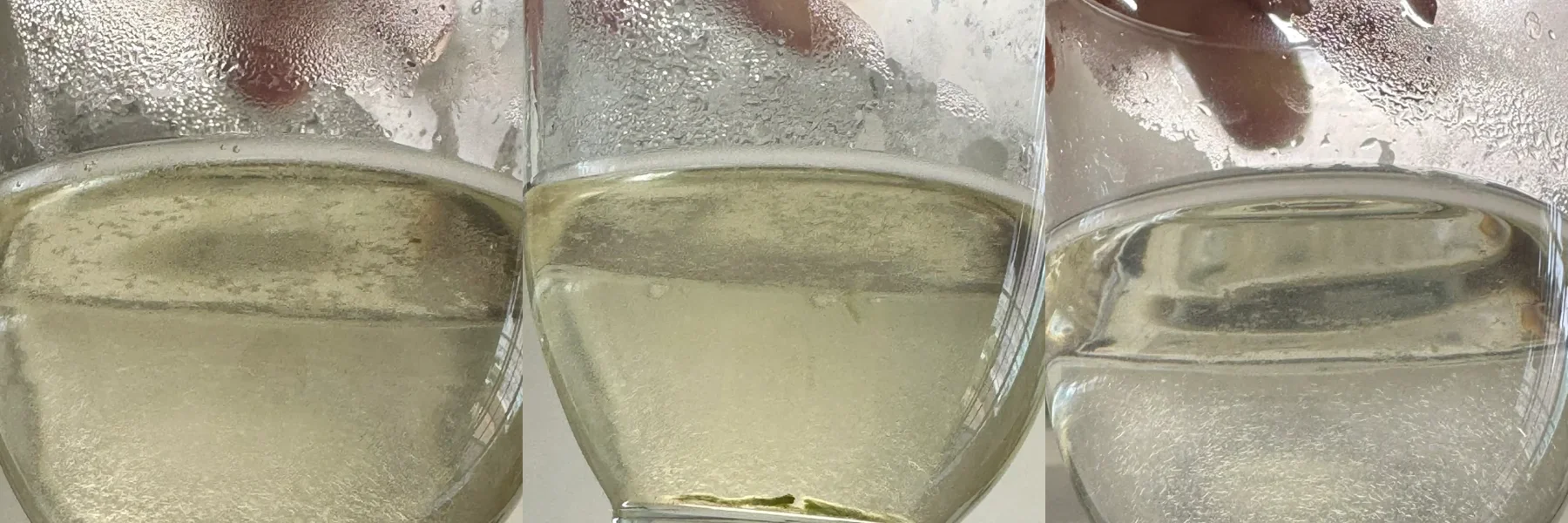
Rank the results in this order:
- Cleanliness: no stale oil, cupboard, cardboard, smoke or artificial perfume.
- Connection: the aroma appears in the liquor rather than disappearing after the first sniff.
- Structure: enough body to carry flavor without roughness doing all the work.
- Finish: sweetness, freshness or a clean green return after swallowing.
- Repeatability: the second extraction still makes sense rather than collapsing.
Liquor color comes last. Camera exposure, cup depth, dose and lighting make pale tea look weaker or darker tea look richer than it is.
Read the spent leaf, but stay inside its limits
Opened leaf can test whether the material broadly matches the seller's picking story. It can reveal breakage, mixed maturity and uneven opening. It cannot identify a village, authenticate a protected name or reconstruct every processing decision.
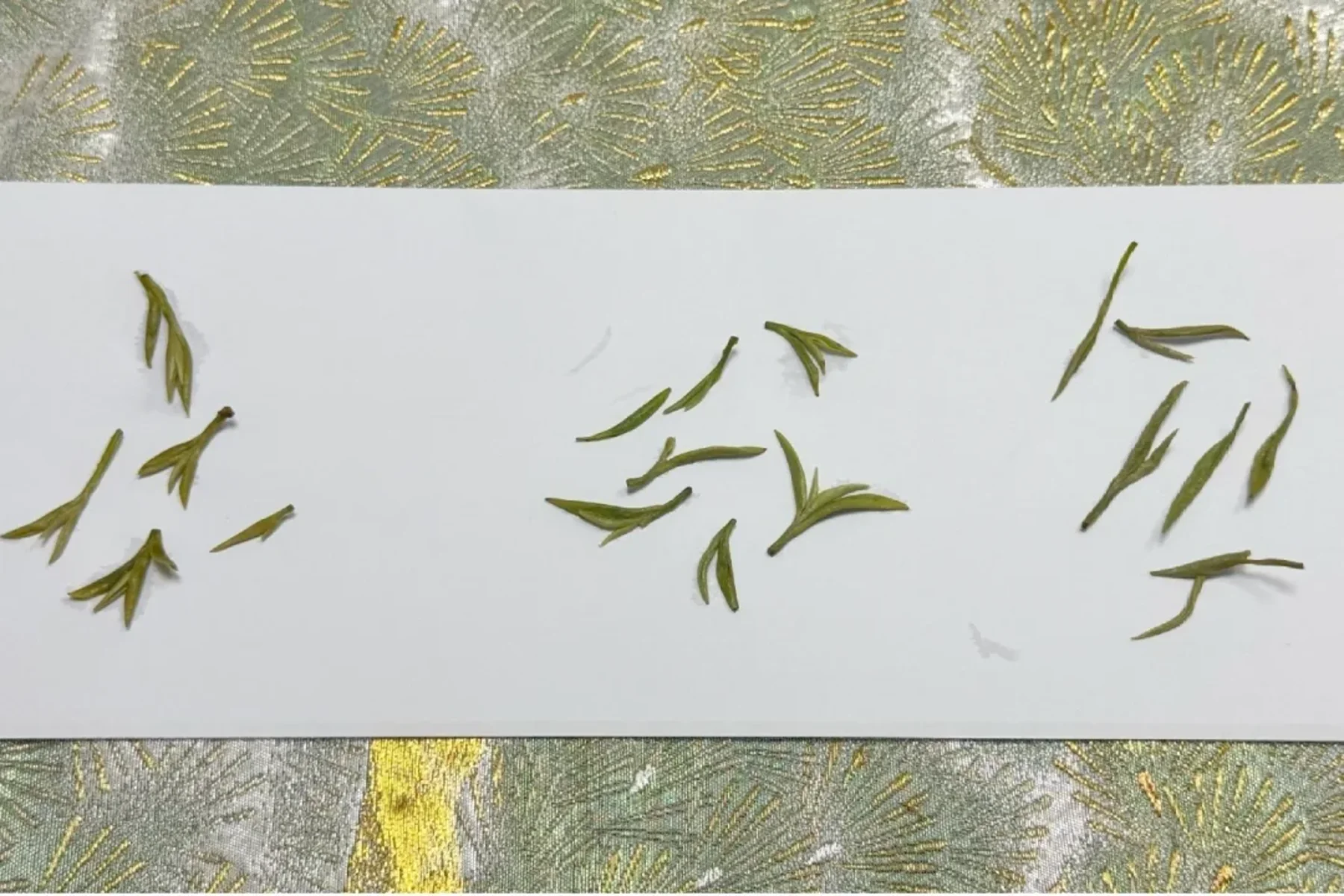
Check whether the opened material is reasonably coherent and whether tenderness matches the description. A mixed lot is not automatically bad; a seller claiming an ultra-fine, uniform early picking should be able to explain obvious mature leaf and fragments. Judge what was promised, not an imagined universal grade ladder.
Freshness is a chain, not a printed date
Green tea loses positive aroma during storage, but research on one green tea or one storage trial cannot set a universal expiry date for every Biluochun. A 2023 Fuliang green-tea study tracked declining positive aroma components over 0, 3, 6 and 12 months. A separate 2024 study comparing −20°C, room temperature and 40°C found that low temperature better retained color, tender aroma and taste in its samples. These studies establish temperature sensitivity, not a guaranteed life for an unknown packet.
Use a rejection gradient instead:
- Fresh aromatic lift but slightly reduced intensity: still potentially useful.
- Sweetness present, aroma shorter: buy only at a price that reflects current condition.
- Hay, paper, cupboard or oily-seed odor: reject as a premium-fragrance purchase.
- Empty perfume followed by rough heat damage: reject even if the dry leaf is beautiful.
Store a working packet airtight, dark, cool and away from odors. If it has been refrigerated or frozen, let the sealed packet reach room temperature before opening so humid air does not condense on cold leaf. Divide a large purchase into small sealed portions; repeatedly warming and opening one large bag defeats cold storage.
Seven questions to ask before buying
- Is “Dongting” specifically claimed, or is this Biluochun-style tea from another area?
- What is the exact production area, producer or packer?
- What are the harvest year and approximate picking period?
- Is the dry-leaf photograph from this lot?
- How was the tea stored between production and sale?
- Can the seller show the opened leaf from a measured brew?
- What return or sample policy applies if the tea arrives stale or unlike the lot description?
Refuse the purchase when a seller uses protected-origin language but will not name an area, offers an implausibly cheap ultra-early handmade claim, treats white fuzz as authentication, cannot state the harvest year, or answers storage questions with prestige language.
Biluochun is not curled Longjing
Longjing tea uses a flat pressed form and is often judged through the relationship between fresh green character and toasted, bean or chestnut-like directions. Huangshan Maofeng tea is commonly presented as slender bud-and-leaf material rather than a tight spiral. Biluochun's fine curl, down and rapid opening demand gentler observation, but none of these forms creates a universal quality ranking.
For the wider process and freshness map, continue to the Chinese green tea guide and its green-tea family route. For a transferable brewing framework across tea families, use the Chinese tea brewing guide.
The final judgment is simple: do not pay for the spiral alone. Pay when the seller's origin claim is precise, the leaf smells alive and the cooling cup still has something coherent to say.