Classify Chinese noodles before naming the bowl
Grain and shaping define the body; broth, sauce and toppings define the finished regional dish.
| Noodle system | Physical evidence | Common confusion |
|---|---|---|
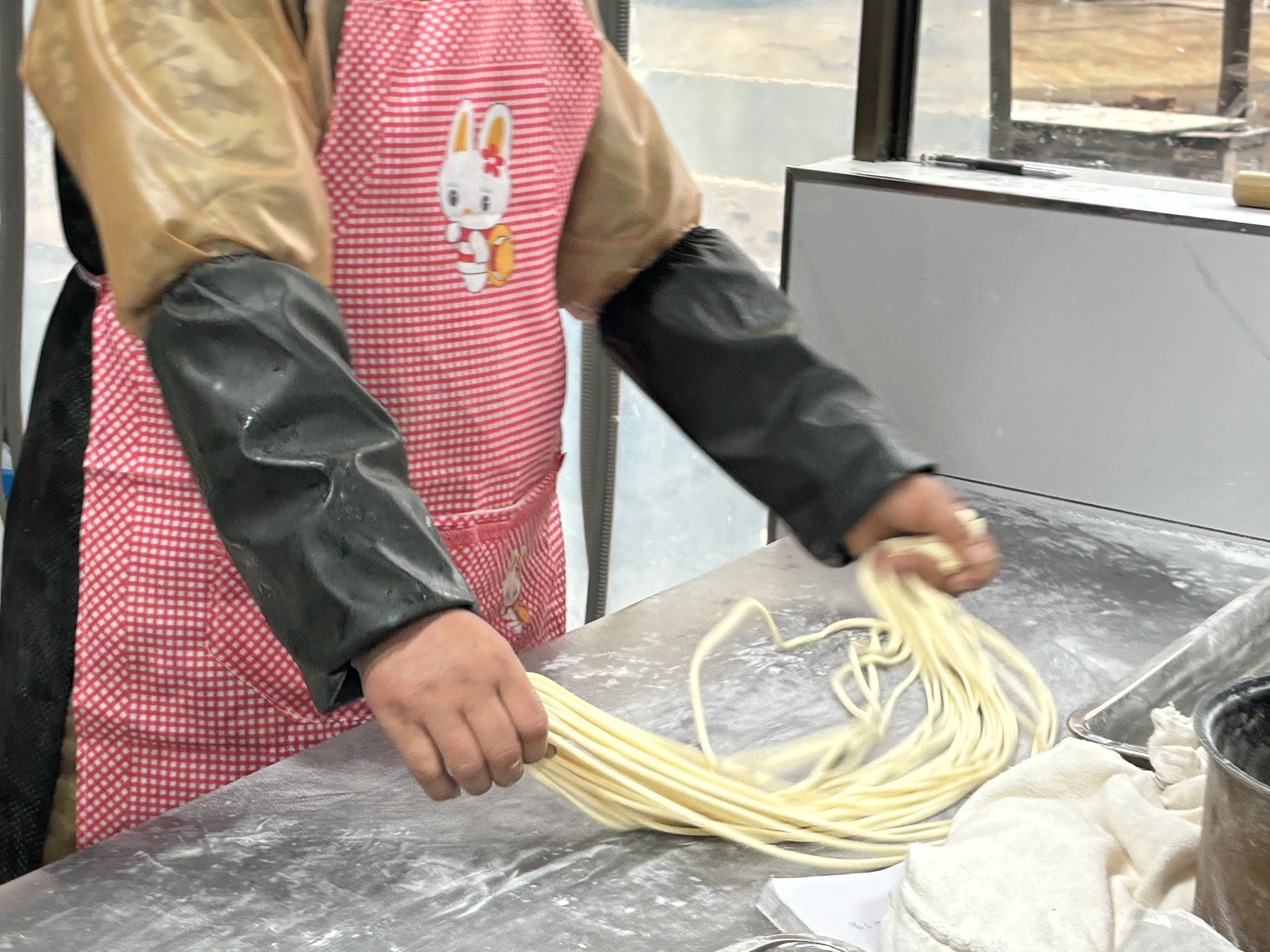
| Pulled wheat noodles | Developed gluten, resting and repeated stretching produce long strands with a characteristic elastic bite. | Every handmade or bouncing noodle is hand-pulled. |
| Cut or belt noodles | A rolled or flattened wheat dough is cut, torn or stretched into broad pieces that carry oil and toppings differently. | Width alone proves biangbiang identity or Shaanxi origin. |
| Sauce-mixed noodles | Cooked strands are mixed with a concentrated sauce whose salt, fat and toppings require deliberate proportion. | Zhajiangmian is one universal brown sauce across Beijing and every diaspora menu. |
| Rice and starch noodles | Non-wheat batters or starch mixtures create textures and cooking behavior distinct from gluten dough. | Transparent means rice, gluten-free or one interchangeable product. |
Noodle taxonomy begins before the pot
Ask what the strand is made from and how it reached its shape. Wheat protein can build a stretchable network; rice relies on starch behavior; mung bean and sweet potato create another kind of translucency and resilience. Flour labels, alkaline salts, water temperature and resting all change the result. ‘Fresh noodle’ does not answer any of those questions.
This material-first approach protects regional meaning. A Lanzhou pull, Shanxi knife cut and Guilin rice noodle are not costume variations on spaghetti. Their bodies demand different hands, liquids and eating speeds. The bowl begins in agriculture and craft long before toppings make it photogenic.
Lamian is controlled gluten, rest and movement
Pulled noodles require dough extensibility without uncontrolled tearing. Flour strength, hydration, salt or alkaline treatment, kneading and rest all matter. The maker stretches and folds repeatedly, using rhythm to divide strands. A viral performance shows confidence; it cannot reveal the full formula or prove that every strand reached the same texture after boiling.
Watch the hands, then inspect the bowl. Good strands should suit the broth and remain lively long enough to eat. If the camera spends more time on airborne dough than on the finished noodle, it has documented entertainment rather than dinner. I want both, but I refuse to confuse them.
Width changes sauce load, cooling and the way the mouth reads wheat
Biangbiang-style belts, hand-torn pieces and other broad wheat noodles expose surface texture. Chili, vinegar, garlic and hot oil can sit across folds, while the center retains chew. Thickness must remain deliberate: too thick and the center tastes raw or heavy; too thin and the noodle becomes a sauce rag.
The character biang attracts search traffic because of its visual complexity, but typography is not the dish. Name the place, dough, width, toppings and serving style. A novelty sign cannot substitute for a bowl eaten before it clumps.
Dan dan and zhajiangmian are mixed at the table, not understood from above
Sauce-based noodles often arrive with concentrated seasoning beneath or around the strands. Mix from the bottom, distribute minced toppings and taste before adding condiments. Dan dan traditions may balance sesame or nutty richness, preserved vegetable, chili, numbing aroma and meat in different regional forms. Zhajiangmian relies on fermented sauce and cooling vegetable contrast.
A top-down photograph hides proportion. The evidence shot is halfway through mixing: sauce coverage, strand thickness and topping distribution become visible. I care less about perfect garnish than whether the last mouthful is as balanced as the first.
A noodle soup carries water, meat, spice and city labor
Lanzhou beef-noodle shops organize clear broth, sliced meat, chili oil, radish, herbs and strand choice through a fast specialist system. Chongqing small noodles build a different aromatic base. Cantonese wonton noodles depend on fine strands, broth and dumpling craft. The word soup conceals different economies and morning rhythms.
Judge the relationship, not the volume. Broth should season the noodle without drowning its texture; noodle choice should survive the intended eating time. A giant bowl can be generous and still structurally wrong. Scale is not flavor.
Sheets, round strands and vermicelli require separate expectations
Rice noodles can be extruded, steamed as sheets and cut, fermented before forming or dried for later cooking. Texture ranges from tender and slippery to resilient. Regional dishes pair each form with broths, stir-fries or rolls that exploit its surface. Substitution changes the dish even when the ingredient list still says rice.
Check the package for rice percentage, added starches, allergens and cooking directions. ‘Rice noodle’ does not automatically mean gluten-free when production lines or sauces introduce wheat. Cultural precision and dietary safety point in the same direction: read the exact product.
Noodles keep changing while the phone searches for focus
Hot strands absorb liquid, starches set and surfaces stick. A soup bowl and dry-mixed bowl have different deadlines, but neither waits politely for a photo session. Take one fast establishing image, then eat. Record texture in words while it is happening instead of trying to reconstruct chew from a cold plate.
I am blunt about this because content culture often sacrifices the object it claims to celebrate. The best noodle photograph should make the reader understand shape and service. It should not require ruining the bowl to manufacture ten angles.
When noodles fail, name the stage instead of blaming the recipe’s nationality
Broken pulled dough may lack development, rest or appropriate hydration. Mushy rice noodles may have soaked too long or entered an overcrowded pan. Clumped wheat noodles may have waited without sauce or enough agitation. Diagnose material, method and time. ‘Authentic recipes are difficult’ explains nothing.
Cook one portion before feeding a crowd. Weigh flour and water, record rest, save package instructions and photograph the cross-section. Repetition turns folklore into personal skill. That is the point where a recipe becomes yours without pretending you invented its history.
One bowl should teach a complete chain from field to hand to mouth
Choose a noodle by grain and shaping, then ask why the broth or sauce belongs with it. Eat promptly, compare texture at the first and last mouthful, and note the city or community that gives the bowl context. This method answers more than a ranking of famous names.
Chinese noodles are vast, but vastness is not an excuse for vagueness. A page earns authority by making distinctions sharp enough that the reader can recognize a strand, order the right bowl and respect the hands that made it.