Classify the parcel before choosing the recipe
The four checkpoints explain why foods that look related behave differently in the hand and pot.
| Family | Structural checkpoint | Failure that reveals the difference |
|---|---|---|
| Jiaozi | Unraised wrapper, sealed edge and a filling balanced for boiling, steaming or pan-frying. | A thick dry edge, burst seam or wet filling exposes poor ratio and sealing. |
| Baozi | Leavened dough must proof, enclose filling and survive steaming without collapsing. | Dense crumb, soaked base or wrinkled skin points to fermentation, moisture or steam control. |
| Xiaolongbao | Thin bun skin contains filling and gelled stock that liquefies during steaming. | A torn wrapper loses the defining soup before the diner tastes it. |
| Wonton | Thin square or trapezoid wrapper folds lightly around a smaller filling, often for broth. | Overfilling turns a delicate wrapper into a broken jiaozi imitation. |
Dough thickness decides what the parcel can survive
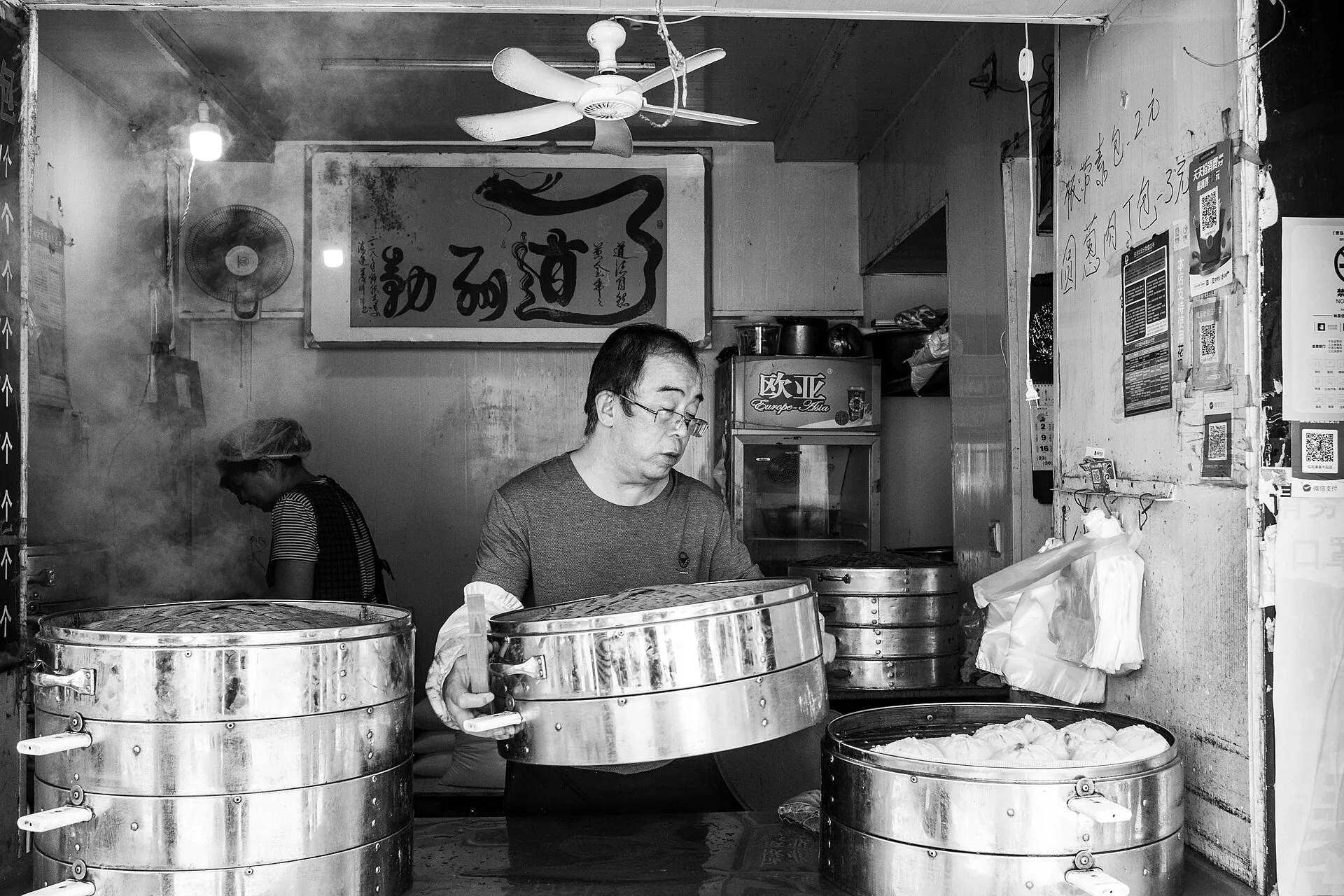
A boiled jiaozi needs enough gluten and seal strength to move through turbulent water. A pan-fried version needs a base that can brown while steam cooks the top. Bao dough must trap fermentation gas and remain soft after steaming. Wonton skin should become tender without dissolving into broth. These are engineering decisions, not decorative regional trivia.
Use measurements and touch. Photograph the rolled edge and center, show how much filling sits inside and record whether the dough rests. Advice such as ‘roll it thin’ is incomplete because thin at the rim and thin at the center create different failures. The hand learns when the instruction names the consequence.
The juiciest filling is useless when it escapes before the first bite
Vegetables release water after salting, meat absorbs liquid only to a point and warm fat softens the mixture. Chop, salt, squeeze or rest according to the ingredient, then chill when the filling needs firmness. Stirring direction is less magical than the visible goal: a cohesive mixture that can be portioned without puddling on the wrapper.
Xiaolongbao make the moisture problem explicit by using gelled stock. The gel must remain cold enough to wrap and melt during steaming. That is why a photograph of the cross-section proves more than a closed bun. It shows whether soup, filling and skin remained distinct until the correct moment.
One shape can carry different names, and one name can hide different forms
Chinese dialects, restaurant translation and overseas menus move names across boundaries. Guotie may refer to a pan-fried form with local distinctions; shengjianbao are not simply fried xiaolongbao; chaoshou and huntun belong to wonton-related families with different regional service. The page should give Chinese names and place context without pretending the naming map has perfectly straight borders.
I prefer a precise description over a forced verdict: state wrapper, leavening, filling, cooking and broth. A reader can then recognize the food even when the menu translation changes. Vocabulary serves the object, not the other way around.
Wrapping together matters because imperfect hands still belong at the table
Festival and family dumpling making distributes work: someone mixes filling, someone rolls, someone seals and someone quietly repairs the leaking pieces. Children produce thick, strange shapes; experienced hands move quickly; conversation fills the repeated task. The finished tray records skill differences instead of hiding them.
That human irregularity is not a flaw to edit out of every image. A perfect restaurant fold teaches craft, while a family tray teaches participation. East Moment needs both and must caption which evidence each image carries.
Ask how it is cooked before assuming what will arrive
Boiled, steamed, pan-fried and deep-fried versions change wrapper and texture. Soup changes how wontons are seasoned. A menu may use dumpling for jiaozi, wonton or a local specialty. Check filling, cooking method, count and whether the portion is a snack or meal. Dietary restrictions require broth, sauce and shared-kitchen questions as well as filling.
My rule is simple: order two contrasting forms and compare structure rather than chasing the longest list. One clean boiled jiaozi and one crisp-bottomed pan-fried parcel reveal more than ten names eaten without attention.
The cross-section is the truth serum
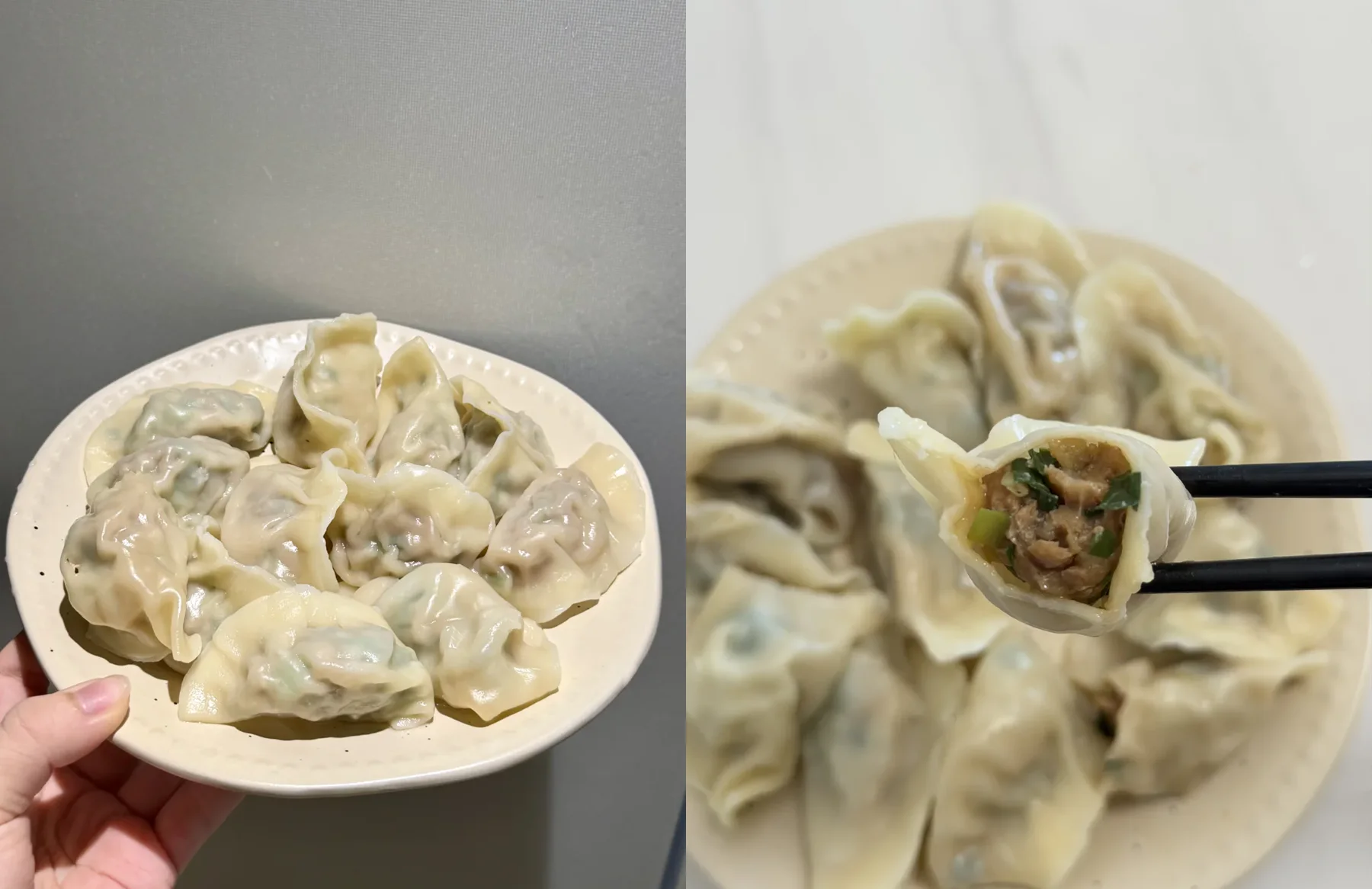
Cut or bite one piece and show wrapper thickness, filling ratio, juice, crumb and seal. The image can prove construction and doneness. It cannot prove a restaurant’s origin story or that every piece in the batch is identical. Pair it with process: one fold, one cooked exterior and one opened interior.
A strong dumpling guide leaves the reader able to classify, order and diagnose. A weak one leaves only hunger. We choose the first because appetite is easy; understanding the hands behind the parcel is the value Google cannot supply from a photo carousel.
A dumpling is also a household storage technology
Families make large batches because repetition becomes efficient and frozen parcels turn later meals into boiling-water decisions. Freeze pieces separately before bagging so wrappers do not glue together. Protect them from drying and label filling and date. Cook from frozen with enough water and time for the center to become safe without shredding the skin.
Commercial frozen dumplings deserve the same structural reading: wrapper ratio, filling identity, package damage and cooking instructions. A beautiful serving photo cannot show cold-chain history. If the package has thawed, leaked or refrozen into one block, do not let thrift become a safety gamble.
The dip should sharpen the parcel instead of replacing it
Vinegar, garlic, chili oil, soy and sesame can be combined by region and preference, but the filling already has seasoning. Taste one piece first. A delicate wonton, pork-and-chive jiaozi and soup bun do not need the same bowl. Xiaolongbao also demands a heat warning and a bite or spoon method that respects the hot broth inside.
At a shared table, separate cooked pieces from raw handling tools and use clean serving utensils. The social pleasure of reaching together should not erase ordinary kitchen hygiene. Care is part of the tradition too.
Show the seam after cooking
A cooked seam records wrapper hydration, pressure and sealing more honestly than a raw decorative fold. Photograph one intact parcel beside one opened parcel. The pair shows whether beauty survived the method it was designed for.
That visual rule is small but powerful: construction must answer to eating. A fold that wins a video and leaks in the pot is not craft; it is costume.