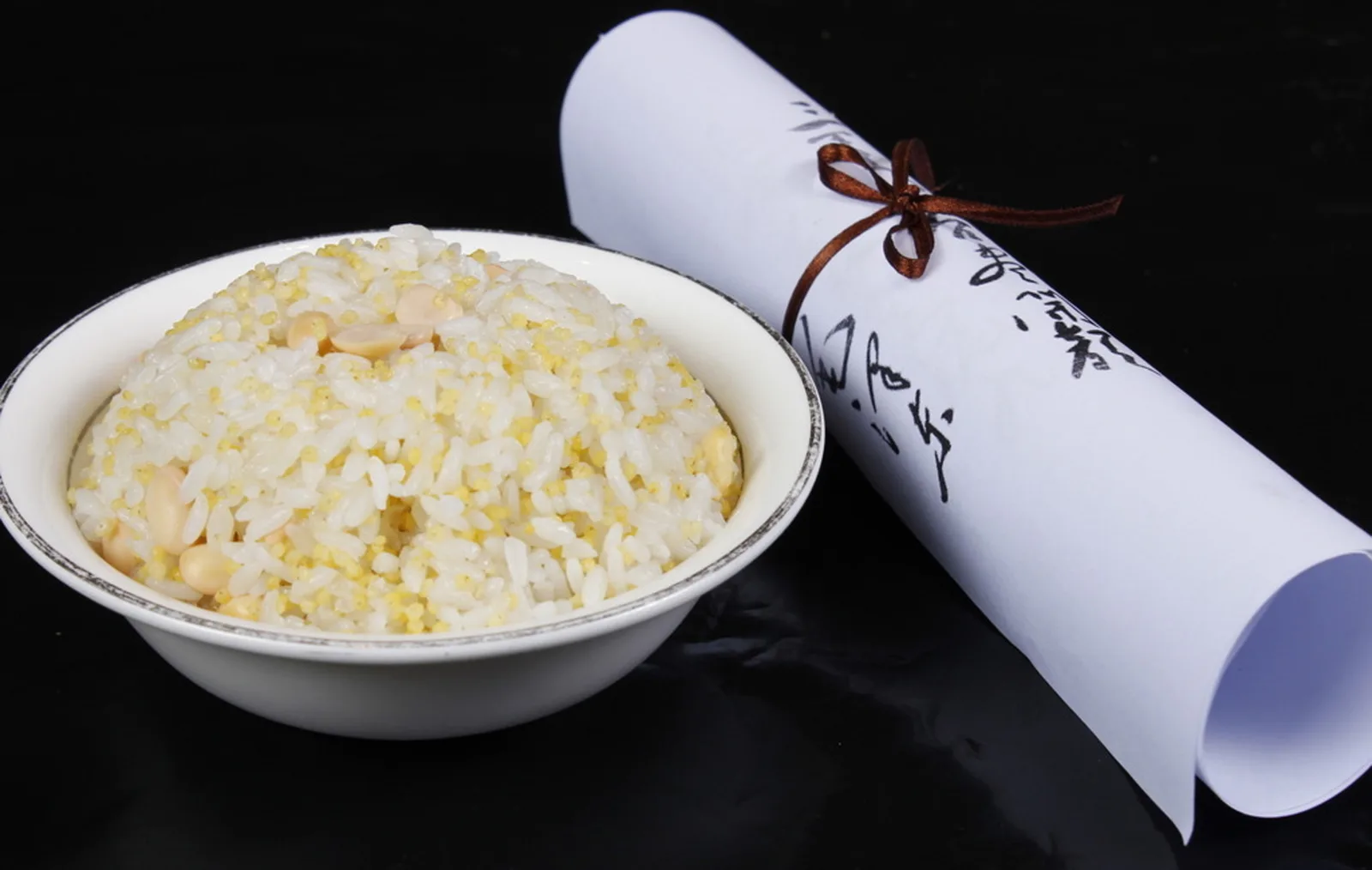
Choose the rice system before judging the bowl
Water, fat, vessel and time change the grain’s social role as much as the topping does.
| Rice form | Decisive technique | False expectation |
|---|---|---|
| Steamed rice | Variety, rinsing, water ratio, rest and gentle release create separate or tender grains suited to the meal. | Plain means careless, nutritionally identical or culturally empty. |
| Fried rice | Cooked grains with controlled surface moisture are separated through heat, fat and staged ingredients. | A smoking wok alone proves wok hei or Yangzhou identity. |
| Clay-pot rice | Direct heat cooks rice and toppings while developing a crisp guoba base without burning it bitter. | Any rice served in clay was cooked as one integrated pot. |
| Congee | Extended hydration and agitation break grains to a chosen continuum, from distinct rice to silky porridge. | Every region wants the same thickness, garnish or medicinal claim. |
The plain bowl organizes the dishes around it
In many shared meals, rice moderates salt, sauce, oil and intensity. Diners combine bites rather than expecting the grain to perform as a stand-alone flavored side. This relationship explains why a dish tasted without rice can seem aggressively seasoned and why pouring soy over every bowl may flatten the intended table balance.
The portion also reveals context. Northern wheat meals, southern rice habits, mixed-grain households and individual health needs resist one national rule. Say what was served, where and with what dishes. Do not turn a household pattern into a claim about 1.4 billion people.
Water ratios are starting points, not ancestral commandments
Long-grain, short-grain, new-crop, aged, polished and mixed rice absorb differently. Rinsing changes surface starch; soaking changes hydration; vessel geometry and heat change evaporation. Use package guidance, then record the adjustment that works in your pot. The finger-joint method can carry family experience, but it is not universal calibration.
Rest after cooking allows moisture to redistribute. Release the grain without crushing it and keep cooked rice out of unsafe warm-temperature limbo. Respect for tradition includes ordinary food safety; nostalgia does not stop bacterial growth.
Separation comes from moisture control, not theatrical fire
Cooled rice is useful because its surface is drier and firmer, but safe cooling matters. Spread and refrigerate promptly rather than leaving a pot at room temperature overnight. Break clumps before the wok, stage wet ingredients and cook manageable portions so the pan recovers heat.
Yangzhou fried rice is a named tradition, not a license to call every mixed leftover bowl Yangzhou. Ingredients and standards vary, but place deserves more than a garnish of peas. If the guide cannot distinguish the technique ‘fried rice’ from the regional claim ‘Yangzhou,’ it is selling a famous word.
The crisp base is made once and can be destroyed in seconds
Clay-pot rice coordinates soaked grain, heat, cured meat or other toppings, sauce and a final stage that creates guoba. The pot holds and redistributes heat differently from a rice cooker. A crisp base should be aromatic and golden, not a black layer defended as rustic character.
Listen for the late sizzle and inspect the edge. Add sauce with restraint so it seasons without dissolving the crust. A whole-pot photograph should be followed by the lifted base, because the hidden surface is where the vessel proves it did more than serve as decoration.
Comfort has regional thickness, toppings and timing
Cantonese jook may become silky and carry fish, pork, preserved egg or peanuts; other porridges retain visible grains or combine millet, beans and cereals. Breakfast, late-night eating, illness and festival observance create different meanings. No single bowl owns the word congee.
I understand why people call it bland when they meet a weak hotel buffet tray. Good congee has grain sweetness, deliberate viscosity and toppings that change each spoonful. Softness is not absence. It is a texture made through time, and time is the ingredient hurried summaries never photograph.
A soothing bowl is not a medical treatment plan
Warm soft food may be easier for some people to eat, and families attach deep care to porridge. That experience is real. It does not prove that one ingredient detoxifies, treats disease or suits every diabetic, kidney or digestive condition. Medical restrictions require qualified advice and a view of the full recipe.
The emotional claim can remain strong without pretending to be clinical: someone stood by the stove, watched water and grain change, and made eating possible on a difficult day. That human labor is enough. We do not need miracle language to make care important.
Sticky rice becomes architecture in leaves, lotus and steam
Glutinous rice has a different starch profile and behavior from ordinary table rice. In zongzi, leaf, fold, filling, soaking and prolonged cooking form a sealed structure. In lotus-leaf rice and sticky-rice poultry dishes, aroma and portioning follow other systems. Sticky describes texture, not added gluten.
Show the opened parcel and grain condition. The cross-section reveals water distribution, filling ratio and whether the center cooked. A tied leaf exterior carries memory, but the interior decides whether technique delivered it safely and deliciously.
Rice economy fails when safety becomes guesswork
Cooked rice should be cooled quickly, stored cold and reheated according to reliable local food-safety guidance. Smell and appearance cannot detect every hazard. Use clean shallow containers, label time and discard doubtful leftovers. A resourceful kitchen plans portions; it does not romanticize risk.
At the same time, leftover rice is a creative household asset. Fried rice, rice cakes and porridge transformations show how families avoid waste through technique. The ethical lesson is not ‘never waste at any cost.’ It is control the chain well enough that reuse remains care.
Read rice by what the meal asks it to do
Is the grain balancing shared dishes, carrying sauce, crisping against clay, dissolving into comfort or binding a festival parcel? That question immediately narrows method, vessel and expected texture. It also protects quiet foods from being judged by restaurant spectacle.
My favorite rice evidence is not a mountain of toppings. It is the point where a family’s practical decision becomes visible: the measured water line, the saved crust, the bowl left warm for someone arriving late. A serious guide makes that ordinary intelligence impossible to overlook.