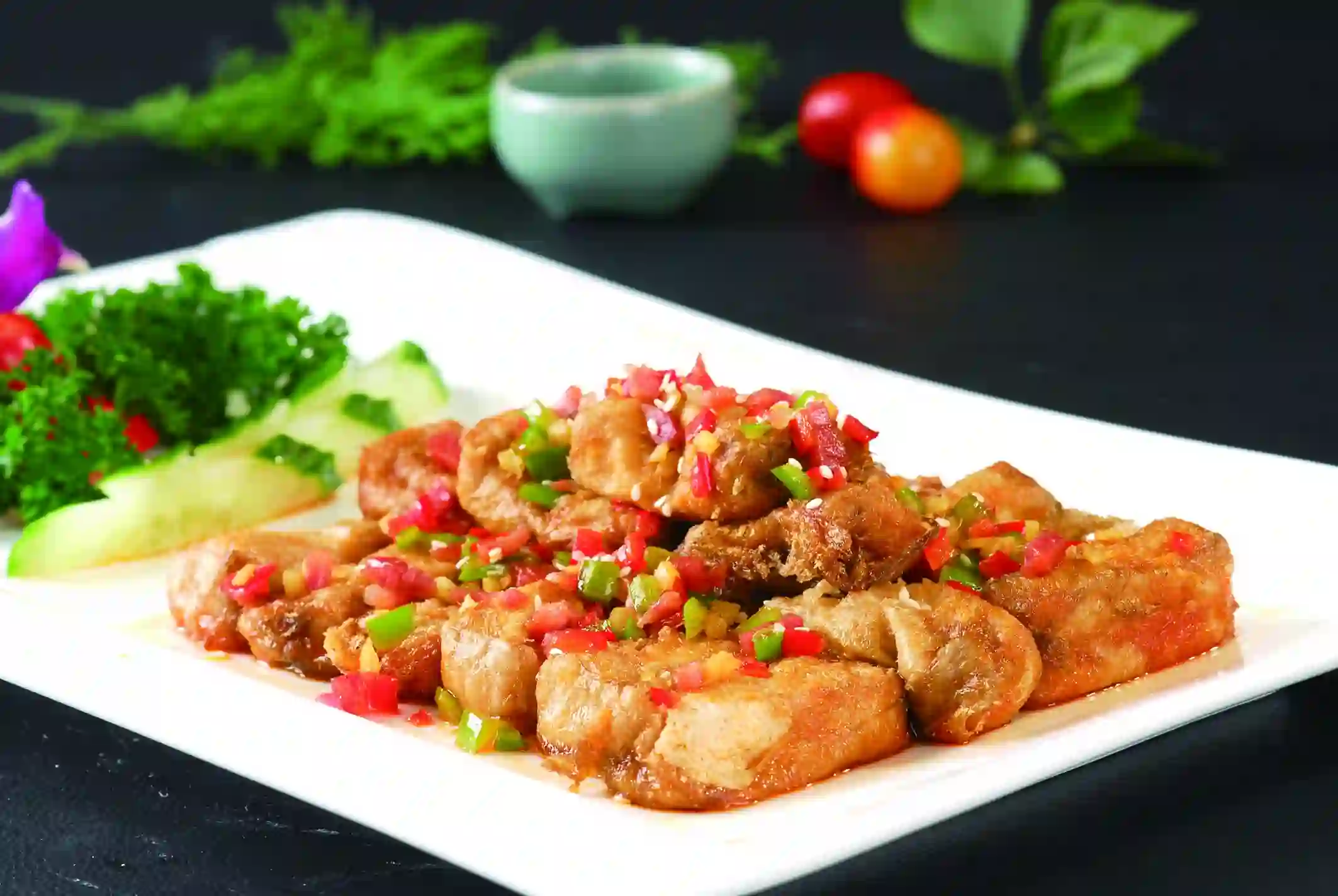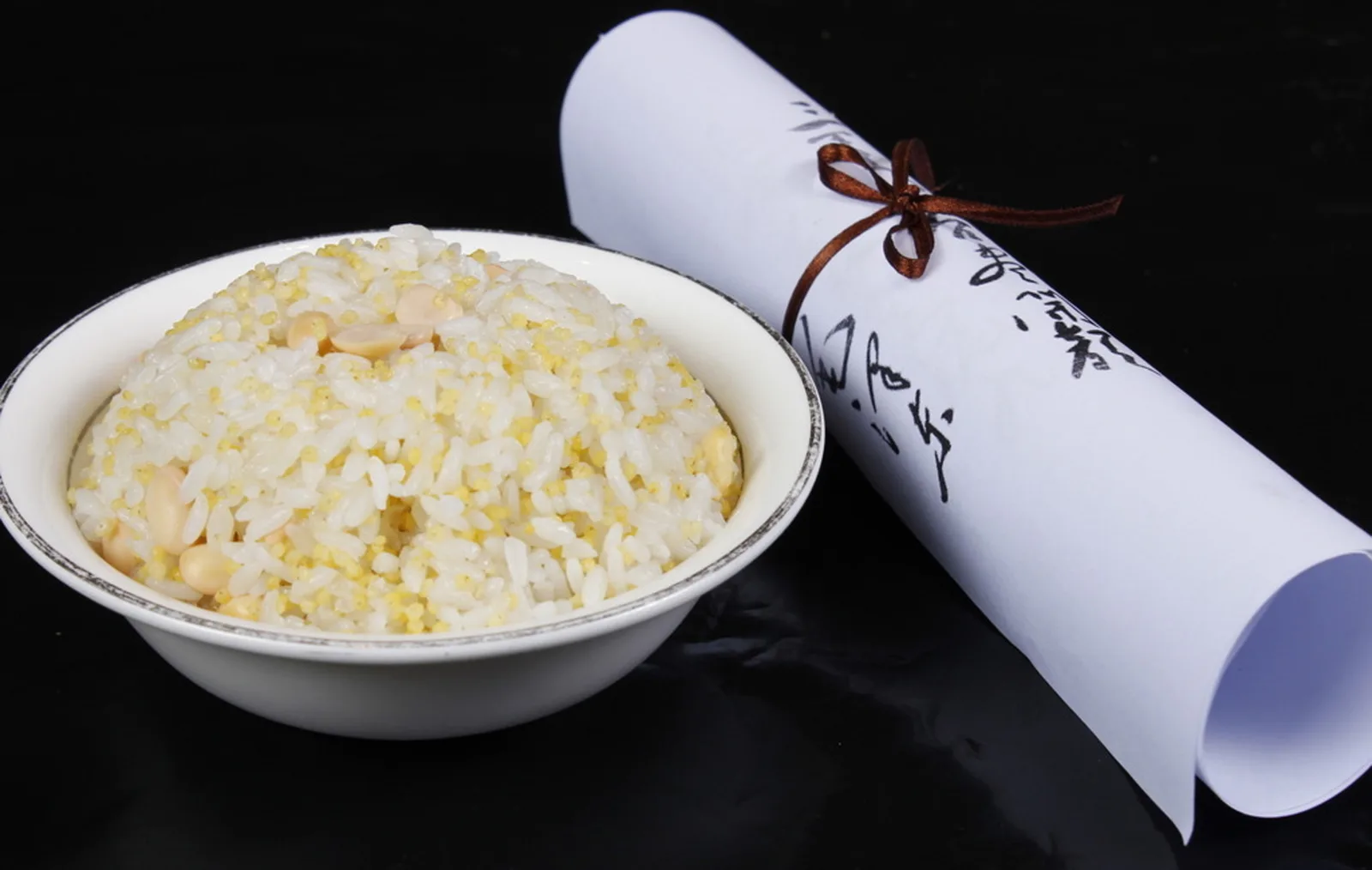
Traditional Chinese food is food carried through time by a region, household, community, season or repeated social practice. It includes dumplings made for reunion, a bowl of congee cooked for an ordinary morning, noodles pulled by hand and vegetables prepared because they have just entered season. Tradition is continuity with memory, not food trapped in the past.
Traditional Chinese food often enters quietly
People looking for authentic Chinese food are often shown a banquet: lacquered meat, carved vegetables, a whole fish presented with theatrical shine. Banquets are part of the story. So is the bowl beside a factory shift, the steamed bun warming a child's hands and the plate a parent cooks so often that nobody in the family remembers learning its recipe.
I have eaten in China for four decades, and the foods that stay with me are not always the famous ones. They are often acts of timing: scallions meeting hot oil at exactly the right second, a dumpling wrapper rolled without conscious measurement, soup left alone until its ingredients stop arguing.
This is the special value of traditional food. It stores thought inside habit.
What makes Chinese food traditional?
Age matters, but age alone is not enough. A practice becomes traditional when people recognize it, repeat it, teach it, adapt it and attach meaning to it. That continuity can belong to a village, city, religious community, profession, festival or family.
| Source of continuity | What it can preserve | Example |
|---|---|---|
| Region | Local ingredients, climate and technique | Wuyi tea-smoked foods, Jiangnan braises, northwest wheat dishes |
| Household | Taste, thrift, care and remembered proportions | A family dumpling filling or everyday soup |
| Festival | Calendar, symbolism and reunion | Jiaozi, zongzi, mooncakes and tangyuan |
| Religious or ethnic community | Ingredient rules, ritual and identity | Hui halal foodways and Buddhist vegetarian traditions |
| Craft lineage | Skilled handwork and production judgment | Hand-pulled noodles, roast meats, tofu and fermentation |
| Diaspora community | Memory adapted to a new economy and pantry | Chinese American, British Chinese and Indo-Chinese traditions |
Tradition therefore has more than one clock. A thousand-year-old technique and a century-old diaspora dish may both carry real cultural inheritance.
Traditional Chinese food is regional before it is national
There is no single traditional Chinese menu. The country's climates, crops and communities produced different systems of appetite.
E. N. Anderson's The Food of China from Yale University Press is useful here because it treats food as a system shaped by ecology, history and social life, not as a parade of nationally representative dishes. A dish name without its grain economy, preservation logic and table is only half an explanation.
Northern and northwestern traditions give wheat a remarkable number of forms: Chinese dumplings, baozi, pulled noodles, flatbreads and filled pastries. In many southern regions, rice appears as grain, congee, noodles, cakes and wrappers. Coastal kitchens develop around seafood; inland and mountain kitchens preserve, ferment and dry what the landscape offers.
Chili transformed Sichuan and Hunan food after arriving from the Americas, yet nobody seriously treats today's mature chili traditions as culturally empty because the ingredient was once foreign. Chinese food has never been protected by refusing change. It remains itself by making change local.
I will always choose a living regional method over a grand claim about “five thousand years of cuisine.” I have watched ordinary cooks correct texture with a glance and a fingertip, and that small, repeatable intelligence is more convincing than invented palace ancestry. Traditional Chinese food must name the people, place and decision that keep it alive.
Classic dishes are families of practice
Dumplings and buns
Jiaozi, wontons, baozi, xiaolongbao and har gow are often gathered under the English word dumpling. Their doughs, cooking methods and social settings differ. Baozi uses a steamed, often leavened wrapper; jiaozi may be boiled, steamed or pan-fried; wontons usually enter broth or sauce.
The traditional knowledge lies as much in texture as in shape. A wrapper must be thin enough to be tender and strong enough to survive boiling. The filling must be seasoned before the cook can taste the finished result. Hands learn to judge moisture faster than a written recipe can explain it.
Noodles
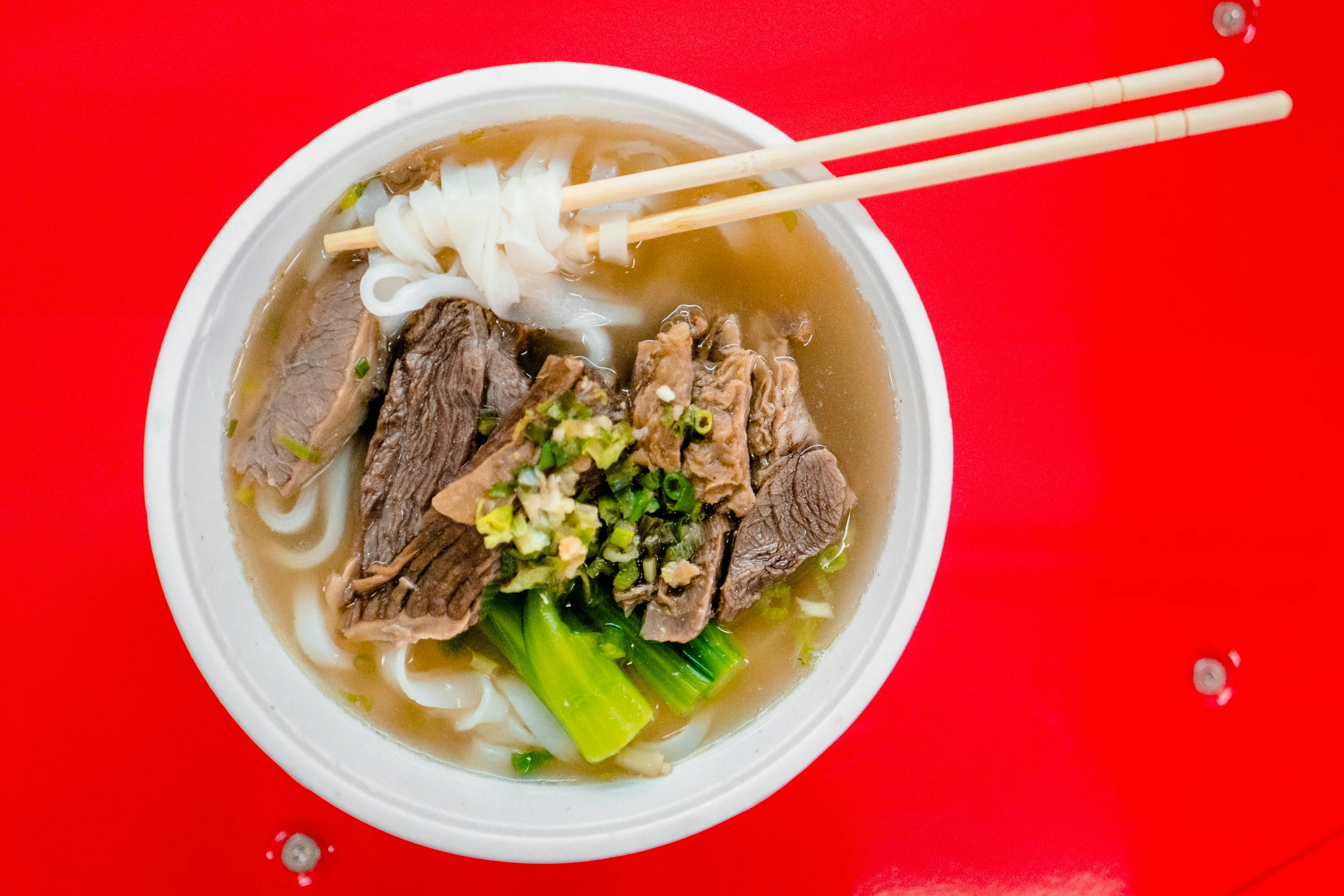
Chinese noodles can be pulled, shaved, cut, rolled or extruded. Wheat, rice, mung bean, sweet potato and other starches create different bodies. Lanzhou beef noodles depend on pulling skill and broth; dan dan noodles organize chili, preserved vegetables and sesame or peanut richness differently; Shanghai scallion-oil noodles succeed through restraint.
A noodle's authenticity cannot be judged by length alone. Dough, local technique, sauce and eating context belong together.
Shared pots, braises and steamed dishes
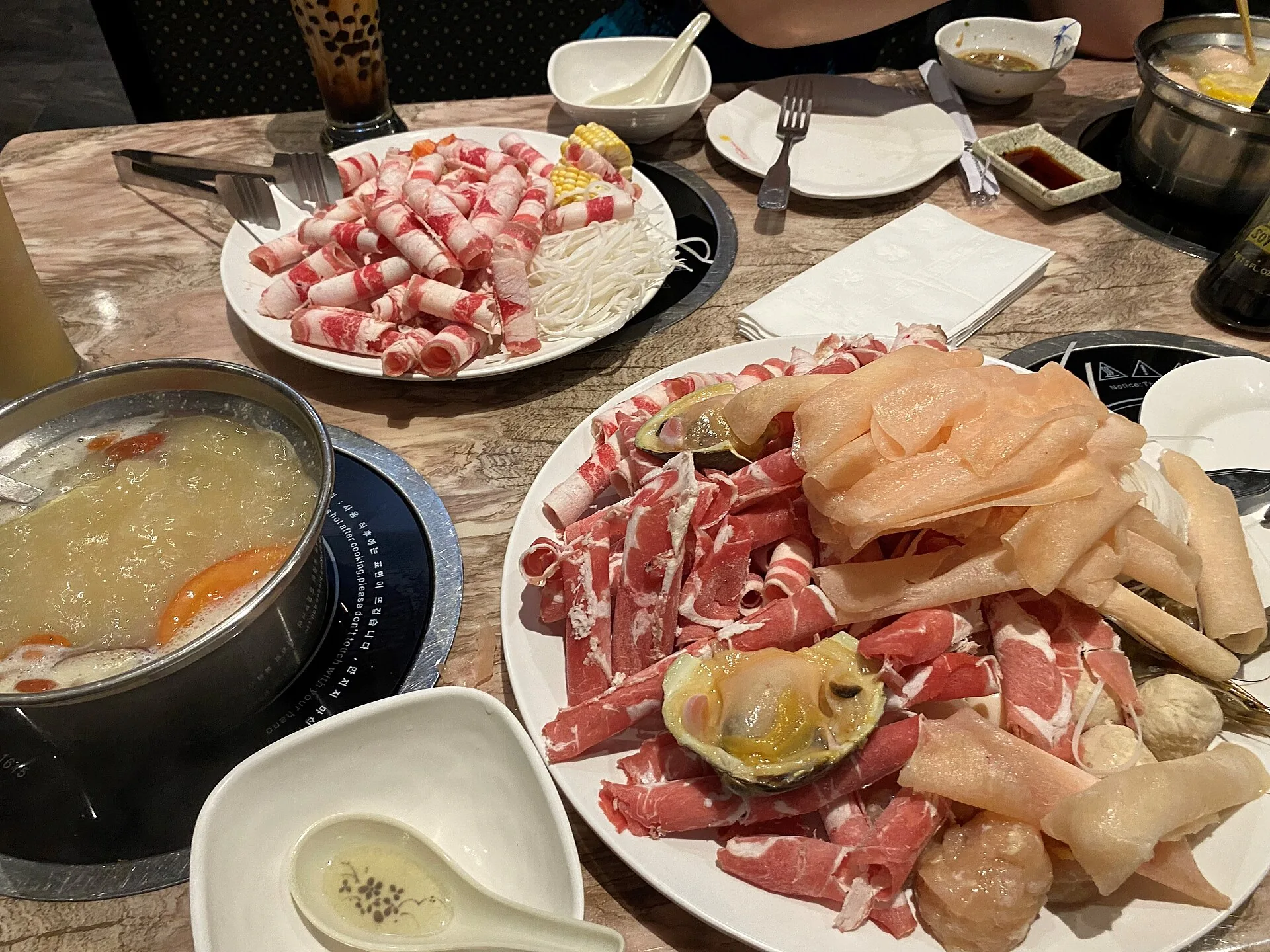
Chinese hot pot is traditional not because one ancient recipe governs it, but because communities developed recognizable ways of sharing broth, ingredients and time. Chongqing red broth, Beijing mutton and Chaoshan beef hot pot are related methods with different priorities.
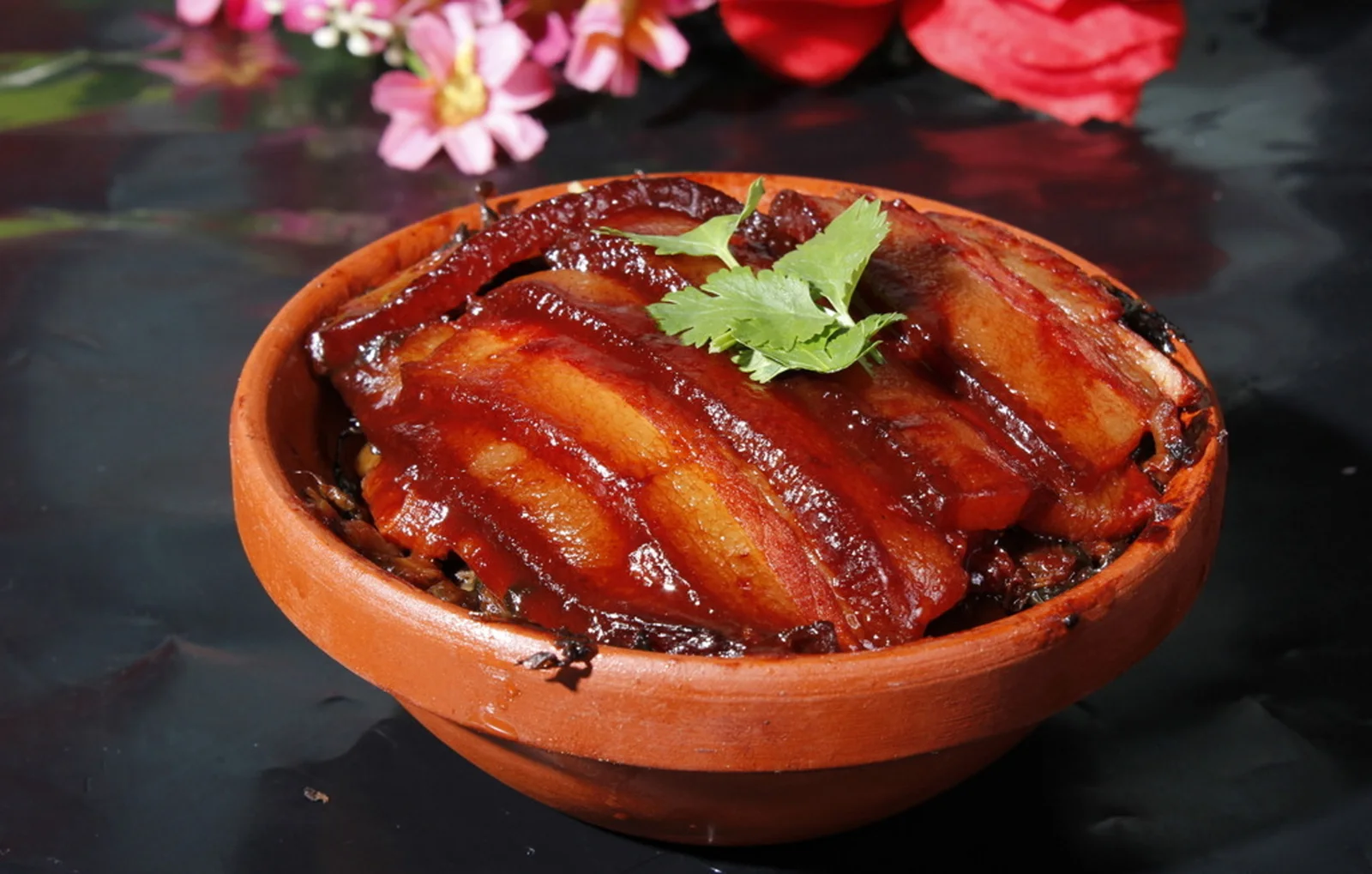
Braising offers another kind of patience. In Shanghai food, red-braised pork turns soy, rice wine, sugar and heat into a sauce that feels settled rather than loud. Steamed fish uses the opposite gesture: intervene lightly, respect timing and let freshness remain visible.
Festival food carries meaning, but not one universal meaning
The UNESCO record for Spring Festival social practices is useful because it treats preparation, reunion, visiting and shared celebration as practices rather than reducing the festival to one symbolic menu. That boundary matters. Dumplings can carry family memory in one northern household while another family builds the same date around rice cakes, seafood, soup or a dish that exists nowhere outside that kitchen. Tradition lives in repeated social work; a nationwide list cannot replace it.
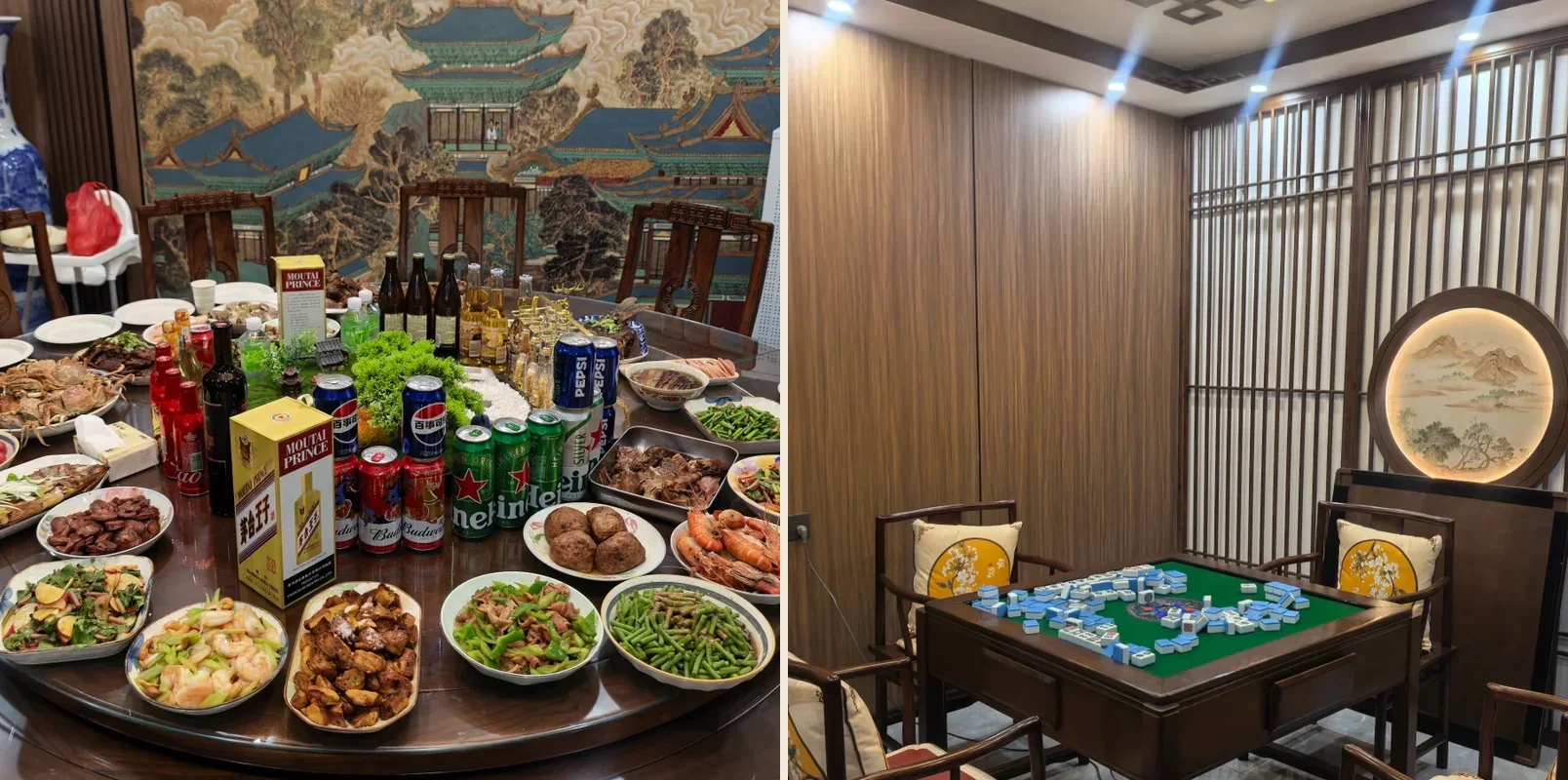
The table and the next room belong to the same story. A long family meal is not only a collection of traditional dishes: somebody shopped, several people cooked, seats were held for relatives, drinks and vegetables were chosen for different appetites, and the gathering continued after the bowls were cleared. The mahjong table is not evidence that every family celebrates this way. It is evidence that food often organizes a larger block of shared time. That relationship—labor, reunion, play and return—is what the broader Chinese food culture guide follows.
Food becomes especially legible during festivals. Dumplings may suggest old ingot forms at northern New Year tables. Round tangyuan can express reunion. Zongzi carries histories and regional tastes through leaf, rice and filling. Mooncakes move between family gifts, local styles and modern commercial life.
These associations are real, but they are not rules shared identically by every Chinese family. Our guide to Chinese festivals treats variation as part of the tradition rather than an error in it.
Symbolism also should not swallow flavor. A longevity noodle still needs texture. A reunion dumpling still needs a balanced filling. Meaning and pleasure survive best together.
Authentic Chinese food needs a more precise question
The word authentic often enters a restaurant like an inspector. It asks whether the food is real, usually without explaining which reality it expects.
Authentic to where? A Chengdu household, a Guangzhou banquet kitchen, a Shanghai breakfast shop, a Chinese American restaurant founded in the 1950s or a family that has moved twice and substituted what it could find?
| Weak authenticity test | Better question |
|---|---|
| “Do Chinese people really eat this?” | Which Chinese community, region or generation eats it? |
| “Is this exactly how it is made in China?” | Which place and period is the comparison using? |
| “The dish changed, so is it fake?” | What did adaptation preserve, and why did it change? |
| “The restaurant looks traditional, so is it authentic?” | Do the technique, ingredients and stated history support the claim? |
Specificity makes authenticity humane. It replaces accusation with context.
Traditional does not mean untouched
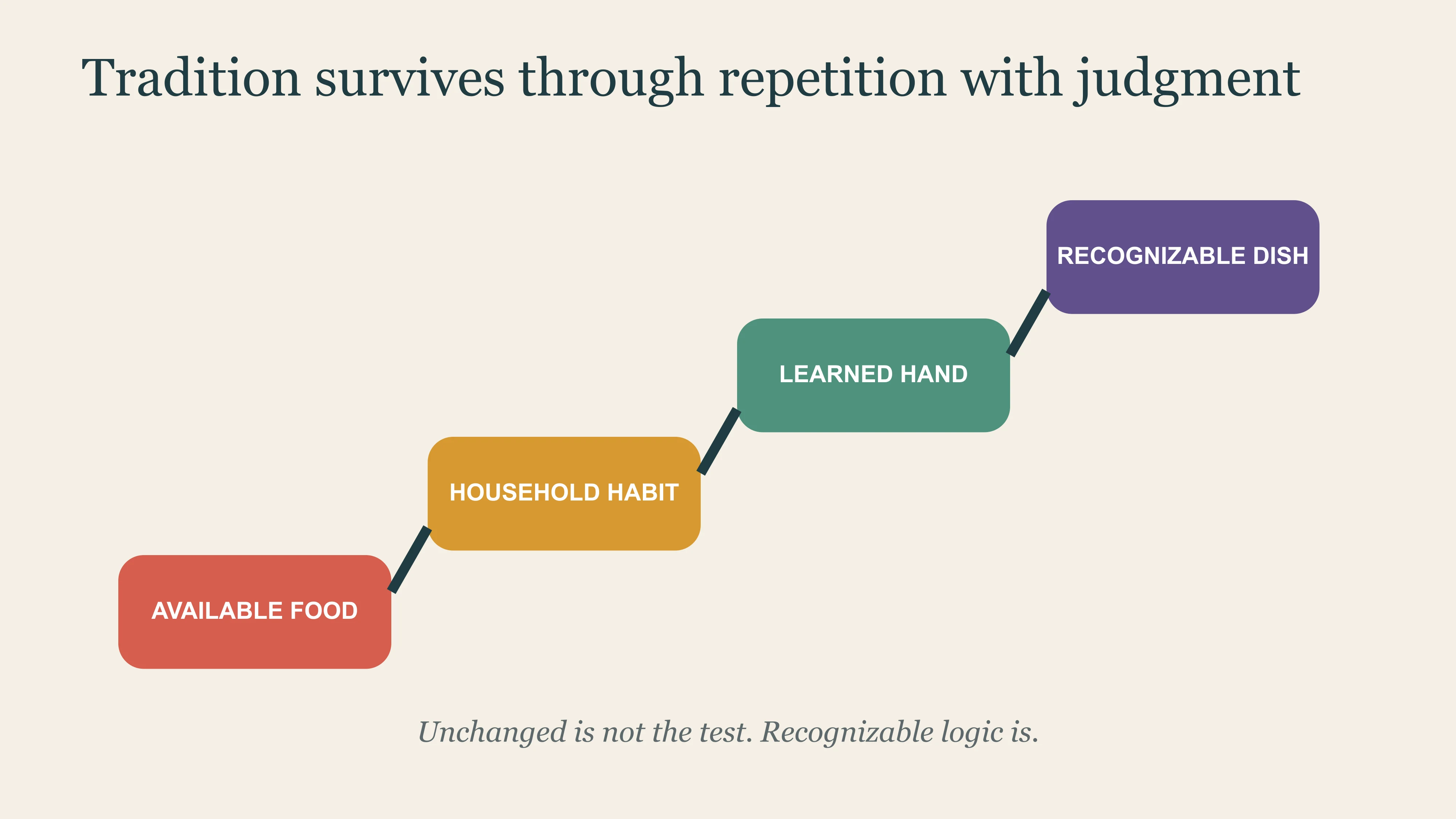
Tradition is not a sealed recipe card. It is a chain of decisions repeated often enough to become recognizable: which grain anchors the meal, which preservation method carries a season forward, which texture signals that the dish is finished, and which step an older cook corrects without consulting a timer. I distrust purity tests because they protect a fantasy of stillness. A tradition that cannot survive a new stove, a new city or one unavailable ingredient is already dead.
The honest question is not whether a dish has changed. Every durable cuisine changes. Ask what the change preserved. A household may replace one local green, shorten a braise for a weekday or use an electric cooker instead of a clay stove. If the sequence, texture target, shared occasion and remembered flavor remain legible, the dish still carries a lineage. If a prestigious name survives while the defining logic disappears, the label alone cannot rescue it.
This is why “traditional” cannot mean only banquet food. Congee made before work, steamed bread reheated for breakfast, pickles stretched across winter and yesterday's rice turned into today's meal are not lesser traditions. They reveal the real intelligence of Chinese food: labor, climate, thrift and appetite made repeatable.
Tomatoes, chilies, corn, peanuts and sweet potatoes entered China through global exchange. New tools changed kitchens. Refrigeration changed seasonality. Trains and delivery apps changed what could arrive for dinner.
Families also change. A grandmother may cook by feel; her grandchild may preserve the dish through a phone video and a digital scale. The method changes, but the desire to keep the taste available can remain deeply traditional.
This is why a newly popular dish can still deserve cultural attention. We should document when it emerged instead of inventing an emperor to make it respectable.
How to recognize thoughtful traditional Chinese cooking
Look for precision rather than costume. Does the menu name the region? Can the cook explain a technique? Are textures deliberate? Does a steamed bun have properly cooked dough? Does a braise balance salt, sweetness, aroma and time? Are seasonal ingredients allowed to taste like themselves?
Outside China, ask restaurant staff which dishes connect to their own region or community. Do not assume the least familiar dish must be the most authentic. Familiar foods can be made with extraordinary integrity, and unfamiliar foods can be marketed carelessly.
When the clues are printed in a restaurant list rather than passed down in a kitchen, the Chinese food menu guide shows how region, method, ingredient and cut can be read before the plate arrives.
At home, begin with one technique rather than a performance of the entire culture. Learn to steam a fish without overcooking it, fold one dumpling securely or make scallion oil without burning the onions. Respect grows through attention.
Frequently asked questions about traditional Chinese food
What is traditional Chinese food?
Traditional Chinese food is food connected to a recognizable regional, household, seasonal, religious or festival practice transmitted over time. It includes everyday staples and home dishes as well as famous banquet foods.
What are examples of traditional Chinese dishes?
Examples include jiaozi, baozi, hand-pulled noodles, red-braised pork, steamed fish, congee, hot pot, zongzi and mooncakes. Every example has regional and household variations, so the name alone does not describe one fixed recipe.
Is authentic Chinese food always the same as food served in China?
No. Authenticity may refer to a particular region, family, restaurant lineage or diaspora community. Chinese American or British Chinese dishes can be authentic to their own histories even when they differ from present-day dishes in China.
Is traditional Chinese food always old?
Not necessarily. Traditions can absorb new ingredients and techniques, and a newer practice can become meaningful through repetition and community use. A dish does not need an invented ancient legend to have cultural value.
What is the difference between traditional Chinese food and takeout food?
The categories can overlap. Takeout describes a service format, while traditional describes cultural continuity or a recognized food practice. A takeaway may serve a regional traditional dish, a diaspora classic or a modern invention.
How can I find authentic Chinese food outside China?
Look for menus that name regions and dishes precisely, ask staff what they cook for their own community, and judge technique and context instead of treating unfamiliarity as proof of authenticity.
Tradition remains alive because dinner is not a museum
The most traditional thing about Chinese food may be its refusal to remain still. A cook adjusts for weather, appetite, price and the people who have arrived. The dish changes enough to survive and remembers enough to be recognized.
Return to the wider Chinese food guide, then explore Chinese street food and Shanghai food as two very different places where continuity and change meet.
For regional depth, compare Beijing food, Hunan cuisine and Fujian cuisine without treating any one of them as the national default.
Bring one living-recipe lineage to East Moment's community: the dish, what changed and the rule your household refuses to lose. Return for lineages showing tradition surviving real kitchens instead of posing behind a purity label.
Traditional Chinese food is a chain of decisions, not an ancient menu
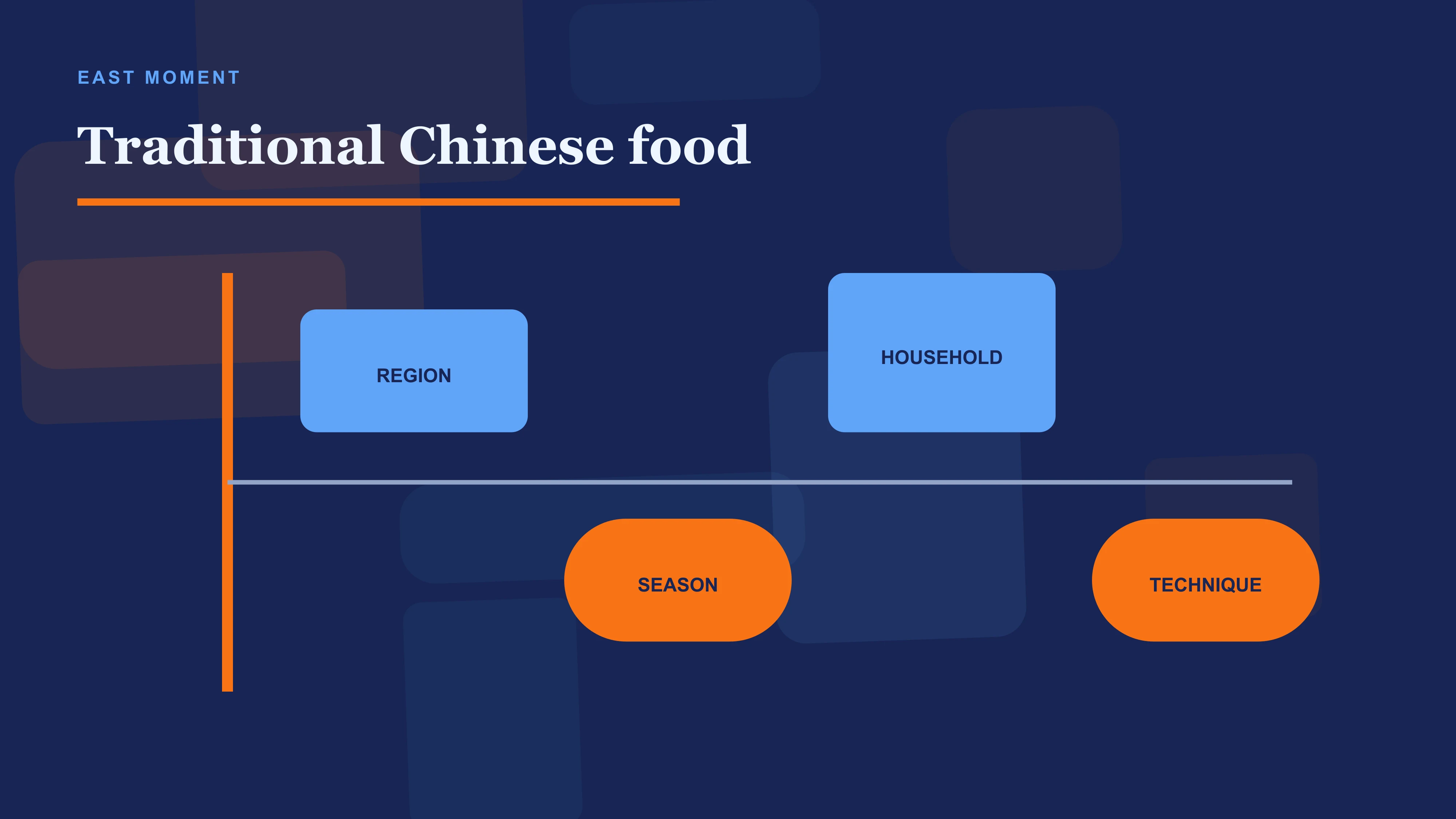
A dish becomes traditional when people repeat and teach a useful arrangement of ingredients, labour and occasion. Age matters, but continuity matters more. A recipe can change chilli variety, fuel or cookware and still preserve the hand decision a family recognises.
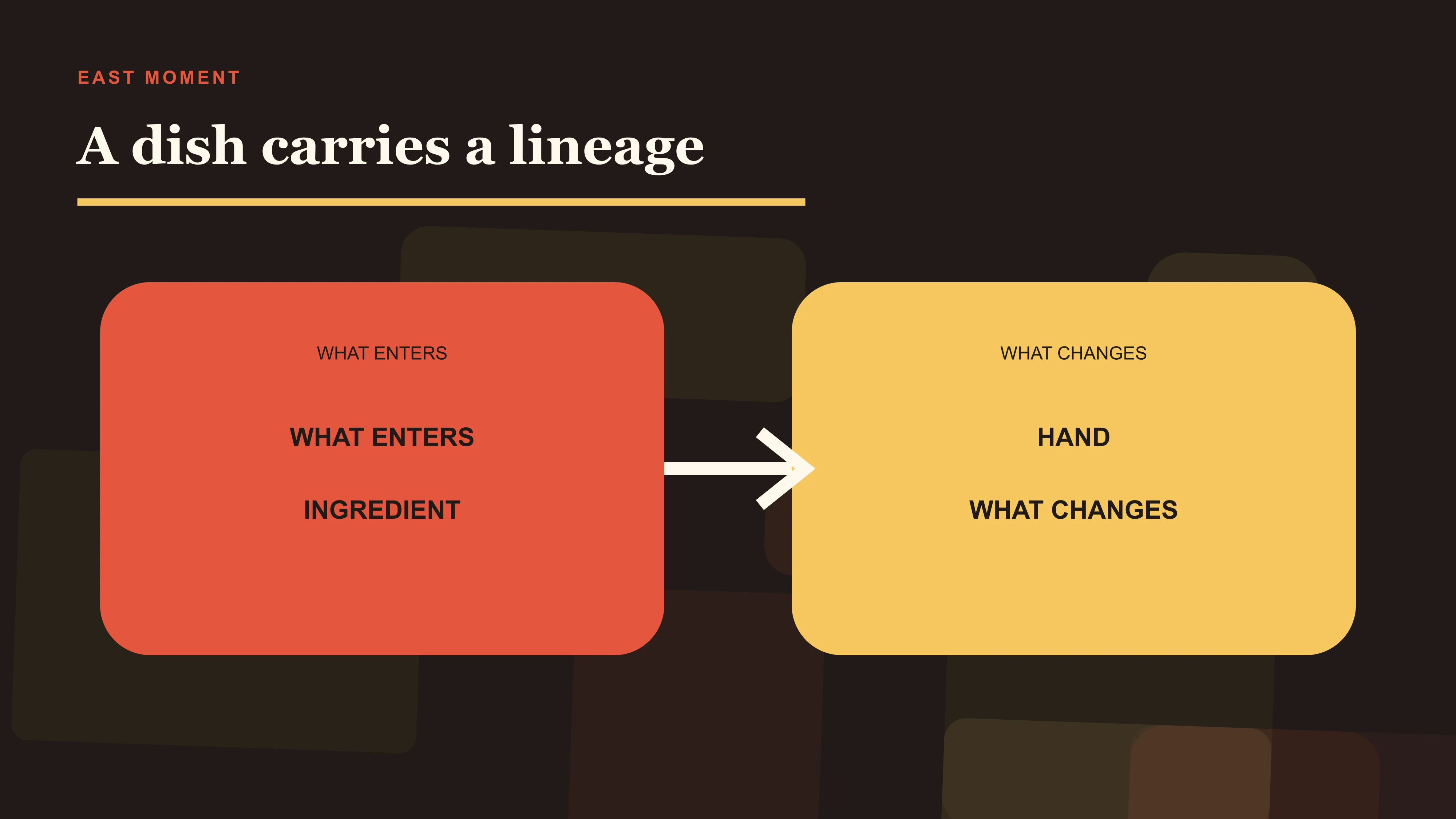
My test is concrete: what ingredient anchors the place, what technique transforms it, when is it served, and who teaches the difficult moment? “Chinese people have eaten this for thousands of years” is usually weaker than one named region, one visible hand movement and one living occasion.
This also prevents a national menu from erasing difference. Wheat dough in Henan, rice textures in the south, preserved vegetables, festival foods and restaurant banquet dishes belong to overlapping but distinct systems. Start with the Chinese food hub, then follow the regional route rather than treating takeout familiarity as the whole cuisine.
Tradition is strongest when a reader can see who keeps it alive. A dish without a cook, season or table is only a name.
The parent food culture and history route follows the practices that make those names durable.