Chaoshan cuisine and Hakka food: keep the seam visible
Use ingredient handling, settlement pattern and service ritual to tell related southern foodways apart.
| Route | What distinguishes it | Boundary |
|---|---|---|
| Chaoshan seafood and brine | Fresh seafood, marinated raw preparations, master-stock braises and precise dipping sauces center ingredient condition. | Every coastal Guangdong dish is Chaoshan or safe to eat raw. |
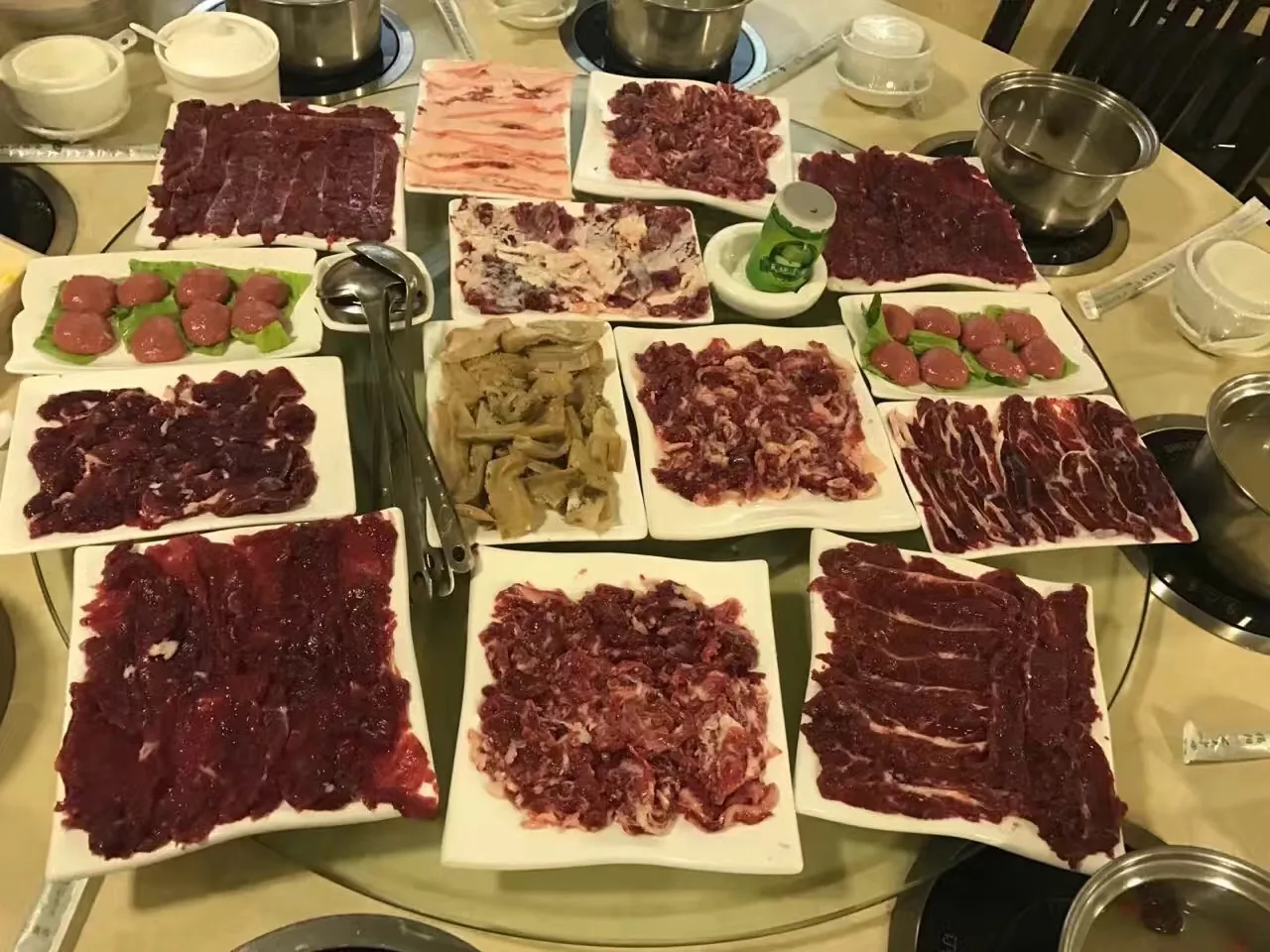
| Chaoshan beef hot pot | Named beef cuts, fresh slicing, brief cooking and satay-like shacha dip create a specialist system. | It represents all Chaoshan cooking or all Chinese hot pot. |
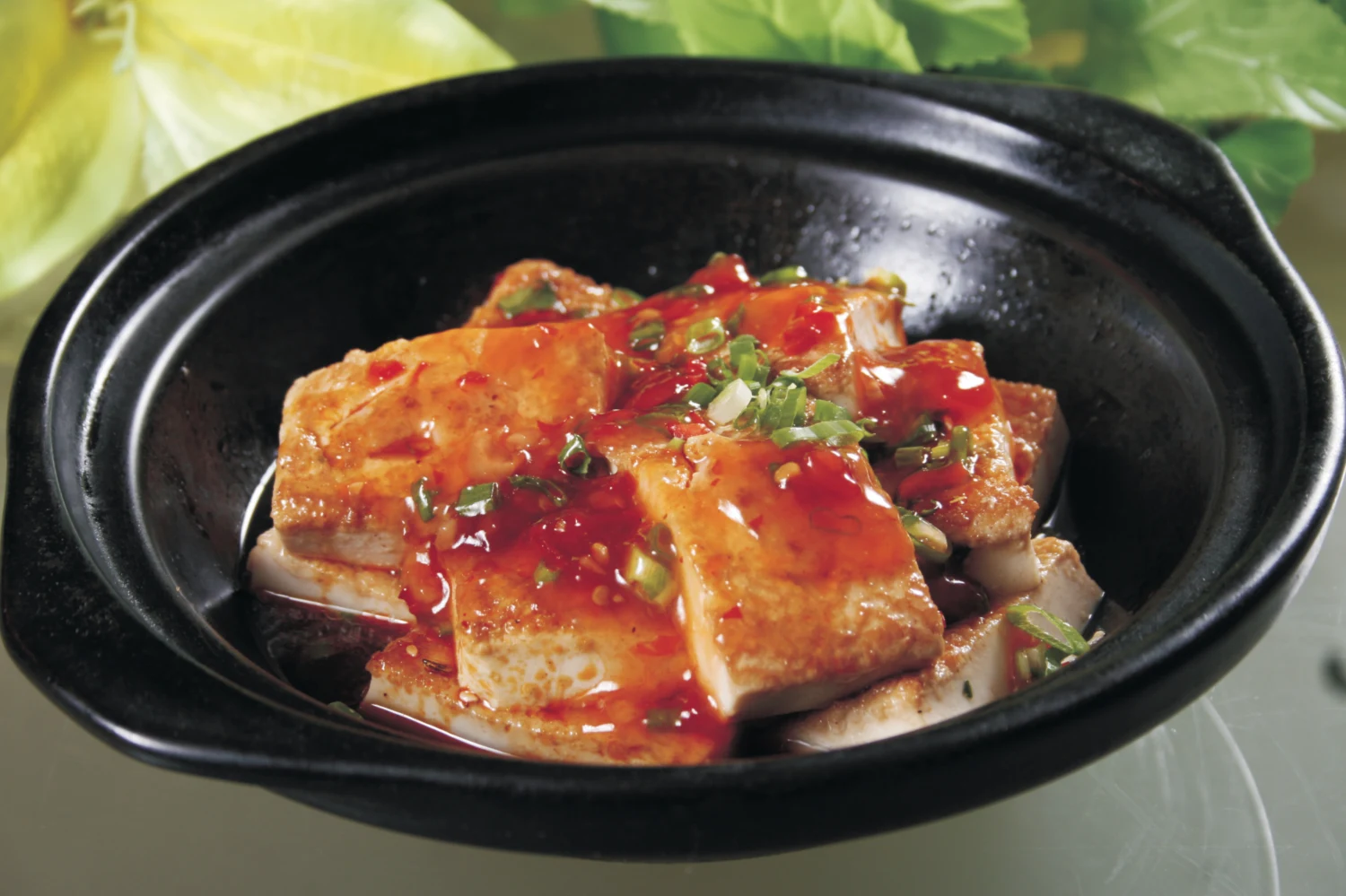
| Hakka preserved and stuffed foods | Stuffed tofu, preserved mustard greens and salt-baked or braised foods connect labor, household storage and migration. | Every salty or preserved southern dish is Hakka. |
| Diaspora routes | Teochew and Hakka communities adapted in Singapore, Malaysia, Thailand and other societies through specific local histories. | Diaspora versions are frozen copies of a Guangdong original. |
The Han River delta and Hakka uplands produce different problems
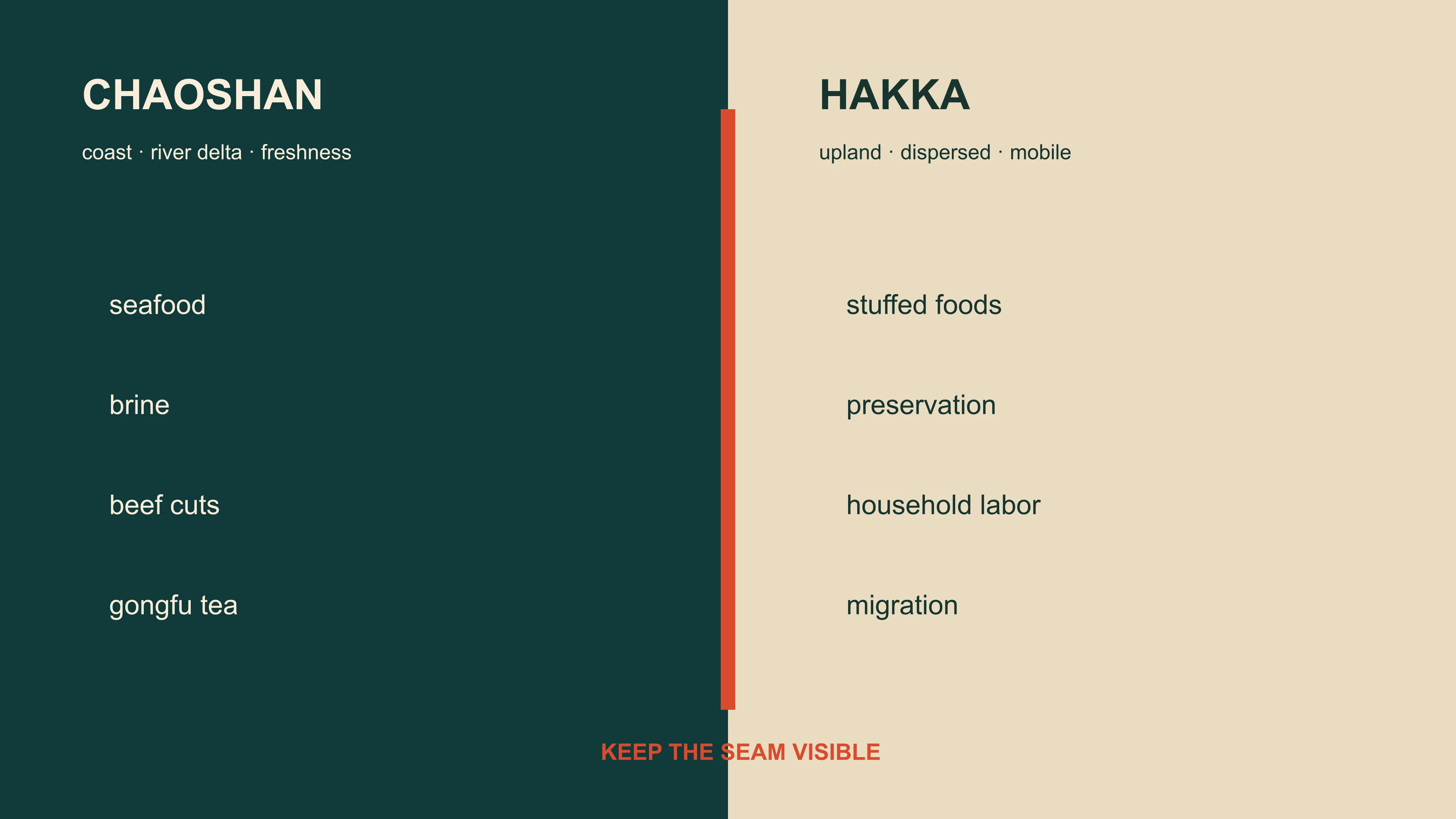
Chaoshan centers on Chaozhou, Shantou, Jieyang and surrounding coastal and river landscapes. Fishing, aquaculture, rice agriculture and market access support seafood and rice products. Hakka communities are historically dispersed across upland and border areas of Guangdong, Fujian and Jiangxi, with no single compact homeland. Settlement, farming and mobility encouraged other preservation and household strategies. Geography does not determine every dish, but it explains why the same province contains foodways that value freshness, brine and fine cutting in one context, and durable preserved flavors in another.
Chaoshan seafood is demanding because little can be hidden
Steaming, poaching and cold or marinated seafood preparations depend on species, handling and precise timing. A plain-looking fish exposes poor freshness faster than a heavily sauced fillet. Shellfish, fish balls and oyster omelets also turn local marine products into distinct textures. The international fascination with raw marinated seafood should not erase food-safety boundaries: source, cold chain and professional handling matter, and a cultural description is not a home-safety instruction. The real sophistication is not danger. It is making ingredient condition legible.
A Chaoshan beef table is a map of cuts
Chaoshan beef hot pot divides the animal into cuts with different grain, fat and cooking windows. Thin slices enter a light broth briefly, then meet shacha or another dip. Freshness and butchery make the experience; a red, spicy broth would bury the point. Beef balls add another craft through pounding and protein structure. I admire this system because it forces attention. The diner cannot call everything 'beef' after comparing tenderloin, brisket, tendon and fattier cuts at the same table.
Master stock and gongfu tea organize repetition
Chaoshan lou mei uses seasoned braising liquid across duck, goose, offal, tofu and eggs, with each ingredient receiving its own timing. The romance of an ancient master stock should never replace hygiene and temperature control, but the culinary idea is powerful: continuity is maintained through disciplined renewal. Gongfu tea provides another repeated practice, using small vessels and concentrated brewing within hospitality and daily conversation. Neither is decoration. Both reward attention to sequence, strength and relationship over one dramatic first impression.
Hakka food remembers mobility without becoming survival folklore
Hakka identity is associated with histories of migration and settlement across southern China and overseas. Food stories often turn this into a single tale of hardship, salt and portable dishes. That frame can help, but it can also trap Hakka cooks in the past. Preserved mustard greens, stuffed tofu and braised pork are living family and restaurant foods whose flavor depends on fermentation, filling, fat and heat. Treat them as skilled cooking first. Mobility explains why practices traveled; it does not mean every dish was invented as a ration.
Yong tau foo turns an ingredient into a vessel
Stuffed tofu is the famous Hakka example, but peppers, bitter melon, eggplant and other ingredients can hold fillings too. The outer material contributes flavor, moisture and structure; the filling must bind without becoming rubbery. Frying, braising or simmering then changes the relationship. Diaspora yong tau foo stalls in Southeast Asia may offer a wide selection and different broths, showing adaptation through service design. The food remains intelligible when we follow the structural idea of stuffing, not when we police one fixed ingredient list.
Chaozhou, Shantou and Meizhou require separate itineraries
Chaozhou's old urban institutions, Shantou's port history and seafood economy, and Meizhou's role as a major Hakka cultural center create different dining routes. In Chaoshan, a visitor might compare fish balls, beef, oyster preparations, goose braises and tea. In Meizhou, preserved mustard greens, stuffed tofu and salt-baked chicken lead toward another household and community history. Driving between them does not merge them. A combined page should function as a switchyard: it tells the reader when to change vocabulary and which local page to open next.
Teochew and Hakka became local in different ports
Teochew communities shaped food in Bangkok, Singapore, Penang, Johor, Cambodia and many other places; Hakka communities built food businesses and homes across Southeast Asia, India, the Caribbean and beyond. Rice noodles, braises, porridge, stuffed foods and preserved vegetables adapted to local ingredients, religious neighbors and restaurant economics. Calling these dishes diluted versions insults the communities that made them work. Calling every local dish Chinese erases collaboration. Name the migration group, city and local partner tradition whenever evidence allows.
Compare restraint with preservation in one meal
On a Chaoshan route, order a plainly cooked seafood or vegetable, one brined item, a rice product and tea; on a Hakka route, choose a stuffed dish, a preserved-vegetable dish and a broth or braise. The point is not to stage a contest. It is to feel how one table makes freshness visible and another turns preservation into depth. Avoid ordering only beef hot pot or only mei cai pork. A cuisine becomes legible when its supporting foods show how people eat beyond the celebrity dish.
Return with the family or shop term, not only the English dish
Teochew, Chaoshan, Chaozhou and Hakka names travel through multiple romanization systems and local languages. Save the characters, pronunciation or menu spelling, city and cooking method. East Moment will connect those terms without forcing one English label onto every version. Return as reader records reveal how the same stuffed form, rice noodle or brine changed across Guangdong and diaspora cities. The most valuable correction may be linguistic: learning that two similar names point to different communities, or that one dish became local enough to carry a new name.