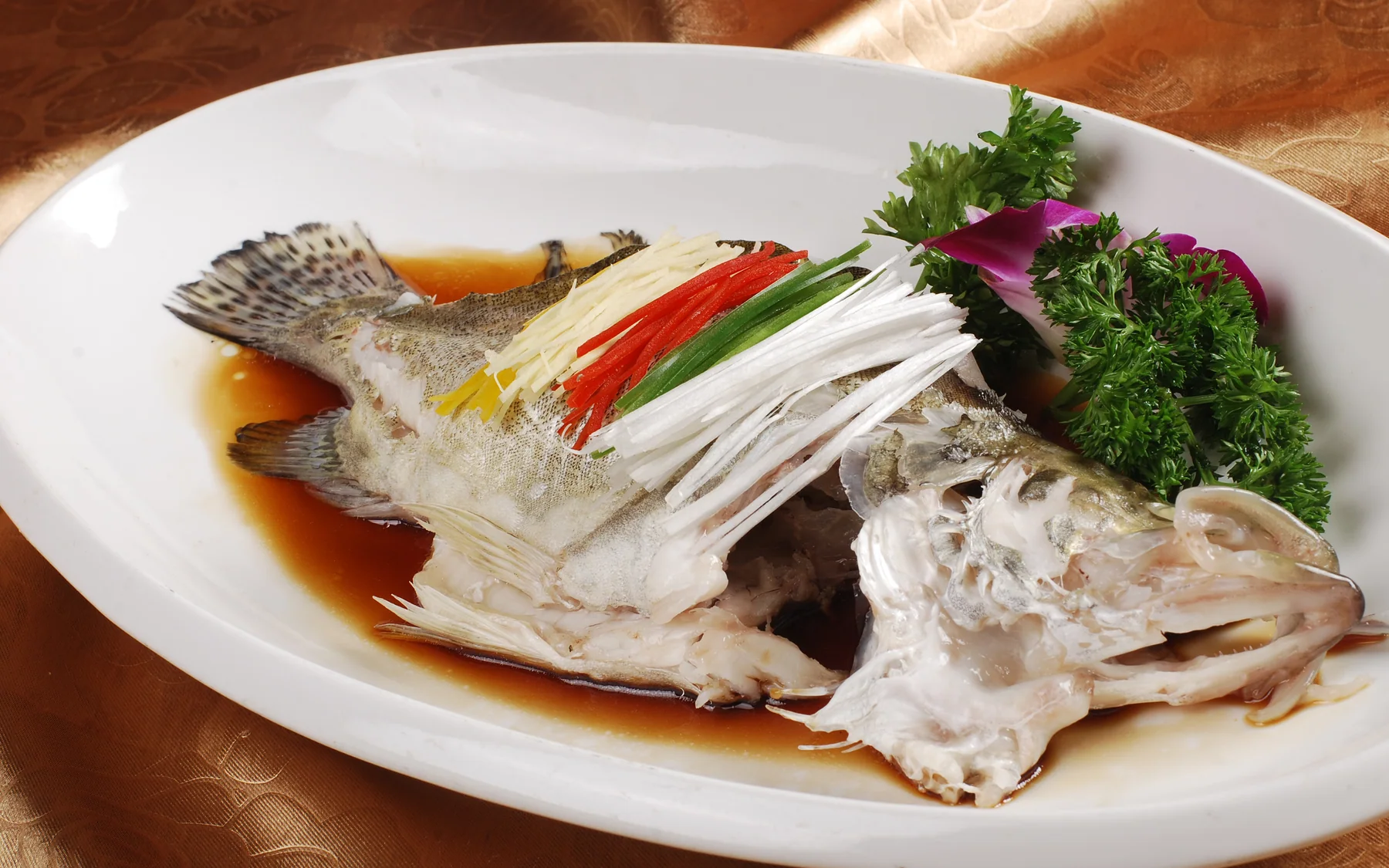
Identify Chinese seafood before choosing the method
Species, source, cut and service determine what heat should do.
| Seafood system | Evidence to inspect | Boundary the image cannot cross |
|---|---|---|
| Whole steamed fish | Known species, clean handling, scored or intact body and exact steam timing preserve flesh and skin. | A whole presentation proves wild catch, freshness or sustainable source. |
| Jiangnan formed fish | Knife cuts, coating, frying and sauce create crisp projections while keeping edible flesh inside. | Squirrel shape alone proves Suzhou craft or the fish species claimed. |
| Shrimp and shellfish | Cold chain, cleaning and brief cooking protect sweetness and spring. | Bright color or curl proves safe doneness and freshness. |
| Dried seafood and stock | Traceable dried ingredients are soaked, cleaned and used to build concentrated savor in soups and braises. | High price proves ethical sourcing, age or absence of substitution. |
A fish name changes safety, ecology and cooking
Freshwater and marine fish differ in bone structure, fat, parasites and texture. English menu names can blur species, while regional Chinese names may refer to appearance or market category. Ask for the exact species when sustainability, allergy or preparation matters.
The word fish cannot carry that responsibility. A credible guide records market name, scientific identification when available, source and cooking method without guessing from a plated photograph.
Whole fish can move from translucent to dry while the table is still sitting down
Thickness, starting temperature, vessel and steam strength determine time. Aromatics and seasoned oil may enter before or after cooking, but they should not bury the fish’s own sweetness. Carryover heat continues after the lid opens.
Check the thickest section near the backbone using safe practice. Flesh should release appropriately for the species without becoming cottony. I prefer a fish served immediately over one delayed for a ceremonial photograph.
Symbolism should not become a performance imposed on every table
Whole fish can signify completeness and abundance at celebrations. Head orientation, turning practices and serving order vary by region, family and occasion. Ask the host rather than converting one custom into a national law.
The more important etiquette is practical: help children and guests with bones, use serving utensils and leave skilled portions for others. Care is more convincing than symbolic policing.
Squirrel fish is built to change surface area
Deep cross-hatching allows a deboned fish body to open outward in hot oil, creating crisp projections and visual form. Coating, oil temperature and cut depth must align; shallow cuts fail to bloom, deep cuts break the structure. Sauce is applied so crispness and sweet-sour contrast survive.
The dramatic form is not childish decoration. It is knife work translated into texture. Photograph the raw cut pattern when possible and the broken interior after serving. Those are the proof frames.
Spring and sweetness disappear under defensive overcooking
Shrimp firm and change opacity quickly; shellfish open according to species and condition; squid crosses from tender to rubbery before longer cooking may soften it again in another method. Clean handling and reliable doneness guidance matter more than one color rule.
Salt-and-pepper preparations should keep the seafood recognizable beneath coating and aromatics. When breading becomes the thickest ingredient, the dish has stopped being about shrimp.
Preservation concentrates flavor and also raises sourcing questions
Dried scallop, shrimp, fish and other products build broth and banquet savor. Quality varies by species, processing, moisture and storage. Rehydrate and clean correctly; keep labels because substitution and undeclared allergens are real concerns.
I refuse the idea that rarity excuses opacity. Expensive dried seafood should carry more documentation, not less. Prestige is not provenance.
Chinese seafood belongs to ecological places, not an endless market counter
Lakes, rivers, deltas and coastlines support local species and cooking systems, while aquaculture and global trade reshape availability. Pollution, overfishing and habitat change enter the culinary story even when the menu remains nostalgic.
A page that praises freshness without asking where the animal came from is incomplete. Cultural heritage cannot be protected by consuming its ecological basis without limits.
Fresh-looking is not the same as safely handled
Cold chain, clean water, cross-contamination control and appropriate cooking are essential. Raw or lightly cooked seafood carries specific risks; vulnerable diners need qualified guidance. Shellfish toxins and some contaminants are not removed by ordinary cooking.
Use reputable suppliers and local advisories. A crowded tank, lively animal or seaside view cannot certify water quality and harvest legality. The guide must say that clearly.
Eating whole fish requires attention the fillet has removed
Small pin bones, rib bones and the backbone remain in many whole-fish preparations. Diners should take modest bites, feel with tongue and chopsticks and provide children with carefully checked portions. Speed and conversation change when the food asks for this concentration.
That slower pace is not an exotic obstacle. It is part of how the dish preserves shape, moisture and visual completeness. Still, restaurants and hosts should warn unfamiliar diners. Hospitality explains a risk before it becomes embarrassment.
The market board is a more honest menu than a permanent fantasy
Species availability, fishing season, weather, aquaculture supply and regulation change what is sensible to serve. A restaurant promising every luxury fish every day may rely on frozen stock, imports or substitution. None is automatically wrong; opacity is the problem.
Ask market price and weight before ordering a whole fish. Confirm preparation and whether the displayed price is per unit weight. A culturally rich meal should not require financial surprise. Clear commerce is part of trust.
The method should reveal the species and the place
Choose the seafood first, then the heat. Steam when freshness and texture deserve exposure; fry when knife work and surface transformation are the point; braise or dry when concentration belongs to the tradition. Do not reverse that order and search for an animal to carry a famous sauce.
My standard is simple: after the first bite, I should still know I am eating this fish or shellfish, not merely ‘seafood.’ Precision is respect for the cook, the diner and the water that produced it.