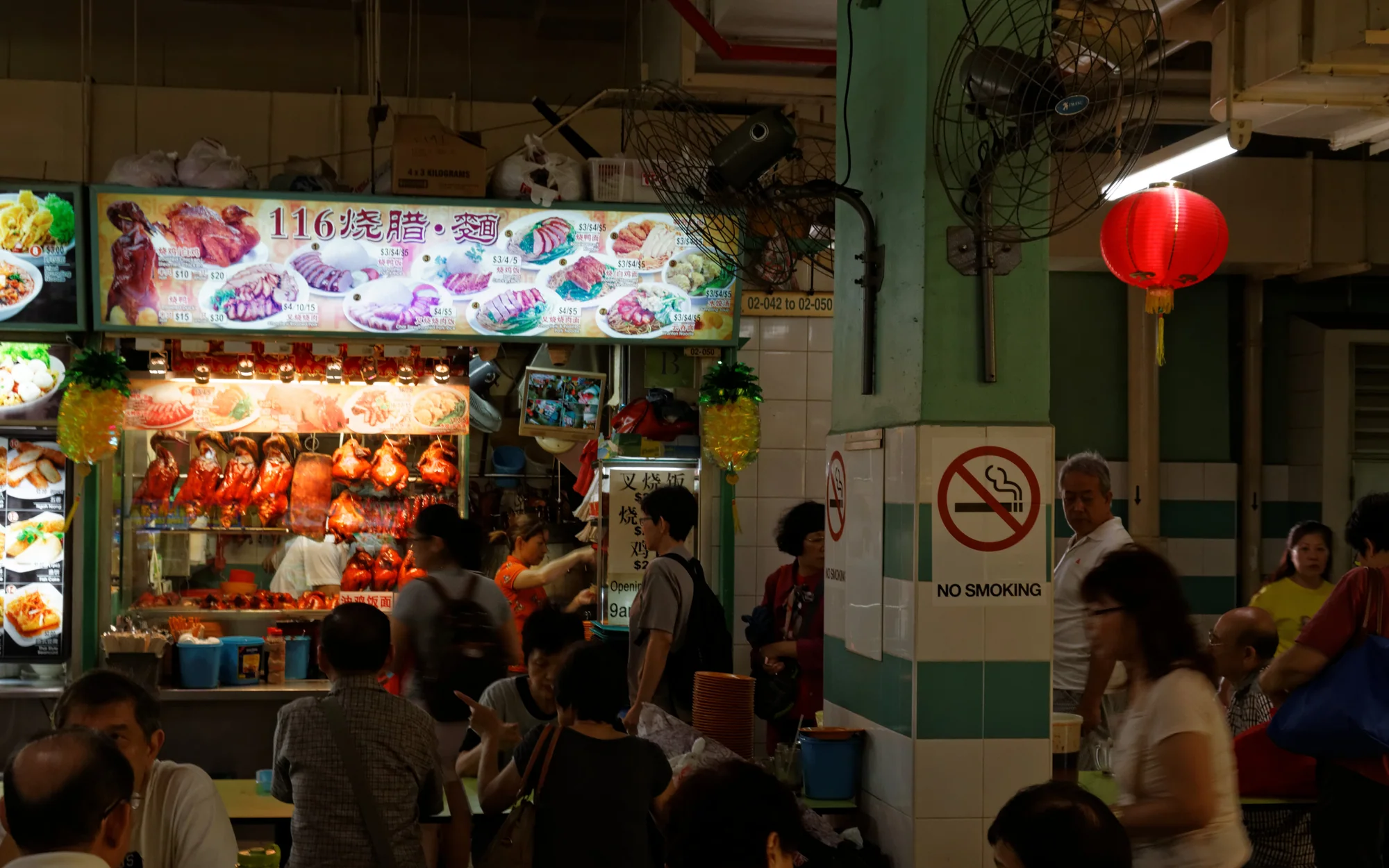
Chinese food in Southeast Asia through port and community
The examples demonstrate different migration languages and local partnerships, not a ranking of national dishes.
| Community route | Evidence | Boundary |
|---|---|---|
| Singapore Chinese cuisines | Hokkien, Teochew, Cantonese, Hakka and Hainanese traditions entered hawker centers, homes and restaurants through distinct migration groups. | Singapore represents Malaysia, Indonesia or the whole region. |
| Peranakan cuisines | Chinese, Malay, Indonesian, Indian, Thai and European colonial histories combine differently in Melaka, Penang, Singapore and elsewhere. | Peranakan always means Chinese ancestry or one conventional recipe. |
| Thai Chinese routes | Teochew migration became central to Bangkok commerce and food, while Hainanese and other communities created additional routes. | Every Thai noodle with a Chinese ancestor remains primarily foreign. |
| Indonesian and Filipino Chinese tables | Hokkien and other communities localized names, pork or non-pork practices, noodles, dumplings and festival foods within different religious majorities. | Shared loanwords prove identical dishes or community histories. |
Trade contact became family, language and neighborhood
Chinese merchants traveled through Southeast Asian ports long before mass colonial-era labor migration. Later miners, plantation workers, artisans, cooks and traders arrived through multiple routes. Some communities intermarried and developed creole languages and customs; others maintained dialect associations and strong links to home counties. Colonial governments classified people in ways that hardened or distorted identities. Food records all of these processes. A noodle can reveal a dialect word, but marriage practice, religious life and neighborhood institutions explain why it became local.
The hawker center is an institution, not a pan-Asian buffet
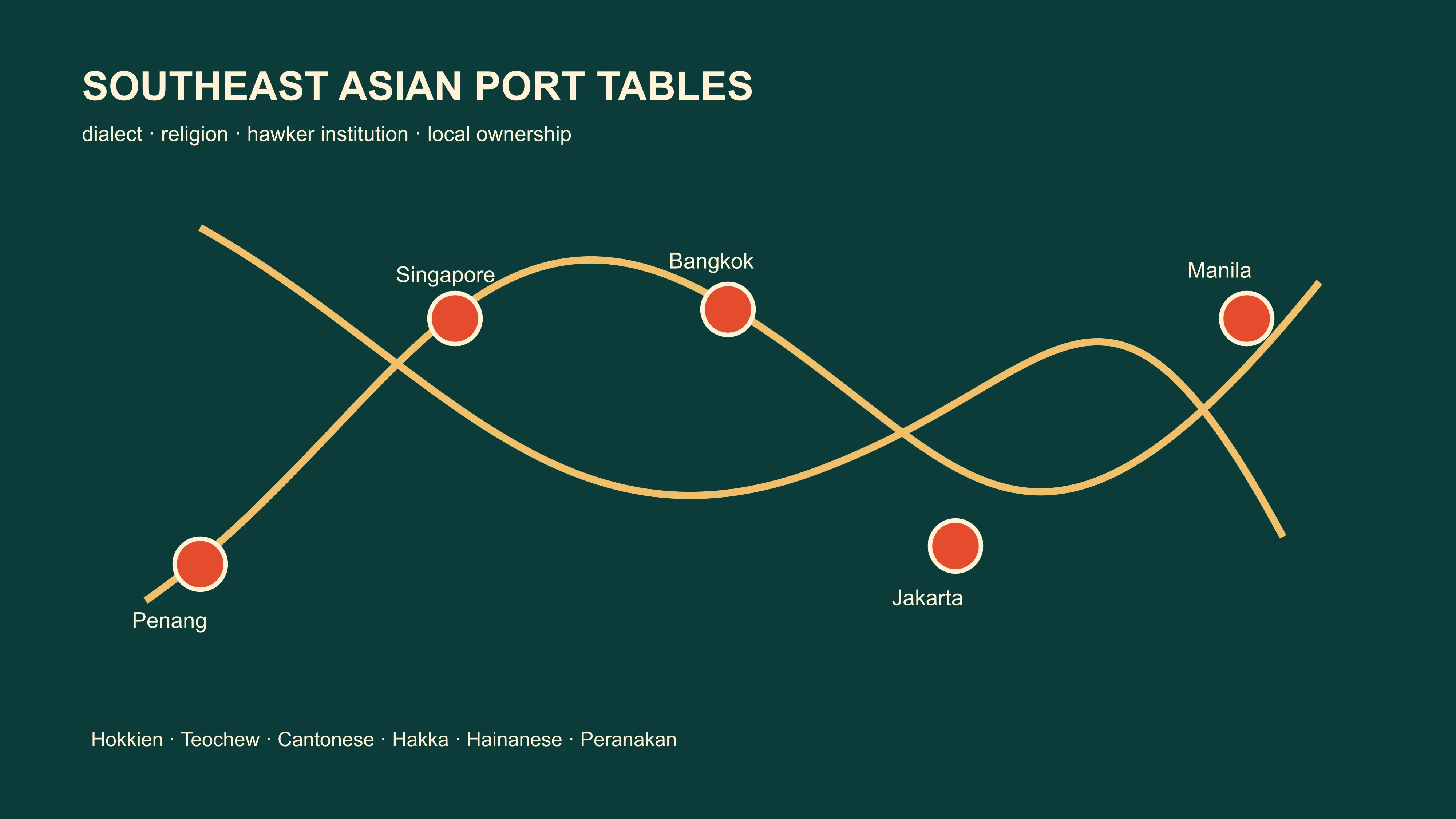
Singapore's National Heritage Board describes Chinese cuisines brought by different nineteenth- and twentieth-century migrant groups and their development in hawker centers, restaurants and homes. Hokkien mee, Teochew kway chap, Cantonese roast meats and Hainanese curry rice carry different histories even when sold under one roof. Regulation moved many street hawkers into organized centers, changing equipment and service. The shared dining space encourages comparison, but it should not erase ownership. Name the stall's claimed tradition and the city-specific way it evolved.
Nyonya food has regional and family grammars
Peranakan cuisine can combine Chinese techniques with Malay and Indonesian ingredients, Indian and Thai connections and European colonial histories. Singapore's heritage record explicitly notes that not all Peranakans are of Chinese ancestry and that no single conventional recipe governs the food. Penang's sour fish-based laksa differs from richer southern forms; family rempah, festival practice and religious boundaries matter. The word hybrid is too passive. Generations of women and households developed exact spice pastes, preservation and ceremonial menus. Collaboration became inheritance.
Penang, Melaka, Ipoh and Kuala Lumpur tell different stories
Penang's Hokkien and Peranakan histories meet Malay, Indian and colonial port life; Melaka has another Peranakan archive; Ipoh's Cantonese migration and tin economy shaped its food; Kuala Lumpur gathers these and newer arrivals. Even a shared name changes meaning: Hokkien mee can indicate a dark fried noodle in Kuala Lumpur or a prawn-broth noodle in Penang, while Singapore uses the name again differently. The difference is not confusion. It is the map. Save the city whenever you save the dish.
Teochew food became part of Thai urban life
Teochew migrants and descendants played major roles in Thai commerce and society, especially in Bangkok. Rice-noodle forms, braises, congee, fish balls and festival foods entered local markets alongside Thai herbs, chiles, fish sauce and service customs. The result cannot be sorted cleanly into Chinese and Thai halves. A dish may carry a Teochew word and be understood nationally as Thai. Hainanese chicken rice adds another route, and regional Thai cities change it again. Name the migration history without withdrawing local ownership.
Religion and national politics change the Chinese table
Chinese Indonesian food developed across islands, colonial categories and periods of anti-Chinese restriction. Hokkien-derived names such as bakmi or lumpia localized in different cities; pork may be central in some communities and absent in Muslim-facing businesses. During periods when Chinese public culture was restricted, food could remain visible while language and identity were pressured. A restaurant name and customer base matter. It is careless to infer the cook's ethnicity or the dish's religious suitability from a Chinese-sounding word alone.
Loanwords reveal contact, not identical ownership
Filipino pancit includes noodle traditions with Chinese migration roots, transformed into many regional and celebratory forms. Lumpia likewise traveled and localized. In Vietnam, Chinese communities including Cantonese, Teochew, Hokkien, Hakka and Hainanese groups participated in Cholon and other urban food systems, while Vietnamese cuisines developed their own powerful noodle, roast and festival traditions. Similar characters or sounds can help trace movement, but they cannot make a modern national dish foreign. Etymology is one evidence layer; lived ownership is another.
Ask which dialect, city and religious table you are entering
In Singapore or Malaysia, distinguish Hokkien, Teochew, Cantonese, Hakka, Hainanese and Peranakan claims instead of ordering 'Chinese local food.' In Thailand, ask whether a dish is associated with Teochew markets, a Hainanese shop or another route. In Indonesia and Malaysia, never assume pork or halal status from the cuisine label. Then choose one noodle or rice form, one preserved or fermented flavor and one dish showing local herbs or seafood. The meal should teach a relationship, not collect national trophies.
Return with the local spelling and stall history
Dish names travel through Hokkien, Teochew, Cantonese, Malay, Thai, Indonesian, Tagalog, Vietnamese, English and other languages. Record the exact local spelling, city, stall or household context and how the food is served. East Moment will connect cognates without declaring them one dish. Return because this lexicon gains precision through readers: a single corrected vowel can reveal a different migration group, while a dated hawker-stall record can show when a family recipe became part of national public life.