Chinese food in Australia by migration layer and place
The primary owner is Australia; New Zealand and Pacific routes remain explicit neighboring histories rather than decorative additions.
| Route | Evidence | Boundary |
|---|---|---|
| Goldfields and market towns | Nineteenth-century miners, merchants, market gardeners and restaurateurs built early Chinese Australian food supply and public businesses. | Gold-rush Victoria or New South Wales represents all Australia. |
| White Australia era | Immigration restriction and racial hostility shaped family formation, occupation and public business through the twentieth century. | Restaurant success means exclusion had little effect. |
| Postwar and contemporary cities | Hong Kong, Malaysian Chinese, Taiwanese and mainland regional migration expanded suburban food corridors and specialist cuisines. | Sydney and Melbourne represent regional towns, Perth, Brisbane, Adelaide or Darwin. |
| New Zealand route | Otago mining, market gardening, laundries, takeaways and later migration created distinct Chinese New Zealand institutions. | New Zealand is a smaller version of Australian Chinese history. |
Early Chinese food followed miners and supplied towns
Chinese migrants reached Australian goldfields in the nineteenth century, but mining was only part of their work. Merchants, cooks, gardeners and traders supplied both Chinese communities and wider towns. The National Museum of Australia's Harvest of Endurance material records merchants and trade links among Australia, Hong Kong and Chinese ports. Food businesses emerged inside this network. A restaurant was not merely a cultural display; it was logistics, credit, language and nourishment. Early migration also involved loneliness and family separation, which changes how we read communal meals and imported ingredients.
White Australia shaped the dining room
The Immigration Restriction Act of 1901 became a foundation of the White Australia policy, limiting Chinese migration and family life. Chinese Australian communities contested racial hostility while maintaining businesses and associations. Restaurants offered one public route inside a society that restricted belonging. This tension matters when an old menu uses cautious English descriptions or serves familiar Australian dishes beside Chinese ones. Adaptation was not simply a cook chasing taste. It could be a strategy for commercial survival in a country policing who counted as Australian.
The local Chinese restaurant made ceremony possible
In many Australian towns, the Chinese restaurant offered family celebrations, club dinners and a night out beyond the pub. Menus balanced sweet-and-sour dishes, chow mein, steak or other familiar items according to local demand. The business became social infrastructure even where few Chinese residents lived. Judging it only by today's regional standards mistakes its job. Ask whether the fried coating stayed crisp, vegetables retained texture and service handled a large group. Then ask what the restaurant allowed the town to do together. Culinary and social competence can occupy the same plate.
Sydney and Melbourne gained multiple Chinese centers
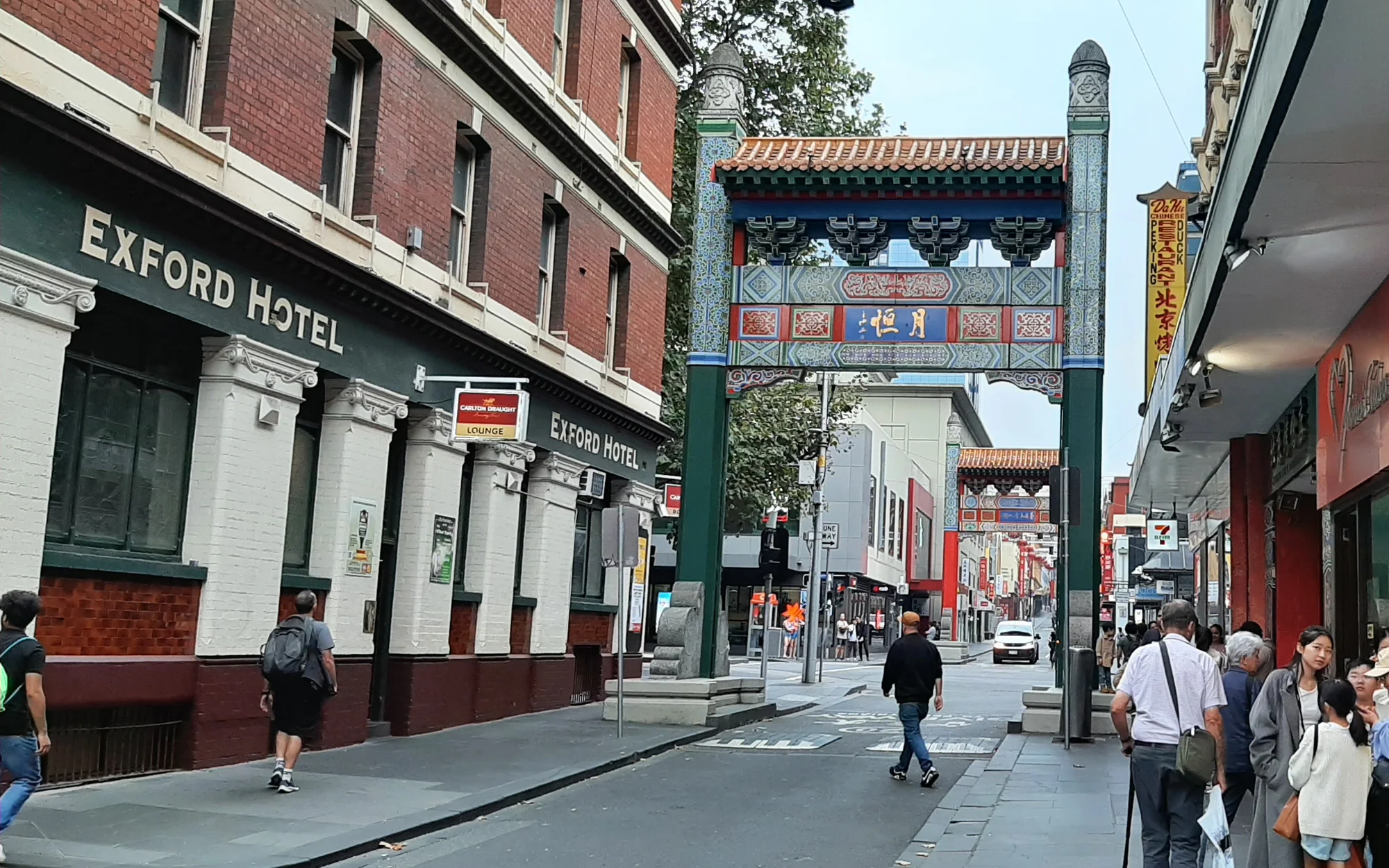
Historic Chinatowns remain visible, but suburban corridors such as Chatswood, Hurstville, Burwood, Box Hill and Glen Waverley reflect different migration waves and customers. Cantonese seafood and barbecue, Malaysian Chinese food, Taiwanese snacks, Sichuan hot pot, northwestern noodles and contemporary dessert shops can cluster far beyond the ceremonial gate. These centers are not merely more authentic. They are products of housing, universities, migration policy, transport and capital. A suburb name now tells the diner as much as the generic word Chinatown once did.
The dim sim shows industrial local design
The Australian dim sim is a large dumpling-like snack associated with Melbourne manufacturing and takeaway culture. Its name remembers dim sum, but its size, wrapper, filling and steaming or frying make it a specific local object. It belongs beside, not underneath, Cantonese dumpling traditions. The right comparison examines structure: dough thickness, cabbage and meat balance, steam versus fryer and the role of soy sauce. Calling it inauthentic misses how successfully it fits fish-and-chip shops, sporting grounds and quick service. A local format can be crude or excellent; origin does not decide quality.
Market gardens and takeaways anchor another national story
Chinese migrants worked in Otago goldfields and later in market gardening, laundries, shops and restaurants across New Zealand. Fruit and vegetable production connected community labor to the wider national diet. Takeaways localized fried rice, chow mein and meat dishes within another small-town economy. Later migration from Hong Kong, Taiwan, Southeast Asia and mainland China broadened Auckland and other urban food corridors. These layers resemble Australia only at a distance. New Zealand law, settlement and Māori and Pacific contexts require their own account.
Oceania is not shorthand for Australia and New Zealand
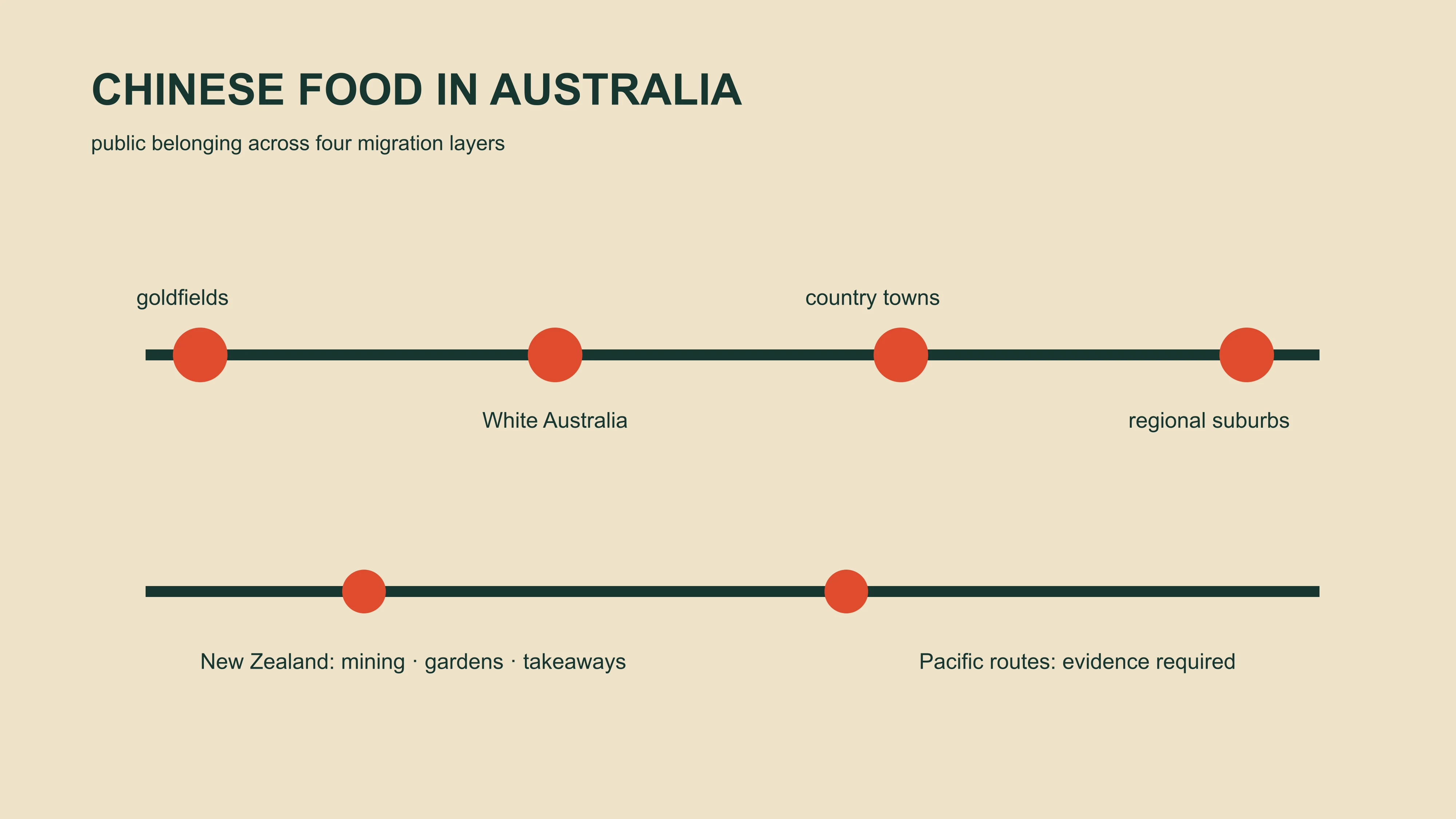
Chinese communities and food businesses also developed in Fiji, Papua New Guinea and Pacific Island societies through plantations, commerce, colonial administration and later migration. Their tables meet Indigenous Pacific, Indian, European and other histories under very different political conditions. Evidence is thinner in this collection, so we state the limit rather than filling it with a generic 'Pacific fusion' paragraph. Australia owns the primary keyword; Pacific country histories will be added only with community and institutional sources strong enough to support them.
Pair an old local classic with a regional newcomer
Order a country-town or legacy suburban dish according to its genre, then visit a restaurant serving a named Chinese region in the same city. Compare price, portion, customer, menu design, labor and ingredient specialization. Sweet-and-sour pork can be judged for coating and balance; Yunnan rice noodles can be judged for broth and rice texture. Neither needs to defeat the other. The two meals reveal how Australian migration and confidence changed. This route is more honest than touring Chinatown for one supposedly timeless national dish.
Archive regional-town menus and suburban corridors together
The most vulnerable evidence may be a paper menu in a closing country-town restaurant; the fastest-changing evidence may be a delivery listing in a new suburban corridor. With permission, save both, including address, year, language and business type. East Moment will map continuity between early public restaurants and contemporary regional specialization without implying a straight progress line. Return as readers add Perth, Adelaide, Brisbane, Darwin, Canberra, Auckland, Wellington and smaller communities that Sydney and Melbourne-centered stories leave out.