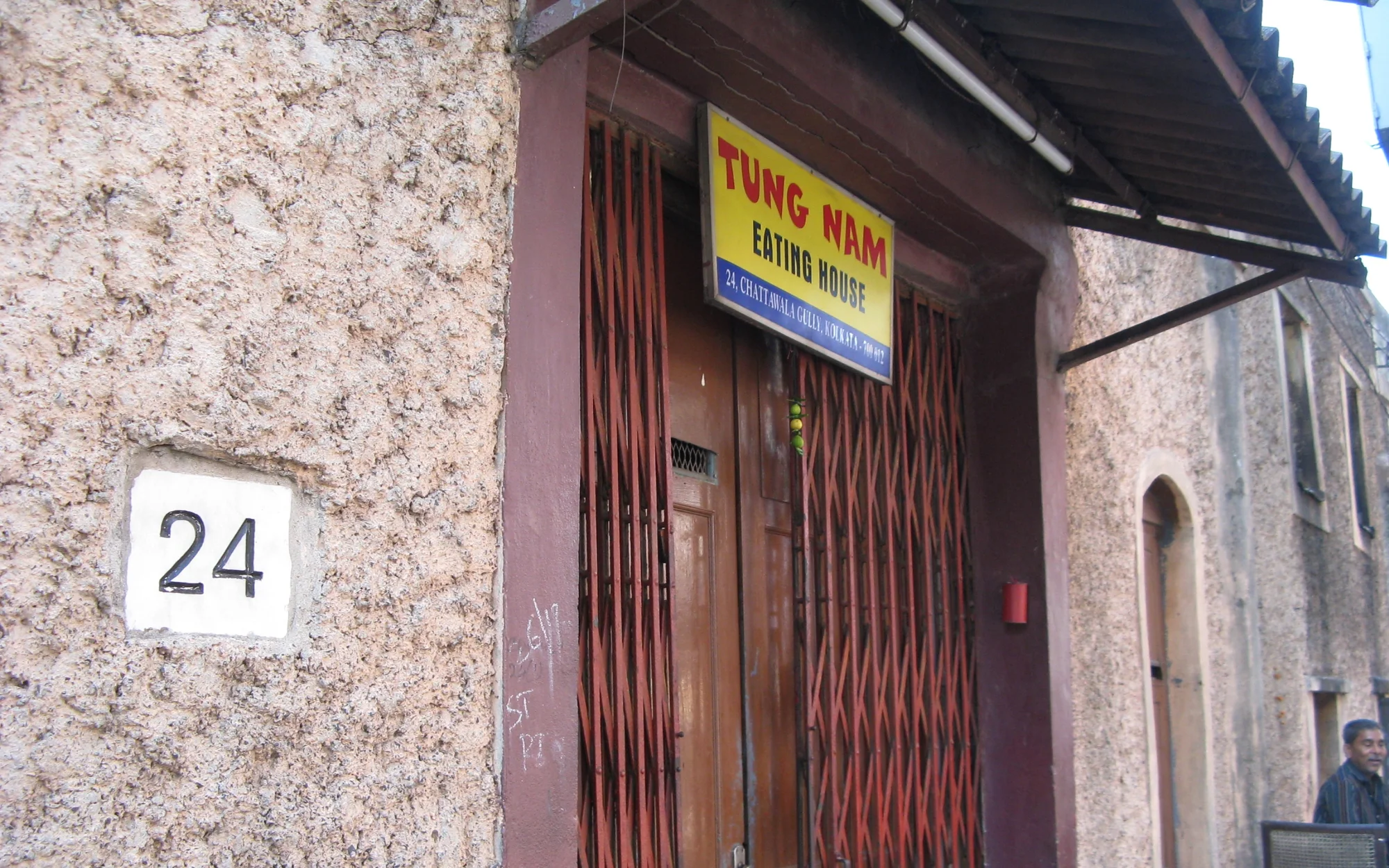
Indo-Chinese food from Kolkata community to national menu
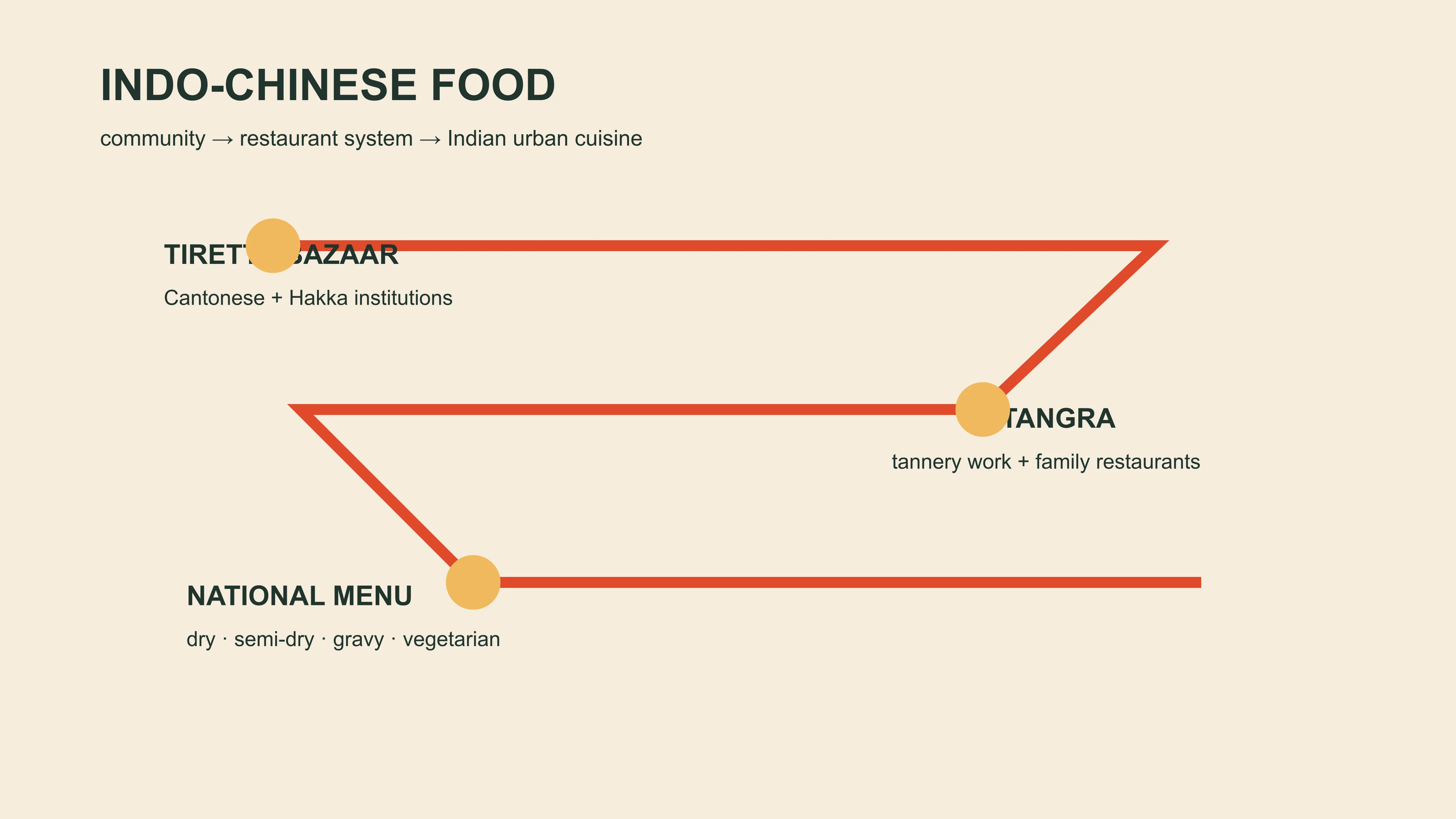
The stages separate community food, restaurant invention and mass-market standardization.
| Stage | Evidence | Boundary |
|---|---|---|
| Tiretta Bazaar | Early Kolkata Chinese community institutions, breakfast foods and Cantonese-linked settlement created a neighborhood table. | Today's market alone represents the full historical community. |
| Tangra | Hakka families linked to tannery work developed restaurants and a distinctive public food district. | All Hakka food is Indo-Chinese or all Indo-Chinese restaurants are Hakka-owned. |
| Restaurant inventions | Chilli chicken and Manchurian-style dishes use Indian aromatics, frying and sauce systems within a Chinese-labeled restaurant genre. | One chef or restaurant origin is proven whenever repeated online. |
| National street and fast food | Noodles, momos, fried rice and saucy dishes localized further across Indian cities, vegetarian markets and price points. | A national label erases Kolkata Chinese ownership and regional Indian changes. |
Indo-Chinese food starts with a community, not a sauce bottle
Chinese migration to Kolkata included Cantonese and Hakka communities working in carpentry, dentistry, leather and other trades, with food businesses becoming increasingly visible. Tiretta Bazaar and Tangra represent different institutions and periods. The cuisine emerged in a colonial and postcolonial city already shaped by Bengali, British, Armenian, Jewish and other food histories. That urban density matters. Soy sauce did not meet chili in an empty laboratory; cooks, workers and customers negotiated flavor inside a multilingual port and industrial economy.
Tangra restaurants grew from difficult labor and land
Hakka families became associated with tanneries in Tangra, an industry involving hard and hazardous work. Restaurants later offered another public face and livelihood, turning the neighborhood into a dining destination. The transformation should not be romanticized as a smooth culinary success story. Environmental regulation, relocation, redevelopment and community dispersal changed both work and food. A plate of chilli chicken can carry the memory of this shift, but only if the people and labor remain visible. The restaurant district is an archive of economic adaptation.
Ginger, garlic, chile and coriander became structural
Indo-Chinese restaurant cooking often builds a sharp aromatic base, uses frying or high-heat tossing for surface texture, and finishes with a sauce carrying soy, chile, vinegar and sometimes tomato-based sweetness. Coriander greens and spring onions brighten the plate. The best versions keep these roles distinct. Heat should release aroma; sauce should coat; vinegar should cut; a fried piece should retain resistance. When every dish tastes like the same sweet red slurry, the kitchen has turned a flexible system into industrial camouflage.
A geographic name became an Indian restaurant genre
Chicken Manchurian and gobi Manchurian have little to do with the cuisines of China's northeast. The name signals a Chinese-coded Indo-Chinese dish rather than geographic provenance. Origin stories commonly credit restaurateur Nelson Wang, but popular repetition is not the same as a complete documentary record for every variation. The more useful fact is how the format works: fried chicken, cauliflower or another base meets a chile-garlic-soy sauce in dry, semi-gravy or gravy form. Indian diners made those service categories meaningful.
Gobi and paneer changed the cuisine's audience
Indian vegetarian demand transformed Indo-Chinese menus. Cauliflower, paneer, mushrooms, baby corn and mixed vegetables entered frying, noodle and sauce formats, sometimes becoming more popular than the meat versions. This was not a secondary accommodation. It expanded the cuisine into schools, office canteens, street stalls and family restaurants while interacting with religious and ethical practices. A vegetarian dish can still involve shared fryers or sauces, so diners with strict requirements should ask. Culinary adaptation and dietary assurance are different questions.
Delhi, Mumbai and the Himalayas edited the category again
As Indo-Chinese food spread, Delhi and Mumbai restaurants, clubs and street vendors adjusted spice, sauce and portion. Himalayan momo traditions entered many Indian cities and are often sold beside chow mein, but Tibetan, Nepali and northeastern Indian identities should not be swallowed by a Chinese label. In Bengaluru, Hyderabad and other technology and education centers, new regional Chinese restaurants now coexist with classic Indo-Chinese menus. South Asia is not one Indian story either: Pakistan, Bangladesh, Sri Lanka and Nepal have their own Chinese restaurant and migration histories requiring separate research.
Kolkata Chinese food can be Indian and community-specific
Chinese Indian families hold identities formed through generations in Kolkata and elsewhere, including periods of discrimination and the trauma surrounding the 1962 India-China war. Food popularity does not erase that history. The public may claim chilli chicken as Indian comfort food while knowing little about Chinese Indian citizens. A good article closes that gap without treating the community as a museum exhibit. The cuisine's national belonging should increase curiosity about the people, not allow the country to take the food and forget them.
Choose dry or gravy deliberately
Indo-Chinese menus often offer dry, semi-dry and gravy versions. That choice changes whether a dish functions as snack, starter or rice accompaniment. Order one dry fried item to test coating, a gravy or soup to test balance, noodles or fried rice, and a vegetable dish with a different sauce base. Ask the kitchen to vary heat rather than assuming maximum chili equals quality. I look for separation: cauliflower still tasting like cauliflower, noodles remaining springy and vinegar lifting the meal. Sauce should connect the table, not erase it.
Return as Kolkata's businesses regain their names
The national category can make the founding community anonymous. With permission, record restaurant names, old menus, neighborhood addresses and family-approved histories from Tiretta Bazaar, Tangra and later Chinese Indian businesses. East Moment will distinguish documented dates from family memory and avoid repeating a single invention story as fact. Return as the archive connects workplace, neighborhood and dish. A menu's spelling of Hakka noodles or chilli chicken may show when a local restaurant format became a nationwide language.