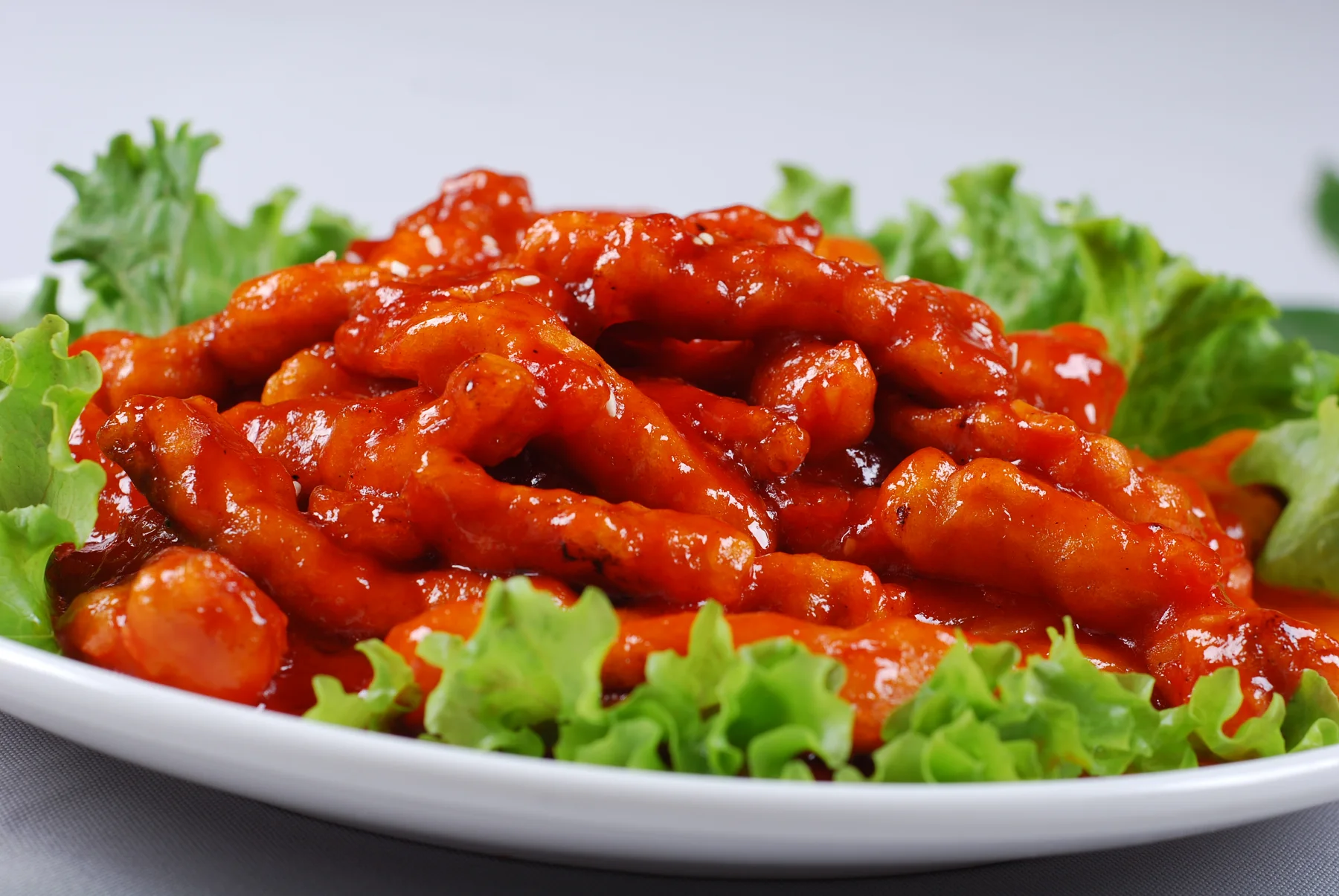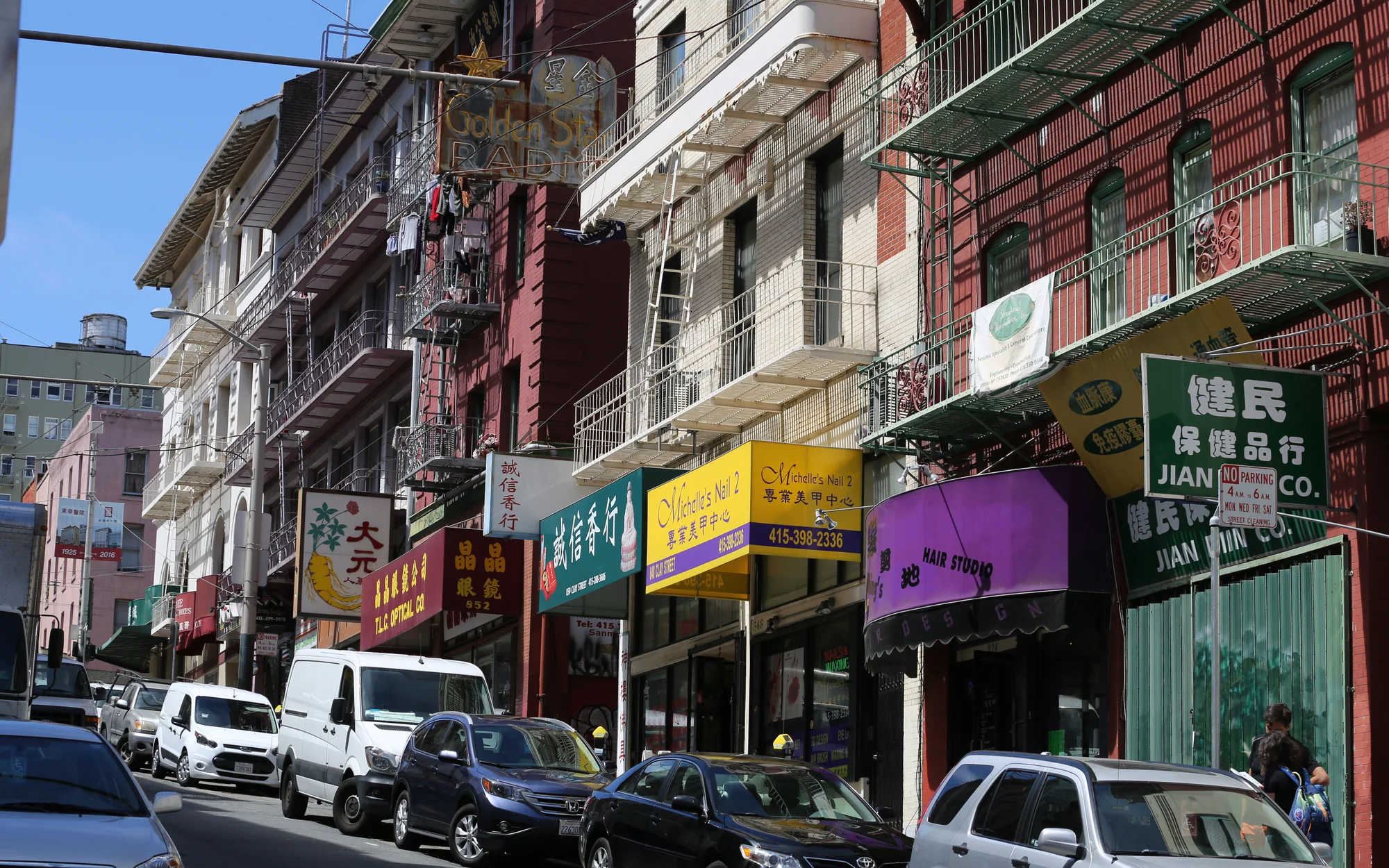
Chinese food in North America by city and migration layer
Use city, period and business model to interpret a dish before assigning a continent-wide identity.
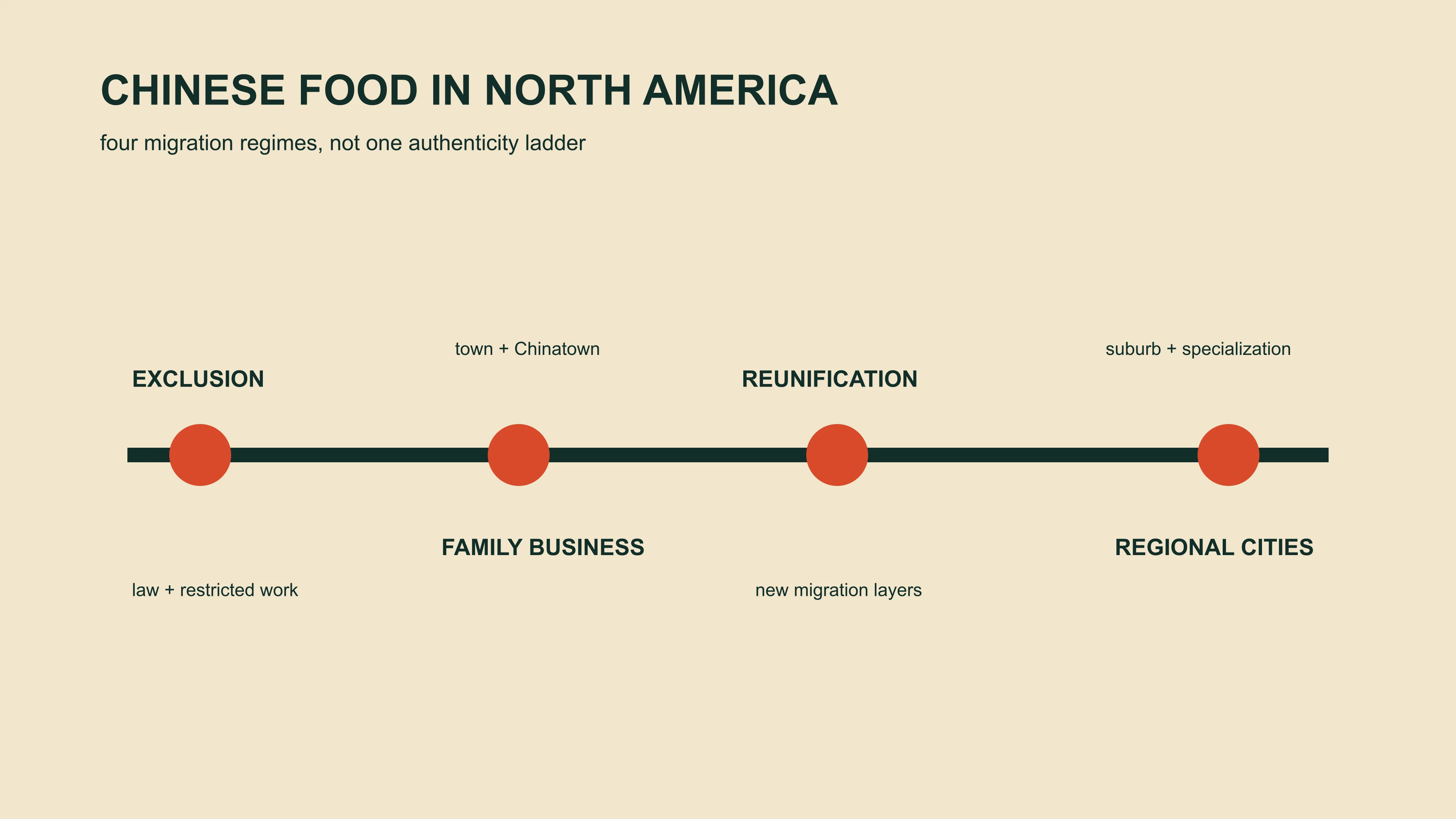
| Layer | Evidence | Boundary |
|---|---|---|
| US exclusion-era restaurant | Cantonese-rooted businesses, chop suey, chow mein and public dining developed amid exclusion and restricted occupations. | One disputed origin story explains every American Chinese dish. |
| Chinese Canadian town and Chinatown | Railway work, head tax, exclusion, family separation and dispersed restaurants shaped different city and small-town economies. | Vancouver represents Toronto, Montreal, prairie towns or every Chinese Canadian wave. |
| Post-1965 and post-1967 migration | US and Canadian policy changes expanded migration sources, regional menus, suburbs and professional-class food businesses. | Newer migration erased older Chinatown food. |
| Contemporary regional city | Flushing, the San Gabriel Valley, Richmond BC and Toronto suburbs host dense regional specialization and multilingual customers. | Regional specificity guarantees quality or makes a restaurant culturally neutral. |
The first menu is written by law
The US Chinese Exclusion Act and Canada's head tax and later Chinese Immigration Act restricted movement, family life and citizenship. In Canada, Library and Archives Canada preserves registration and immigration records created through that discriminatory regime. Those documents explain why many communities were disproportionately male and why restaurant and laundry businesses became visible routes to survival. Law does not dictate a sauce recipe, but it shapes who can cook, who can inherit and whether a family can reunite. Every serious menu history must place that boundary before culinary folklore.
Chop suey became a business language
Chop suey gathered many preparations under a name American customers learned to recognize. Its precise origin remains contested, and that uncertainty is useful: the dish became important through repetition across restaurants, newspapers and popular culture, not through one provable inventor. The broader menu relied on flexible stir-fries, gravies, rice and noodles that a small kitchen could adapt to supply and demand. Calling this food fake ignores the operational intelligence. Calling it unchanged Cantonese food ignores the customers and economy that transformed it.
The dispersed restaurant mattered beyond Chinatown
Chinese restaurants appeared in mining, railway, prairie and industrial towns where the Chinese population might be small. The business could serve local workers, travelers and the owners' own network at once. In Canada and the United States, these dispersed restaurants produced regional combinations that big-city histories often miss. A diner remembering one cafe in a rural town is not describing a lesser version of Chinatown. The address may reveal how Chinese entrepreneurs made public belonging in places whose laws and social life often told them they did not belong.
San Francisco, New York, Vancouver and Toronto do not share one timeline
San Francisco's Chinatown grew from Gold Rush migration and became a national symbol under intense hostility and tourism. New York's historic Chinatown, later Flushing and Sunset Park, reflects different waves and regional concentrations. Vancouver and Victoria carry early Pacific migration and exclusion histories; Toronto's Chinatowns and suburbs developed through other relocations and postwar arrivals. Montreal adds French-language and local restaurant dynamics. The continent becomes legible only when those timelines stay separate. A dish's city address is evidence, not incidental metadata.
New immigration laws expanded the pantry and the dining room
Changes to immigration policy in the United States during the 1960s and in Canada after the exclusion era enabled more family migration and broader origins. Subsequent arrivals from Hong Kong, Taiwan and many mainland regions expanded Cantonese seafood restaurants, banquet institutions, Taiwanese cafes, Sichuan and Hunan kitchens, noodle shops and regional specialties. Suburban commercial centers became powerful food destinations. This did not replace adaptation with purity. It created new customer networks and new adaptations, often designed as much for co-regional diners as for a generic mainstream public.
Chinese Canadian food carries its own policy and place
Canada's head tax and 1923 exclusion legislation produced family separation and mandatory registration, while railway and resource-town histories spread Chinese businesses across the country. Vancouver's Cantonese and later Hong Kong-rich food landscape differs from Toronto's metropolitan layers, Montreal's bilingual context and prairie restaurant traditions. Canadian combination plates may resemble US forms, but their business histories are not borrowed. The phrase North American helps comparison; Chinese Canadian must remain a full subject. A border on a map changed laws, migration channels and the meaning of citizenship.
Family food businesses extracted an intimate price
The flexibility of a family restaurant can conceal long hours, unpaid child translation, dangerous kitchen work and the pressure to remain cheerful under racism. It can also create housing, education and a foothold for relatives. Both truths belong together. A nostalgic neon sign is not a complete history. When an old restaurant closes, the reason may be rent, redevelopment, exhaustion or children choosing a life their parents' labor made possible. Preservation should honor the family without demanding that another generation stay behind the counter for our sentimental comfort.
Order the restaurant's own era
At a legacy Cantonese-American or Canadian cafe, judge the intended system: wok aroma, texture, sauce balance, fried coating, rice and service speed. At a banquet restaurant, inspect seafood, roast meats and table composition. At a regional newcomer, learn the city and dish vocabulary it claims. Do not order General Tso's chicken everywhere and use its absence or presence as an authenticity test. The respectful diner lets each business state its genre, then expects competence within that genre. History explains a menu; it does not excuse bad cooking.
Archive the closed restaurant before the sign disappears
North American Chinatowns and small-town main streets are losing businesses to rent, redevelopment and generational change. With owner or family permission, save a dated menu, storefront image, address and short account of what the restaurant meant. East Moment will separate verified business facts from memory and never publish private family details without consent. Return as the archive connects a town cafe to railway history, or a Toronto menu to a later Hong Kong migration wave. The value is not nostalgia alone; it is evidence of public life.