Chinese food in the Caribbean through country and labor history
The parent keyword centers the Caribbean while the evidence table keeps Caribbean and Latin American routes distinct.
| Country route | Evidence | Boundary |
|---|---|---|
| Guyana and Trinidad | Nineteenth-century indenture, later commerce and national family tables localized noodles, fried rice and meats differently. | The two countries share one Chinese Caribbean cuisine. |
| Cuba and Puerto Rico | Cuban Chinese community history and later Cuban-Chinese migration to New York differ from Puerto Rican Chinese takeout's local combinations. | Spanish language or Caribbean location makes the restaurant histories interchangeable. |
| Peru chifa | Chinese migration, urban fondas and Peruvian ingredients produced chifa dishes such as arroz chaufa and lomo saltado. | Every soy-seasoned Peruvian dish has a proven Chinese origin. |
| Brazil, Mexico and beyond | Agricultural colonies, commerce, border regions and later metropolitan migration created country- and city-specific restaurants. | Latin America is one Spanish-speaking culinary field; Brazil and multilingual communities disprove it. |
Indenture followed emancipation into another unequal system
Chinese contract laborers arrived in parts of the Caribbean during the nineteenth century as colonial economies sought workers after slavery's abolition. Conditions, legal status and demographic patterns differed by colony, and the history should never be softened into adventurous migration. Some migrants left plantations for retail, market gardening and food businesses, forming communities through intermarriage and local institutions. The meal that followed contains African, Indian, Indigenous, European and Chinese histories shaped by colonial power. A fried-rice recipe cannot carry that burden alone, but it can open the correct archive.
Chow mein became a Guyanese family-table language
In Guyana, chow mein is not confined to Chinese restaurants. It can appear at family gatherings and alongside fried rice, pepperpot, curries and other national foods. Noodle type, seasoning, vegetables and meats reflect local supply and household taste. The dish's Chinese migration route remains relevant, but local ownership is complete. Asking whether it is authentic Chinese misses the social fact. A better comparison records how Guyanese households make it differently and how Chinese Guyanese history is remembered—or forgotten—when the food becomes ordinary.
Two island restaurant histories require separate evidence
Trinidadian Chinese food developed through local ingredients, Creole tastes and a multiethnic society shaped by African and Indian histories. Jamaican Chinese restaurants likewise localized meats, sauces, rice and noodles within another island economy and migration network. Similar menu words do not prove shared recipes. Scotch bonnet, local rum, Caribbean vegetables or Chinese preserved ingredients may enter differently. The responsible guide asks for country, city, family and period. 'Chinese Caribbean' is a useful shelf only if each book can still be opened.
Havana's Barrio Chino connects China, Cuba and New York
Chinese migration to Cuba included contract labor and later community formation, with Havana's Barrio Chino becoming a major institution. Revolution and migration changed the neighborhood; Cuban Chinese cooks and families also moved to the United States, especially New York, creating another layered cuisine. A Cuban-Chinese dish in Manhattan may therefore carry two migrations before reaching the table. The route is not a novelty. It is a map of empire, revolution, family separation and entrepreneurial continuity. Name both cities when the evidence supports them.
Chifa became a Peruvian culinary institution
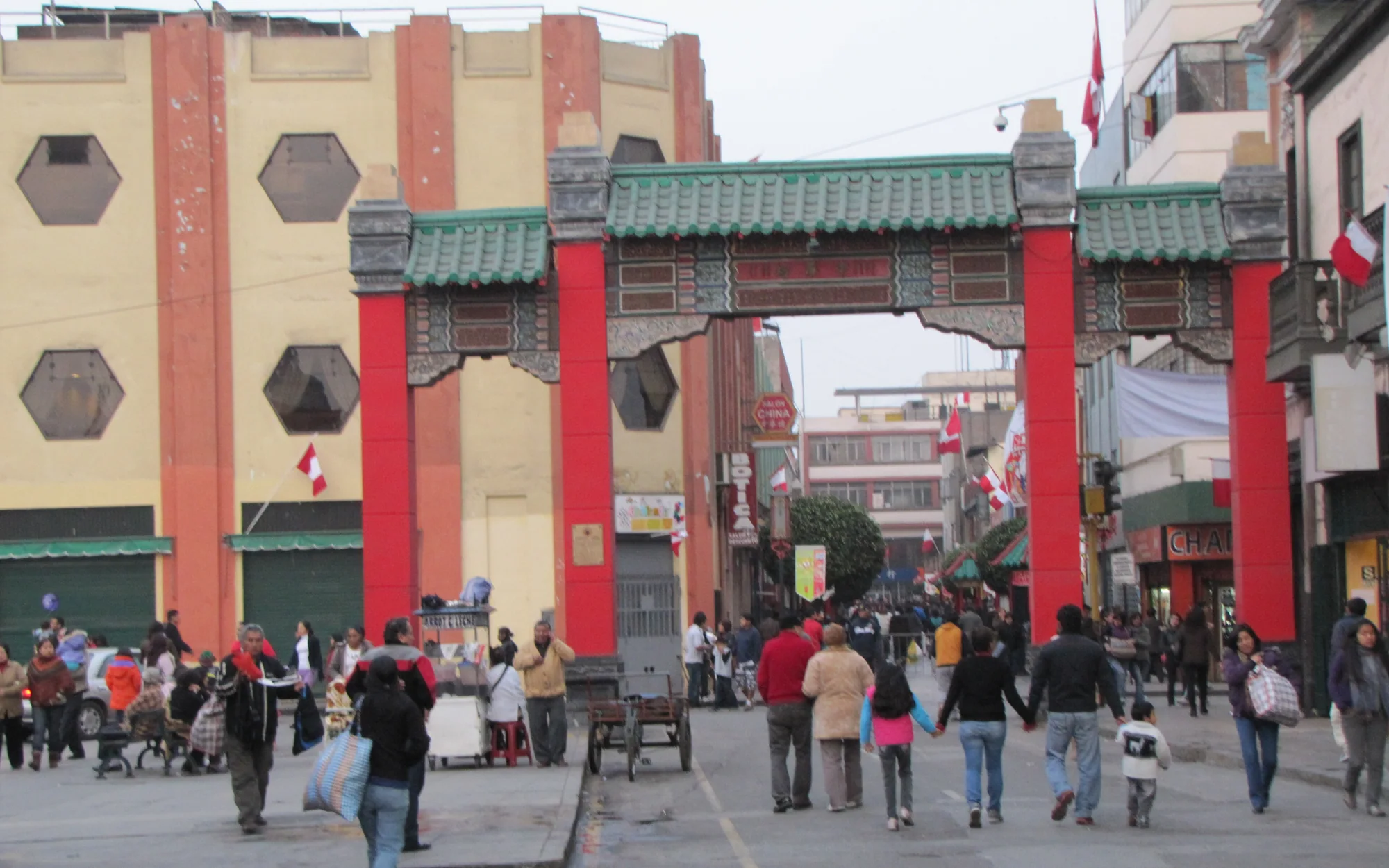
Chinese migrants, many from Guangdong, entered nineteenth-century Peru through harsh labor systems and later built small restaurants known as fondas. Chifa developed as cooks and diners combined Chinese techniques with Peruvian ingredients and urban tastes. Arroz chaufa, tallarín saltado and lomo saltado became national foods, with wok cooking and soy-seasoned savor entering Peruvian vocabulary. The Smithsonian educational record recognizes lomo saltado's chifa tradition. That supports the cultural relationship; it does not establish one inventor or a fixed national recipe.
The takeout combination expresses island taste and US connection
Puerto Rican Chinese restaurants commonly combine fried rice, meats, plantain or fries and local sauce preferences in formats shaped by the island's relationship with the United States and its own migration. The menu can resemble mainland American Chinese food while tasting unmistakably local. This is not evidence of careless copying. It is a second adaptation inside a distinct political and culinary economy. To understand it, compare rice texture, garlic, sweet-savory balance, side choices and how the restaurant positions itself in the neighborhood.
Language, coast and border produce other Chinese-Latin routes
Brazil's Chinese migration includes early projects and later metropolitan communities in São Paulo and elsewhere, inside a Portuguese-speaking national cuisine with Japanese and other Asian migration histories. Mexico contains northern border stories, Mexicali's Chinese community, Pacific ports and major-city restaurants, each interacting with regional chiles, meats and trade. Neither country is an appendix to Peru. Evidence should begin with a city and migration period, then ask how local agriculture and customer taste changed technique. Hemisphere-wide 'Latin flavor' is not analysis.
Taste the local starch partnership
In Guyana or Trinidad, observe how noodles or fried rice sit beside curries, stews and celebration foods. In Peru, compare arroz chaufa with a saltado to see how rice, potatoes and wok-seared ingredients share a plate. In Puerto Rico, note plantain, fries or rice combinations. The point is not to identify a Chinese core beneath local additions. It is to see how the local meal system assigns roles. A diaspora dish becomes durable when it fits the pace, starches and social occasions of its home society.
Return with country, neighborhood and family permission
The region's Chinese community archives are uneven, and restaurant histories are easily replaced by legend. Share permitted menus, storefronts and family accounts with exact country, city, date and migration connection. East Moment will not infer ethnicity from a surname or publish private indenture histories without consent. Return as the map distinguishes Georgetown from Port of Spain, Havana from New York, Lima from San Juan and Mexicali from Mexico City. Precision is how a hemisphere becomes a set of human stories instead of an exotic fusion tour.