Chinese food in Europe through four local systems
The comparison follows city, colonial history and restaurant economy, not a continental flavor profile.
| System | What it reveals | Boundary |
|---|---|---|
| British Chinese takeaway | Postwar Hong Kong and Cantonese migration, family labor, chips and curry sauce, and small-town high streets created a British institution. | London Chinatown represents the Welsh, Scottish, northern English or suburban takeaway. |
| Dutch Chinese-Indonesian restaurant | Dutch colonial history and Indonesian decolonization shaped menus joining Chinese-Indonesian dishes for local customers. | The menu is either simply Chinese or simply Indonesian. |
| French urban layers | Paris includes Wenzhou, Cantonese, Teochew, Cambodian, Vietnamese and other migration routes across different districts. | The 13th arrondissement or one traiteur represents France. |
| New regional corridors | Students, professionals and entrepreneurs support Sichuan, northwestern, Dongbei and specialist restaurants in multiple European cities. | A Chinese-language clientele makes a restaurant timeless or unadapted. |
The takeaway turned the high street into a family workplace
After the Second World War, migrants from Hong Kong and southern China expanded Chinese restaurants and takeaways across Britain. The small takeaway fit towns that lacked a large Chinese population because the business served a broad local market. Family members absorbed long hours and children often crossed between school and counter. Chips, curry sauce, battered meats and familiar meal formats became locally meaningful alongside fried rice and chow mein. This was not a cuisine designed by national committee. It was thousands of families solving the same hard business problem under different local pressures.
Britain's Chinatowns moved and changed their audience
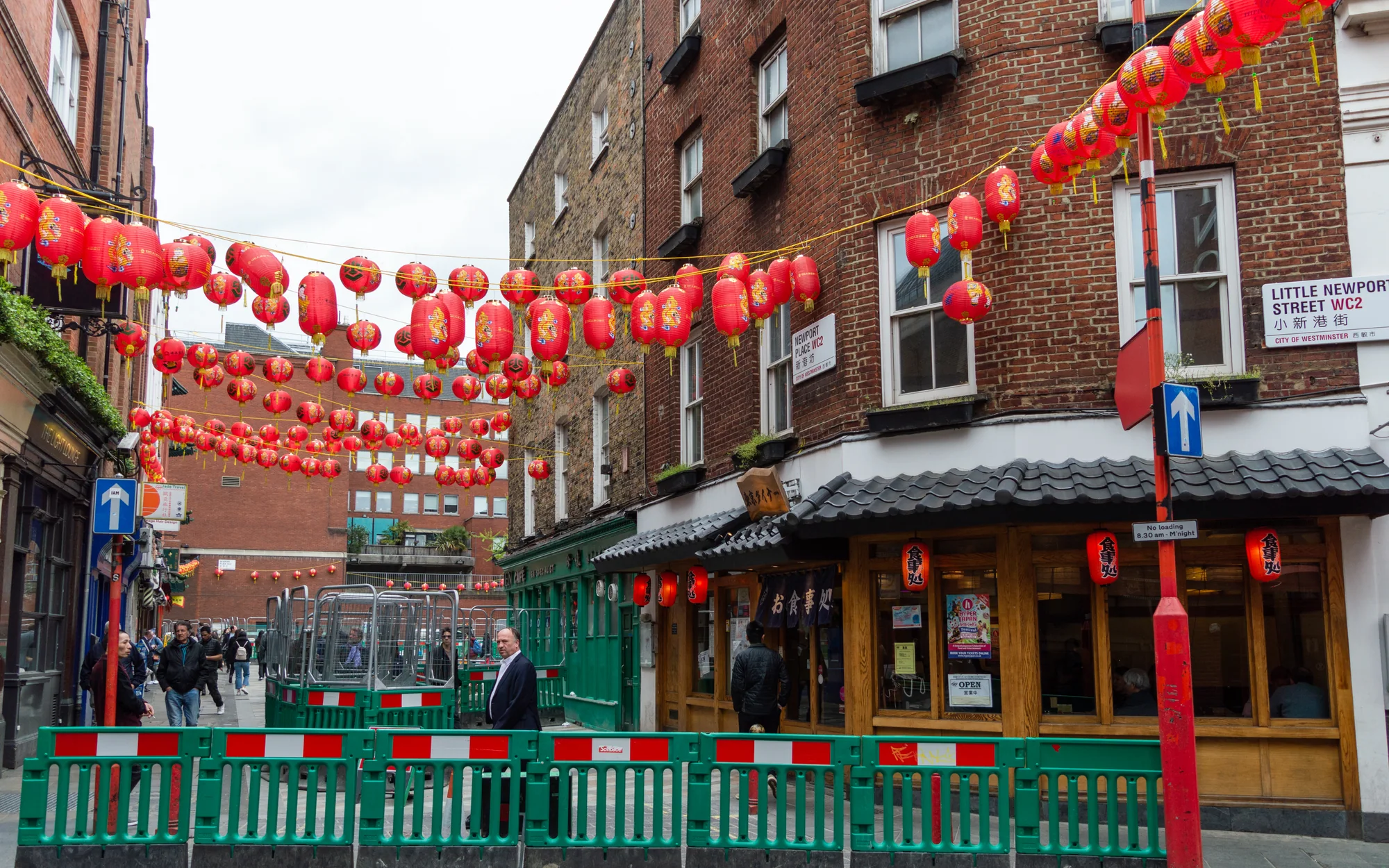
London's first Chinatown was associated with Limehouse before Soho became the better-known postwar center; Liverpool has one of Europe's oldest Chinese community histories through its port. Manchester and other cities developed their own institutions. A Chinatown can be residential, commercial, touristic or all three, and redevelopment can alter the balance. The restaurant a visitor sees today may belong to a newer wave than the gate or district story suggests. Read addresses through time. Urban branding can preserve visibility while simultaneously pricing out the community that created it.
Chinese-Indonesian food records a colonial return route
The Dutch Chinese-Indonesian restaurant, often named with the combined label Chinees-Indisch, grew through migration connected to the former Dutch East Indies and postcolonial Netherlands. Menus joined Chinese and Indonesian-rooted dishes in combinations legible to Dutch customers. Babi pangang and rijsttafel culture belong to that colonial and restaurant history, not to a timeless fusion mood. The category should be read with Indonesian voices and colonial power in view. Food can become national comfort while carrying an unequal route into the country.
Paris contains several Asian migrations under one storefront category
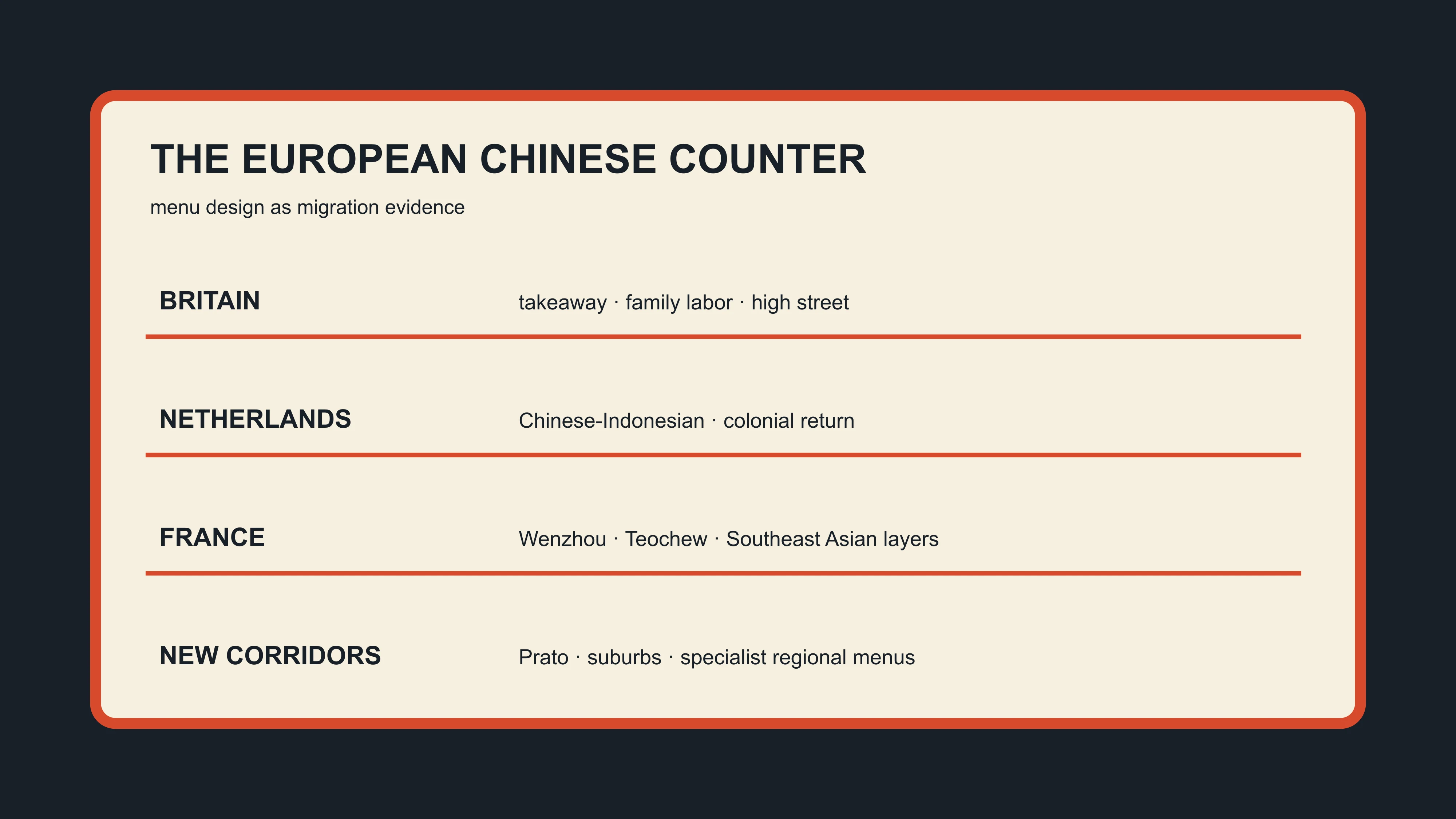
Paris food histories include Cantonese and Teochew migration, refugees and migrants from Vietnam, Cambodia and Laos, Wenzhou networks, and later arrivals from many parts of China. Traiteurs asiatiques often serve mixed prepared foods to a wide public, while district restaurants may specialize more sharply. Labeling every business Chinese can erase Southeast Asian national and ethnic histories; labeling every hybrid item generic Asian erases the entrepreneurs. The useful task is to identify the operator's stated community and menu language without guessing identity from appearance.
Manufacturing districts and student cities create new food geographies
Prato's Chinese community is linked to textile production and entrepreneurship, creating restaurants and markets within a distinctive labor and urban context. Milan, Rome, Bologna and other cities add students, professionals and regional food businesses. Similar newer corridors appear in Madrid, Barcelona, Berlin and elsewhere, each shaped by local immigration rules and rents. A Sichuan restaurant in Europe is not merely exported regional cuisine. Ingredient supply, staffing, customers and neighborhood regulation reshape it. Adaptation continues even when the Chinese menu grows more detailed.
The smiling takeaway counter could conceal hostility
British and European Chinese families have faced racial abuse, stereotyping and pressure to remain silent while serving customers. The COVID-19 period made old prejudices newly visible. A food guide should not use hardship as dramatic garnish, but it should explain why public-facing businesses carried particular risks. Children who grew up in takeaways may remember community, skill and exhaustion simultaneously. Their decision to close or reinvent the business is not betrayal. The next generation gets to choose what to keep, including recipes, design, stories or nothing at all.
Curry sauce, chips and chow mein are local vocabulary
A British takeaway's curry sauce is not evidence that the cook misunderstood China. It reflects British curry histories, customer expectation and an efficient sauce system. Chips can share a fryer and meal format with battered chicken or ribs. In the Netherlands, combination platters answer another local grammar; in France, prepared-food counters answer another. Judge whether the food achieves its intended texture and balance, then ask how the format emerged. Mocking a local favorite is easy. Explaining the labor and colonial routes inside it takes more editorial courage.
Compare one legacy business with one new specialist
In the same city, order from a family takeaway with decades of local history and from a newer restaurant naming a specific Chinese region. Do not ask which is more authentic. Compare customer, price, labor model, menu size, ingredient supply and the skill each format demands. A crisp chip and a precisely cooked Sichuan fish answer different briefs. The pairing reveals how the city's Chinese population, diners and rent have changed. It also prevents the newer restaurant from receiving all the cultural prestige while the old business receives only nostalgia.
Preserve the takeaway's designed objects
Paper menus, illuminated boards, calendars, order pads, delivery bags and waiting-area furniture are evidence of an everyday design history rarely archived. With permission, photograph the whole object and record town, approximate date and business name. East Moment will connect those objects to migration phases and changing high streets. Return as the archive grows beyond London and major cities into Welsh valleys, Scottish towns, Dutch suburbs and other places where one family business may have been the local public face of China for decades.