Gongfu tea is not skilled because it has many gestures. It is skilled because the brewer can measure one session, empty the vessel completely, read the cup and make one defensible adjustment to the next infusion. For a useful first practice, brew one twisted oolong at 6 g per 100 ml, about 95°C, beginning near 5–10 seconds, and repeat for six infusions. Treat those numbers as an East Moment comparison protocol, not a historical law.
Gongfu tea is a method of attention, not one Chinese ceremony
In tea, gongfu points to cultivated skill and effort. Small vessels, a relatively high leaf-to-water ratio and repeated short infusions make changes easy to detect: a few extra seconds, a slower pour or a cooler vessel can alter the next cup.
Calling this the Chinese tea ceremony creates a false national script. Chaozhou practice, southern Fujian practice, a household tea table, a shop tasting and a public tea-art performance may use similar objects while differing in sequence, pace, leaf and social meaning. UNESCO's inscription of traditional tea processing techniques and associated social practices in China documents a broad living culture of making, sharing and transmitting tea knowledge; it does not prescribe one compulsory national choreography.
Chaozhou is nevertheless a crucial center. The official China-EU geographical-indication profile for Fenghuang Single Cluster Tea explicitly links the area with gongfu tea culture and refers to a formal 21-step repertoire. Anthropologist Peter d'Abbs, writing about Chaoshan today, also treats tea art as everyday practice. Both can be true: a named regional repertoire can preserve formal knowledge while a family adapts the working sequence to its own table.
I do not judge a gongfu session by the number of visible tools. I watch the decant, then I taste the next cup. I trust the brewer who notices a harsh finish and corrects one variable; twenty graceful movements mean nothing when they produce the same careless liquor six times.
The practical distinction is simple:
| Setting | What organizes the session | What success looks like |
|---|---|---|
| Formal regional teaching | A named sequence transmitted by a teacher or community | The learner understands the order, vocabulary and context |
| Everyday gongfu brewing | Leaf response, available vessels, guests and conversation | Each infusion is controlled and people are served comfortably |
| Public tea-art performance | Visibility, rhythm and audience comprehension | Movements read clearly and the presentation holds attention |
Do not borrow the authority of the first setting to decorate the third. Name the region, teacher and situation when a sequence is specific.
Build one capacity system before heating water
The brewing vessel, pitcher and cups are not independent objects. They form one volume chain:
brewing-vessel working capacity → pitcher capacity → planned volume across the cups
Working capacity is the amount you can use safely below the rim, not brim capacity. Leaf occupies space and retains liquor, so finished yield will be lower than the water-only measurement.
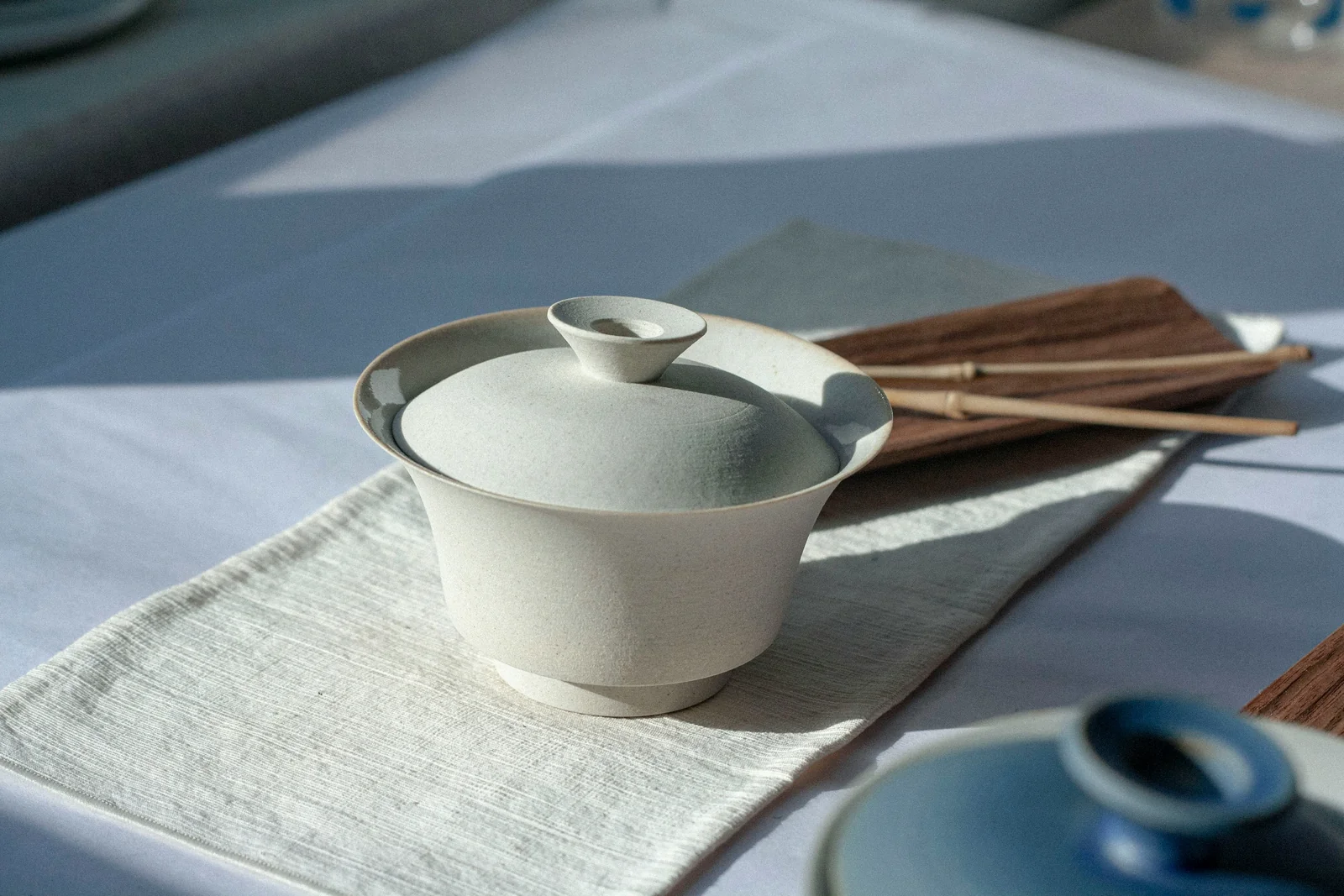
Our reviewed measurement record contains two real porcelain gaiwan samples. After taring, one held 111.3 g of water at the demonstrated fill and the smaller one held 79.4 g, approximately 111 ml and 79 ml for this household comparison. These are measurements of two samples, not universal gaiwan sizes.
| Session | Sensible starting vessel | Service check |
|---|---|---|
| One drinker comparing six infusions | About 79 ml working capacity | One cup can receive the decant comfortably |
| Two or three drinkers | About 111 ml working capacity | Pitcher can receive the full decant; cups share the intended yield |
For example, three planned 30 ml servings require 90 ml across the cups. A roughly 111 ml water-only vessel provides system headroom, but leaf displacement means it will not necessarily yield 111 ml of tea. The pitcher should still be able to receive the vessel's full working volume without approaching its brim.
Before using hot water, fill the vessel with cool water, decant fully into the pitcher and divide it among the cups. This rehearsal reveals an undersized pitcher, unstable lid, awkward reach and overfilled cups without risking a burn. It tests fit and movement; it does not prove how the vessel will feel when hot.
Use this six-infusion training protocol
Choose one clean, moderately priced twisted oolong. A comparison exercise is easier when you are not protecting an expensive tea or switching samples halfway through.
| Variable | Starting point | Keep fixed for the exercise |
|---|---|---|
| Leaf | 6 g per 100 ml working capacity | Use the same leaf for all six rounds |
| Water | About 95°C | Use the same water and reheat consistently |
| First infusion | Begin around 5–10 seconds | Record the actual target you choose |
| Decant | Empty the vessel completely | Record pour duration separately from target contact time |
| Evaluation | Aroma, texture, bitterness, sweetness, finish | Taste before deciding the next time |
This is an East Moment training protocol, not a Chaozhou historical rule and not an ideal recipe for every oolong. Its purpose is to make cause and effect legible.
Define time before comparing cups
Tea timing is often meaningless because brewers start and stop the clock at different moments. Use one convention:
- Start the clock when water first contacts the leaf.
- Begin decanting when the chosen target time is reached.
- Record the pour duration separately.
- Treat extraction as finished only when the continuous stream ends.
If you begin pouring at 8 seconds and the vessel takes several more seconds to empty, the leaf did not receive only eight seconds of contact. This is why complete, repeatable decanting matters as much as the number on a recipe.
The complete hand sequence
1. Inspect and add the leaf
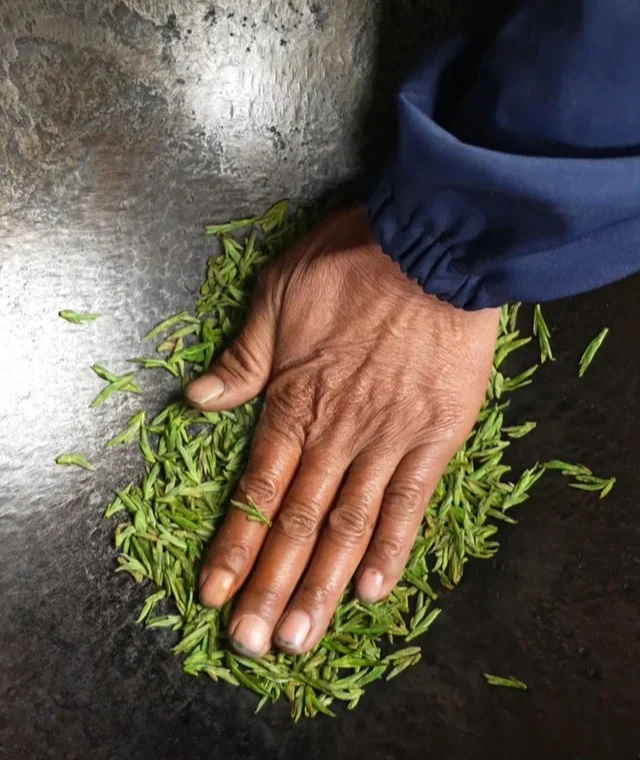
Look for leaf size, breakage and compression before dosing. Broken fragments usually extract faster than intact twisted leaf. Smelling the warmed vessel may reveal aroma, but it does not identify origin or quality by itself.
2. Inject water without theatrical height
Pour so the leaf is wetted consistently. A dramatic high stream is not a requirement of gongfu tea and can cool, splash or make the contact point harder to repeat. Watch whether all of the leaf is reached; appearance alone does not establish the tea's cultivar or origin.
3. Set the lid and choose a stable grip
Leave enough lid gap for a continuous stream while retaining leaf. A three-finger grip is one teachable option, not a universal ritual. Your fingers should remain on the cooler rim and knob. If the shape forces contact with hot porcelain, change the vessel or use a handled pot.
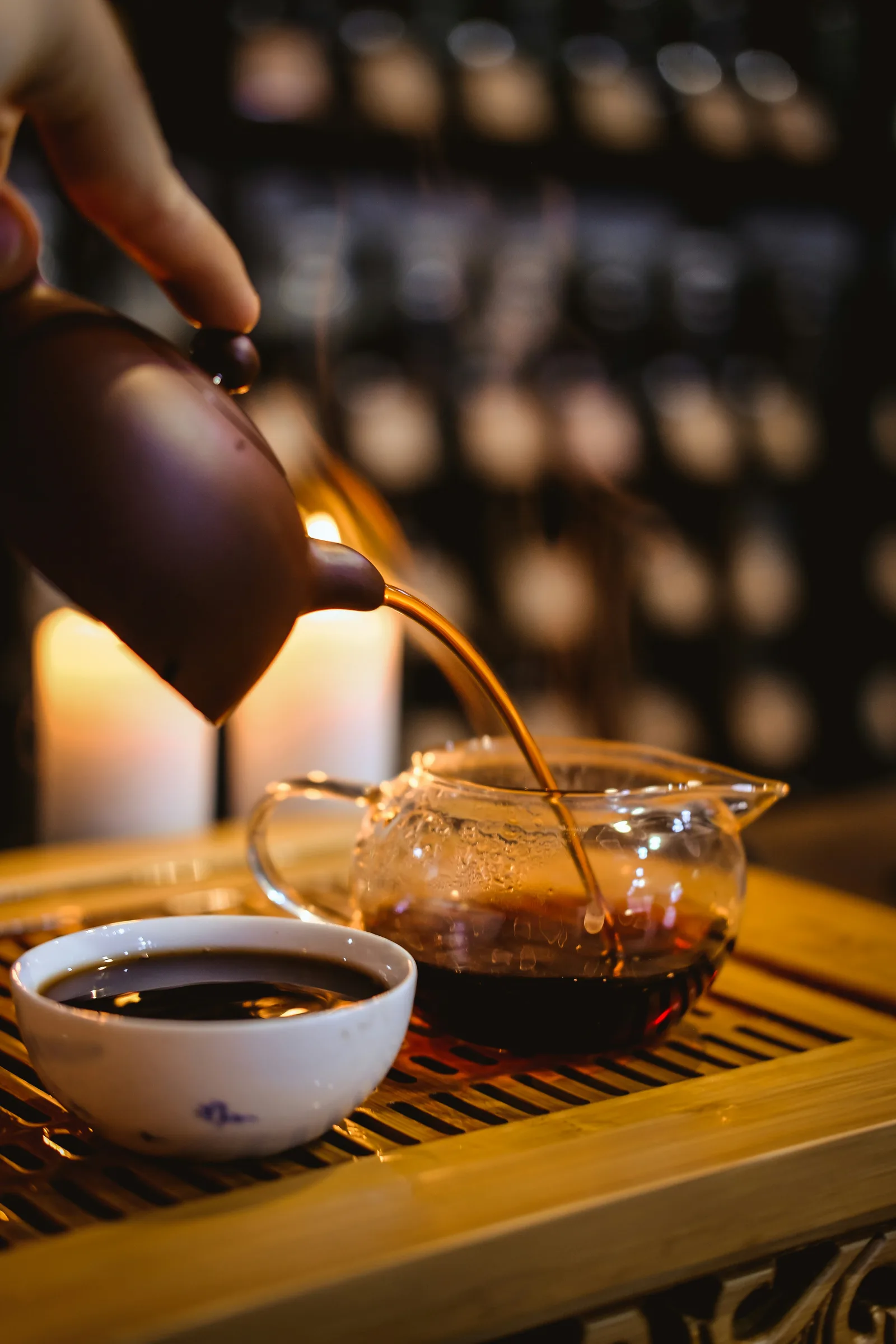
4. Decant completely
Begin pouring at the chosen target time and empty the vessel in one controlled movement. Record the fill and repeat the stopwatch trial before treating any pour time as a useful benchmark.
5. Combine and divide the infusion
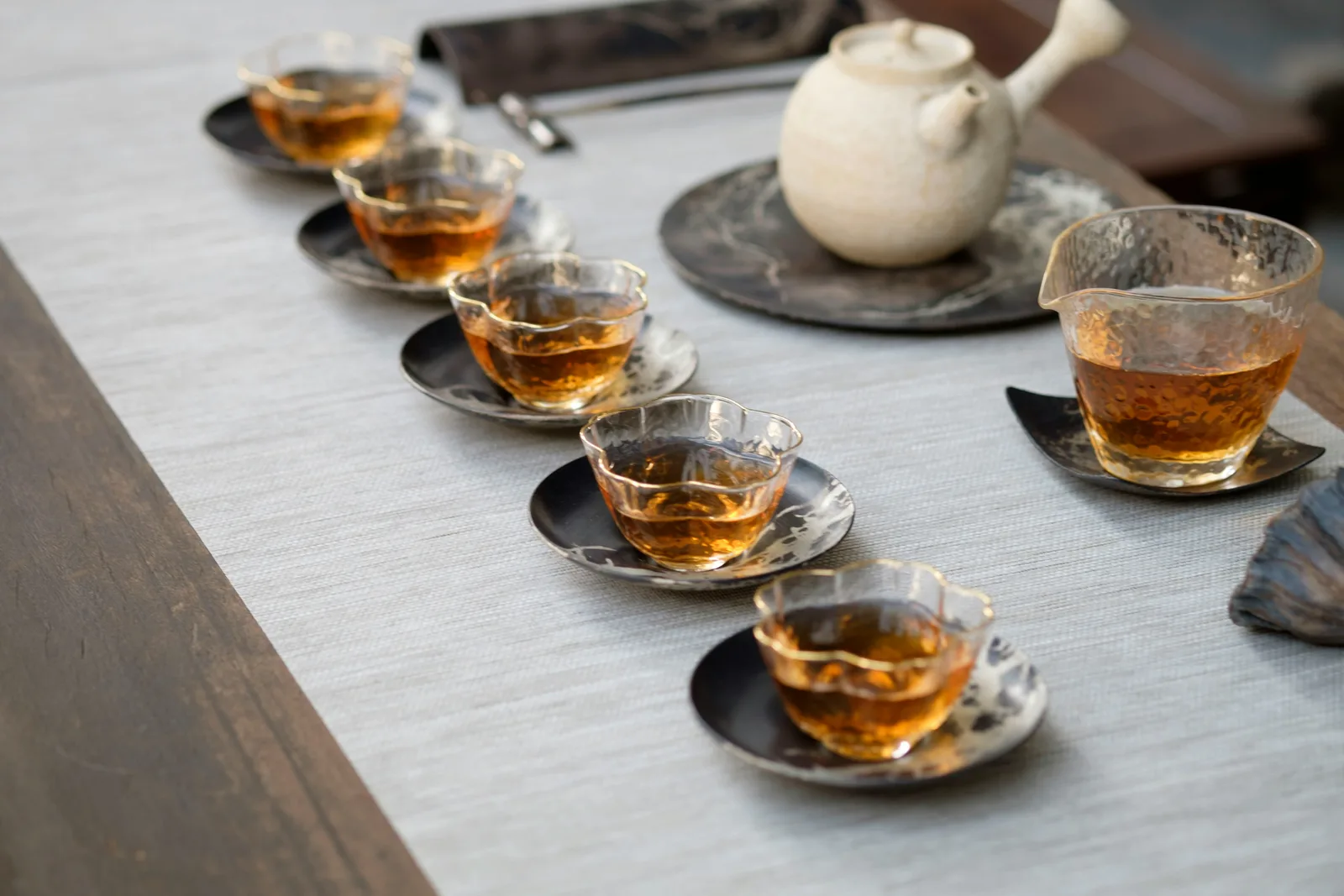
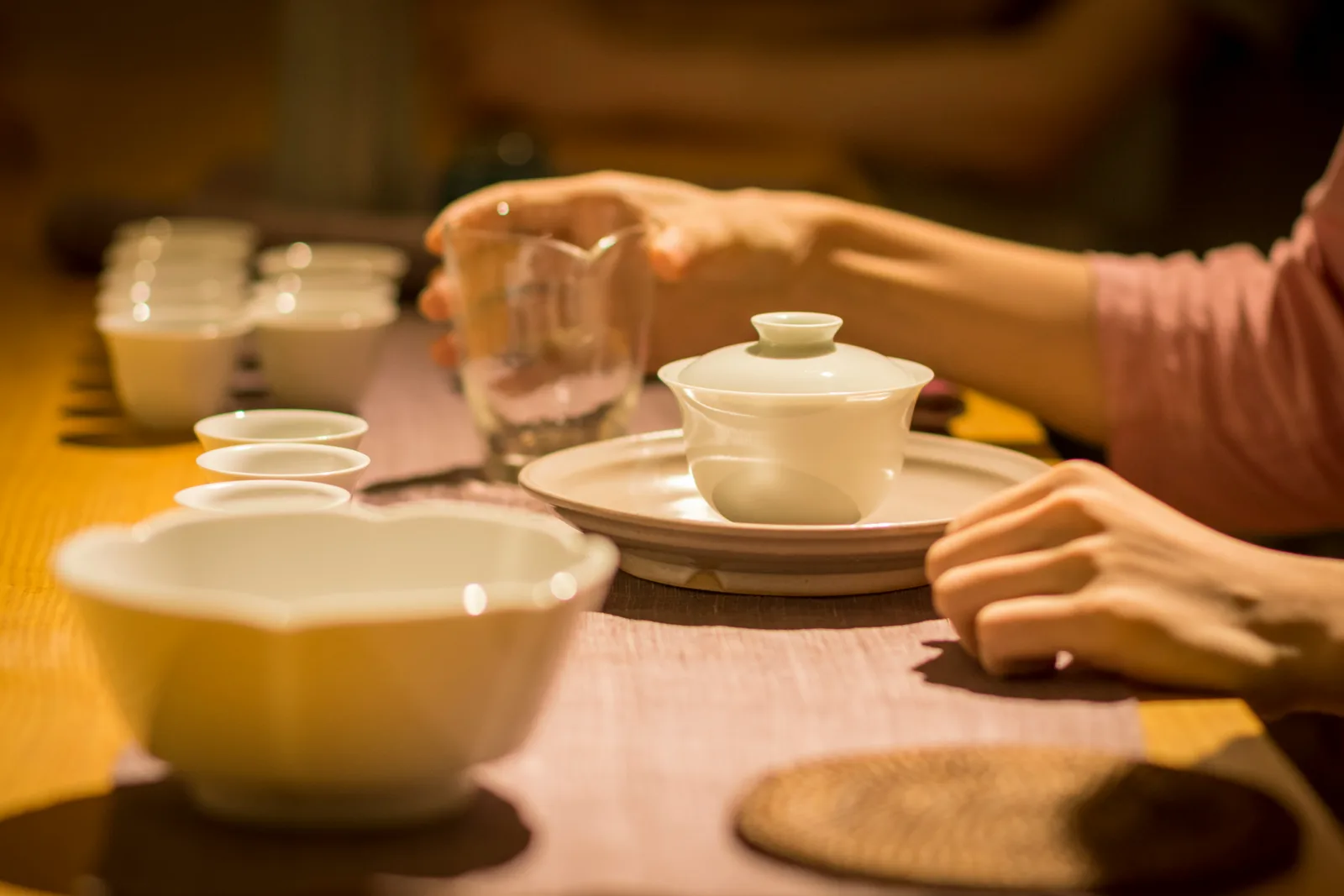
A fairness pitcher combines the infusion before it reaches several cups. Direct distribution can also work when the brewer moves among cups to even out strength. The photograph supports shared small-cup service; it does not prove a particular tea or regional origin from appearance.
6. Taste, then inspect the opened leaf
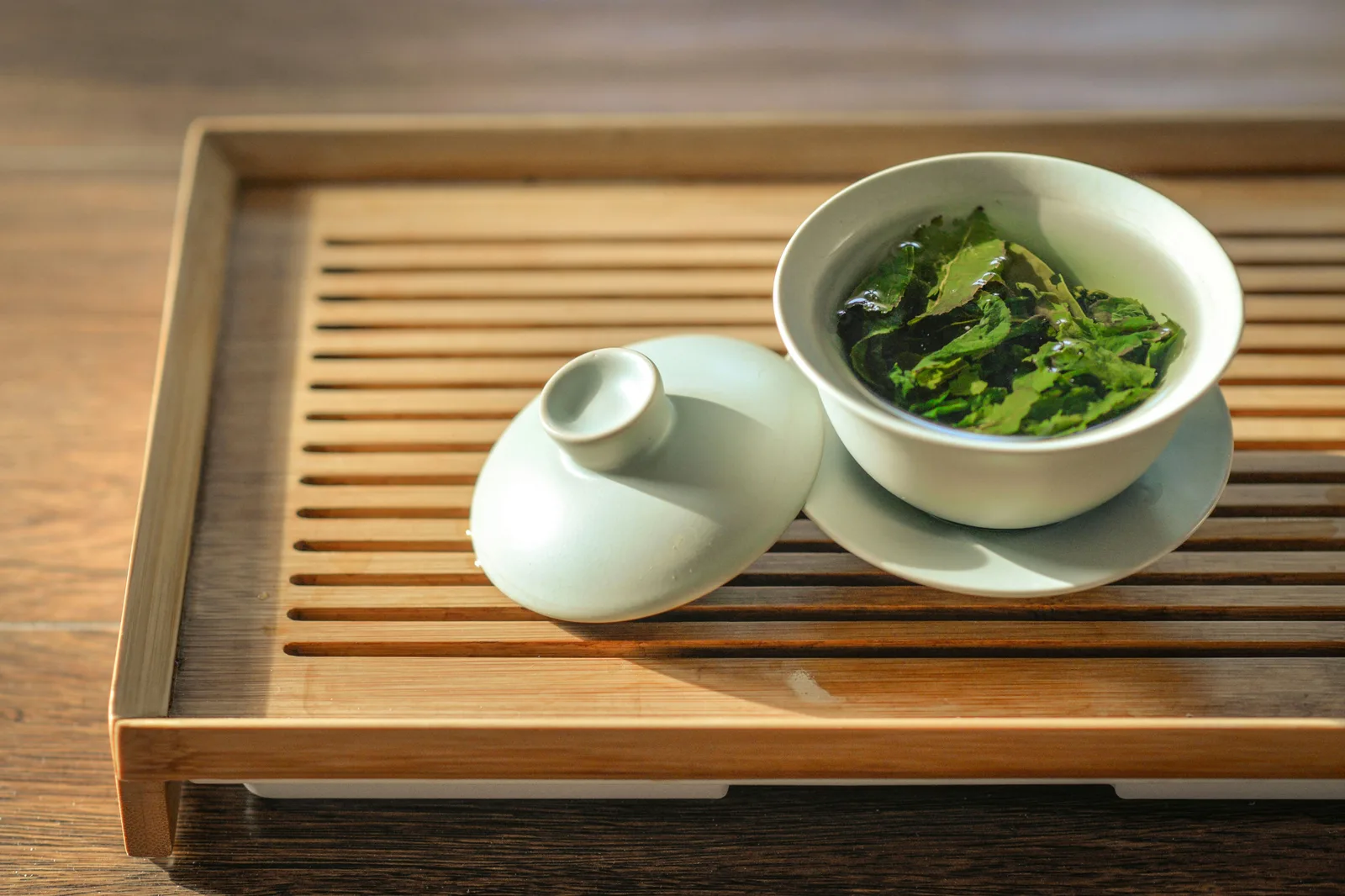
Taste the liquor before deciding what the leaf means. An opened leaf can reveal uneven wetting, heavy breakage or whether a compressed mass remains tight, but a photograph cannot authenticate cultivar, mountain or processing history.
Let each cup decide only one change
The most useful gongfu skill is not naming aromas. It is connecting a sensory result to the smallest sensible adjustment.
| Result in the cup | First adjustment for the next infusion | Why this comes first |
|---|---|---|
| Balanced aroma, texture and finish | Repeat the same timing | Repetition tests whether the result is stable |
| Harsh, bitter or drying too early | Begin decanting sooner | Shorter contact is the cleanest immediate test |
| Thin but clearly aromatic | Add a few seconds | More contact may build body without changing the whole setup |
| Muted despite adequate body | Check water and vessel heat before adding leaf | Heat loss can suppress aroma while concentration remains |
| Strong first cups, then sudden collapse | Extend modestly and inspect leaf opening | The leaf may need more time; an excessive early extraction is also possible |
| Different strength between guests' cups | Combine in a pitcher or improve direct distribution | This is a service failure, not a leaf-quality diagnosis |
Do not change leaf dose, temperature and time together. One adjustment creates information; three simultaneous adjustments create another cup but no clear lesson.
Use a six-row record:
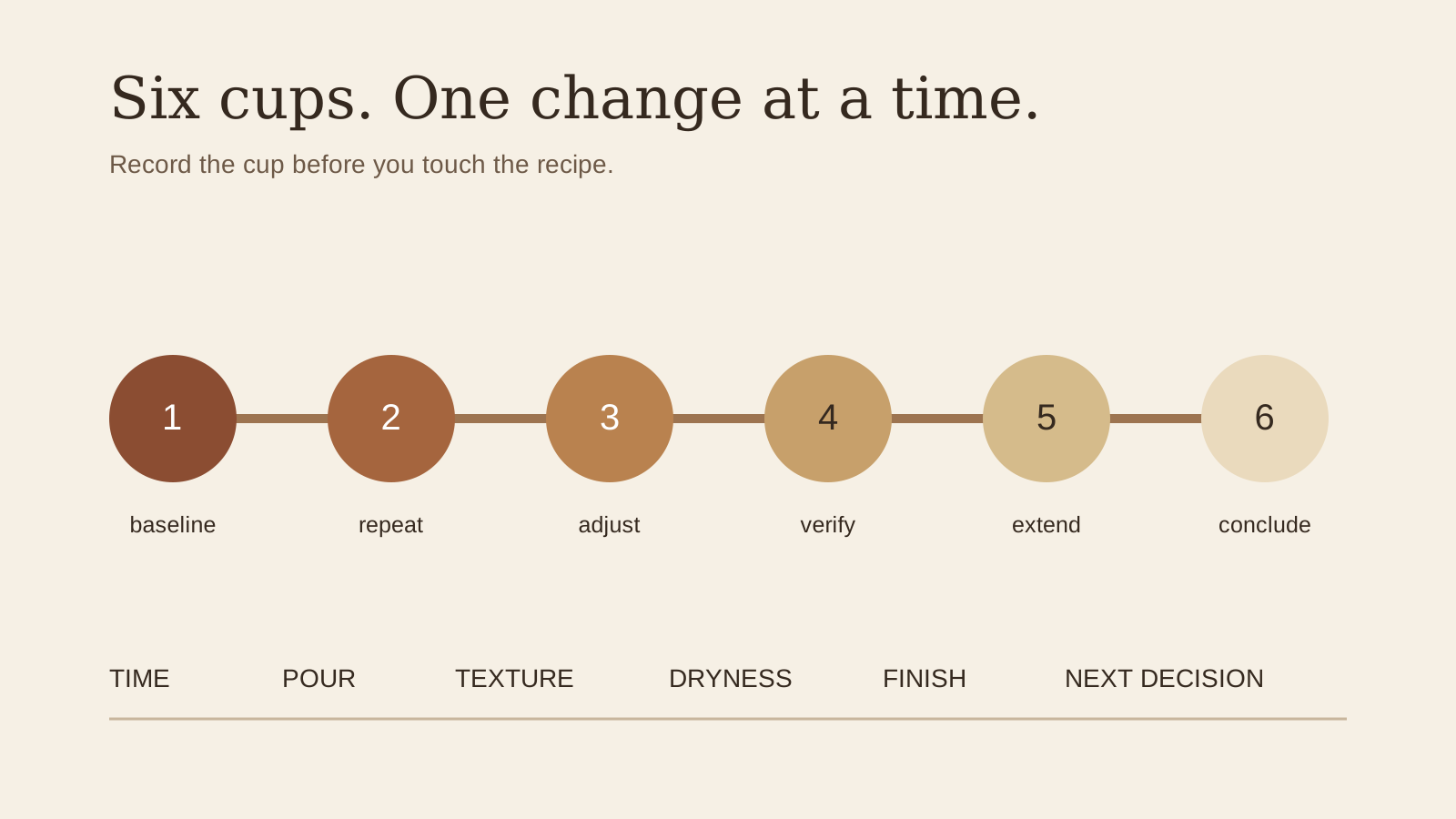
| Infusion | Begin decant at | Pour duration | Aroma and texture | Bitterness / dryness | Next decision |
|---|---|---|---|---|---|
| 1 | |||||
| 2 | |||||
| 3 | |||||
| 4 | |||||
| 5 | |||||
| 6 |
The best infusion becomes the target for the next session. If you cannot explain why you changed the next round, repeat the previous one instead.
Rinsing must solve a named problem
A quick rinse can help loosen compressed tea, warm the leaf or discard the first contact with water when that is the brewer's informed preference. It does not reliably “wash away caffeine,” repair questionable storage or improve every tea.
For this twisted-oolong exercise, either skip the rinse or record it as a separate contact with a stated purpose. Do not silently rinse and then call the next cup “infusion one”; that makes two sessions impossible to compare. Tender green tea and aromatic black tea may lose a valuable first infusion when rinsing becomes automatic.
Performance and responsive brewing require different judgments
Public presentation is a separate test from the quiet training sequence above.
| Public performance question | Responsive brewing question |
|---|---|
| Can the audience see and understand the gesture? | Did the action improve control or service? |
| Does the sequence maintain rhythm? | Did the cup require a change in time, heat or distribution? |
| Are objects arranged for a readable stage picture? | Are hot water, cords and waste safely placed for these people? |
| Is the repertoire represented accurately? | Was the vessel emptied and the next decision recorded? |
A skilled performance can also produce excellent tea. The error is assuming that visible complexity proves brewing skill, historical age or universal Chinese practice.
Hospitality sets the final standard
Keep the kettle, cord and hot waste water away from reaching hands. Turn handles and spouts away from guests. Ask before refilling; gongfu's small cups do not mean everyone wants six rounds of caffeine. Serve cooler, use a larger cup or simplify the grip when a guest needs it. Accessibility does not make the gathering less Chinese.
For more than one guest, taste a small portion when a round seems uncertain before distributing the full pitcher. This is quality control, not selfishness. Good hospitality protects guests from the brewer's experiment.
Finger tapping to thank a server is recognized in some settings, and popular stories connect it to imperial travel. It is not mandatory everywhere, and a familiar origin story should not be treated as verified history without evidence.
What a successful first session proves
After six infusions, you should be able to answer five concrete questions:
- What was the vessel's working capacity and did the pitcher receive it safely?
- When did water first touch leaf, when did pouring begin and how long did the decant take?
- Which infusion had the best balance, and what observable result supports that judgment?
- What single change improved or worsened the following cup?
- Were all guests served evenly and comfortably?
If you can answer those, you practiced gongfu tea even if the table was plain and the gestures were short. If you cannot, adding more implements or ceremonial names will not supply the missing skill.
Continue through tea practice and etiquette, compare the Chinese tea ceremony guide, choose a measured gaiwan, build a functional Chinese tea set or apply the variables in the general brewing guide.