Do not copy a gesture until you know what the occasion means
The same cup can carry hospitality, technical attention or family recognition. Context changes the action.
| Practice | Human purpose | What cannot be standardized |
|---|---|---|
| Chinese tea ceremony | The page names region, teacher, occasion and participants before explaining sequence. | One national ritual represents all Chinese tea service. |
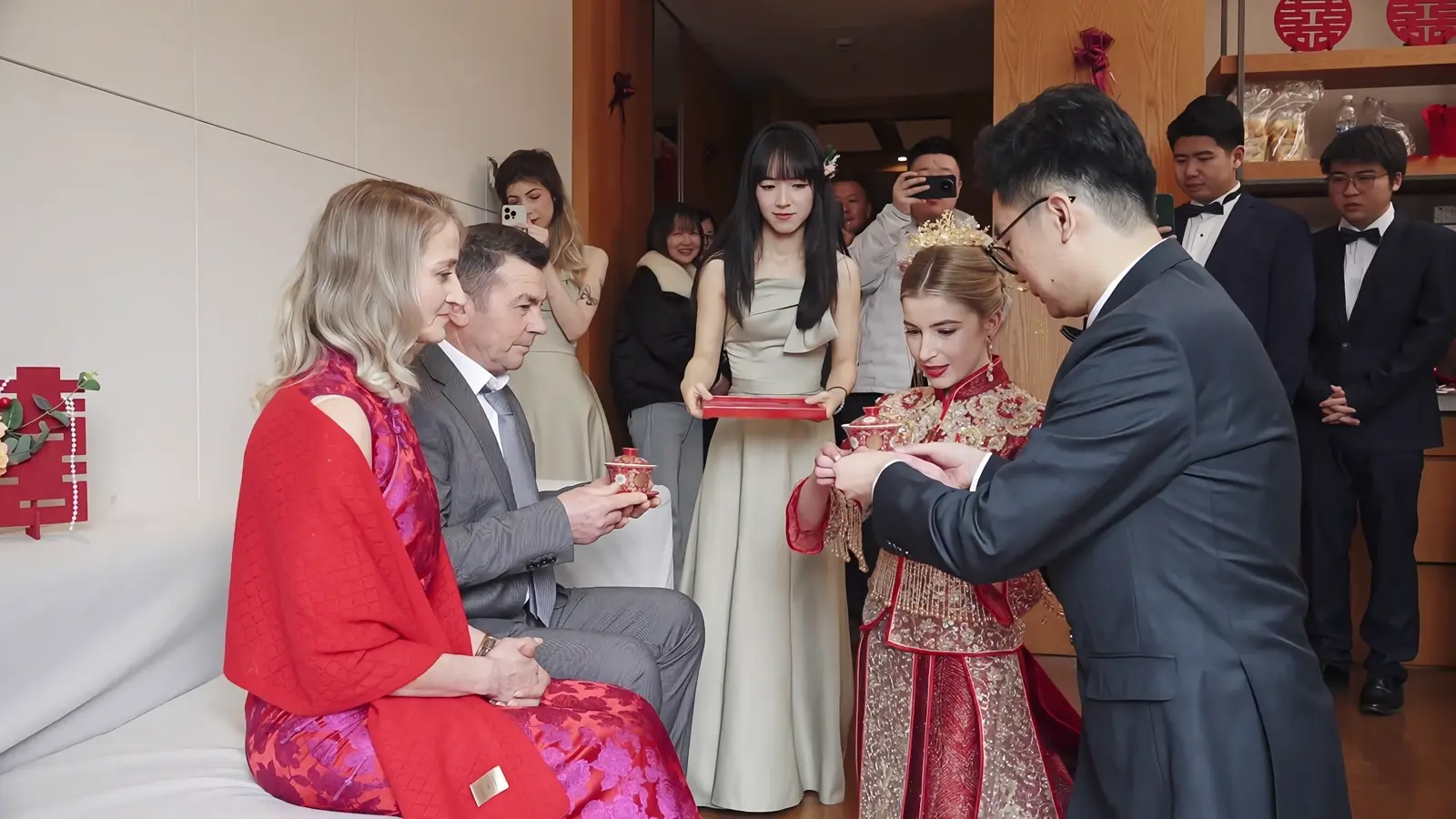
| Wedding tea ceremony | Serving order, forms of address, kneeling or standing, gifts and helpers are agreed with the actual families. | A viral checklist can settle kinship, remarriage, diaspora or family conflict. |
| Gongfu tea ceremony | Leaf, vessel, repeated infusions and regional teaching create a focused practice of brewing and company. | More accessories, faster hands or smaller cups prove deeper knowledge. |
Ask who is being recognized before asking where the tongs go
Search results often offer an ordered list: warm the pot, rinse the leaf, arrange cups, pour in circles. That can help with mechanics, but it cannot explain a ritual. A wedding tea service recognizes relatives and changes forms of address. A Chaozhou-style session may emphasize concentrated brewing, repeated pours and local etiquette. A public performance may translate craft for an audience. The same movement carries different weight in each setting.
Begin by naming participants, purpose, place and authority. Who taught the sequence? Is it a family expectation, a regional practice, a school, a commercial presentation or a personal arrangement? This does not weaken tradition. It prevents a confident host from imposing one internet script on people whose relationships are actually at stake.
The tea is simple; the family map is the difficult part
At a Chinese wedding tea ceremony, the couple may serve parents and other elders, use kinship titles, receive blessings or gifts, and rely on helpers to prepare cups and guide order. Details vary by region, family, language, religion, venue and diaspora history. Kneeling may be expected, optional, adapted or rejected. Divorced, remarried, blended or bereaved families require care that a generic elder list cannot provide.
The most respectful preparation happens before the wedding day. Write the names and titles, ask both families about order, decide how mobility and clothing affect posture, and identify who will quietly solve mistakes. Tea temperature should be safe and cups easy to handle. A ritual meant to honor elders must not become a public examination that humiliates the couple.
Gongfu is skill made repeatable, not luxury made visible
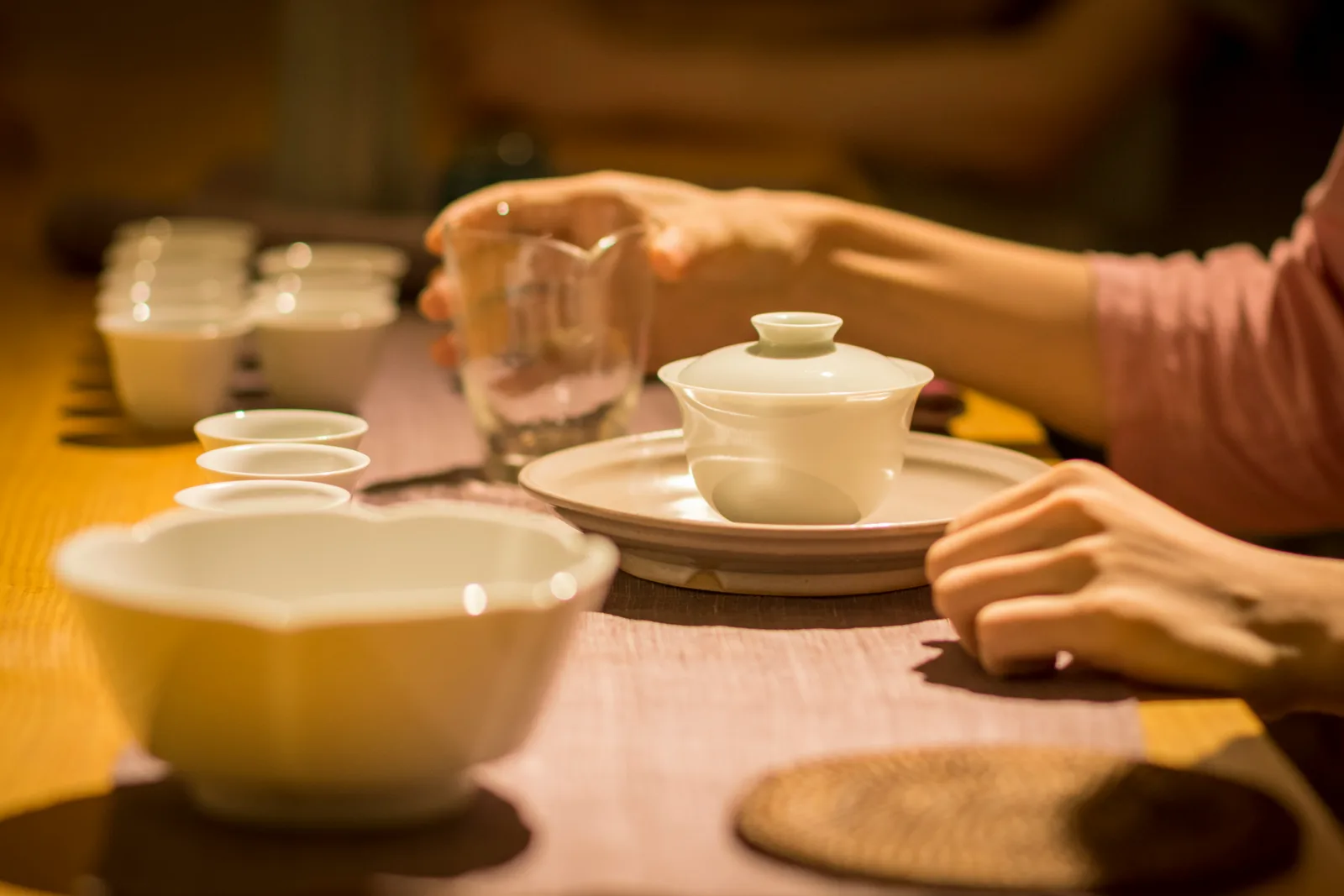
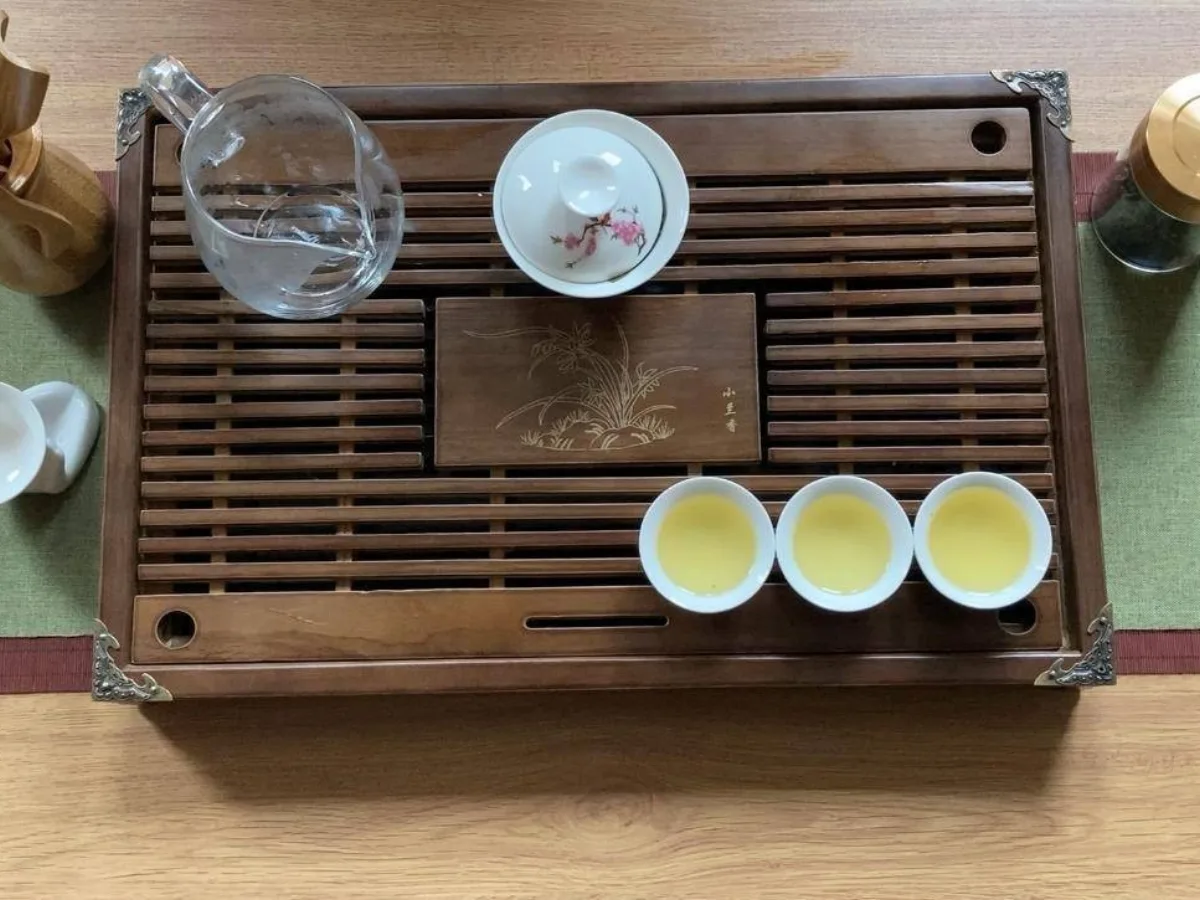
Gongfu tea uses a relatively small vessel, enough leaf to produce distinct infusions, controlled contact and a complete pour. Chaozhou, Fujian, Taiwan and contemporary tea communities have related but not identical practices. The point is not to own every tool. It is to make leaf behavior legible while serving others attentively. A gaiwan, pot, pitcher and cups are useful only when their capacities work together.
Online performance exaggerates speed, height and accessory count because movement photographs better than listening. I reject that hierarchy. A brewer who notices an empty cup, reduces strength for a guest and keeps conversation alive has more gongfu than someone performing a flawless rinse while everyone waits. Skill should disappear into hospitality.
A beautiful demonstration must admit whose version it is
Tea schools, hotels, museums, cultural events and creators often stage a Chinese tea ceremony for an audience. Performance can make tools and gestures visible, and it can create a memorable invitation into the subject. The problem begins when a recent choreography is presented as timeless national tradition. Costume, music and synchronized movement may belong to the performance design rather than the household or regional history being claimed.
A responsible presenter names the lineage, teacher or institution and distinguishes interpretation from universal custom. Captions should say what viewers can see and what remains contextual. The audience deserves beauty and honesty at once. I would rather watch a clearly identified contemporary demonstration than a fake ancient ritual protected by foggy language.
Good manners reduce anxiety instead of creating secret tests
A guest usually needs very little: notice the host, accept or decline politely, handle a hot cup safely and avoid treating every gesture as exotic theatre. Finger tapping, cup turning and other customs vary in meaning and use. When uncertain, observe and ask. A host should explain what matters rather than wait for a visitor to fail an invisible rule.
Dietary, caffeine, pregnancy, medication and accessibility needs also belong to hospitality. Offer water, lighter tea or a way to stop. Never pressure someone to finish a strong infusion as proof of respect. Tradition that cannot adapt to a human body has forgotten why people gathered.
A tea table should show the relationship between capacities
The visual field can become crowded with tray, scoop, tongs, towel, incense, flowers and decorative animals. Strip it back. Measure the brewing vessel, pitcher and cups. Make sure a complete pour fits. Keep hot-water movement safe. Place waste water where it will not cross hands. Then add objects that solve a need or hold real meaning.
This practical sequence produces better photographs too. Hands, steam, leaf and eye contact become visible because clutter no longer claims the frame. An image should show what the ritual does: one person serving another, a leaf opening across infusions, a family recognizing an elder. Decoration without action is not evidence.
Keep one gesture only if everyone can explain why it remains
For a family or community gathering, write a one-page protocol: purpose, participants, order, forms of address, tea choice, capacity, safety and who will guide. Rehearse the physical sequence with water. Ask whether any step embarrasses, excludes or exhausts someone. Remove it or adapt it. Record changes so future family members understand that adaptation was care, not forgetfulness.
My final judgment is severe because ritual deserves seriousness: inherited meaning is precious, inherited discomfort is not. The strongest tea ceremony is recognizable to the people it belongs to and generous to the people entering it. When the final cup leaves everyone more connected, the ritual worked.
Use the Chinese name when the English word ceremony creates a false promise
The English word ceremony suggests a formal, bounded event. Chinese tea practices may be called cha yi, cha dao, gongfu cha, jing cha or by family and regional expressions whose meanings do not align perfectly. Translation should help the reader enter the scene, not force every cup into one grand institution. Give the original term when known, explain who uses it and avoid claiming one English equivalent settles the history.
This is also why viral phrases about ancient tea ceremony deserve caution. Some gestures are old, some have been revived, standardized or redesigned, and some belong to modern hospitality industries. Dating a practice requires sources. A beautiful action can be valuable now without being pushed backward through centuries it never lived.
A wedding ritual must never become leverage against the couple
Family rituals can surface unresolved questions about hierarchy, divorce, remarriage, absent relatives, same-sex partners, intercultural marriages and who is recognized publicly. The tea does not solve these conflicts. Pretending the order is merely traditional can hide a painful choice inside a cheerful schedule. Discuss the map privately and early, with the people most affected.
Adaptation may include separate sessions, revised titles, standing service, chosen-family recognition or removing a step. Record the reason so the change does not become another mystery. My position is absolute: no photograph of perfect kneeling is worth humiliating a person. Respect is measured by what the family can carry after the cups are cleared.
Photograph faces and hands only after consent has entered the ritual
Wedding and family tea photographs can become precious records, but cameras also turn intimate recognition into content. Ask who wants to be photographed, whether children should appear, where images may be shared and which moments stay private. A photographer needs the serving order and family names, not permission to interrupt every cup for a better angle.
After the event, label names, kinship terms, place and date while memory is fresh. Invite relatives to correct the record. The archive then preserves relationships rather than an anonymous red costume and porcelain set. This is the kind of evidence future generations can actually use.
If someone leaves thirsty, burned or embarrassed, the ceremony failed
A ritual can be technically beautiful and socially careless. Water too hot for an elder, inaccessible seating, caffeine pushed on a guest, unclear order or public correction can turn attention into control. Design a quiet exit for mistakes, provide alternatives and let helpers carry logistics. Hospitality is not a performance judged by one authoritative viewer.
At the end, ask what changed between the people present. Was gratitude spoken? Did a guest feel welcomed? Did the brewer listen? Those answers matter more than symmetrical cups. The ceremony should leave a human trace deeper than the photographs.
The host can also invite correction afterward. A relative may explain that a title was wrong, an elder expected another order or a guest felt excluded. Record the lesson without defending the performance. A living ritual grows through accountable memory, not through pretending every ceremony was flawless.
That follow-up creates a reason to return to the page and community: participants can compare adaptations, not just display finished portraits. The archive becomes useful when it holds revisions and consequences beside beauty.
For a public demonstration, publish the named tradition, teacher or institution beside the images. For a family ritual, keep private details private and let participants decide what the community may learn. These two archives should never be confused.
A short written reflection after the event can capture what no video shows: who relaxed, who felt recognized, which step created tension and what should change next time. That evidence gives future hosts something better than a flawless highlight reel.