To travel to Guangzhou is to understand that a city can be globally connected without constantly announcing its cosmopolitanism. This route sits inside our wider Chinese cities travel guide, but Guangzhou demands its own clock: much of its confidence arrives at the table, one bamboo steamer at a time.
Travel to Guangzhou beyond the transfer hub
Overseas travelers often pass through Guangzhou on the way somewhere else. That is a mistake made understandable by the city's competence: it moves people and goods so efficiently that its own texture can disappear behind the transaction.
Guangzhou has long been shaped by maritime trade, migration and Cantonese culture. Today, wholesale markets, technology, fashion, historic arcades and the Pearl River belong to the same urban organism.
The companion Guangzhou culture guide explains why those systems belong together. This page makes the next decision: how to encounter them without losing half the trip to heat, transfers and an impossible landmark list.
Who should visit Guangzhou
Come for Cantonese food, trade history, subtropical street life, Lingnan architecture and a contemporary megacity less theatrical than Shanghai or Chongqing. Food-focused travelers should plan mornings as carefully as evenings.
Humidity can be intense. This is a city where shade, tea and an afternoon pause are practical intelligence.
Language is part of the visit, not a performance
Cantonese remains central to Guangzhou's sound, food vocabulary and cultural identity, while Mandarin is widely used across transport, hotels and contemporary business. English support varies. The traveler does not need to resolve that complexity or prove fluency.
Save destination names in Chinese, use translation tools and learn a few food terms from a reliable source. A Cantonese greeting can show attention, but repeating phrases for a reaction turns language into entertainment. Listen first: announcements, family conversation and restaurant ordering reveal where different languages are used.
Menus may use regional names that automatic translation handles poorly. Photographs help with recognition but cannot explain ingredients, bones, offal or allergens. Ask precise questions rather than assuming the English name describes the whole dish.
| Guangzhou at a glance | What it means for your trip |
|---|---|
| Best for | Cantonese food, trade history, design and subtropical urban life |
| Ideal first stay | Three full days |
| City pace | Commercial, practical and less theatrical than its scale suggests |
| Best way to move | Metro, with walking concentrated by neighborhood |
| Do not miss | Morning tea followed by a contrasting contemporary district |
Choose your route through this guide
| If you need... | Start with... |
|---|---|
| A first itinerary | The three-day route and district geography |
| Cantonese food | Morning tea, meal timing and the food section |
| Historic Guangzhou | Xiguan, Chen Clan Ancestral Hall and Shamian |
| Contemporary Guangzhou | Zhujiang New Town, Pazhou and design culture |
| A regional connection | Hong Kong, Macau and Pearl River Delta logistics |
Plan Guangzhou by trade routes and river districts
Guangzhou is a large, polycentric city. Historic Liwan, central Yuexiu, Zhujiang New Town, Pazhou, university districts and major railway hubs answer different travel questions. The metro connects them, but combining distant zones because they share one line still creates a fragmented day.
Use Liwan and Yuexiu for older commerce, religious and civic history. Give Zhujiang New Town and the Pearl River a separate afternoon and evening. Pair Pazhou with contemporary business, design or exhibition interests rather than inserting it between historic sites. Guangzhou South Railway Station should be treated as a regional transport node, not a central landmark.
The Pearl River is the city's broad organizing line, but much older commercial life developed through channels, wharves, markets and neighborhood streets that are not visible from a skyline cruise. Experience the river once from a promenade or ferry-level perspective, then return to streets where goods and food actually move.
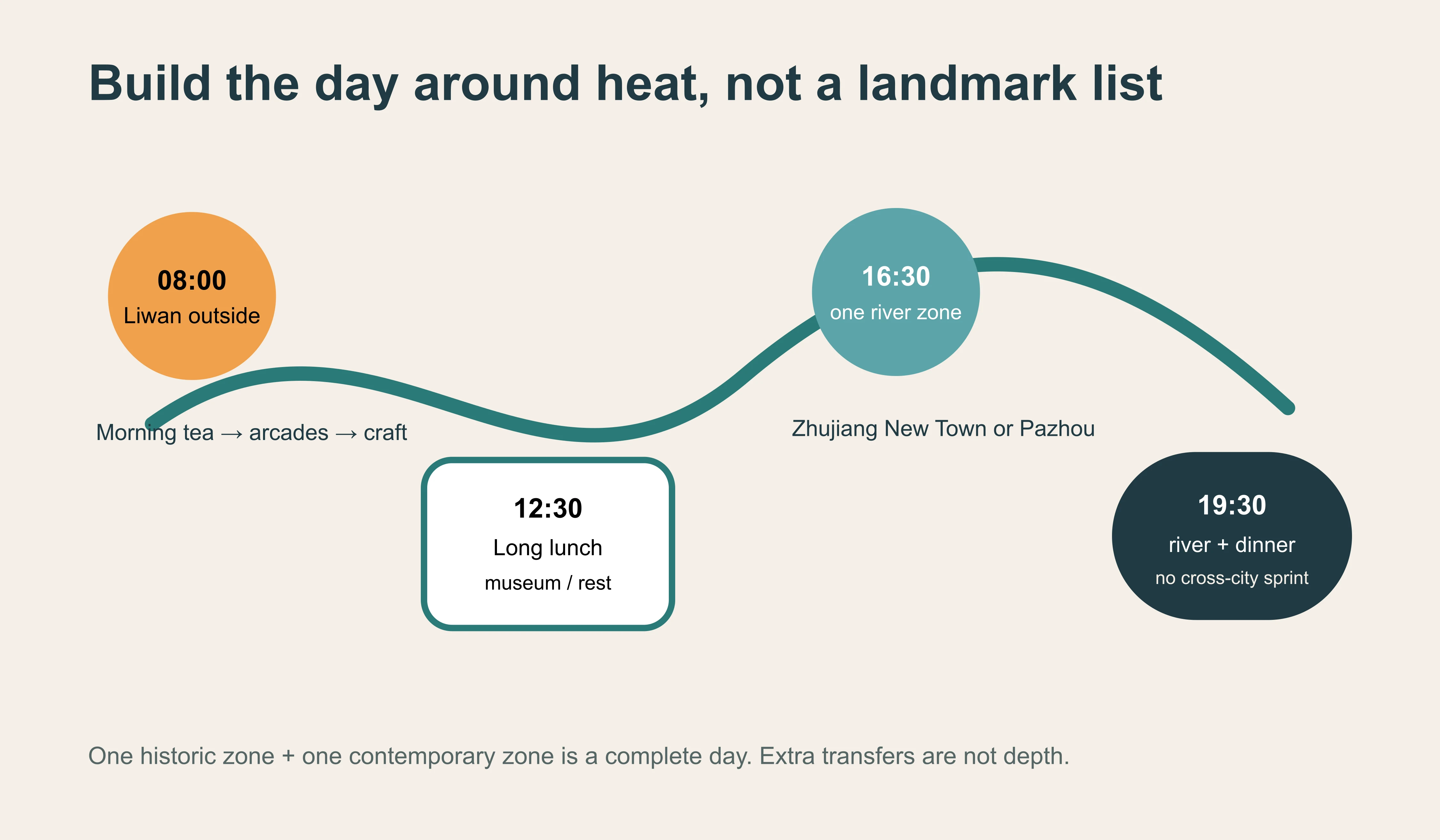
Heat changes the correct route
Subtropical weather is not a small practical note. Shade, covered arcades, tea, indoor markets and evening street life all respond to heat and rain. In humid months, protect the morning for outdoor neighborhoods, use midday for a museum or long meal and return outside near dusk.
This rhythm makes the city culturally clearer. A two-hour morning-tea session is not time stolen from attractions; it is a locally intelligent response to food, company and climate.
Essential Guangzhou experiences
Treat morning tea as social architecture
Yum cha is not simply a checklist of dim sum. Families and friends gather, refill cups and negotiate dishes over time. Arrive with company if possible, order gradually and observe the pace of the room.
Tea establishes the table before food arrives. Learn who is pouring, how cups are refilled and whether ordering happens from a menu, cart or phone-based system. Practices vary by restaurant, so observation is better than performing etiquette remembered from a video.
For two people, begin with three or four items rather than filling the table immediately. Har gow, siu mai, rice rolls, steamed ribs, buns and fried pastries create different textures. Add dishes only after seeing portion size. The goal is conversation and comparison, not completing every basket associated with Guangzhou.
Morning tea can continue toward lunch. Popular rooms may require queues or advance booking, while neighborhood restaurants can be less translated. Save the Chinese name and confirm whether the kitchen serves the dishes you want throughout the session.
Read Lingnan craft at Chen Clan Ancestral Hall
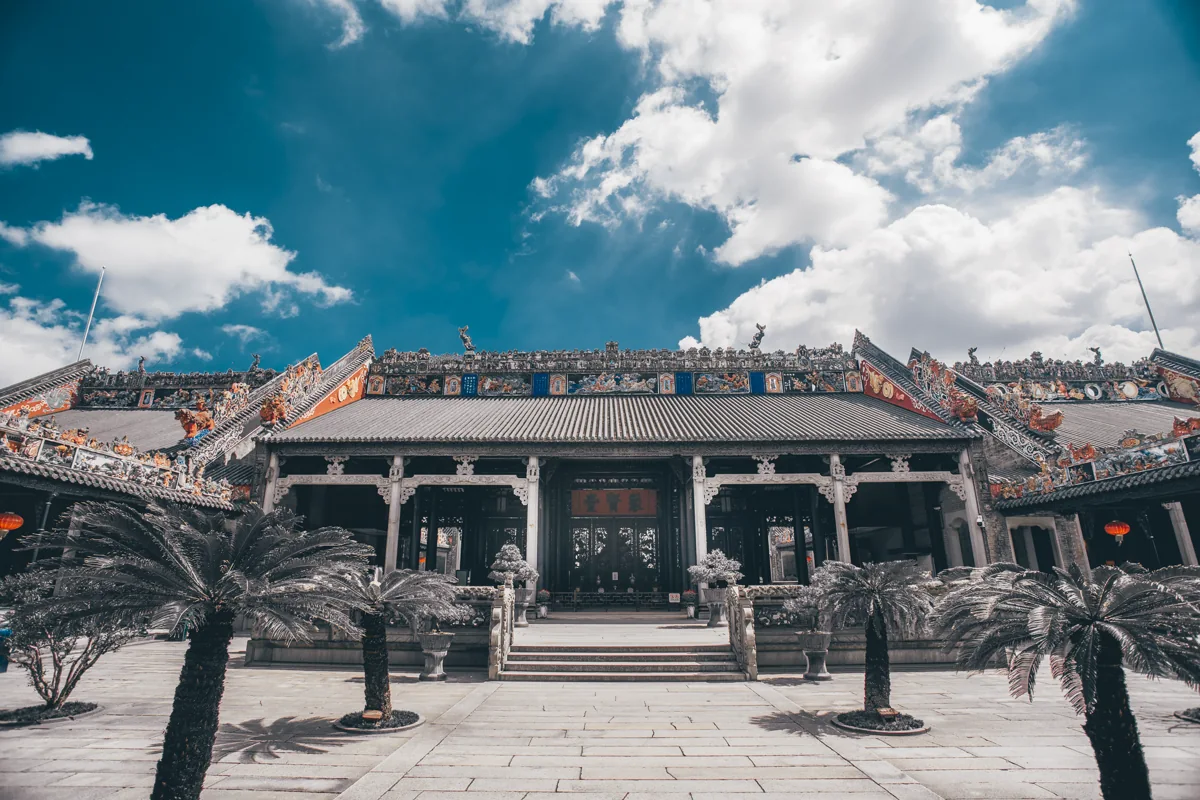
The complex rewards close looking: roof figures, wood, stone, ceramic ornament and courtyards built for climate. The Guangzhou municipal visitor record identifies the Chen Clan Ancestral Hall as an 1894 clan academy that now houses the Guangdong Folk Art Museum. It provides a strong doorway into Chinese architecture without suggesting that one regional style stands for the whole country.
Do not photograph only the roofline. Move between courtyards and compare shade, ventilation, screens and the relationship between decorative density and open space. Institutional history and later museum use matter as much as individual carvings.
Walk old commercial streets
Xiguan, Enning Road and arcade streets reveal older mercantile Guangzhou, though restoration and redevelopment continue to change them. Notice ventilation, shaded walkways and the relationship between shop and street.
Arcades solve several problems at once: they protect pedestrians from sun and rain, extend commercial frontage and keep movement close to shop entrances. Walk beneath them during changing weather and observe where the covered system remains continuous or has been interrupted.
Xiguan should not be reduced to decorative mansions and nostalgia. Food businesses, housing, medicine shops, workshops and daily services show how older commercial districts continue to function. A renovated facade may preserve visual language while the building's use changes completely.
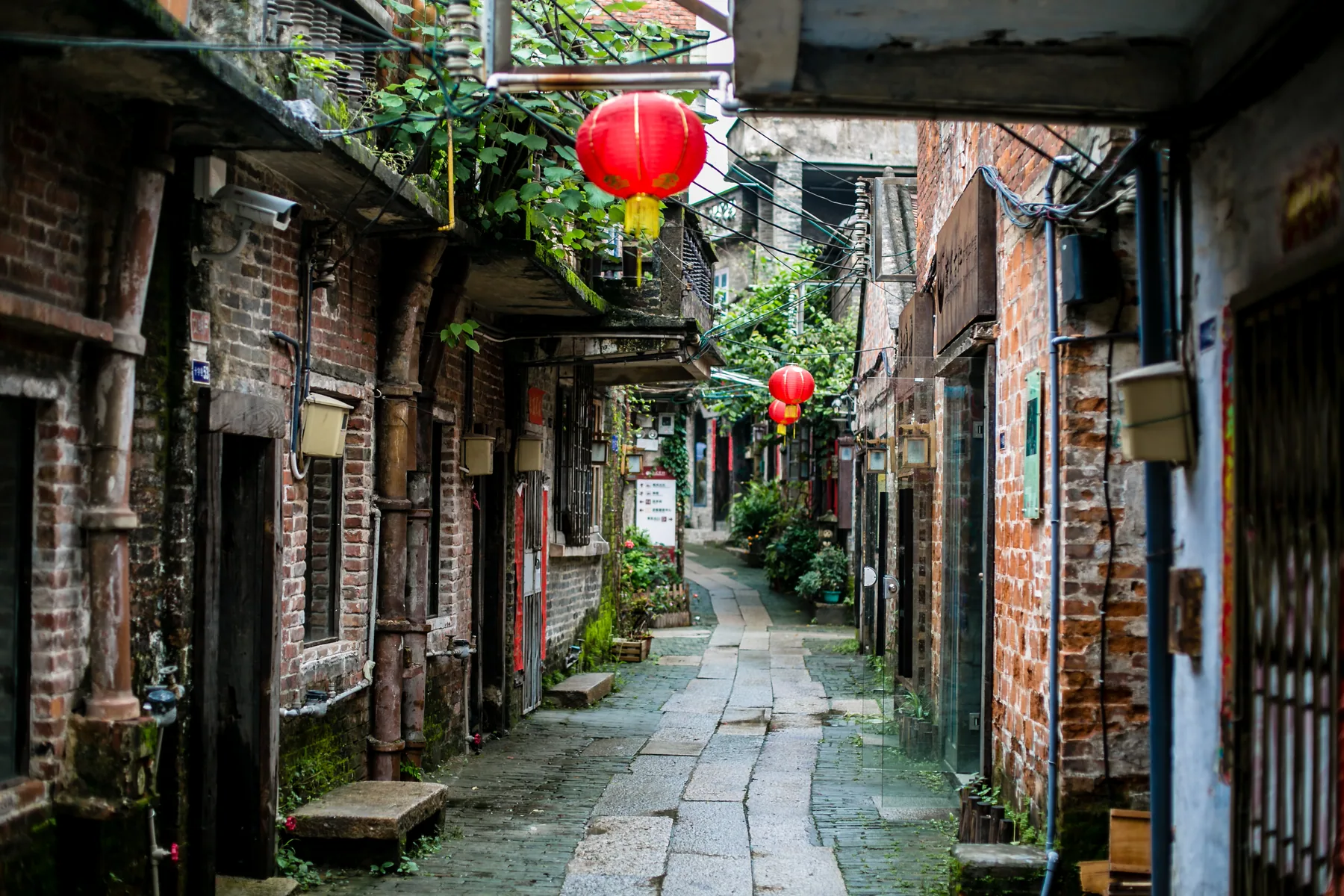
The useful detail is not the lantern. It is the lane's scale: doors, plants, signs and walking space are pressed close enough that commerce and residence cannot be separated into different sightseeing zones.
Shamian requires a trade-history label
Shamian's trees and European-style buildings make it one of Guangzhou's easiest walking districts. Its visual calm can conceal the history of foreign trade, concessions and unequal power that produced the enclave. Architecture should be admired with the historical category visible.
Walk the island slowly, then cross back into surrounding urban life. The transition is the lesson: a planned enclave, riverside infrastructure and dense contemporary Guangzhou occupy a small distance.
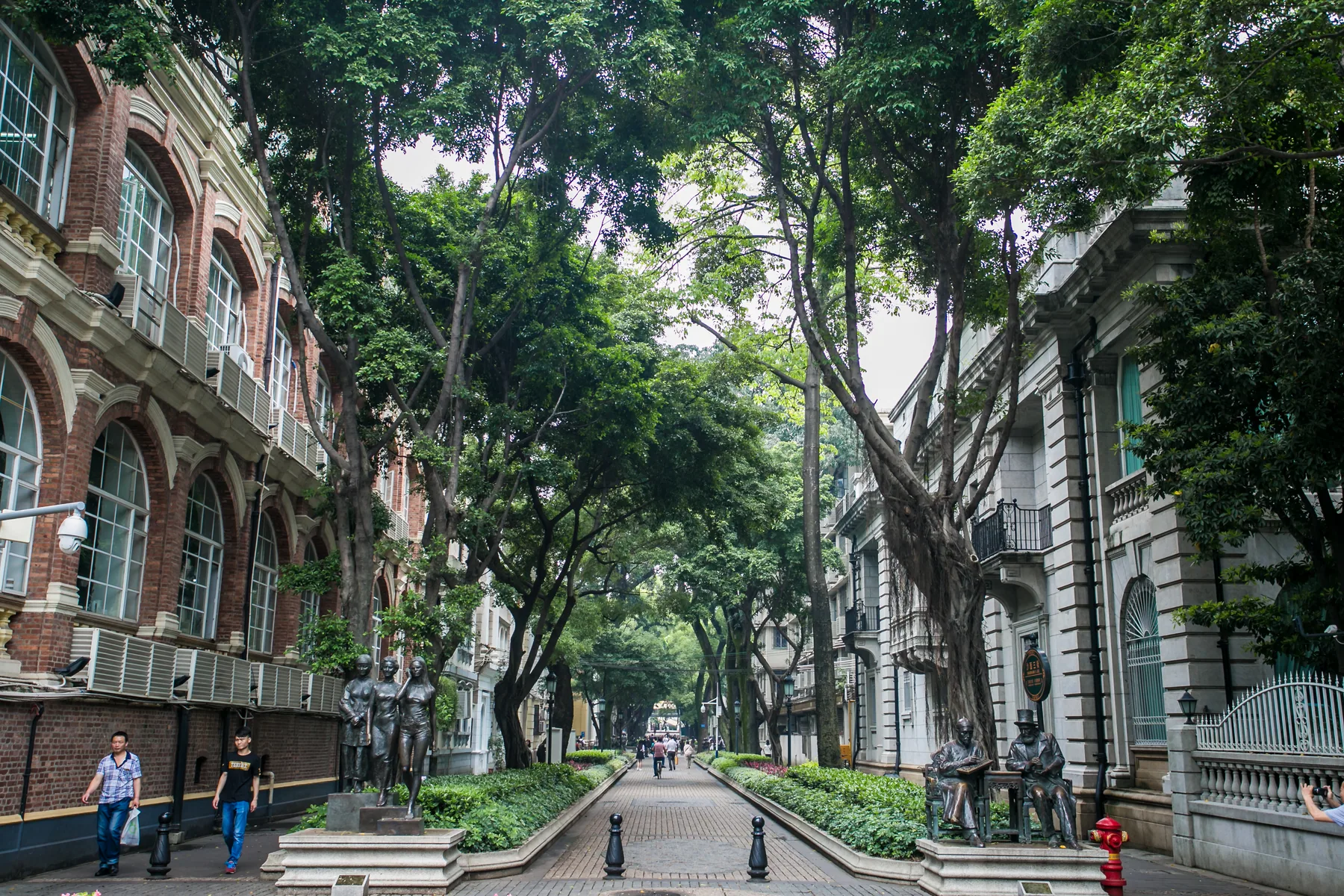
Shamian's shade is real and valuable in Guangzhou's heat, but visual comfort should not erase the trade and concession history that produced this unusually planned streetscape.
Civic and religious Guangzhou needs a separate half-day
Sun Yat-sen Memorial Hall, Yuexiu's monuments, temples, mosques and Sacred Heart Cathedral represent different political, migrant and religious histories. Do not compress them into a generic heritage route. Choose two institutions whose stories genuinely interest you and confirm current public access.
At active religious sites, architecture is secondary to respectful behavior. Keep voices low, avoid interrupting worship and follow photography rules. At civic memorials, ask how the figure or event is interpreted for present audiences rather than treating monumental form as neutral biography.
This route is especially useful after Shamian because it broadens the history beyond foreign trade. Guangzhou has also been shaped by revolution, education, religious communities and repeated movement from across China and overseas.
Meet the contemporary river city
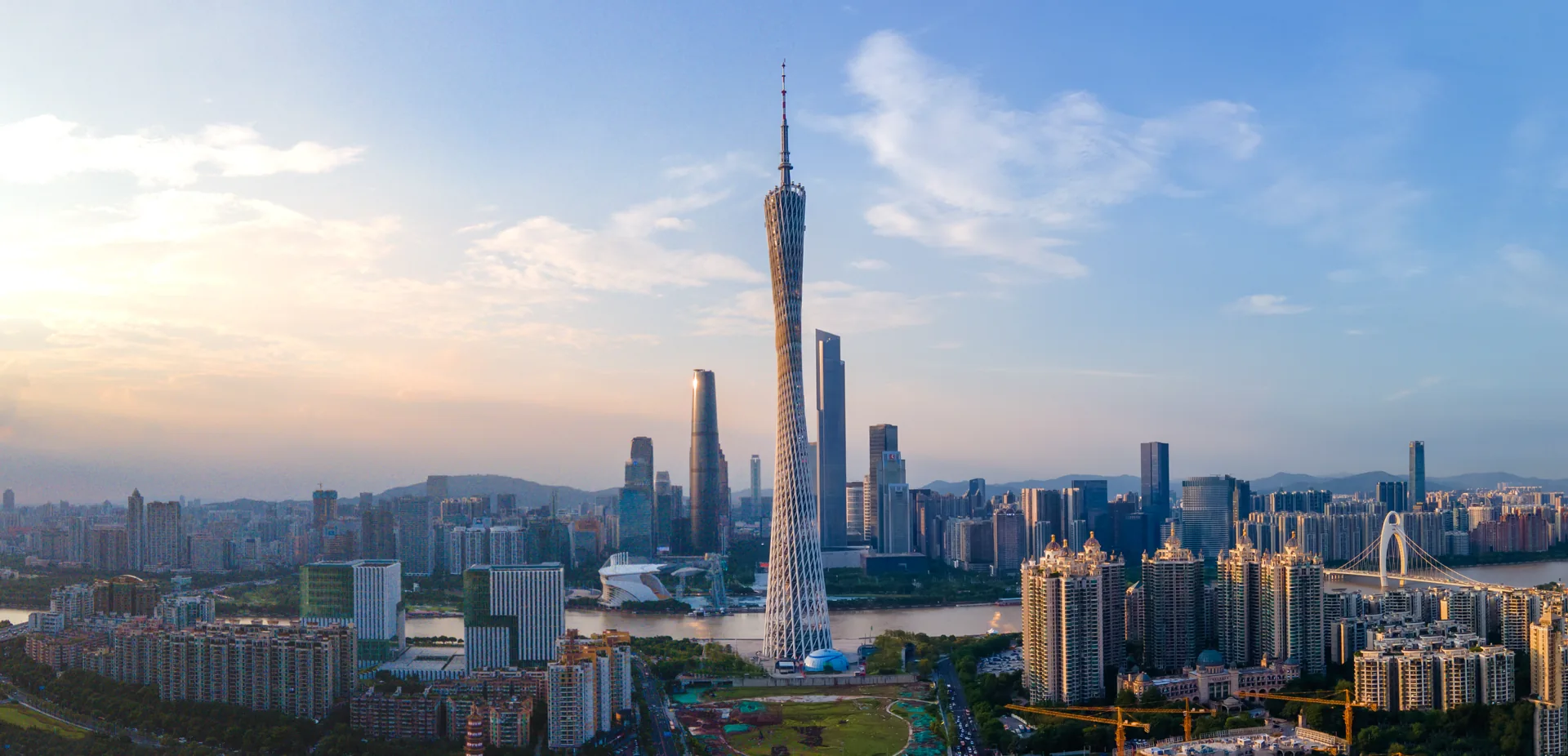
Zhujiang New Town and the Canton Tower skyline show Guangzhou's modern confidence. A riverside walk at dusk is more revealing than racing between observation decks.
Canton Tower works best first as part of the river landscape. Walk a public stretch on the opposite bank and let the changing light show the tower in relation to bridges, apartment blocks and Guangzhou's civic buildings. An observation-deck ticket is worthwhile if the elevated view itself is your priority; it is not a mandatory fee for understanding the city. Verify operating hours and tickets with the attraction before setting a fixed evening.
Give Chimelong a full day, or leave it out
Chimelong Safari Park in the Panyu area is a major family attraction, not a casual detour between Liwan and the Pearl River. Budget a separate day for the park, travel and rest, especially with children. The Guangzhou Chimelong resort includes different attractions; confirm that the ticket you are buying is for the safari park rather than assuming the resort name identifies one entrance.
Animal welfare matters alongside entertainment. Decide whether a wildlife park fits your family's priorities and check its current policies rather than treating the visit as a required Guangzhou cultural lesson. For a short first trip focused on neighborhoods, food and Lingnan history, I would choose the city over an overfilled attraction day. The Zhuhai Ocean Kingdom is a different Chimelong destination in another city; do not combine the two into a single Guangzhou itinerary.
The central library, opera house, museums and plazas create a civic corridor where landmark design meets family recreation and office movement. Visit at ground level before seeking a tower view. Large public buildings explain how the city presents knowledge and culture, while the surrounding crowds show whether that presentation is actually used.
Urban villages belong to contemporary Guangzhou
Dense urban-village districts support housing, food, logistics and small business for people working across the metropolitan economy. They should not be treated as exotic chaos or entered as poverty photography. Observe from public streets, respect residents and avoid turning narrow lanes into a visual contrast with luxury towers.
Their proximity to major business districts demonstrates how Guangzhou's growth depends on multiple housing and commercial systems. A complete guide must acknowledge this city even when the traveler spends most nights in a formal hotel district.
Specialist markets reveal the city's operating system
Guangzhou's markets connect manufacturing, wholesale, logistics and international trade. A market selling fabric, tea, medicine, electronics or accessories is not automatically a visitor attraction. Some complexes are designed for professional buyers, work on specific schedules and provide little reason for casual photography.
Visit only where public access is clear and the category interests you. Observe units, packaging, sample displays and how buyers move through the building. Do not block transactions or demand retail service from a wholesaler. The value is understanding scale and specialization, not buying one souvenir from every floor.
Market districts also expose the labor behind online commerce. Goods seen in livestreams or global marketplaces pass through design, production, sales, packing and delivery systems. Guangzhou's digital future is connected to physical rooms, vehicles and workers.
Evening Guangzhou is distributed rather than centralized
The Canton Tower view is famous, but the city's night life does not belong to one skyline. Liwan food streets, Tianhe restaurants, university districts, riverside paths and neighborhood shopping areas serve different audiences. Choose an evening near the day's final destination rather than crossing Guangzhou for a single online-famous view.
After dinner, walk one ordinary commercial block. Notice family groups, delivery riders, dessert shops and late public transport. This is where Guangzhou's practical energy becomes more convincing than its landmark lighting.
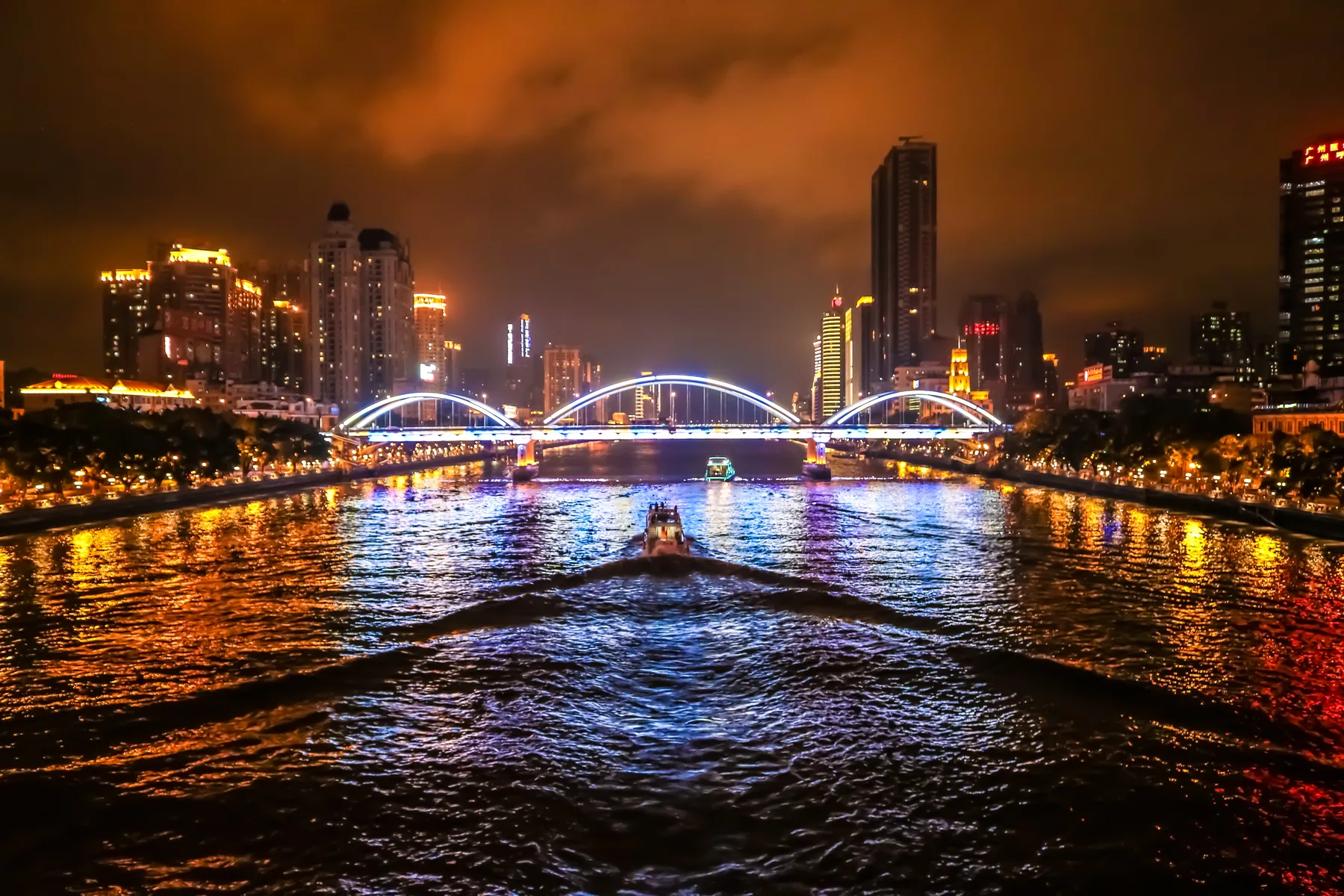
From the water, Guangzhou's night becomes a route rather than a single tower photograph. Bridges, boats and both banks stay in the same moving frame.
Young Guangzhou: design, digital trade and the future of the Pearl River
Guangzhou's young culture grows from the same forces that have long shaped the city: trade, making, migration and an instinct for practical adaptation. Fashion, product design, live music, animation, e-commerce and food entrepreneurship do not sit outside Cantonese culture; they are current ways the city continues it.
Guangzhou Design Week offers one visible point of entry into the professional design world. Outside major events, look at how design appears in ordinary commercial life: packaging in specialist markets, interiors, local fashion, transit and the speed with which a product idea moves toward manufacture.
Pazhou represents another future-facing Guangzhou, combining exhibition infrastructure with expanding digital-business and office districts. The official Canton Fair history dates the fair to 1957 and locates its exhibition complex on Yuejiang Zhong Road; that continuing trade institution makes Pazhou more than an anonymous office skyline. Its construction and scale can still feel impersonal, so pair it with an older commercial neighborhood. The contrast reveals continuity: Guangzhou has always built systems for exchange, even when the goods move from river cargo to data and livestream commerce.
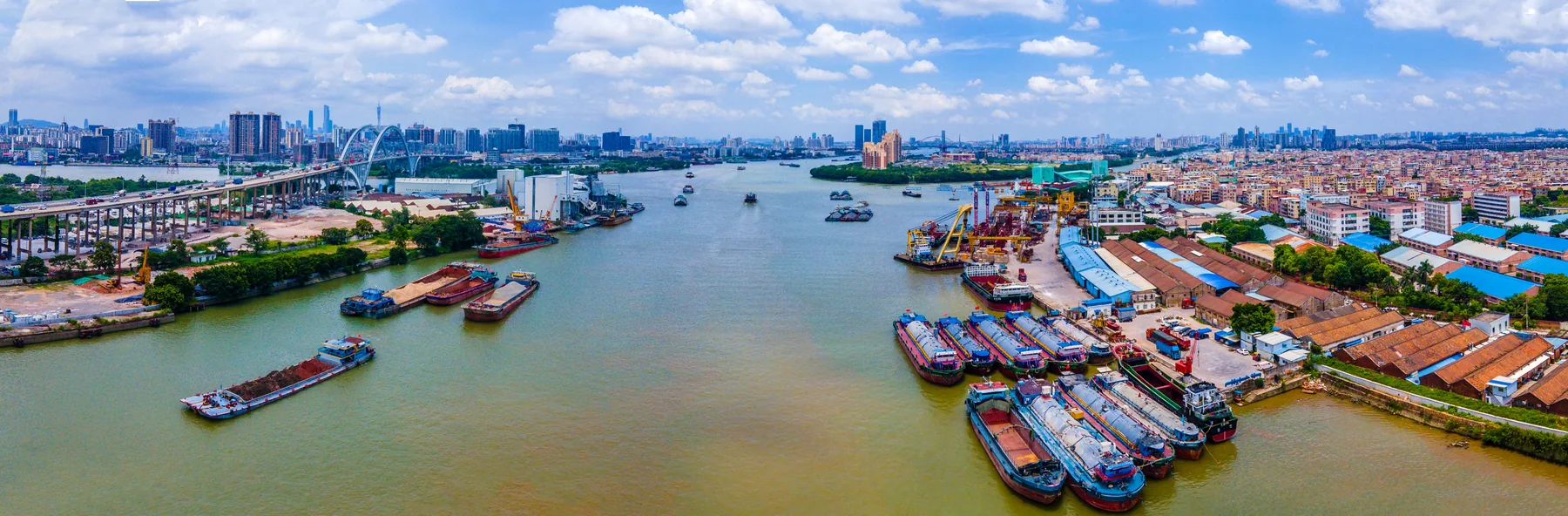
The cargo waterway is the missing half of the trade story. Guangzhou's digital storefronts still depend on physical goods, docks, vehicles and workers; the future-facing city has never stopped being material.
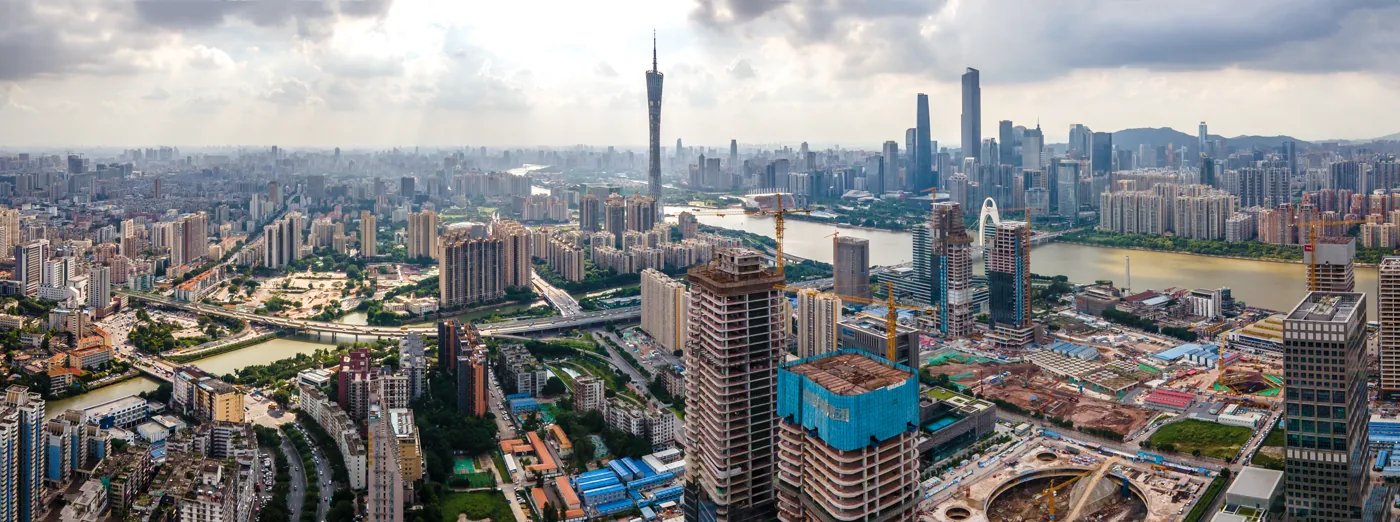
A Guangzhou past-and-future day
| Time | Place type | Cultural question |
|---|---|---|
| Morning | Traditional yum cha room | How does an old social ritual remain useful to young families? |
| Midday | Xiguan, arcade street or specialist market | How do climate and commerce shape the street? |
| Afternoon | Design event, creative business or contemporary museum | What is Guangzhou making for the wider world now? |
| Evening | Pazhou, Zhujiang New Town or riverside | How does the Pearl River still organize the city's imagination? |
Guangzhou hides its sophistication in use
What most guides get wrong
They treat Guangzhou as a food stop followed by one old building and one skyline. Food, architecture and trade are not separate themes here. Morning tea organizes social time, arcades organize commercial movement and Pazhou organizes newer forms of exchange.
The city rewards travelers who compare systems. Put a traditional restaurant beside a digital-business district, an ancestral hall beside a public library and a shaded arcade beside a tower plaza. Three days is enough for an introduction; four makes room for markets, wetlands or deeper food without crossing the city at every meal.
Guangzhou may feel less immediately theatrical than Shanghai, Hong Kong or Chongqing. That is a strength. Its urban confidence often appears as something functioning well rather than something designed to announce itself to visitors.
What to eat in Guangzhou
Dim sum is the beginning. Look for roast meats, steamed fish, white-cut chicken, congee, rice rolls, clay-pot rice, double-skin milk and soups whose subtlety challenges the stereotype that memorable food must shout.
The phrase “Cantonese food” covers enormous variation. Ask what is seasonal. Texture, freshness and precise heat often matter more than heavy seasoning.
Plan meals by time. Rice rolls, congee and dim sum suit mornings. Roast meats, noodles and clay-pot rice can anchor lunch or dinner. Seafood restaurants require attention to pricing, weight and preparation; confirm before ordering rather than assuming the tank display explains the bill.
Soup is not decorative. It can express season, household ideals and the importance of extracting flavor without visual drama. A subtle dish may be the most technically demanding item on the table.
Use our Cantonese food guide to understand the regional cooking system, then use the Guangzhou food guide to build actual meals by hour, neighborhood and appetite. The first answers what Cantonese technique is; the second prevents a visitor from spending three days eating versions of the same dim-sum basket. If food is deciding the whole trip, compare Guangzhou's morning-and-market system with the best food cities in China before booking a second city.
A three-day Guangzhou itinerary
| Day | Morning | Afternoon | Evening |
|---|---|---|---|
| 1 | Morning tea | Chen Clan Ancestral Hall and Xiguan | Cantonese shared dinner |
| 2 | Market or museum | Shamian and old commercial streets | Pearl River walk |
| 3 | Contemporary architecture | Design, shopping or neighborhood exploration | Clay-pot rice or seafood |
A stronger four-day sequence
- Begin with morning tea, Chen Clan Ancestral Hall and a restrained Xiguan walk.
- Explore Yuexiu history or a museum, continue to Shamian and eat a Cantonese dinner outside the largest visitor streets.
- Visit Zhujiang New Town's cultural buildings, rest during the hottest hours and return to the Pearl River at dusk.
- Choose Pazhou, a specialist market, Haizhu Wetland or deeper neighborhood food according to interest.
Do not use the fourth day for an automatic border crossing. Hong Kong and Macau require their own entry, currency and transport planning and deserve more than a same-day checklist.
The four-day sequence works because it follows Guangzhou's own rhythm rather than alternating “old” and “new” as opposing categories. Xiguan commerce, ancestral-hall craft, specialist markets and Pazhou exhibitions are all versions of a city organizing exchange. The materials and technologies change; the practical intelligence remains.
Where to stay, move and manage the weather
Liwan suits food and older-neighborhood priorities. Yuexiu provides a central historical base with broad metro access. Tianhe and Zhujiang New Town suit business, modern hotels and contemporary-city routes. Pazhou is practical for fairs and exhibitions but less convenient for repeated historic-district visits.
Choose the exact metro station and check late-evening walking conditions. A hotel marketed as central can sit inside a large block or across a major road from the useful entrance.
Getting around Guangzhou
The metro is extensive and connects major railway hubs, but Guangzhou South can be a substantial transfer from central districts. Confirm station names carefully. Summer storms and heat can alter walking plans quickly.
Guangzhou works well in a broader route with Hong Kong or Macau, but border procedures and currencies change. Review the practical distinctions in Travel to China.
Seasons, storms and breathing room
Spring humidity and rain can be persistent. Summer brings heat, intense sun and storms. Autumn often supports the longest walking days, while winter is generally milder than northern China but can still feel damp indoors and after sunset.
Follow current severe-weather warnings. River walks, wetlands and tower viewpoints are not worth forcing during dangerous conditions. Keep one indoor alternative such as a museum, library, long meal or market with clear public access.
Air conditioning creates another planning issue. Long shifts between humid streets and cold interiors can be tiring, so carry a light layer even in summer and avoid scheduling every outdoor district at midday. Morning tea is useful climate strategy as well as food culture: an early meal creates a social start before the hardest heat, while a long lunch can become the necessary pause between Liwan streets and an evening river route.
Haizhu Wetland should be treated as an ecological and residential edge rather than a decorative green break. Its value lies in seeing water management, vegetation, towers and daily urban growth together. Confirm current entrances, booking requirements and opening conditions, then allow enough time that the visit is not compressed between distant commercial districts.
Lijun's note: sophistication without explanation
Guangzhou rarely pauses to translate its taste into a slogan. A clear broth may contain more judgment than a dramatic plate elsewhere. A shaded arcade solves climate while conducting business. The city trusts use, repetition and appetite. Stay long enough and that quiet competence becomes its strongest visual effect.
For foreign visitors, this can initially feel less legible than a skyline with a famous story attached. The answer is not to demand a louder city. Compare how people occupy a restaurant, market, riverside and library, and Guangzhou's coherence becomes visible through behavior. It is a place whose depth arrives through repeated use rather than one definitive viewpoint.
Frequently asked questions about travel to Guangzhou
How many days should I spend in Guangzhou?
Three days is enough for historic districts, Lingnan architecture, modern Guangzhou and several serious meals. Add time if you are connecting the wider Pearl River Delta.
Is Guangzhou the same cultural experience as Hong Kong?
No. They share important Cantonese and regional connections, but have distinct histories, institutions, currencies, language environments and urban rhythms.
Do I need to speak Cantonese in Guangzhou?
Mandarin is widely usable and transport signage often includes English. Cantonese remains culturally important; learning a greeting or food term can show attention without pretending fluency.