Confucius was a Chinese teacher and thinker who lived from 551 to 479 BCE. He did not write a grand system, found a church or spend his days manufacturing quotations for office walls. His influence grew from a more difficult project: teaching people to examine how character appears in relationships, learning and public responsibility.
Before Confucius became a statue
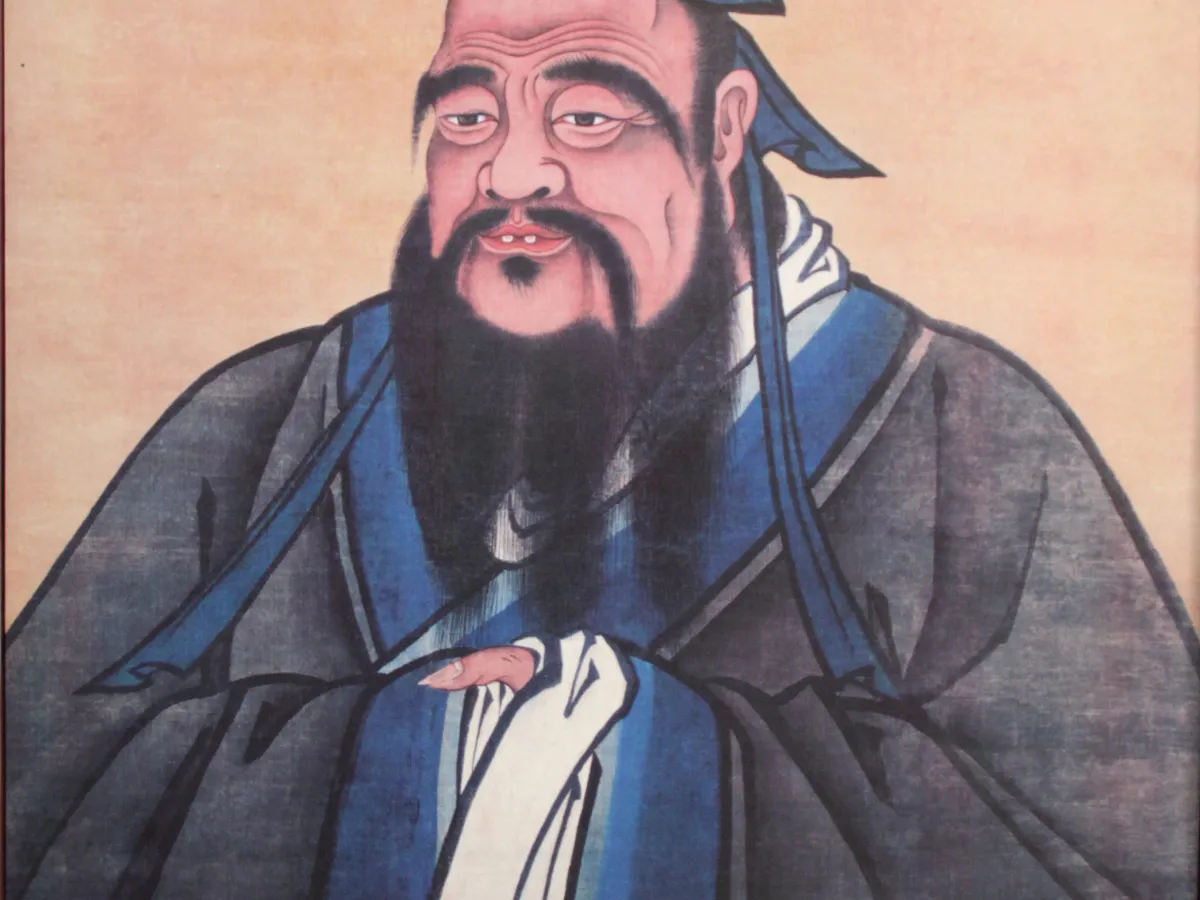
It is easy to meet Confucius after history has finished arranging him. He stands in temple courtyards, school halls and public squares with a composed beard, folded hands and robes that seem immune to weather. Bronze is very good at certainty.
The historical person was less settled. He sought political influence, advised rulers, gathered students, traveled, experienced disappointment and worried that good order had been lost. His ideas did not arrive from a throne. They grew in the uncomfortable space between how society behaved and how he believed people might improve it.
This tension gives his life a pulse. Confucius became famous for order because he lived in disorder.
Confucius, Kongzi and Kong Qiu
Confucius is the Latinized name that entered European languages through early missionary scholarship. In Chinese he is commonly called Kongzi, “Master Kong,” or Kong Fuzi, “Revered Master Kong.” His personal name was Qiu, and his courtesy name was Zhongni.
The different names reflect different relationships to the man. Confucius belongs to global intellectual history. Kongzi sounds closer to the teacher encountered in Chinese texts. Neither is wrong, but the distance between them reminds us that translation carries its own history.
He was born in the state of Lu, in what is now Shandong province, during the late Spring and Autumn period. Traditional chronology gives 551 BCE as his birth year and 479 BCE as his death year.
What do we actually know about his life?
Accounts of Confucius combine early textual evidence, later biography and centuries of reverence. The Analects gives glimpses of a teacher through conversations, but it is not an autobiography. Later historical works organized his life more fully, sometimes preserving information and sometimes shaping the sage that later ages needed. The Stanford Encyclopedia of Philosophy gives a careful account of that evidential boundary.
Broadly, Confucius appears to have come from a family of reduced aristocratic standing, worked in teaching and public service, held or sought political roles, and traveled among states with followers. The exact sequence and interpretation of events remain debated.
An honest biography should neither dissolve him into legend nor pretend that the evidence is a modern personnel file.
The world Confucius wanted to repair
Confucius looked backward to admired ritual and political models associated with the early Zhou dynasty. This was not nostalgia for old furniture. He believed inherited forms could educate desire, discipline power and make relationships more humane.
The society around him was politically fragmented. Rulers competed, hereditary orders weakened and warfare changed. Confucius responded by asking whether social repair could begin with cultivated people.
His answer was demanding: government should not rely only on force and law. A ruler's character mattered. Officials needed moral judgment. Education could transform someone beyond inherited status. Ritual required sincerity. Names and roles should correspond to real conduct.
These ideas could support hierarchy, but they also placed obligations on those above. A ruler who behaved without virtue weakened the moral basis of rule.
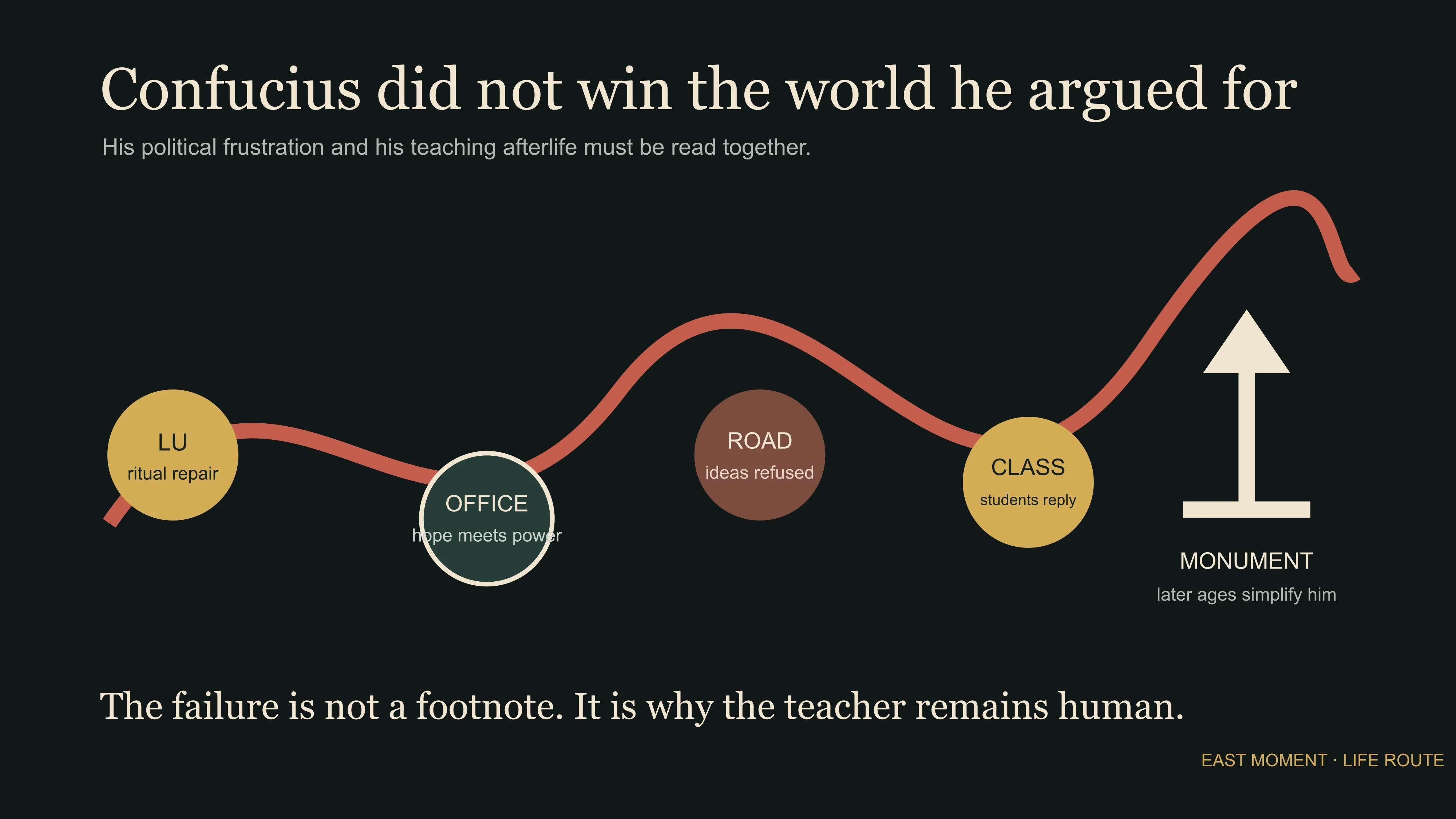
Political failure is the key to Confucius, not an embarrassing footnote
I understand why modern retellings turn Confucius into a heroic man who “never gave up.” That version is emotionally satisfying, but it becomes another poster if we smooth away the humiliation. His political hopes did not simply take longer than expected. Rulers had stronger incentives than moral self-cultivation, and a program built on exemplary conduct could not compel people who benefited from disorder to reform themselves.
That failure makes the teaching sharper. Confucius kept returning to learning, ritual, language and character because he could not command the world into order. He had to ask what a teacher, student or official could still do without possessing the throne. This is not proof that personal virtue can solve every structural problem. It is the opposite: the gap between his ambition and his actual power is visible throughout the story.
I refuse both easy verdicts. Calling him a useless political loser ignores the extraordinary afterlife of his classroom. Calling him an all-knowing sage hides the evidence that his preferred order did not win in his lifetime. The human being worth meeting is between those two fantasies: proud, disappointed, observant, sometimes severe and still willing to teach inside defeat.
Confucius as a teacher
The Analects remembers Confucius through exchanges with students. Different students receive different answers. One needs encouragement; another needs restraint. The teaching is relational rather than mechanically standardized.
Confucius valued learning from texts, ritual, music, history and human example. Yet learning was incomplete without reflection and practice. Knowledge should alter the learner's conduct.
He is often associated with the ideal that education should not be limited narrowly by social category. We should not turn this into a modern claim of universal equality without qualification, but his teaching community helped establish the powerful image of learning as a route to moral and social development.
The classroom he left behind was not a room. It was a method of conversation that later generations kept reopening.
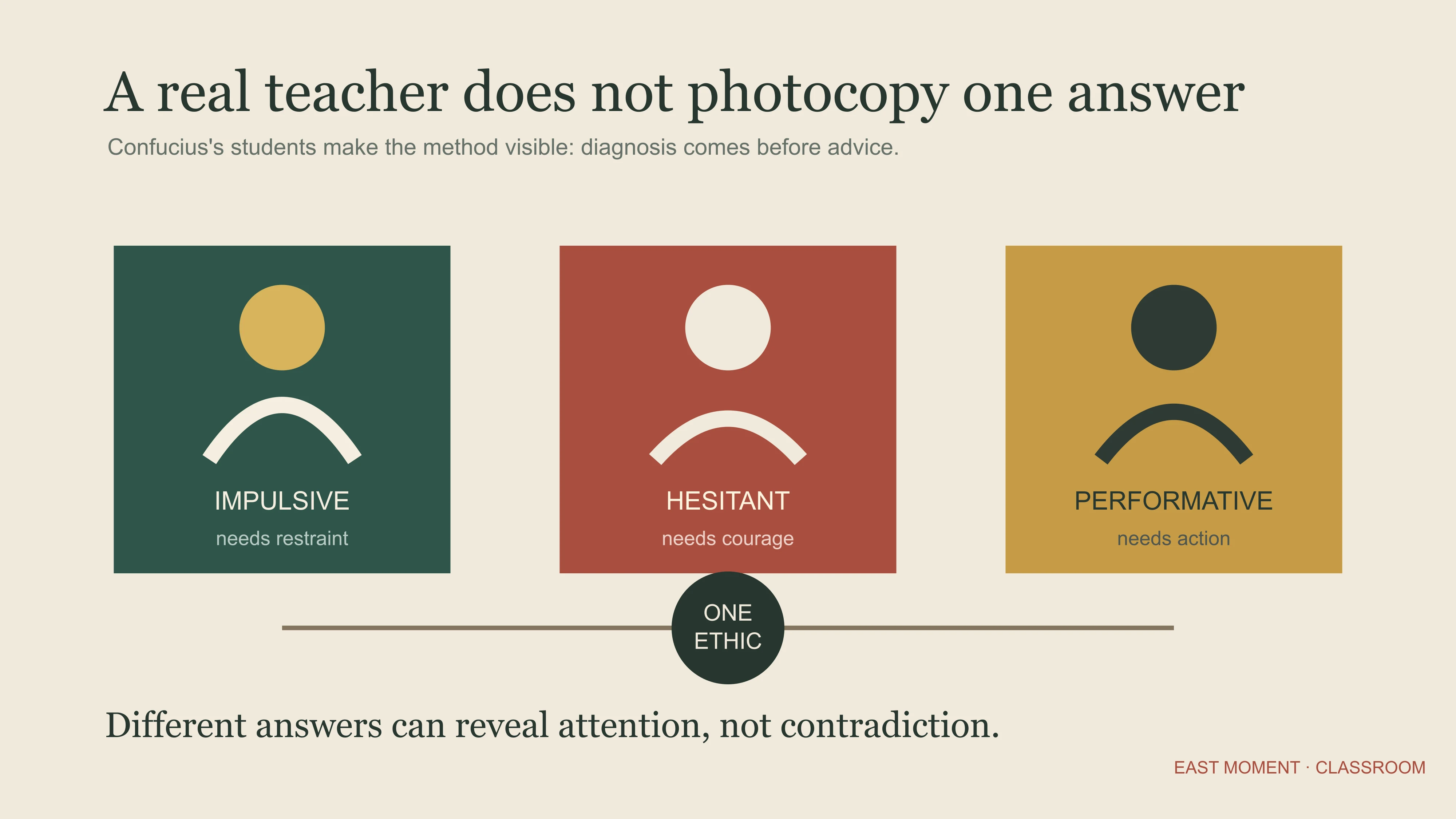
This is the feature I admire most. One student needs courage; another needs brakes; a third needs to stop speaking as if performance were character. A teacher who gives everyone the same polished sentence is distributing content. Confucius, at his best, is diagnosing people.
The main teachings associated with Confucius
| Idea | Approximate meaning | How it appears in Confucius's teaching | What it does not mean |
|---|---|---|---|
| Ren | Humaneness | Cultivating concern, reciprocity and worthy character | Simple niceness |
| Li | Ritual and appropriate conduct | Giving relationships and emotion disciplined form | Empty ceremony alone |
| Yi | Moral rightness | Choosing what is fitting over mere advantage | Blind obedience to rules |
| Xiao | Filial responsibility | Respect and care within family relationships | Every parental demand is automatically right |
| Learning | Study, reflection and practice | Becoming corrigible and morally capable | Memorization for status alone |
| Junzi | Exemplary person | Character cultivated through conduct rather than claimed by title | A biologically or socially superior person |
The concepts became much larger in later Confucian traditions. This biography stays close to the teacher and the questions attached to his name.
Ren: the difficult work of being humane
Ren is often translated as benevolence or humaneness. Confucius does not reduce it to one slogan. It is approached through conduct: care, reciprocity, restraint and the effort to become someone who can be trusted with other people's dignity.
Humaneness begins nearby. That can sound limited, but closeness is where moral language becomes inconvenient. It is easy to care about humanity at a distance. The person interrupting you at dinner presents a more advanced examination.
Confucius linked personal cultivation with public life. A humane person was not merely privately kind; character affected family, office and government.
Li: why Confucius cared about ritual
Ritual gave emotion and hierarchy a visible form. It shaped mourning, sacrifice, music, greeting, dress and court behavior. Confucius believed correct form could educate feeling, but he also criticized ritual performed without sincerity.
This combination matters. He was neither a rebel against every convention nor a bureaucrat satisfied by perfect procedure. Form and inner intention were supposed to correct each other.
Modern readers may recognize the principle in ordinary etiquette. A sincere apology still needs words. Grief needs practices that make space for it. Respect without any visible form is easily confused with respect that never arrived.
What did Confucius believe about government?
Confucius preferred moral example to rule by punishment alone. If leaders cultivated virtue and honored appropriate conduct, people could develop shame and self-correction rather than merely learning how to avoid penalties.
This did not make him a modern democrat. His political imagination remained hierarchical and rooted in ancient models. Yet his standard could judge rulers: authority without virtue was morally deficient.
The idea that public order begins with private character has inspired both reform and hypocrisy. Every age contains officials who praise virtue most enthusiastically when discussing someone else's behavior.
Did Confucius write the Analects?
No. The Analects is a collection of sayings, conversations and brief scenes transmitted and compiled by followers over time. Its Chinese title, Lunyu, suggests arranged or selected conversations.
The text's layered formation explains some variation in voice and emphasis. It also makes responsible quotation important. A line should be traced to a passage and translation rather than accepted because an image of a bearded man appears beneath it.
The Analects is concise, but not simple. Students should read notes and compare translations. A smooth English sentence may conceal a Chinese term with centuries of argument inside it.
Confucius and Confucianism are not identical
Confucius was a historical teacher. Confucianism is the vast field that followed: Mencius, Xunzi, Han scholarship, imperial education, Neo-Confucian thinkers, family ritual, state ideology, modern criticism and contemporary revival.
Later traditions developed metaphysics and institutions that cannot be placed directly in Confucius's mouth. They honored him, interpreted him and sometimes used his authority for purposes he could never have imagined.
This distinction protects both history and thought. It lets Confucius remain a person rather than a label pasted across two thousand years.
How a disappointed teacher became China's sage
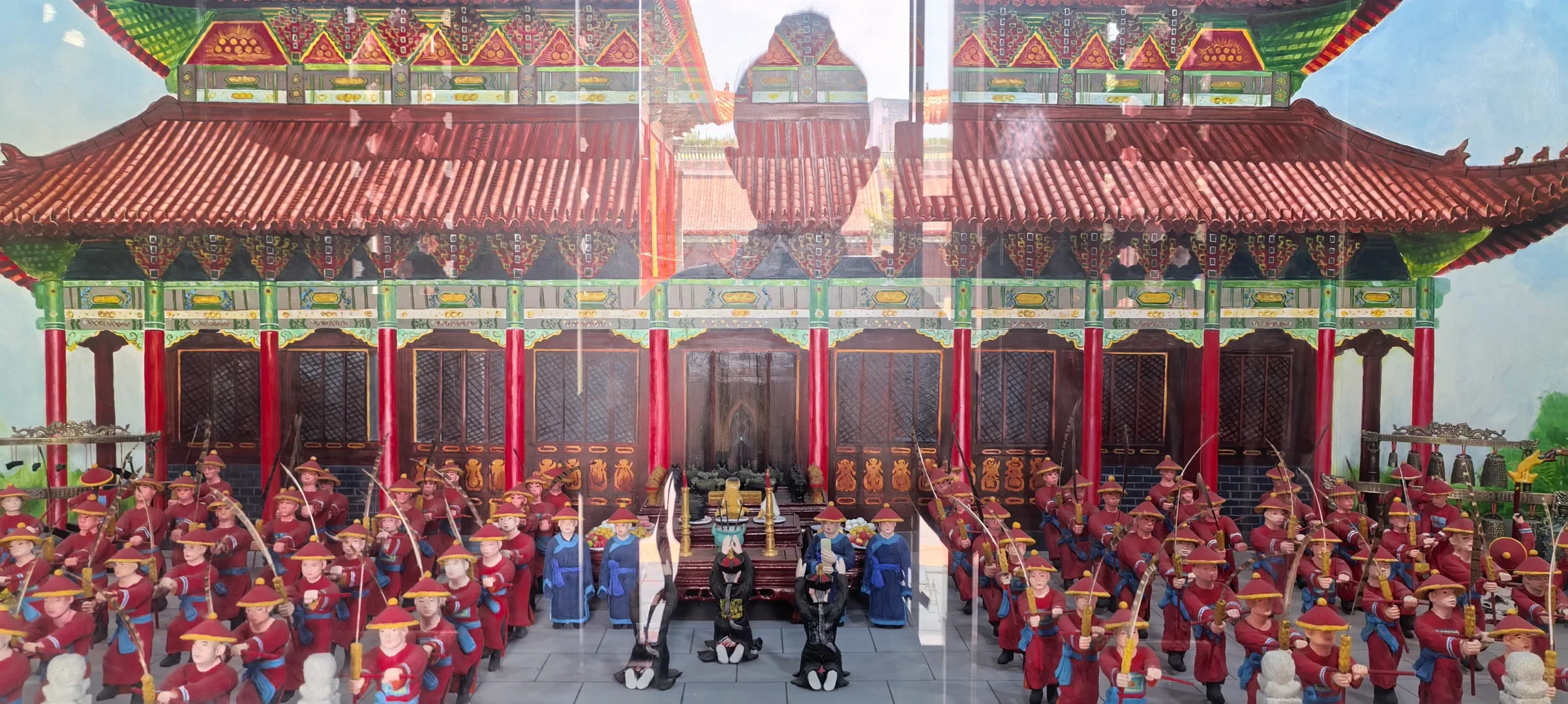
Confucius did not see his program triumph during his lifetime. His prestige grew after his death. Texts associated with his teaching became central to education. Imperial states sponsored temples and rituals. Scholars debated his meaning. Examinations made classical study a route, however unequal, into official life.
The sage was built slowly. Portrait conventions, titles, genealogies, temples and school rituals gave him institutional presence. By the time he stood in bronze, generations had already decided how he should hold his hands.
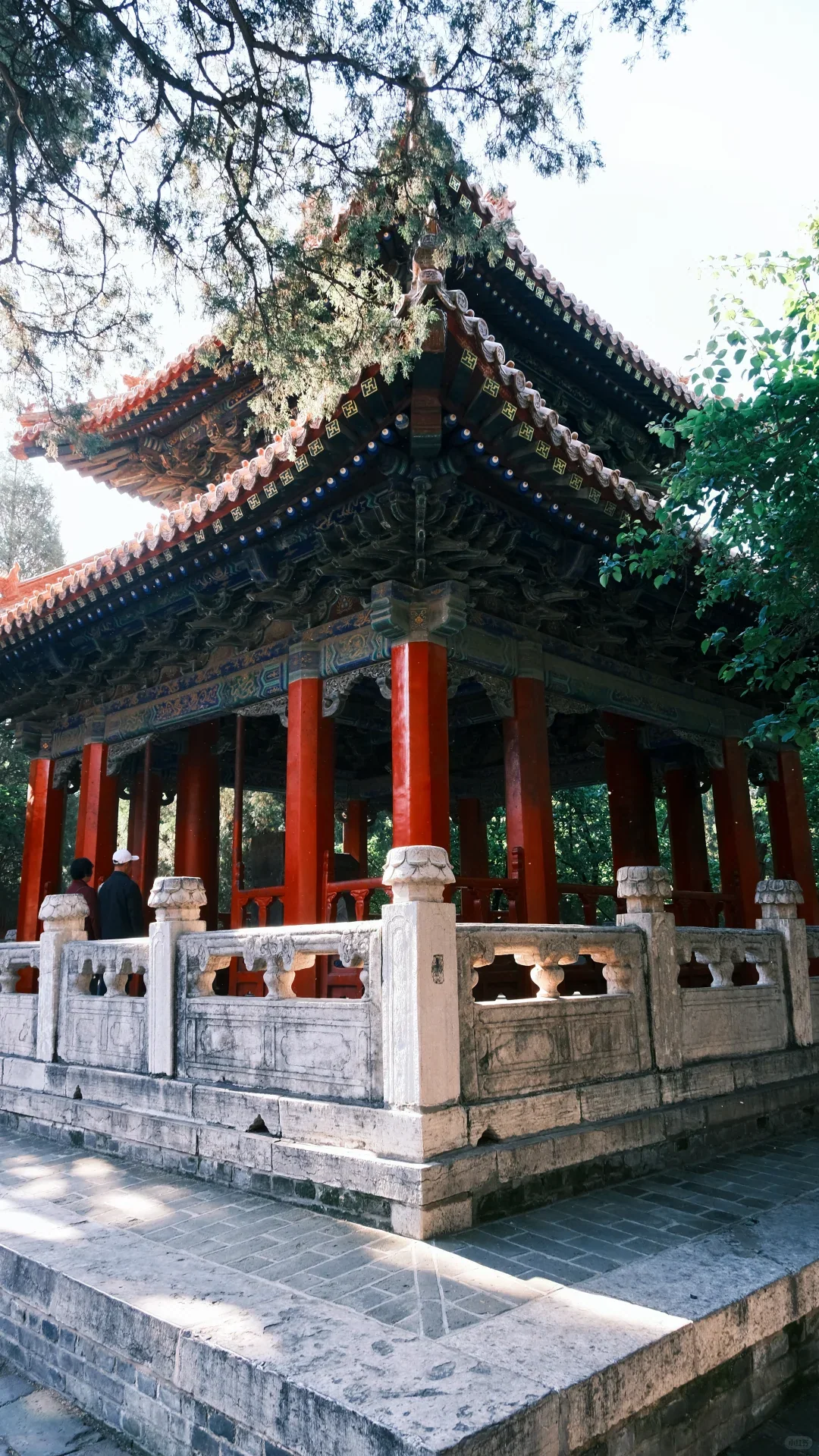
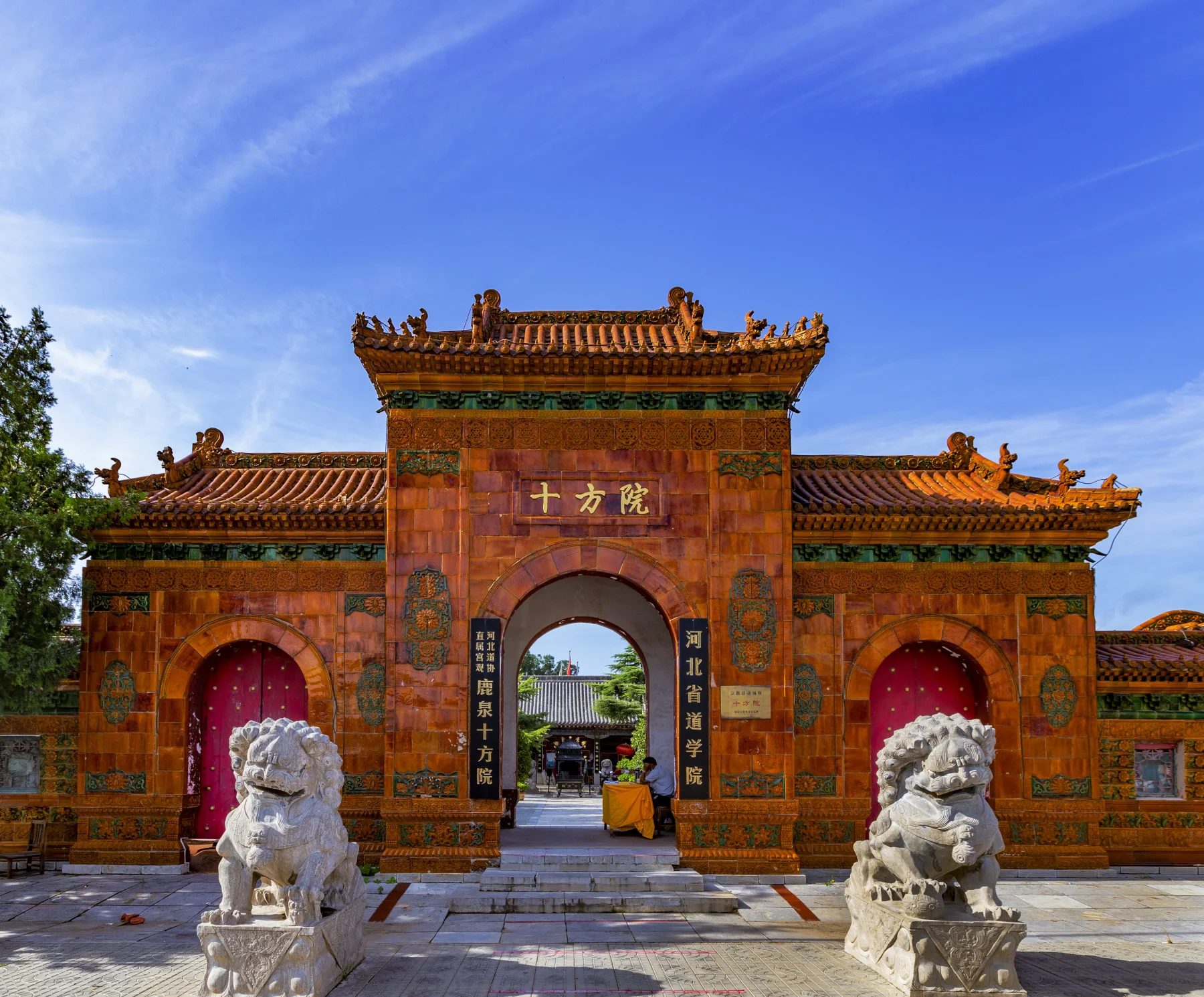
Xingtan, the “Apricot Altar,” is a later architectural commemoration of Confucius as teacher. It is evidence of his institutional afterlife, not a photograph of a classroom from 500 BCE. Authorized field photograph.
That distinction changes the visit. The UNESCO listing for the Temple and Cemetery of Confucius and the Kong Family Mansion describes a monumental complex repeatedly rebuilt and extended after his death. I do not go to Qufu expecting untouched antiquity. I go to see how dynasty after dynasty materialized an argument: this failed adviser should become the teacher standing behind Chinese education. The Confucius temple guide follows that argument through gates, courtyards, halls and examination memory instead of treating the complex as a shrine-shaped biography.
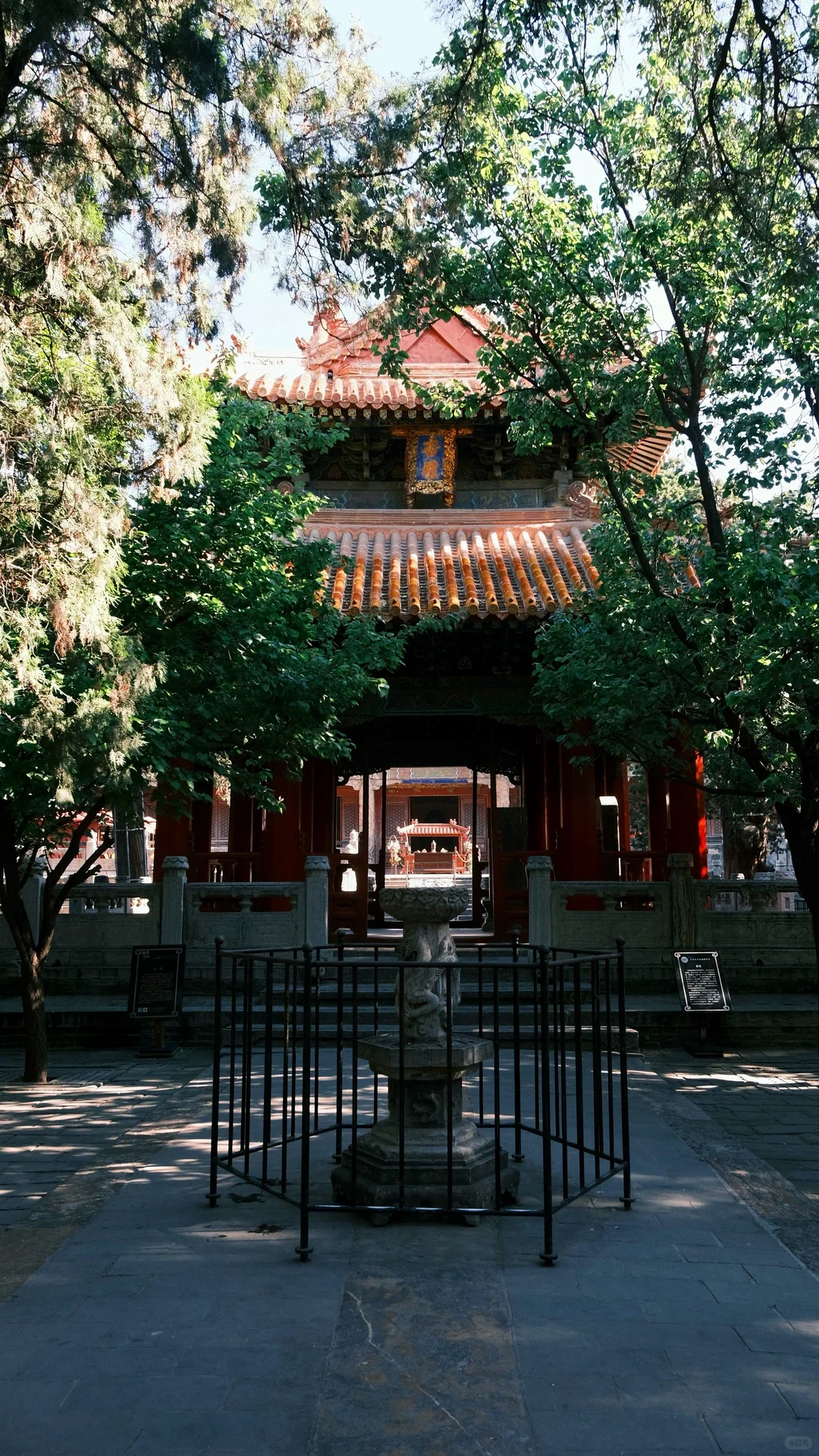
Courtyard, trees and threshold turn the memory of teaching into a route visitors physically cross. The architecture belongs to later commemoration; the movement through it belongs to the present. Authorized field photograph.
Influence came with cost. Confucian language could defend education and responsible government, but it could also support rigid hierarchy, patriarchy and social conformity. Modern reformers attacked “Confucius” as a symbol of the old order, sometimes more than the historical teacher himself.
Confucius in modern China
The twentieth century repeatedly changed Confucius's public position. He was criticized during movements against traditional culture and later violently rejected during the Cultural Revolution. In more recent decades, temples, public ceremonies, scholarship and cultural branding have returned his image to visibility.
Modern admiration is selective. People may value his emphasis on learning or family responsibility while rejecting inherited hierarchy. Governments may use him as a symbol of harmony. Businesses borrow his authority. Students meet him through textbooks and exams: historical continuity with a small sense of humor.
Confucius remains useful because different groups can claim a different part of him. That usefulness makes careful history more necessary, not less.
Confucius around the world
Translations carried Confucius into European philosophy, comparative religion, education and political debate. East Asian societies developed their own Confucian histories long before modern Western interest. Chinese diaspora communities built temples, schools and associations where his image could represent education, ancestry or cultural continuity.
Confucius Institutes later attached his name to state-supported language and culture programs, creating a modern political institution distinct from the ancient teacher. A person searching “Confucius” may therefore be looking for a philosopher, a statue, an institute, a restaurant or a plaza in New York. Search engines have inherited the same problem as historians: one name, many later constructions.
The internet's imaginary Confucius
Confucius is among the world's most frequently misquoted thinkers. Some false quotes are modern motivational sayings. Others are jokes built around “Confucius say,” a formula shaped by caricature rather than classical Chinese speech.
Before sharing a quotation, look for a passage number in the Analects or another named early text. Check whether the wording comes from a recognized translation. Be cautious when a line sounds perfectly tailored to productivity software, romantic disappointment or a coffee mug. Our traceable Confucius quotes guide starts with ten passages that can actually be located instead of recycling unattributed internet advice.
Not every wise sentence needs an ancient Chinese grandfather. Modern writers are allowed to be responsible for their own advice.
How to read Confucius now
Begin with the Analects in a translation that explains key terms. Read dialogue by dialogue rather than racing for a doctrine. Notice which student asks the question. Compare answers that seem inconsistent; the difference may be pedagogical. The Analects guide gives a practical reading route and explains why the book is a layered collection rather than a manuscript written by Confucius.
Then read beyond Confucius. Our Confucianism guide follows how later thinkers and institutions transformed the tradition, while the Chinese Language guide helps readers notice what translation changes and how old teaching enters a new vocabulary.
Read critically. Confucius does not need protection from disagreement. A teacher whose tradition values correction should be able to survive a question.
Frequently asked questions about Confucius
Who was Confucius?
Confucius was a Chinese teacher and thinker who lived from 551 to 479 BCE in the state of Lu. His conversations about learning, character, ritual and government became foundational to later Confucian traditions.
What did Confucius teach?
He emphasized humane character, learning, appropriate conduct, moral judgment, trustworthy relationships and government by ethical example rather than punishment alone.
Did Confucius write the Analects?
No. The Analects is a layered collection of sayings and conversations compiled and transmitted by followers after his death.
Was Confucius the founder of a religion?
Confucius did not found a religion in the modern institutional sense. Later Confucian traditions became philosophy, ethics, education, state ideology and ritual culture, sometimes with religious dimensions.
Are Confucius quotes online authentic?
Many are not. Some are loose paraphrases, later sayings or modern jokes. A reliable quotation should be traceable to a named classical passage and responsible translation.
What is the difference between Confucius and Confucianism?
Confucius was a historical teacher. Confucianism names the diverse traditions that developed from texts, thinkers, institutions and debates associated with him across more than two thousand years.
The man remains smaller than his shadow
Confucius's global shadow contains temples, examinations, family rules, political slogans, school ceremonies, jokes and several million quotations he never said. Behind it stands a teacher from a divided age who believed people and governments could be trained toward better conduct.
His confidence in learning can feel hopeful. His hierarchy can feel restrictive. His attention to character remains difficult because it refuses to let systems become an excuse for personal carelessness.
The bronze statue is composed. The teacher inside the text is still asking questions. Continue through the Chinese philosophy collection if you want to see which later traditions answered him, revised him or used his name for purposes the man from Lu never controlled.