Taoism is a Chinese philosophical and religious tradition about living in accord with the Dao, the way reality unfolds. It values naturalness, flexibility and wu wei: action that does not strain against the grain of a situation. It is also a living religious world of temples, priests, scriptures, deities, ritual, meditation and community. Any definition that keeps only the peaceful quotations and removes the people, history and incense has made Taoism tidier than it really is.
What is Taoism?
The word Taoism can point toward several connected things. It can mean the thought found in classical works such as the Daodejing and the Zhuangzi. It can mean organized religious traditions with lineages, liturgies and temples. It can also describe practices of self-cultivation, local ritual life and modern interpretations that have travelled far beyond China.
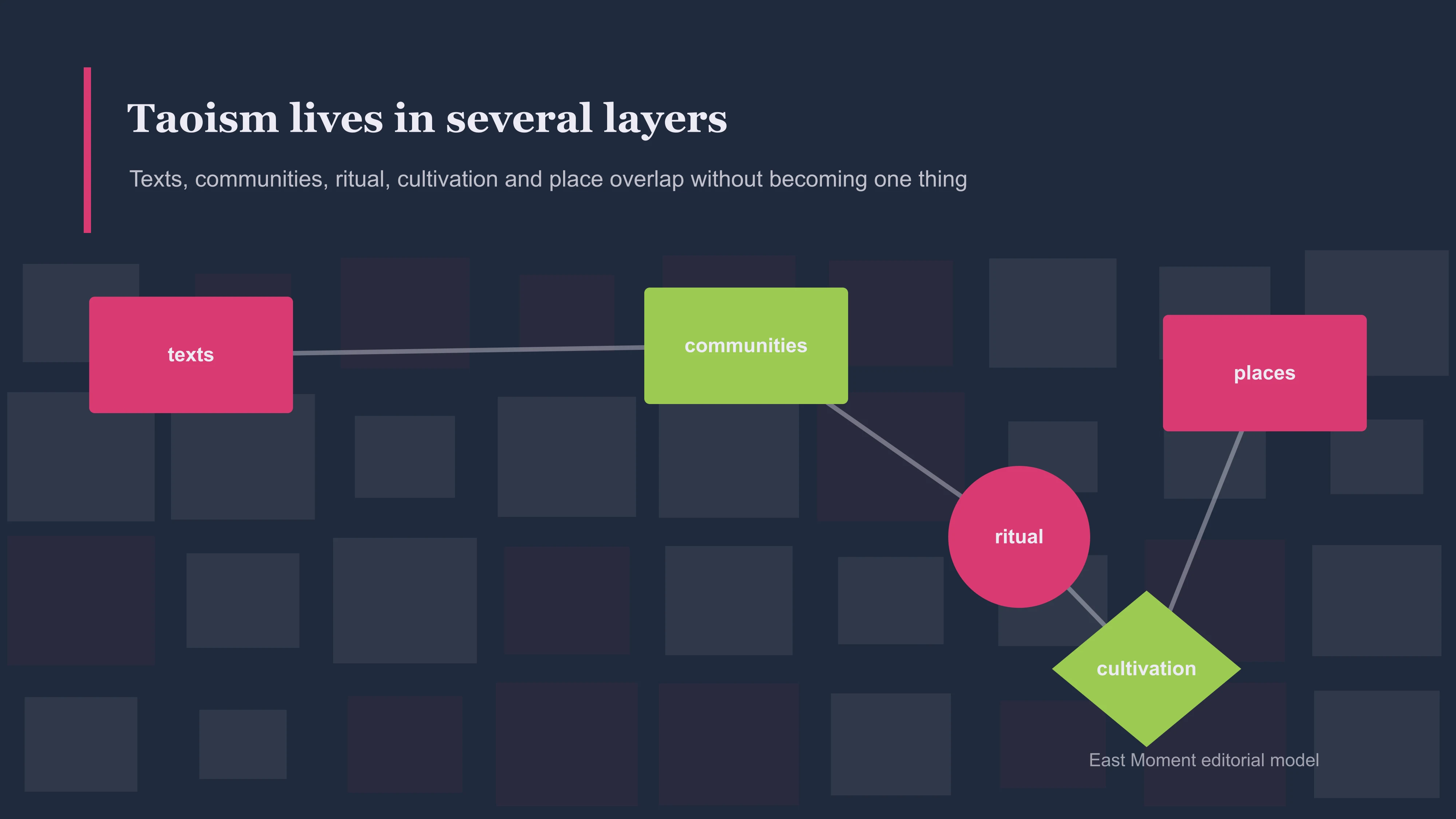
These strands share family resemblances, but they are not one doctrine sealed inside a bamboo box. Taoism has developed for more than two thousand years. During that time, poets, hermits, court scholars, priests, village communities, emperors, healers, artists and modern readers have all found different rooms inside it. The Stanford Encyclopedia of Philosophy's Daoism entry is especially useful because it treats even the category itself as historically contested rather than pretending one sentence can settle it.
When I first encountered Taoist language, its attraction seemed to be ease: stop forcing, follow nature, become calm. That is the version printed beautifully on a notebook. The older texts are less obedient. They unsettle our confidence about usefulness, status, certainty and even the borders by which we organize life. Taoism does not simply offer a quieter schedule. Sometimes it asks why we built such a noisy idea of success in the first place.
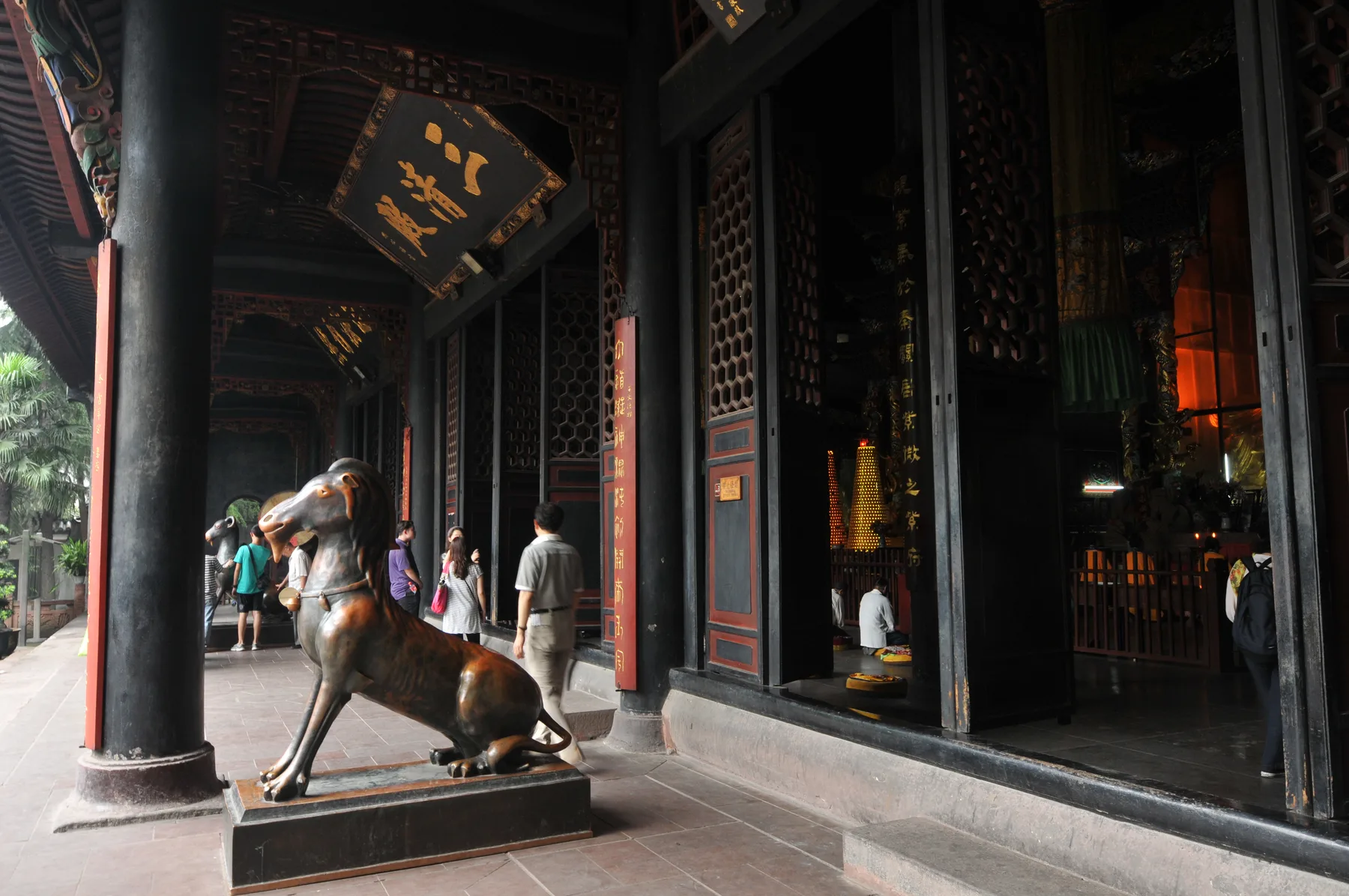
The worn threshold, incense light and bronze goat at Qingyang Palace make a fact visible that quotation cards hide: Taoism also lives through built places, named figures, maintenance and organized communities.
Taoism or Daoism: which spelling is correct?
Both words refer to the same tradition, written 道教 or 道家 in Chinese depending on context. Taoism reflects older systems of romanization. Daoism uses Hanyu Pinyin, now the standard way of writing Mandarin sounds in the Latin alphabet.
Academic writing increasingly prefers Daoism, while Taoism remains deeply established in English and is still the more common search term. The pronunciation begins closer to an English “d” than a hard “t.” On East Moment, we use Taoism in the title because that is how most readers look for the subject, while using Dao in Chinese terms and when discussing specialist distinctions.
The spelling debate matters less than the habit of using it as a false historical border. Taoism and Daoism are not competing religions. No ancient master waited at a mountain gate to inspect your romanization. The Taoism vs Daoism guide separates spelling, pronunciation and the harder Daojia/Daojiao scope problem.
The Dao cannot be reduced to “the way”
Dao is often translated as “the Way.” The English word is helpful, but small. In different contexts, dao can suggest a path, a method, a course of conduct, a teaching or the larger process through which things arise and change.
In the Daodejing, the Dao exceeds fixed names and tidy descriptions. It is not merely a rulebook for good behavior, nor usually a personal creator standing outside the universe. It is closer to the generative course of reality: present in the growth of a tree, the movement of water, the rise and decline of power, and the limits of whatever we confidently claim to know.
This is why Taoist writing often prefers images to definitions. Water does not win an argument, yet it reaches low places and reshapes stone. An empty bowl is useful because of the space it holds. A valley receives because it does not insist on being a peak.
The images are memorable. Their danger is that we turn them into decorative advice and hurry back to behaving exactly as before.
The central ideas of Taoism
| Idea | Working meaning | What it changes in practice | Common misunderstanding |
|---|---|---|---|
| Dao | The way or unfolding course of reality | Attend to patterns larger than immediate desire | A personal god issuing commands |
| De | Embodied potency, integrity or effective presence | Let character and conduct express alignment | Simple moral virtue in the narrow sense |
| Wu wei | Non-forcing or uncontrived action | Use timing, proportion and the least necessary pressure | Laziness or doing absolutely nothing |
| Ziran | What is so of itself; naturalness or spontaneity | Allow things to develop according to their nature | Whatever impulse appears first must be authentic |
| Pu | The uncarved block; simplicity before overworking | Return from display and complication | Reject all skill, culture or refinement |
| Transformation | Life as continual change rather than fixed identity | Stay responsive when categories and circumstances shift | Nothing matters because everything changes |
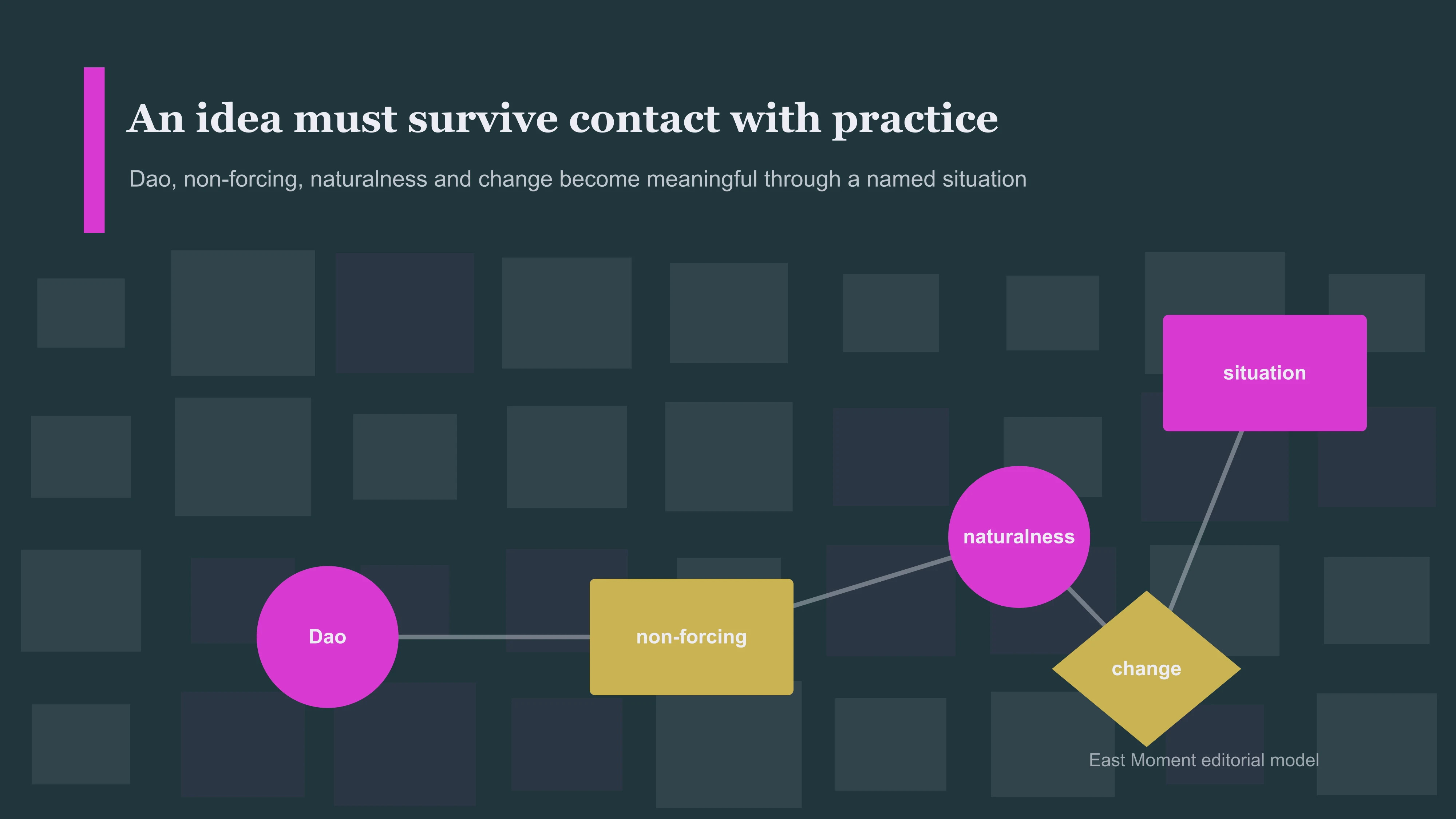
These English phrases are invitations, not final equivalents. Classical Chinese words gather meaning from the sentences around them and from centuries of commentary. A translation can open the door, but it should not pretend to be the entire house.
Wu wei is not doing nothing
Wu wei is the Taoist idea most likely to appear beside a photograph of a lake. It is frequently translated as “non-action,” which can sound like remaining on the sofa until the universe completes your tax return.
A better approach is non-forcing, effortless action or action free from compulsive interference. The skilled response fits the situation so well that it does not advertise its strain. A cook follows the structure of what is being cut. A leader avoids multiplying prohibitions. A conversation is allowed to breathe instead of being pushed toward the answer one person prepared in advance.
Wu wei does not forbid effort. Learning any craft may require years of awkward repetition. The ease comes when practice, attention and circumstance meet. A pianist's relaxed hand is not evidence that nobody practiced.
In ordinary life, the principle can be uncomfortable. It asks whether more pressure will actually improve the result. Sometimes the answer is yes: the fire needs tending, the child needs protection, the deadline is real. Sometimes we keep pushing because control feels more respectable than listening.
Who founded Taoism?
There is no single historically verified founder of Taoism.
Laozi, “the Old Master,” is traditionally associated with the Daodejing. Later biographies described him as an elder contemporary of Confucius and an archivist who left civilization through a western pass. These stories became culturally powerful, but historians cannot confirm a simple biography, and the text itself likely took shape through more than one layer of composition.
Zhuang Zhou, usually called Zhuangzi, was a historical thinker of the fourth century BCE, although the book bearing his name also contains material from later hands. Its stories are playful, sharp and suspicious of anyone who has made certainty too comfortable.
Organized religious Daoism emerged through later communities rather than directly from one philosopher's classroom. The Way of the Celestial Masters developed in the second century CE and established communal structures, moral registers, ritual authority and hereditary leadership. Other revelations, schools and lineages followed.
Asking “Who founded Taoism?” is therefore a little like asking who founded Chinese poetry. There are major ancestors, decisive movements and famous texts, but the river has more than one source.
Is Taoism a religion or a philosophy?
It is both, provided we do not imagine two airtight containers.
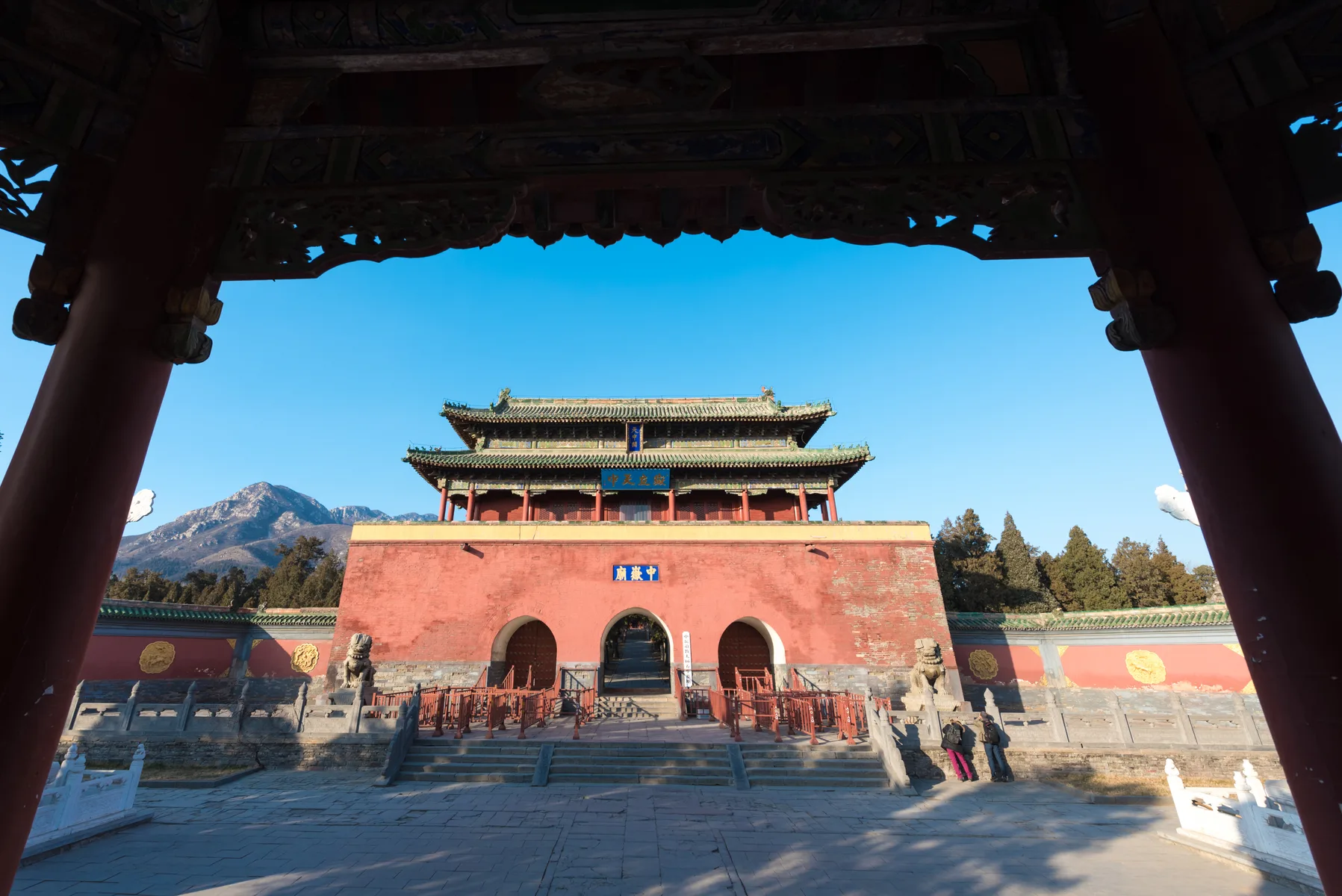
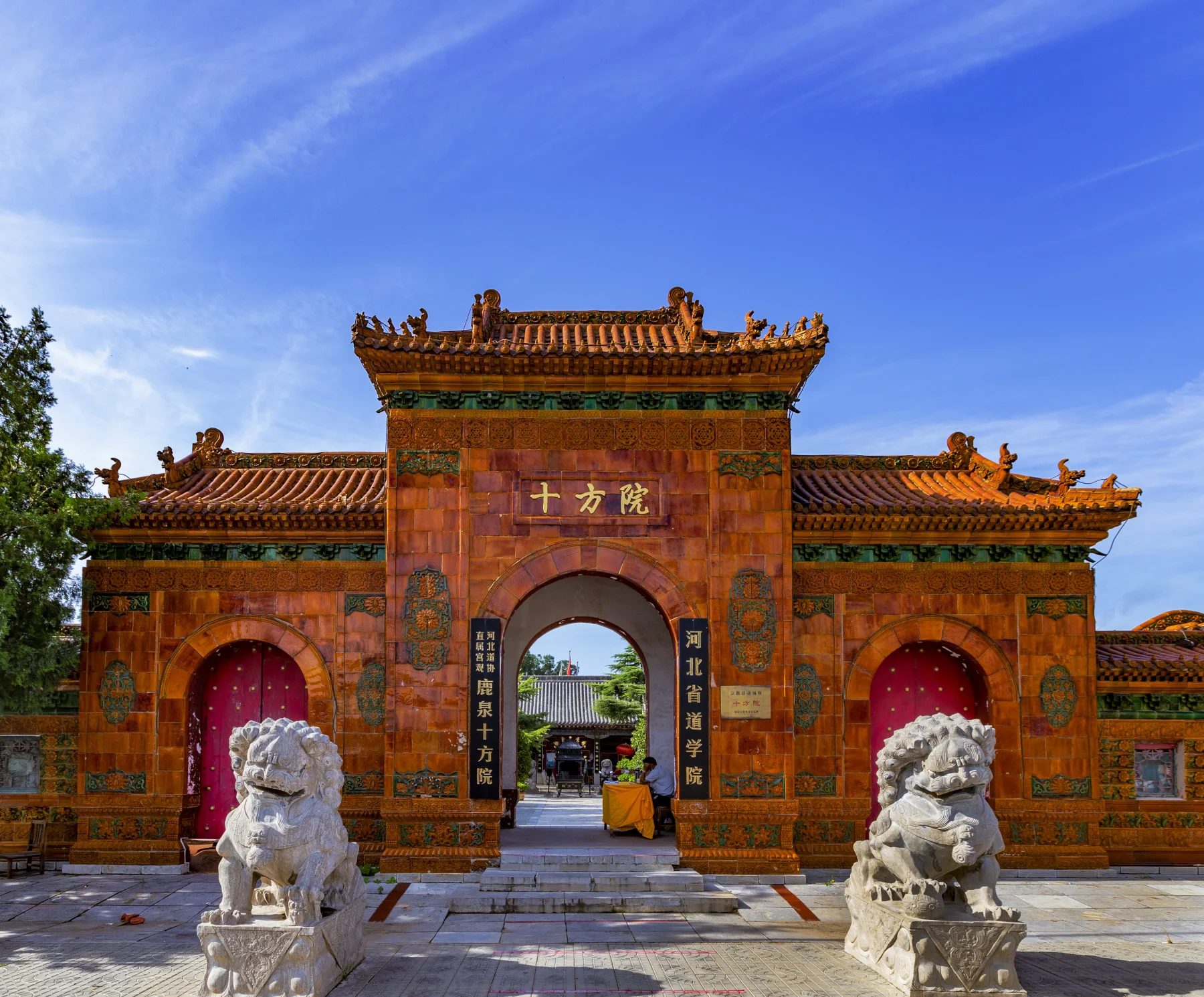
The layered approach to Zhongyue Temple is institutional evidence. It shows that Daoist life occupies public space and has been built, repaired and entered; it cannot tell us what every visitor believes or reduce the tradition to architecture.
Modern introductions often separate “philosophical Taoism” from “religious Taoism.” The distinction can help beginners notice that reading the Zhuangzi is not the same activity as commissioning a temple ritual. It becomes misleading when philosophy is treated as pure and original while religion is dismissed as later superstition.
Religious Daoist traditions developed sophisticated scriptures, ethics, ritual systems, meditation, cosmology, sacred geography and institutions. Their practitioners did not merely add colorful ceremonies to an untouched philosophical core. They interpreted the Dao through bodies, communities and history. The Metropolitan Museum's Daoism and Daoist Art makes that institutional growth visible through scriptures, pantheons, schools and ritual objects—not as decoration surrounding a supposedly purer philosophy.
| Dimension | Classical and philosophical study | Organized religious life |
|---|---|---|
| Frequent focus | Language, knowledge, government, naturalness and transformation | Ritual, community, revelation, cultivation, protection and sacred order |
| Important sources | Daodejing, Zhuangzi and later commentary | Large scriptural canons, liturgies, registers, lineage texts and local traditions |
| Typical specialists | Philosophers, commentators, writers and modern readers | Ordained priests, monastics in some lineages, ritual communities and temple networks |
| Main caution | Do not reduce Taoism to self-help quotations | Do not treat diverse religious traditions as one uniform folk belief |
The categories overlap. A priest may be an attentive reader of the classics. A philosopher may be shaped by ritual language. Chinese history rarely arranged itself for the convenience of an introductory chart.
Taoist texts: a library, not one holy book
Taoism has no single holy book equivalent to the role one text may hold in some other religions.
The Daodejing is the most internationally famous Taoist classic. Its compact verses address the Dao, power, government, desire, simplicity and the limits of naming. The Zhuangzi uses dialogue, humor, fantasy and paradox to loosen rigid distinctions. A huge man may be less useful than a twisted tree; a dream may make the dreamer uncertain which side of waking deserves confidence.
Religious Daoist traditions produced an enormous body of scripture. The Daozang, or Daoist Canon, contains texts on ritual, meditation, cosmology, ethics, alchemy, sacred biography and much more. Different schools also value their own revelations and liturgical collections.
Readers beginning in English should choose translations with introductions and notes. The shortest, smoothest version is not automatically the most faithful. Ancient Chinese is compact enough to make certainty look suspiciously inexpensive.
Taoism beliefs are diverse
Taoism does not have one creed recited identically by every practitioner. Still, several recurring orientations appear across texts and communities:
- reality is patterned, relational and continually transforming;
- human flourishing depends on alignment rather than domination alone;
- excess, rigid certainty and compulsive ambition create disorder;
- the body can be a site of disciplined cultivation rather than an obstacle to spiritual life;
- ritual can restore relationships between persons, communities, ancestors, deities and the wider cosmos;
- longevity, harmony and spiritual refinement have been pursued in many different ways.
Religious traditions include rich pantheons of gods, celestial officials, perfected beings and local deities. The Three Pure Ones hold high status in many forms of Daoism. Laozi was also divinized in some historical traditions. Yet no short list represents every temple or lineage, and the Dao itself is not simply another deity at the top of an organizational chart.
Questions about afterlife and reincarnation also receive varied answers. Daoist views developed in conversation with Chinese ancestral traditions and Buddhism. Some texts describe celestial realms, judgment, transformation, immortals or continued spiritual cultivation. It is safer to ask which community and period than to announce one universal Taoist position. The Taoist beliefs guide applies that rule across the Dao, gods, the body, ethics and death.
Yin and yang are not a Taoist logo
The black-and-white taijitu is now widely called “the Taoist symbol.” It does express ideas of complementary forces, mutual dependence and change that became important in Daoist thought. But yin-yang theory belongs to a broader field of Chinese cosmology and appears in healing traditions, divination, state thought, martial arts and other fields.
Yin and yang are not moral teams. Yin is not evil and yang is not good. They name relational tendencies: dark and light, receptive and active, inward and outward, cooling and warming. Each depends on context, each can transform, and neither remains complete without the other.
The familiar diagram is useful when it points toward movement. It becomes misleading when sold as two frozen personality types, preferably on matching mugs. Use the Taoist symbols guide to distinguish a documented Daoist object from a broadly Chinese motif or a modern decorative association.
How Taoism is practiced
There is no universal daily routine for all Taoists. Practices vary by lineage, temple, region and personal commitment. They may include:
- temple offerings and festival participation;
- chanting, liturgy, confession and ethical precepts;
- meditation, visualization and breath regulation;
- internal cultivation and forms of internal alchemy;
- ritual services for communities, families, ancestors or the dead;
- study of scripture and instruction from an authorized teacher;
- movement and bodily disciplines connected to broader Chinese traditions.
The internet sometimes turns “practice Taoism” into a checklist of solitude, tea and walking barefoot. Those activities may be pleasant. They do not by themselves constitute entry into a religious lineage, and they should not erase the ritual labor of actual communities.
For an unaffiliated reader, a responsible beginning is modest: read reliable translations, learn the difference between historical periods, visit temples respectfully where permitted, and resist claiming an identity after three quotations. Attention is a better first credential than costume.
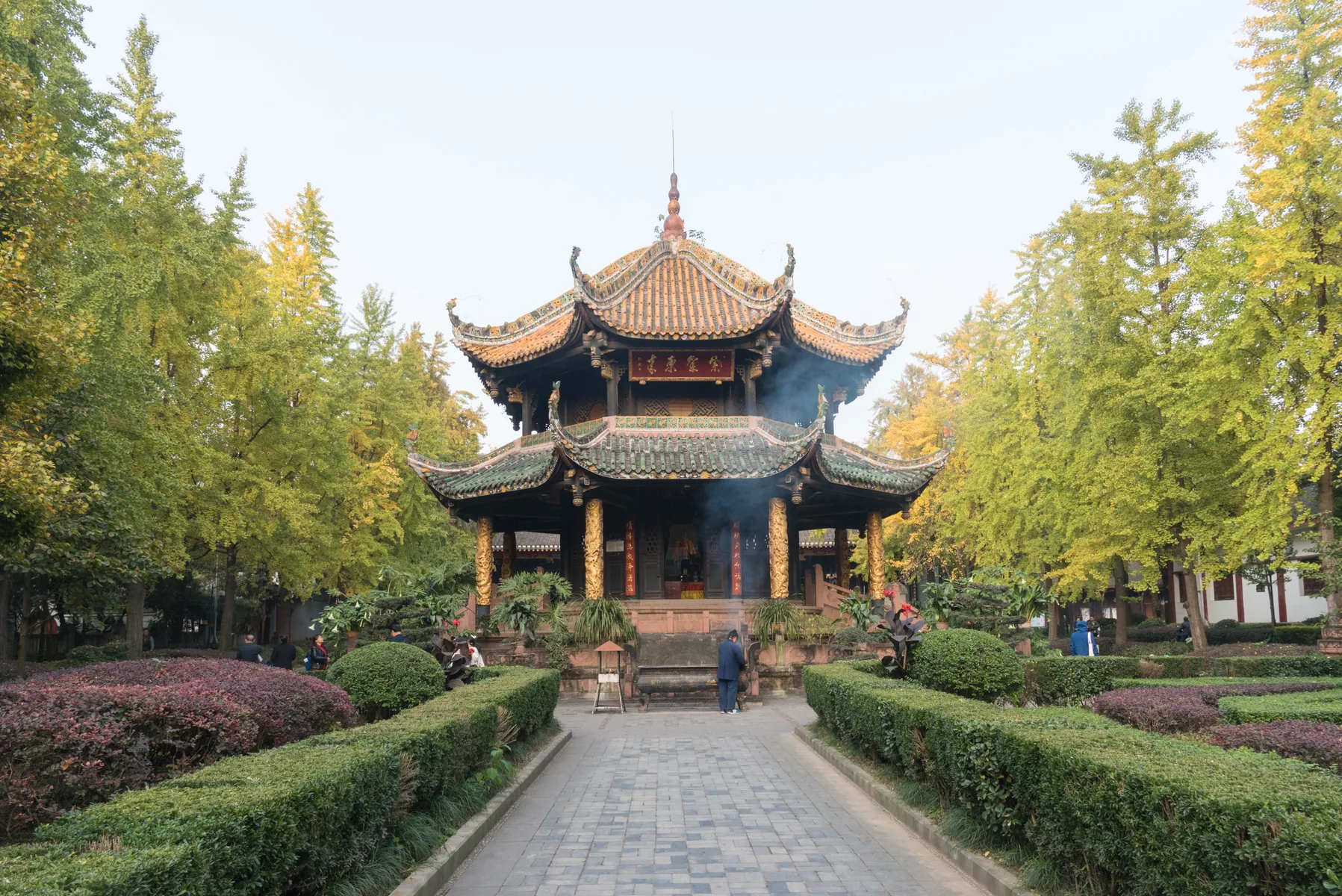
At Qingyang Palace, incense, architecture and human movement occupy the same frame. Taoism cannot be reduced to misty mountains and elegant quotations; liturgy, offerings, trained specialists and community obligations make the tradition social rather than decorative.
Taoism, Confucianism and Buddhism compared
Chinese traditions have argued, borrowed and lived beside one another for centuries. They cannot be understood only as rival brands.
| Tradition | Recurring concern | Characteristic question | Historical complexity |
|---|---|---|---|
| Taoism | Alignment with the Dao, transformation, naturalness, ritual and cultivation | Where am I forcing what needs another kind of attention? | Classical texts and organized religions overlap but are not identical |
| Confucianism | Character, learning, family responsibility, ritual and humane order | How should I become trustworthy within relationships? | It contains competing schools and changing political roles |
| Buddhism | Suffering, impermanence, compassion and liberation | How do attachment and ignorance shape experience? | Chinese Buddhism includes many schools, texts and local forms |
A person might honor ancestors through family ritual, seek a Daoist priest for a community ceremony and visit a Buddhist temple without experiencing this as a philosophical crisis. Boundaries mattered, but daily life could be generously plural.
Our Confucianism guide explores a tradition often placed beside Taoism. The difference is not simply “rules versus freedom.” Confucian thinkers also discussed flexibility and inner cultivation; Daoist communities also developed demanding codes and institutions.
Taoism in modern Chinese life
Modern Taoism has lived through imperial patronage, local continuity, reform, violence, restriction and revival. Temples have been destroyed and rebuilt. Lineages have adapted to new states and new publics. In mainland China, officially recognized religious life operates within contemporary regulation. Taiwan, Hong Kong and overseas Chinese communities preserve other networks, festivals and ritual traditions.
Taoist influence also travels outside formal identification. It appears in landscape aesthetics, language about balance, popular stories of immortals, martial arts culture, seasonal customs and attitudes toward retreat. Not every mountain painting is Taoist, and not every Chinese person who values harmony follows Taoism. Influence is not the same as membership.
Growing up in China, I did not meet Taoism first as a chapter with clean headings. It arrived scattered: a temple half hidden behind a market street, an elder warning against doing a thing too absolutely, a story in which the clever person loses to someone who understands timing. Culture often reaches us before its label does.
This is part of Taoism's global difficulty. Outside China, it can become an elegant philosophy without inconvenient institutions. Inside China, it can become heritage without enough attention to living believers. Both versions admire the outline and risk overlooking the person standing within it.
How to read Taoism without turning it into self-help
Begin with the Daodejing and Zhuangzi, but read introductions as well as verses. Compare translations. Notice when a modern writer turns a disputed line into universal life coaching.
Then move beyond the two famous books. Learn about the Celestial Masters, Shangqing revelations, Lingbao traditions, Quanzhen monasticism, ritual specialists and local temples. Explore the Ideas and Beliefs hub alongside our broader guide to Chinese culture. The Language and Texts hub is especially useful here because Taoist thought repeatedly shows how much a single translated word can conceal.
Most importantly, let difficulty remain. A tradition is not more respectful when every contradiction has been edited out. Taoism contains philosophical play and disciplined ritual, solitude and community, skepticism about language and thousands of pages of scripture. Its depth begins where the slogan ends.
Frequently asked questions about Taoism
What is Taoism in simple terms?
Taoism is a diverse Chinese philosophical and religious tradition concerned with living in accord with the Dao, the unfolding way of reality. It values naturalness, flexibility, non-forcing, self-cultivation and many forms of ritual and community practice.
Are Taoism and Daoism the same?
Yes. Taoism and Daoism are English spellings of the same Chinese tradition. Daoism follows the now-standard pinyin spelling, while Taoism remains common in general English and search usage.
Is Taoism a religion or a philosophy?
It is both, although that short answer hides a long history. Classical texts inspired philosophical interpretation, while organized Daoist communities developed priests, rituals, temples, scriptures, deities and methods of cultivation.
Who founded Taoism?
Taoism has no single historically verified founder. Laozi is the traditional author associated with the Daodejing, but his biography is uncertain. Organized religious movements developed centuries later, including the Celestial Masters in the second century CE.
What are the main ideas of Taoism?
Important ideas include the Dao, de or embodied power, ziran or naturalness, wu wei or non-forcing action, receptivity, transformation and the value of returning from excess to simplicity.
Does Taoism believe in gods?
Religious Daoist traditions include many deities, perfected beings and sacred officials, but they do not all share one simple theology. The Dao itself is not usually understood as a personal creator god.
The usefulness of an open space
Taoism often draws attention to what ambition overlooks: the low place, the empty center, the soft response, the crooked tree spared because nobody can turn it into lumber. These images do not ask us to become passive. They ask whether our idea of usefulness has become too narrow to recognize life.
That question feels modern because it is permanently human. We fill calendars, rooms and identities until nothing can move. Then we wonder why ease has disappeared.
The Dao is not a productivity technique waiting to improve the same crowded plan. It may be the moment we notice the plan has mistaken fullness for meaning. An open space is not nothing. It is where the next honest movement becomes possible.
For the narrower bridge from historical Daoist vocabulary into cultivation fiction and xianxia world-building, use XianLore's Daoism, Taoism and xianxia guide.