A Confucius temple is not simply a place that puts Confucius on an altar. It is a machine for making learning public: gates slow you down, courtyards arrange a shared body, halls hold ritual memory, and nearby schools or examination spaces reveal why study carried social weight.
The mistake is to treat it like a Chinese version of a church and leave after one photograph. A better visit starts with a more useful question: what kind of person did this place hope to produce?
What is a Confucius temple?
A Confucius temple—often called a wenmiao (Temple of Culture) or kongmiao in Chinese—commemorates Confucius and gives material form to a long Confucian history of learning, ritual and public recognition. It is not proof that Confucius founded a single church. It is evidence that later communities, schools and states kept returning to his name when they wanted education and moral authority to be visible.
The complex at Qufu, Confucius's birthplace, makes the scale of that later work impossible to miss. UNESCO records that its temple was first built in 478 BCE to commemorate and offer sacrifices to Confucius, and rebuilt many times afterwards. It became a model for temple layouts across East and Southeast Asia.
That history is why the best way to enter is not to hunt for a single ancient original. Look for layers instead: a ritual institution, an educational ideal, later rebuilding, tourist choreography, and the particular city around it. Those layers can all be real at once.
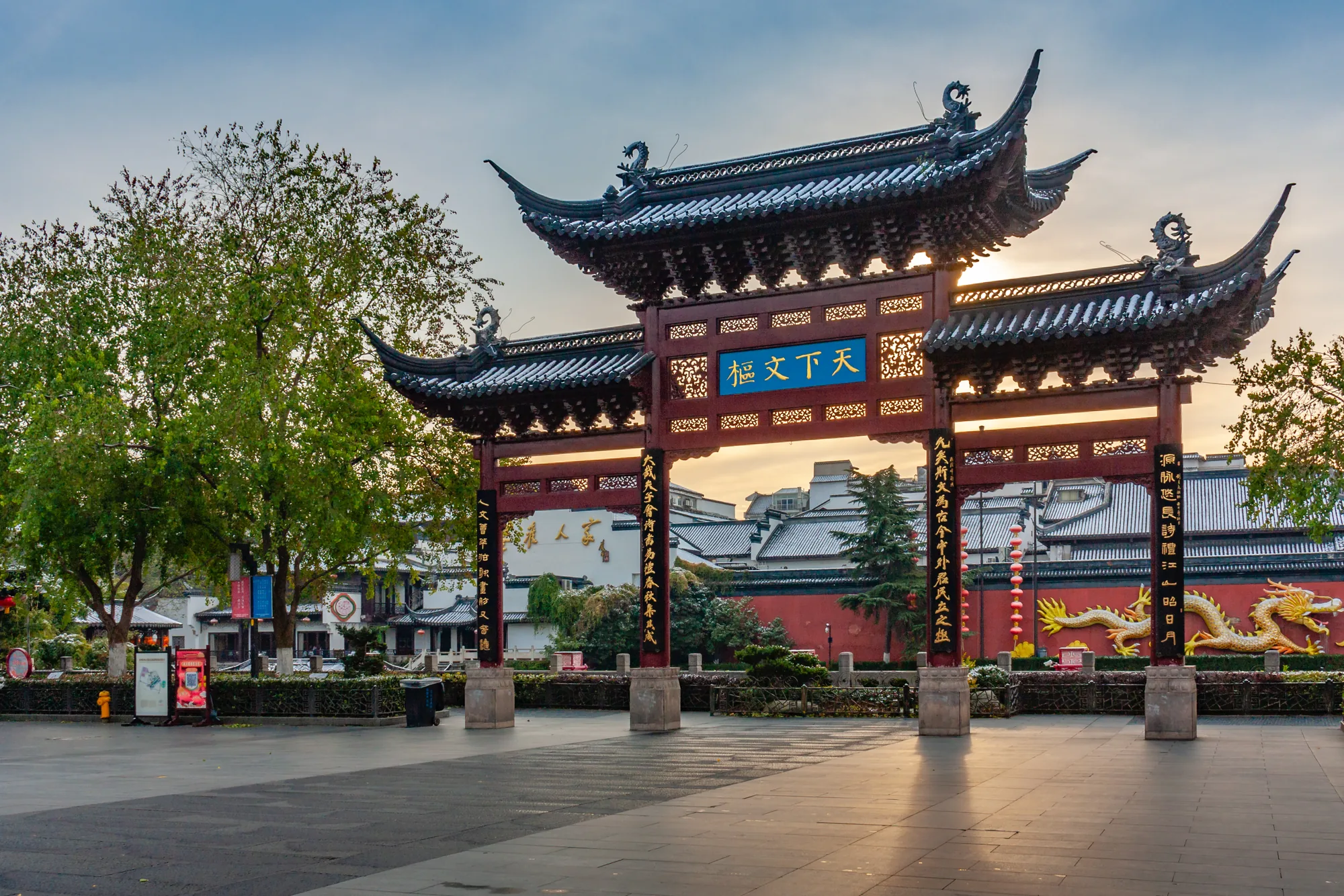
The Nanjing gate does not tell us what Confucius looked like or what every visitor believes. It does show the threshold logic that matters: learning is staged as an entry into a more deliberate public order.
A Confucius temple is an education story written in space
Confucian thought puts immense pressure on learning, self-correction and the way people carry themselves with others. A temple changes those ideas from sentences into a route. You pass from street noise through a gate, move along an axis, cross courtyards, and eventually face a principal hall. The point is not that every visitor becomes morally transformed by walking in a straight line. The point is that the place makes attention feel collective rather than private.
This is the detail many overseas visitors miss. In a museum, knowledge sits in a label. In a Confucius temple, learning is arranged as posture, sequence and relationship. It is architecture saying that education belongs in public life.
That also explains why a Confucius temple can sit so naturally beside a school, academy or examination history. In Nanjing, the Confucius Temple and Qinhuai district sit close to the old examination world; our Nanjing guide follows the connection between river commerce, study, performance and the social pressure of exams. Do not flatten that proximity into “China valued education.” Notice the sharper claim: educational ambition once had gates, routes, ceremonies and a civic address.
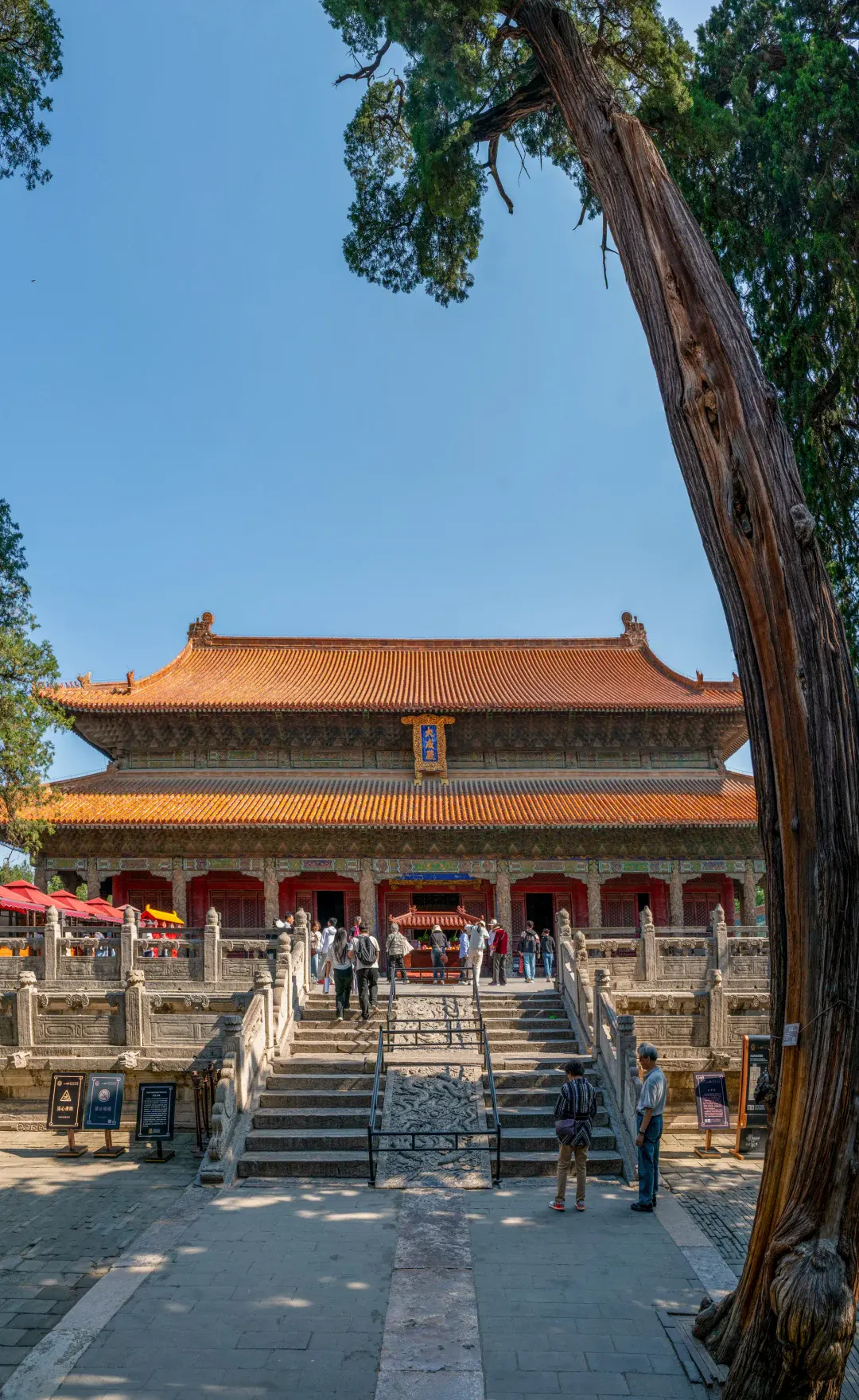
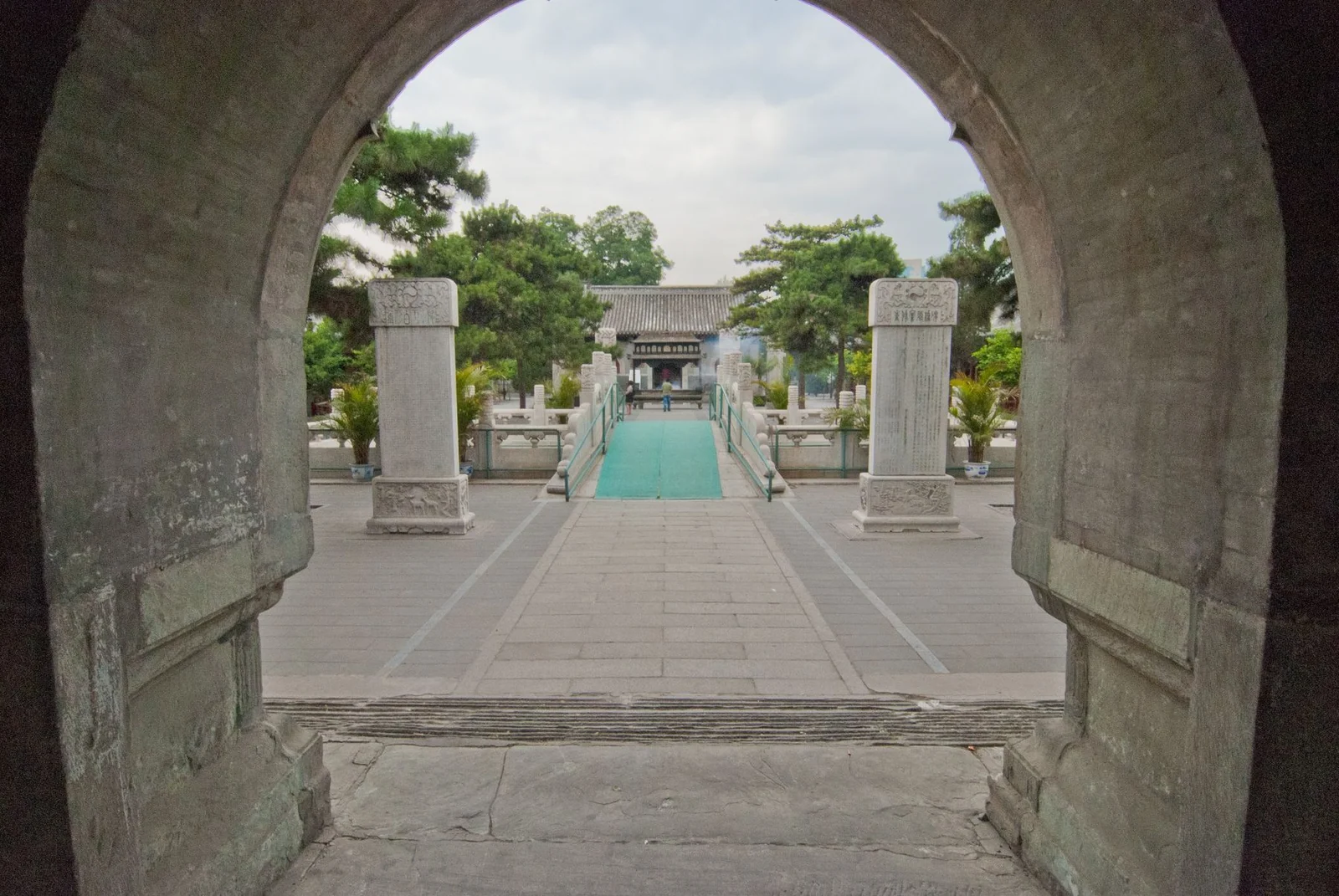
This Qufu approach makes the institution legible without pretending the courtyard is frozen in the past. The central path, raised platform and hall pull the eye forward, but present-day visitors keep breaking the perfect symmetry. I prefer that interruption. The temple's order is visible precisely because real bodies must negotiate it: some climb, some pause, some read, some move aside. Architecture proposes a disciplined route; public life refuses to become a diagram.
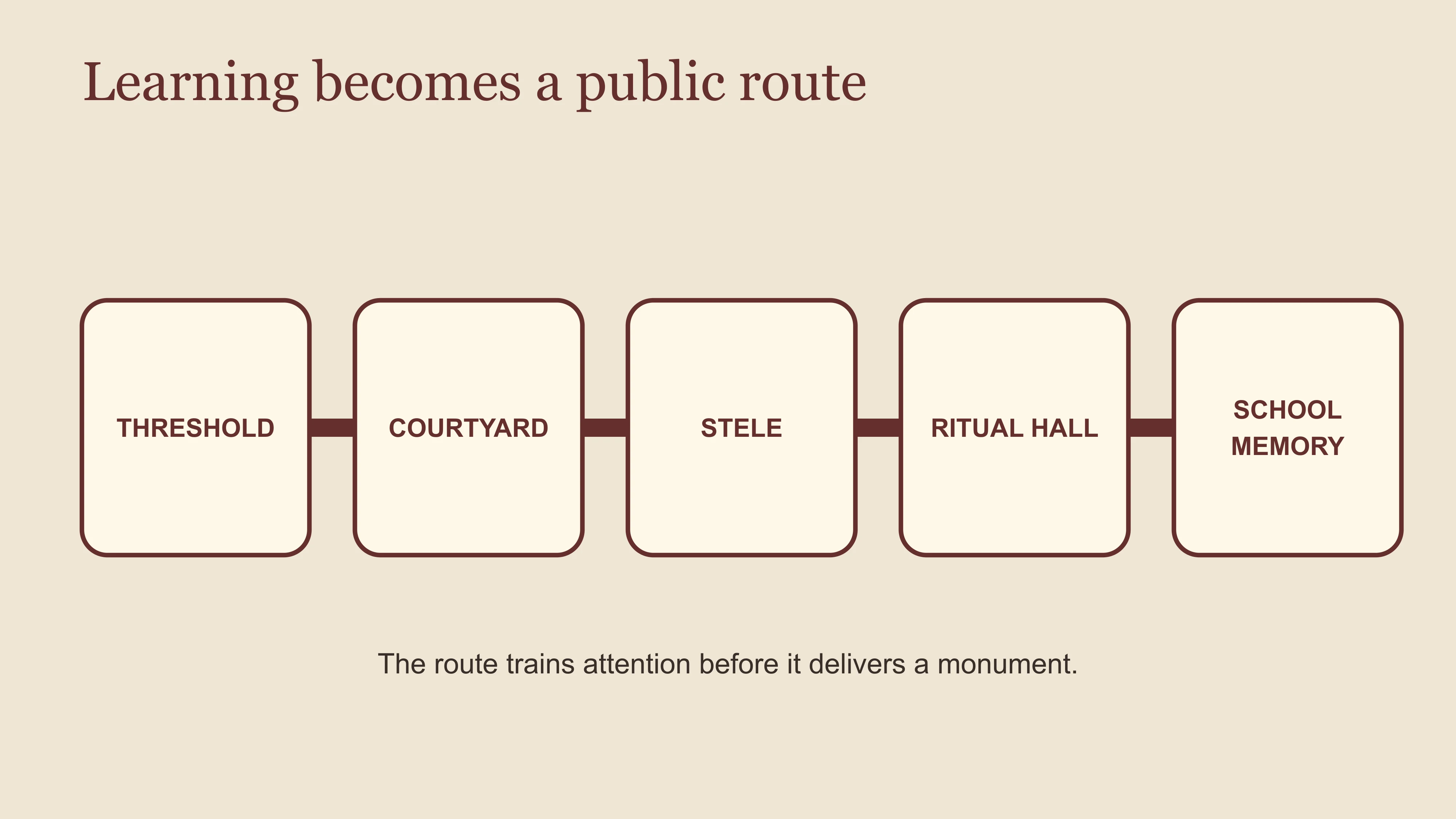
Kongmiao, wenmiao and the temple-school system are not interchangeable labels
English often compresses several institutional histories into “Confucius Temple.” Kongmiao points directly to a temple of Confucius. Wenmiao, literally a Temple of Culture, belongs to the state and local ritual recognition of Confucius and other honored figures. A temple could also stand within a temple-school system in which ritual space, official education and examination ambition reinforced one another.
Those distinctions matter because the building was never just a memorial house for one philosopher. It helped cities display who counted as a teacher, which learning deserved public honor and how educated status entered government. The institution could inspire disciplined study and also make a brutally unequal system look morally inevitable. Both belong in the same reading.
My position is firm: the temple's deepest subject is not Confucius's personality. It is the social power given to learning in his name. That power created libraries, teachers, rituals and routes of advancement. It also created exclusion, memorization pressure and reverence for credentials. If we admire the courtyard but refuse that contradiction, we have reduced a civic institution to elegant roofing.
Read the courtyard before you read the souvenir shop
At a busy site, the first thing you may notice is food, lantern light, selfie sticks or an aggressively photogenic archway. That is not a failure of the place. Temples and their districts have always depended on cities, donors, movement and public use. The mistake is assuming commerce cancels history.
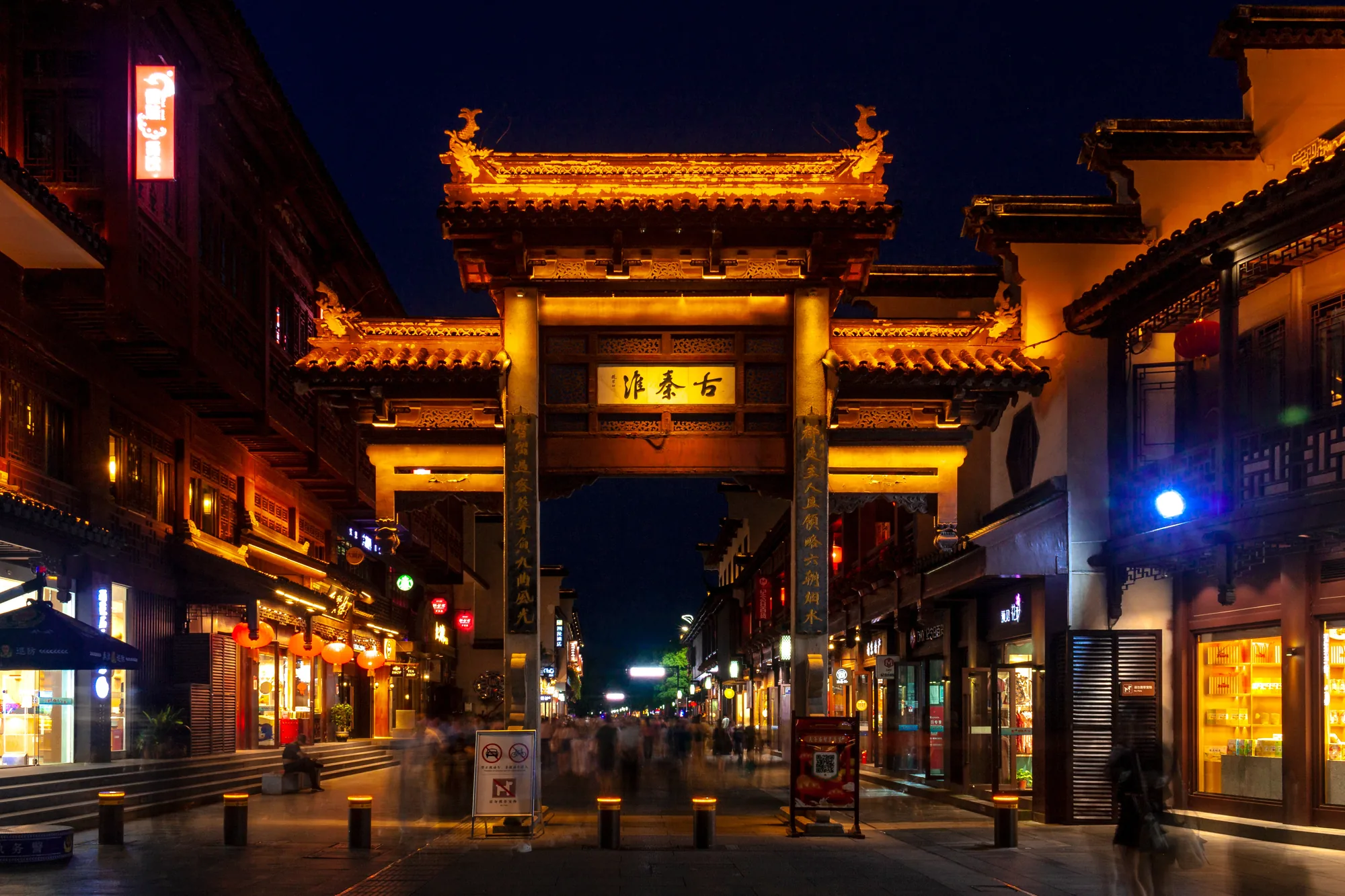
The better reading is double: the night crowd shows a living urban district, while the gate and axial spaces preserve an older argument about who gets to enter dignified public culture. One is not a contamination of the other. They create a productive tension. A heritage site that only asks to be revered becomes stage scenery; a commercial district that forgets why its landmark exists becomes a theme park with better lighting.
When I visit a place like this, I look for the moment the crowd changes pace. A narrow entrance, a raised threshold, an open court, a line of tablets, or the sudden quiet before a hall often carries more meaning than the largest roof. Those changes are the site's grammar.
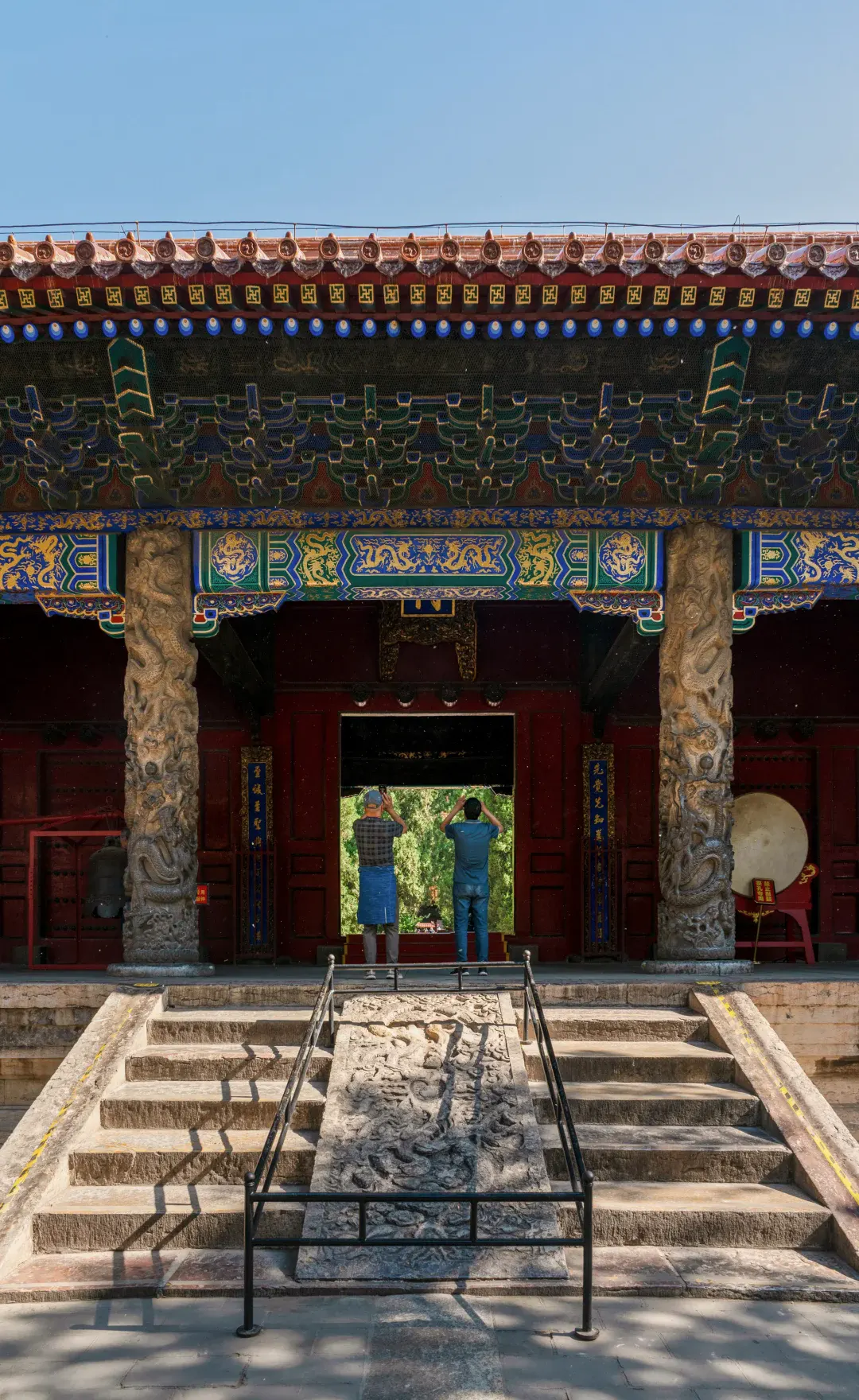
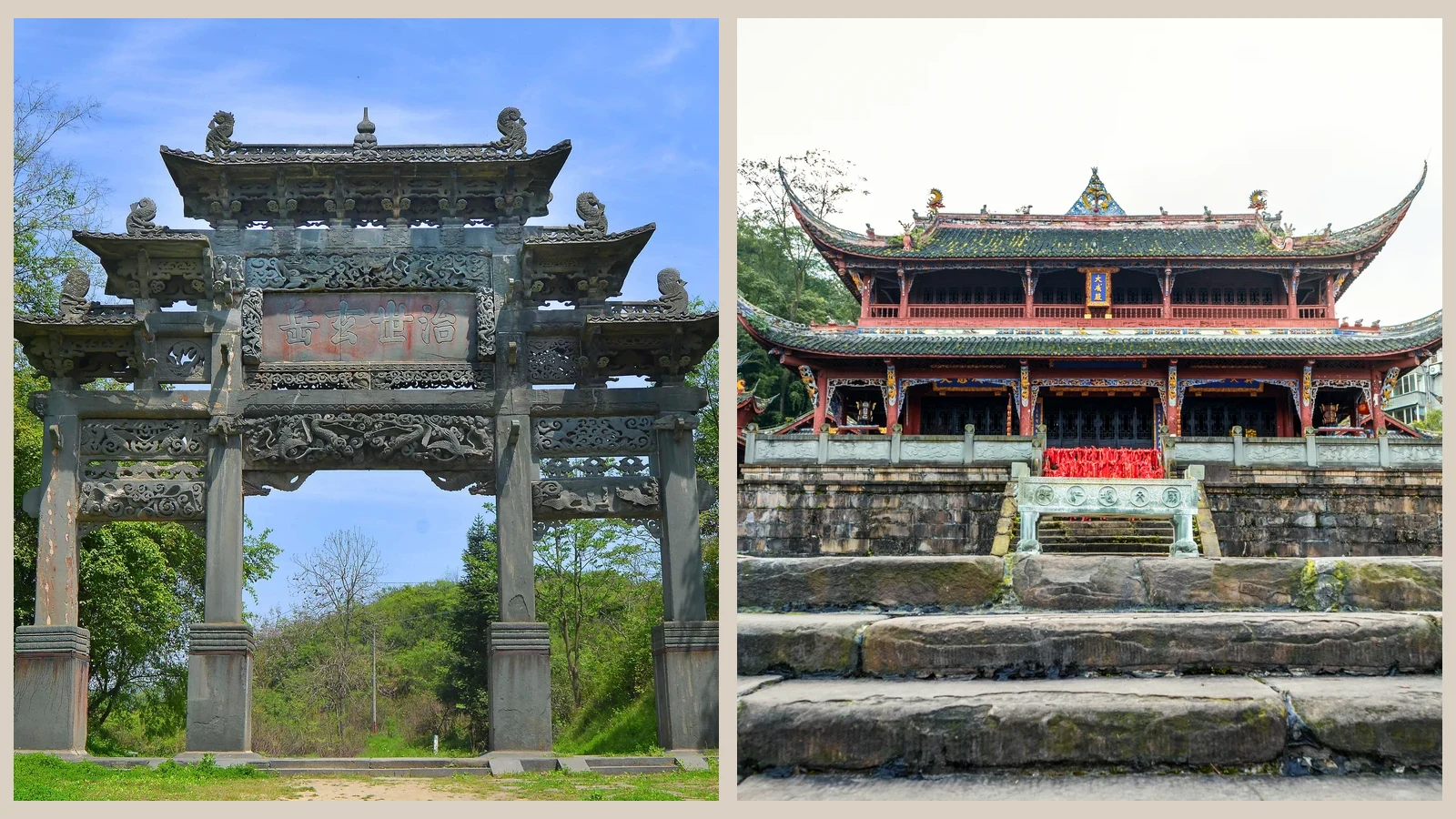
The foreground stone is not decorative clutter to crop away. It forces the pavilion to be read through age, touch, repair and restricted movement. Behind it, people continue through the shade. That is the honest scale of a Confucius temple: a monumental claim about culture assembled from many small decisions about where a person may stand, face and pass.
Ritual is not empty choreography—and it is not automatic obedience
Ceremonies for Confucius can look formal to readers used to treating sincerity as entirely private. Robes, music, bows and ordered lines may even feel like the opposite of thought. But the Confucian wager is that form can train attention: respect must become visible enough to be practiced, corrected and shared.
That wager has a limit. Form without humane purpose can become performance for authority; Confucian history itself has been used to defend hierarchy more effectively than responsibility. The Confucianism guide follows that conflict directly. A good visit should hold both truths together: ritual can make gratitude and learning tangible, and ritual can be hollowed out when it asks only for deference.
This is why the temple is more interesting than a statue of a wise man. It gives you a question to carry home: which parts of public life deserve deliberate form, and where does form become a way of avoiding the harder work of care?
Why Qufu matters, but does not erase local temples
Qufu is the central reference point because its temple, cemetery and Kong family mansion preserve an unusually large and long-developed complex. UNESCO describes the temple as the prototype for Confucius temples in East and Southeast Asia. That makes Qufu essential—not interchangeable with every local wenmiao.
Local temples tell different stories. A smaller city temple may foreground a school tradition, a particular rebuilding campaign, a neighborhood's memory, or the way a modern city has reinserted heritage into everyday life. A temple's visible condition can show careful preservation, reconstruction, religious ritual, civic ceremony, tourism, or several of these at once. It cannot, by itself, prove a single unchanged tradition.
Quanzhou's temple belongs to a port city whose cultural life was shaped by local institutions and far-reaching exchange. Read it alongside the Quanzhou guide, rather than treating every Confucius temple as a duplicate of Qufu. The same architectural language can carry different local stakes. This page no longer borrows that city's photograph as generic proof: a local temple deserves to be read through its own inscriptions, rebuilding history and present use.
Three layers of evidence beat one beautiful photograph
First, read the spatial sequence: the gate, axis, courtyards and principal hall tell you how public attention was ordered. Second, read the written record: plaques, steles, honorific names and rebuilding notices identify patrons, dates and claims that visual style cannot settle. Third, read the present use: ceremonies, school visits, tourism, neighborhood commerce and restrictions reveal what the institution is doing now.
These layers correct one another. A reconstructed hall can still host meaningful ritual; a venerable inscription does not prove uninterrupted practice; a lively crowd does not explain the site's historical office. I distrust any guide that calls a temple “authentic” after showing only an empty courtyard at sunrise. Emptiness is often a photography trick, not historical truth.
The strongest field note therefore records one detail from each layer and one unresolved tension between them. Perhaps the axial route feels severe while children use the courtyard casually. Perhaps a rebuilding plaque is newer than the tradition it commemorates. Perhaps the night market keeps the district alive while making the temple itself harder to notice. That tension is the story, not an inconvenience to crop away.
A five-minute way to visit a Confucius temple well
You do not need a lecture, a ritual costume or a complete command of classical Chinese to have a serious encounter with a Confucius temple. Give yourself five slower minutes:
- Stand outside the first gate. Ask what separates the street from the complex: height, a threshold, an inscription, a change in sound?
- Follow the main axis once without looking at your phone. Notice how courtyards make people visible to one another.
- Find the principal hall. It is not merely the biggest building; it is where commemoration becomes an argument about learning and authority.
- Look for the educational neighbor. An academy, examination hall, tablet, classroom history or even its absence tells you what this city chose to remember.
- Read one detail against the present. A school group, a ritual, a guide's script, a snack stall or a rebuilding plaque can reveal how the site now lives.
Then write a six-sentence “learning-in-space” field note: name the temple and city; describe the threshold; identify one inscription through the site's own wording; record one educational connection; name one present use; finish with the question the place refused to answer for you. This is the community contribution I want here. It creates comparable evidence without turning every local temple into a copy of Qufu.
That is enough to turn a landmark into a question. From there, return to Confucius for the historical teacher behind the later sage, or read the Analects to see why a tradition built so many imposing spaces around a book of compact, often awkward conversations.
Use the Chinese philosophy collection to compare that institution with Taoist temples and other traditions, but keep the categories separate. Similar rooflines do not imply identical ritual purposes. A shared Chinese architectural vocabulary is the beginning of identification, never the end.
The place is not asking for worship
A Confucius temple asks for something tougher than instant reverence: attention to the systems that make learning prestigious, public and unevenly available. Its beauty is inseparable from that pressure. The gate is lovely because it is also an argument about entry; the hall is moving because it lets a teacher's afterlife become an institution; the courtyard matters because ideas stop being abstract when people must stand in it together.
If you leave with only a roofline, you saw Chinese architecture. If you leave asking who gets formed by a society's schools, rituals and public spaces, you saw the temple.