Filial piety is not a command to obey parents without thought. At its strongest, it is a demanding practice of care, gratitude, truthful correction and responsibility across generations. If it becomes one-way control, it has already lost the humane relationship it claims to protect.
The Chinese term xiao (孝) is often translated as filial piety. In English, “piety” can sound antique, passive or frighteningly obedient. The actual argument is messier because family life is messier.
What is filial piety?
Filial piety is a Confucian ethical idea about the responsibilities between children, parents and ancestors. It includes care, respect, remembrance, gratitude and conduct that does not bring needless harm or shame to a family. Its historical forms range from ordinary support to ritual practice and moral stories.
The important word is between. Filial piety is often taught as a child's duty upward, but Confucian ethics also judges parents, elders and rulers by how they use the authority relationships give them. Care without room for moral correction becomes fear. Obedience without responsibility becomes flattery.
A wedding tea ceremony gives respect a visible form: a couple offers tea and senior relatives receive it. The exchange matters because a response is built into it—recognition moves both ways. The wedding tea ceremony guide explains why a family's order, wording and posture should be agreed rather than copied from a viral template.
Care is practical before it is symbolic
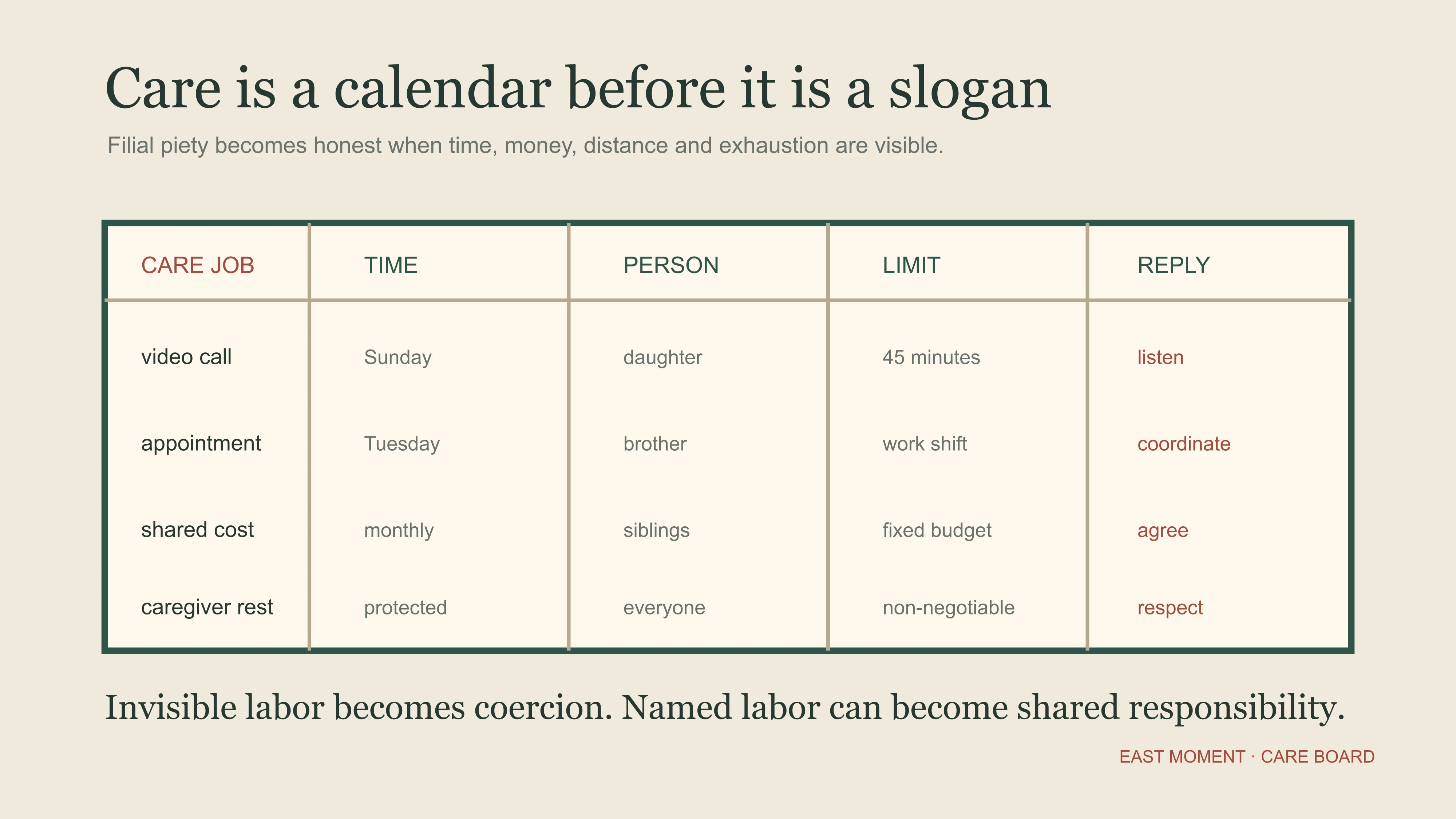
In daily life, filial responsibility often means ordinary work: making time to call, arranging medical support, sharing expenses, listening when an older relative has lost social contact, learning how someone wants help rather than assuming it, and showing up when a situation cannot be solved by a message.
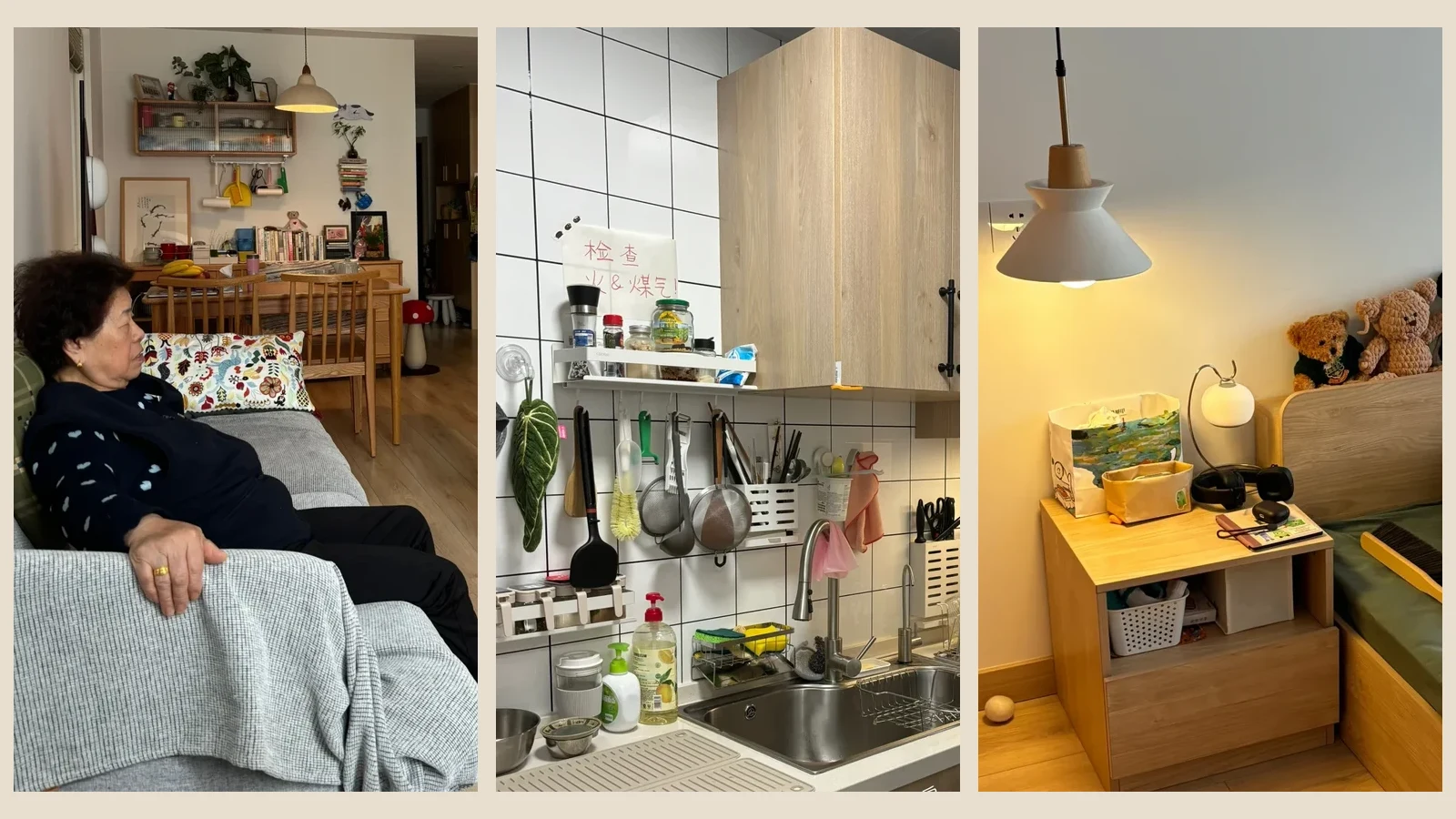
The three separate Chengdu home scenes above are why I refuse to reduce xiao to a bow or a slogan. A grandmother has somewhere comfortable to sit. The kitchen has been made workable. A sleeping space has been prepared before the guest needs to ask. None of those details can prove that a family relationship is perfect. Together they show the part of care I trust most: attention has altered the room. Someone anticipated another person's ordinary day.
That sounds less cinematic than a grand bow. It is also harder. Care must adjust to age, health, money, migration, gender, family history and the actual relationship in front of you. A child living overseas may be deeply involved in a parent's life; a child living in the same home may be emotionally absent. Physical proximity is one condition of care, not its automatic proof.
This is where old vocabulary becomes contemporary. A weekly video call, a translated appointment, an honest conversation about finances or a boundary around harmful behavior can carry more ethical weight than a ceremonial gesture performed for an audience.
Filial piety cannot be a debt that one generation owns forever
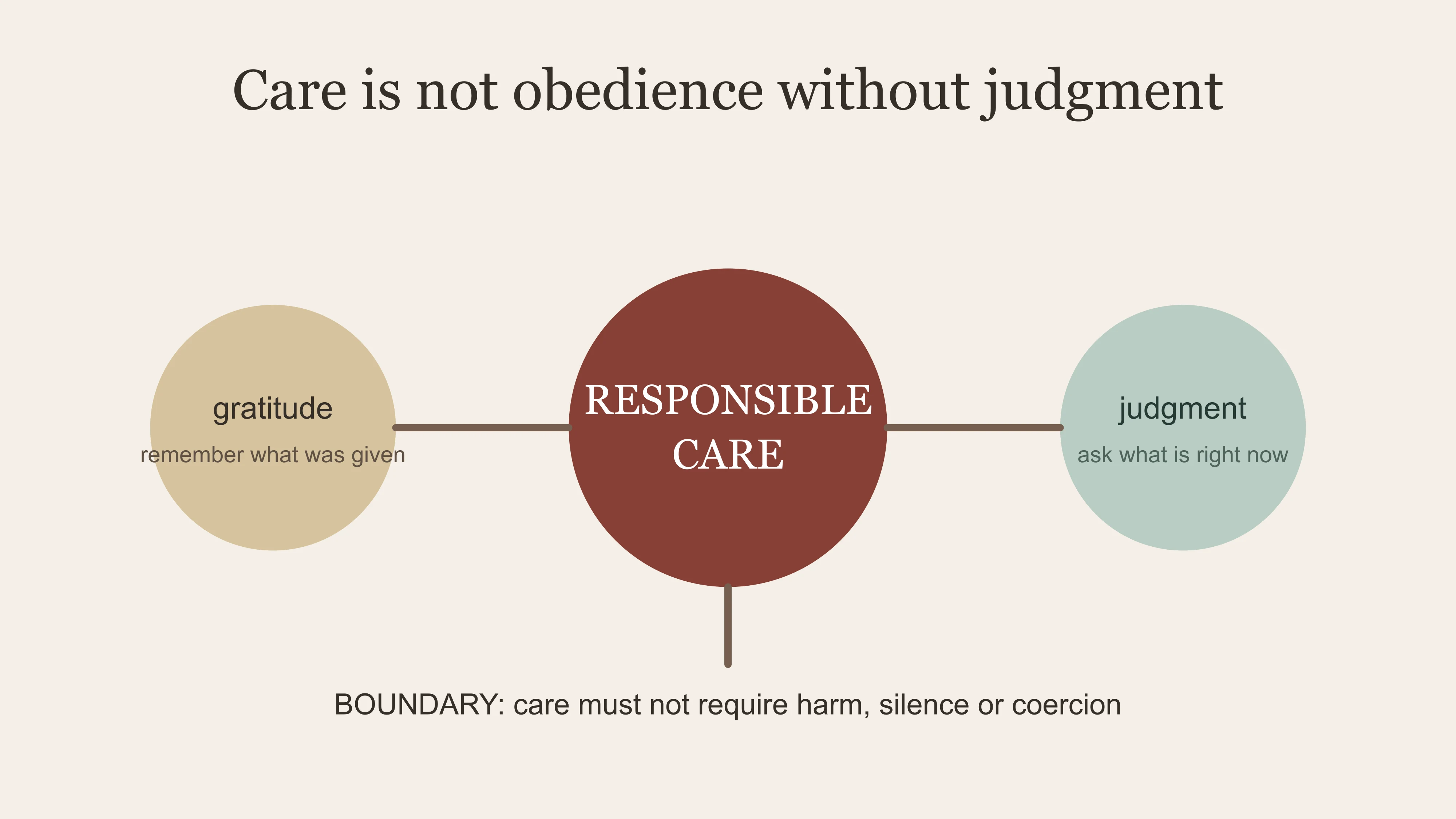
The language of repayment is powerful in Chinese family life: parents sacrificed, therefore children owe. Gratitude is real. Raising a child costs money, sleep, bodily work and years of attention. Pretending otherwise produces a shallow individualism that enjoys care while denying dependence.
But a child is not a loan product. Parents choose to bring a dependent person into the world; the child does not sign a contract accepting unlimited future control. Adult care for parents can be morally serious without becoming repayment of a principal that never reaches zero. Once every disagreement is answered with “after all we did for you,” sacrifice has stopped being a gift and become leverage.
My position is deliberately hard on both evasions. “I owe my parents nothing” erases the relationships that made a life possible. “My child owes me everything” erases the child's adulthood. The only defensible filial ethic holds gratitude and independence in the same frame. Care must be substantial; authority must end where another person's life begins.
That distinction matters most when money enters. Support should be discussed through actual income, health needs, siblings, pensions, debt and caregiving time. A flat demand for equal cash can be unfair when one sibling already supplies daily labor. A demand that one daughter sacrifice work because “women are better at care” is not tradition. It is an unpaid labor decision disguised as virtue.
Correction belongs inside responsibility
The common caricature says Confucianism makes disagreement impossible. The tradition is more demanding. It includes the idea that a child or official should remonstrate—speak up, advise and try to correct someone in authority when they are wrong.
That does not make every argument easy or every family safe. It establishes a moral boundary: respect cannot require someone to endorse harm. There are situations in which direct confrontation, outside help, distance or legal protection is necessary. No cultural concept should be used to keep a person in danger.
The Confucianism guide follows the tension directly. Relationships give obligations in both directions. A parent who demands loyalty while refusing accountability is not preserving xiao; they are asking for a power arrangement to be mistaken for virtue.
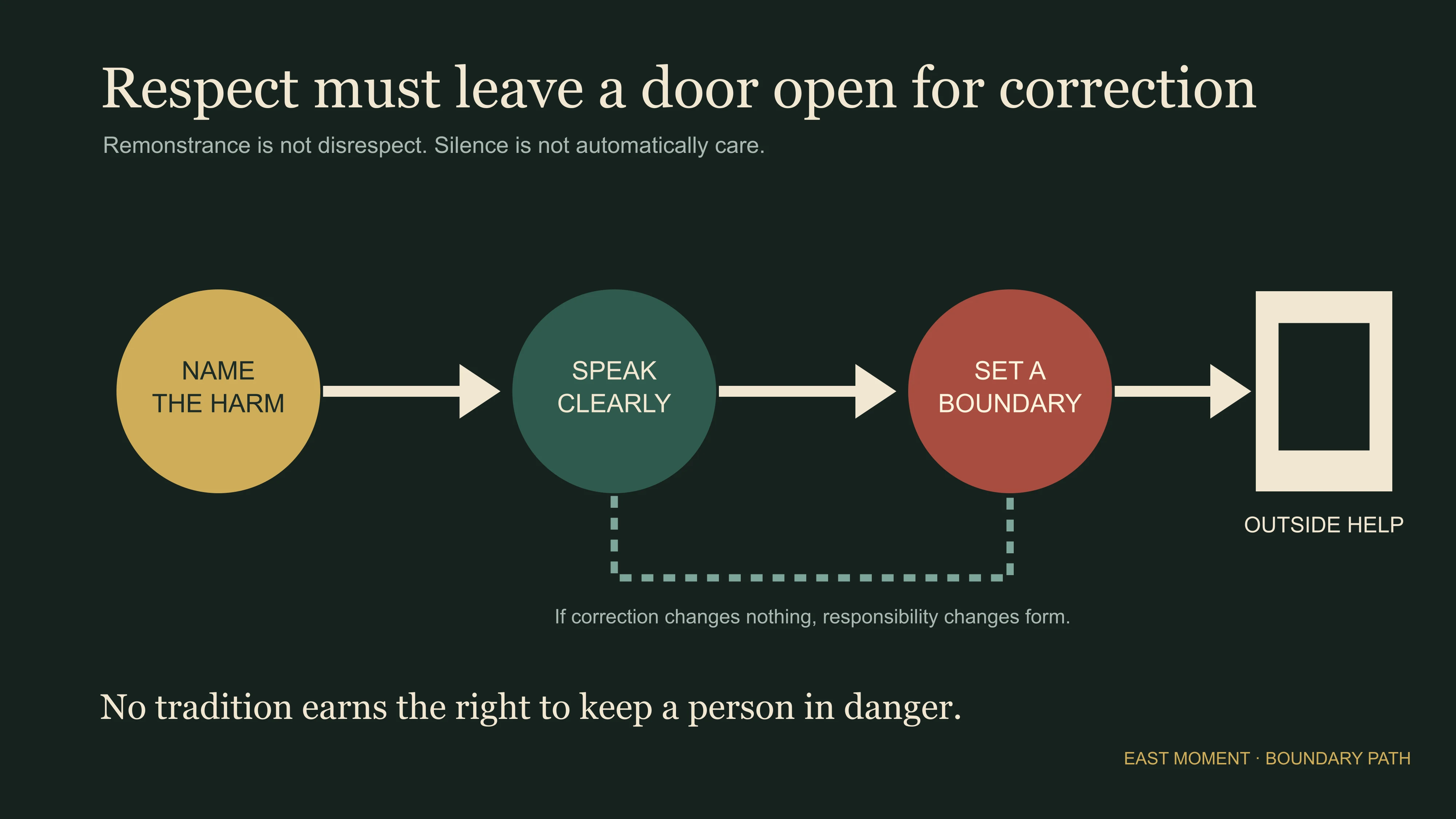
Remonstrance is not a decorative exception. It is the line separating respect from moral surrender. A careful first conversation may preserve the relationship. Repeated pressure may require a written agreement, another relative, a counselor or financial boundary. Violence, coercive control or immediate danger requires safety and qualified outside help—not a more elegant quotation about family harmony.
I am suspicious whenever only the younger person is asked to be patient. Patience demanded downward is often simply comfort for the person with power. A reciprocal family ethic asks parents to hear unwelcome truth, siblings to name unequal labor and adult children to speak without cruelty. Everyone has work to do.
Texts survive because people argue with them
Filial piety has never had only one settled meaning. The Analects presents short teaching exchanges whose force depends on who is asking and what weakness is being addressed. The Classic of Filial Piety gives xiao a more concentrated textual frame, but it does not eliminate later interpretation, disagreement or changing family structures.
The surviving history of commentary makes an important fact visible: inherited text and later argument travel together. The tradition is not a recording of one unchanging family rule. It is evidence of generations reading old language through new questions. The Analects guide is a good entry if you want to see why a short sentence can never replace the surrounding conversation.
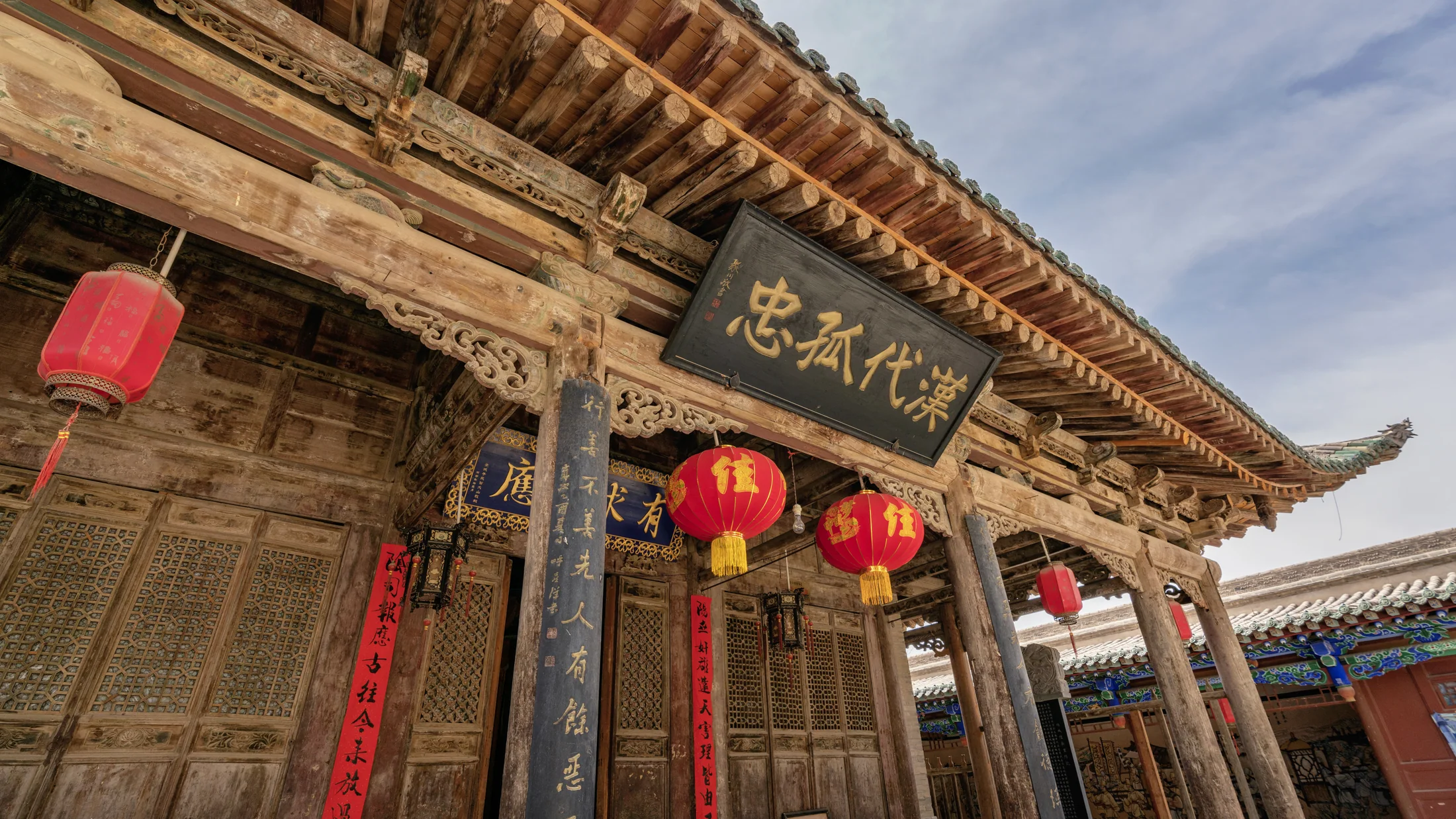
The Qingcheng ancestral hall is a useful correction to the idea that family memory is only a private feeling. Its timber, inscriptions, lanterns and named entrance give lineage a durable address. Architecture can preserve names and obligations beyond one household's memory. It cannot tell us whether a family was loving, who was permitted to belong or whether anyone still accepts the values written there. A building can hold continuity; it cannot certify justice.
Ancestors, memory and the danger of turning care into theater
Filial piety also reaches beyond the living. Family remembrance, grave tending, offerings and seasonal gatherings can make continuity visible. At Qingming, the act of cleaning a grave, bringing offerings or recounting a relative's story can be a way of saying that a life remains part of the family record.
Remembrance has a physical side: names, place, labor and the decision to return. The Qingming Festival guide separates historical context from the variations that families actually negotiate.
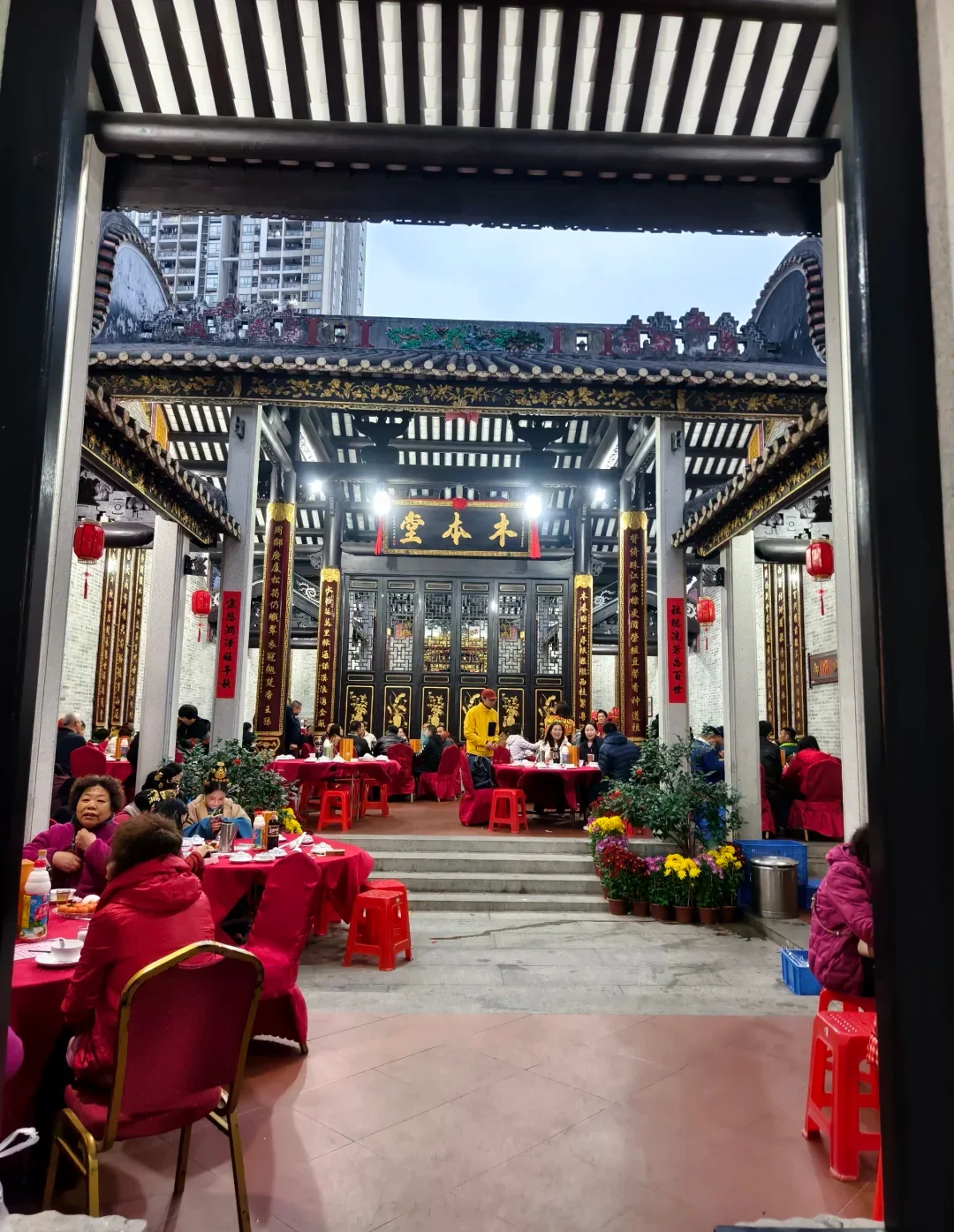
The Liedecun banquet brings that continuity into contemporary Guangzhou. Elderly diners, younger relatives, round tables and a working ancestral hall occupy the same frame while apartment towers rise beyond the roofline. This is not an antique tableau. Kinship is being maintained through food, attendance and shared space inside a modern city. The photograph cannot reveal the quality of anyone's private care, and a crowded feast is no proof of family harmony. What it does prove is that ancestry can still organize time and bodies in public, not merely survive as an abstract value.
Ritual can be moving because it gives grief and gratitude a form. It can also become theater when people use an elaborate gesture to avoid the harder work of care. The ethical test is not how traditional the scene looks. It is whether someone is treated with dignity when no one is taking a photograph.
Four questions for a family decision
Before calling a choice “filial” or “unfilial,” ask:
- Whose need is being met? Care is not the same as preserving a family's public image.
- Who carries the cost? Time, money, emotional labor and physical care should not disappear into a moral slogan.
- Can someone disagree safely? If no, respect may be functioning as coercion.
- What response is possible? Gratitude becomes real when both sides can speak, not when one side merely receives obedience.
These questions do not make family duty effortless. They make its pressures visible enough to discuss honestly.
Three modern cases reveal whether care is reciprocal
An adult child lives abroad. Flying home every week is impossible; disappearing behind distance is still a choice. A serious plan might combine scheduled calls, a local contact, shared medical information, emergency travel rules and a transparent budget. The ethical achievement is not the number of calls. It is whether the parent knows what support exists and whether the child can actually sustain it.
Several siblings disagree about money and time. “Split everything equally” sounds fair until one person has supplied years of appointments, cooking and interrupted work. Count money, hours, proximity and lost opportunities. Then decide. Invisible care must enter the ledger, while the primary caregiver must also accept that exhaustion does not grant unilateral control over the parent.
A parent demands control over marriage, career or housing. Listen for the fear inside the demand—loneliness, financial insecurity, reputation or loss of role—but do not hand over the decision. Understanding a parent's emotion does not make the requested control legitimate. A filial response can be compassionate and final: “I hear what you fear; this choice is still mine.”
These cases show why the English word obedience is too blunt. The harder Confucian question is how people preserve relationship while telling the truth about power, dependence and cost.
What if the parents did not provide good care?
This is the question polite introductions to filial piety avoid, and avoiding it is cruel. Some parents were absent, violent, manipulative or financially destructive. Some adult children carry injuries that a holiday phone call cannot repair. Telling them that “Chinese culture values family” does not answer the moral problem. It merely puts cultural decoration around pressure.
Past failure changes present obligation. It does not produce one automatic answer. An older parent may have an urgent material need while the adult child still requires distance. Support can be delivered through another relative, a fixed payment, professional services or no direct contact. Forgiveness, reconciliation, financial assistance and physical caregiving are four different decisions. No one should bundle them into a single command called xiao.
The classical language of remonstrance matters here because it refuses to equate moral relationship with silent approval. But ancient vocabulary cannot decide a modern safety plan by itself. Where there is abuse, coercion or credible danger, the first duty is to prevent further harm. Family status does not cancel personhood.
I also reject the opposite performance: using therapeutic language as a fashionable excuse to discard every difficult elder. Irritation is not abuse. A parent's clumsy fear, repetitive story or unfamiliarity with digital life can demand patience without demanding surrender. The honest work is to name the exact behavior and consequence instead of choosing the label that wins the argument fastest.
My boundary is simple. Care should be proportionate to relationship, need, capacity and safety. It should never require someone to deny what happened. A family can ask for generosity; it cannot demand historical amnesia.
Filial piety after distance changes the household
Migration, urban work, smaller households, divorce, remarriage, disability, care systems and digital communication have changed what family proximity looks like. The tradition did not disappear; it entered new constraints.
For some families, filial responsibility now includes scheduling care across time zones or negotiating with siblings who live in different cities. For others, it means refusing an expectation that would reproduce violence, debt or gendered exhaustion. A living ethic has to meet the conditions people actually inhabit. The wider Chinese culture beliefs and traditions guide keeps this family argument beside ritual, learning, local practice and refusal, so xiao does not get misrepresented as China's single moral instruction.
Start with Confucius for the teacher behind the later tradition, then return to your own family question. The wider Chinese philosophy collection shows how other traditions frame duty, non-forcing, compassion and ritual differently. The useful version of filial piety is not “How do I prove I am good?” It is “What kind of care lets everyone in this relationship remain human?”