This Lhasa culture guide begins where the postcard fails. Lhasa (拉萨) is often imagined as a collection of sacred monuments floating above the modern world. The real city is more demanding: pilgrimage routes cross shopping streets, monasteries operate beside expanding neighborhoods and the Potala Palace stands over an administrative capital where people study, work and commute. It is one distinct highland culture within our wider Chinese culture guide, not a timeless stage outside the present.
Lhasa culture guide at a glance
| Question | Short answer |
|---|---|
| Why does Lhasa matter? | It is a major center of Tibetan Buddhist pilgrimage, monastic learning and political history |
| Sacred urban center | Jokhang Temple and the Barkhor circuit |
| Monumental anchor | Potala Palace, joined in the UNESCO ensemble by Jokhang Temple and Norbulingka |
| Elevation | Roughly 3,650 meters, high enough to require deliberate acclimatization |
| Best cultural approach | Watch how ritual movement, architecture, language, trade and everyday life share space |
| Main misunderstanding | Treating Lhasa as a timeless monastery city rather than a living and changing regional capital |
Read Lhasa through four systems at once
Lhasa becomes easier to understand when four systems remain visible together.
The first is sacred movement: pilgrimage circuits, prostration, prayer wheels, temple visits and monastic study. The second is political history: institutions of government, contested memory and the changing uses of monumental space. The third is highland infrastructure: water, roads, rail, altitude, housing and the practical work of sustaining a city. The fourth is ordinary urban life: schools, tea houses, phones, deliveries, shopping and families making plans that have nothing to do with a visitor's itinerary.
Most shallow accounts choose one. Religious romance removes politics and daily work. Political summary can flatten believers into symbols. Tourism promotion isolates monuments. A useful Lhasa culture guide keeps the systems in the same frame even when they do not resolve neatly.
Geography makes Lhasa possible before architecture makes it famous
Lhasa sits in a high valley connected to the Lhasa River system. Sunlight, altitude, dry air, mountain passes and water availability shape the city's materials, food, movement and settlement patterns.
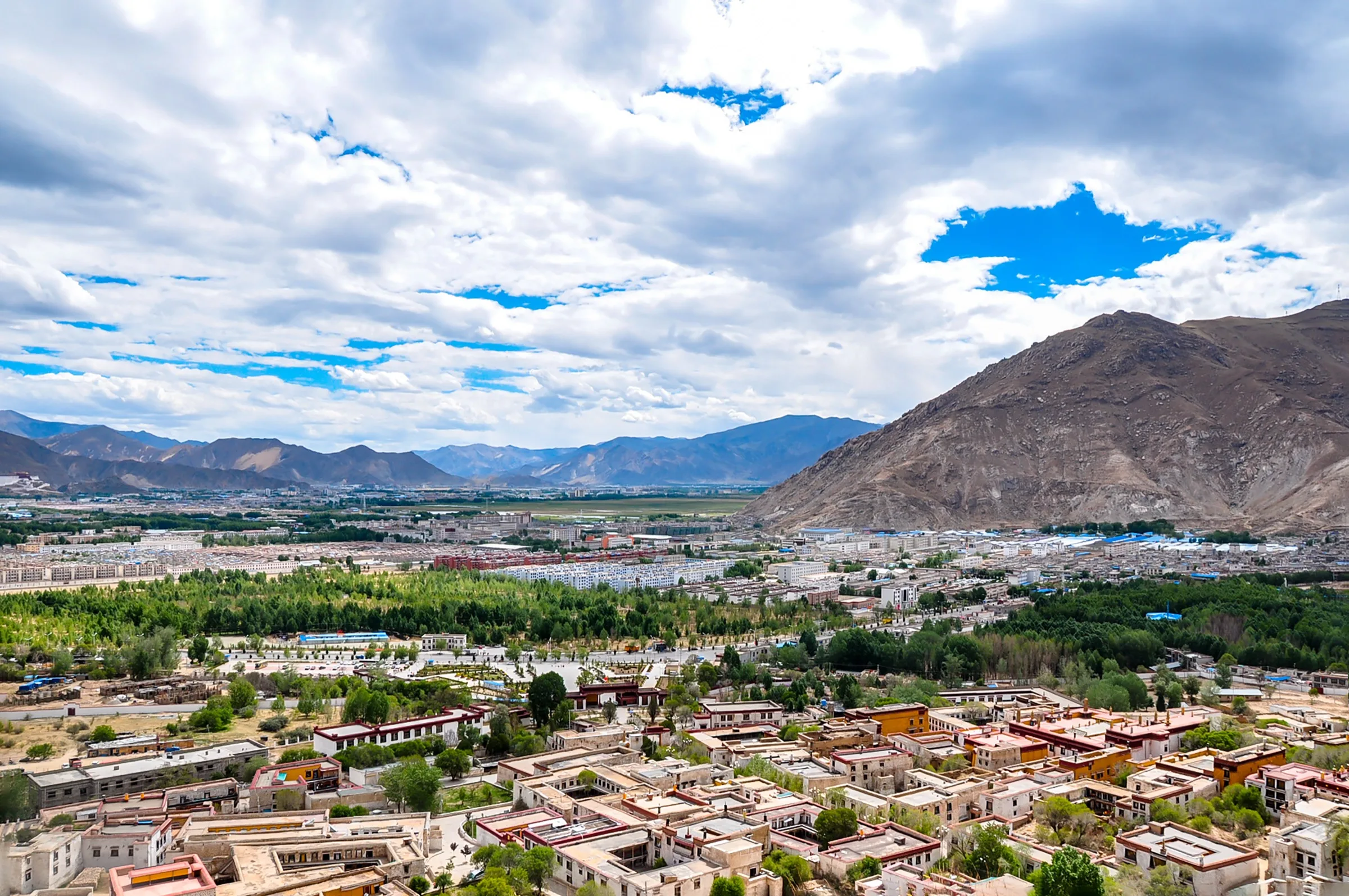
The altitude is not a decorative fact. It affects how fast visitors should walk, how buildings manage climate and how routes connect the city to other parts of the plateau. A respectful cultural visit begins by accepting physical limits rather than racing between monuments.
High altitude affects people differently, and physical fitness does not provide immunity. A slow first day, hydration, limited exertion and attention to symptoms are practical boundaries rather than signs of weakness. Serious or worsening symptoms require medical attention; a culture page cannot assess individual risk.
The valley also changes visual scale. Mountains remain present beyond new roads and apartment blocks, preventing the city from feeling detached from terrain. The Potala appears monumental partly because it occupies this valley relationship, not because the building floats alone against an empty sky.
Sun and shade matter at street level. Bright light can make white walls visually severe while shaded interiors feel unexpectedly cool. Dry air, dust and large temperature shifts affect clothing, walking pace and the way public space is used across a day.
Jokhang and Barkhor form a sacred center through movement
Jokhang Temple is one of the most important religious sites in Tibetan Buddhism. Its meaning comes not only from the building and sacred images but from pilgrimage, offerings, prostration, recitation and repeated movement around it.
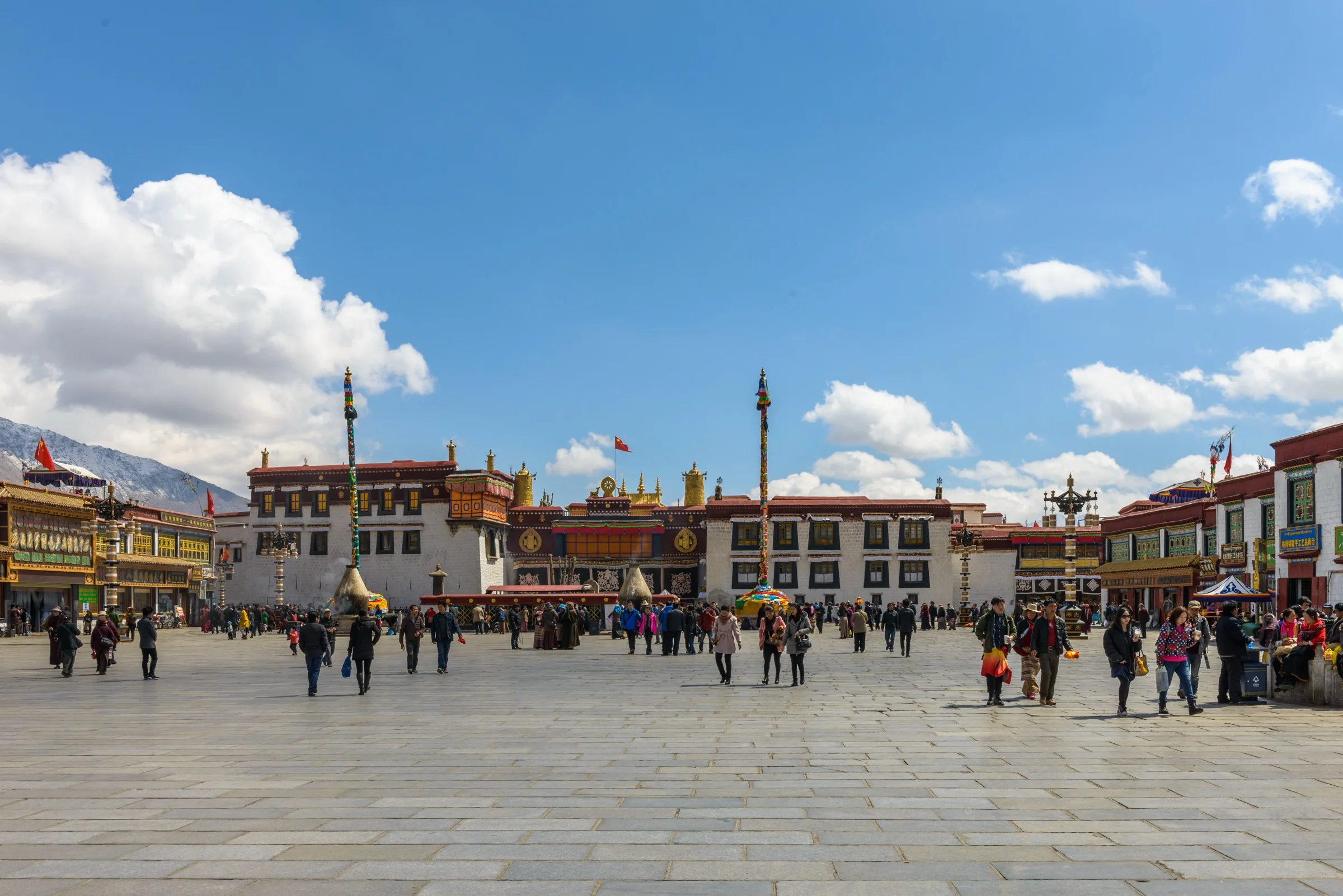
The surrounding Barkhor is both a pilgrimage circuit and a commercial district. Pilgrims, residents, traders and visitors share a route whose purposes are not identical.
| Read the Barkhor through | What to notice | Respectful behavior |
|---|---|---|
| Pilgrimage | Direction, pace, prayer wheels and prostration | Do not block the flow or step into ritual space for a photograph |
| Commerce | Religious goods, household items, tea, clothing and souvenirs | Distinguish goods made for practice from generic tourist decoration |
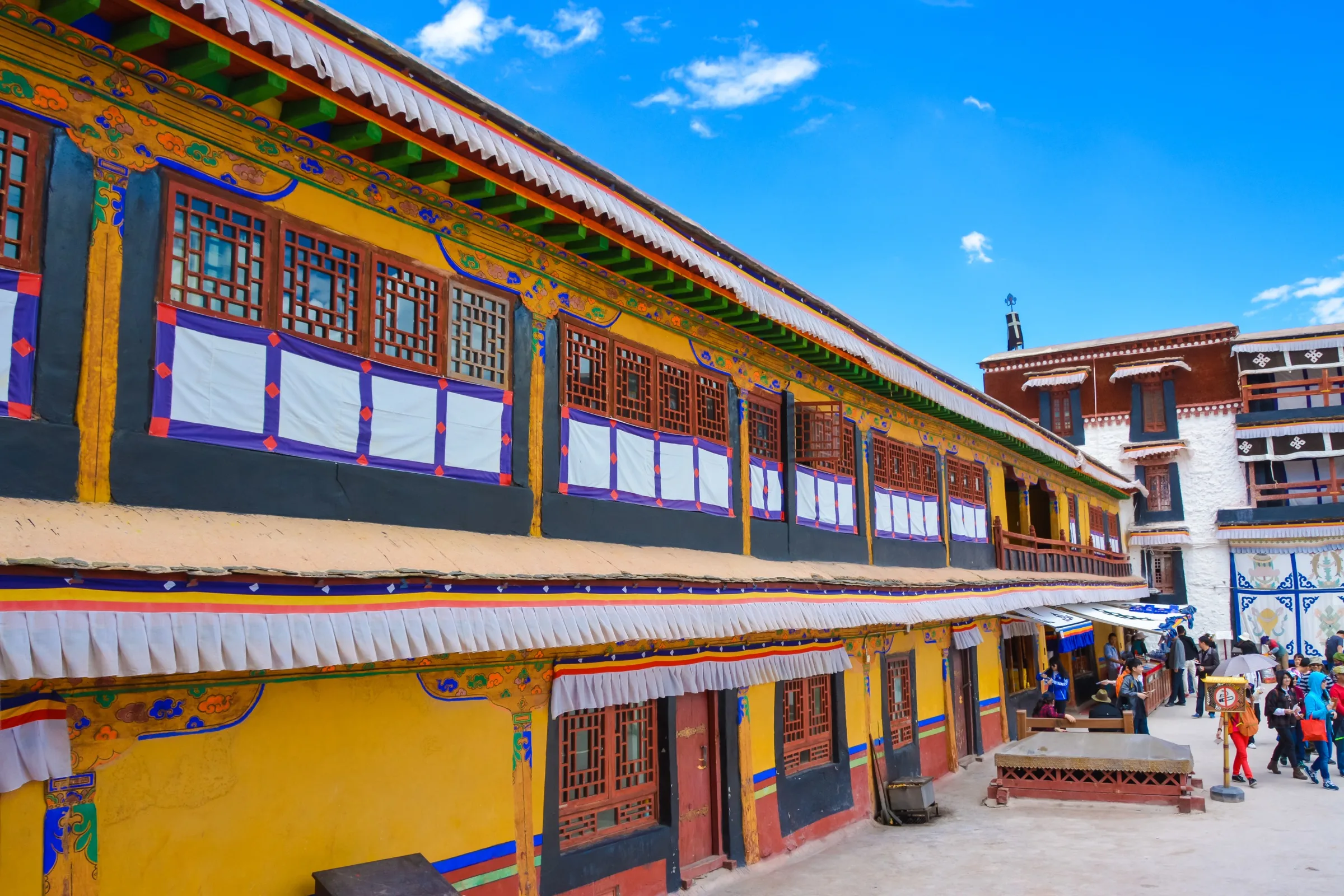
| Architecture | White walls, dark window frames, courtyards and later alterations | Avoid assuming every facade is equally old |
| Security and administration | Managed entrances and controlled public space | Follow current rules without photographing sensitive situations |
| Everyday life | Deliveries, school journeys, conversation and rest | Remember that the district is not an outdoor museum |
The Barkhor is best understood by walking more slowly than commerce encourages. Shop windows, devotional movement and security management compete for attention. A visitor looking only for old architecture may miss the route itself, while a visitor looking only for ritual may ignore the people carrying boxes, meeting friends or opening a business.
Direction matters because the circuit is not random pedestrian flow. Follow the prevailing movement and watch before entering it. Do not step backward into a pilgrim, stop suddenly in a narrow point or use a person in prostration as foreground composition.
Time of day changes the district. Early movement can feel more devotional and locally oriented; later hours may bring denser tourism and shopping. This does not produce a pure-versus-commercial split. Religious goods are part of religious life, and pilgrims also buy things. The harder question is what kind of commerce a product serves and who defines its value.
The Potala Palace joins religion, government and memory
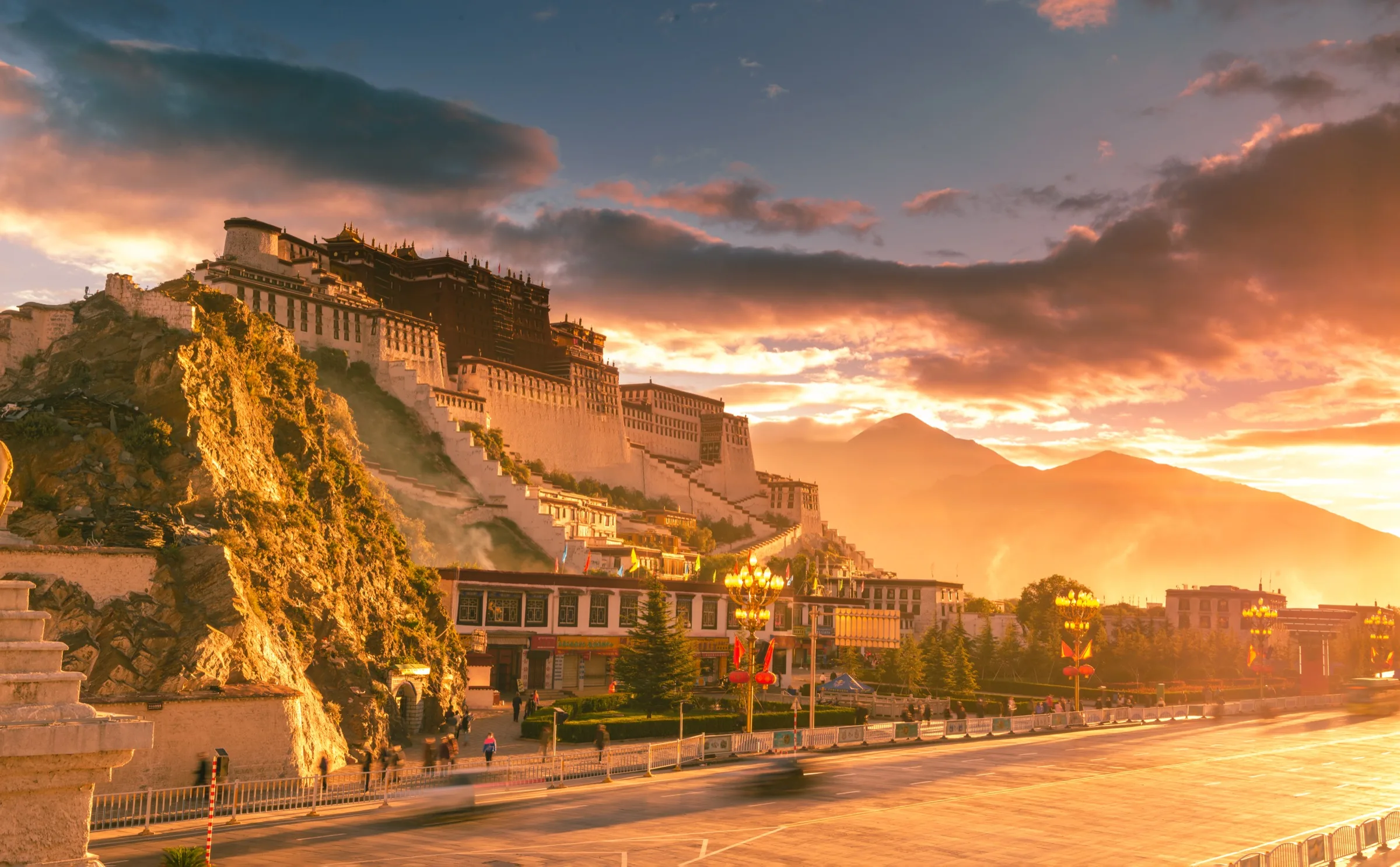
The Potala Palace dominates Lhasa physically and symbolically. Although the site has earlier associations, the monumental complex visible today was developed principally from the seventeenth century and became connected to the Dalai Lamas, Tibetan government and major religious institutions.
UNESCO's record for the Historic Ensemble of the Potala Palace joins the palace with Jokhang Temple and Norbulingka. Reading the three together is more useful than isolating one silhouette: they reveal different relationships among authority, devotion, residence, garden and urban movement.
Its white and red masses organize views across the city, but the palace is not only a skyline object. Chapels, tombs, administrative spaces, murals, manuscripts and stored objects make it a dense institutional archive.
Visitor numbers, timed entry and interior rules can change. Photography may be restricted in important spaces. The best preparation is to learn the difference between the palace as a historic seat, a sacred complex, a museum-like visitor site and a modern national symbol.
| Potala layer | What it explains |
|---|---|
| Sacred architecture | Chapels, images, ritual objects and accumulated religious patronage |
| Political institution | The historical relationship between religious leadership and government |
| Monumental landscape | How the palace controls the visual identity of Lhasa |
| Heritage management | Conservation, visitor limits and the challenge of protecting fragile interiors |
| Contemporary symbol | Different ways the palace is used in tourism, media and public memory |
The palace also teaches verticality. Reaching it is physical; rooms, stairs and terraces accumulate rather than unfold on one level. That bodily effort can make authority feel architectural before a visitor understands any historical detail.
From outside, the building is often reduced to a perfect frontal image. Move around its base and the relationship changes. Roads, public squares, traffic and modern buildings enter the frame. The famous silhouette remains, but the city refuses to disappear for the photograph.
Conservation creates a tension every major heritage site shares more intensely here: access allows understanding and adds wear. Timed entry, restricted photography and controlled movement can frustrate visitors while protecting fragile interiors and sacred spaces. The correct response is preparation, not entitlement.
Monasteries were centers of learning and power
Sera, Drepung and Ganden belong to major Gelug monastic traditions associated with Lhasa. They were not simply quiet retreats. Monasteries educated large communities, organized debate and ritual, held land and resources and participated in political life.
Visitors often encounter monastic debate as a visually dramatic activity. The gestures help structure argument and memory; they are not a performance invented for tourists. Access and schedules vary, and visitors should not interrupt participants for staged photographs.
Debate is compelling because thought becomes physical. A clap, step and change of posture punctuate questioning. Yet the visible gesture is only the surface of disciplined study involving texts, logic, memory and teacher-student relationships. Filming the clap while ignoring the argument repeats the same mistake as photographing a book without opening it.
Large monasteries also shaped economies and political relationships. Their scale came from institutions, resources and networks, not only private contemplation. Reading them as peaceful mountain retreats removes the social power that made them historically consequential.
Prayer flags and devotional objects also require context.
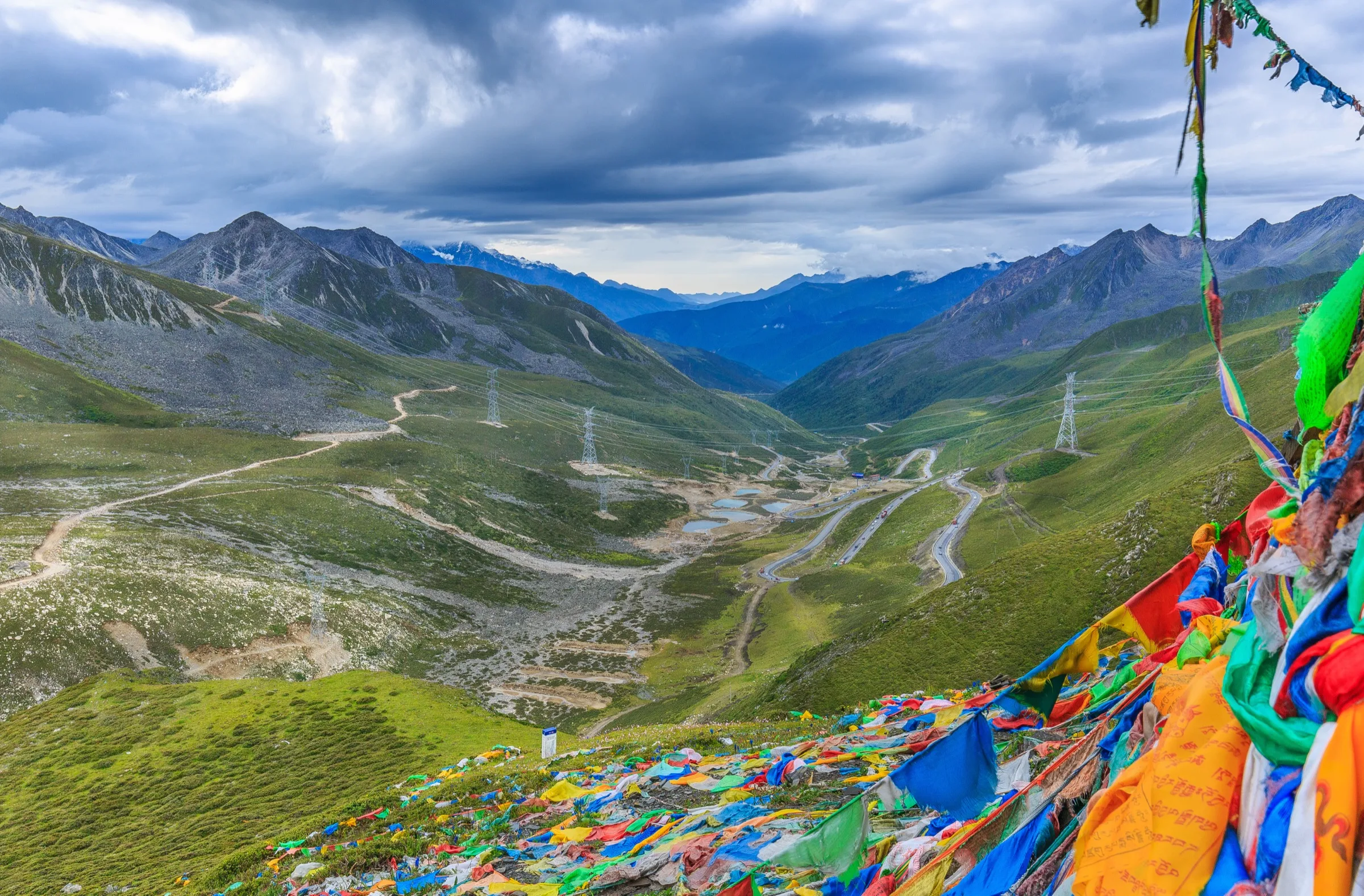
Flags are connected to texts, blessing, place and religious practice. Their colors make powerful photographs, but visual beauty is not the whole explanation.
Weathering is part of what visitors see. Cloth fades, tears and moves in wind. Replacing devotional objects, maintaining buildings and handling offerings are forms of labor. Sacred atmosphere is produced through repeated care, not preserved automatically by mountain air.
Norbulingka reveals a different scale of authority
Norbulingka, associated with the Dalai Lamas as a summer palace, contrasts with the vertical severity of the Potala. Gardens, pavilions and seasonal use show another relationship among leadership, landscape and daily routine.
Together, the Potala, Jokhang and Norbulingka form the UNESCO-listed historic ensemble. They should not be read as three interchangeable attractions. Each organizes sacred and political life differently.
Norbulingka also interrupts the visual stereotype of Lhasa as stone, white wall and exposed height. Garden space, water, trees and pavilions create shade and seasonal movement. The contrast is not merely aesthetic. It shows that authority can be expressed through retreat and enclosure as well as monumental elevation.
Architecture carries climate, status and belief together
White walls, dark window surrounds, flat roofs, courtyards and colored details are recognizable features in Lhasa, but no single feature has one cause. Materials, solar gain, rain, construction practice, religious meaning, status and later restoration can overlap.
Look at wall thickness and openings. Notice how a facade manages bright light, how an entrance slows movement and how a courtyard creates an interior world away from the street. Then ask what has been renovated, standardized or rebuilt. Heritage districts are edited environments as well as inherited ones.
This is where the wider Chinese architecture guide needs careful boundaries. Tibetan architecture belongs within the geography of China without becoming a variation of one Han Chinese template. Local religious systems, materials, engineering and visual language must remain named.
Language is visible before a conversation begins
Tibetan script appears across religious texts, signs, shops and public space alongside Chinese and, in selected visitor settings, English. The coexistence of scripts shows several audiences and institutions sharing the city.
Translation can flatten important distinctions. A monastery, chapel, assembly hall, sacred image and ritual object should not all become generic "temple culture." Learn precise names where they change understanding, but do not use Tibetan vocabulary as decoration detached from speakers.
Young residents may move among Tibetan, Mandarin and other languages across family, school, work, media and tourism. Language choice can be practical, intimate and political at once. An overseas visitor should resist treating fluency in one language as evidence that another identity has disappeared.
Tibetan material culture is present in ordinary decisions
Culture in Lhasa also appears at table height and street level: butter tea, sweet tea houses, barley foods, noodles, textiles, metalwork, incense and the design of household religious objects.
| Everyday form | Cultural depth | Common mistake |
|---|---|---|
| Sweet tea house | Social time, inexpensive food and urban conversation | Expecting every tea experience to be ceremonial |
| Butter tea | Hospitality, climate and pastoral ingredients | Treating it as a novelty challenge |
| Thangka painting | Religious iconography, training and patronage | Buying imagery without understanding subject or workshop quality |
| Incense | Devotion, atmosphere and local plant materials | Assuming every fragrant product has the same ritual use |
| Jewelry and textiles | Craft, status, trade and regional difference | Calling every object generically Tibetan without provenance |
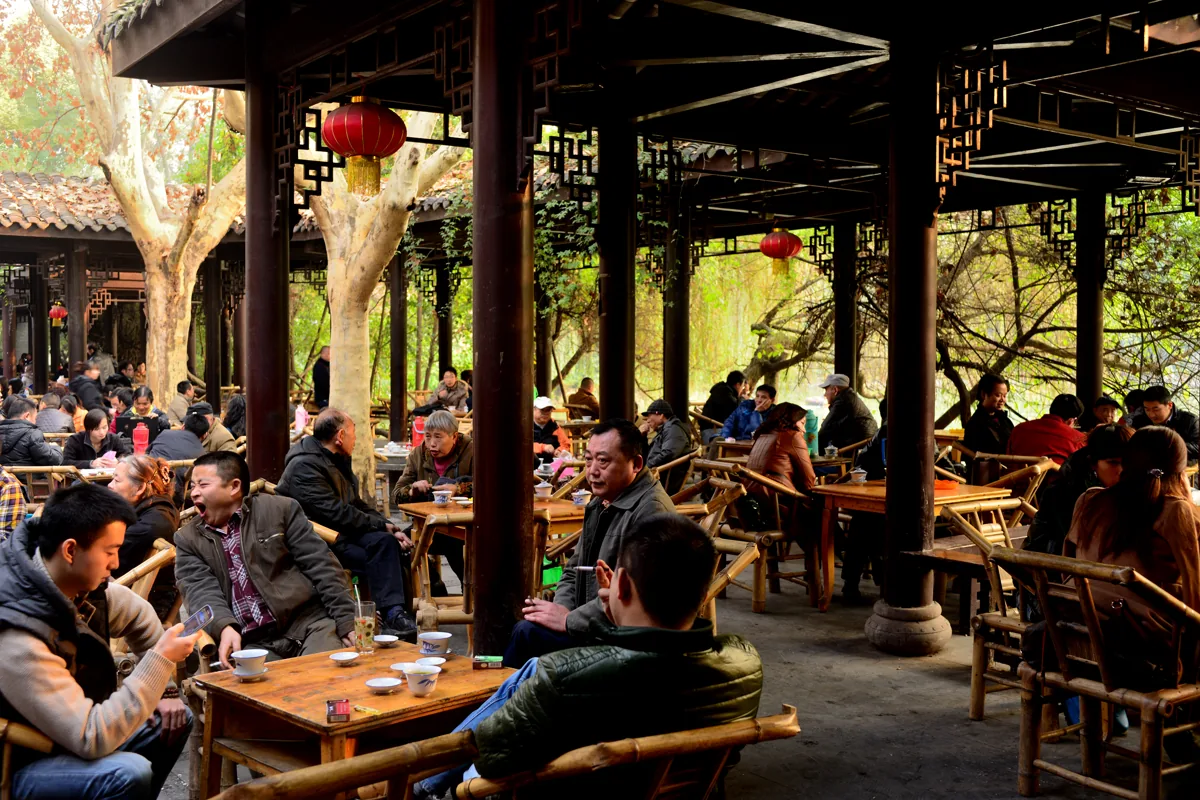
Sweet tea houses are especially useful because they return the city to human scale. People sit, talk, eat simple food and refill glasses without turning every drink into ritual theater. The room may teach more about urban social time than an expensive staged cultural performance.
Butter tea asks for another adjustment. Its salt, fat and texture belong to hospitality and highland food systems. Treating the first sip as a reaction-video challenge makes the visitor the subject and the culture a prop. Taste it as food, not as a dare.
Thangka painting deserves the same seriousness. Iconography, proportion, materials, training and intended religious use matter. A beautiful image is not automatically a suitable souvenir, and a cheap print should not be described as handmade sacred art because the colors look traditional.
When buying craft, ask what the object is, who made it, what materials were used and whether it was intended for devotion, household use or the visitor market. Provenance is respect made practical.
Modern Lhasa is not outside the cultural story
Roads, rail, tourism, state institutions, migration, digital media and new construction have transformed Lhasa. Tibetan, Mandarin and other languages circulate through different settings. Young residents participate in religious, educational, commercial and online worlds that cannot be divided into tradition versus modernity.
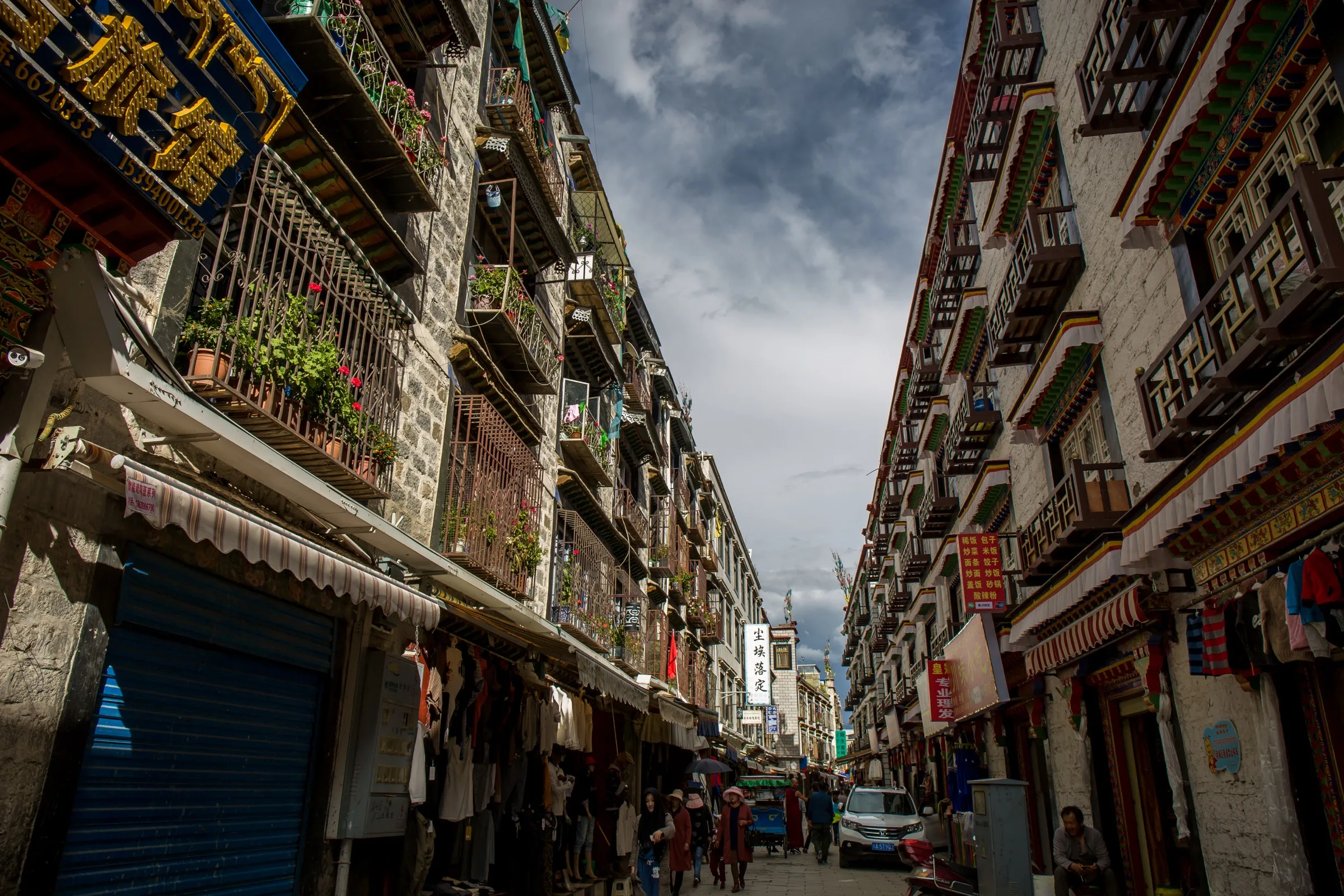
The modern city can be visually ordinary compared with the Potala, but that is precisely why it matters. Housing, work, schools and transport show how culture survives through decisions about the present rather than through monuments alone.
Smartphones, digital payment, short video and navigation apps do not sit outside Tibetan culture. They change how shops reach customers, how young people encounter music and fashion, how visitors find places and how images of Lhasa circulate far beyond the plateau.
Technology can widen access and flatten context simultaneously. A fifteen-second clip can reveal a street, song or ceremony to millions while separating it from language, permission and local meaning. The answer is not nostalgia for a pre-digital city. It is better description.
Rail and road connections also change the city's rhythm through tourism, migration, goods and construction. New districts can feel visually disconnected from heritage Lhasa, yet they are where much contemporary life is organized. A city is not less real because its newest neighborhoods are difficult to romanticize.
What visitors most easily get wrong
The first mistake is treating every Tibetan person as a source of spiritual wisdom. Residents have professions, moods, private lives and different relationships to religion. Curiosity does not create an obligation to teach.
The second is treating visible devotion as proof that the city exists outside modern politics and economics. Pilgrimage, administration, tourism and surveillance can occupy the same street.
The third is collecting sacred images without context. Prayer flags, murals, thangkas, statues and prostration are visually powerful because they belong to practices, texts and relationships. Beauty is an invitation to learn, not permission to extract.
The fourth is turning altitude into achievement. Completing more sites while feeling unwell is not deeper travel. It is simply a worse relationship with the body.
The fifth is using "Tibetan" as if it guarantees handmade origin. Tourist markets contain devotional goods, local craft, factory production and objects designed for visitors. Ask precise questions without demanding a purity performance.
A responsible three-day cultural sequence
| Day | Focus | Pace |
|---|---|---|
| 1 | Acclimatization and a short neighborhood walk | Keep exertion low; do not place the Potala staircase immediately after arrival |
| 2 | Jokhang and Barkhor | Observe pilgrimage patiently and add a museum or tea house rather than another major climb |
| 3 | Potala Palace and its surrounding urban landscape | Use timed entry, then compare the monument with the working city below |
| Extra day | Sera, Drepung or Norbulingka | Choose one or two sites according to current access and physical condition |
The sequence is deliberately incomplete. Lhasa should not be consumed as six major sites in seventy-two hours. The spare time is where tea houses, neighborhood streets, changing light and the practical pace of altitude become legible.
For a return visit, choose depth instead of adding more monuments. Spend longer around one monastery, study one museum collection, compare architecture across old and new districts, or work with a qualified local guide who can explain language and religious context without reducing the city to folklore.
What respectful visitors do differently
- They learn current permit and access rules before travel.
- They do not photograph worshippers at close range without permission.
- They avoid blocking prostration and pilgrimage routes.
- They distinguish cultural explanation from romantic claims about a timeless people.
- They treat altitude symptoms as health information, not a test of willpower.
- They spend money with local guides, craftspeople and ordinary businesses where possible.
Lhasa is a city of practiced continuity
Lhasa's depth lies in repeated action: walking a circuit, turning a prayer wheel, debating a text, pouring tea and adapting an old neighborhood to new pressures. Monuments matter because communities have continued to move around and through them. The city is sacred, political, commercial and ordinary at the same time.
The most honest image of Lhasa is therefore not an empty Potala at sunset, however beautiful that image may be. It is the monument with the working city still attached: buses moving, phones lighting, pilgrims continuing their circuit and someone somewhere deciding what to cook for dinner.
Readers planning where Lhasa sits inside a larger journey can return through the Chinese cities collection. That route should not flatten the city into another stop: altitude, access rules and the time required to observe sacred movement all make Lhasa a deliberate destination.
Frequently asked questions about Lhasa culture
What is Lhasa best known for?
Lhasa is known as a major center of Tibetan Buddhism and for the Potala Palace, Jokhang Temple, Barkhor pilgrimage circuit, large monasteries and a highland cityscape shaped by religious, political and commercial history.
Is Lhasa only a religious destination?
No. Religion is central to the city's identity, but Lhasa is also an administrative capital, transport hub, university city, tourism economy and home to residents managing ordinary work, education and family life.
How high is Lhasa?
Lhasa stands at roughly 3,650 meters above sea level. Altitude affects people differently; visitors should allow time to acclimatize, avoid heavy exertion on arrival and seek medical advice for personal risks or significant symptoms.
What etiquette matters around the Barkhor?
Do not block pilgrims, keep a respectful distance, follow the prevailing clockwise flow where required and ask before photographing people closely. Religious practice is not a performance arranged for visitors.
Can international travelers visit Lhasa independently?
Travel rules for foreign passport holders can require permits and organized arrangements in addition to a Chinese visa. Requirements change, so confirm current official procedures before booking transport or accommodation.