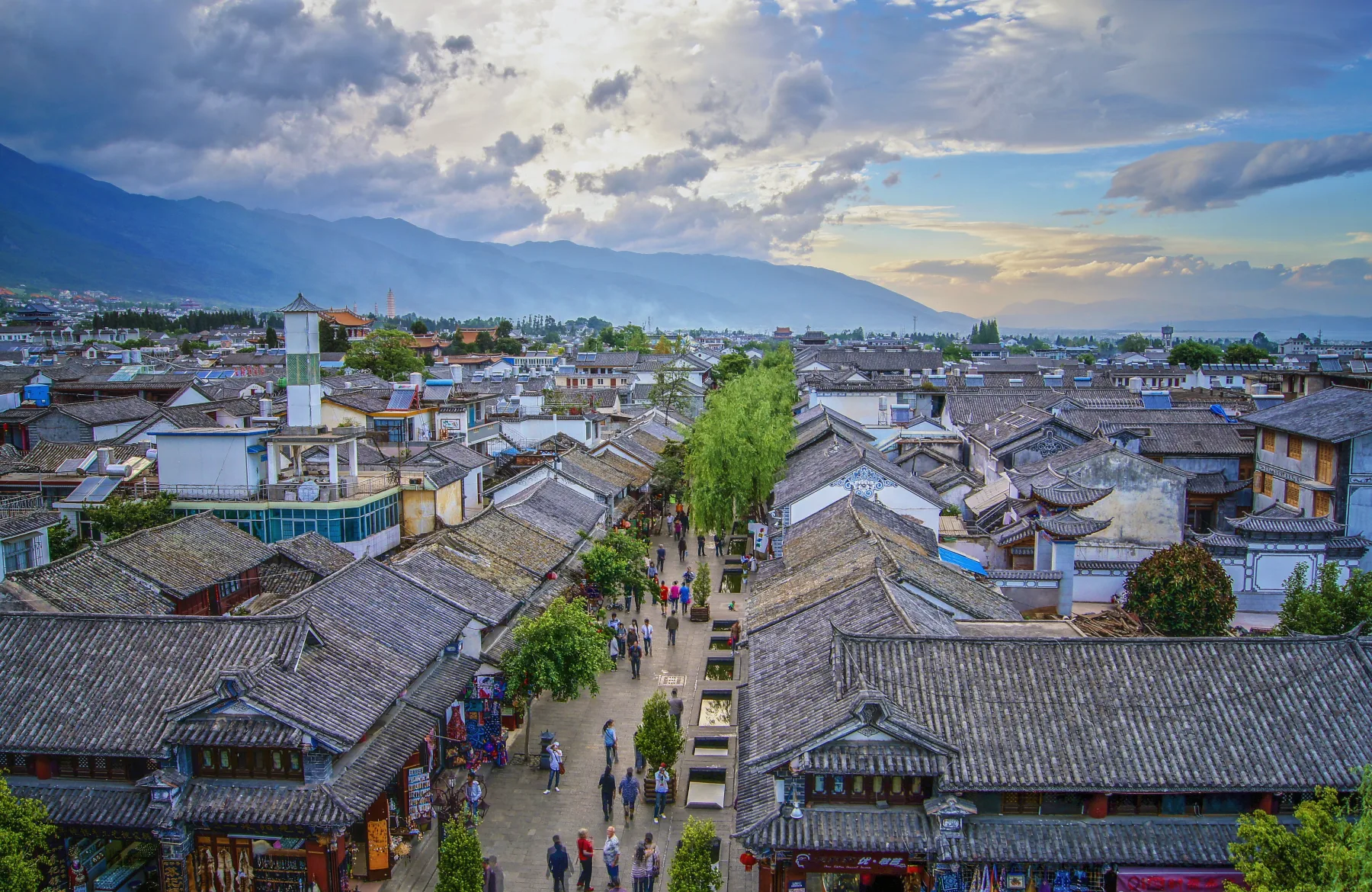
Dali (大理) is not one old town beside one beautiful lake. The name can mean a modern city, a famous walled tourism district or a much larger Bai autonomous prefecture. Between Cangshan and Erhai are archaeological landscapes, Buddhist monuments, Bai and other communities, market towns, farms, environmental regulation, guesthouses and people who arrived hoping to redesign their lives. Dali becomes more interesting when those scales are kept separate.
This Chinese culture guide starts with a firm position: Dali is not China's ready-made escape from pressure. It is a mountain-lake society whose beauty depends on water management, farming, craft, housing and people who do not disappear when a visitor begins a “slow life.”
Dali travel guide at a glance
| Question | Short answer |
|---|---|
| Why visit? | For Nanzhao and Dali Kingdom history, Bai cultural landscapes, Cangshan, Erhai, Buddhist monuments, market towns, craft and contemporary slow-travel culture |
| Ideal first stay | Six days, including two days beyond Dali Old Town |
| Best first base | Choose between Old Town atmosphere, Xiaguan transport convenience and an Erhai-side village; no single base is best for every route |
| Essential experiences | Read the old town critically, visit Three Pagodas, walk one Cangshan route, spend time in Xizhou or Zhoucheng and observe Erhai as an inhabited ecosystem |
| What makes it different? | Mountain, lake, state history, ethnic identity, pilgrimage and modern lifestyle migration are compressed into one highly visible destination |
| Main planning trap | Calling every tiled building ancient, every local person Bai, every lakeside stay sustainable or every cafe part of authentic Dali life |
First understand which Dali you mean
| Name in conversation | Usually refers to | Planning consequence |
|---|---|---|
| Dali City | The county-level city including Xiaguan and Dali Old Town | Rail and many government services are in Xiaguan, not inside the old town |
| Dali Old Town | The historic and tourism district north of Xiaguan | Walkable for several sites but not a base for the entire prefecture |
| Dali Bai Autonomous Prefecture | A much larger administrative region | Shaxi, Jianchuan, Weishan and other destinations require substantial travel |
| Erhai area | Settlements around the lake | East and west shores have different transport, development and landscape patterns |
Maps and booking platforms often collapse these scales. A hotel described as "Dali" may be an hour or more from the place you intend to visit.
Nanzhao and the Dali Kingdom shaped a regional center
Nanzhao emerged as a powerful polity in the eighth century, followed later by the Dali Kingdom. Britannica's Dali history provides the broad political sequence; the local landscape then makes the limits of that summary visible. Their political and religious networks connected the Erhai region with Tibet, Sichuan, Southeast Asia and wider Chinese states.
This history should not be turned into an isolated lost kingdom. Trade, warfare, diplomacy, Buddhism, migration and local communities placed Dali inside several overlapping Asian worlds.
| Historical question | Useful evidence | Caution |
|---|---|---|
| Where was political power located? | Archaeology, capital sites, inscriptions and landscape | Modern Old Town is not a complete surviving Nanzhao capital |
| How did Buddhism matter? | Pagodas, sculpture, texts and later pilgrimage | Present temple complexes include rebuilding and renewed practice |
| Who lived in the region? | Archaeology, language, genealogies and historical records | Modern ethnic categories should not be projected unchanged into every early period |
| How did Dali connect outward? | Routes, objects, horses, tea and diplomatic records | "Tea Horse Road" is a broad historical framework, not one preserved road |
Dali Old Town is a living and commercialized reconstruction
The old town retains a legible grid, gates, religious institutions, courtyards and local architectural forms. It also contains rebuilt facades, hotels, bars, national retail, souvenir production and infrastructure for mass tourism.
That does not make it fake. It means the district must be read through use and date. Early mornings reveal deliveries, residents and maintenance. Evenings reveal music, consumption and visitor expectation. One walk cannot represent both.
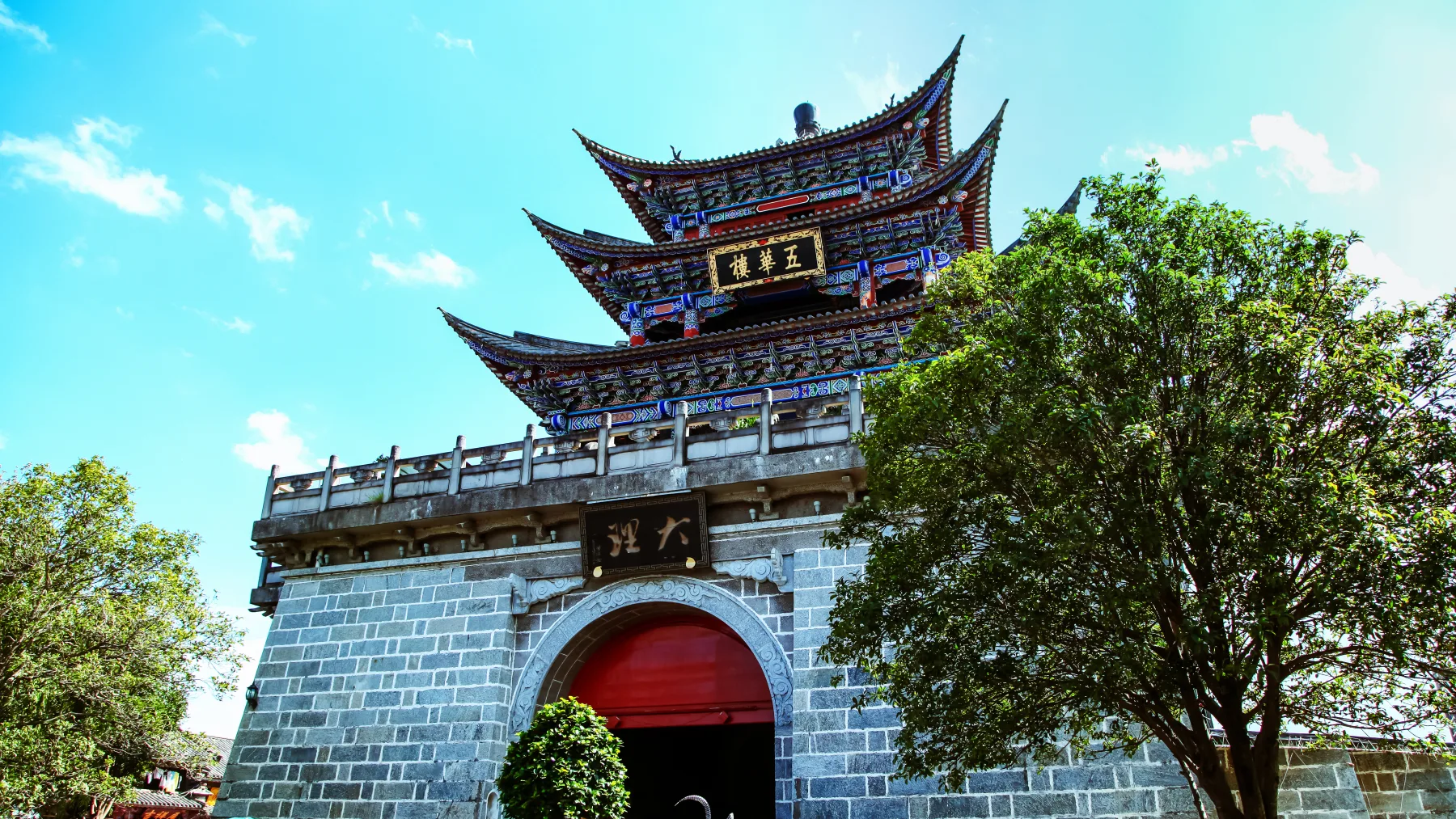
Wuhua Tower is a prominent contemporary landmark drawing on older historical memory. The visible structure should not be described as an untouched Nanzhao building.
Three Pagodas preserve monument and reinvention together
The Three Pagodas near Chongsheng Temple are Dali's most recognizable monuments. The central Qianxun Pagoda is associated with the Nanzhao period, while the smaller flanking pagodas are later. The surrounding temple complex visible today includes extensive modern reconstruction.
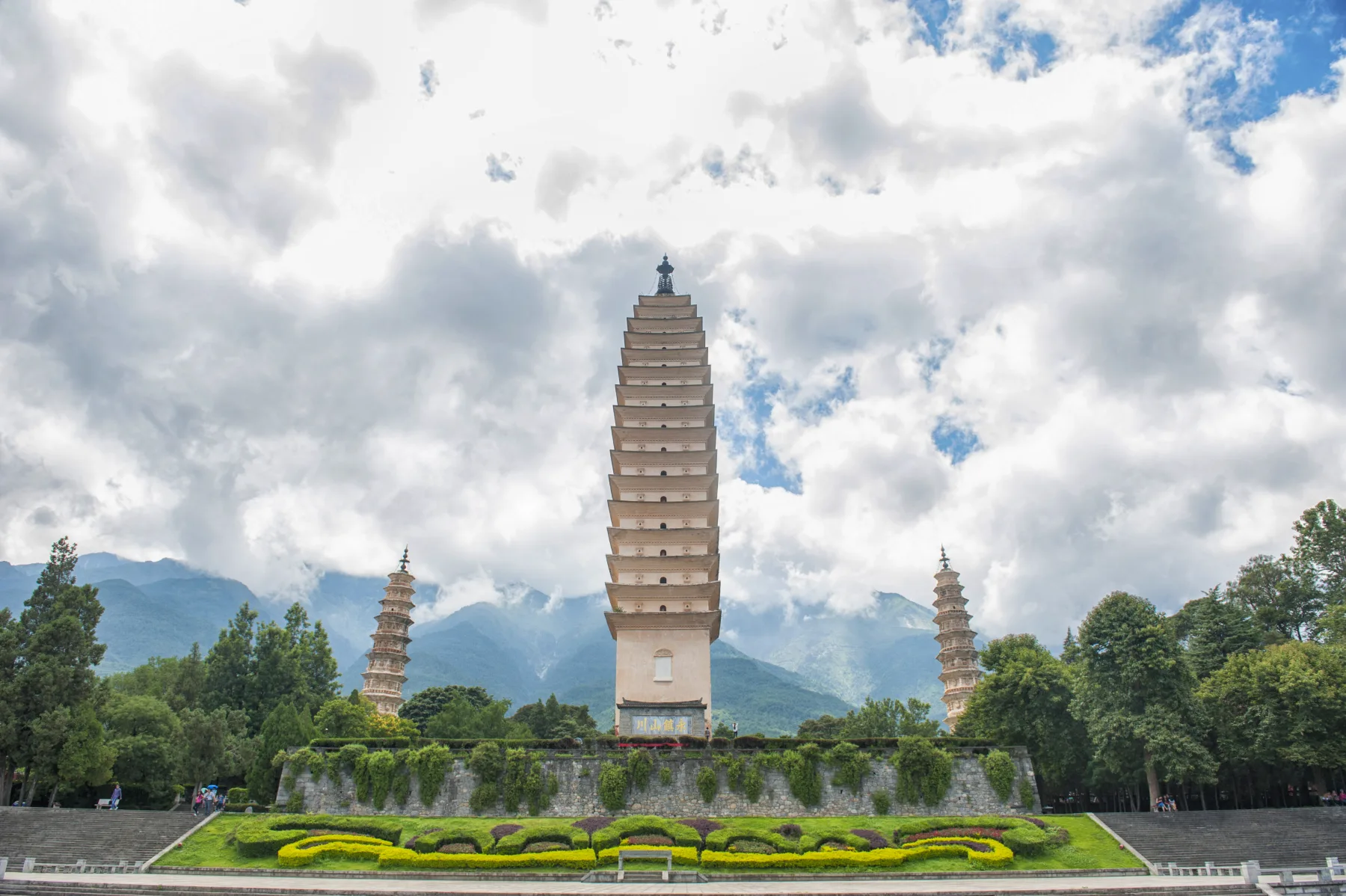
Visit for the pagodas' form, setting and relationship to regional Buddhist history. Use precise language: ancient pagodas can stand within a renewed temple landscape.
Cangshan is not a decorative backdrop
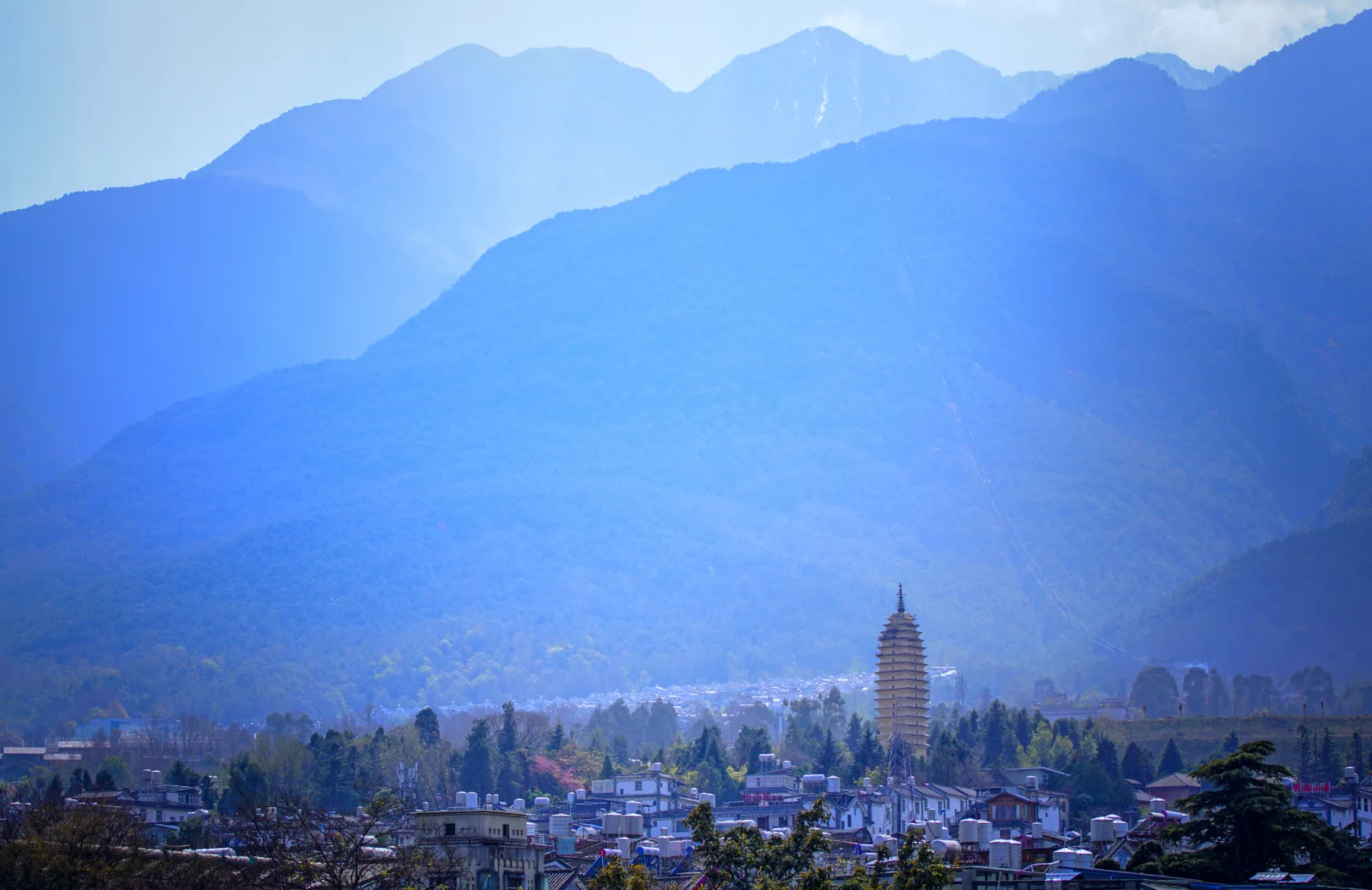
Cangshan shapes water, weather, vegetation, routes and visual identity. Elevation changes quickly, and conditions can differ from the old town below.
Cable cars make some areas accessible, but mountain walks still require weather awareness, suitable footwear and respect for closures. A blue-sky social-media image is not a route forecast. Avoid walking into closed or unmanaged areas for an unobstructed photograph.
Erhai is an ecosystem under pressure
Erhai is a freshwater lake supporting settlements, agriculture, fisheries, tourism and regional identity. Water quality has faced serious pressure, leading to regulation, treatment projects and restrictions on development.
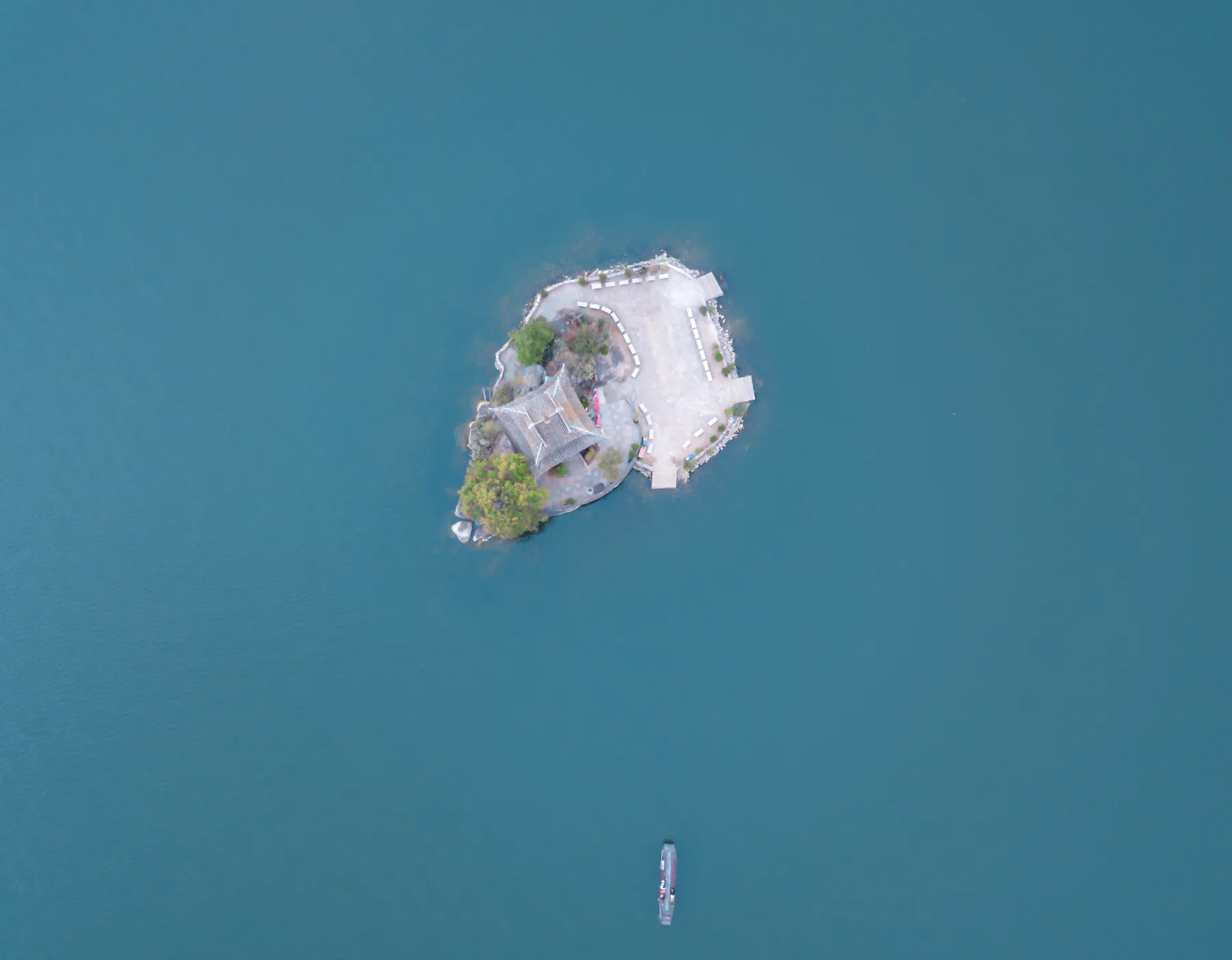
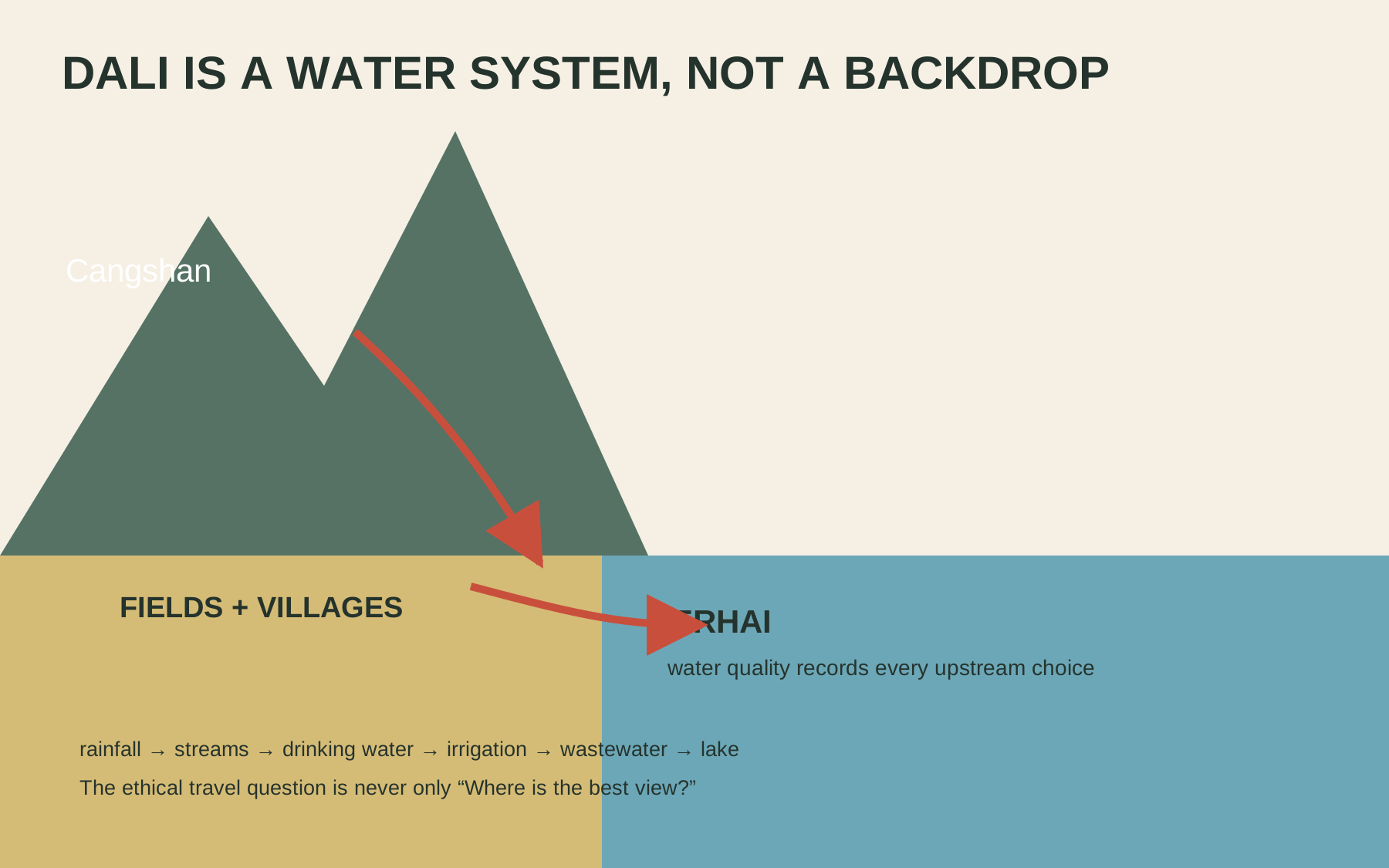
This section is the hinge of my Dali judgment. The same water that creates the blue horizon also passes through roofs, hotels, kitchens, fields and treatment systems. A room marketed as “closer to nature” can impose more pressure on nature if sewage, traffic and shoreline access are poorly managed. The diagram does not prove the condition of one business; it proves why no lakeside choice is isolated from the basin around it.
The environmentally responsible trip is not automatically the one with the closest possible room to the water. Use legal accommodation, follow shoreline restrictions, reduce disposable waste and do not enter protected agricultural or wetland areas for photographs.
| Tourism choice | Better question |
|---|---|
| Lakeside hotel | Is it legally operated and connected to proper wastewater treatment? |
| Scooter or car loop | Can part of the route use public transport or cycling without creating unsafe road pressure? |
| Drone photography | Is flying permitted, safe and respectful of residents and wildlife? |
| Flower-field visit | Is the field a working farm, ticketed tourism site or private land? |
| Waterfront cafe | Does spending support a local business without requiring illegal shoreline construction? |
Bai culture is specific, contemporary and internally diverse
Bai communities have shaped the Erhai region through language, architecture, religion, trade, agriculture, food, music and textile practice. Tourism often compresses this diversity into white walls, blue patterns and one staged dance.
Xizhou offers a useful introduction to merchant history, courtyard architecture and contemporary tourism. Zhoucheng is strongly associated with tie-dye production. In both places, distinguish working homes and workshops from visitor displays. Building scale, decoration and courtyard form vary by period, wealth, village and adaptation.
Ask before photographing artisans, rituals or residents. Buying a textile is more respectful when the seller can explain who made it, how it was dyed and whether the pattern is local, newly designed or mass-produced.
Tea connects ritual, hospitality and regional trade
Tea circulates through Dali as agriculture, trade, hospitality and tourism. Bai three-course tea is widely presented through a sequence often interpreted as bitter, sweet and lingering. Performances and explanations vary by host and venue.
The UNESCO inscription of traditional tea processing techniques and associated social practices in China includes multiple communities and practices. It does not make every tourist tea show ancient or identical.
Continue through pu-erh tea for Yunnan's broader tea history, while remembering that Dali is not the sole origin of pu-erh production.
Xizhou, Shuanglang and the lake towns are not interchangeable
| Place | Strongest reason to visit | Main caution |
|---|---|---|
| Xizhou | Bai courtyard architecture, market life, fields and merchant history | Central lanes can be crowded and highly curated |
| Zhoucheng | Tie-dye workshops and village craft | Verify who made the textile and avoid intrusive photography |
| Shuanglang | East-shore lake views, hospitality and contemporary tourism history | Development pressure and traffic can overwhelm the village image |
| Caicun and west-shore villages | Access to fields, paths and lake-edge life | Respect farms, wetland rules and resident space |
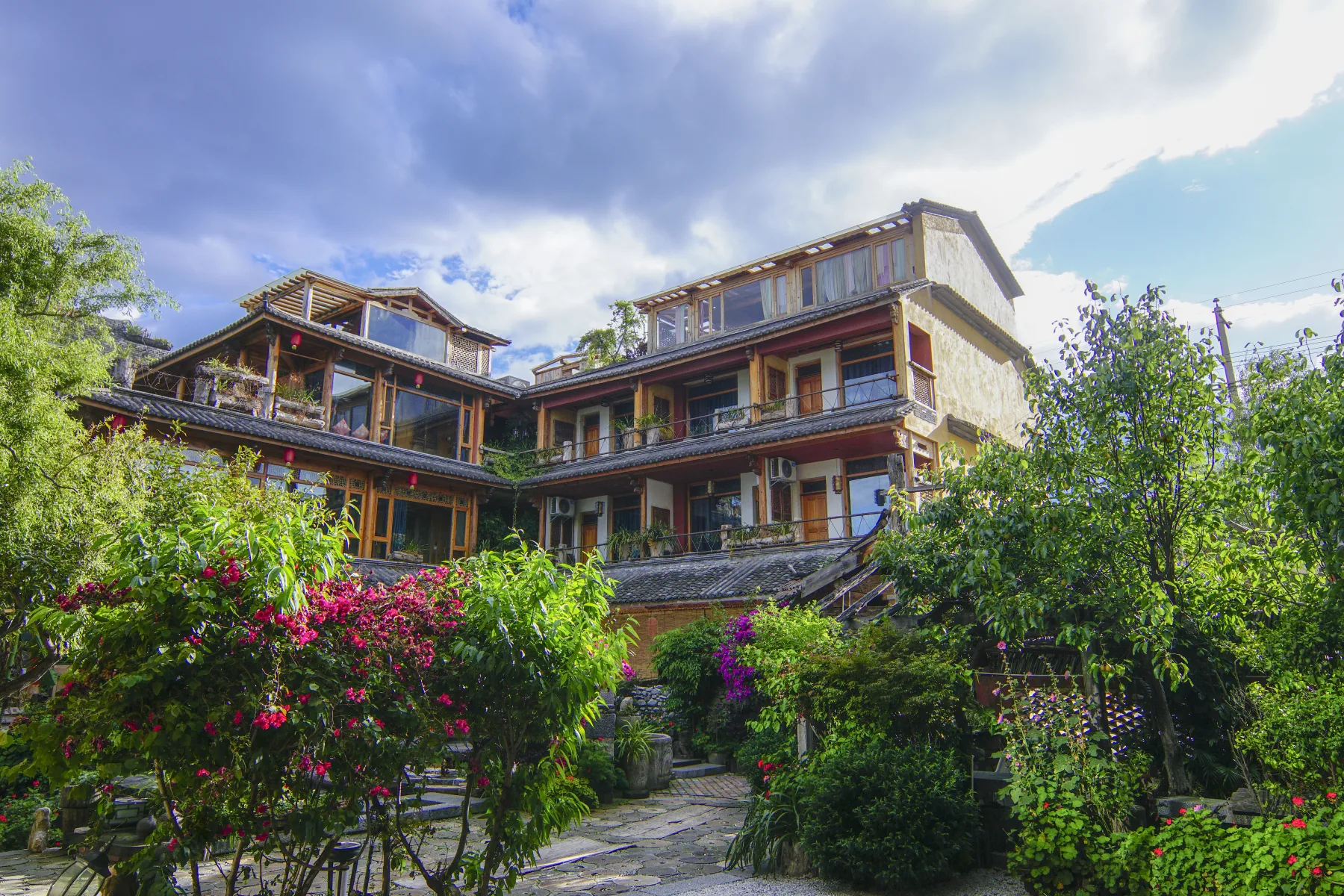
The image shows tourism accommodation using Bai architectural language. Treat it as a prompt to observe differences on the ground rather than a template for every Bai home or every settlement around the lake.
Shaxi belongs to a wider prefectural journey
Shaxi is far enough from Dali Old Town that it deserves at least an overnight stay. Its market square, temple, theater-stage architecture and route history make it more than a day-trip backdrop.
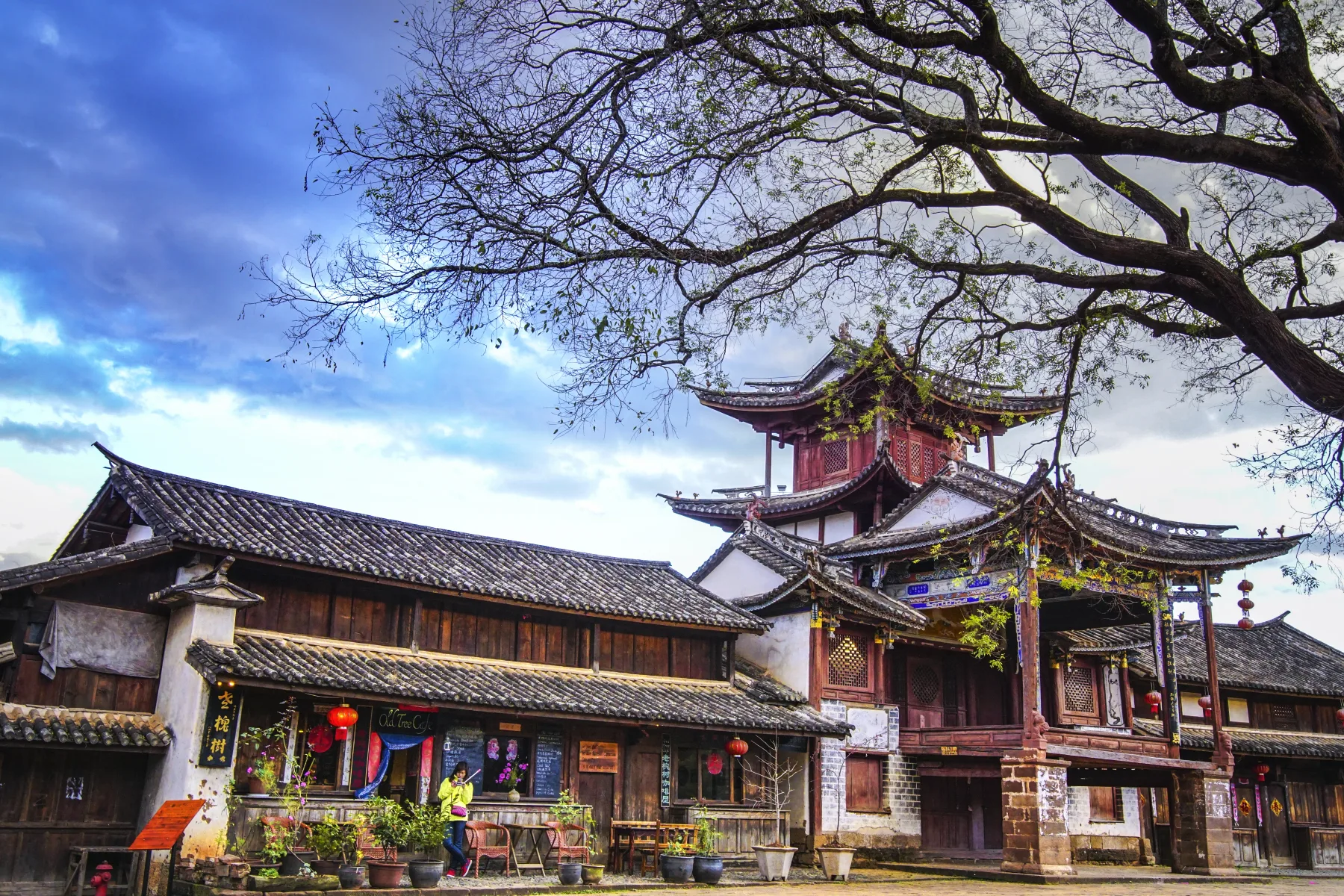
Conservation and tourism have changed Shaxi. Slower visitation allows travelers to notice agriculture, local services and contemporary residence beyond the central square.
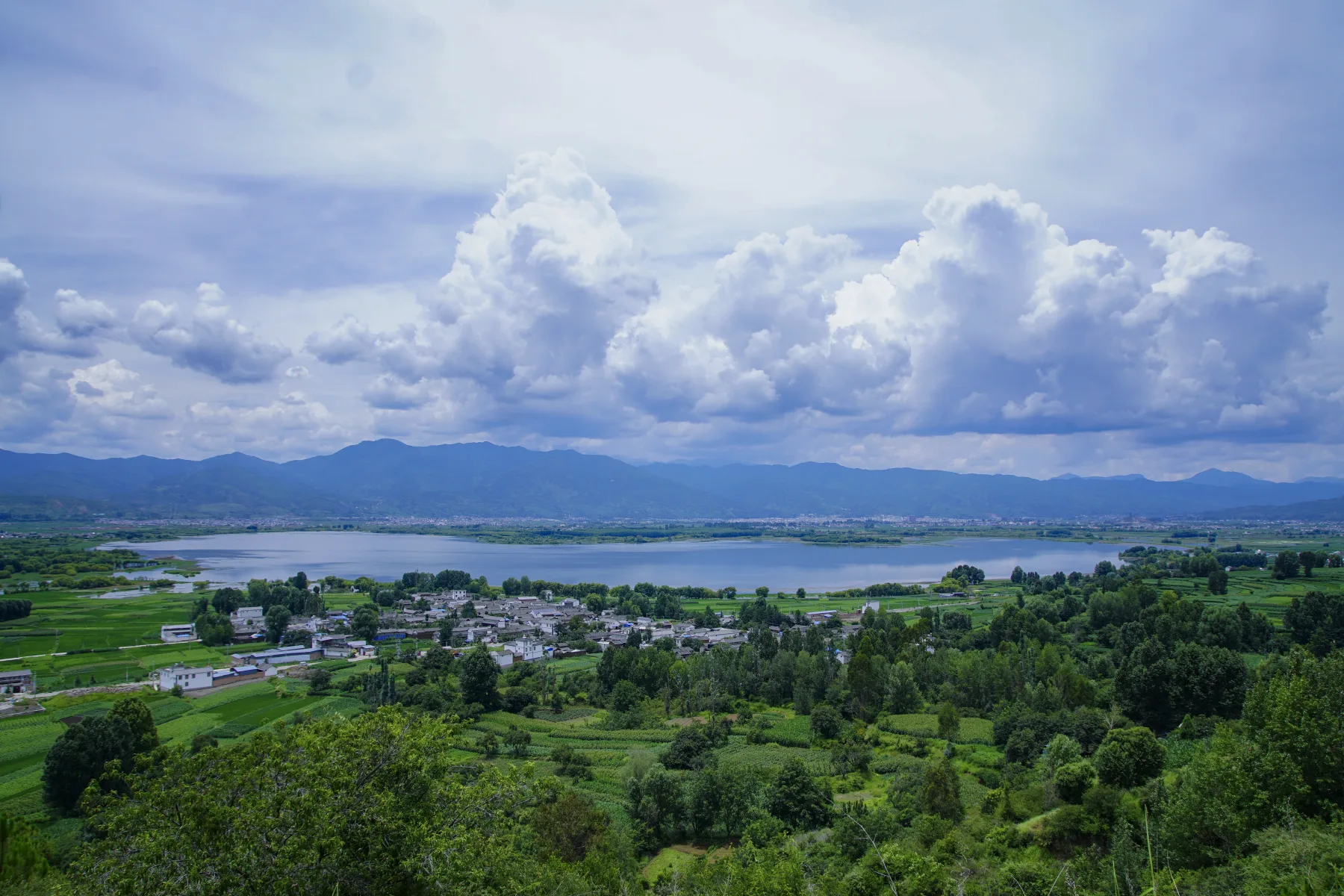
Jian Lake and Jianchuan add another landscape and cultural layer.
Dali's long-stay culture creates opportunity and tension
Writers, artists, entrepreneurs, remote workers and people leaving high-pressure cities have contributed to Dali's contemporary image. Cafes, guesthouses, markets and informal communities make experimentation possible.
The story can become self-centered when newcomers describe the region as empty space for personal reinvention. Local housing, wages, water, waste and business rules continue whether a visitor calls the stay a retreat or a new life.
I understand why the fantasy works. In a high-pressure Chinese city, the first Dali morning can feel like somebody turned down the volume of life. Cangshan is visible above a cafe roof, the air feels wider and nobody seems to care how efficiently you are using the hour. But that emotion belongs to the visitor. It does not prove that local work is relaxed, rent is harmless or every person serving the fantasy shares it. Dali becomes more humane when gratitude replaces projection: I can feel released here without pretending the place exists to release me.
| Long-stay question | Why it matters |
|---|---|
| Is the accommodation legal? | Registration, safety and wastewater management affect residents and visitors |
| Are work and visa arrangements lawful? | A tourist stay does not automatically permit local employment |
| Who owns the business? | "Local" branding may conceal outside ownership or supply chains |
| How is waste handled? | Scenic villages have limited environmental capacity |
| What is being photographed? | Homes, fields and ceremonies are not free visual assets |
A six-day Dali itinerary
| Day | Focus | Suggested rhythm |
|---|---|---|
| 1 | Dali Old Town | Early streets, local museum or temple, midday rest and evening comparison |
| 2 | Buddhist history | Three Pagodas, surrounding landscape and a slower old-town return |
| 3 | Cangshan | One weather-appropriate route without adding a full lake circuit |
| 4 | West Erhai | Xizhou, fields and Zhoucheng craft with respectful workshop visits |
| 5 | East Erhai | Shuanglang or another lake town, chosen for one clear purpose |
| 6 | Contemporary Dali | Markets, cafes, neighborhood food and environmental context rather than another checklist day |
Add two or three nights for Shaxi. Do not compress it into the same day as a complete Erhai loop.
Practical Dali planning
| Issue | Useful approach |
|---|---|
| Altitude | Dali is high enough for sun, dehydration and exertion to feel different; pace the first day |
| Sun | UV exposure can be strong even in cool weather; carry protection and water |
| Rain and mountains | Check conditions before Cangshan and keep a lower-elevation alternative |
| Transport | Dali Station and many services are in Xiaguan; old town and lake villages require onward travel |
| Erhai routes | Distances are larger than photographs suggest; do not promise a relaxed full loop with many stops |
| Culture | Ask which community and village a practice belongs to; avoid universal "Bai customs" claims |
| Food | Wild mushrooms require expert sourcing and complete cooking; never use a travel article as identification guidance |
| Accessibility | Old paving, courtyard thresholds, mountain paths and village lanes vary widely |
Dali is a place, not a lifestyle product
The city and prefecture can support reflection, beauty and slower time. They also contain difficult histories, environmental limits, working communities and rapid change. The deeper journey begins when Cangshan and Erhai stop functioning as scenery behind the traveler and become the geography within which other people's lives continue.
I reject the version of Dali that exists only to heal an exhausted visitor. I believe the mountain-lake landscape must be read as somebody else's home before it becomes our personal reset button. The most beautiful itinerary should therefore make room for water limits, ordinary transport, Bai authorship and the labor hidden behind a perfect courtyard breakfast.
My final test is simple. If a Dali story contains only a cafe, a lake view and a person “finding themselves,” it has omitted the place. Add a Bai workshop where authorship is clear, a field whose boundary is respected, a legal guesthouse handling wastewater properly, a market price, a bus timetable or one resident's ordinary use of the street. Then the postcard gains weight. If Meet Yourself was your emotional doorway into this slower Yunnan image, the Liu Yifei guide explains why her performance works through altered tempo rather than treating the scenery as a cure. Continue to the practical Travel to China hub or compare how altitude reorganizes the separate travel to Lijiang guide.