Guanyin is one of the most recognizable figures in Chinese culture, but recognition is not the same as one fixed meaning. A statue may be worshipped, inherited, placed in a living room, displayed as porcelain, remembered from a temple or simply understood as an image of compassion. The room and the family matter.
Who is Guanyin?
Guanyin is the Chinese name for Avalokiteshvara, a bodhisattva associated with compassion. The Chinese name is commonly understood through the idea of perceiving or hearing the cries of the world. That translation is a doorway, not a complete biography: Buddhist texts, local devotion, sculpture, painting, storytelling and household practice all shaped the figure's life in China.
The Metropolitan Museum of Art's Guanyin research describes Guanyin as the Chinese form of Avalokiteshvara and notes the increasing prominence of female representations in imperial China. That history helps explain why English-language pages often call Guanyin a “goddess of mercy,” while a more careful account calls the figure a bodhisattva whose forms and gender presentation changed across time.
Why Guanyin is so familiar in China
Guanyin crossed the boundary between specialist doctrine and everyday recognition. A person may know the name from a temple, a family object, a television drama, a porcelain figure, a story told by an elder or a phrase about compassion without being a practicing Buddhist.
My family has always kept Guanyin images at home. I am not a religious believer, but that does not make the object culturally empty. In my experience, the image belongs to the household's visual memory: it suggests compassion, calm, protection and a connection to older generations. That is my family's relationship to the image, not a claim that every Chinese household treats Guanyin in the same way.
This is why I resist two easy explanations. “Every statue is worship” is too narrow. “It is only decoration” is also too narrow. Material, placement, incense, prayer, inherited stories and daily habits decide what an image is doing in a particular home.
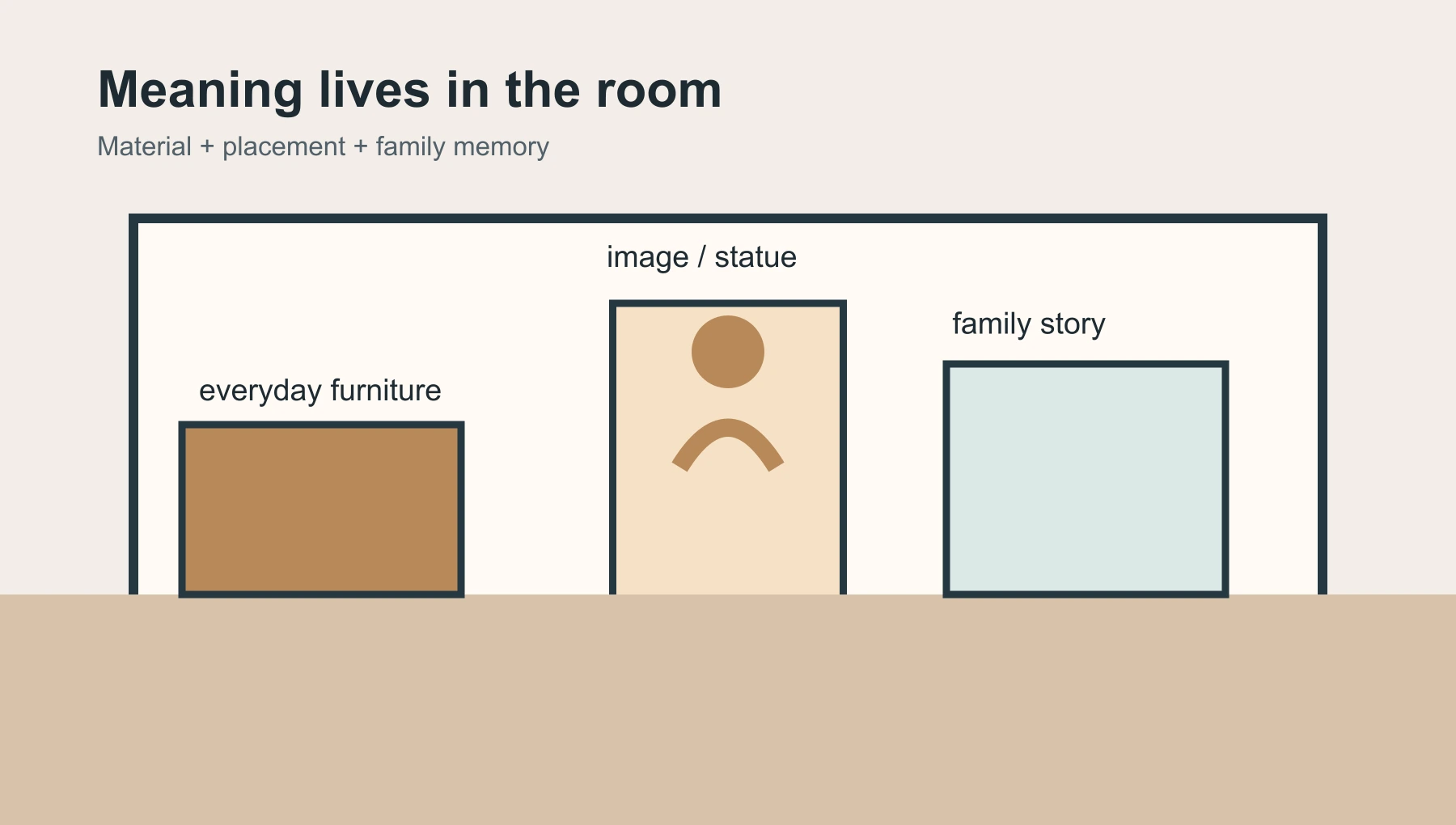
The room diagram reflects how I remember Guanyin at home. The figure was never isolated from furniture, conversation, cleaning, visitors or the ordinary pressure of family life. A home image can be quiet without being empty. It can also be important without demanding that every family member describe themselves as religious. For overseas readers, this distinction matters: a familiar statue may be one of the few objects that crossed borders with the family, carrying a memory of home even when the original room is gone.
The wider Chinese culture guide helps place this familiarity beside festivals, family ritual and material culture. Guanyin is not a standalone symbol floating above Chinese life; the meaning changes with a temple visit, a porcelain workshop, a family room or a story told during illness and travel.
The many forms of Guanyin
| Form or context | What it can emphasize | Caution |
|---|---|---|
| White-robed Guanyin | Purity, compassion and a calm visual presence | A white robe does not identify one single historical period |
| Water-Moon Guanyin | Contemplation, ease and an elegant seated pose | Museum dating and regional attribution require object-specific evidence |
| Guanyin with children | Fertility, family hope and protection | “Bringer of sons” is one manifestation, not the whole figure |
| Thousand-armed Guanyin | Expanded capacity to respond to suffering | Iconographic details vary by tradition and image |
| Porcelain Guanyin | Household devotion, craft and portable beauty | A ceramic object may be contemporary even when the icon is ancient |
| Temple Guanyin | Ritual, pilgrimage and communal worship | A tourism photograph cannot replace observing temple practice respectfully |
The Dehua porcelain guide is useful for readers who meet Guanyin through white porcelain. It keeps material and kiln history visible instead of treating every pale figure as an interchangeable “Chinese goddess.”
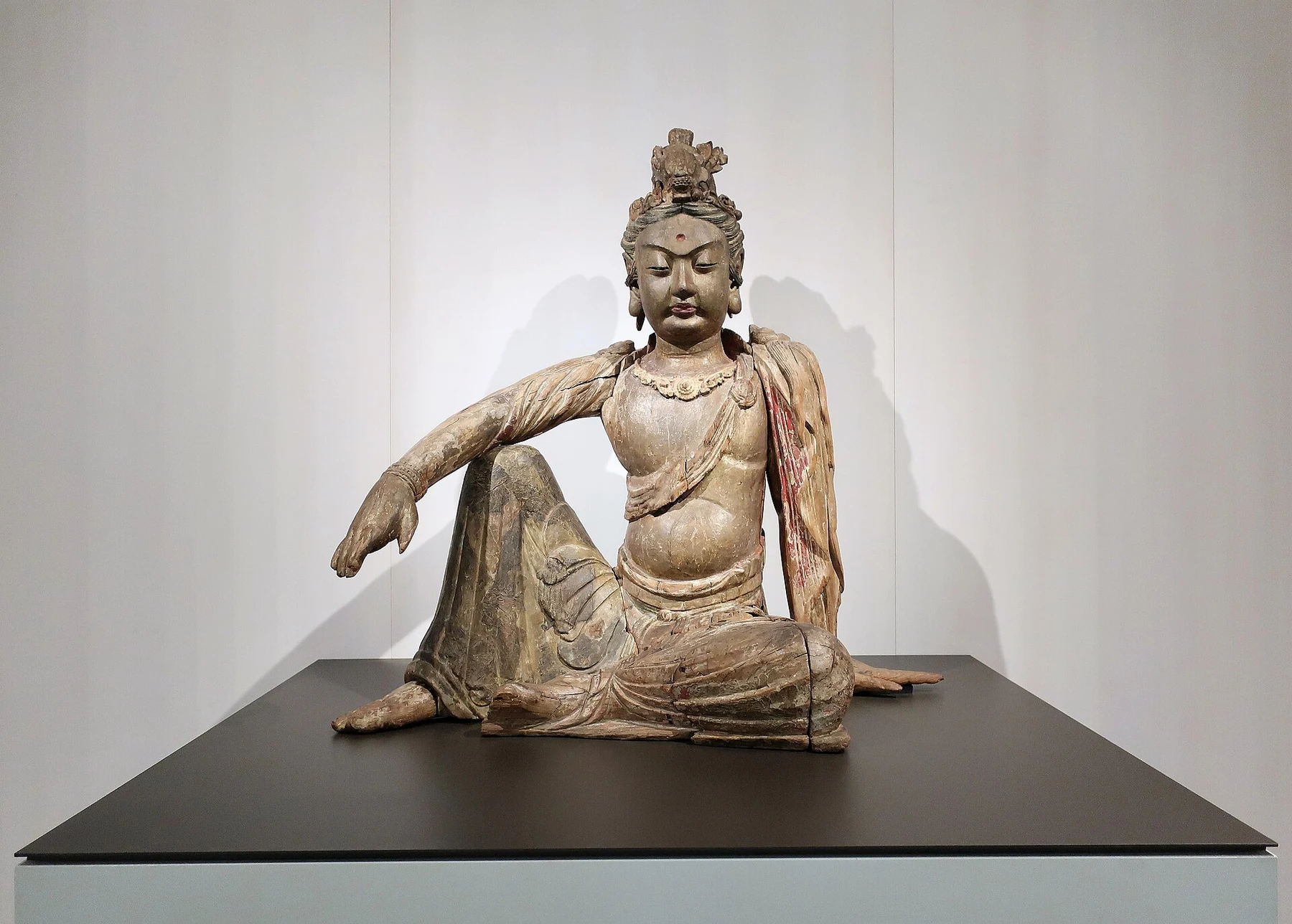
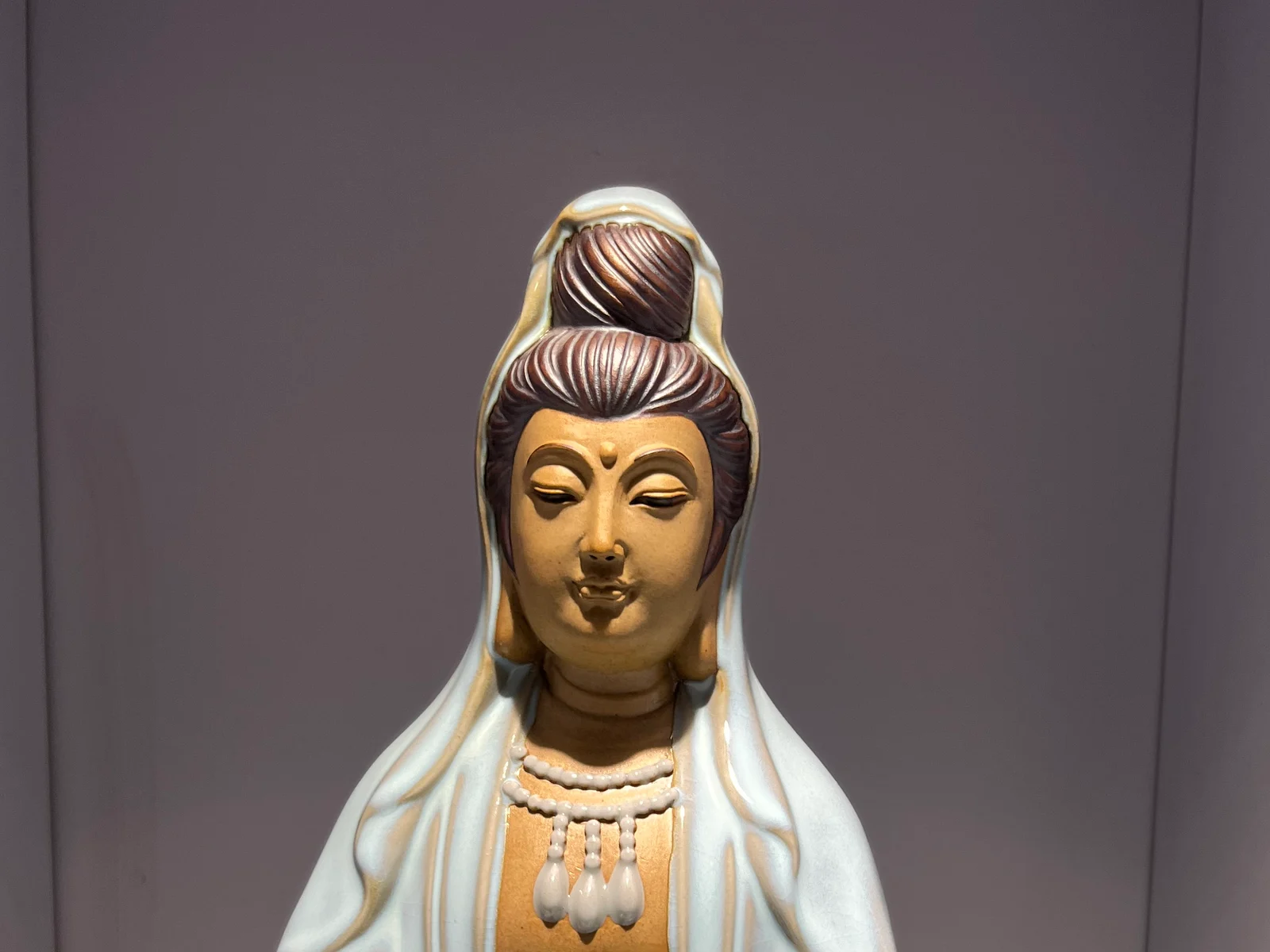
The sculpture is evidence of a specific material encounter: pose, surface, proportion and setting. It cannot tell us whether the original owner prayed to it, inherited it or displayed it for study. That boundary protects the figure from being reduced to an “Asian decoration” while avoiding claims the photograph cannot support.
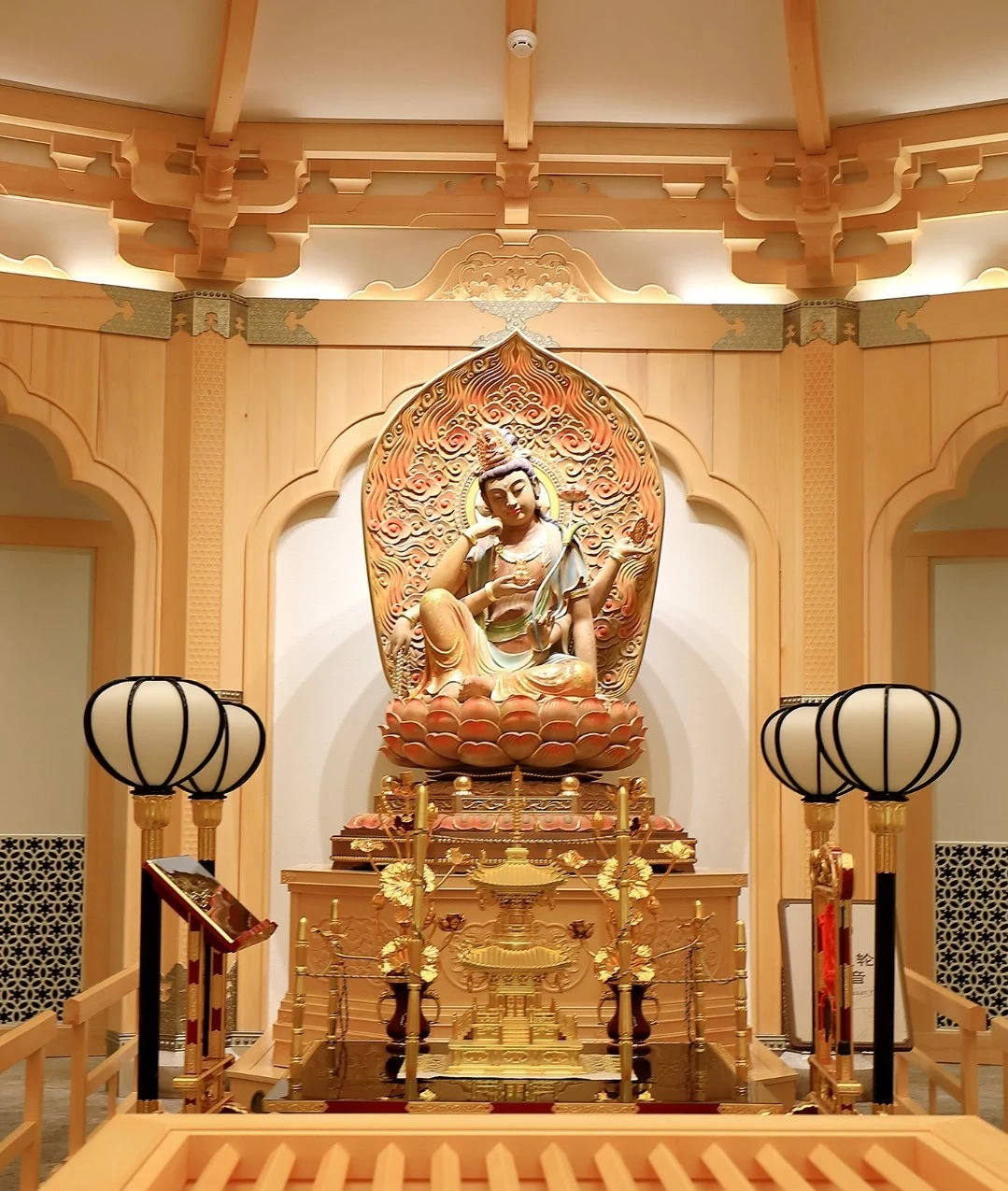
Place changes the reading. A Guanyin image at a pilgrimage site participates in a public religious landscape; the same icon in a private room has a different social job. The two settings can share a visual language without being interchangeable.
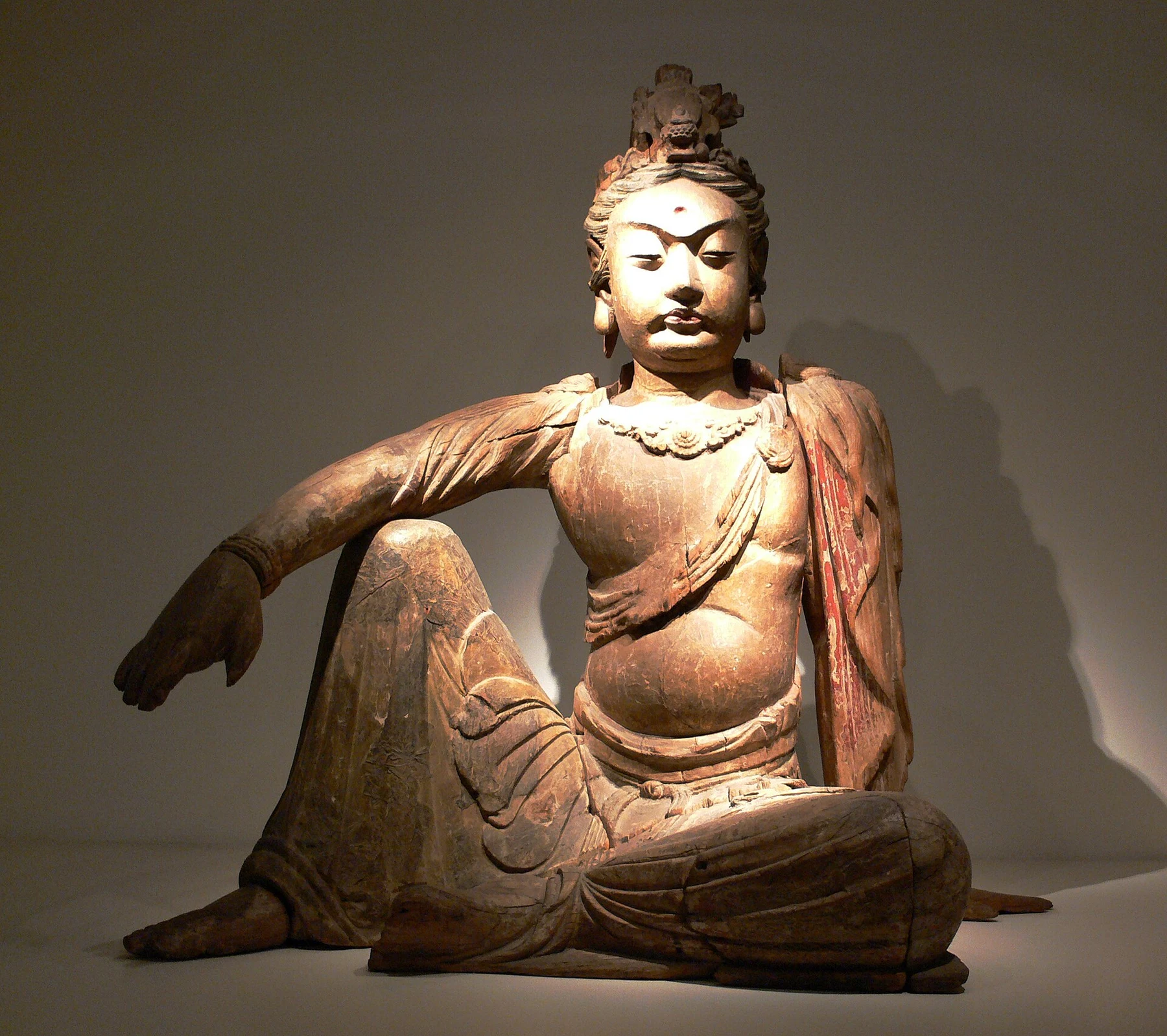
When I look at a Guanyin image, I begin with what the body is doing before I assign a mood. Hands, gaze, posture and attributes carry more information than the shortcut “goddess of mercy.”
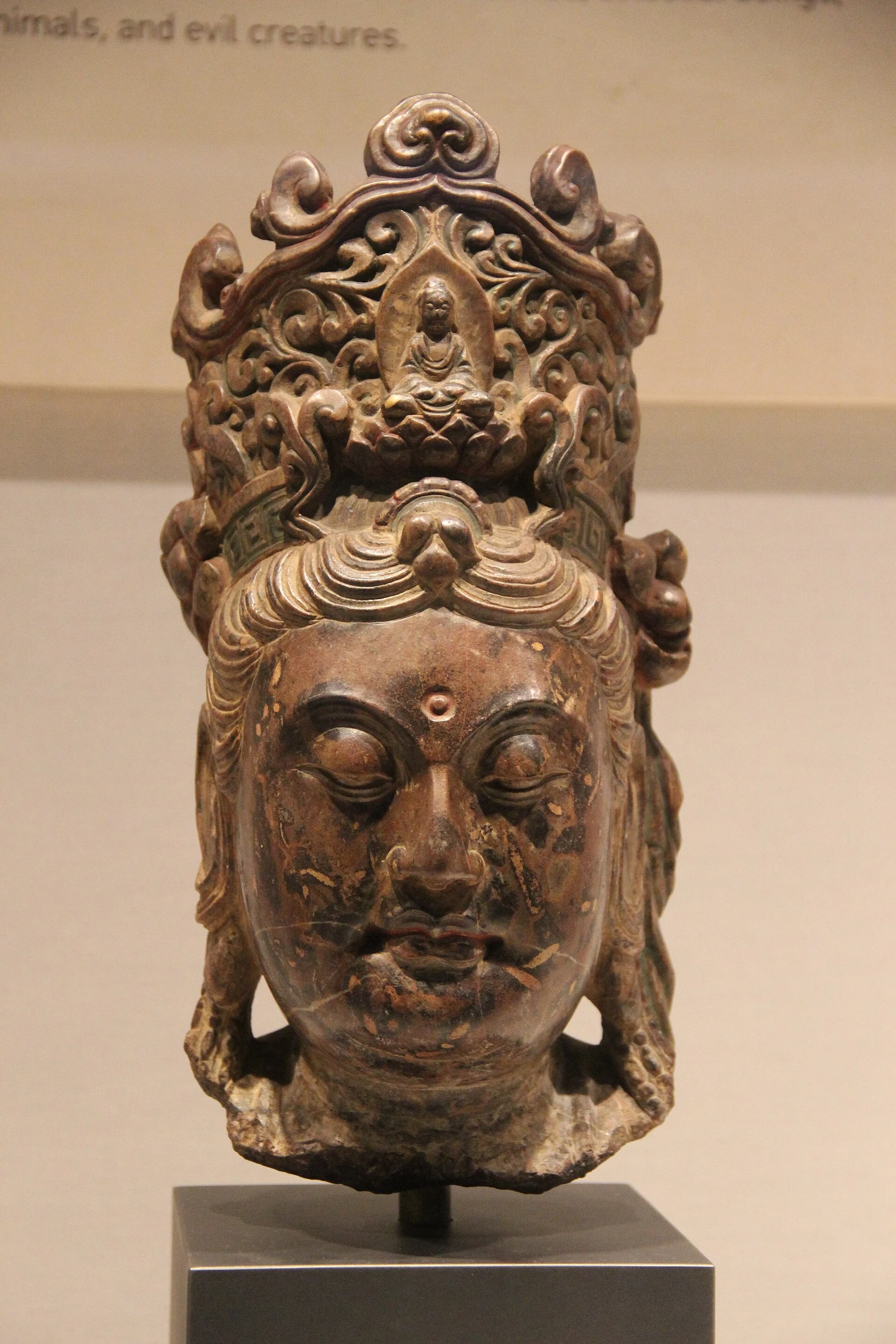
This close view makes an important limit visible: a head, a full statue and a household altar are different kinds of evidence. A museum photograph can support formal observation; it cannot stand in for living practice or family testimony.
Guanyin in the household
A home image has a geography. Is it near the entrance, in a quiet room, on a family altar, beside tea, in a cabinet or among everyday objects? Is it dusted, addressed, lit with incense, covered during renovation or simply left in place because a parent placed it there years ago?
Those details are evidence of practice. They do not prove doctrinal knowledge or religious identity. A non-religious person may still feel that removing an inherited Guanyin image would be disrespectful. Another family may keep one because it is beautiful. Both relationships are real.
For overseas Chinese families, the object can carry an extra layer. A statue or porcelain figure may survive a migration even when the temple, dialect and neighborhood do not. It becomes a small, portable piece of family geography.
How to look at a Guanyin image
- Identify the material: wood, bronze, stone, porcelain, ink or modern composite.
- Note the pose, hand gesture, attributes and surrounding figures.
- Separate museum dating from family memory.
- Ask who made, owned and used the image.
- Avoid photographing active worshippers without permission.
The object may invite reverence and analysis at once. Looking closely is not the same as reducing it to a specimen.
Guanyin, gender and translation
English-language readers often meet the phrase “goddess of mercy.” It is understandable, but incomplete. Chinese representations increasingly took feminine forms, and popular devotion often speaks of Guanyin as compassionate mother, protector or gentle presence. At the same time, the doctrinal category is a bodhisattva, and the figure can appear in forms that are not simply a woman.
Translation affects what a reader expects. “Mercy” can sound passive; compassion in Buddhist practice is an active response to suffering. “Goddess” can make the figure seem unrelated to Buddhist teaching. The best explanation keeps the familiar phrase available while adding the historical and religious context it leaves out.
Guanyin in porcelain and popular culture
Dehua porcelain made white Guanyin especially portable and recognizable. The Dehua porcelain guide separates kiln history, sculptural form and modern household use. A white figure on a shelf may be an inherited devotional object, a gift, a contemporary craft piece or all three at once.
Guanyin also appears in novels, opera, television, animation and games. Those versions can preserve compassion, transform gender, or make the figure an authority who resolves a crisis. A popular adaptation is not a doctrinal source, but it is evidence of how the culture continues to imagine help.
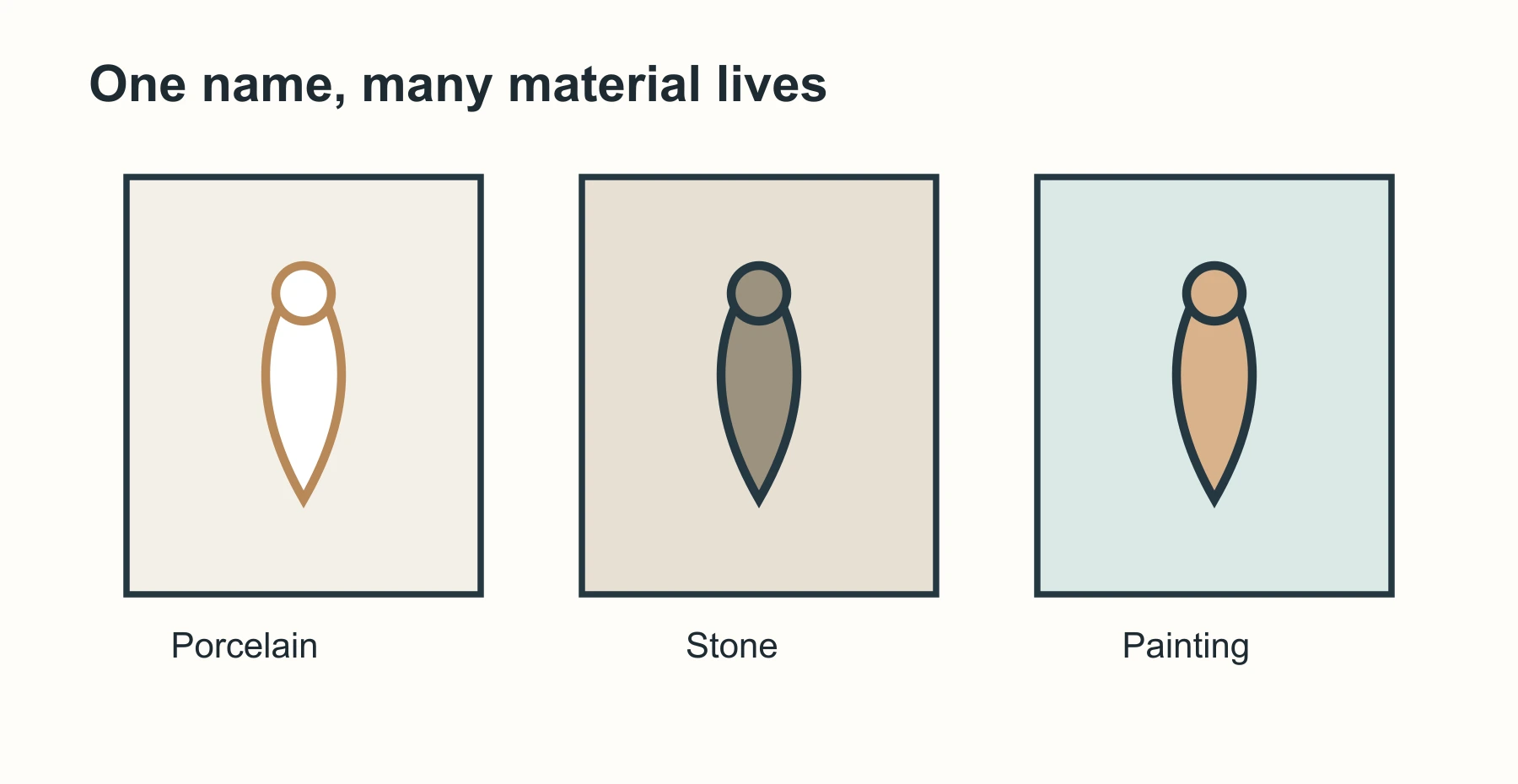
Material changes the encounter. Porcelain catches light and invites questions about kiln, glaze and touch. Stone carries weight, weather and the memory of a public site. A painting depends on line, pigment and the distance between the viewer and the surface. None of these materials automatically tells us what a family believes. They tell us how a figure has been made present.
Respectful photography and family conversation
Ask before photographing an active altar or temple ritual. Do not touch a statue to improve a composition, and do not treat worshippers as decorative evidence. At home, ask who brought the image, where it came from and what the family calls it. The answer may reveal migration, marriage, grief, protection or simply a grandmother's taste.
Guanyin and the stories people remember
Chinese readers may encounter Guanyin through the Lotus Sutra, Journey to the West, local miracle stories, temple inscriptions, opera, television or a grandmother's warning to be kind. These are not interchangeable sources. A literary episode can make the bodhisattva dramatic; a temple ritual can make the figure present; a porcelain image can make the memory portable.
In Journey to the West, Guanyin is an active problem-solver and organizer, not a passive ornament. In local devotion, the figure may be approached through vows, offerings, prayer or festival processions. In contemporary art, the face and body can be reimagined to ask what compassion looks like under modern pressure. Each version adds evidence about reception, not a replacement for every other version.
A careful way to describe a home image
Instead of writing “this family worships Guanyin,” describe what you can actually see:
- the image is made of white porcelain, wood, bronze or another material;
- it stands in a living room, altar, shop, bedroom or temple hall;
- incense, flowers, lamps, offerings or none of these are visible;
- a family member calls it Guanyin, a bodhisattva, a protector or simply an inherited figure;
- the object came from a local kiln, a temple visit, a wedding, a funeral or an older home.
Specific description protects both culture and privacy. It also makes the article more useful to overseas readers who recognize an image in their own house but do not know how to name the relationship.
Guanyin is not a shortcut to Chinese identity
The figure is widespread, but no single image represents all Chinese people, all Buddhists or all households. Some families pray to Guanyin, some keep the figure as heritage, some reject religious images and some move among these positions over a lifetime. A strong cultural guide leaves room for those differences.
A short visual vocabulary
When identifying an image, begin with visible evidence rather than a confident name. Look for a lotus, vase, willow branch, water, attendants, a child, multiple arms, a seated posture or a particular hand gesture. Then compare the object with a museum record or a specialist source. Similar-looking figures may belong to different periods, workshops or manifestations.
This method is especially useful for overseas families. A white porcelain Guanyin may have been made in Dehua, bought in Hong Kong, inherited from Henan or produced recently for a contemporary home. The image can carry a long tradition without being an old artifact. Date, origin and family meaning are separate questions.
Guanyin beside other household symbols
Guanyin may stand beside ancestral photographs, red paper, flowers, tea vessels, lucky symbols or ordinary furniture. The arrangement creates a local grammar that a generic “altar” label cannot fully explain. Compare the image with our Chinese symbols guide and the Chinese gods collection only after recording what this particular room does.
Frequently asked questions about Guanyin
Who is Guanyin?
Guanyin is the Chinese name for Avalokiteshvara, a bodhisattva associated especially with compassion. Chinese images and stories developed many forms, and the figure became widely recognizable in Buddhist, artistic and household contexts.
Is Guanyin a goddess?
Many Chinese speakers describe Guanyin in feminine language, and later Chinese art often presents a female-looking figure. Historically and doctrinally, Guanyin is a bodhisattva whose representations are not limited to one gendered body.
Can a non-religious family keep a Guanyin statue?
Yes. A family may keep Guanyin as a devotional image, a protective presence, an inherited object, an art object or a combination of these. The object alone cannot tell us how every household understands it.
Compassion becomes visible through repetition
Guanyin remains culturally powerful because the figure can move between temple, text, household, workshop and memory without becoming identical in every setting. For me, the image has never required a formal religious identity to matter. It has been part of the visual atmosphere of home, a reminder that compassion is an idea people keep giving a body.
Read this page with the Chinese mythology and gods collection and the Dehua porcelain guide. The next useful question is not “What is the one correct Guanyin?” but “What is this particular image doing here, for these particular people?”