Hangzhou (杭州) is often sold as a beautiful pause: a lake, a pagoda, a cup of green tea. The city is more interesting when the pause becomes a question. Who shaped this landscape? Why did poets, monks, officials, merchants and emperors keep remaking it? How does a former imperial capital become a center of digital commerce without losing the hills, canals and seasonal habits that made it legible in the first place?
Hangzhou travel guide: choose the water system before the attraction
| Question | Short answer |
|---|---|
| Why visit? | For a rare meeting of designed landscape, Southern Song memory, tea culture, Buddhism, food and contemporary urban life |
| Ideal first stay | Five days for West Lake, Lingyin, tea hills, the canal, museums and one wetland or archaeological day |
| Best first base | East of West Lake for convenience; north lake for quieter culture; Binjiang for the contemporary river city |
| Essential experiences | Walk different shores of West Lake, visit Lingyin, enter a tea landscape, ride or walk the canal and eat beyond tourist classics |
| Best travel style | Start early, group places by geography and leave time for weather, crowds and unplanned walking |
| What makes it different? | Beauty here is not separate from governance, labor, religion, literature, commerce and urban design |
This Hangzhou travel guide treats the city as four different water experiences: West Lake for designed memory, the Grand Canal for trade and industry, Xixi for managed wetland life, and the Qiantang for metropolitan scale. Choose one as the spine of each day. Crossing all four for photographs produces more transit than understanding.
I reject the itinerary that circles West Lake for three days and calls the result Hangzhou. I believe the lake earns its beauty only when the canal, tea hills, wetland and Qiantang expose the systems behind it. The mistake is to collect reflections while missing labor, water control and the modern city; one day must leave the lake's orbit.
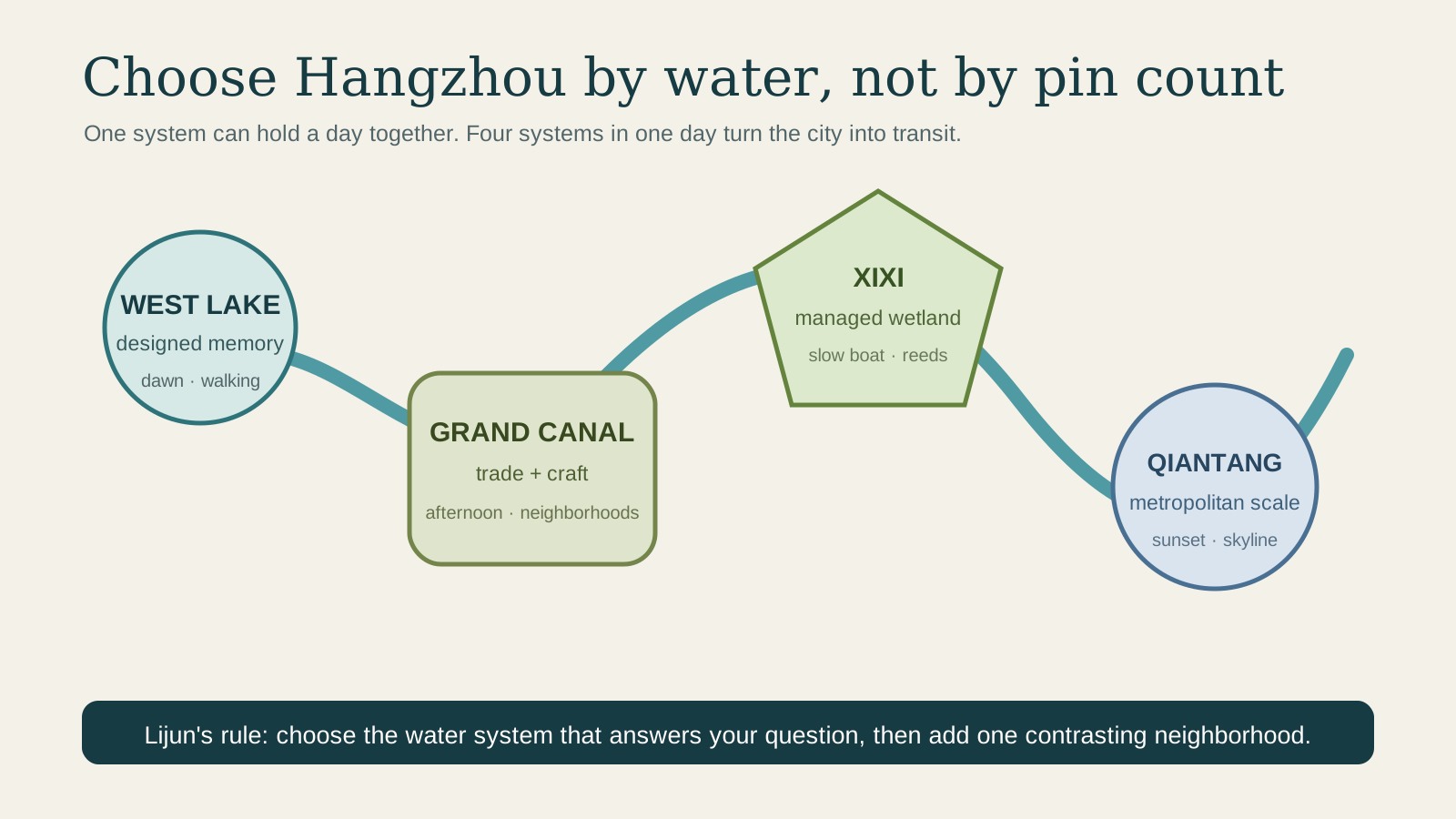
Choose the Hangzhou you want to meet
| If you care most about | Build your days around | Add this contrast |
|---|---|---|
| Landscape and photography | West Lake at dawn, Su Causeway, Yanggong Causeway and the western hills | Return after dark to see how lighting and tourism remake the same scene |
| History and museums | Southern Song sites, Hangzhou Museum and Liangzhu | Add the Qiantang River to understand how the city has expanded beyond its old center |
| Tea | Longjing-area villages, China National Tea Museum and a careful tasting | Visit a working neighborhood so tea does not become your only picture of local life |
| Buddhism and architecture | Lingyin Temple, Feilai Feng and nearby temple landscapes | Compare active religious space with reconstructed lake monuments |
| Design and young city life | Zhejiang University surroundings, galleries, bookstores, cafes and Binjiang | Spend a morning on the Grand Canal, where logistics and craft preceded digital platforms |
West Lake is a cultural landscape, not untouched nature
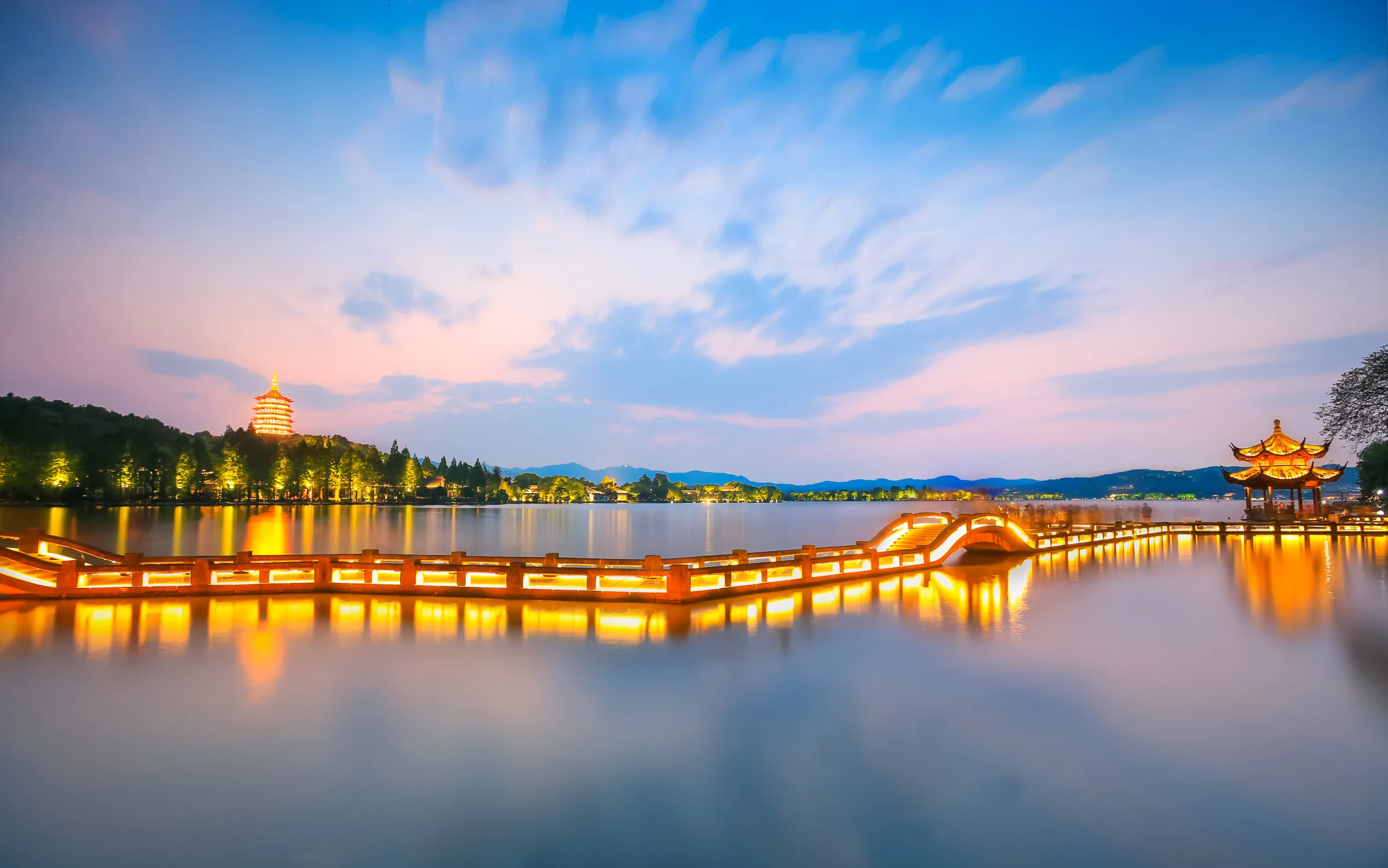
UNESCO inscribed the West Lake Cultural Landscape of Hangzhou in 2011. The designation matters because it describes more than attractive water. Causeways, islands, temples, pagodas, gardens, wooded slopes and framed views were created and revised over centuries. West Lake is nature interpreted through public works, political authority, religious practice, literature and habits of looking.
This is why the lake changes as you move. From the east, the water opens like a civic stage. Along the Su Causeway, trees, bridges and water divide the view into sequences. West of the main tourist shore, Yanggong Causeway and smaller wetlands feel less monumental. The hills make every long view temporary.
Do not try to circle the entire lake simply to complete it. Choose two or three sections and walk slowly enough to notice how a bridge reveals a pagoda, how a willow controls the frame and how a paved edge becomes a garden path. The designed act of seeing is the heritage.
The lake carries government, poetry and public memory
West Lake's famous causeways are associated with officials and writers including Bai Juyi and Su Shi. Their names show how Chinese cultural memory can join administration and literature: water management, public movement and poetic reputation become part of one landscape story.
That story should not become a collection of perfect legends. Dredging, rebuilding, naming and scenic classification happened in different periods for different reasons. Later generations often strengthened an association because it made the lake easier to remember. The useful question is not whether every scenic title has remained unchanged, but how a city repeatedly decided what deserved to be preserved and seen.
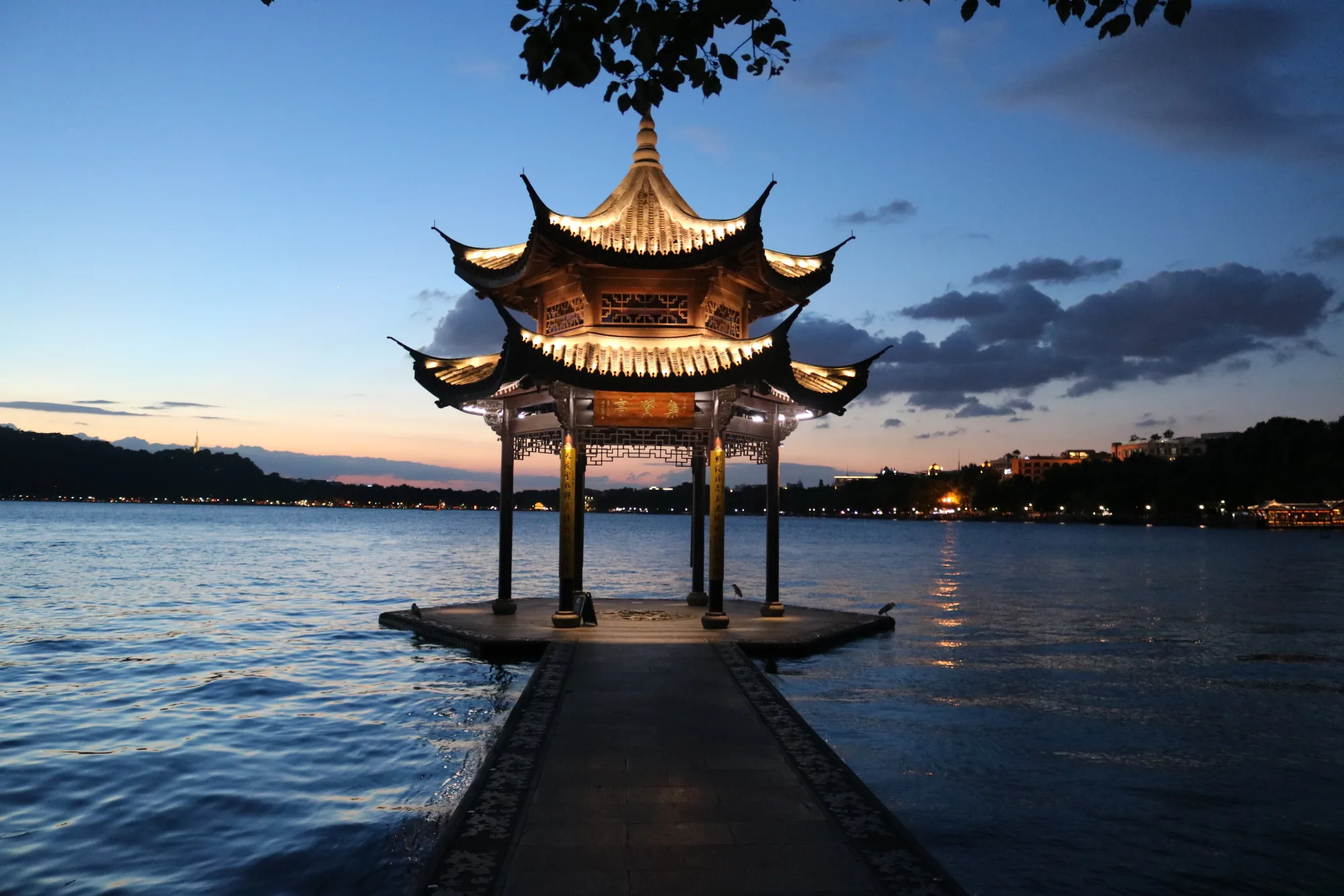
The Ten Scenes of West Lake are not a checklist of fixed objects. They are combinations of place, weather, season, time and cultural expectation. A scene such as autumn moon over calm water asks the visitor to recognize a condition, not merely locate a pin.
Hangzhou remembers the Southern Song through absence
In the twelfth century, Hangzhou - then known as Lin'an - became the capital of the Southern Song. It grew into one of the world's largest and most sophisticated cities, sustained by commerce, craft, canals, markets, print culture and an elite court displaced from northern China.
Very little of that capital survives as an intact urban fabric. Wars, fires, rebuilding and modern growth have changed the city repeatedly. Southern Song Hangzhou is therefore encountered through archaeology, museum objects, reconstructed sites, street names, food narratives and the continuing prestige of a refined Jiangnan way of life.
This absence is important. A reconstruction can help the imagination, but it should not be mistaken for a building untouched since the dynasty. Visit museums and archaeological displays before treating a commercial old street as the complete historic city.
Leifeng Pagoda explains how monuments acquire second lives
Leifeng Pagoda anchors one of West Lake's most familiar views. The earlier tower collapsed in 1924; the structure seen today is a modern reconstruction built over protected remains. It is therefore both a contemporary building and a container for older memory.
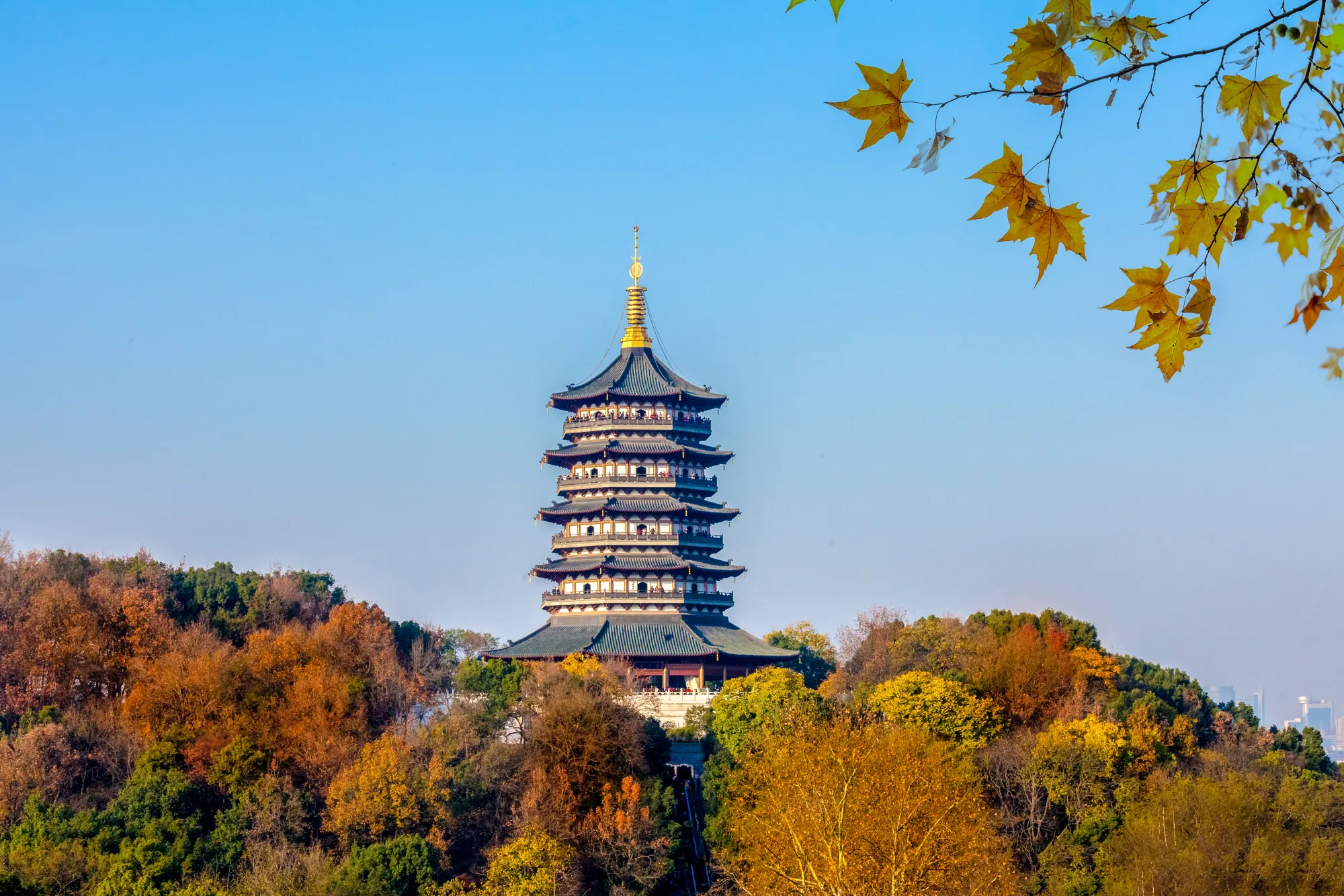
The pagoda's fame also comes from the Legend of the White Snake, in which love, religious authority and transformation are mapped onto West Lake. Folklore has made the monument emotionally larger than its masonry. Read the site at both levels: as architecture with a complicated material history and as a place repeatedly recreated by storytelling, opera, film and tourism.
Lingyin is an active Buddhist landscape
Lingyin Temple sits west of the lake among forested slopes and the carved grottoes of Feilai Feng. The institution traces its foundation to the fourth century, but the complex has been damaged and rebuilt many times. Its historical depth lies in continuity of religious presence, patronage and memory, not in every hall being ancient.
Arrive early and separate three experiences that crowds can blur together: the mountain path and stone carvings, the architectural sequence of temple halls, and the behavior of worshippers. Incense, offerings and bows are not atmosphere arranged for photography.
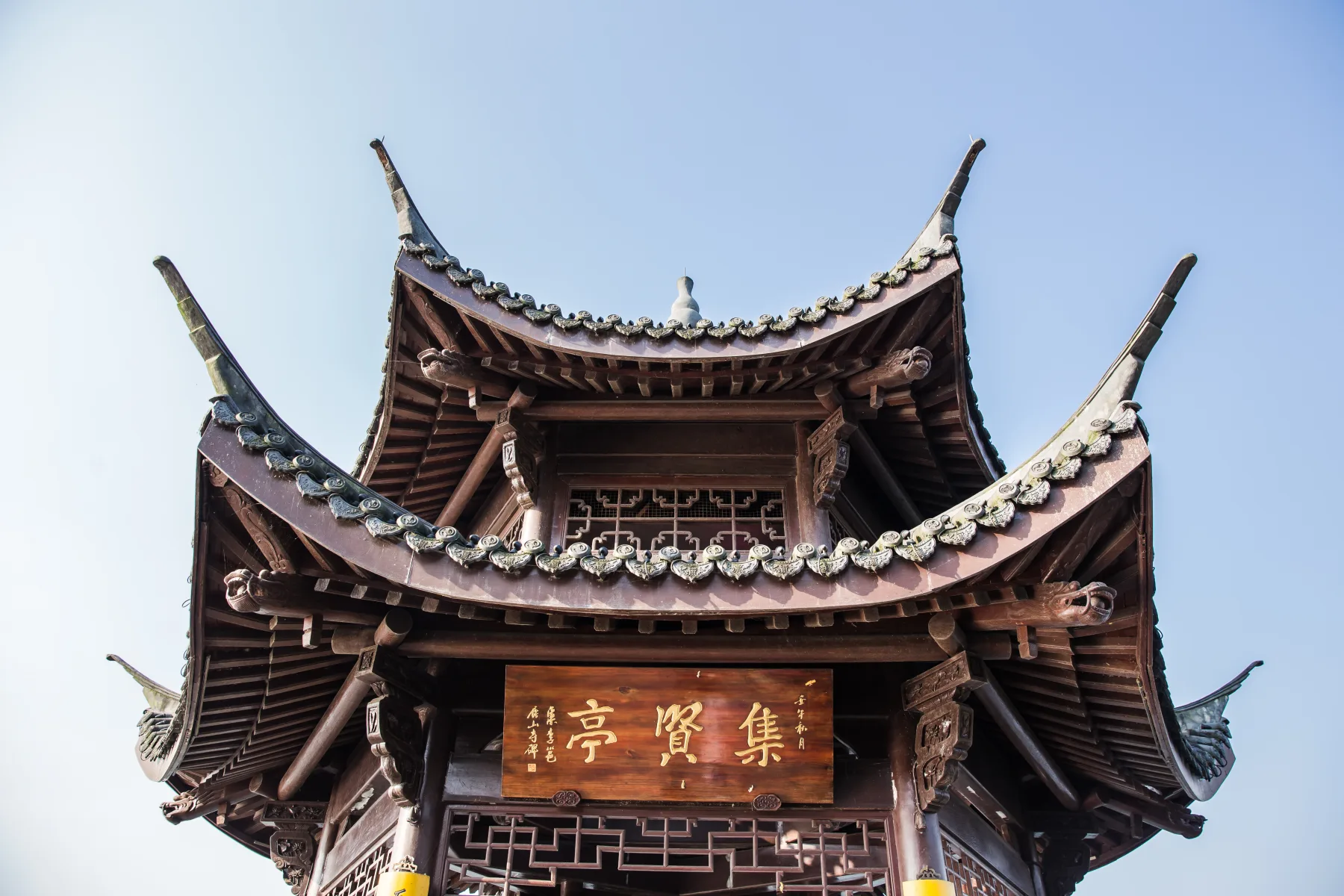
Hangzhou's Buddhist culture also shaped publishing, pilgrimage, vegetarian food, charitable networks and the movement of objects and ideas across East Asia. A temple visit becomes deeper when it is understood as part of the city's intellectual and social history, not only as a peaceful escape.
Longjing tea joins landscape to labor
The tea hills southwest of West Lake make one of Hangzhou's strongest visual transitions. Dense city gives way to bamboo, villages and rows of tea bushes. Yet the apparent calm is working land. Spring picking compresses skill, weather, labor and price into a short season.
Longjing tea, or Dragon Well tea, is a pan-fired green tea associated with Zhejiang and most famously with Hangzhou. "West Lake Longjing" is a protected geographical name, not a decorative synonym for every flat green leaf. A village tasting should therefore include questions about exact production area, harvest period, cultivar, shaping and storage.
Our Longjing tea guide explains origin and brewing in detail. In Hangzhou, pay attention to the social scene around the cup: family-run rooms, restaurant tea, museum interpretation, gift packaging and young cafes all translate the same leaf differently.
The Grand Canal reveals Hangzhou as a commercial city
The Grand Canal, inscribed by UNESCO in 2014, reaches its southern end in Hangzhou. It connected grain, goods, people and administrative power across eastern China for centuries. The canal corrects the idea that Hangzhou's history belongs only to scenery and courtly taste.
Walk the canal around Gongchen Bridge and the surrounding museum district. Warehouses, bridges, craft displays and restored streets reveal a logistical city. Some heritage areas have been carefully adapted; others risk turning labor history into decorative retail. Look for what remains in use: boats, residential lanes, markets, workshops and ordinary crossings.
West Lake taught visitors how to look. The canal taught the city how to move goods.
Hefang Street is a reconstruction, not a time machine
Hefang Street and the former commercial areas near Wushan are useful for food, medicine-shop history, crafts and the memory of old Hangzhou. They are also heavily restored and intensely commercial.
That does not make them worthless. Restoration is itself evidence of what contemporary Hangzhou chooses to display as heritage. Read the shop signs, building materials and curated trades, then step into the smaller streets beyond the busiest strip. The contrast between staged historic atmosphere and ordinary urban life is part of the lesson.
Liangzhu moves Hangzhou's history far beyond the Song
The Archaeological Ruins of Liangzhu City, inscribed by UNESCO in 2019, document a late Neolithic society with rice cultivation, water management, social differentiation and sophisticated jade production. The site lies beyond central Hangzhou but changes the scale of the region's history.
Liangzhu should not be squeezed into an exhausted afternoon after West Lake. Its museum and archaeological landscape need time. The jade objects are visually precise, but their importance comes from archaeological context: burials, settlement, labor and systems of authority.
For travelers interested in design, Liangzhu also offers a useful warning. A beautiful object is not self-explanatory. Meaning is built from where it was found, how it was used and what relationships made its production possible.
Xixi Wetland offers another model of water and settlement
Xixi Wetland lies west of the city center in a landscape of waterways, ponds, vegetation, villages and managed visitor routes. It is not a wilderness untouched by people. Agriculture, fishing, flood management and settlement helped form it.
Visit for slower movement and a different water scale from West Lake. Boats narrow the field of vision; reeds replace monumental views; the city appears and disappears at the edge. As with many urban wetlands, conservation, tourism and commercial development remain in tension.
The Qiantang River faces the contemporary city
Hangzhou's historic imagination gathers around West Lake, but much of its recent expansion faces the Qiantang River. New business districts, residential towers, bridges and cultural buildings create a broader, more infrastructural city.
The river is also known for its tidal bore. Viewing requires official timing and safety information; riverbanks and tides are not informal adventure spaces. Even without the bore, a walk along the Qiantang helps explain why contemporary Hangzhou cannot be understood from the old center alone.
Digital commerce and technology have changed work, consumption and the city's global profile. Zhejiang University and other institutions add research, student life and design culture. The interesting Hangzhou is not "ancient versus modern." It is a city where scenic heritage, real-estate pressure, platform economies and public space continually negotiate with one another.
Hangzhou food is quieter than its legends
Hangzhou restaurant culture turns literary names and lake imagery into memorable dishes: Dongpo pork, West Lake vinegar fish, Longjing shrimp and Sister Song's fish soup. These classics matter, but everyday appetite often lives in noodles, soy-braised poultry, seasonal vegetables, breakfast pancakes and small shops.
Our Zhejiang cuisine and Hangzhou food guide separates restaurant icons from daily eating and explains why the cuisine is not simply "sweet." Build a meal through contrast: one braise, one fresh or seasonal dish, one soup, rice or noodles, and tea chosen for drinking rather than prestige.
Where to stay in Hangzhou
| Area | Best for | Character | Trade-off |
|---|---|---|---|
| East side of West Lake | First visits and short stays | Metro access, lake walks, shopping and dense dining | Busy, expensive and crowded on weekends |
| North Lake / Beishan Road | Museums, architecture and quieter mornings | Historic villas, trees and access to the northern shore | Fewer late-night choices in some pockets |
| Wushan / Hefang area | Old-city atmosphere and food | Walkable historic-commercial streets near the south lake | Tourist intensity and uneven authenticity |
| Grand Canal / Gongchen Bridge | Craft, industrial history and neighborhood pace | Canal walks, museums and residential streets | Farther from early West Lake starts |
| Binjiang / Qiantang River | Contemporary Hangzhou and nightlife | New skyline, river paths and technology districts | Less convenient for a lake-centered itinerary |
Three, five and seven-day Hangzhou itineraries
Three days: the essential layers
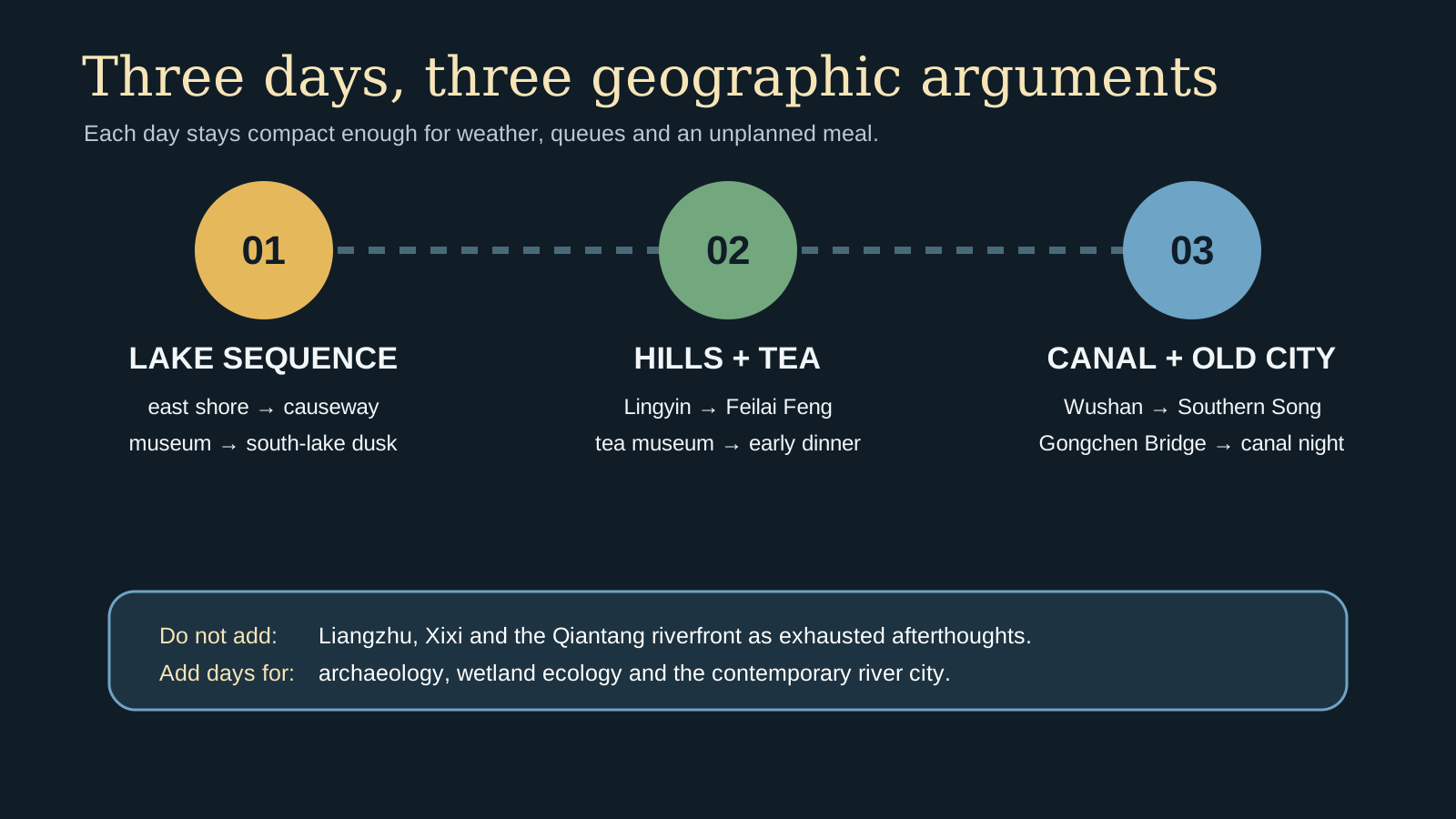
| Day | Morning | Afternoon | Evening |
|---|---|---|---|
| 1 | West Lake east shore before crowds | Su Causeway and a museum or garden | South lake and Leifeng Pagoda views |
| 2 | Lingyin Temple and Feilai Feng | China National Tea Museum or Longjing-area walk | Hangzhou dinner with seasonal vegetables and one classic dish |
| 3 | Southern Song and Wushan area | Grand Canal and Gongchen Bridge | Canal-side walk or contemporary cafe district |
Five days: city, water and work
Add a full day for Xixi Wetland and another for contemporary Hangzhou along the Qiantang River, Zhejiang University-linked cultural spaces, galleries, bookstores or design districts. Keep at least one evening unplanned; Hangzhou becomes more convincing after the day's attraction schedule loosens.
Seven days: extend the historical scale
Use one full day for Liangzhu Museum and the archaeological park. Spend the other on a deeper tea-country walk, a quieter West Lake circuit, or a carefully chosen nearby water-town or mountain extension. Do not collect three distant excursions simply because high-speed rail makes them possible.
Seasons and weather
| Season | What it feels like | Best for | Watch for |
|---|---|---|---|
| Spring | Mild, damp, green and changeable | Tea landscapes, gardens and long walks | Rain, Qingming crowds and high accommodation demand |
| Summer | Hot, humid and storm-prone | Early lake walks, museums and evening riverfronts | Heat stress, heavy rain and typhoon-related disruption |
| Autumn | Clearer, cooler and highly popular | Walking, cycling, osmanthus season and Liangzhu | National Day crowds and busy weekends |
| Winter | Damp, quiet and occasionally cold | Museums, tea, architecture and low-crowd lake views | Limited heating in some interiors and grey weather |
Hangzhou logistics without turning West Lake into a queue
| Need | Useful approach |
|---|---|
| Getting around | Metro handles major corridors; walking, buses and regulated bike-share fill the gaps around the lake and canal |
| Navigation | Save destinations in Chinese and check the exact entrance; large scenic areas may have several gates far apart |
| Payments | Mobile payment is dominant, but carry a physical bank card and some cash as backup; setup rules can change |
| Connectivity | Arrange roaming, an eSIM or a local plan before relying on map, translation and payment apps |
| Crowds | Start West Lake and Lingyin early; avoid compressing the city into a public-holiday weekend |
| Tea visits | Ask about origin and price before tasting; a scenic village address does not prove that every tea served was grown there |
| Accessibility | Lake promenades can be smooth, but temples, hills, bridges and heritage lanes include stairs and uneven surfaces |
Travel with attention, not only admiration
Hangzhou's beauty is heavily worked. Gardeners, tea pickers, cleaners, boat crews, restaurant staff, conservators and transit workers sustain the calm surface visitors enjoy. Respecting the city means noticing those systems, not treating every pavilion as a private photo set.
Photograph worshippers, tea workers and residential lanes only with care and permission. Buy tea for documented quality rather than a myth of untouched tradition. At West Lake, let weather interrupt the ideal image. The landscape was designed to reward changing conditions.
Frequently asked questions about Hangzhou
Is Hangzhou worth visiting for young travelers?
Yes. Hangzhou combines a walkable historic lake landscape, tea hills, temples, museums, design and university culture, contemporary nightlife, wetlands and fast rail connections. It suits travelers who want Chinese history without giving up cafes, cycling, digital convenience and a lively modern city.
How many days do you need in Hangzhou?
Three days cover West Lake, Lingyin Temple, a tea landscape and one historic urban area at a steady pace. Five days allow the Grand Canal, Xixi Wetland, museums and contemporary Hangzhou. Seven days create room for Liangzhu, deeper walks and nearby water-town or mountain extensions.
What is Hangzhou best known for?
Hangzhou is best known for West Lake, Longjing tea, its role as the Southern Song capital, Buddhist sites including Lingyin Temple, the southern end of the Grand Canal and a modern economy associated with digital commerce.
Where should a first-time visitor stay in Hangzhou?
The east side of West Lake gives the easiest first-time access to the lake, metro and dining. The north lake and canal areas are quieter and more cultural, while Binjiang suits travelers interested in the Qiantang River and contemporary city. Check walking distance to a metro station because the lake itself is large.
What is the best time to visit Hangzhou?
Spring and autumn are generally best for long walks, tea landscapes and gardens. Spring is beautiful but rainy and crowded around public holidays. Summer is hot and humid, while winter is quieter, damp and occasionally cold enough to make lakeside walks feel sharp.
Hangzhou is deepest when beauty stops being an answer
The familiar praise of Hangzhou as "heaven on earth" can be an invitation, but it is a poor conclusion. West Lake is beautiful because generations organized water, movement, memory and attention around it. Tea tastes of place because labor and verification protect that place from becoming only a brand. The old capital survives because archaeology, stories and selective reconstruction keep asking what should be remembered.
Come for the lake. Stay long enough to see the canal behind the poetry, the labor behind the tea and the restless modern city beyond the hills. Then bring one route decision—not another perfect reflection—to China Moments so the next reader can plan a Hangzhou day that actually holds together.