Lijiang (丽江) becomes shallow when it is treated as a beautiful old town waiting for a camera. Its deeper story belongs to Naxi communities, mountain trade, ritual knowledge, local government, water engineering and the difficult transformation of a lived city into a global tourism image.
This page explains the cultural layers. Use the separate travel to Lijiang guide for altitude, transport and a practical three-day itinerary.
This Chinese culture guide takes a clear position: Lijiang's most important attraction is not a landmark. It is the relationship between memory and maintenance. Water still has to move, timber still has to be repaired, manuscripts still need knowledgeable readers and residents still need an old town that works after visitors have finished photographing it.
Lijiang culture guide at a glance
| Question | Short answer |
|---|---|
| Why does Lijiang matter? | It connects Naxi history, Dongba traditions, a remarkable urban water system and trade routes between Yunnan, Tibet and Sichuan |
| Cultural center | Dayan Old Town, with important contrasts in Shuhe, Baisha and surrounding villages |
| Landscape anchor | Jade Dragon Snow Mountain, visible as ecology, sacred geography and tourism infrastructure |
| Best way to read the city | Follow water, inscriptions, markets and changes in building use rather than collecting only scenic viewpoints |
| Main misunderstanding | Treating Naxi identity as costume, Dongba signs as decoration and the old town as an untouched medieval settlement |
Naxi culture is living knowledge, not background color
The Naxi people are central to Lijiang's historical identity, but no community can be explained by a list of costumes, songs and symbols. Naxi life has changed through agriculture, trade, state administration, migration, schooling, tourism and intermarriage. Language use and cultural practice also vary by generation and place.
For visitors, the most useful shift is from spectacle to institution. Ask who teaches music, who reads ritual texts, who repairs houses, who runs cultural organizations and how younger residents decide which traditions remain useful.
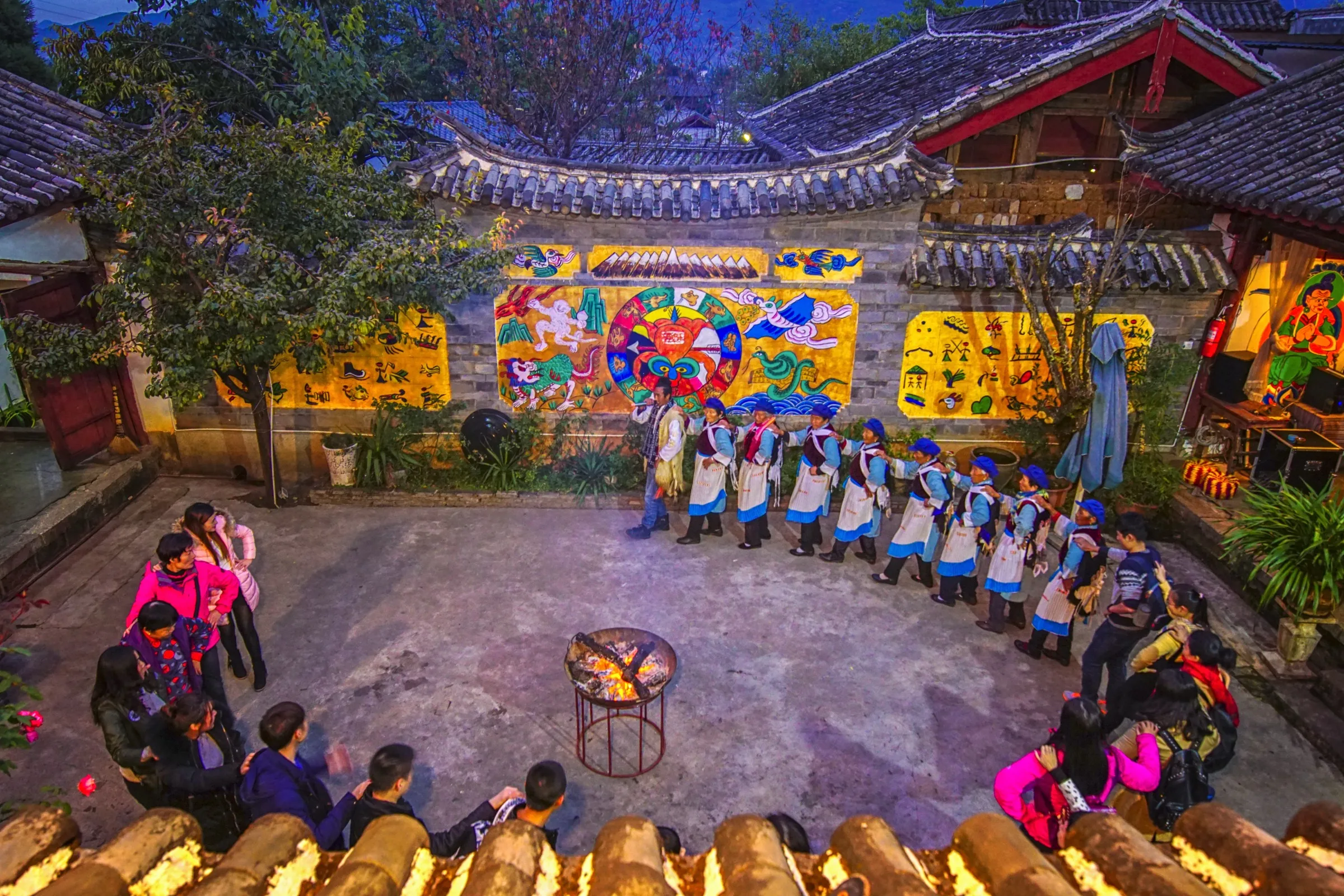
Public dance can be social life, staged tourism or both. Context matters more than deciding that every performance is either perfectly authentic or completely artificial.
| Cultural form | What it can reveal | What not to assume |
|---|---|---|
| Naxi language | Family, place and local memory | That every Naxi resident uses it in the same way |
| Music and dance | Community gathering, ritual history and public performance | That a ticketed show represents all local practice |
| Timber houses and courtyards | Climate, household organization and craft | That every old-looking facade is historically original |
| Food | Highland ingredients, trade and household adaptation | That every Yunnan dish served in the old town is specifically Naxi |
| Festivals and ritual | Relationships among people, ancestors, landscape and specialists | That visitors are entitled to unrestricted access or photography |
Dongba manuscripts require a reader, not only a symbol
Dongba traditions are associated with Naxi ritual specialists, manuscripts, recitation, cosmology and ceremonies. The manuscripts are famous for signs that can appear strongly pictorial, but they are not self-explanatory picture books. Reading depends on trained knowledge, oral language and ritual context.
UNESCO's Memory of the World program recognizes ancient Naxi Dongba literature manuscripts for their documentary significance. That recognition should increase precision, not turn every painted figure into a universal logo.
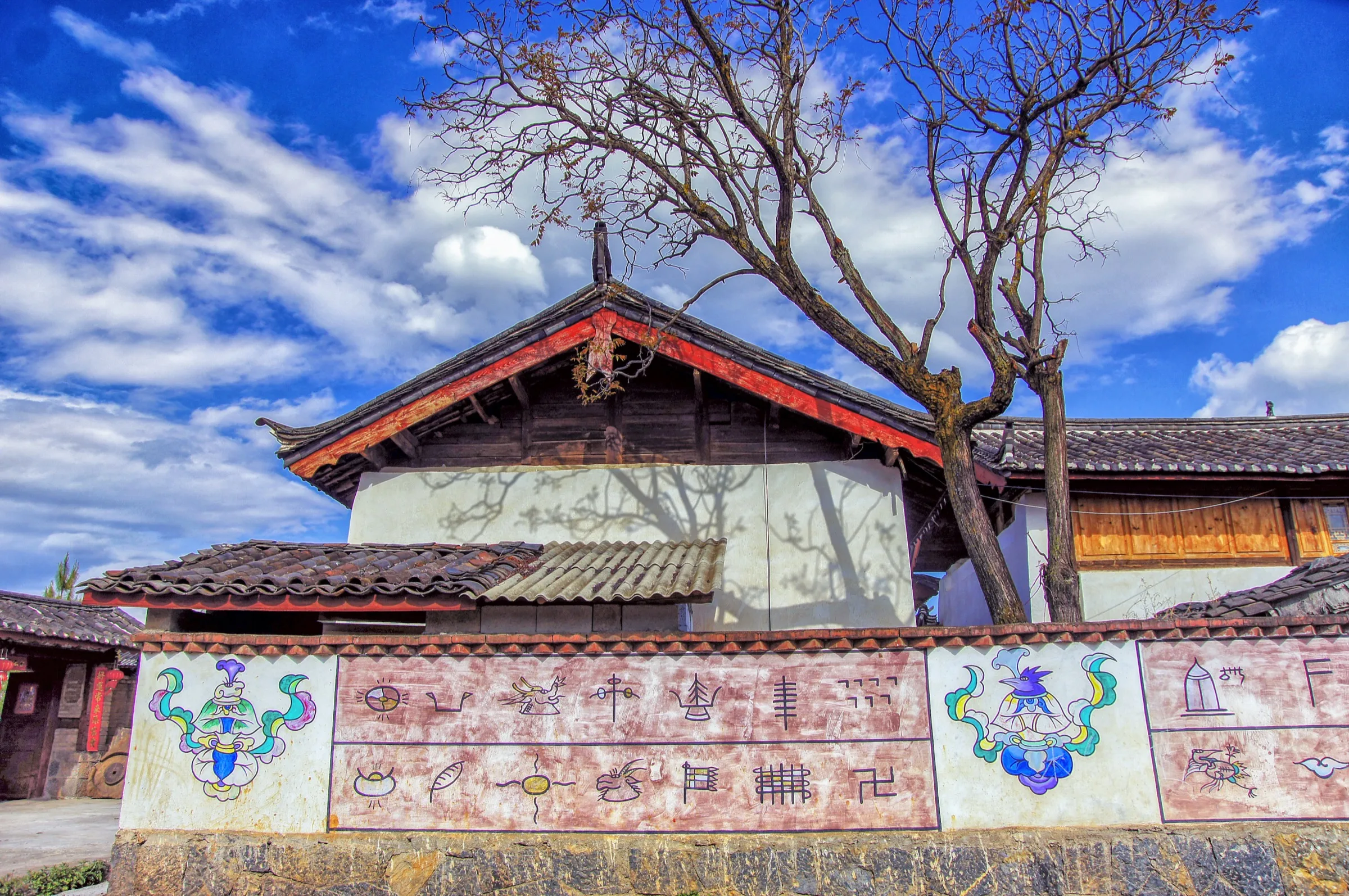
The signs create immediate delight: figures seem to walk, carry and speak across the surface. I feel that surprise too, but I refuse to stop at “China's pictographic writing.” A manuscript is not alive because tourists recognize its shapes. It remains meaningful when language, ritual setting, training and interpretation survive together. The UNESCO Memory of the World record establishes the documentary importance of the corpus; it cannot turn every commercial sign into ritual evidence.
Tourist streets often place Dongba-like signs on souvenirs, shop boards and wishing tokens. Some products support local artists; others detach visual forms from their cultural use. Ask who made an object and what the signs are meant to say before calling it an ancient text.
The old town is a water machine as well as a heritage image
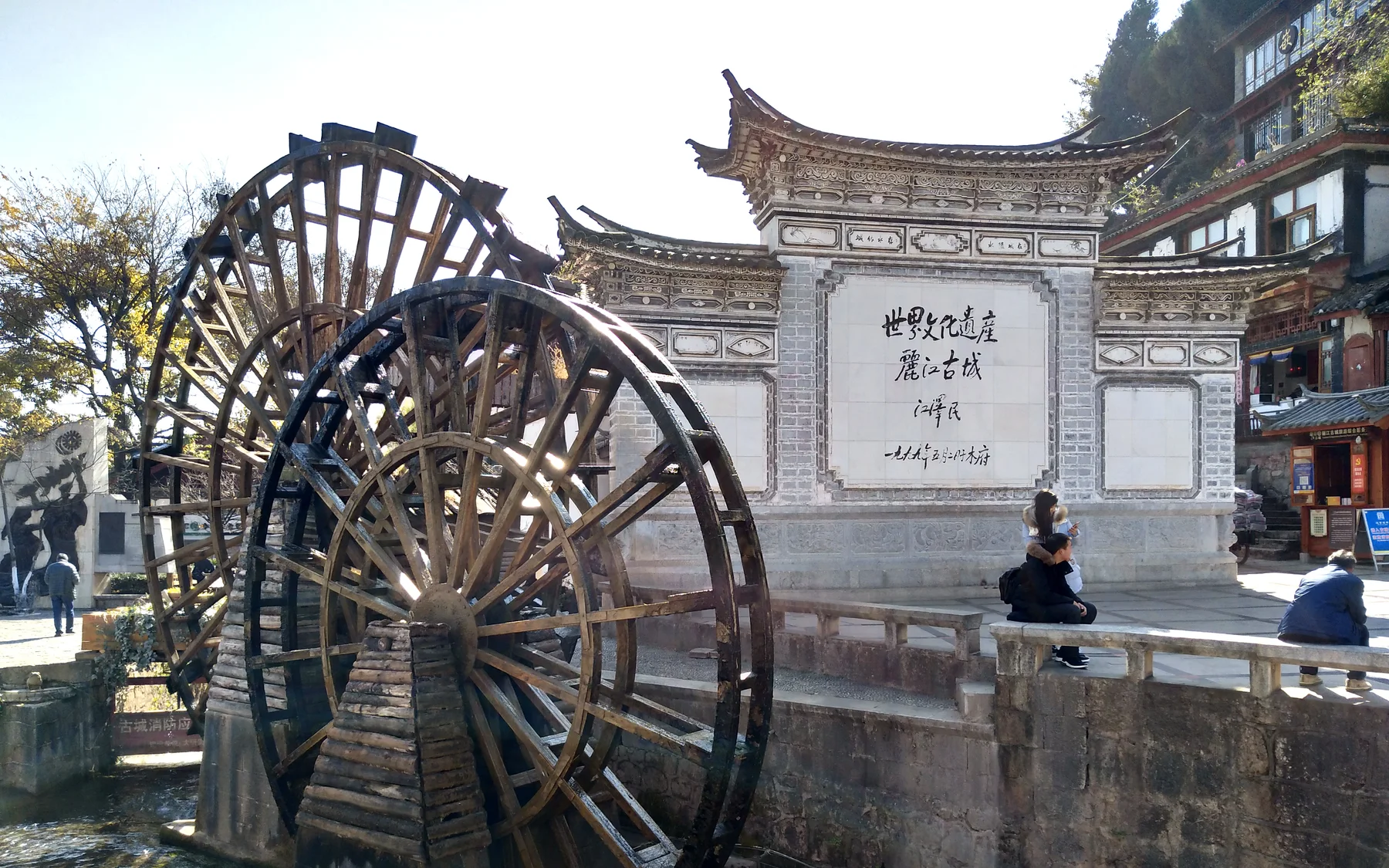
The UNESCO record for the Old Town of Lijiang includes Dayan, Shuhe and Baisha. Dayan is the most intensely visited. Its lanes, bridges and timber buildings are organized around water descending from the mountain landscape and dividing into channels through the settlement. The property's nomination and evaluation record is especially useful because it identifies the water system, streets, squares, bridges and houses as one urban whole. That is the evidence behind my insistence on reading Lijiang as working infrastructure rather than a pile of picturesque façades.
Historically, this water was infrastructure. It supported households, washing, street cleaning and fire response. The town's beauty comes partly from practical coordination: gradient, flow, access and shared rules.
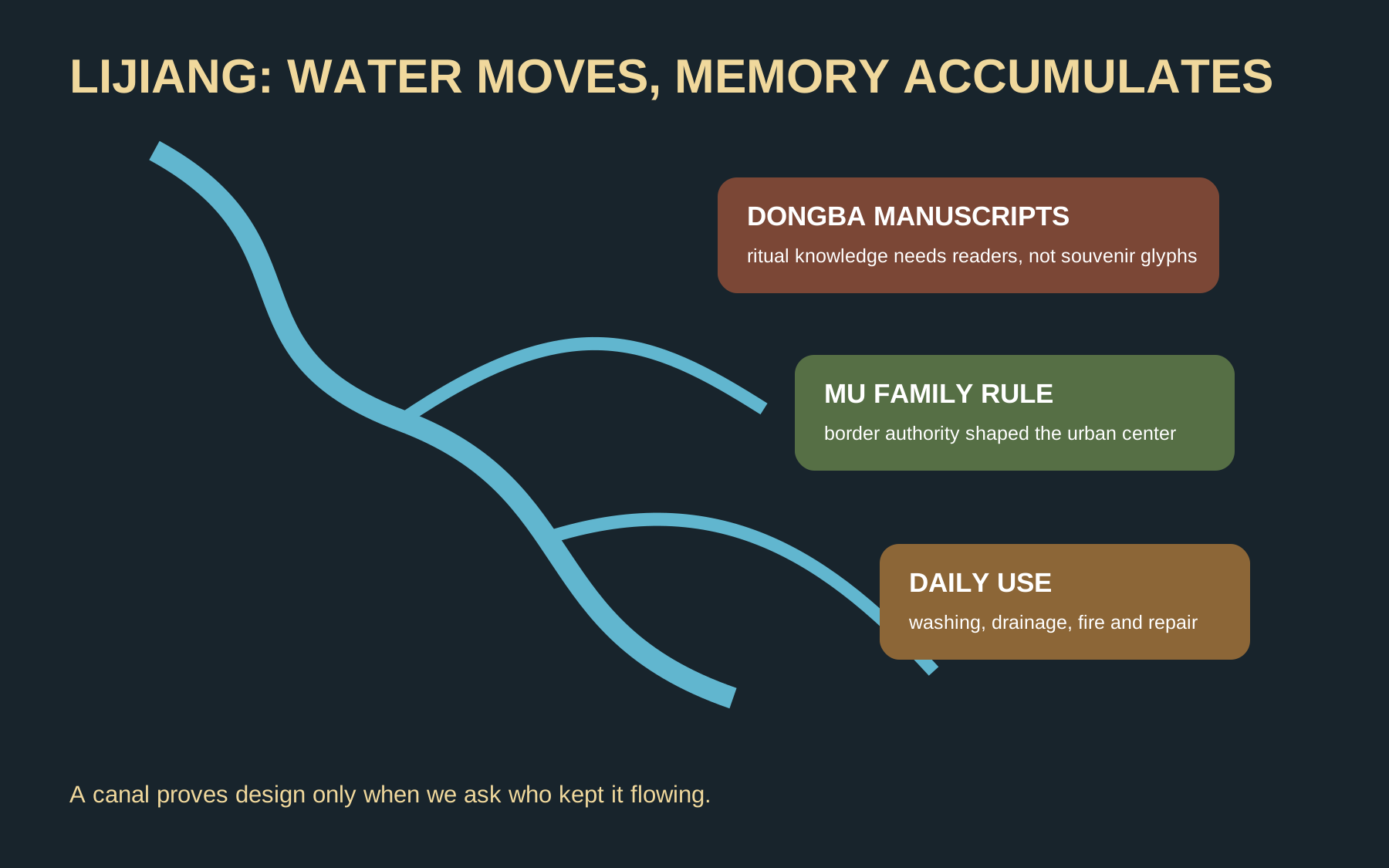
When I follow a canal instead of the shopping crowd, the town changes. The water does not care which storefront has the brightest sign. It slips past thresholds, bends around stone and reveals the logic beneath the tourism surface. That feeling also makes a factual demand: somebody designed, negotiated and maintained this flow. “Ancient water town” is empty praise unless we ask who kept the water usable.
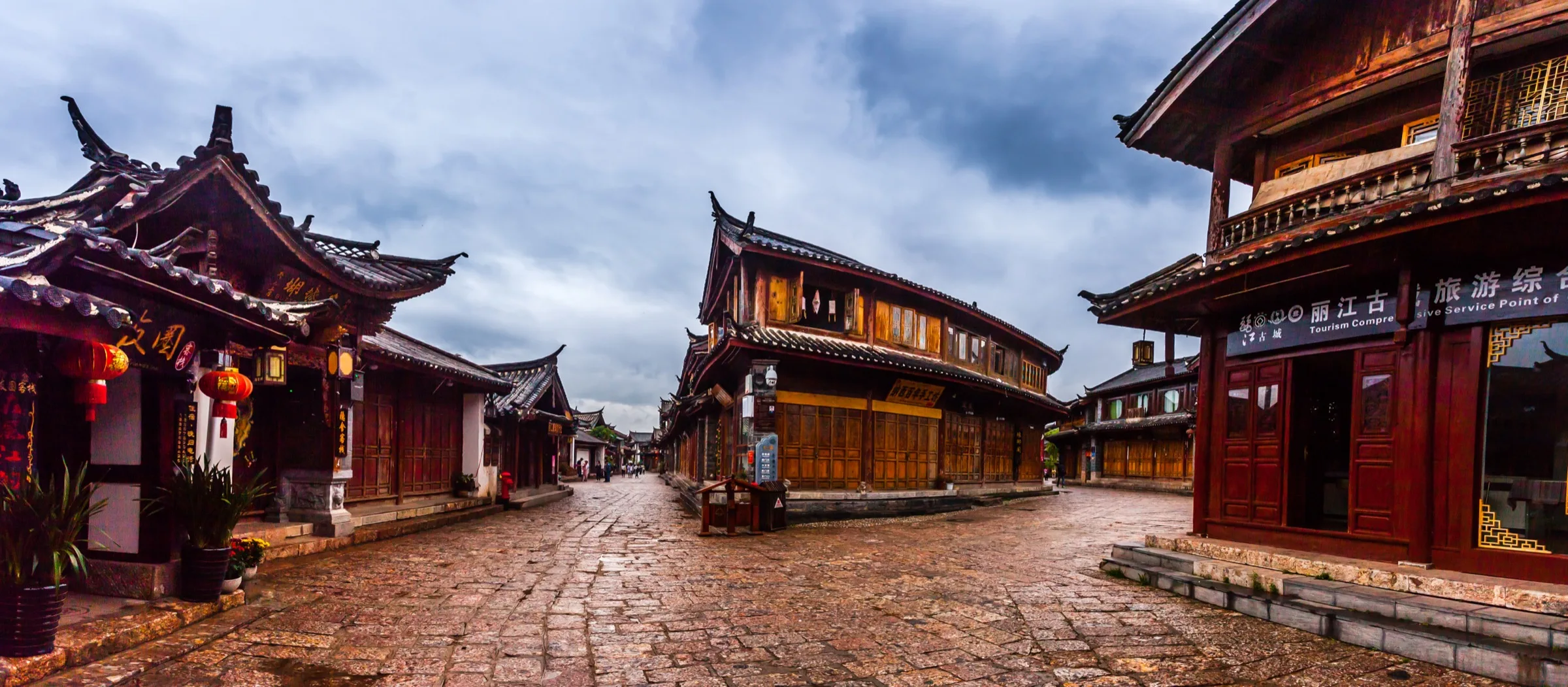
| Follow the water to notice | Cultural question |
|---|---|
| Main channels dividing into smaller flows | Who maintained access and prevented obstruction? |
| Bridges and changes in lane level | How did movement adapt to water rather than erase it? |
| Courtyards facing or turning from canals | How did households negotiate public and private space? |
| Modern pumps, paving and restaurant terraces | Which parts of the historic system still function, and which now serve tourism? |
The old town has survived fire, earthquakes, rebuilding and intense commercialization. "Historic" therefore describes continuity through change, not a district frozen at one date.
Mufu explains how Lijiang governed a borderland
The Mu family served as hereditary local rulers under successive imperial systems, especially during the Ming period. Their authority connected local society with larger Chinese states while retaining a distinct regional power base.
The Mufu Palace presents this political history through halls, courts and elevated views across the old town. Much of the visible complex is modern reconstruction. That does not make it useless; it means the site should be read as historical interpretation rather than untouched evidence.
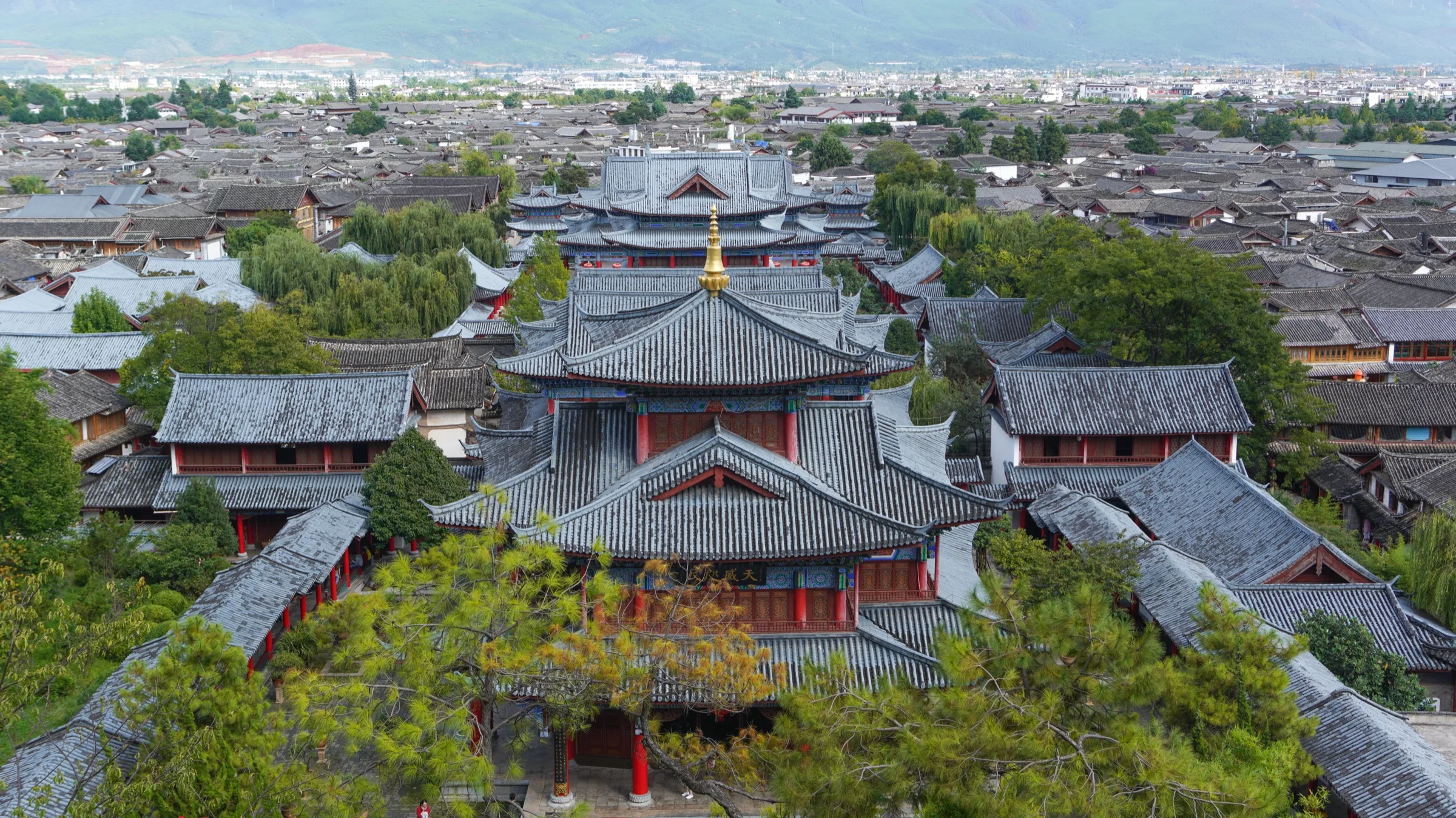
Mufu complicates the easy story of an isolated ethnic town. Lijiang's leaders dealt with imperial titles, taxation, military pressure, Buddhism, trade and neighboring powers. Local identity developed through connection as much as separation.
What moves me here is not the fantasy of a hidden kingdom. It is the opposite: a local society remained recognizable while negotiating with powers larger than itself. Mufu makes that tension physical. Courtyards stage authority, rooflines borrow and adapt wider architectural languages, and the elevated view places the governing compound inside the town rather than outside history.
That is why reconstruction dates matter. If I call every visible hall “ancient,” I turn political memory into a film set and weaken the genuine history. A reconstructed space can still teach, but it teaches through interpretation: which episodes are selected, how authority is presented and what visitors are encouraged to admire. The honest sentence is stronger than the glamorous one—Mu rule is historically consequential; the current palace is a modern route into that history, not untouched proof of every claim.
The Tea Horse Road was a network, not one romantic trail
Lijiang became important within mountain routes linking Yunnan, Tibetan regions and Sichuan. Tea, horses, salt, textiles, medicinal materials and everyday goods moved through overlapping roads and commercial relationships often grouped under the modern label Tea Horse Road.
The phrase can create an image of heroic caravans crossing empty mountains. The more useful history includes warehouse work, animal care, multilingual negotiation, taxation, credit, inns, risk and the communities through which traders passed.
Shuhe and Baisha help widen the story beyond Dayan. They have their own histories and are also affected by tourism, but their spatial scale can make trade routes, agriculture and settlement patterns easier to see.
Jade Dragon Snow Mountain is ecology and sacred landscape
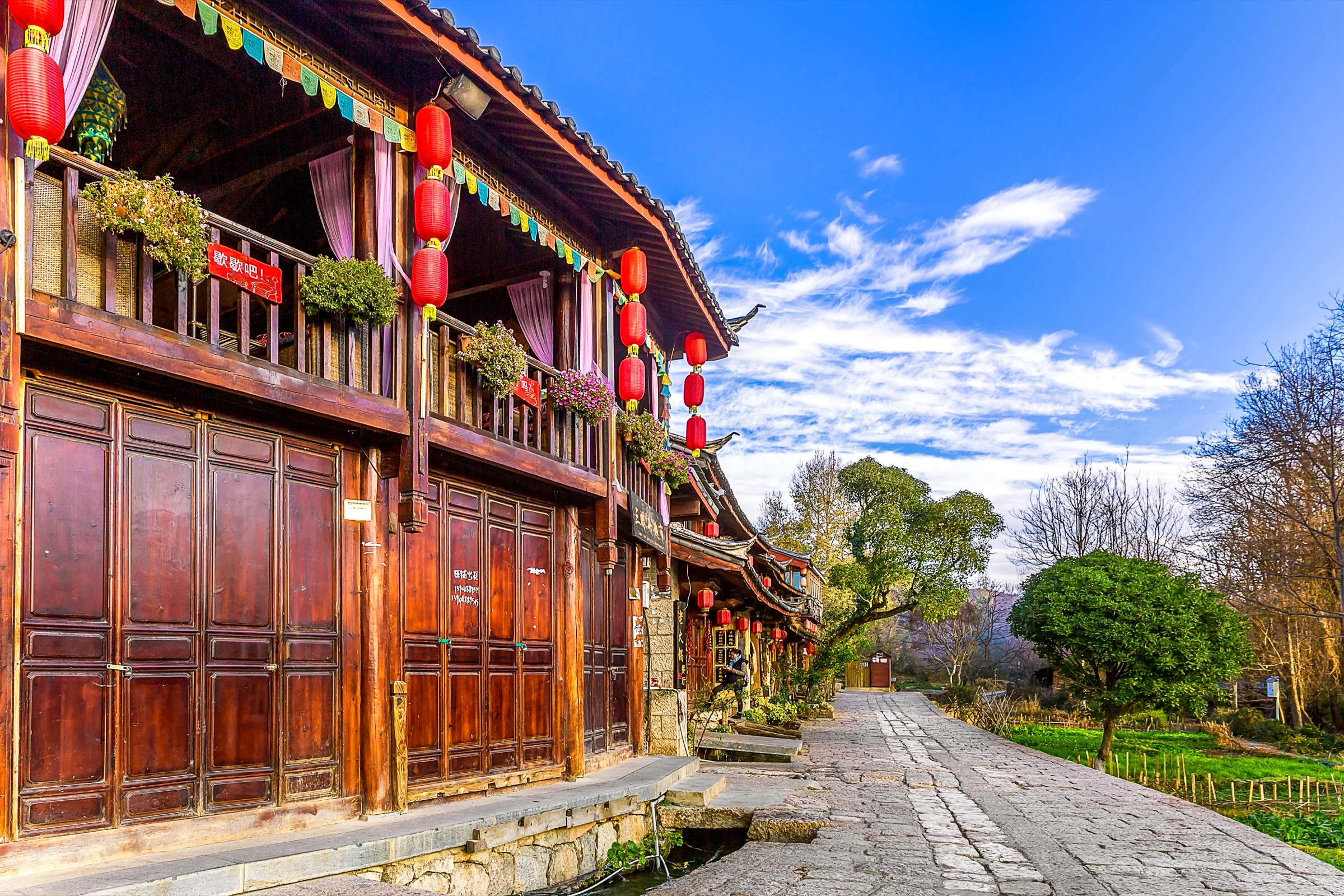
Jade Dragon Snow Mountain dominates Lijiang's visual identity. It is a high-altitude ecosystem, a source of water, a major tourism zone and a landscape with cultural and religious meaning for local communities.

The mountain should not be reduced to a cable-car viewpoint. Glacial retreat, visitor pressure, water supply and changing weather connect the iconic skyline to environmental questions. Cultural respect also means avoiding vague claims that every peak has one simple sacred meaning shared by everyone.
The mountain also disciplines the city image. It appears behind roofs as if it were permanent while snow, ice, weather and water are changing. That contrast is exactly why a good culture page cannot separate ecology from identity. Lijiang's visual symbol is also part of the material system that supplies water and sets limits on tourism.
Tourism preserves Lijiang and rearranges it
World Heritage status and mass tourism brought investment, conservation, employment and global recognition. They also raised rents, changed property use, expanded souvenir economies and encouraged architecture designed to look old.
| Tourism effect | Possible value | Possible cost |
|---|---|---|
| Restoration | Repairs buildings and public space | Can standardize diverse local forms |
| Visitor spending | Supports jobs and cultural businesses | Can displace ordinary shops and residents |
| Performances | Funds artists and introduces traditions | Can compress complex practices into a short spectacle |
| Heritage branding | Protects a recognizable landscape | Can make living change appear undesirable |
| Photography economy | Gives small businesses visibility | Can turn residents and rituals into props |
The right question is not whether tourism has made Lijiang "fake." Ask which histories remain visible, who controls representation and whether local people can still use the center as a city.
I disagree with both easy extremes. Lijiang is not ruined merely because it has bars, guesthouses and ticketed performances. Nor is every commercial adaptation proof of living heritage. A repaired drain, a morning vegetable delivery or a courtyard used without an audience can tell us more than another panoramic sunset.
The old town at night can be loud, bright and theatrical. At dawn, the same lane contains wet stone, sweeping, breakfast steam and the sound of water before amplified music returns. Neither hour is the whole truth. Seeing both is necessary because culture is not an authenticity score; it is a negotiation over who controls time, space and attention.
A cultural reading plan for Lijiang
| Day | Cultural focus | What to compare |
|---|---|---|
| 1 | Dayan water system, lanes and Mufu | Infrastructure beside heritage staging |
| 2 | Museum or Dongba-focused institution, then Black Dragon Pool | Text, ritual knowledge and the mountain-water relationship |
| 3 | Shuhe or Baisha | Trade memory, agriculture and different levels of tourism |
| 4 | Jade Dragon Snow Mountain area | Sacred landscape, ecology and visitor infrastructure |
Do not schedule this as a checklist. One early morning beside working water can explain more than three rushed performances.
Lijiang is most interesting where the postcard breaks
Lijiang deserves its beauty, but beauty is the beginning of interpretation. The city becomes deeper when roofs lead to governance, canals to cooperation, pictographs to trained readers and mountain views to ecology. Its culture is not stored behind glass. It is being negotiated by residents every day.
That is my verdict. The famous view earns attention, but maintenance earns respect. Compare Lijiang's water-shaped memory with Dali's mountain-lake society, then bring one observed working detail to Moments instead of another unsupported claim about “authentic Naxi life.”
Frequently asked questions about Lijiang culture
What culture is Lijiang known for?
Lijiang is strongly associated with Naxi history and living culture, including Dongba ritual and manuscript traditions, local music, architecture, water management and memories of mountain trade. The region is also culturally diverse and should not be reduced to one ethnic image.
Is Dongba writing a pictographic script?
Dongba manuscripts use highly pictorial signs alongside other forms of notation. The tradition is connected to ritual specialists and specific reading knowledge, so decorative symbols sold to visitors should not be treated as a complete everyday writing system.
Why does water matter in Lijiang Old Town?
Water channels branching through the old town historically supported household use, cleaning, fire protection and urban organization. The system helps explain why Lijiang is more than a collection of photogenic timber buildings.
Is the visible Mufu Palace entirely ancient?
No. The Mu family governed from Lijiang for centuries, but the present complex includes substantial modern reconstruction. It is best read as a presentation of local political history rather than untouched Ming architecture.
How is this page different from the Lijiang travel guide?
This page explains Naxi culture, Dongba memory, trade history and the meaning of the built landscape. The separate travel guide focuses on itinerary design, altitude, transport and practical trip planning.