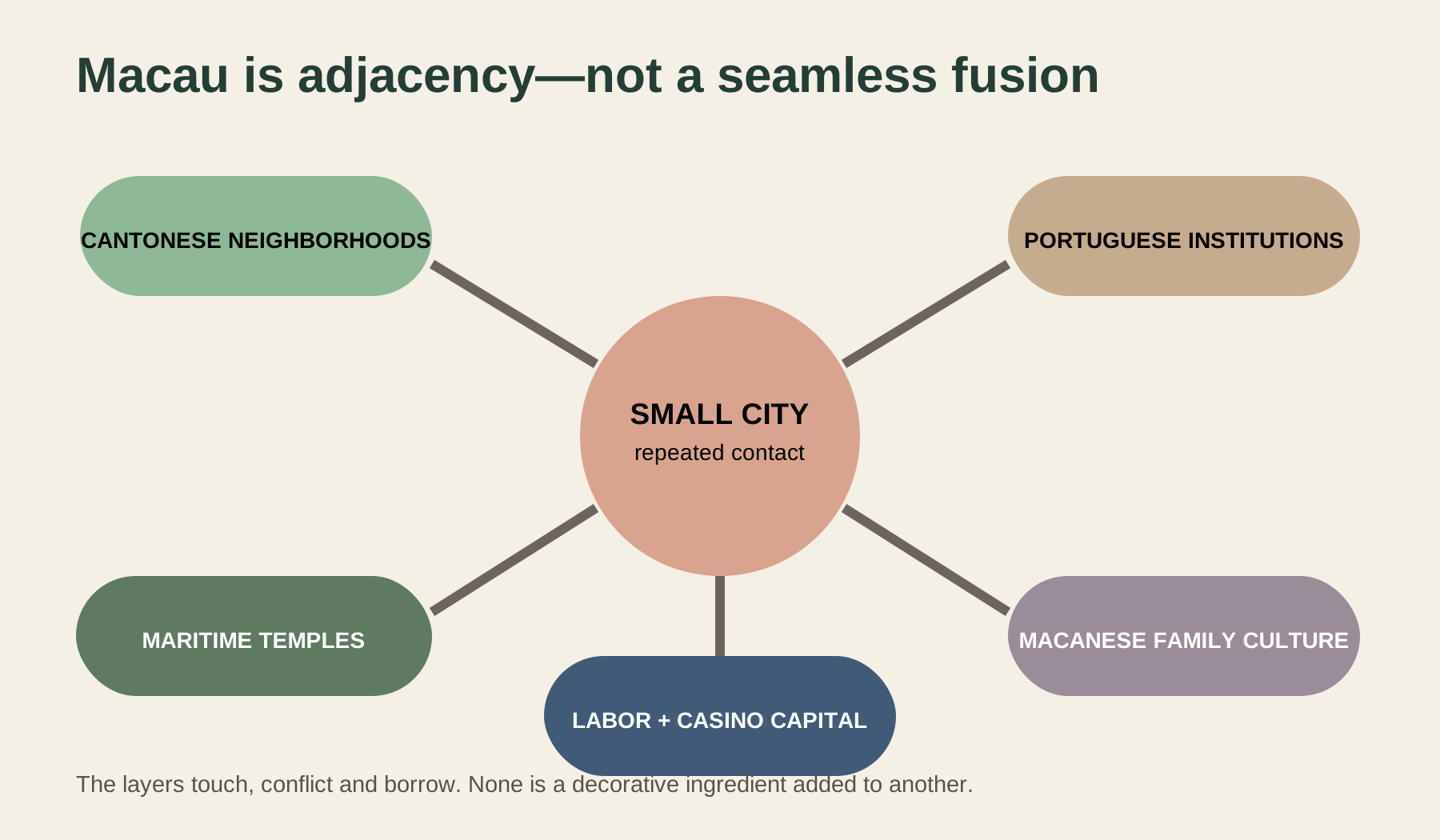
Macau (澳门) is often described as a meeting of East and West. The phrase is visually convenient and historically incomplete. Macau is better understood as a very small city where Cantonese neighborhoods, Chinese temples, Portuguese institutions, Macanese families, migrant labor and casino capital have repeatedly changed one another without becoming one seamless culture.
This Chinese culture guide treats proximity as Macau's central force. The UNESCO Historic Centre of Macao record confirms the connected heritage network; it does not license us to turn unequal history into a pastel-colored fusion slogan.
This page interprets those layers. Use the travel to Macau guide for border procedures, transport and a practical itinerary.
Macau culture guide at a glance
| Question | Short answer |
|---|---|
| Why does Macau matter? | It preserves an unusually dense urban record of maritime exchange, Chinese religious life and Portuguese colonial rule |
| Cultural languages | Cantonese is central to everyday life; Chinese and Portuguese have official status; English and Mandarin are also widely encountered |
| Best area for historical reading | The connected historic center from A-Ma Temple through Senado Square to St. Paul's and Mount Fortress |
| Essential contrast | Walk a lived old neighborhood before entering a resort complex |
| Main misunderstanding | Treating the city as either a casino district or a harmonious Portuguese-Chinese theme park |
The Historic Centre is a network, not one square
UNESCO lists the Historic Centre of Macao as a group of buildings and public spaces rather than one monument. That structure matters. Temples, churches, fortifications, civic buildings, lanes and squares reveal how different communities occupied the same peninsula.
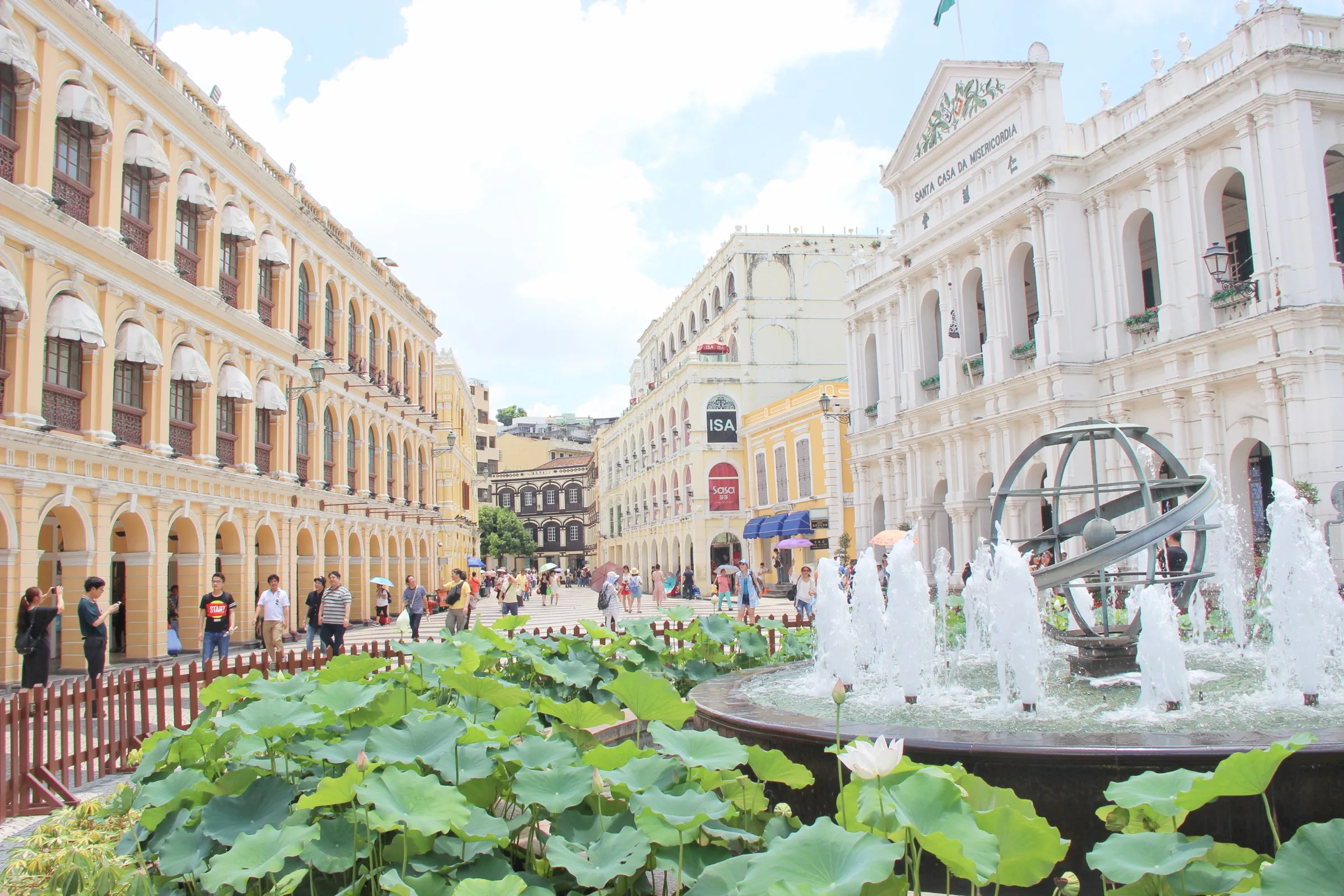
Senado Square is the most familiar civic image: patterned paving, pastel facades and institutions connected to Portuguese administration. Yet its cultural meaning changes when you leave the central axis. Pharmacies, apartment windows, bakeries, schools and small shrines return the monumental center to everyday scale.
Macau's smallness changes the meaning of heritage. In a large capital, a religious monument, government quarter and residential district may occupy separate mental maps. Here they interrupt one another. A delivery scooter crosses the visitor's perfect photograph; schoolchildren pass a church wall; incense appears within minutes of Portuguese paving. I do not see those interruptions as visual noise. They are the proof that the historic center remains inside a working city.
That is also why a single-square visit fails. Senado Square without A-Ma Temple turns Macau into colonial scenery. St. Paul's without the college, fortress and surrounding lanes turns a regional institution into a facade. The correct unit is the walk between sites, because the route exposes changes in authority, worship, language and daily use.
| Urban layer | What to notice | Better question |
|---|---|---|
| Portuguese civic space | Squares, arcades, paving and administrative facades | Who used these spaces, and under what authority? |
| Cantonese neighborhood life | Shop houses, markets, balconies, temples and schools | How did local communities adapt around colonial institutions? |
| Religious architecture | Temples, Catholic churches and processional routes | Where did traditions meet, remain separate or compete? |
| Fortification | Hilltop walls, cannon and views over the harbor | What trade and military interests required defense? |
| Resort city | Reclaimed land, towers, shuttles and controlled interiors | How did gaming revenue change labor and urban scale? |
A-Ma Temple places the sea before the casino skyline
A-Ma Temple is associated with the maritime deity Mazu and with communities whose safety and livelihoods depended on the sea. The site is often linked to explanations of Macau's name, although linguistic histories should be presented cautiously rather than as one perfect origin story.
The temple reminds visitors that Macau's international history did not begin with European arrival. Southern Chinese maritime networks, fishing, pilgrimage and regional trade already gave the coastline meaning.
Small Chinese temples remain embedded in dense streets and beside later colonial structures.
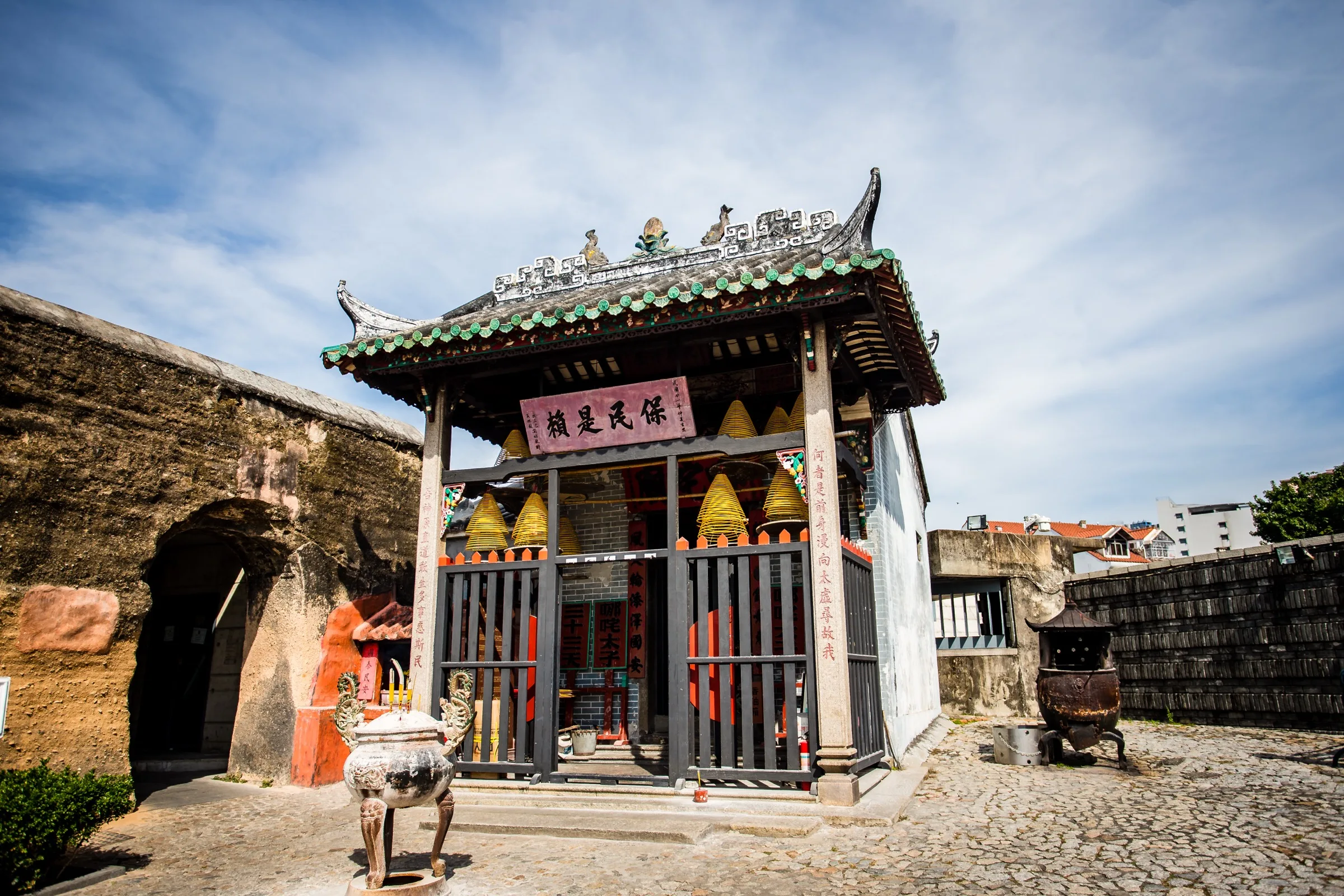
Do not enter active worship spaces as though they were decorative rooms. Give people space, avoid photographing faces at close range and notice how incense, offerings and movement organize the site.
St. Paul's is a surviving facade with an Asian history
The Ruins of St. Paul's are the surviving facade and steps associated with the Church of Mater Dei and St. Paul's College, a major Jesuit institution. Fire destroyed most of the church complex in 1835.
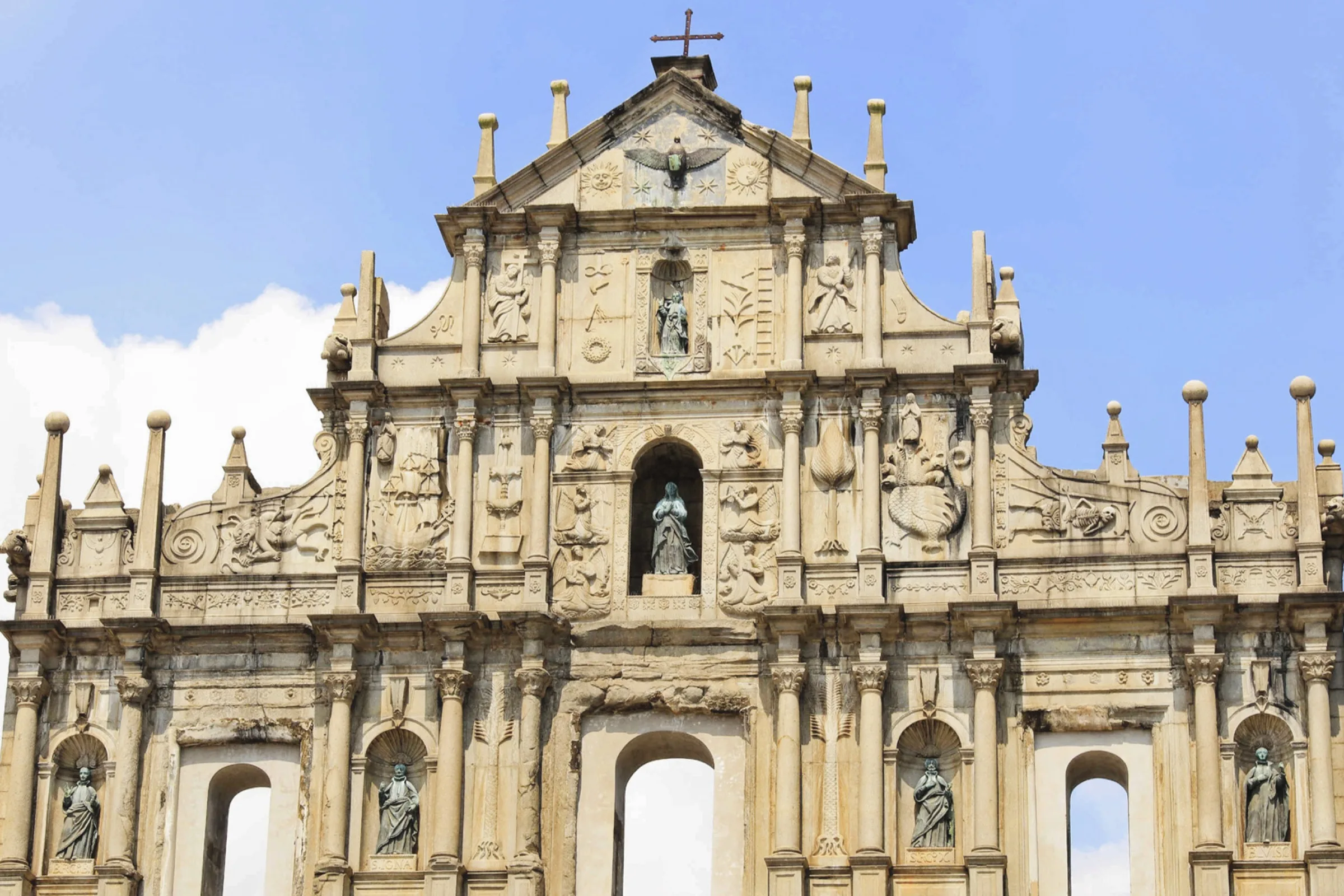
The facade combines Catholic imagery with craft and visual references produced in an Asian setting. It should not be reduced to a Portuguese building transported intact from Europe. The college connected Macau to missionary, educational and translation networks extending through East Asia.
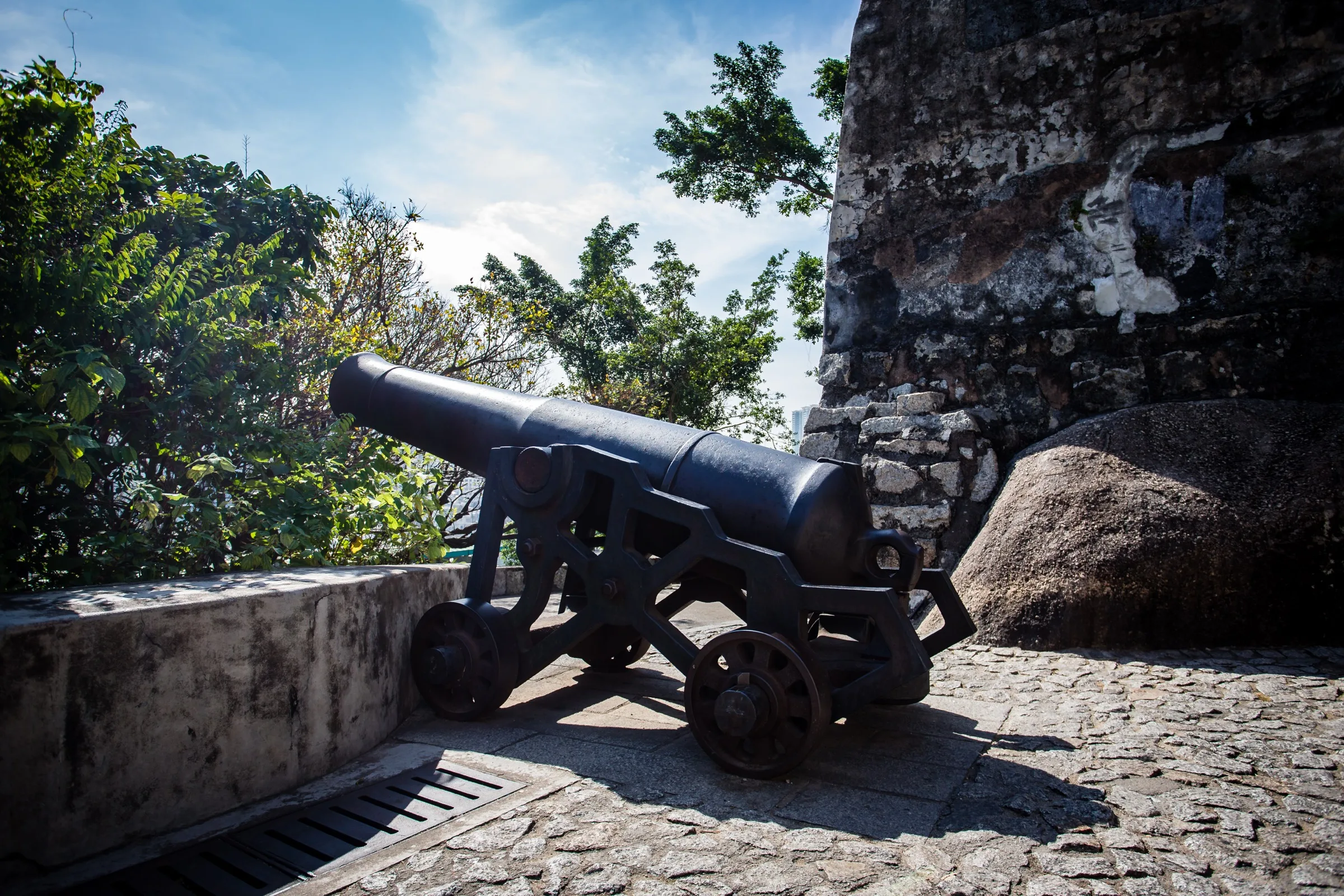
Nearby Mount Fortress makes the military dimension visible. Religion, scholarship, commerce and defense were not separate stories.
Colonial encounter was creative and unequal
Macau's architecture is often praised for harmony. Beauty is real, but colonial systems distribute rights and power unevenly. Portuguese administration, Chinese authorities, local merchants, religious institutions and different resident groups negotiated Macau through changing legal arrangements.
The city was neither a simple colony disconnected from China nor a naturally blended cultural zone. It was made through agreements, conflict, dependence and adaptation.
The phrase “East meets West” removes the verbs that matter. People translated, traded, converted, married, resisted, governed, served, cooked and raised families. Institutions did not meet as equal colors in a design palette. Some controlled law and land; some negotiated access; some survived by adapting around powers they did not choose.
Macau's architecture still carries that argument. A facade can show European religious form while its stone, labor and carved details belong to Asian production networks. A Chinese temple can absorb repairs and additions from several periods without becoming a frozen “traditional” object. The result is creative, but creativity does not cancel hierarchy. Any culture guide that celebrates mixture while deleting power has misunderstood the city.
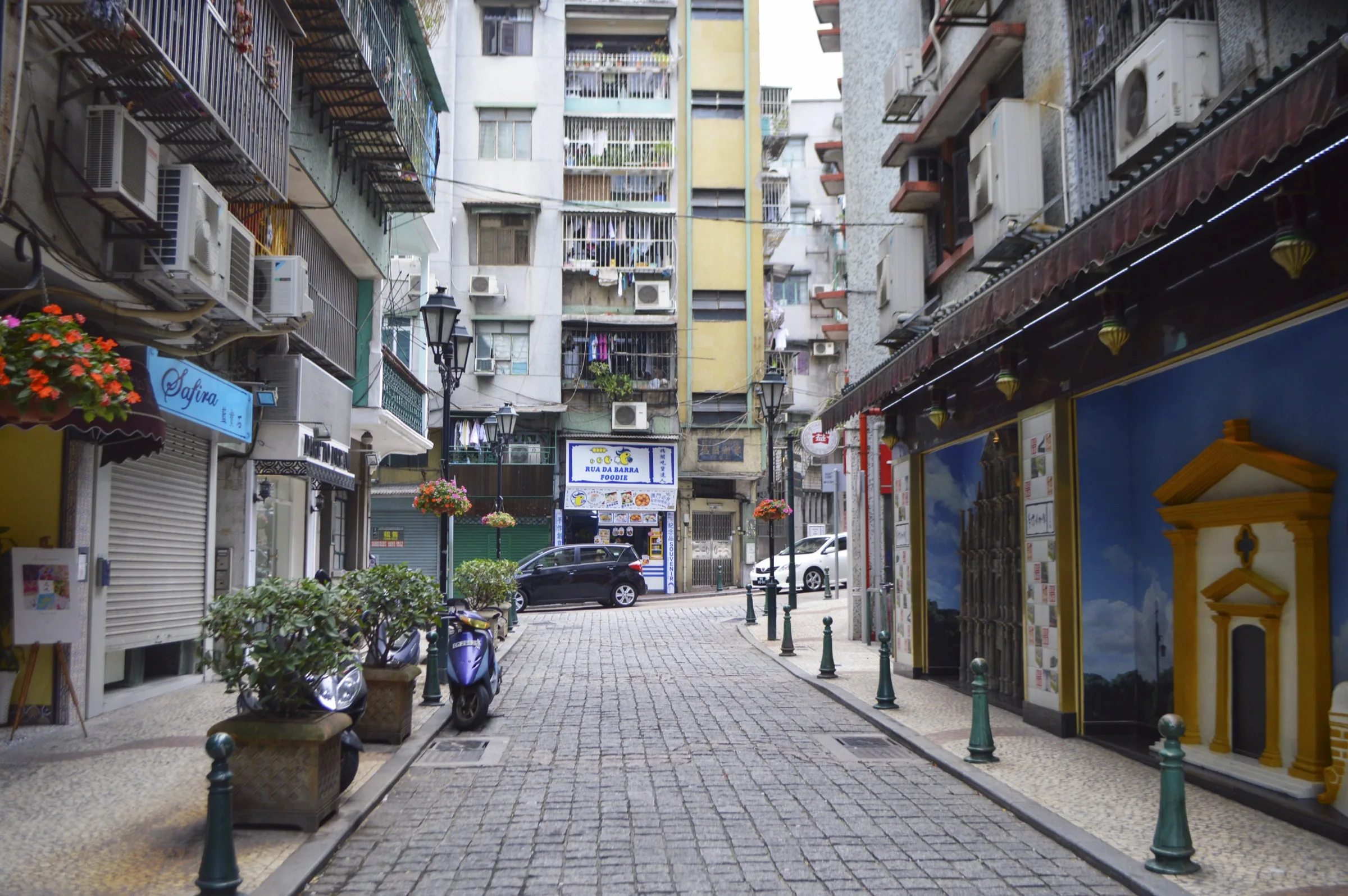
Old lanes show this history more clearly than a slogan. Chinese shop-house rhythms, Portuguese street names, Catholic institutions and contemporary apartment life appear within a few minutes of walking.
Macanese identity is specific, not a marketing adjective
Macanese identity developed through communities connected to Macau and the wider Portuguese Asian world. Family histories may include Chinese, Portuguese and other Asian ancestry, Catholic traditions, distinctive foods and forms of Portuguese or Macanese Patuá.
The word should not be applied to every hybrid-looking building or every dish combining two ingredients. Macanese culture belongs to people and historical communities, not merely to an aesthetic.
Food is one of its clearest archives. Minchi, African chicken and other Macanese dishes reflect domestic histories and routes through Portuguese Asia. They exist beside, not instead of, Macau's Cantonese noodles, roast meats, seafood, bakeries and tea culture.
Read the Cantonese food guide for the regional cooking system that surrounds Macau; Macanese food is a specific historical archive within the territory, not a replacement name for that wider table.
This distinction matters because tourism language loves to turn identity into flavor. “Macanese-style” can become a label for any plate with Portuguese seasoning and Chinese ingredients, just as “fusion” can hide the family route that made a dish possible. The better question is not which two national cuisines were combined. Ask which households carried the recipe, which ingredients arrived through maritime routes and which local constraints changed it.
Patuá makes the same point through language. Its historical existence records a community formed across Macau and the Portuguese Asian world; it is not a novelty phrasebook for visitors. Cantonese, Portuguese, Mandarin and English now occupy different institutional and social spaces. Hearing several languages in one afternoon does not mean everyone shares them equally. Language tells you who a service is designed for, which memory is being protected and which audience a business expects.
Churches became neighborhood institutions
Catholic churches in Macau carried missionary and colonial histories, but they also became local places for worship, schooling, festivals and community memory.
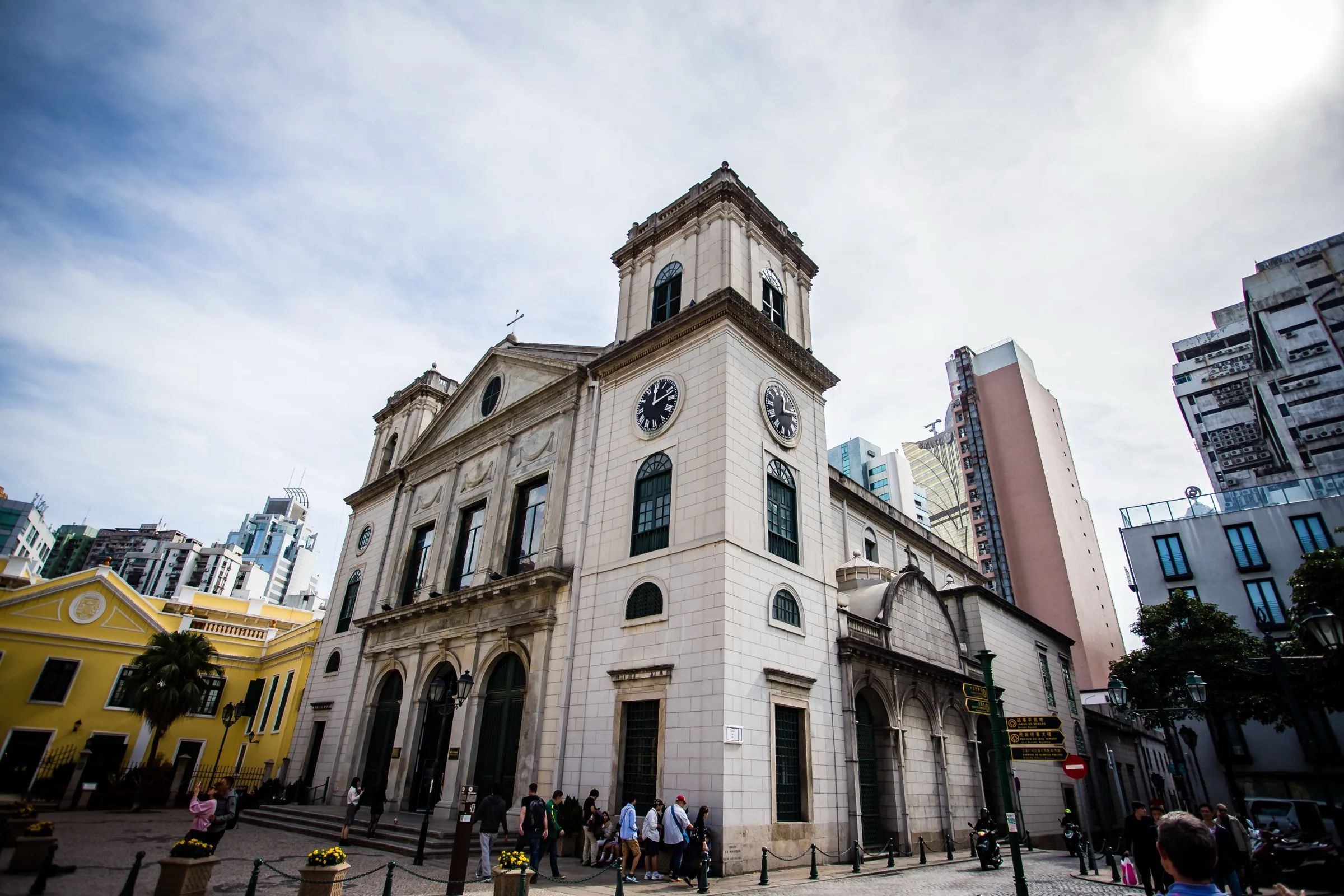
Architecture can tempt visitors to classify each building by European style and stop there. Ask which language a service uses, who maintains the church, how festivals move into the street and how the building sits beside nearby homes and temples.
Taipa shows heritage beside resort urbanism
Taipa preserves older village streets, religious sites and the pastel Taipa Houses, while enormous resort developments stand nearby on reclaimed land. The transition is not subtle.
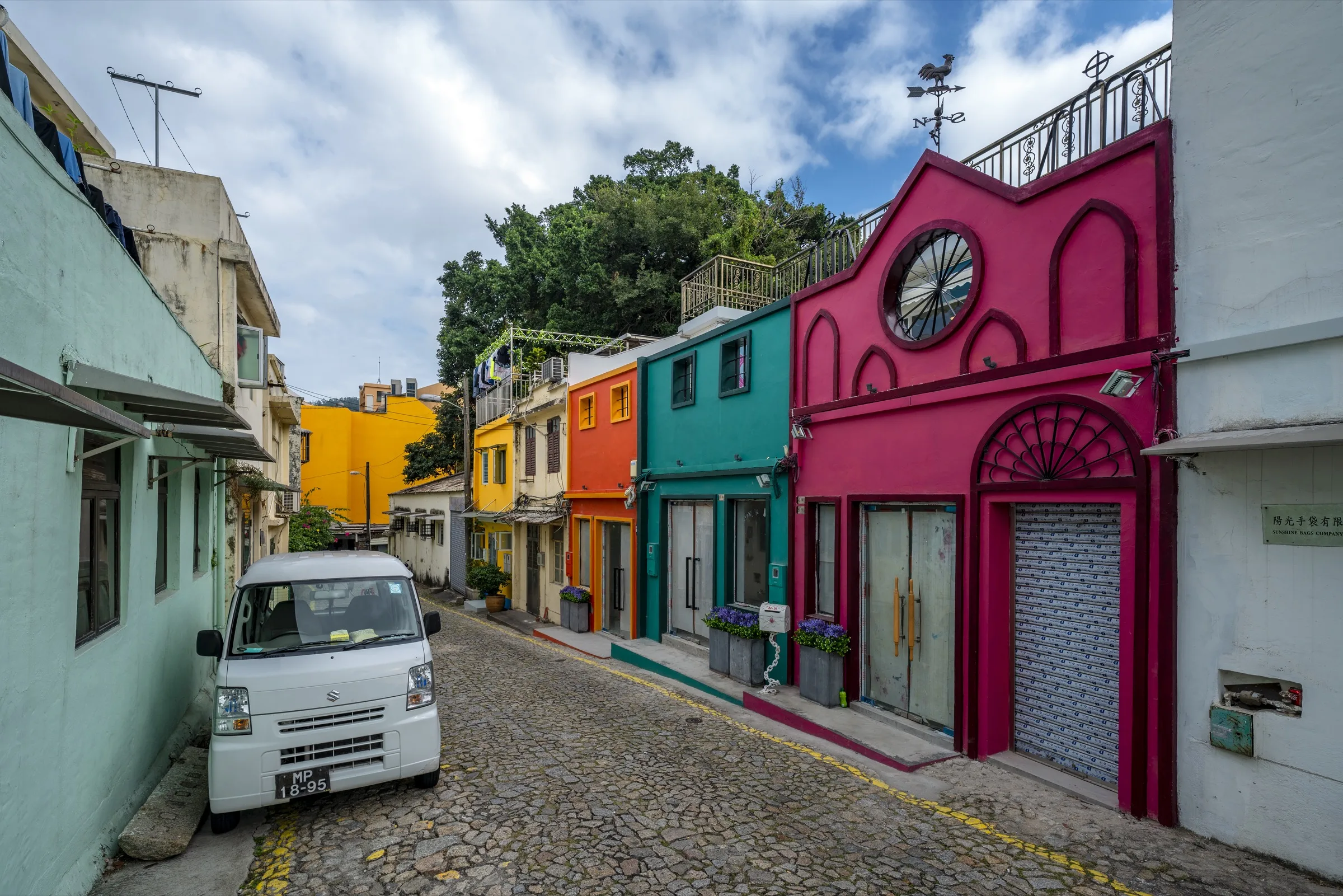
This proximity explains modern Macau. Heritage, gaming, housing, hospitality labor and infrastructure compete within a territory with limited land. Resorts create jobs and revenue but also dominate the external image of the city.
| Macau beyond the peninsula | Cultural value | What to avoid |
|---|---|---|
| Taipa Village | Older streets, food and neighborhood scale | Treating it as untouched by tourism |
| Taipa Houses | Residential heritage and curated memory | Assuming the interiors reproduce all past domestic life |
| Cotai | Reclamation, resort capital and controlled spectacle | Calling it the whole of modern Macau |
| Coloane | Temples, village streets and a slower southern edge | Imagining it has remained outside urban change |
Casinos changed the city without explaining all of it
Gaming is impossible to ignore. Casino and hospitality development altered land use, employment, migration, public revenue, transport and the skyline. Workers from Macau, mainland China, Southeast Asia and elsewhere sustain this economy.
But economic dominance is not cultural completeness. A city can depend on gaming while residents continue to organize life around schools, temples, markets, family restaurants and neighborhood associations.
The casino story is really a story about scale. Resort interiors make distance disappear through carpets, controlled temperature, artificial skies, retail corridors and shuttle networks. Residential Macau does the opposite: stairs, narrow pavements, delivery doors and bus stops make every meter visible. Moving between those systems is not an “old versus new” photo exercise. It shows two different ideas of how a city should move people and money.
Labor connects them. Hotel rooms, restaurant floors, gaming tables, security systems, buses and kitchens require people whose daily Macau is not the visitor's spectacle. Migrant labor and cross-border movement therefore belong inside any honest account of contemporary culture. I would rather notice where workers eat after a shift and how buses meet residential streets than pretend the resort simply appeared as architecture.
The most revealing comparison is spatial: move from a resort interior designed to eliminate weather and time into a street where laundry, incense and delivery scooters make daily life visible again.
How to read Macau responsibly
| Instead of | Try |
|---|---|
| Photographing only St. Paul's | Walk the connected heritage route and read several religious traditions |
| Calling every pastel facade Portuguese | Identify the building's original function and later local use |
| Treating cultural mixture as automatic harmony | Notice unequal power, adaptation and communities that remained distinct |
| Using Macanese as a general style label | Learn about the specific people, language and food traditions |
| Judging Macau from a casino shuttle | Walk one residential district at morning or early evening |
A Macau culture guide must keep six layers separate
| Layer | What it contributes | What it must not be reduced to |
|---|---|---|
| Cantonese neighborhood life | Language, markets, worship, schools and family routine | A generic “Chinese side” of the city |
| Maritime religion | Mazu devotion, coastal memory and regional movement | Incense as exotic decoration |
| Portuguese institutions | Law, administration, Catholic networks and urban form | Pastel facades without colonial power |
| Macanese community | Specific family histories, food, religion and language | A universal synonym for fusion |
| Migrant and cross-border labor | The people who operate hospitality and contemporary services | An invisible background workforce |
| Gaming and resort capital | Revenue, jobs, reclamation, infrastructure and global spectacle | The complete identity of Macau |
Keeping the layers separate does not deny connection. It makes connection meaningful. Only after naming who and what is present can we ask where borrowing occurred, where conflict remained and where a new local form emerged.
Macau's depth comes from adjacency
Macau rarely gives cultural layers enough space to separate. A temple can sit against an old wall; a church can face apartment towers; a resort can rise beyond a village lane. The city becomes meaningful when those juxtapositions are read as history rather than collected as visual novelty.
My firm conclusion is simple: Macau is not a harmonious fusion object and it is not a casino with heritage nearby. It is a compact negotiation among communities, institutions and economies that remain visibly unequal. Walk slowly enough to see who uses each space, and the city stops looking small.
Frequently asked questions about Macau culture
What culture is Macau known for?
Macau is shaped by Cantonese life, Chinese religious traditions, Portuguese colonial rule, maritime trade, migration and a distinct Macanese community. Its culture is not a perfectly blended East-meets-West style but a layered history with unequal power and local adaptation.
Is Macau culture only Portuguese and Chinese?
No. Those histories are central, but Macau also reflects migration from elsewhere in Asia, global tourism, casino labor, contemporary mainland connections and communities whose identities do not fit a simple two-part formula.
What is Macanese culture?
Macanese identity developed through families and communities connected to Portuguese Asia and Macau, with distinctive language, religion, food and social history. It should not be used as a loose label for anything that combines Chinese and Portuguese elements.
Are the Ruins of St. Paul's a complete church?
No. The famous stone facade and stairway are surviving parts of the Church of Mater Dei and the former St. Paul's College complex after a nineteenth-century fire. The site needs its Jesuit, educational and regional context.
How is this page different from the Macau travel guide?
This page explains history, identity, religion and urban form. The separate travel guide covers entry, transport, neighborhoods, food choices and a practical two-day itinerary.