To travel to Macau only for casinos is like entering a library to admire the elevators. The spectacle is real, but the plot sits in the short distances between a Chinese temple, a Portuguese civic square, an apartment block, a Macanese kitchen and a resort built at another scale entirely. Give Macau three days only if you are willing to walk across those layers instead of commuting between casino lobbies.
This page handles entry, route design, transport and where to spend limited time within the wider Chinese cities travel guide. Read the Macau culture guide for deeper context on colonial rule, Cantonese life, Macanese identity, religion and the city's changing urban form.
Travel to Macau at a glance
| Travel decision | East Moment recommendation |
|---|---|
| Ideal first stay | 2 full days; 3 for Coloane, museums and slower food exploration |
| Best first route | A-Ma Temple to Senado Square, St. Paul's and Mount Fortress |
| Best second-day contrast | Taipa's older streets, then Cotai or Coloane depending on your interests |
| Best for | Dense urban walking, architecture, Cantonese and Macanese food, religious history and city contrasts |
| Main mistake | Arriving on a day trip, following the largest crowd and assuming the casino skyline explains the territory |
Choose your route through this guide
| If you need... | Start with... |
|---|---|
| A one-day route | The peninsula's south-to-north historical spine |
| A two- or three-day plan | Taipa, Coloane, Cotai and the itinerary table |
| Cultural context | The layered-city framework and active religious sites |
| Food priorities | Macanese dishes and the territory-based meal plan |
| Entry logistics | Border, currency, buses and hotel location |
Plan Macau by zone, not by a list of landmarks
Macau is compact, but water, bridges, border crossings and resort superblocks break the territory into distinct experiences. The historic peninsula is best read mostly on foot. Taipa combines older streets, museums and residential life. Cotai is the large-scale resort zone built on reclaimed land. Coloane offers a lower, slower southern landscape.
A strong trip moves through these zones deliberately. It does not use a free shuttle as the itinerary.
The UNESCO Historic Centre of Macao listing confirms that the peninsula's heritage is a connected group of sites. Use it to understand the route as a network, not as permission to sprint between one famous facade and one square.
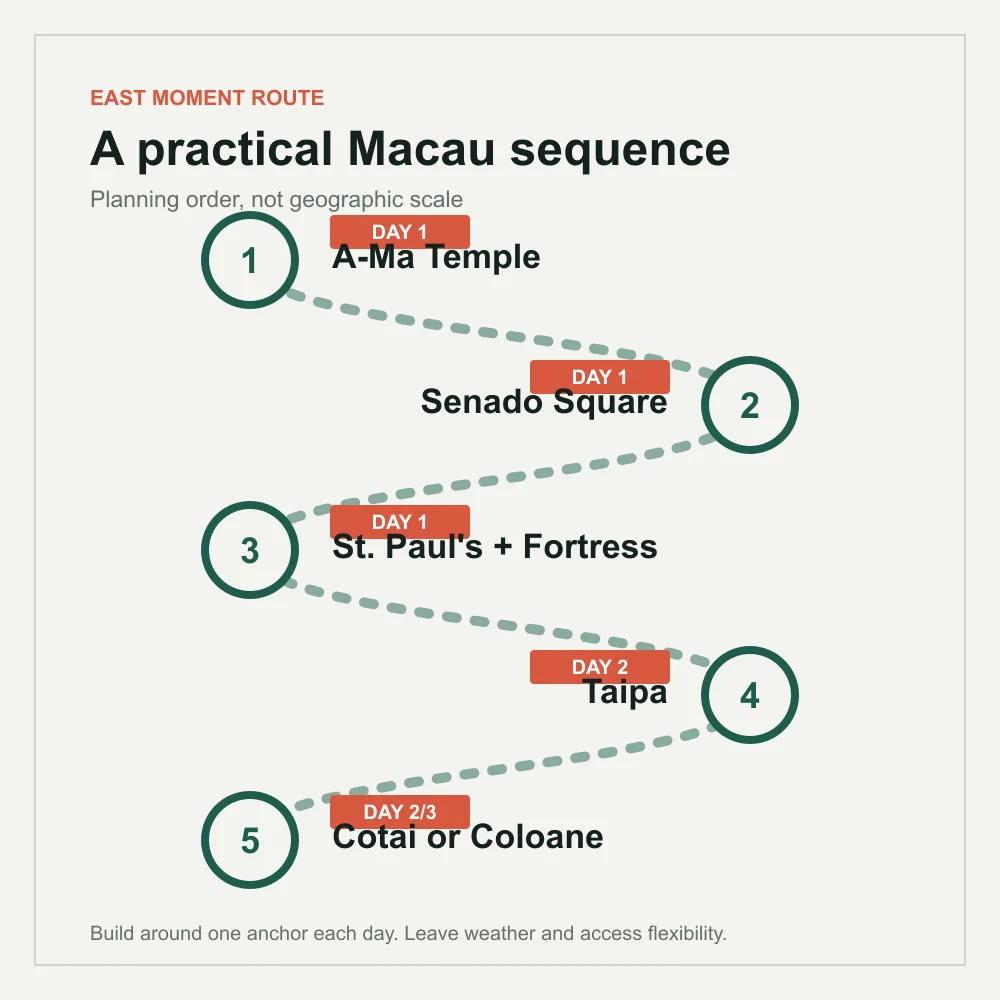
Walk the peninsula as one connected story, then use the second day for a deliberate island and resort contrast.
How to read Macau beyond the postcard
Do not reduce Macau to "East meets West"
The phrase is attractive because it is short, visual and apparently inclusive. It is also too smooth. Macau was not created when two abstract cultures met politely in a square. Its built environment reflects trade, Catholic institutions, Chinese religious life, colonial administration, migration, war, family networks, gaming policy, land reclamation and everyday adaptation. Those forces did not carry equal power, and they did not produce one harmonious style.
Travelers can see the difference by replacing the question "Is this Chinese or Portuguese?" with more specific questions. Who funded the building? What institution used it? Which language appears on signs? How does the street around it function now? Is the space religious, civic, commercial, residential or deliberately staged for tourism? A church facade beside a Chinese shop does not automatically explain their historical relationship.
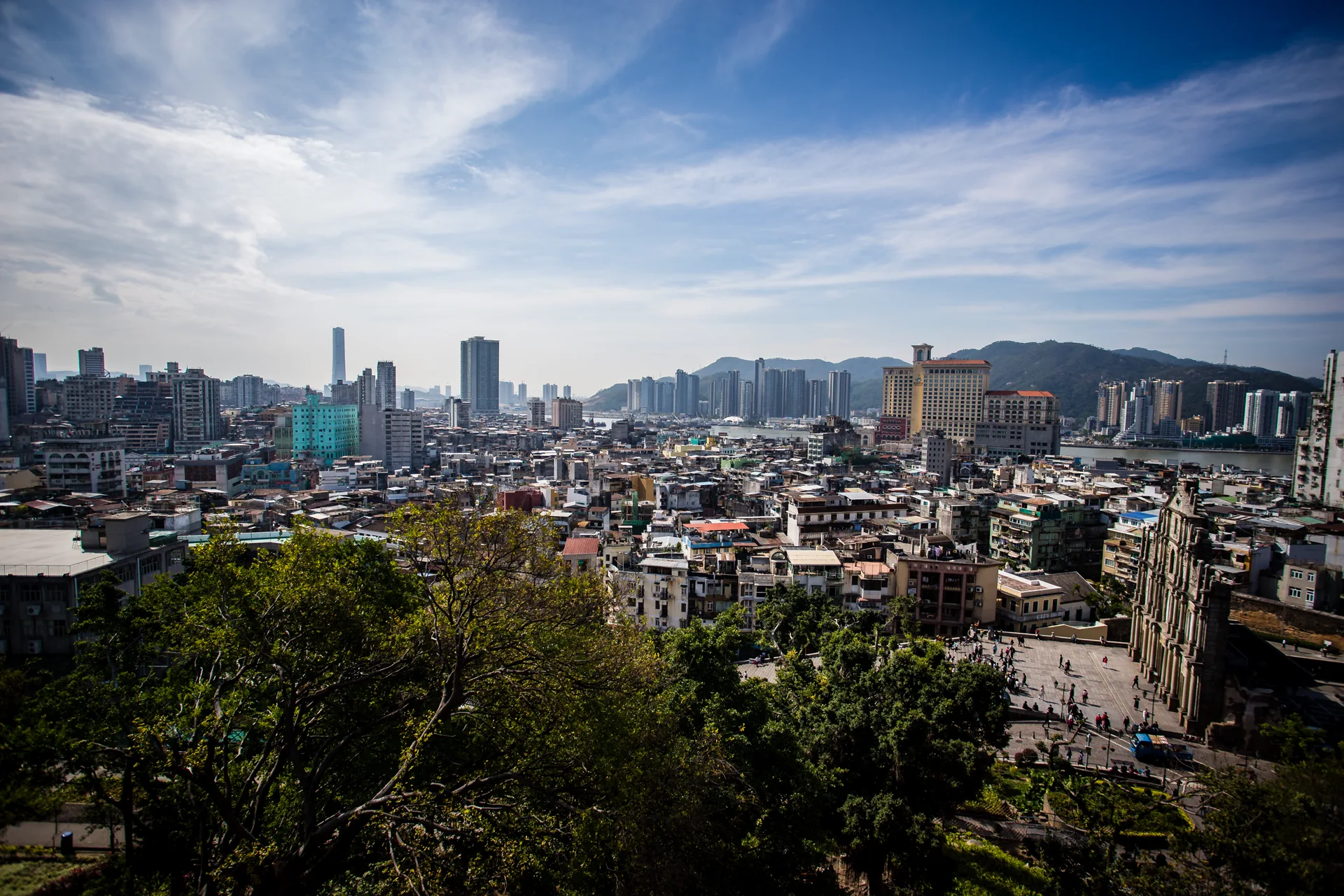
This sharper way of looking does not make the city less enjoyable. It makes visual contrast more meaningful. Portuguese paving in a civic square, a temple embedded in a dense neighborhood and a casino tower visible behind older roofs belong to different systems that happen to occupy a compressed territory. Macau's power comes from their adjacency, not from pretending they form a simple fusion.
Use the phrase "layered city" as a working idea. Layers can coexist, conceal one another, be rebuilt or gain new meanings. A two-day route should therefore include spaces of worship, administration, housing, food and entertainment rather than collecting only the most photogenic evidence of cultural mixture.
Day one: walk the historical spine from south to north
Start around A-Ma Temple and the Inner Harbour side, then move north through the historic center toward Senado Square, the Ruins of St. Paul's and Mount Fortress. This direction lets maritime and Chinese religious history appear before the most photographed Portuguese-facing civic spaces.
A-Ma Temple is the right beginning
A-Ma Temple connects worship, maritime movement and the cultural landscape from which Macau's name is commonly associated. It remains a religious site. Keep circulation clear, lower your voice and do not treat incense or prayer as a portrait backdrop.
From there, do not rush straight to Senado Square. The route through older streets shows how churches, shops, schools, clinics and homes occupy the same compact city. Slopes and humidity make the walk more demanding than the distance suggests.
Senado Square is a civic space, not the whole historic center
The patterned paving and painted facades are memorable, but the square is most useful as a junction. Walk one block away and the visitor economy quickly meets pharmacies, bakeries, apartment entrances and small businesses.
St. Paul's needs the fortress and museum beside it
The Ruins of St. Paul's are the surviving facade and stairway of a much larger religious and educational complex. Climb the steps, then continue to the museum and Mount Fortress so the facade becomes part of a regional story of Jesuit activity, exchange, fire, conflict and memory.
The fortress also gives a useful view across dense residential Macau toward later towers. That visual compression is more revealing than a clean heritage photograph because it shows how little physical distance separates different periods of power.
Residential Macau is where the postcard becomes a city
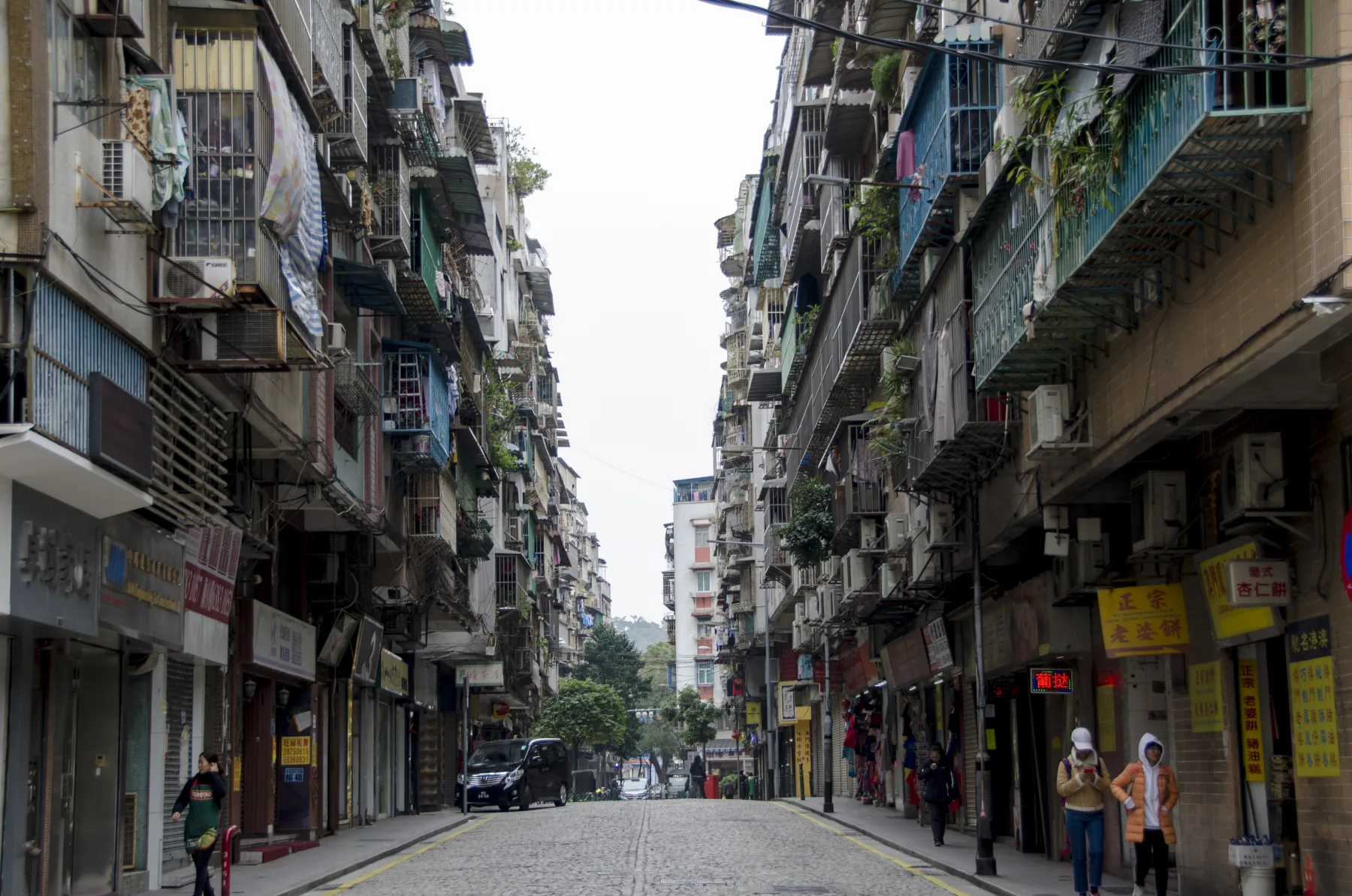
The historic center can be crowded enough to feel like a continuous attraction zone. Walk ten minutes away from its strongest visitor flow and the territory changes. Apartment entrances, schools, wet-market activity, clinics, repair shops and small restaurants show how limited land and high density organize ordinary life.
This is not a request to hunt for a supposedly hidden, authentic Macau. Residential districts are not attractions and residents do not owe visitors access. The purpose of walking through public streets is to understand scale. Look upward at additions, air-conditioning units, laundry, signs and windows. Notice how a small temple or older facade survives beside much taller housing. Observe where sidewalks narrow and how buses, scooters, delivery work and pedestrians negotiate the same corridor.
The peninsula's slopes matter here. A short route may include stairways, ramps and abrupt elevation changes that maps understate. Higher points reveal roof density and later reclamation; lower streets bring the harbor and older commercial geography back into view. Build extra time into any north-south walk rather than assuming compactness means ease.
Photography requires restraint. A dense facade can be photographed without aiming into a private window. A street scene can show movement without isolating one resident as an exotic subject. If someone notices the camera, lower it or ask. The ethical boundary is especially important in Macau because public and private life sit unusually close together.
Look for the service city
Behind every visitor landscape is work: hotel shifts, food preparation, cleaning, transport, security, retail and construction. Pay attention to morning bus movement, staff entrances and the routes that exist beside resort shuttles. This service geography connects residential Macau to the spectacle seen by visitors and prevents the city from being described only through architecture.
Day two: use Taipa to understand transition
Taipa's older village streets, houses and food businesses sit close to residential towers and Cotai's giant resort complexes. Walk the older area first. The Taipa Houses can help frame domestic and Portuguese-era history, but visible heritage is curated and should not be confused with a complete account of island life.
Then choose your contrast:
- Go to Cotai if you want to understand resort architecture, gaming-led tourism and the labor and infrastructure required to sustain spectacle.
- Continue toward Coloane if you want a lower-density landscape, older streets, food and a quieter waterfront rhythm.
You can do both in one day, but the result is often transport-heavy. Two hours in a resort and two hours in Coloane are enough to see surfaces, not to understand either place.
Taipa and Coloane answer different questions
Taipa is not merely the place to eat before entering Cotai. Its value lies in transition. Older village-scale streets, museums, temples, restaurants, apartment towers and airport-related infrastructure exist within a small area. Walking between them shows how an island settlement became part of a closely integrated urban territory.
Visit the busiest food street, but do not stop there. Continue toward quieter public spaces and residential edges where the relationship between old lanes and later development is easier to see. The Taipa Houses offer a curated architectural image; the surrounding streets show how that image is framed, maintained and consumed in the present.
Coloane provides another kind of contrast. It is lower-density, greener in places and more closely associated with waterfront and village atmosphere. Yet it should not be described as untouched. Weekend visitors, restaurants, buses, housing and recreation all shape it. Go because you want a slower half-day, coastal air and a different settlement scale, not because a guide promised escape from modern Macau.
The choice between Cotai and Coloane is ultimately a choice between two forms of contemporary Macau. Cotai shows concentrated capital, private interior space and engineered spectacle. Coloane shows the value and pressure attached to relative quiet. Seeing both over three days reveals more than declaring one artificial and the other authentic.
If time permits, finish the island day after sunset. Taipa's residential towers, Cotai lighting and darker southern edges create a night geography very different from the heritage lighting around Senado Square. Macau's small area contains multiple night-time cities.
Casinos belong in the story, but should not control it
Gaming and integrated resorts are central to Macau's economy and global image. Ignoring them produces another distortion. Visit one complex if the scale interests you, notice how shopping, hotels, entertainment and simulated public space are organized, then return to an actual street.
The useful comparison is not "old Macau versus fake Macau." Both zones are contemporary. The question is who each environment is designed for, how long people are expected to stay and whether movement is controlled by civic streets or private interiors.
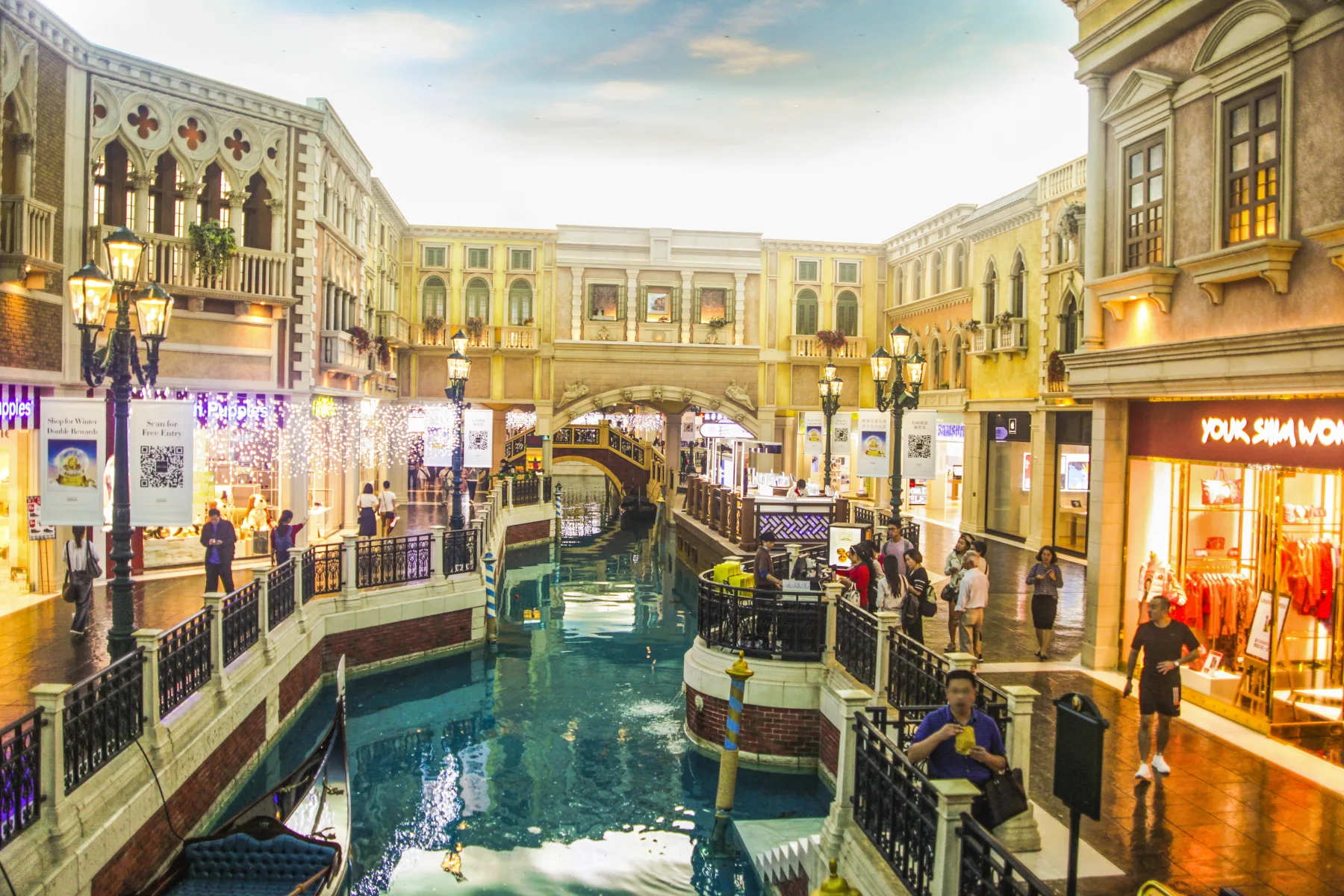
Cotai is an urban experience even if you never gamble
An integrated resort is designed to reduce friction. Climate, lighting, scent, music, signage, entertainment and shopping work together to keep visitors inside a controlled environment. Corridors may look like public streets, but access, surveillance, opening hours and commercial purpose are privately managed. This makes Cotai useful for understanding a form of urbanism that is very different from the peninsula.
Enter one large complex with an observation task. Trace how you arrived from a shuttle, taxi or bus. Note whether the route brings you first to gaming, retail, hotel reception or entertainment. Look for natural light and clocks. Estimate how long it takes to reach an exit that faces an ordinary road. The building is not only decorated spectacle; it is a machine for directing movement and attention.
Then step outside. Distances between neighboring resorts can be uncomfortable in heat or rain, and roads may prioritize vehicles. A skyline that appears compact from a viewpoint can involve long internal and external walks. This is why a Cotai visit should be selective. One carefully observed complex explains more than collecting photographs from five nearly interchangeable lobbies.
Travelers who gamble should set financial and time limits before entering and treat gaming as paid entertainment, not an income strategy. Travelers who do not gamble still need to respect age restrictions and controlled areas. Current rules, dress expectations for specific venues and photography restrictions should be checked on site.
The most revealing end to the visit is a public bus away from Cotai. The transition from themed interiors to staff commutes, residential towers and ordinary streets reconnects spectacle to the wider territory that supports it.
Religious sites should be visited as active places
Macau's temples and churches are central to the historic route, but active worship changes visitor responsibility. A-Ma Temple, Na Tcha Temple, St. Dominic's Church and other sites may be simultaneously heritage landmarks, community institutions and sacred spaces. Opening access, ceremonies and photography expectations can vary.
Pause before entering. If worship is underway, stand back. Avoid blocking doors, altars or incense areas. Clothing and behavior should suit a religious place even when the surrounding square feels like an attraction. Flash, tripods and posed photography may be inappropriate or prohibited.
The route becomes deeper when sites are not treated as evidence for a generic coexistence slogan. Compare how each one meets the street, how offerings or devotional objects organize movement and how later urban development surrounds it. Ask what the building is doing today, not only which century appears on a plaque.
Travelers with limited mobility should research entrances carefully. Historic churches, temple compounds, fortress routes and steep streets may involve steps or uneven surfaces, while an accessible approach can be located on another side. A short distance on the map does not guarantee a simple route.
Build a 1, 2 or 3-day Macau itinerary
| Length | Recommended sequence | What to leave out |
|---|---|---|
| 1 day | A-Ma Temple, historic-center walk, St. Paul's and Mount Fortress | Cotai unless resorts are your main reason for visiting |
| 2 days | Add Taipa, then choose either Coloane or a selective Cotai visit | Multiple museums and repeated shuttle loops |
| 3 days | Add Coloane, a deeper museum or church route, and meals in different neighborhoods | Treating the third day as another casino day by default |
Where to stay in Macau
Stay on the peninsula if walking, food and the historic center are your priorities. Choose a hotel near a useful bus corridor rather than assuming every central-looking property is easy with luggage. Stay in Taipa for a middle ground between older neighborhoods, the airport and Cotai. Stay in Cotai for resort facilities, entertainment and large rooms, accepting that spontaneous old-street life is limited inside the complexes.
Macau can also be visited from Hong Kong, but a day trip gives border procedures and ferry or bridge transport a large share of the day. Compare the full route in our travel to Hong Kong guide before deciding where to sleep.
The border is part of the itinerary
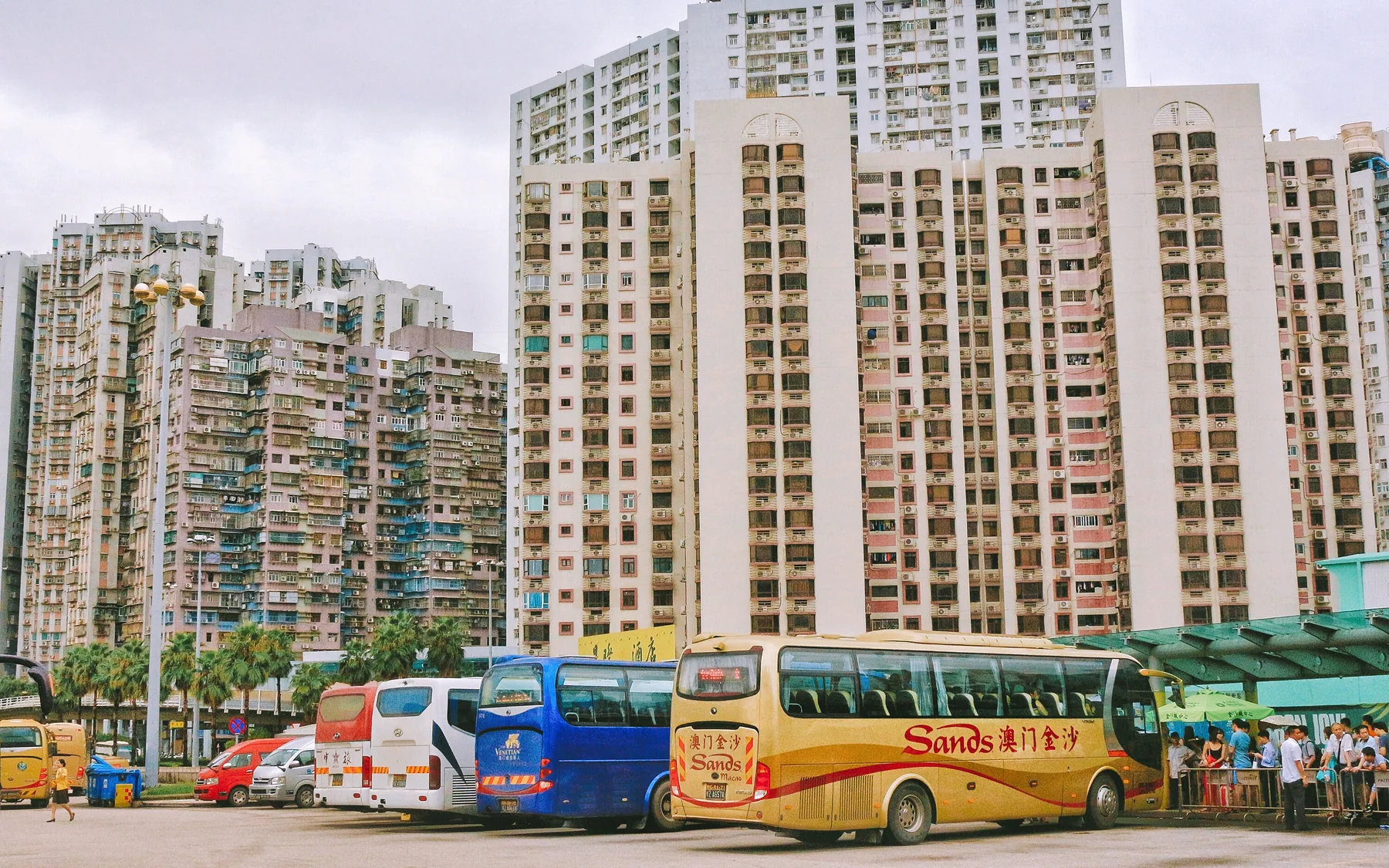
Macau is often described as if it were a neighborhood reached from Hong Kong or Zhuhai. In practice, immigration, terminal access, baggage, ticketing and onward transport create a real travel boundary. The exact process depends on nationality, residence status, route and current policy, so official information matters more than an old personal blog.
Before choosing a hotel or buying a return ticket, compare the Macao Government Tourism Office's current ports of entry. The list separates air, sea and land terminals and publishes opening information; it should decide the first and last hour of the itinerary, not sit as an afterthought beneath a landmark list.
For a Hong Kong day trip, count door-to-door time rather than vessel or bridge time. Reaching the terminal, checking in, completing border procedures and traveling from the Macau arrival point to the historic center can consume the quietest morning hours. Returning on a fixed schedule also makes it harder to stay for dinner or respond to weather.
An overnight stay is therefore not only about adding attractions. It changes the emotional pace. Once the return border is removed from the evening, you can eat without watching the clock, walk after the main crowds leave and begin the next day inside the territory. Two days and one night often feel more than twice as substantial as a day trip.
Keep passport, entry record and transport details accessible. Do not leave the territory for a casual side trip unless you have confirmed that your documents support re-entry. Travelers connecting with mainland China must separately understand mainland entry requirements; Macau admission does not create permission to cross into Zhuhai.
Eat beyond a single egg tart stop
Portuguese egg tarts are a reasonable beginning, not a complete food identity. Add a Macanese dish such as minchi or African chicken from a kitchen that treats the cuisine as more than a tourism label. Then eat Cantonese noodles, congee, roast meats, seafood or dim sum in a neighborhood setting.
Macanese cuisine grew through particular families, migration routes, ingredients and Portuguese Asian connections. It is not a generic fusion category. Our Cantonese food guide explains the wider regional table, while the Hong Kong food guide makes a useful comparison across the delta.
Use meals to map the territory
Food becomes more informative when each zone contributes something different. On the peninsula, begin with a Cantonese breakfast or neighborhood noodle meal before the heritage walk. Around the historic center, use a bakery stop as a pause rather than lunch. In Taipa, book one Macanese meal where several dishes can be shared. In Coloane, seafood or a simple local meal can match the slower setting. Cotai is useful for observing how resort dining packages regional and international cuisines at another price and scale.
Macanese restaurants vary from family-style kitchens to formal heritage presentations. Read menus in advance and ask what portion sizes suit your group. Dishes such as minchi, African chicken and baked rice are substantial; ordering all the famous names for two people can create waste and prevent comparison with Cantonese food.
The egg-tart debate is enjoyable but not historically or nutritionally sufficient as a route. Different bakeries produce different textures, and queues often reflect location and online fame as much as absolute quality. Buy one while it is fresh, then move on. Macau's food identity becomes clearer through a day of contrasting meals than through a box carried from one famous counter.
Travelers with allergies should ask specifically about shellfish, nuts, dairy, egg and sauces. A dish described through Portuguese or English vocabulary may still use Cantonese pantry ingredients, and the reverse is also true. Translation cards can help, but staff confirmation remains important.
Who should give Macau three days
What most guides get wrong
They divide the territory into "heritage" and "casinos," then rush between the two. Macau's real value lies in the residential streets, transport systems, food businesses and service labor connecting those apparently separate worlds.
Stay three days if you care about architecture, food history, dense urbanism or the relationship between public streets and private resort space. The extra day supports museums, Coloane, slower meals and repeat walks at different times. It is also valuable for photographers because haze, rain and changing light can transform short sightlines.
One day may be enough if your only objective is the principal heritage route. Two days suit most first visits. Travelers who dislike crowds should not assume that a longer stay removes them; instead, the extra time allows early starts and less famous streets. Families should plan around heat, walking distance and long resort interiors. Anyone expecting a beach holiday or a purely Portuguese old town will need to reset expectations.
Macau's strongest experience is comparative. It asks the visitor to hold temple smoke, apartment density, colonial institutions, family foodways and casino spectacle in the same mind without forcing them into one slogan. That work takes time, but it is what makes the territory more than an optional stop beside Hong Kong.
Transport, money and border planning
Public buses provide the most complete local network. Route numbers, stops and payment options should be checked close to travel. Taxis can save time but demand rises around borders, events and resort areas. Free hotel shuttles connect selected terminals and properties; they are useful links, not universal public transport.
Use the tourism office's local transportation guide to recheck buses, LRT, taxis and payment details shortly before departure. My route recommendations explain which zone deserves the time; the official page owns the operational facts that can change.
The Macanese pataca is the local currency. Hong Kong dollars are widely accepted in many visitor-facing situations, but exchange and change practices vary, and small businesses should not be assumed to handle every payment method. Keep a practical backup.
Macau has entry arrangements distinct from both mainland China and Hong Kong. Check the rules that apply to your passport, arrival point and onward route through official channels. Do not assume a mainland visa or Hong Kong entry automatically answers the Macau question.
Weather and walking reality
Late autumn through early spring often supports the most comfortable long walks. Summer is hot, humid and storm-prone; rain shelter does not remove heat stress. Historic streets include slopes, steps, polished paving and narrow sidewalks, while resort interiors can involve surprisingly long indoor distances.
Macau's central lesson is adjacency. Walk enough to see incense, tiled facades, laundry, school traffic and a casino tower occupy the same frame, then resist the temptation to call that frame a simple "East meets West" picture.
Frequently asked questions about travel to Macau
How many days should I spend in Macau?
Two days is enough for the historic peninsula and either Taipa or Coloane without rushing. Three days lets you compare residential Macau, Macanese food and Cotai's resort scale instead of reducing the city to one crowded day trip.
Is Macau only for casinos?
No. Gaming resorts are economically and visually prominent, but Macau also has layered Cantonese and Portuguese heritage, temples, churches, old neighborhoods, beaches and a distinctive food culture.
Can I use Hong Kong dollars in Macau?
Hong Kong dollars are commonly accepted in many places, but the Macanese pataca is the local currency and change practices vary. Check current payment information and do not assume every small business handles currencies identically.