Quanzhou (泉州) is best understood as a network. A stone bridge moved people and cargo. Kilns supplied export markets. Officials managed trade. Buddhist, Muslim, Daoist, Manichaean and popular religious communities built institutions. Sailors prayed, merchants donated, craftspeople cut stone and families maintained links across seas. The modern city still carries those connections in red-tile roofs, temple festivals, overseas kinship, factories, food and music. Its depth does not depend on imagining one perfectly preserved ancient harbor.
This Chinese culture guide makes one firm claim: Quanzhou is not a collection of religions placed side by side for a diversity poster. It is a working ledger. Trade created risks and obligations; bridges, temples, mosques, officials, craftspeople and families absorbed them. Read the entries together and the port becomes human.
The UNESCO Quanzhou serial-property record identifies the component sites and the Song–Yuan emporium argument. It cannot prove effortless harmony or replace present-day opening information.
Quanzhou travel guide at a glance
| Question | Short answer |
|---|---|
| Why visit? | For UNESCO maritime heritage, Minnan architecture, religious diversity, bridges, Nanyin, puppetry, food and a lived old city |
| Ideal first stay | Four days: two old-city days, one museum and performance day, and one bridge or outer-site day |
| Best first base | Near the old city with practical access to West Street and public transport, without expecting every component site to be walkable |
| Essential experiences | Read the UNESCO sites as one system, compare Kaiyuan Temple with Qingjing Mosque and Tianhou Temple, hear Nanyin and eat beyond one snack street |
| What makes it different? | Quanzhou makes global exchange visible through local infrastructure, worship, craft and family memory rather than through a modern skyline alone |
| Main planning trap | Treating every religious building as evidence of effortless harmony or assuming the UNESCO label covers one compact attraction |
Choose the Quanzhou you want to understand
| If you care most about | Build your days around | Add this contrast |
|---|---|---|
| Maritime history | Quanzhou Maritime Museum, UNESCO component sites and port geography | Pair precious objects with bridges, kilns and administrative infrastructure |
| Religious heritage | Kaiyuan Temple, Qingjing Mosque, Tianhou Temple and Cao'an | Ask how different communities used the port rather than collecting facades |
| Architecture | Red-brick houses, swallowtail roofs, stone pagodas and bridges | Separate living adaptation, restoration and tourism reconstruction |
| Performance | Nanyin and Fujian puppetry | Look for training, repertoire and community context beyond a short show |
| Food | Beef soup, oyster dishes, noodles, seafood and tea | Use the Fujian cuisine guide to place Quanzhou inside Minnan and provincial systems |
| Diaspora | Clan halls, temples, inscriptions and overseas-donated buildings | Consider how migration changed both Quanzhou and communities abroad |
UNESCO protects a trading system, not one monument
The World Heritage property Quanzhou: Emporium of the World in Song-Yuan China is serial, meaning its component parts are distributed. Together they explain production, transport, administration, religion and urban organization.
| System function | Examples visitors can connect | Why it mattered |
|---|---|---|
| Administration | Official and urban sites | Trade required taxation, regulation, storage and authority |
| Religious support | Buddhist, Islamic, Daoist and popular religious institutions | Merchants and sailors built communities, patronage and ritual protection |
| Transport | Bridges, gates, waterways and port sites | Cargo moved through a regional landscape before reaching ships |
| Production | Kilns and craft evidence | Overseas demand depended on specialized inland and coastal production |
| Urban exchange | Markets, streets, inscriptions and residences | Trade changed language, diet, architecture and social networks |
The property does not freeze Quanzhou in one century. Coastlines shifted, channels silted, buildings were rebuilt and the city expanded. The most accurate narrative follows relationships rather than searching for a single surviving medieval waterfront.
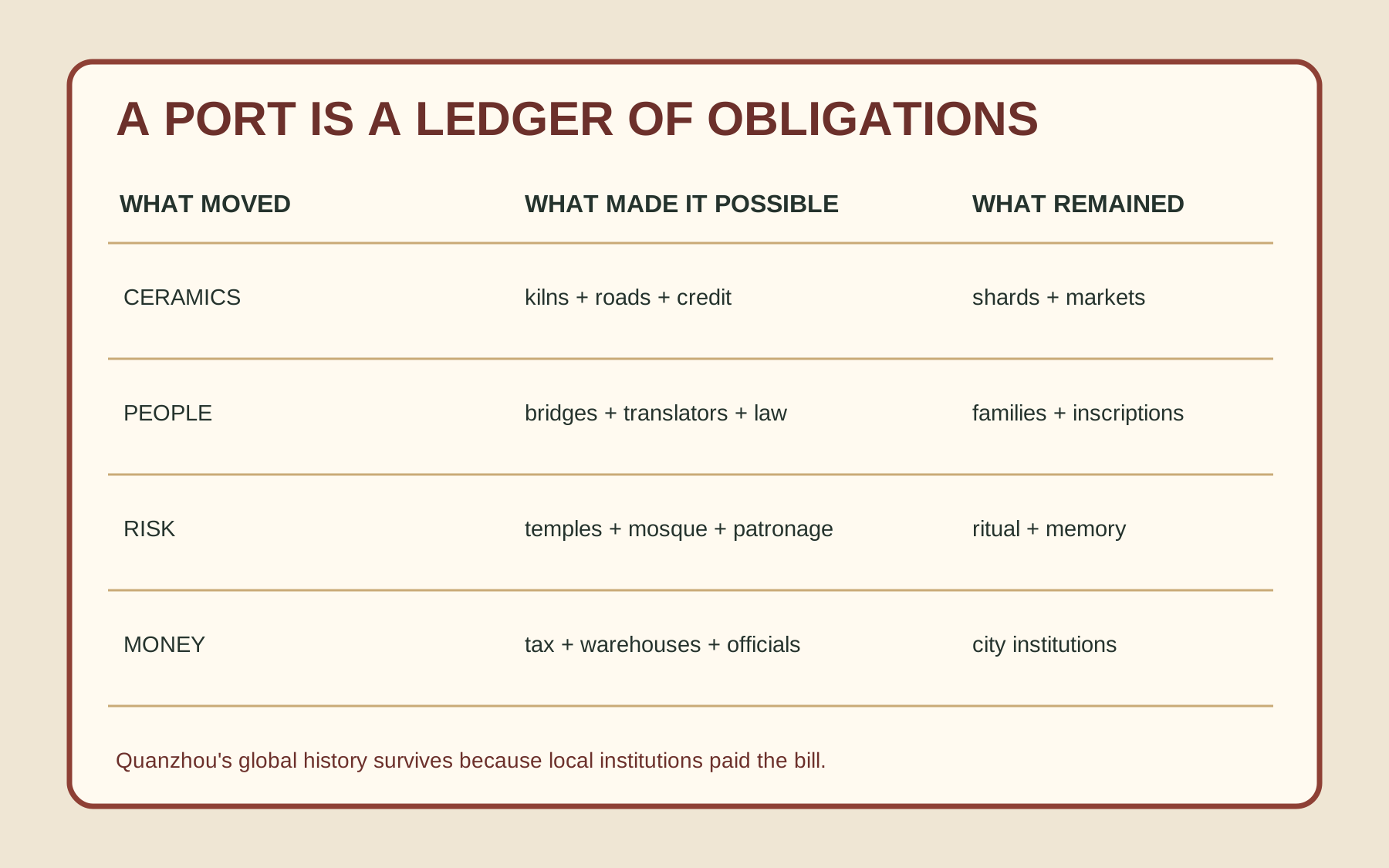
I use the word ledger deliberately. A ship arriving safely was never only a captain's achievement. Cargo depended on kilns, warehouses and roads; contracts needed trust and enforcement; danger produced ritual obligations; migration created families that remembered a hometown across generations. The diagram is not a literal account book from one merchant. It is a way to stop “Maritime Silk Road” from floating above the people who paid, prayed, waited and repaired.
The old city's roofs show continuity and adaptation
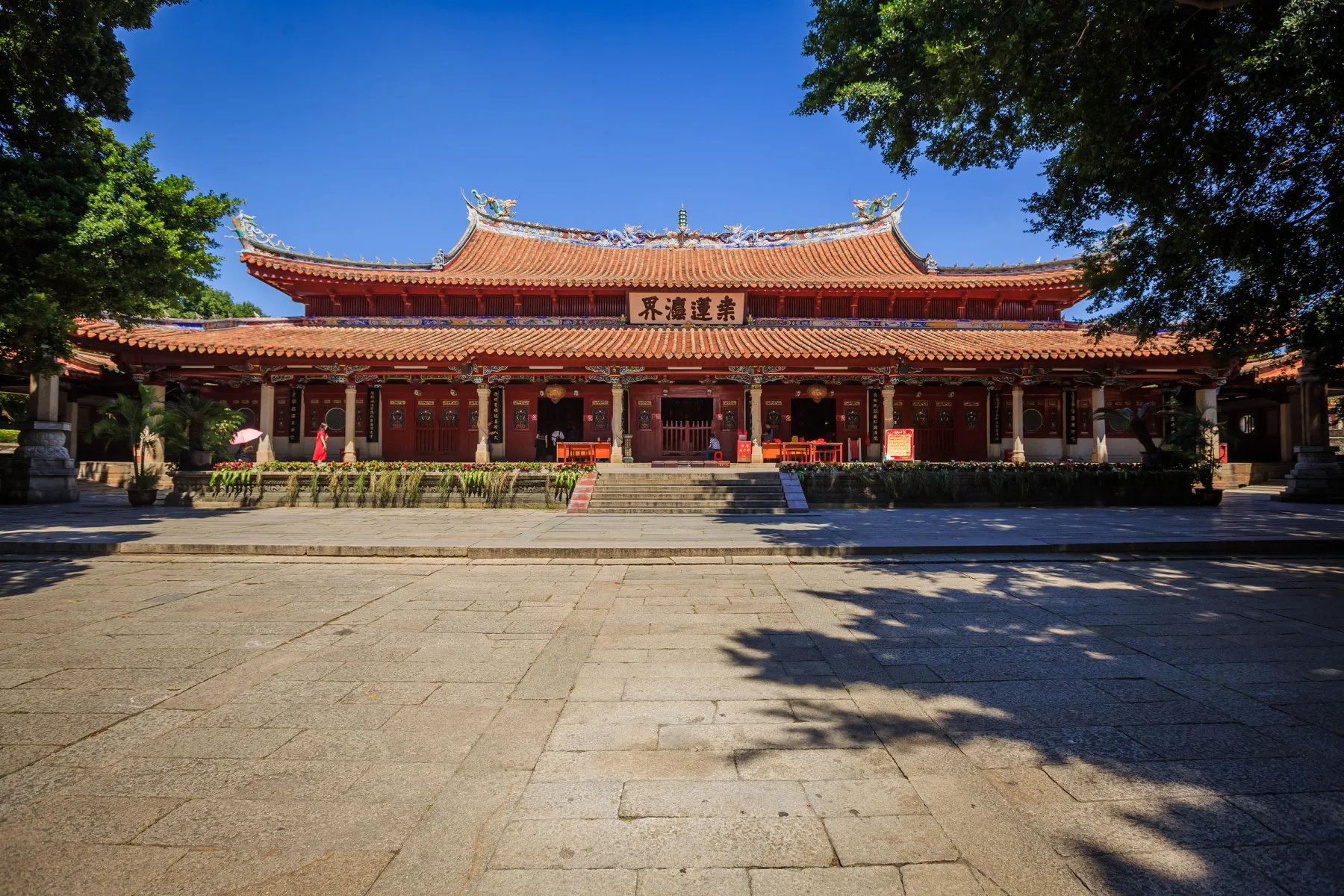
Red brick, pale stone, curved roof ridges and swallowtail forms help define the visual language of southern Fujian. Yet the old city is not a uniform conservation zone. Houses carry air conditioners, shop signs, repairs, concrete additions and changing uses.
That mixture is evidence of life. A roof can preserve regional form while the building beneath it becomes a home, warehouse, cafe or hotel. Conservation should not require residents to perform permanent antiquity.
Kaiyuan Temple is Buddhist history inside a trading city
Kaiyuan Temple is one of Quanzhou's major Buddhist institutions. Its stone pagodas dominate the city image, while temple halls and carved material connect religious patronage to craft and exchange.
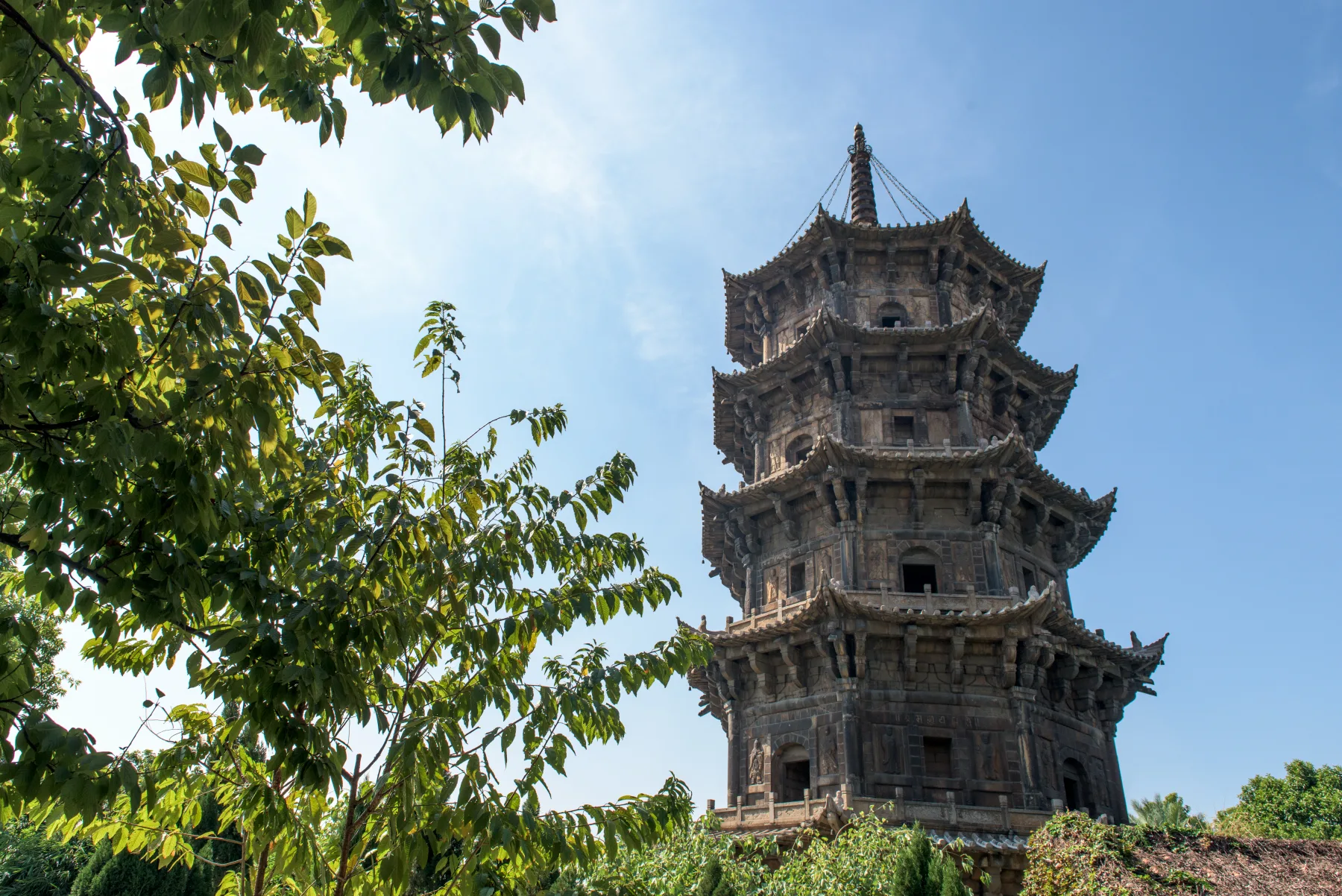
The twin pagodas are medieval stone structures, but the wider temple complex includes repair and rebuilding across periods. Look closely at carvings and reused materials. Some stone elements associated with South Asian religious imagery reveal the mobility of objects and artisans without turning the temple into a vague symbol of global fusion.
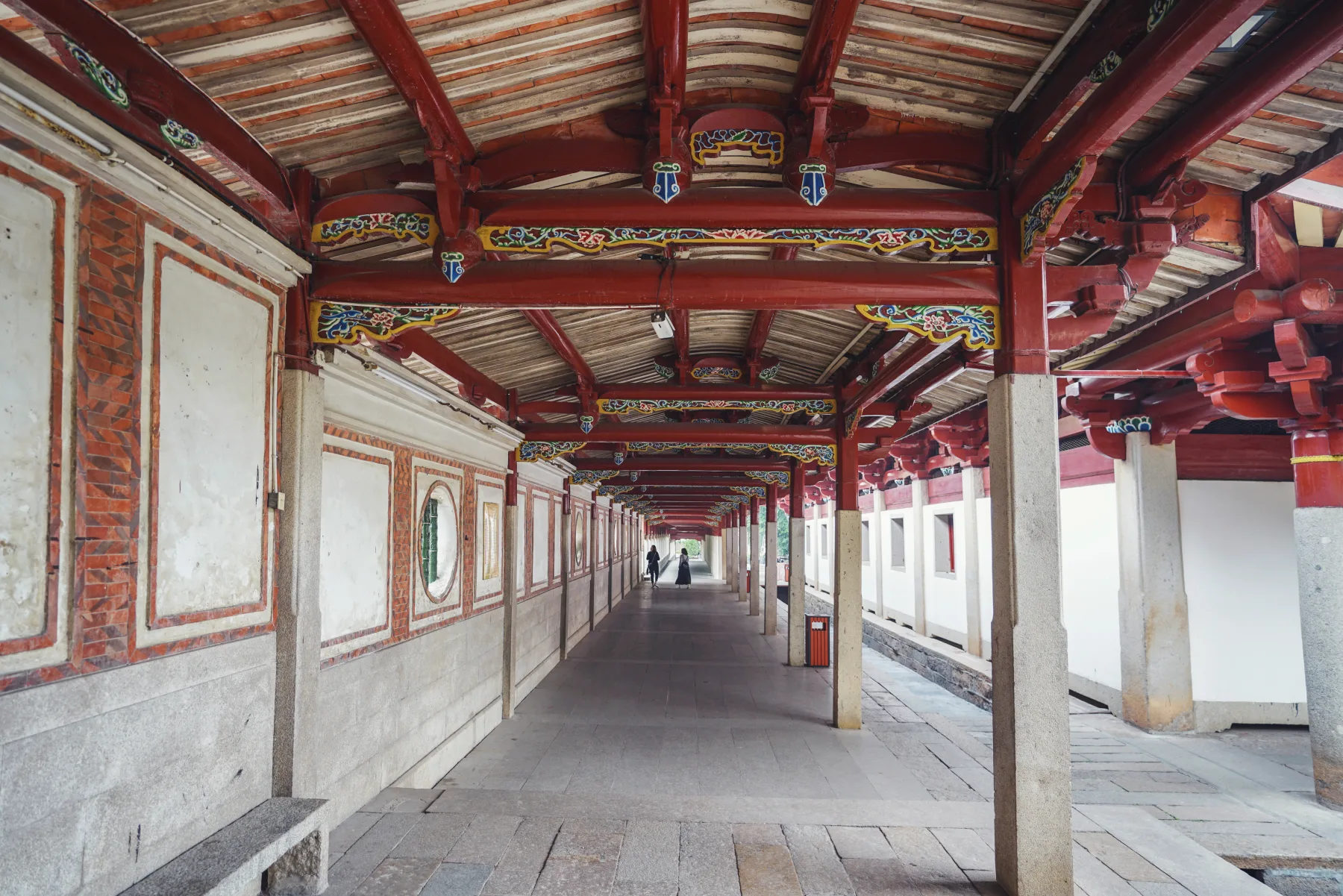
West Street outside is commercially intense. Visit the temple early, then return to the street later when you are ready to read tourism, food and everyday circulation as a separate layer.
Qingjing Mosque records an established Muslim community
Qingjing Mosque is associated with Quanzhou's historic Muslim community and maritime connections. Its stone entrance and surviving architectural elements differ visibly from surrounding Minnan temples.
The site should not be reduced to proof that ancient China was universally tolerant. I reject that polished story because a mosque requires people, endowments, ritual knowledge and relationships with authority. Inscriptions and community history reveal more than the novelty of an architectural contrast.
Respect current worship rules. Dress and photography expectations may differ from a museum, and not every area exists for tourism.
Tianhou Temple connects the port to Mazu devotion
Mazu is widely revered among coastal and seafaring communities. Quanzhou's Tianhou Temple links maritime risk, merchant patronage, family migration and ritual life.
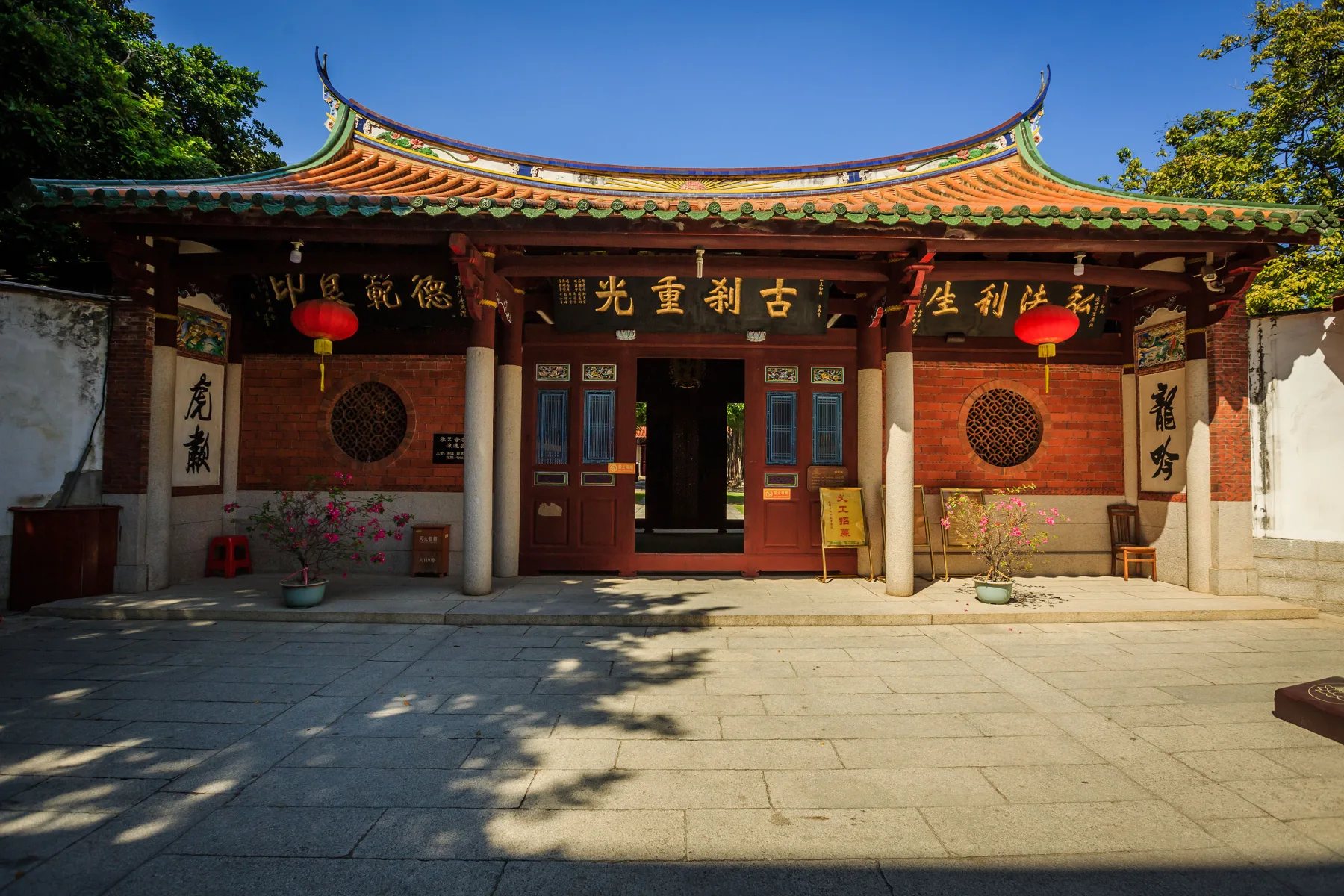
The nearby Deji Gate site helps visitors imagine changing city walls, gates and shoreline relationships. Temple and gate should be read together: spiritual protection and physical circulation supported the same urban world.
The Confucian temple represents another institution of order
The Confucian temple and educational complex connects ritual, local administration and scholarly culture. It corrects a port-city stereotype in which everyone is imagined as a merchant or sailor. Maritime wealth depended on officials, teachers, families and local institutions as well as ships.
Bridges made the maritime city possible
Luoyang Bridge and Anping Bridge belong to the infrastructure history of the wider Quanzhou region. Stone construction, tidal conditions, foundations and route planning allowed people and goods to cross difficult water.
The bridges are not decorative leftovers. They explain how a port connected to production zones and settlements. Visit at a pace that allows you to see water, approach roads and surrounding communities rather than only the famous span.
Cao'an preserves rare Manichaean heritage
Cao'an, outside the central old city, is associated with Manichaean heritage and a distinctive stone image interpreted within that tradition. The site is globally unusual, but it should not be used to claim that Manichaeism remained socially dominant in Quanzhou.
Its value lies in survival, local adaptation and the evidence that a maritime region could sustain religious forms whose histories crossed Central and West Asia. Transport requires planning; combine it with nearby sites rather than treating it as a quick central-city stop.
Nanyin is a living listening tradition
UNESCO's Nanyin record identifies the tradition, its Minnan-language setting and its ensemble practice. I believe the decisive word is living: a heritage label matters only if people still learn the repertoire, breathe together and make old music occupy present time.
UNESCO recognizes Nanyin, a musical tradition maintained in southern Fujian and overseas Minnan communities. Singing, instruments, notation, repertoire and social transmission matter together.
Nanyin is sometimes marketed as a "living fossil." The phrase attracts attention but can imply that performers merely preserve an unchanged ancient sound. Living traditions survive through teaching, selection, adaptation and new audiences.
| Listen for | Why it matters |
|---|---|
| Measured tempo | Creates attention that differs from tourism-show speed |
| Vocal delivery | Connects language, poetry and regional sound |
| Instrument relationships | Reveals ensemble discipline rather than solo display |
| Club or association setting | Shows how communities maintain repertoire |
| Younger performers | Makes continuity visible as training, not inheritance by magic |
Fujian puppetry offers another performance system. Short visitor programs are useful introductions, while the deeper story belongs to master-apprentice training, carving, manipulation, music and repertoire.
Food carries Minnan geography
Quanzhou's food uses seafood, beef, noodles, rice products, peanuts, fermented or braised flavors and tea. Oyster omelets and beef soup are strong entry points, but recipes vary by neighborhood and surrounding county-level cities.
The Fujian cuisine guide explains why Minnan food overlaps with, but does not equal, all Fujian cuisine. Diaspora dishes in Southeast Asia may preserve related names while reflecting different ingredients and histories.
Oolong tea belongs in the regional conversation. Continue through Chinese oolong tea rather than treating every dark roasted cup as one fixed local type.
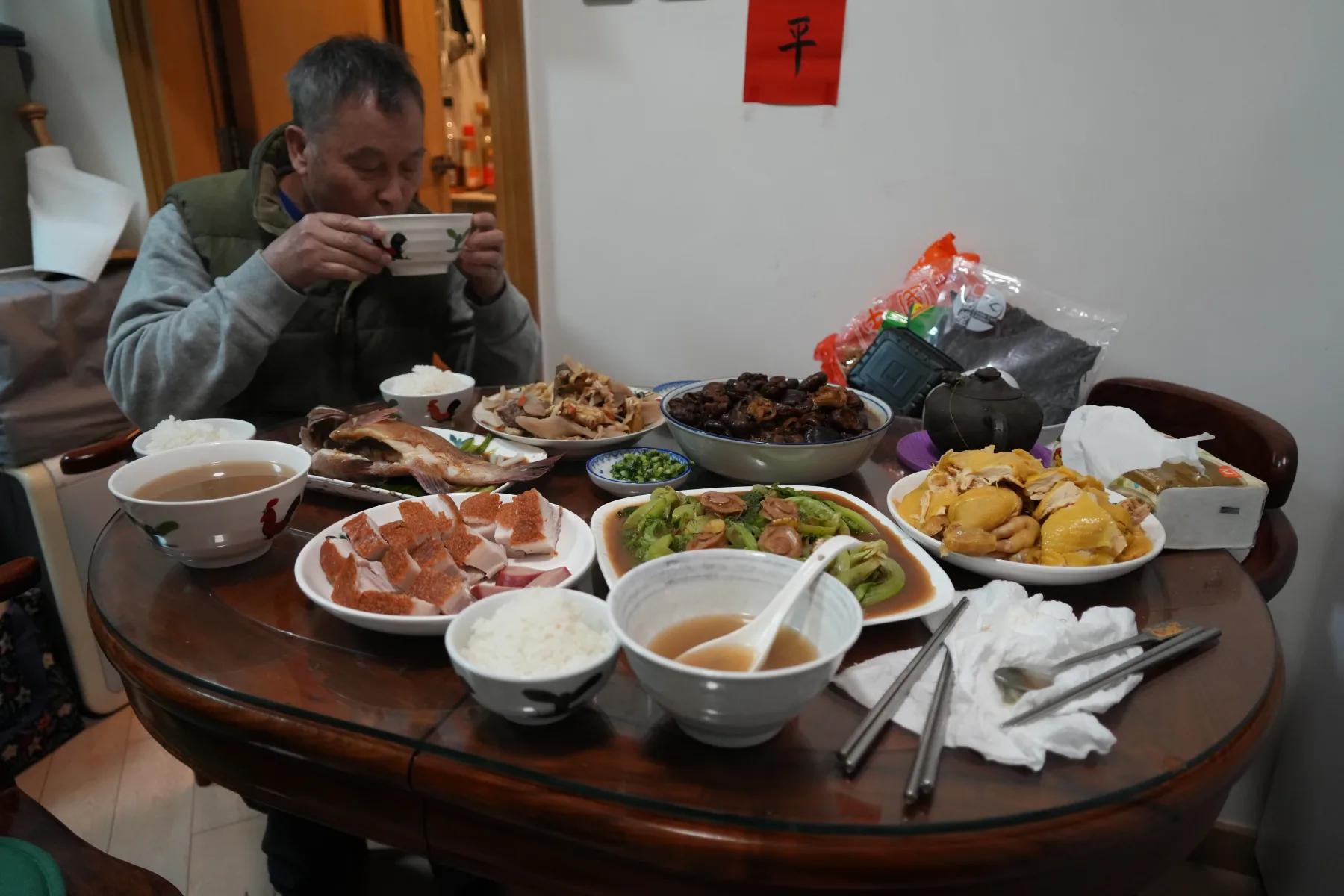
Food is where Quanzhou stops feeling like a heritage dossier. Beef soup has heat, speed and ordinary appetite; oyster dishes bring the coast into a bowl; noodles and braises carry household habits that a monument label cannot. I do not need to call every bite ancient to feel history inside it. I want the bowl tied to an ingredient, route or household habit, not decorated with a dynasty it cannot prove. The more honest connection is material: port geography, local ingredients, migration and Minnan taste repeatedly meet at the table.
A close food photograph can prove what was served and how it looked at that moment. It cannot prove a universal recipe or an unbroken thousand-year lineage. That boundary makes first-hand evidence stronger, not weaker. Continue through the Fujian cuisine guide for the regional system behind the bowl.
Quanzhou is also a manufacturing and migration city
Modern Quanzhou's economy includes textiles, footwear, building materials, food production and private enterprise across a wider metropolitan region. Overseas Chinese networks influenced investment, schools, temples and family architecture.
This history can produce a romantic "hometown of overseas Chinese" image. Ask who left, who remained, who returned and how gender, class and generation shaped migration. An overseas-funded facade may represent family success while hiding decades of separation.
A four-day Quanzhou itinerary
| Day | Focus | Suggested rhythm |
|---|---|---|
| 1 | Old city | Kaiyuan Temple early, West Street later, Confucian Temple and red-roof neighborhoods |
| 2 | Maritime faiths | Qingjing Mosque, Tianhou Temple, Deji Gate and maritime museum |
| 3 | Infrastructure | Luoyang Bridge plus one port, kiln or outer component site |
| 4 | Living culture | Nanyin or puppetry, neighborhood food, craft and a slower return to the old city |
Practical Quanzhou planning
| Issue | Useful approach |
|---|---|
| Distributed sites | Group by geography; UNESCO components are not one walkable park |
| Climate | Summers are hot, humid and storm-prone; build indoor alternatives and check typhoon conditions |
| Worship spaces | Dress respectfully, lower your voice and ask before photographing rituals or people |
| Language | Minnan speech is culturally important; Mandarin is widely useful, while English support varies |
| Food allergies | Seafood, peanuts and shared sauces are common; communicate specific ingredients |
| Architecture | Read labels for rebuilding and restoration dates before using the word ancient |
| Performance | Confirm current schedules through venues or local cultural listings rather than relying on old travel posts |
Quanzhou makes global history local
Its strongest lesson is that maritime exchange does not float above ordinary life. It needs bridges, taxes, kilns, worship, translators, food, warehouses, families and repair. Quanzhou allows travelers to see world history at human scale, one roof ridge, stone inscription and remembered route at a time.
My Quanzhou verdict is therefore more demanding than “many faiths coexisted here.” The city mattered because people built institutions capable of carrying difference, risk and distance. Compare regional form through Chinese architecture, then add one precise connection—not a praise slogan—to Moments.