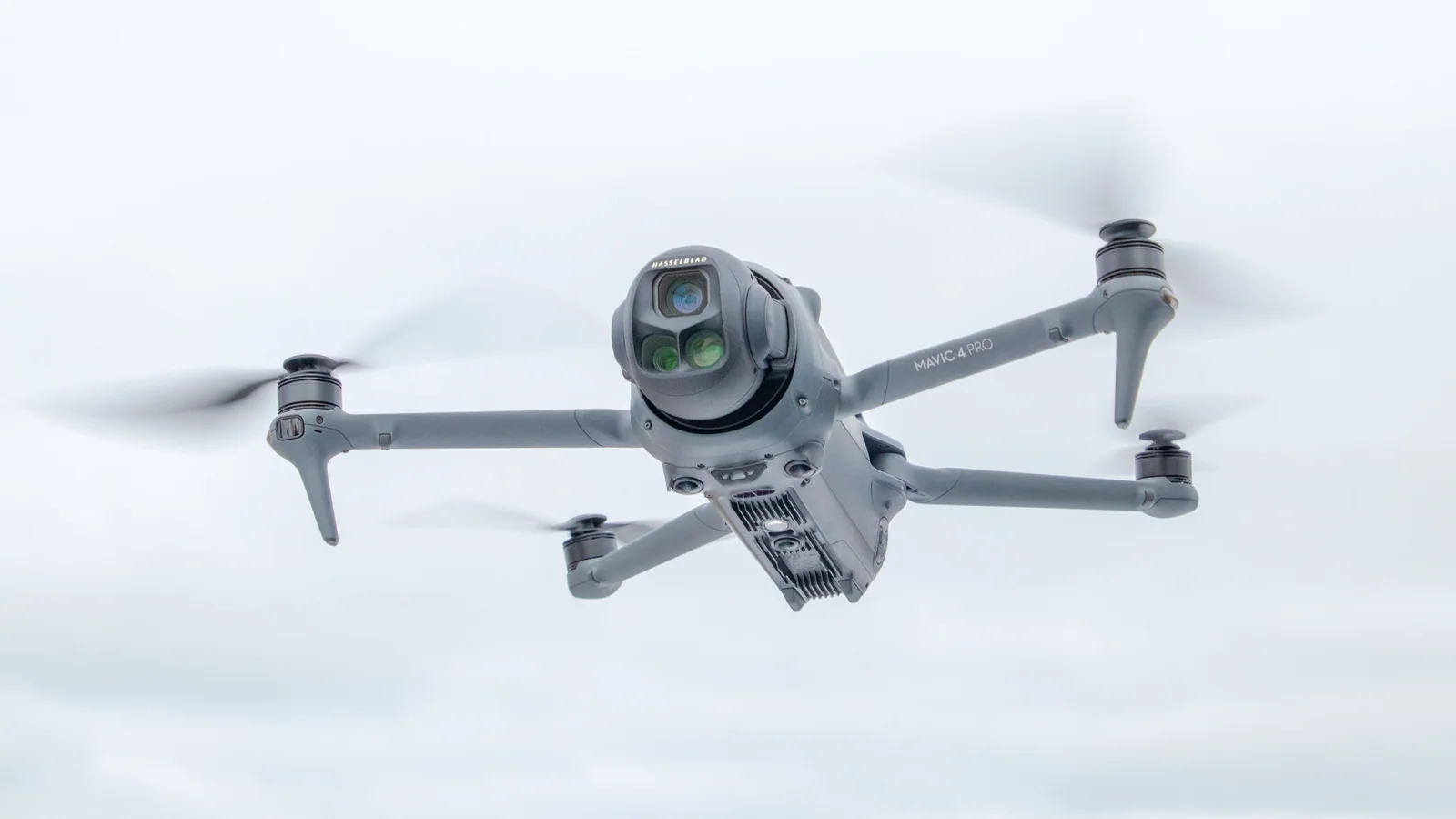
Are DJI Drones Banned in the US? What the Rules Actually Change
Are DJI drones banned in the US in 2026? A dated guide to the FCC Covered List, existing ownership, future equipment authorization, sales and FAA flight rules.
Read the deep guide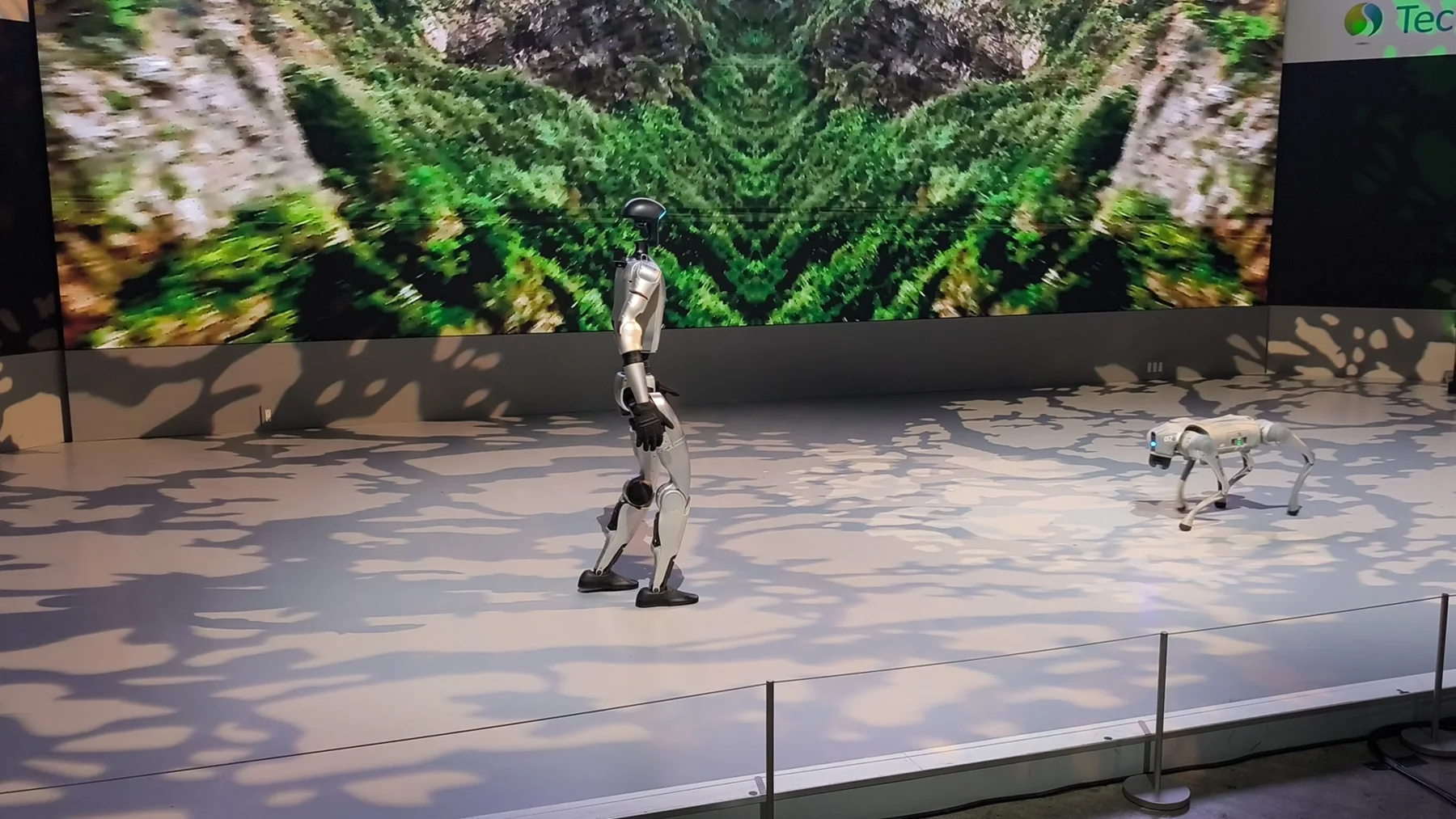
Task · repetition · deployment · changed work
Chinese robotics across research, factories, service machines, competition and public imagination, explained through what robots can actually do.
Look beyond the demonstration3 published guides across 6 core paths.
Demand repetition after the viral clip
Chinese robotics becomes important after the applause ends. Name the task, operating environment, human supervision, repeatability and deployment scale before calling a machine transformative. A backflip proves control in one moment; useful work has to survive the whole shift.
Comparable industrial-robot deployment data and definitions that keep viral demonstrations in proportion. International Federation of Robotics
Published guides, organized by intent
A collection page must do more than list recent posts. Choose the question that brought you here, open a focused guide, then keep moving through works, people and related cultural context without returning to search.
2 published guides
Drones and driver-assistance systems show why embodied technology cannot be judged from movement alone. Airspace, supervision, mapping, software support and local rules decide what the machine is allowed and able to do.
Are DJI drones banned in the US in 2026? A dated guide to the FCC Covered List, existing ownership, future equipment authorization, sales and FAA flight rules.
Read the deep guide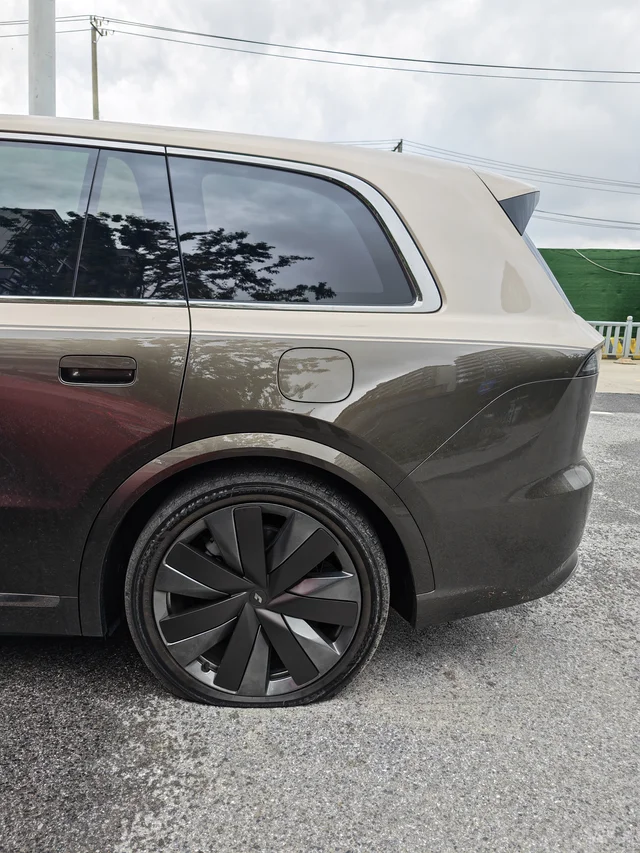
A clear-eyed Li Auto L9 guide: 2026 China price, Ultra vs. Livis, six-seat family logic and what overseas readers should verify before treating it as a purchase option.
Read the deep guide1 published guide
Sensors, motors, batteries, controllers, assembly, service and replacement parts turn a demonstration into a deployable system. Follow the manufacturing chain before treating one stage clip as an industry.
From demonstration to shift
I enjoy a spectacular robot demonstration. I refuse to confuse enjoyment with evidence. The serious question begins after the applause: can the machine repeat the task, recover from interruption, work safely near people, survive maintenance and cost less than the problem it replaces? Chinese robotics is compelling because factories, research teams, supply chains and public imagination are moving together. It is also a field where one edited minute can hide a thousand engineering hours.
Humanoid robots attract attention because their body makes technical progress emotionally legible. A jump looks brave. A stumble looks vulnerable. We project intention onto balance. That response is not stupidity; it is part of why form matters. Yet a successful movement tells us little about perception in clutter, hand reliability, battery duration, intervention rate or safe recovery. The correct response to a striking clip is not cynicism. It is a narrower sentence about what was actually demonstrated.
Chinese teams have become exceptionally visible in this layer because hardware supply, motors, batteries, control research and performance culture converge quickly. Public demonstrations also recruit talent and investment. Spectacle can serve industry. The problem begins when performance becomes the substitute for deployment rather than the invitation to inspect it.
When I edit a robotics claim for East Moment, I place the beautiful clip beside an intentionally boring checklist: task boundary, number of attempts, intervention, runtime, recovery and maintenance. The emotional difference is immediate. I still enjoy the movement, but I stop borrowing certainty from the music and camera cut. If the source cannot show what happened before and after the successful minute, I describe the minute and refuse the larger prophecy. That refusal is not anti-technology. It is how I protect genuine engineering from its own publicity.
The same discipline applies to product categories. A quadruped crossing rough ground, a humanoid carrying a box, a cobot sharing a workstation and a logistics machine moving shelves face different hazards and economics. Their shapes invite comparison before their jobs do. I compare them only after the task and operating environment are fixed. The winner of a stage demonstration may be irrelevant to the warehouse, hospital, home or construction site. Chinese robotics becomes more interesting when the category narrows enough for the engineering tradeoff to appear.
Most robots changing Chinese work do not resemble people. They weld, move, pick, inspect and repeat within designed systems. Their intelligence is partly in the machine and partly in the environment engineers build around it. That is not a lesser form of robotics. It is the mature recognition that reliability often comes from controlling the problem instead of performing generality.
International Federation of Robotics data provides a useful scale check because it defines industrial installations more carefully than a viral feed. But installation count is not the final human story. We still need to ask which jobs become safer, which skills gain value, who monitors exceptions, whether small factories can afford integration and what happens to workers during the transition. Automation changes the composition of labour before it eliminates labour.
Use comparable deployment definitions to keep humanoid publicity and industrial reality in proportion. International Federation of Robotics
A robot can look autonomous while remote operators rescue edge cases, technicians reset hardware and engineers redesign the scene. None of that makes the system fraudulent. Human support is how complex technology matures. Fraud begins when support is concealed to sell a fantasy of independence. Intervention rate, recovery time and environmental constraints should be standard questions in every robotics story.
I also want the worker's view. Does the robot remove lifting or add relentless monitoring? Does it create a technical path upward or split the workplace between a small group of integrators and a larger group with less control? Safety improvement is valuable even when productivity barely changes. Productivity improvement can still be socially damaging when the gains are hoarded. 'Robots took jobs' is too simple; 'robots create jobs' is equally evasive.
A chatbot hallucination can mislead. A physical system misreading a person, stair, object or command can collide. Embodied AI therefore needs a stricter trust model than conversational novelty. Perception must meet control, and both must meet a safe boundary when confidence collapses. The machine's ability to say 'I cannot complete this' is not weakness. It is engineering maturity.
Cars and drones already show how autonomy is distributed across sensors, maps, operators, regulation and user attention. Humanoids will not escape that ecology. The fantasy of one general robot arriving fully formed is commercially convenient and technically distracting. Useful systems will enter in bounded tasks, gain data, expose failure and slowly widen their domain.
When I see a Chinese robot clip, I ask for task definition, environment, number of attempts, intervention, runtime, recovery and cost. Then I ask who benefits if it works. This method does not kill wonder. It moves wonder from choreography to persistence. A machine that performs one modest, useful action safely for an entire shift is more impressive than a spectacular body that requires a reset outside the frame.
China may become one of the decisive places where embodied systems move from laboratory to mass production. The hardware ecosystem and appetite for iteration are real advantages. That makes clear-eyed reporting more important, not less. The future will not be proven by a spring festival cameo. It will be proven on the boring Tuesday when the robot keeps working and the people beside it understand exactly what changed.
Maintenance is where the futuristic image finally meets grease, spare parts and institutional memory. Who can diagnose a fault at 2 a.m.? Are replacement actuators available? Does the vendor expose logs, or does every failure become an expensive mystery? A deployment that depends permanently on the founding engineering team has not become infrastructure. Chinese manufacturers may gain a major advantage by making hardware affordable, but affordability at purchase is not the same as low lifetime cost.
The household is an even harsher frontier than the factory. Floors change, objects move, children behave unpredictably and privacy enters every sensor. A domestic robot must earn permission to see, listen and move through intimate space. It must also fail gently around people who never received technical training. I do not believe the home will be conquered by the most human-looking machine. It will be entered by the system whose limits are easiest to understand and whose help is worth the attention it demands.
That standard changes how I read company claims. I look for a named task, a bounded environment and evidence collected over time. I look for customers who describe inconvenience as well as delight. I look for the person who cleans the sensor, clears the jam and explains the emergency stop. When those people are absent, the story has probably confused a product launch with a social transformation. Robotics becomes trustworthy when the supporting humans are visible rather than edited out.
A backflip is easy to share because success and failure fit inside one clip. Useful robotics has a less glamorous question: what happens on repetition ninety-seven? The floor changes, the battery falls, a grip slips, a person enters the workspace or an object arrives outside the demonstration script. A machine earns trust when task definition, sensing, control, recovery, maintenance and human supervision remain visible together. East Moment begins after the applause because deployment begins there too.
Separate forms before comparing them. A quadruped built for inspection solves terrain and payload problems unlike a humanoid designed around human spaces. An industrial arm can be extraordinarily useful without walking or speaking. A service robot may rely on a controlled environment that makes apparent autonomy possible. Embodied AI promises generality, but intelligence, dexterity, safety and economic value do not advance at the same speed. Naming the layer prevents one spectacular capability from certifying the whole machine.
The practical test is a task sheet: object, environment, cycle time, acceptable error, recovery behavior, supervision, energy, maintenance and consequence of failure. Ask what the video omits. Is the sequence continuous? Was the environment mapped? How many attempts preceded the success? What happens after contact goes wrong? These questions do not diminish engineering. They respect it by moving attention from spectacle toward the difficult work of making physical systems repeat.
Level 07 · Changed work, not replaced humans
Robotics coverage loves a clean replacement story because it gives the technology one dramatic consequence. Actual work is messier. People label environments, prepare objects, reset faults, inspect output, maintain hardware, manage exceptions and take responsibility when the system behaves outside its script. Some tasks disappear, others become safer, and new monitoring or repair burdens arrive. The right question is not whether the robot is autonomous in a slogan. It is which labor moved, which risk moved and who gained control over the new process.
This is where factory density matters. Suppliers, motors, batteries, sensors, machining, integration and rapid iteration can shorten the distance from prototype to revised machine. Density is a real advantage, not magic. It does not guarantee reliability, after-sales support or a viable deployment. A buyer or observer must still distinguish demonstration unit, pilot, production model and installed fleet. Shipping a machine once and keeping it productive for years are separate engineering and business problems.
I want robotics pages to retain wonder without becoming obedient to it. A machine recovering balance is genuinely thrilling. The feeling should open a harder investigation instead of closing one. Return with a deployment record, continuous task video, maintenance detail or failure sequence that changes the judgment. The most valuable Moment is not another perfect stunt; it is the interruption that shows how the system and the people around it actually cope.
Procurement turns those questions into money. Buyers need payload, reach, ingress protection, duty cycle, integration, spare parts, training, warranty and service geography—not the adjective intelligent. A lower purchase price can become expensive when downtime, custom integration or unavailable support enters the calculation. East Moment is not a product catalogue, but the deployment lens must remain concrete enough to protect readers from confusing a remarkable machine with a ready solution.
East Moment Community
Submit the clip with task, environment, repetition, visible intervention and missing evidence. Tell us which proof level it actually reaches.
Why return: We will update notes when a demonstration becomes a deployment—or when the promised deployment never appears.