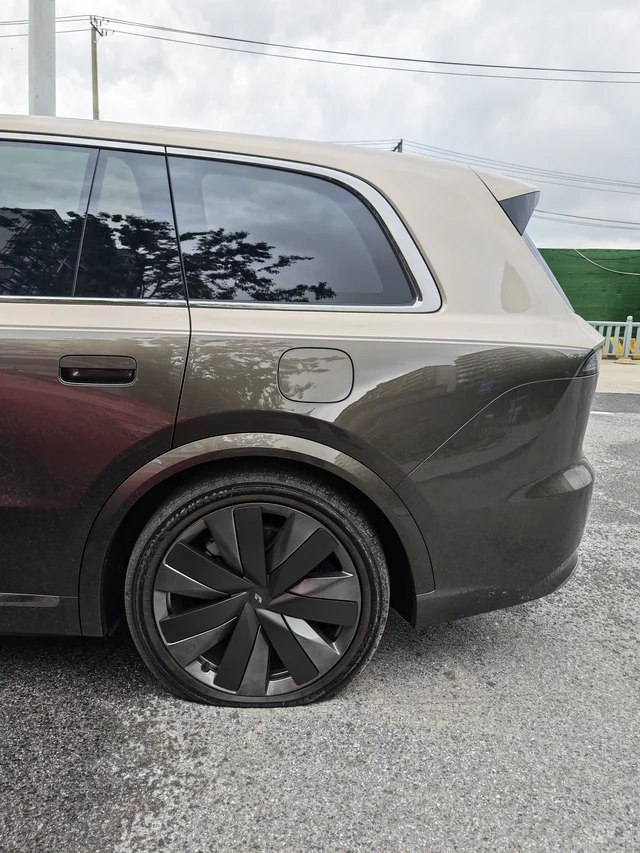
Li Auto L9, in brief: Li Auto launched the all-new six-seat L9 in China on May 15, 2026, at RMB 459,800 for Ultra and RMB 509,800 for Livis. These are launch prices, not a live quotation or a U.S. price. Its strongest argument is passenger comfort for a household that actually uses all three rows. For an overseas buyer, registration, service and warranty come before any price comparison.
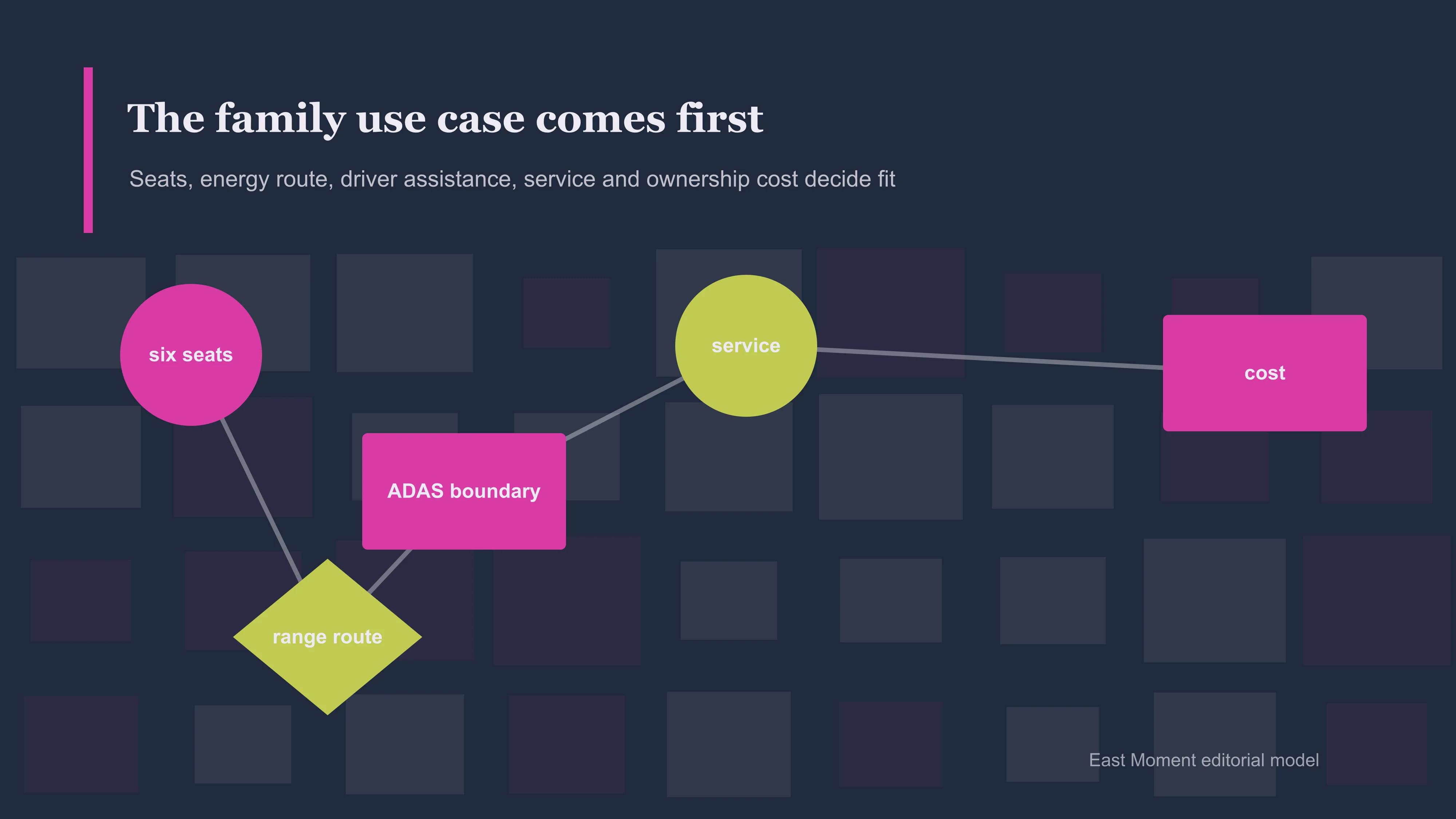
That is a more useful starting point than calling it either the future of family travel or expensive furniture on wheels. The question I would take to a showroom is whether the people who usually do not choose the car feel better after two hours in it.
Li Auto L9 is a family decision before it is a flagship SUV
The wrong way to meet the L9 is through an argument about whether it is a “real driver’s car.” That question has a place, but it misses what this vehicle is trying to solve. The L9 is a large, six-seat Chinese extended-range SUV aimed at households that have outgrown the arithmetic of five seats: two adults, children in bulky seats, grandparents, a caregiver, weekend bags, and a journey that cannot be reduced to an empty highway screenshot.
On May 15, 2026, Li Auto announced the all-new L9 in China and said deliveries would begin May 17. Its official launch release listed the L9 Ultra at RMB 459,800 and the L9 Livis at RMB 509,800. Those are China launch prices, not a promise of what an imported vehicle would cost elsewhere. The useful fact is not the conversion into someone else's currency. It is the product decision behind it: Li Auto is asking a flagship-SUV buyer to pay for a passenger environment, a large-body travel rhythm, and a specific version of Chinese electrified road travel.
I understand the scepticism. A screen-heavy SUV with a calm, domestic interior can be dismissed as expensive furniture on wheels. Yet that dismissal is too easy. The sharper question is whether the people who usually do not control a car purchase—the second-row rider, the person loading bags, the child who cannot sleep sitting upright, the driver carrying everyone’s mood—actually gain something lasting from the layout. If the answer is no, the L9 is too much car. If the answer is yes, a spec-sheet debate starts to feel oddly incomplete.
The current China price: Ultra and Livis are not just trim labels
The all-new L9 has two official China versions. Li Auto's launch release named the Ultra at RMB 459,800 and the Livis at RMB 509,800. The names matter less than the equipment philosophy behind them, so I would not choose between them by checking boxes in a configurator alone.
| Version | Official China launch price | What Li Auto highlights | The practical question to ask |
|---|---|---|---|
| L9 Ultra | RMB 459,800 | Steer-by-wire, rear-wheel steering, third-generation dual-chamber dual-valve Magic Carpet Air Suspension, one MAHE M100 chip and Snapdragon 8797 Max | Does the household need the flagship's passenger-first space and ride, without chasing the most sensor- and chassis-heavy configuration? |
| L9 Livis | RMB 509,800 | 800V active suspension, fully drive-by-wire chassis, dual MAHE M100 chips, four LiDAR sensors and Snapdragon 8797 Elite | Will the additional chassis and sensing hardware change your own routes and ownership priorities enough to justify the step up? |
The features in that table come from Li Auto's 2026 first-quarter release. They should tell us what the company says it fitted; they should not be treated as a substitute for trying the car on roads you actually use. More hardware does not automatically make a better household decision. A family that rarely fills the car and mostly drives alone may find the L9's core premise excessive. A family that repeatedly makes the third row, ride quality and luggage loading part of every plan may reach the opposite conclusion before it has learned the name of a single chip.
Why the six-seat cabin changes the emotional math
The most revealing discussions about the L9 are never really about a sensor diagram. They are about a family changing shape: a second child arriving, a parent becoming less comfortable in a low rear seat, a stroller that refuses to be a small object, the quiet embarrassment of asking someone to squeeze into the back for the third time that month. Those details are not sentimental extras. They are the constraint set.
When I picture the L9 being used well, I do not picture a person showing off a menu screen in a parking lot. I picture the boring part of a family trip becoming less dramatic: people step in without moving each other around like luggage; a middle-row rider is not treated as the temporary winner and the rear-row rider as the punishment; the driver gets a calmer cabin because everyone else has a little more room to settle. That is an ordinary kind of luxury, and ordinary is exactly why it can be valuable.
The cabin photograph is more useful than another glossy exterior angle because it tests the page's central claim: the L9 is selling a way for several people to occupy the same trip without turning the third row into a penalty box.

The settings view keeps the promise grounded in use: a passenger-first cabin still has to be understandable when the journey is already underway.
This does not mean every six-seat SUV is automatically wise. Space can be theatrical if it only works in a showroom. A serious test is inconvenient on purpose: bring the actual child seat, the travel bags, the person who would use the third row, and the person who loads the boot. Let everyone sit where they would sit after two hours, not where the salesperson suggests for a photograph. Check whether an adult can reach the rear seat without an apology, whether the seatbelts and air vents make sense, and whether the storage solutions work when the cabin contains real clutter rather than a brochure's clean surfaces.
An extended-range answer to the China road-trip problem
Outside China, readers may see the L9 described as an EREV, or extended-range electric vehicle, and imagine it as a half-hearted choice between petrol and electric. That is not how I read its appeal. It is an answer to a practical anxiety: a household wants much of the quiet, immediate response and day-to-day charging behaviour associated with an electric vehicle, but it also does not want a long family drive to be held hostage by one charging-plan mistake.
The L9 therefore belongs to a larger Chinese mobility story, not merely a luxury-SUV story. It reflects a market where electrification, rapid charging expansion, dense cities and inter-city family travel have all developed at once. Li Auto reported 4,077 supercharging stations with 22,509 charging stalls as of April 30, 2026, alongside a nationwide retail and service footprint. That scale makes the product's domestic logic easier to understand; it does not make a guarantee for a buyer in another country.
For a China-based family, the right question is simple: where do you normally sleep, park and charge, and how often do your long journeys become a full-car journey? For an overseas reader, the order has to be reversed. First verify whether the vehicle can be lawfully imported and registered where you live; then ask about service, warranty, insurance, compatible charging and parts. A technically attractive car is not a usable car until those everyday arrangements are real.
The interior is a point of view, not neutral design
There is a reason the L9 provokes people. It chooses softness, screens and a lounge-like passenger environment over the old idea that an expensive SUV must perform seriousness through exposed mechanical drama. Some people will read that as too plain. Others will feel relieved by the visual quiet.
My own view is that minimalism earns its place only when it makes the people inside more capable, not when it merely photographs well. A clean dashboard is useful if controls are easy to learn, if passengers can be comfortable without turning the driver into tech support, and if the cabin does not become tiring after the novelty fades. It is weak if it turns basic actions into a scavenger hunt across glass. That is why I would make the test drive deliberately unglamorous: set the climate while someone is talking, adjust a route while a child is impatient, move between rows, and see whether the interior responds like a room designed for people rather than a product demo.
The L9 will not charm every driver. A buyer who wants a smaller, lighter-feeling machine, who travels mostly alone, or who wants every mile to centre on steering feedback should not talk themselves into the passenger-first promise. There are plenty of cars that answer that desire more honestly. The L9 earns its price only when the cabin's calmness changes the social experience of travel.
A fair reading of the controversy
The L9's most persistent criticism is almost philosophical: have Chinese family SUVs become too willing to trade driving character for comfort, software and convenience? I do not think that is a foolish concern. A large vehicle still has mass, width and limits. No amount of display technology should make a driver forget that.
But I also think the opposite camp is too often caricatured. Wanting a smooth ride and an inviting second row does not mean someone is indifferent to cars. It can mean that they have done the more difficult adult calculation: a vehicle is carrying different bodies, different ages and different energy levels, and the driver is not the only person whose comfort counts. The most honest L9 buyer is not claiming it is universally superior. They are saying that, for their household, the usual driver-first hierarchy no longer describes the trip.
That distinction matters when you read enthusiastic owner reports or harsh criticism. Neither the person who loves the soft cabin nor the person who misses a more direct driving feel is automatically wrong. The mistake is treating either preference as objective proof. Use the disagreement as a shopping list: try the second row, the third row, the parking manoeuvres, the route you actually drive, and the visibility you depend on. The vehicle should answer your day, not win an internet argument.
Is Li Auto L9 available in the USA?
Do not assume it is. The official materials I reviewed describe a China retail, service and charging network. They do not establish a standard U.S. retail channel, a U.S. price, or a blanket route to registration and warranty coverage. A reader considering one outside China should treat availability as a destination-specific verification task, not a search-result shortcut.
That distinction is more respectful of the buyer than pretending a currency conversion is a purchase plan. In the United States, the NHTSA's import guidance says that a vehicle under 25 years old which was not originally manufactured and certified to meet applicable federal safety standards cannot simply be permanently imported as an ordinary private purchase; an eligibility determination and registered-importer route may be relevant. That is not a verdict on this particular L9, and it is not legal advice. It is the reason a buyer should obtain a written answer about the exact model, model year and route before a deposit, shipment or conversion is arranged.
Then work through the ownership chain in the same order you would with any expensive household decision: import and registration first, then insurer acceptance, service and parts, charging compatibility, language and software-region support, and finally the price. Start with the official L9 page, but do not let a polished product page answer questions that only a local authority, importer and insurer can answer for your destination.
Who should choose it—and who should walk away
Choose the L9 if your life repeatedly produces a full car; if second- and third-row comfort is not a ceremonial concern but a weekly one; if you want a China-market extended-range travel solution; and if a calm cabin makes the driver more patient rather than less engaged.
Walk away if the third row is mostly hypothetical, if you want a compact vehicle, if your driving pleasure comes from a more agile driver-first character, or if you live outside China and cannot answer the legal, service and charging questions with confidence. There is no shame in either answer. The failure would be buying a flagship because the word “flagship” sounds like a verdict.
Li Auto L9 FAQ
How much is the Li Auto L9?
At its May 2026 China launch, Li Auto listed the all-new L9 Ultra at RMB 459,800 and the L9 Livis at RMB 509,800. Those are official China launch prices; local taxes, import costs and overseas availability are separate questions.
Is the Li Auto L9 fully electric?
Li Auto positions the L9 as an extended-range electric vehicle. Its appeal is the combination of electric-driving behaviour with an extended-range architecture for longer journeys, rather than a simple battery-electric-only proposition.
Is the Li Auto L9 a good family SUV?
It can be excellent for the household it is designed around: people who genuinely use six seats, care about passenger comfort and make longer family journeys. It is not automatically the right answer for a mostly solo driver or a household that rarely needs the third row.
Can I buy a Li Auto L9 in the United States?
Do not treat the China launch as confirmation of a U.S. purchase route. Verify import, registration, service, warranty, insurance, charging and parts support for your own destination before treating it as available to you.
The East Moment verdict: a car for the people who usually sit behind you
The Li Auto L9 is not a universal definition of what a flagship SUV should be. It is more interesting than that. It makes a specific argument: when a family gets larger, the most meaningful performance number may be how much friction disappears before the journey even begins.
I like that argument when it is tested honestly. Bring the people, not just the driver. Bring the bags, the patience limit, the actual route and the questions that make a purchase uncomfortable. If the L9 turns those conditions into a calmer shared day, it has earned its place. If it does not, a more expensive screen or a longer feature list will not rescue it.
Explore the wider China technology hub for the systems and companies reshaping everyday life, place the L9 inside the country’s broader China manufacturing landscape, or bring your own family-car decision to Moments. The useful story is never just the badge; it is who has to live with the journey.
For two U.S. availability questions where headlines routinely collapse several rule layers, compare the dated guide to whether DJI drones are banned in the United States with the model-year and ownership checks in Can I Buy a BYD Car in the US?.