Doubao Seed Code is a useful search phrase and a dangerous setup instruction. It points toward ByteDance’s Seed-family models, but it does not reliably identify one single, fixed product that every reader can install or call in 2026. The official naming has moved through Seed generations and product surfaces: Doubao for user-facing interaction, TRAE for developer work, and Volcano Engine for API access. The best answer is not “paste this model name.” It is: decide what you need to do, then verify the current official model and route before you build around it.
Doubao Seed Code is a search intent, not one permanent product name
People usually arrive at this query with one of three needs. They want a capable Chinese coding model, they have seen an old model label in a tutorial, or they want a practical way to try ByteDance’s AI without getting trapped in a pricing or region surprise. Those needs are real. The problem is that a label found in a video can outlive the product surface it described.
ByteDance’s current Seed model catalogue describes a family rather than a single “Seed Code” download. It lists successive general-purpose and agent-oriented models alongside media, speech, science and robotics work. The company’s Seed 2.0 launch note says the Pro and Code models launched in the Doubao app and TRAE, with the full series available through Volcano Engine. Its later Seed 2.1 release describes updated Pro and Turbo routes in Doubao, TRAE and the Volcano Engine experience center.
That is why I would not let a tutorial decide the architecture. A model name can be retired, preview-only, renamed, limited to one interface, or made available through a different provider route. The durable question is not “what was this called last month?” It is “which official surface currently lets me do my actual work?”
Start with the task, not the most exciting benchmark
The word code makes people rush toward a leaderboard. In practice, a good route depends on the work sitting in front of you.

This chart is useful evidence of the performance story being circulated around the model, but it is not an independent verdict. It compares named methods under specific benchmark conditions. It cannot tell me whether the model understands my repository, edits the right file, keeps a design constraint, explains a failure or leaves a reviewable diff. I will never promote a coding model because one purple bar is taller. The bar earns a test; it does not earn trust.

The cost chart has the same boundary. A low token price matters only after the workflow is counted honestly. Retries, long context, tool calls, agent loops and a human cleaning up a plausible but wrong edit all belong to the bill. A cheap request that fails quietly is expensive engineering.
| Your real task | First place to verify | The question that matters |
|---|---|---|
| Try an assistant for documents, research or everyday work | Doubao product interface | Is the current model selectable in the product and available in your region? |
| Work inside an IDE or coding workflow | TRAE | Which model is currently exposed in the tool, and what project data can it access? |
| Build an application or agent | Volcano Engine / Ark documentation | What exact model ID, API terms, quota, region and data-handling rules apply? |
| Compare claims from a tutorial | Official model page and release note | Does the name, access method and capability still exist as described? |
This is my first filter for any Chinese AI tool. I do not care how impressive a model sounds if the path from claim to work is missing. A coder needs reproducible calls, clear limits and a failure mode they can debug. A writer needs a surface that makes revision possible rather than a demo that produces one spectacular paragraph. A team needs to know where its prompts and files travel before it makes the model part of a workflow.
The strongest practical criticism I found was not a competing benchmark. It was the feeling that a celebrated model could still make ordinary work awkward—as if a fluent language-learning app had been handed the job of running a restaurant. That metaphor is harsh and useful. Capability and ergonomics are separate. A model may solve a benchmark task while the product route makes file selection, iteration, context control or recovery frustrating. My evaluation therefore has two scores: can the model do the task, and can a human reliably make it do the task again?
The Volcano Engine Doubao page is therefore more useful than a copied model string when your goal is integration. It is where you should confirm the live product and documentation path. Do not substitute an old endpoint from a forum for an official current reference.
The three access routes solve different problems
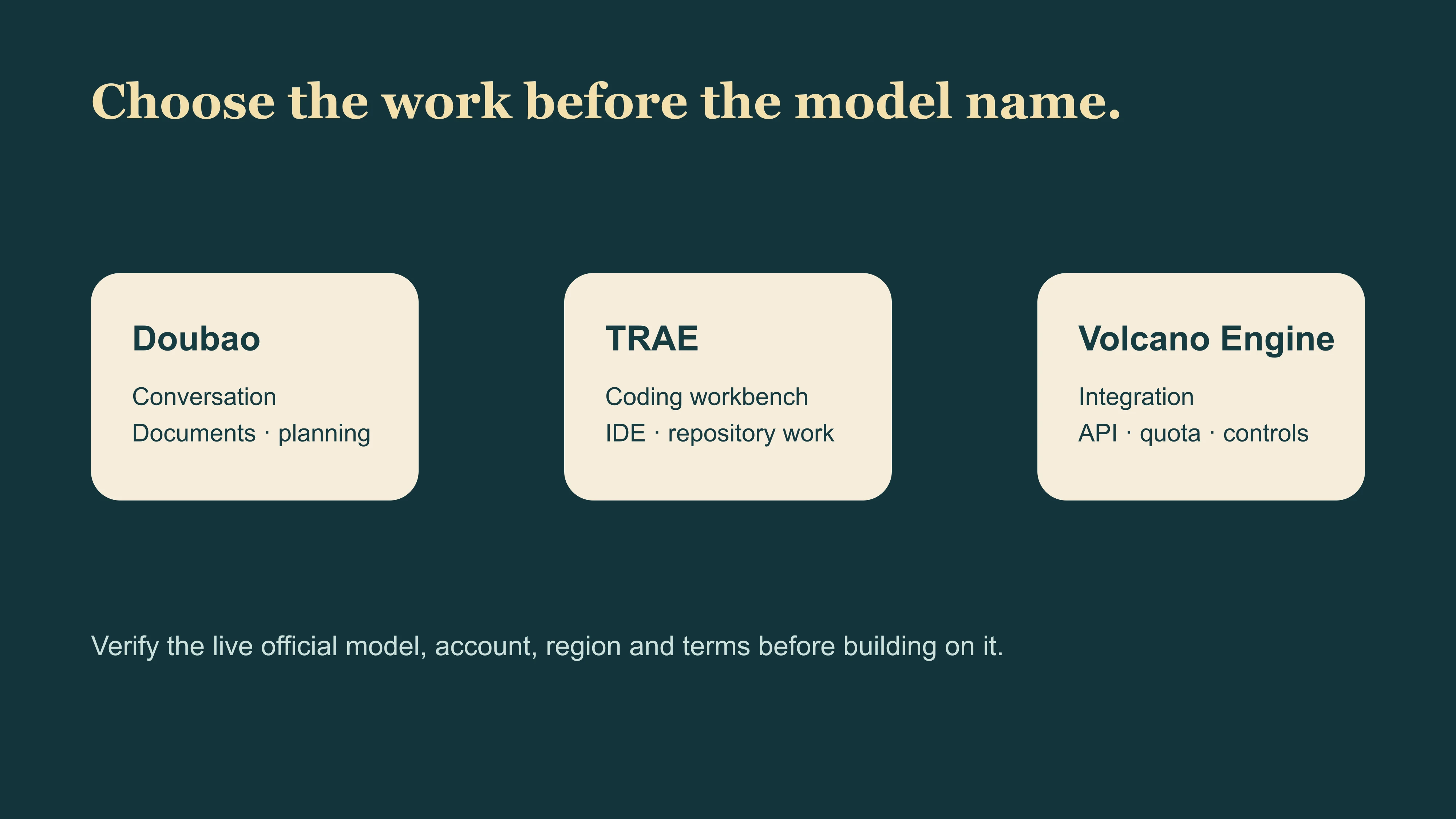
This task-first map is an editorial decision aid, not a live product catalog. It cannot prove current model IDs, price, regional availability or account eligibility; those must be verified on the official surface before use.
Doubao, TRAE and Volcano Engine can look like three doors to the same room. They are better understood as three ways of asking for different kinds of work.
Doubao is the conversation route. It makes sense when you want to assess interaction quality, planning, document work or a task that benefits from a product interface. A chat surface can be a valuable test, but it is not evidence that you have an API integration, predictable programmatic output or permission to automate the same thing.
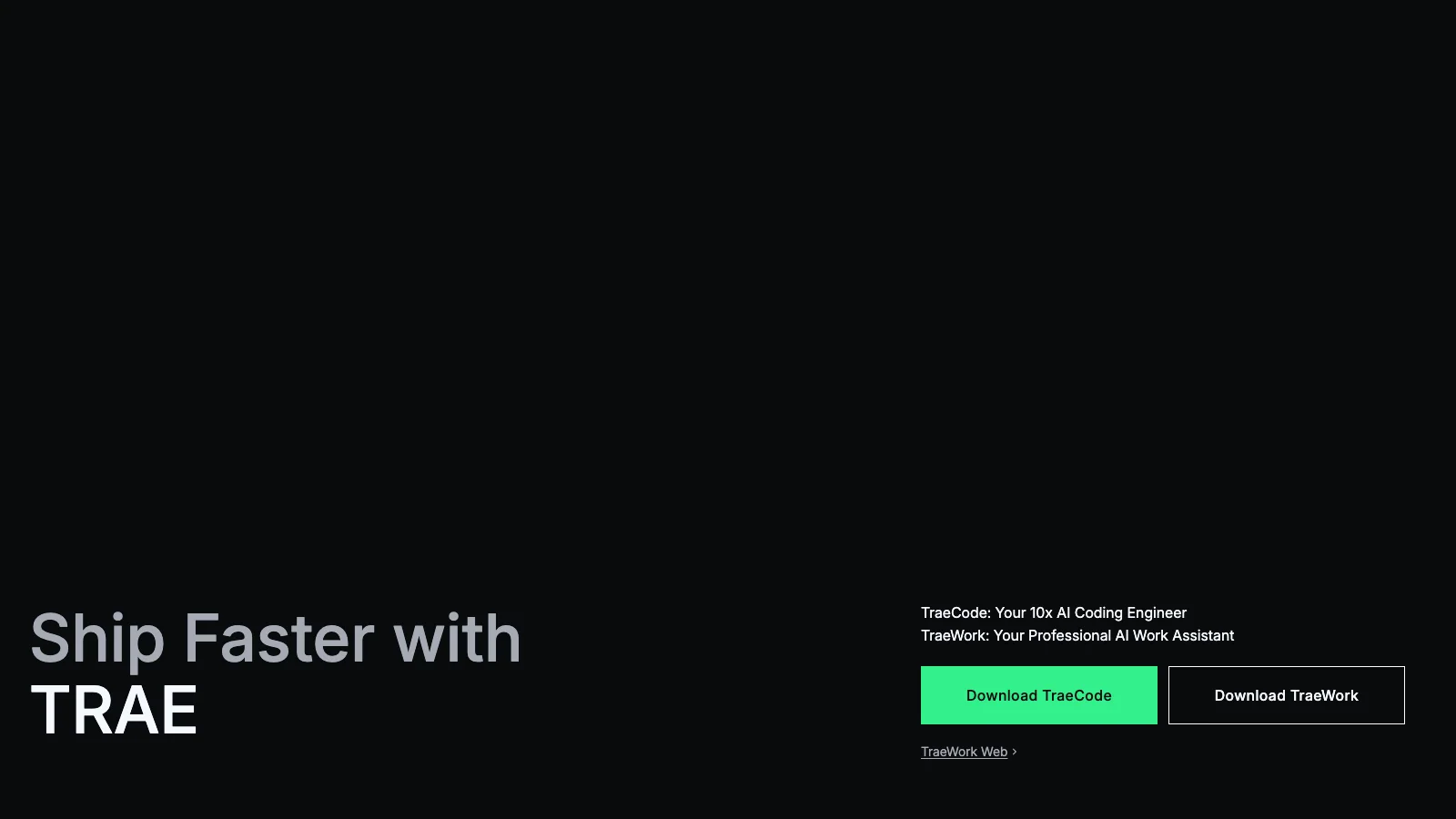
TRAE is the workbench route. ByteDance’s Seed 2.1 release specifically identifies TRAE Work and TRAE IDE as places where current Seed models can be selected. That matters for a developer who wants to judge a model in the context of a repository, files and iterative coding rather than in a blank chat window. It also raises a more important question than “is it good at code?”: what does the tool read, send, retain and expose when it touches a real project?
The cover is the first image on the page that proves an access surface rather than repeating a benchmark claim. It shows that TRAE is a real product route with separate coding and work interfaces. It still cannot prove which Seed model a particular account can select, what the tool transmits from a repository, or whether the route is available in every region. Those are checks, not assumptions.
Volcano Engine is the integration route. If you need an application, agent or internal service to call a model, the official API documentation and console are the source of truth. This is where regional availability, account setup, quota, model identifiers, billing and data controls become real. It is the least glamorous route, but it is where a prototype stops being a screenshot and starts becoming an accountable system.
A practical way to verify a current setup
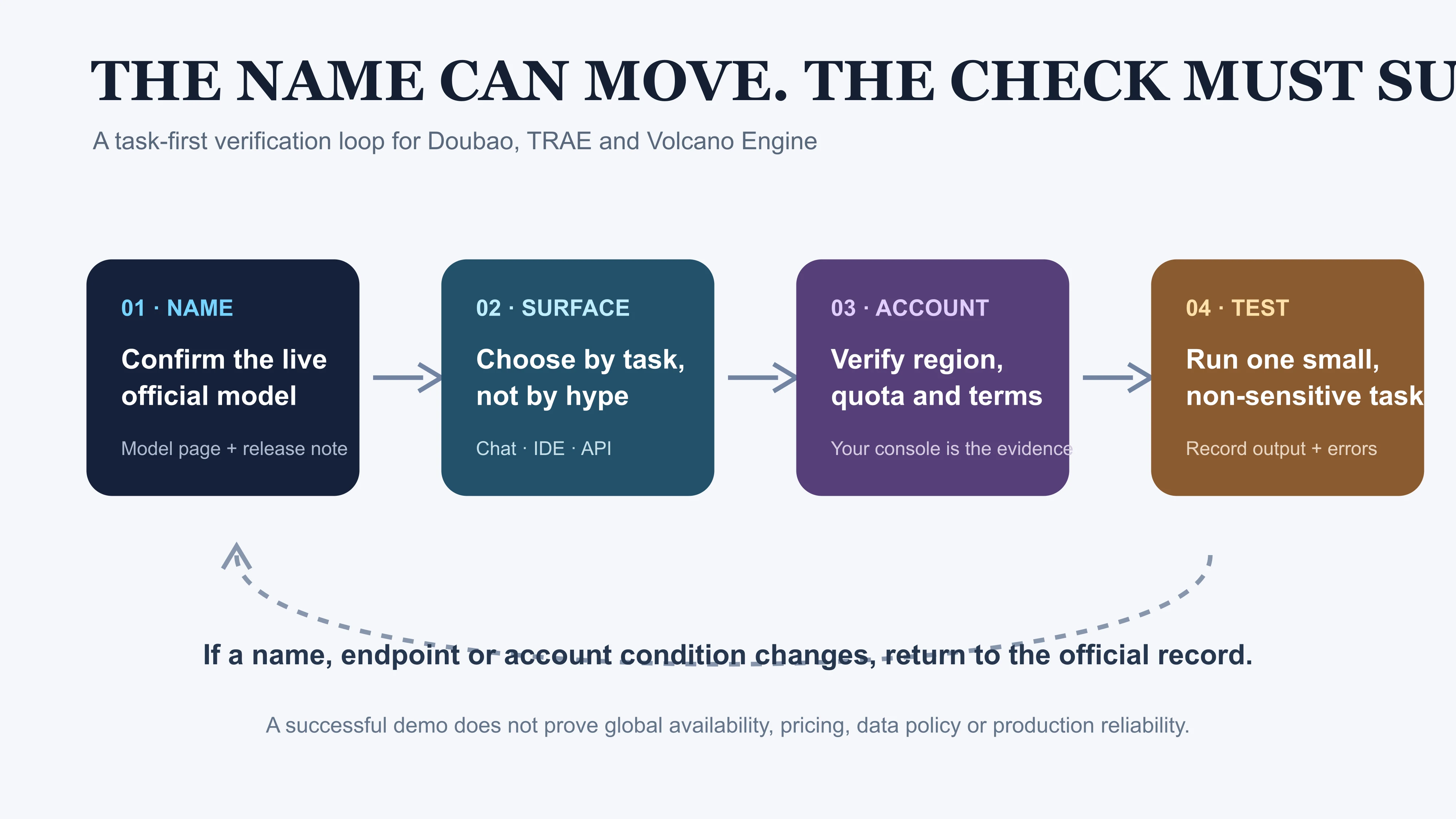
This East Moment diagram records the decision process, not a live product screen. It cannot prove that a model, endpoint, quota or region remains available for a particular account.
I would use this short sequence before trusting any Doubao Seed Code guide.
- Open the official Seed model page and identify the current family name, not the name used in a cached tutorial.
- Choose the surface that matches the task: Doubao for product use, TRAE for coding work, Volcano Engine for integration.
- Verify the model is actually visible in that surface for your account and region; do not assume global availability from an English model card.
- For an API project, copy the model identifier and endpoint only from the live official documentation or console.
- Run a small, disposable test with non-sensitive material first. Check output format, language handling, tool behavior, rate limits and error messages.
- Before moving real code or customer data, read the applicable terms, privacy and enterprise/data controls. “It worked once” is not a data policy.
This sequence may feel less exciting than a prompt hack. It saves more time. The most expensive AI setup mistakes are usually not caused by weak prompting; they come from building around a name that changed, an interface that was only a demo, or an access path that was never meant for the workflow you gave it.
The same verification habit appears in the Qwen 3.6 Plus access guide: confirm the exact model, account region and official endpoint before copying code. The providers differ, but the failure pattern is similar enough to deserve a reusable method.
Why the China context matters here
Overseas discussion often treats Chinese AI as a single scoreboard: who is catching whom, who has the best benchmark, who is cheapest. That lens misses the important product fact. China’s AI landscape is built through linked surfaces—consumer apps, workplace tools, developer clouds, short-video ecosystems and enterprise services. A model family can feel omnipresent locally while still presenting a fragmented, region-dependent path to an overseas developer.
That is not a flaw unique to ByteDance. It is the practical reality readers need before they make a technical decision. The better question is not “is Doubao Seed Code available everywhere?” It is “which part of this ecosystem is meant for my task, and can I verify that it works under my own account, geography and data constraints?”
I also think this creates a healthier way to evaluate AI. Do not ask a model to win an imaginary all-purpose contest. Give it one task with a consequence: explain a document without losing a qualifier, change a small function without breaking tests, produce a structured response your system can parse, or plan a workflow you can inspect. Then choose the route that makes the result repeatable.
What not to assume from an old guide
Do not assume that a model ID in a screenshot remains supported. Do not assume a model shown in a Chinese product UI is available through an international API account. Do not assume a consumer chat experience grants the controls a business needs. And do not assume “code” in a product name means the model is the best fit for every repository, language, licensing situation or security requirement.
The honest limitation of this page is deliberate: I cannot promise your account will see a particular model tomorrow, and neither can an old tutorial. Product availability, names and terms change. What I can give you is a verification habit that keeps those changes from turning into a broken build or an accidental data decision.
Doubao Seed Code FAQ
Is Doubao Seed Code an official model name?
Treat it as a broad search label, not a permanent guarantee of one official model identifier. Check ByteDance Seed’s current model catalogue and the relevant product surface before using it in code or procurement documents.
Can I use Seed models for coding?
ByteDance’s official Seed releases describe coding-oriented models and availability through TRAE, Doubao and Volcano Engine surfaces. The right route depends on whether you want an IDE workflow, a chat experience or an API integration.
Is Volcano Engine the same as the Doubao app?
No. They can be connected to the same broader model family, but they solve different tasks. A consumer app is not automatically an API product, and an API route has separate account, region, quota and data questions.
What is the safest first test?
Use a small non-sensitive task, verify the live model name and route from official material, then test output quality, errors and limits before connecting the tool to a repository or customer data.
The East Moment verdict: choose the route that survives a renamed model
The useful discovery behind Doubao Seed Code is not a magic model string. It is a way to stop confusing a fast-moving Chinese AI ecosystem with a single product button. The names will keep changing; the work still has to get done.
Start with the task, use the official surface that owns it, and keep an old tutorial on probation until the live product confirms it. If a unified third-party route is part of the decision, compare the different accountability chain in Qwen 3.6 Plus through OpenRouter. Explore the wider China technology hub or bring a real model-access question to Moments. The best AI choice is not the one with the loudest name; it is the one you can verify, repeat and live with.