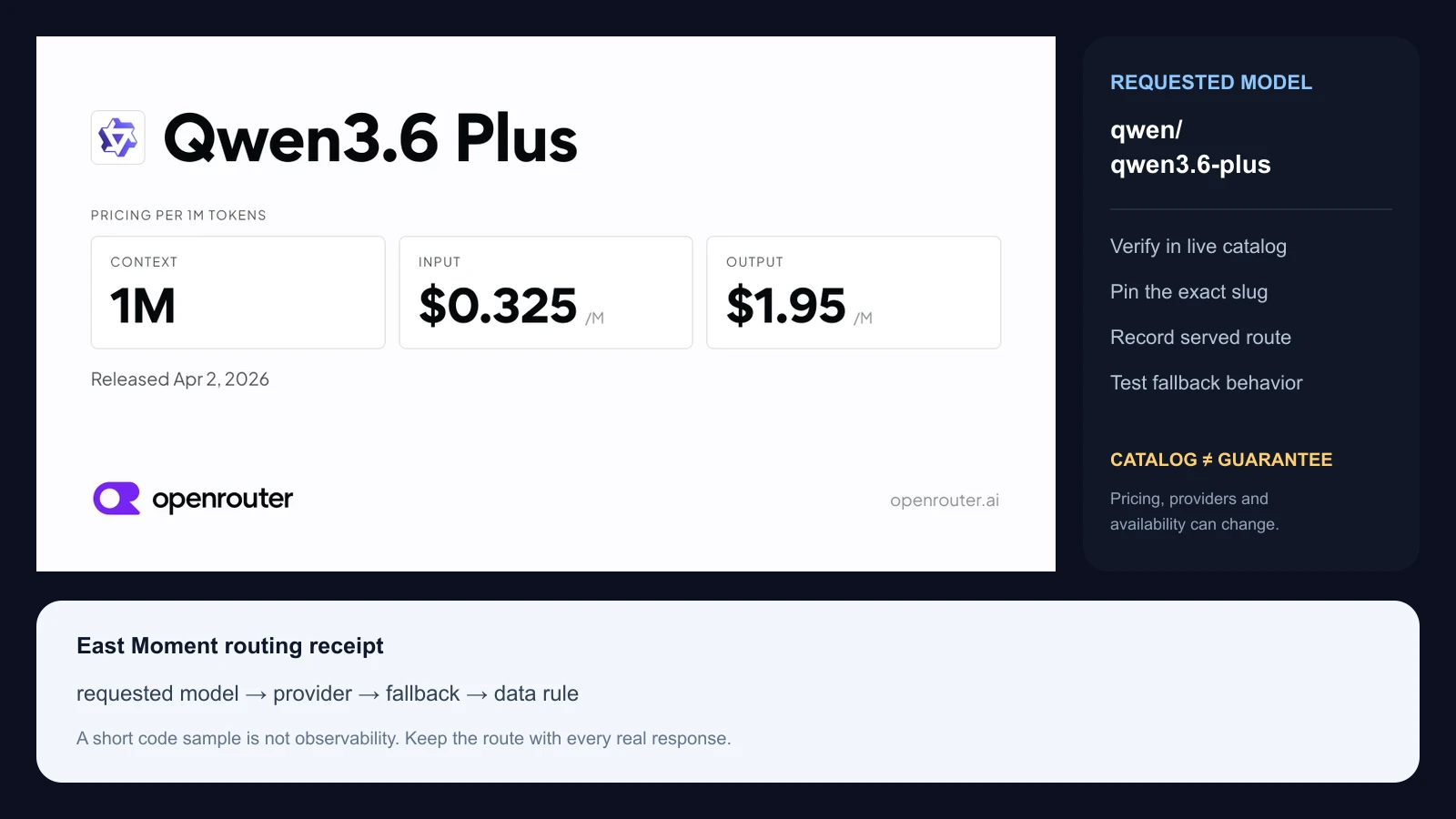
How do you use Qwen 3.6 Plus with OpenRouter? Verify the live OpenRouter model catalogue contains the exact slug
qwen/qwen3.6-plus, create an OpenRouter API key, send a small request tohttps://openrouter.ai/api/v1/chat/completions, and record the routing result before you add real data. The important difference is that OpenRouter may select or fall back between upstream providers; that makes a routed call a different operational choice from calling QwenCloud directly.
The cover uses OpenRouter's live Qwen 3.6 Plus model card as reviewed on August 28, 2026, then places East Moment's routing receipt beside it. The screenshot proves the exact slug and the price/context values displayed at that moment. It cannot guarantee tomorrow's price, provider availability, fallback behavior, data policy or the route that served one real request.
How to use Qwen 3.6 Plus with OpenRouter: begin with the route, not the code snippet
The code is short. The responsibility is not.
At review time, OpenRouter’s official Qwen 3.6 Plus model page lists the exact model slug qwen/qwen3.6-plus, with text, image and video input and a 1M-token context window. That confirms the model is in its catalogue now. It does not mean every request goes to one named provider forever, that the price will never change, or that a request through OpenRouter is the same thing as a direct QwenCloud / Alibaba Cloud Model Studio call.
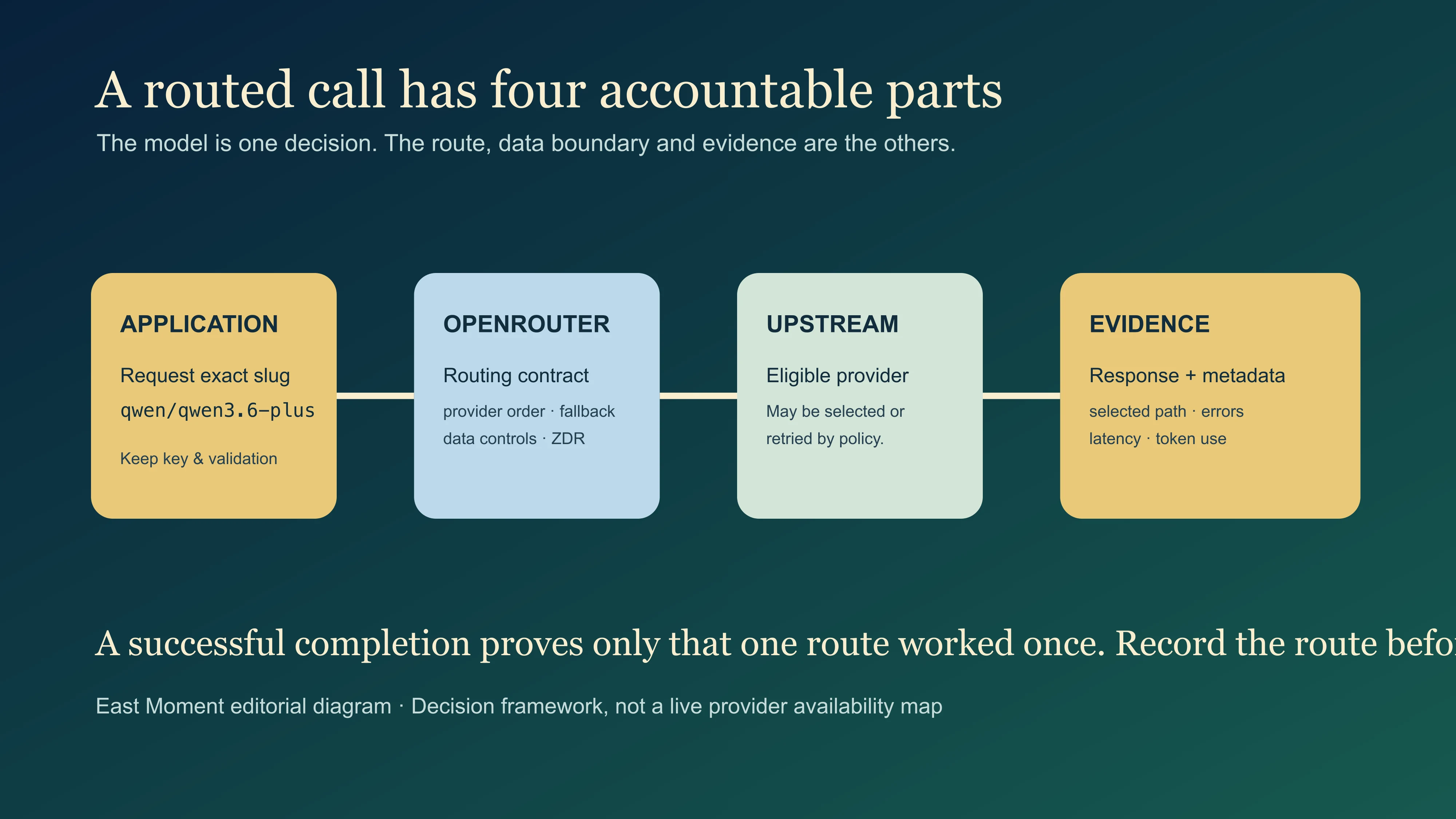
This is the distinction that turns a generic setup tutorial into a useful decision. When you use a direct provider endpoint, you choose its account, credentials, regional host and documented behavior. When you use a router, you choose a stable integration surface and a model slug, then the router can make availability and fallback decisions within the controls you set. That can be a practical advantage. It also means you need to know what decision was made on your behalf.
I would not call a routed model request “portable” merely because the client code looks portable. It is portable only when the team can still answer four questions after the response arrives: which model did we request, which provider served it, were there fallbacks, and which data rule governed the route?
Confirm the exact model slug before you create a dependency
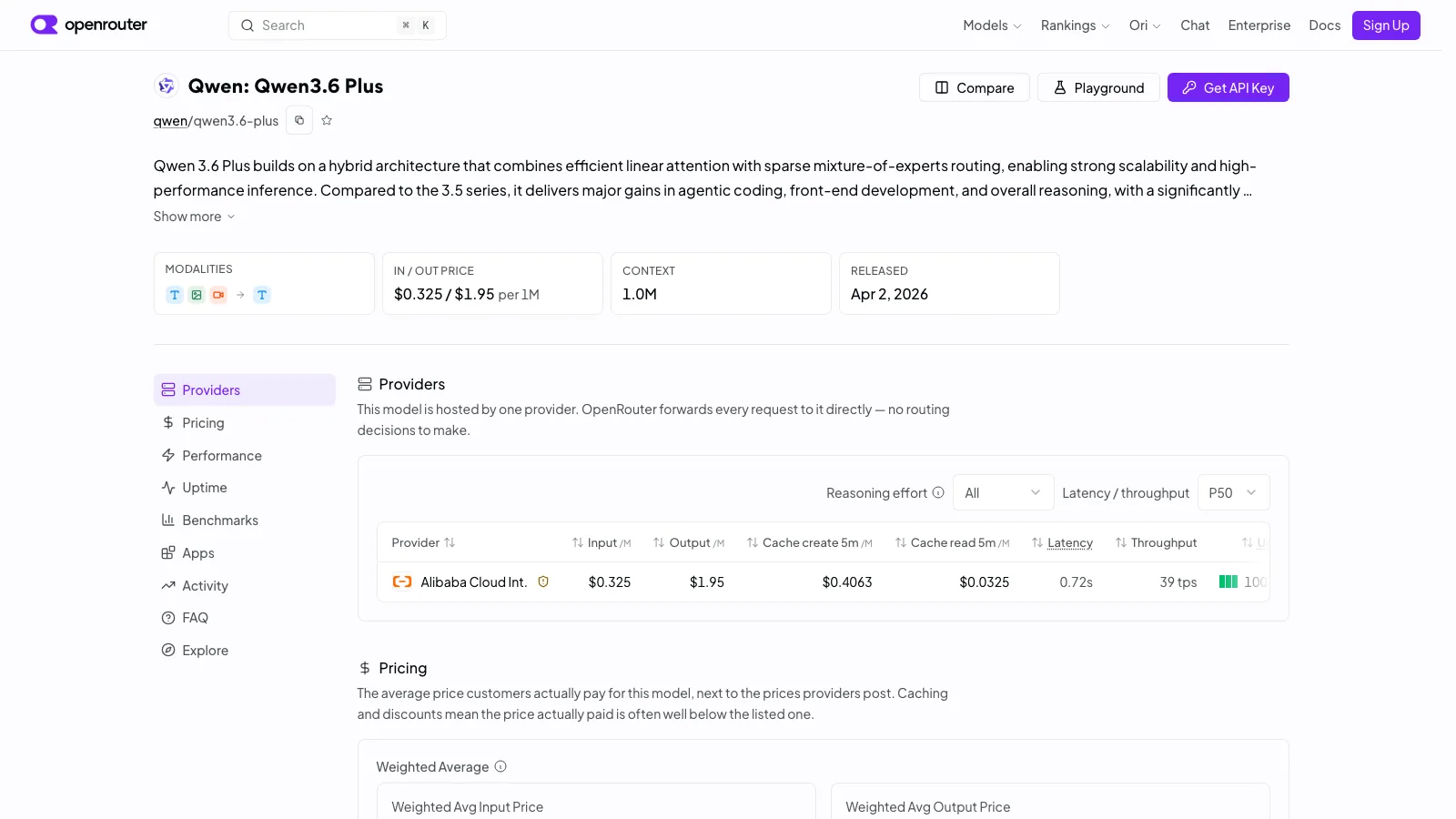
This capture is deliberately mundane. It proves that the exact OpenRouter slug and one provider row were visible together at review time. It does not prove tomorrow's price, permanent availability, a fallback path or the quality of one response. A live model page is an access receipt, not a performance trophy.
Do this on the day you build, not once when you bookmark the guide:
- Query OpenRouter’s public model catalogue at
GET /api/v1/modelsor inspect its current model page. - Find the exact ID
qwen/qwen3.6-plus. Do not guess a slash, vendor prefix, dated suffix orlatestalias. - Read the current context, modality and provider information shown there. A model page is a current capability snapshot, not a promise of a permanent route.
- Decide whether your task truly needs Qwen 3.6 Plus. If your existing workflow depends on that model, record the exact slug in configuration. If you only need “a strong long-context model,” define the behavior you need before letting an alias make the decision.
- Make a small test request with no customer data, repository secrets or private document. Keep the returned request metadata and usage information.
That last step matters because the easiest mistake is to test only the happy path. A short completion proves that your OpenRouter key, endpoint and requested slug can cooperate. It does not prove that a long conversation, a vision input, tool call, structured output, or fallback behaves like the narrow integration your product assumes.
The smallest useful request
OpenRouter documents a standard Chat Completions endpoint. A minimal Python request can look like this:
import os
import requests

response = requests.post(
    "https://openrouter.ai/api/v1/chat/completions",
    headers={
        "Authorization": f"Bearer {os.environ['OPENROUTER_API_KEY']}",
        "Content-Type": "application/json",
        "X-OpenRouter-Metadata": "enabled",
    },
    json={
        "model": "qwen/qwen3.6-plus",
        "messages": [
            {"role": "user", "content": "Give three plain facts about a sunflower."}
        ],
    },
    timeout=30,
)

response.raise_for_status()
print(response.json())
The example’s most important line is not the model slug. It is the X-OpenRouter-Metadata: enabled header. OpenRouter says routing metadata is opt-in; when enabled, the response can expose the routing context that helps you inspect what its pipeline selected or attempted. Without that visibility, “the request worked” can hide the exact information you will need when output, latency or cost changes later.
Keep the API key in OPENROUTER_API_KEY as an environment secret, never in a front-end bundle, screenshot, prompt or committed .env file. The optional HTTP-Referer and application-title headers shown in the official quickstart are useful attribution fields, but they are not authentication and should not be treated as access controls.
What OpenRouter changes—and what it cannot change
| Decision | Direct QwenCloud / Model Studio call | Qwen 3.6 Plus through OpenRouter |
|---|---|---|
| Credentials | Qwen / Alibaba Cloud key and regional host | OpenRouter key and OpenRouter endpoint |
| Model name in code | Qwen’s documented model ID | OpenRouter’s qwen/qwen3.6-plus slug |
| Upstream selection | You call the provider’s documented route | Router chooses among available routes unless you constrain it |
| Failures | Diagnose the provider response and your account | Diagnose request, router result, provider attempt and fallback behavior |
| Data decision | Read the direct provider’s applicable controls | Read both router controls and the eligible upstream-provider path |
This is not a verdict that one route is superior. It is a prompt to make the choice consciously.
The same model name can look impressive on a spatial frontend test and less convincing on a backend or agent task. Routing adds another variable on top of that task difference. If I compare a direct call with an OpenRouter call, I keep the prompt, model snapshot, temperature, tool set and evaluator fixed, then record provider metadata and fallback behavior. Otherwise I am not comparing routes; I am comparing two uncontrolled stories and calling the difference intelligence.
Choose direct QwenCloud / Model Studio when regional control, a provider-specific feature, a direct commercial relationship or a provider’s exact documented API behavior is the main requirement. The companion guide, How to Access Qwen 3.6 Plus, explains that route’s account, region, API-key and endpoint chain.
Choose OpenRouter when one integration surface, a broad model catalogue, router-managed availability or comparative experimentation gives you real value. But do not turn “one endpoint” into a synonym for “no operational questions.” A router saves integration work; it does not remove data, observability, provider and evaluation work.
Provider routing is a product decision, not an invisible optimization
OpenRouter’s official provider-routing documentation says that it load-balances across top providers by default to maximize uptime. It also provides controls that can affect the route: an ordered provider list, fallback behavior, a requirement that providers support all requested parameters, data-collection constraints and zero-data-retention restrictions.
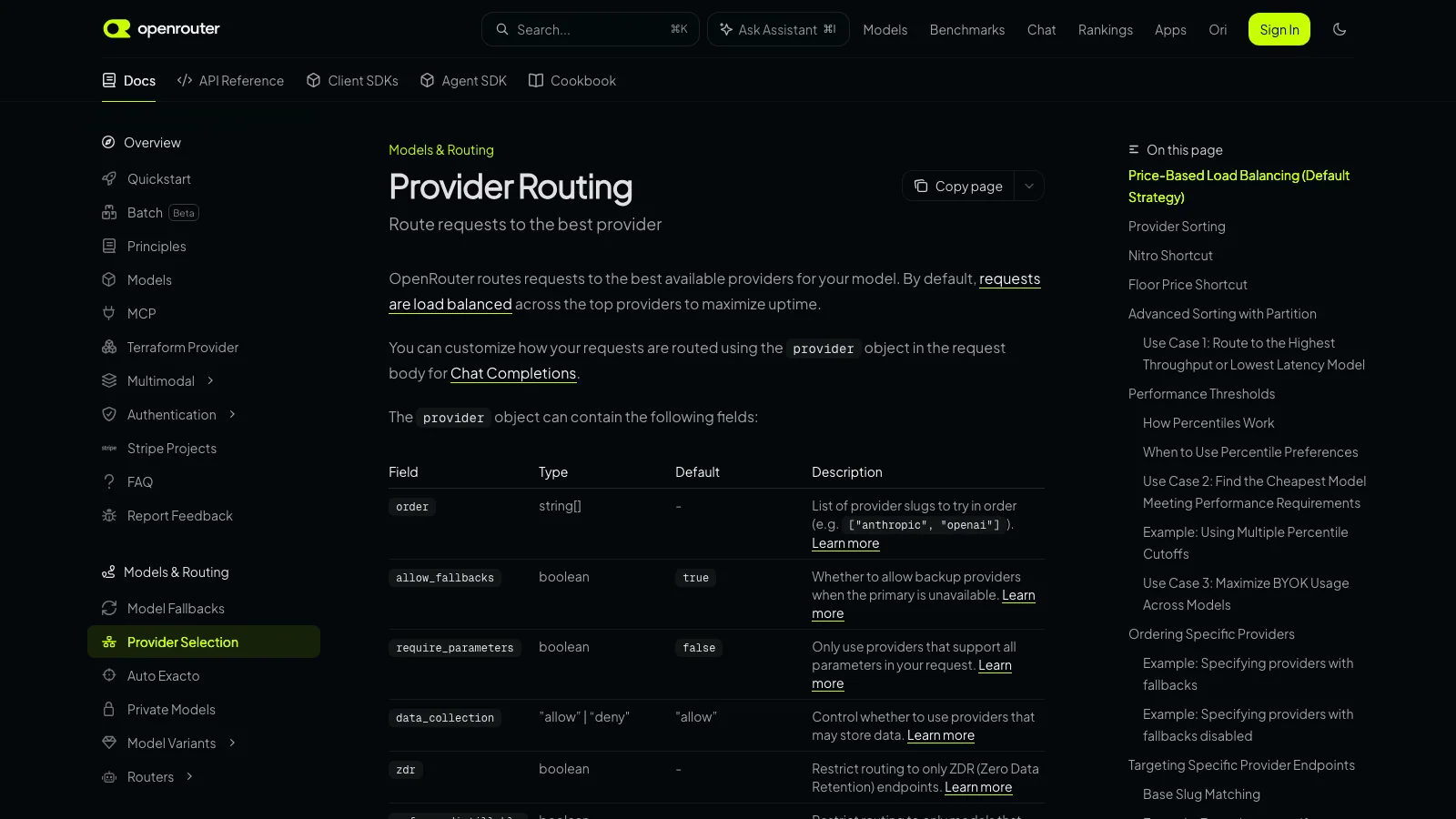
The control table is stronger evidence than a generic “multi-provider” diagram because it names the decisions the router exposes. It still cannot tell you which route served a particular request; that requires response metadata and your own retained receipt.
Those controls are not decorative. They are the content of your product decision.
If your system can tolerate different eligible providers serving the same model, the default routing behavior may be sensible. You gain resilience, but you should measure consistency across the tasks that matter. If an upstream choice is material—for data geography, commercial policy, latency characteristics or a reproducible evaluation—you need to constrain it deliberately and decide what should happen when it is unavailable.
The key question is this: when the preferred route is unavailable, do you want a fallback answer or a visible failure?
For a low-risk drafting experiment, an eligible fallback may keep the work moving. For a strict evaluation, an audited workflow or a sensitive operation, a fallback can silently invalidate the comparison. OpenRouter supports disabling fallbacks; use that choice only after deciding that a failed request is better than an answer produced on a different route. There is no universal “correct” setting—only a setting that matches the promise your application makes.
A clean routing contract for a real application
Before a routed Qwen call becomes part of a product, write a short contract your own team can inspect. It does not need legal theater. It needs explicit choices.
| Contract question | A concrete answer to record |
|---|---|
| Requested model | qwen/qwen3.6-plus, verified against the catalogue on a stated date |
| Allowed route | Default eligible providers, or an explicit provider order / no-fallback policy |
| Data boundary | Whether the request may use data-collecting routes; whether ZDR is required |
| Task boundary | The narrow job the model may perform and input types it may receive |
| Output boundary | How the application validates the response before it affects a user or system |
| Cost boundary | Per-request limits, retries, concurrency and a way to notice unusual usage |
| Evidence | Request ID, model, selected provider / routing metadata, timing, usage and error type |
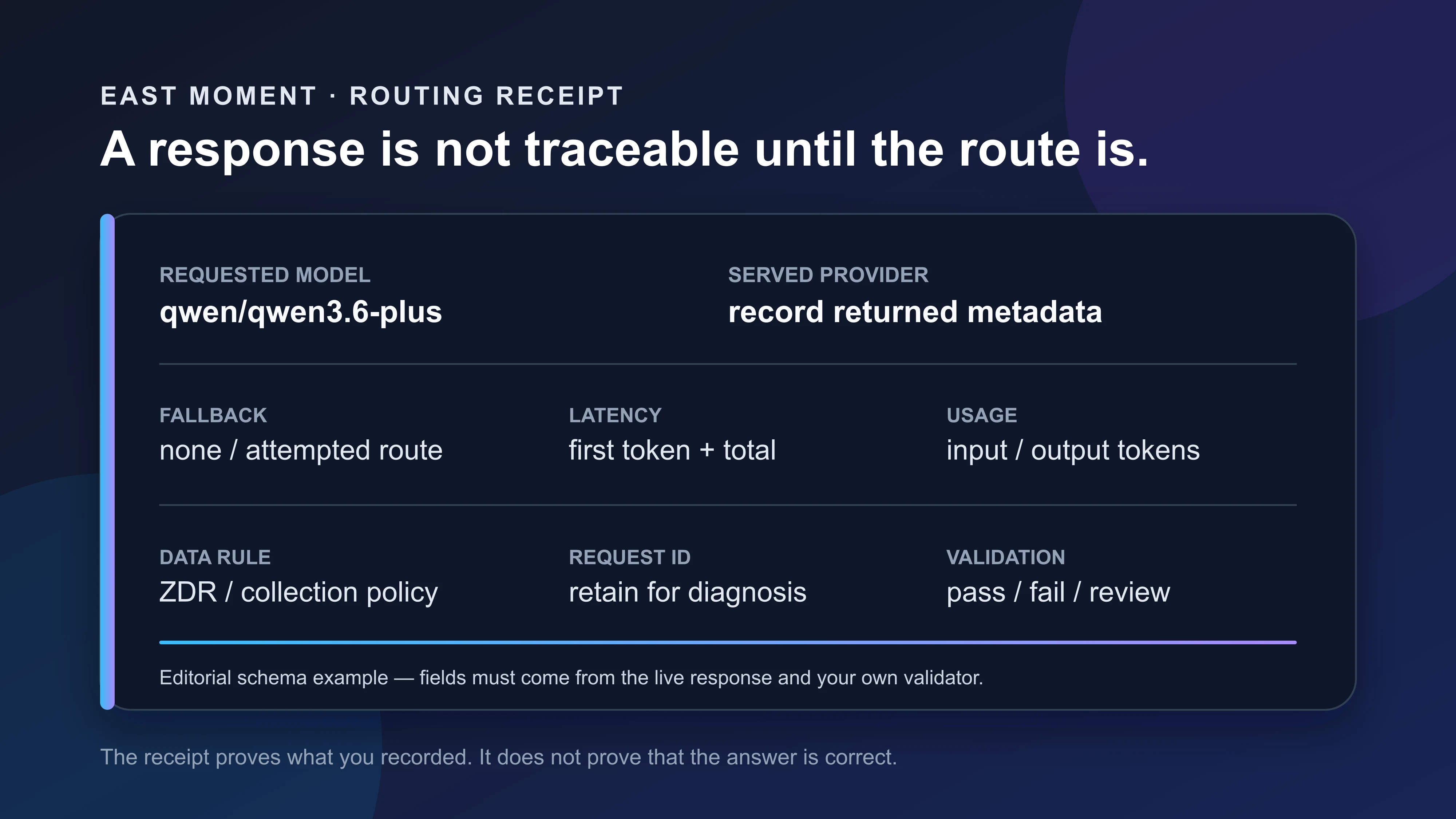
This is an editorial record schema, not a screenshot of one live request. Populate every field from the response and your own validator; never invent a provider name to make an incomplete log look finished.
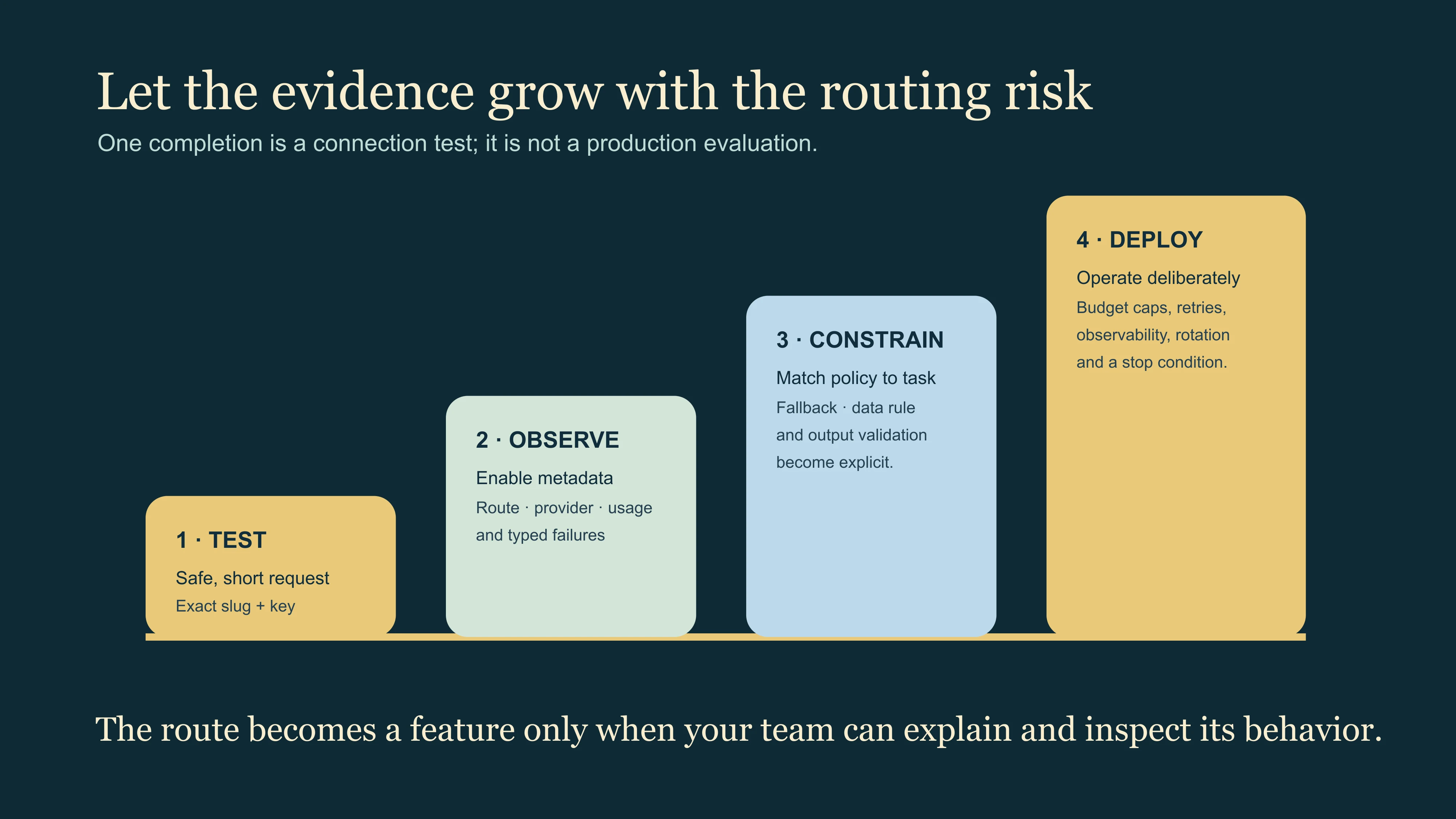
This is the human part of an AI integration. The model can compose an answer; it cannot decide the standards by which your organization accepts that answer. When a tool is assembled from an international routing layer and a fast-moving Chinese model ecosystem, that distinction becomes even more important.
Privacy controls must match the work, not the marketing phrase
OpenRouter documents a per-request zdr control intended to restrict routing to zero-data-retention endpoints, as well as a data_collection routing control. Those are useful technical levers, but they are not a substitute for reading current provider policies or deciding whether the task should leave your system in the first place.
For a public, disposable test prompt, ordinary routing may be acceptable. For customer content, unreleased code, personal data or a legally sensitive document, pause before the request. Identify the contractual and policy requirements, determine whether a qualifying route is available, and treat “no qualifying route” as a valid result. The right fallback for protected material may be do not send it.
This is why an overseas reader should not reduce China AI access to a benchmark table. The technical question is also a geography, data-flow and accountability question. A model’s capabilities are only one layer of what an application actually does.
Diagnose the failures that matter
The slug is rejected. Re-query the catalogue and confirm the exact requested string. Do not guess that a QwenCloud model ID and an OpenRouter slug must be identical; they belong to different integration surfaces.
The response is slower or different from yesterday. Enable routing metadata and inspect the returned route before you blame the prompt. Then compare task inputs, streaming behavior, provider selection and any fallback attempt.
A required feature seems missing. OpenRouter can require providers that support all request parameters. Check whether your request asks for a parameter or modality that changes the set of eligible upstream routes. Do not remove the parameter just to make a test pass unless your product truly can work without it.
Retries turn a minor outage into a cost event. OpenRouter documents typed error information and standard retry guidance. Honor Retry-After for rate limits and transient failures; cap retries and record them. A router can improve availability, but a reckless retry loop can turn one uncertain request into many paid ones.
Your test passed but production behavior is not comparable. Check whether production permits provider fallback, a different privacy route, longer context or tools that your test did not include. Test the smallest version of the actual task and independently validate the output. A model response is evidence, not a final authority.
Qwen 3.6 Plus with OpenRouter FAQ
What model name should I use?
At review time, OpenRouter’s public catalogue lists qwen/qwen3.6-plus. Check the live catalogue immediately before implementation; model availability and provider routes can change.
Do I need a QwenCloud key as well?
For a normal OpenRouter call, you use an OpenRouter API key and its endpoint. A QwenCloud key is relevant when you choose the separate direct Qwen / Alibaba Cloud route, or when a specific bring-your-own-key arrangement has been explicitly configured and documented.
Does OpenRouter always use the same upstream provider?
No. Its provider-routing documentation describes default load balancing and optional fallbacks. If the upstream route matters, define an order or a no-fallback policy and capture routing metadata.
Can I treat an OpenRouter call as identical to a direct Qwen call?
No. The requested model may be related, but credentials, endpoint, routing, data controls and failure behavior differ. Evaluate the actual integration route you intend to deploy.
The East Moment verdict: the route deserves the same scrutiny as the model
Using Qwen 3.6 Plus through OpenRouter can be a sensible choice when a unified API and visible routing controls solve a real problem. It is not a shortcut around engineering judgment. The strongest setup is the one whose route remains legible: you can name the exact slug, show what provider path served the request, explain your fallback choice and stop the call when the data boundary says stop.
Explore the wider China technology hub, read the direct-provider counterpart in How to Access Qwen 3.6 Plus, compare how ByteDance splits chat, workbench and API surfaces in Doubao Seed Code, or bring a real routing decision to Moments.