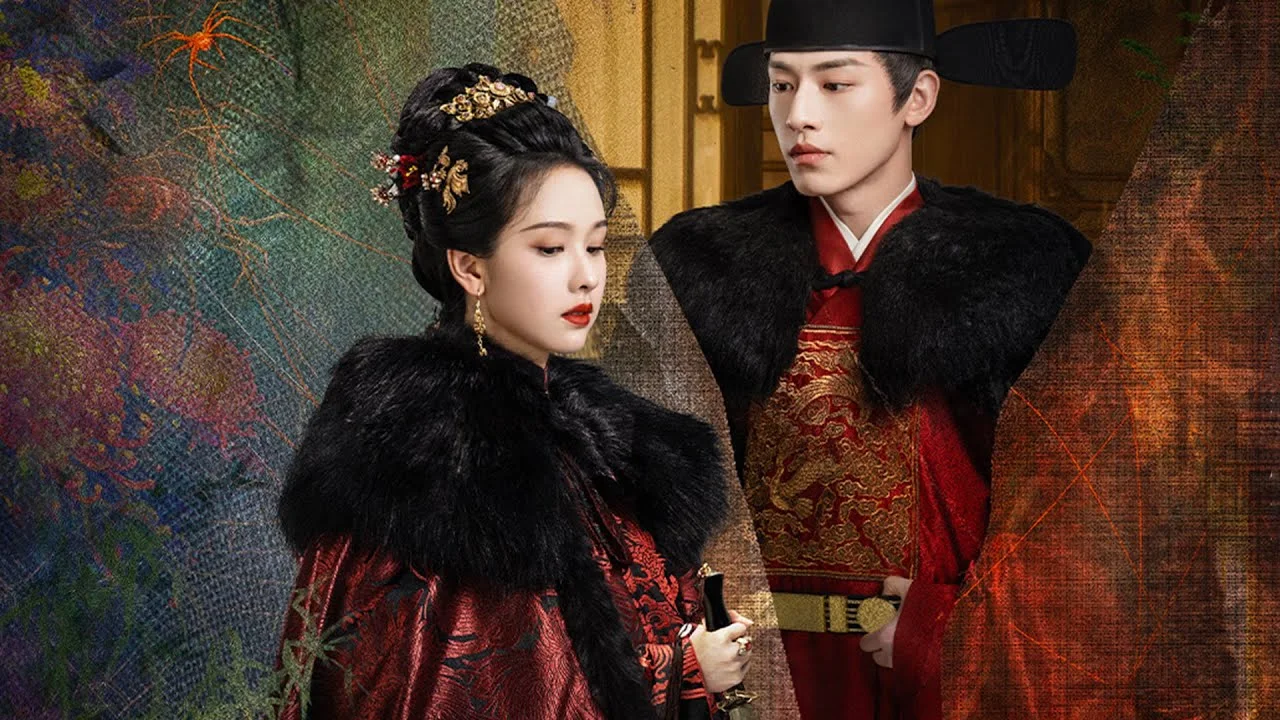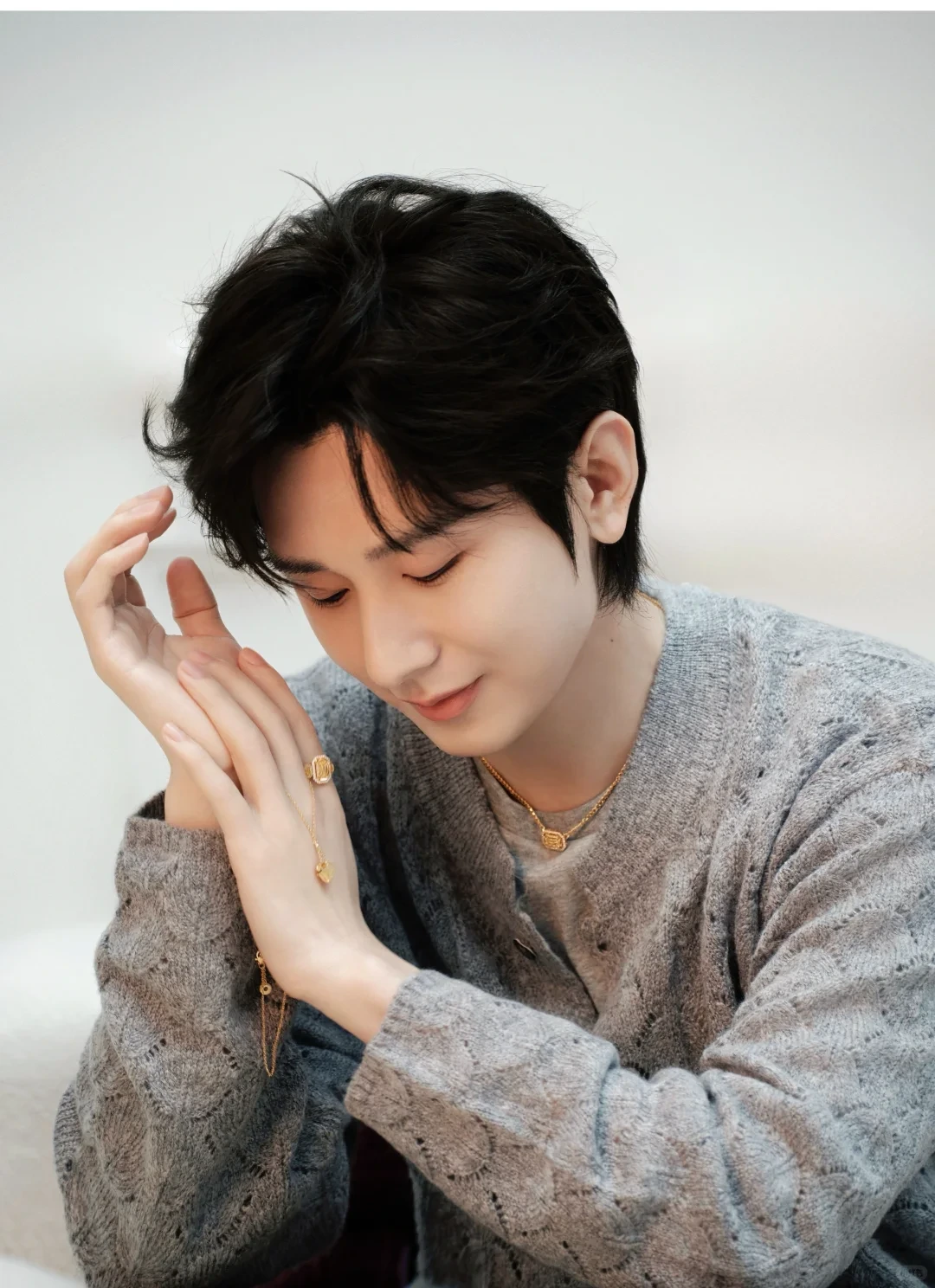
Start with I Am Nobody to see Hou Minghao (Neo Hou) share an ensemble, When We Were Young to see him without fantasy spectacle, then Fangs of Fortune to test his mythic leading-man presence. He can register alarm, mischief and hurt before an overseas viewer finishes a subtitle. That speed is a gift, not the whole performance. The real test is whether a reaction changes the lie his character tells, the person he protects or the way he enters the next room.
Hou Minghao dramas: the best viewing route is a reaction test
If you search Hou Minghao actor, Neo Hou, or Hou Minghao dramas, the useful answer is not a biography followed by an undigested filmography. He is an actor and singer, but this is a guide to his screen performances, not a complete music or movie catalogue. Start with the roles that put different kinds of pressure on his body:
- Cambrian Period (寒武纪) for the young, unprotected impulse before the fantasy polish becomes a signature.
- When We Were Young (人不彪悍枉少年) for warmth in ordinary school life, where sincerity has to survive embarrassment and noisy friendship.
- I Am Nobody (异人之下) for Wang Ye's contemporary looseness and ensemble timing.
- Back From the Brink (护心) for the practical cost of broken power, damaged trust and reluctant partnership.
- Fangs of Fortune (大梦归离) for the smiling danger of Zhao Yuanzhou, a role that turns beauty into a social weapon.
- Love in the Clouds (入青云) as a newer costume test, after you already know what his familiar reactions look like.
That order is more revealing than a “best drama” ranking. Cambrian Period removes polish. When We Were Young removes supernatural machinery. I Am Nobody removes the protection of being the only emotional center. Back From the Brink makes intimacy practical. Fangs of Fortune asks whether mythic sadness can remain attached to particular people rather than float as an attractive atmosphere.
| Start with | What the role takes away | What I watch for |
|---|---|---|
| Cambrian Period | The finished leading-man image | Whether shock enters breath, posture and later behavior |
| When We Were Young | Tragic lighting and fantasy status | Whether warmth notices another person's social cost |
| I Am Nobody | The right to own every close-up | Whether Wang Ye listens, withholds and then acts precisely |
| Back From the Brink | Easy authority and safe intimacy | Whether injury changes distance, touch and trust |
| Fangs of Fortune | The innocence of a beautiful smile | Who is calmed, deceived, protected or tested by it |
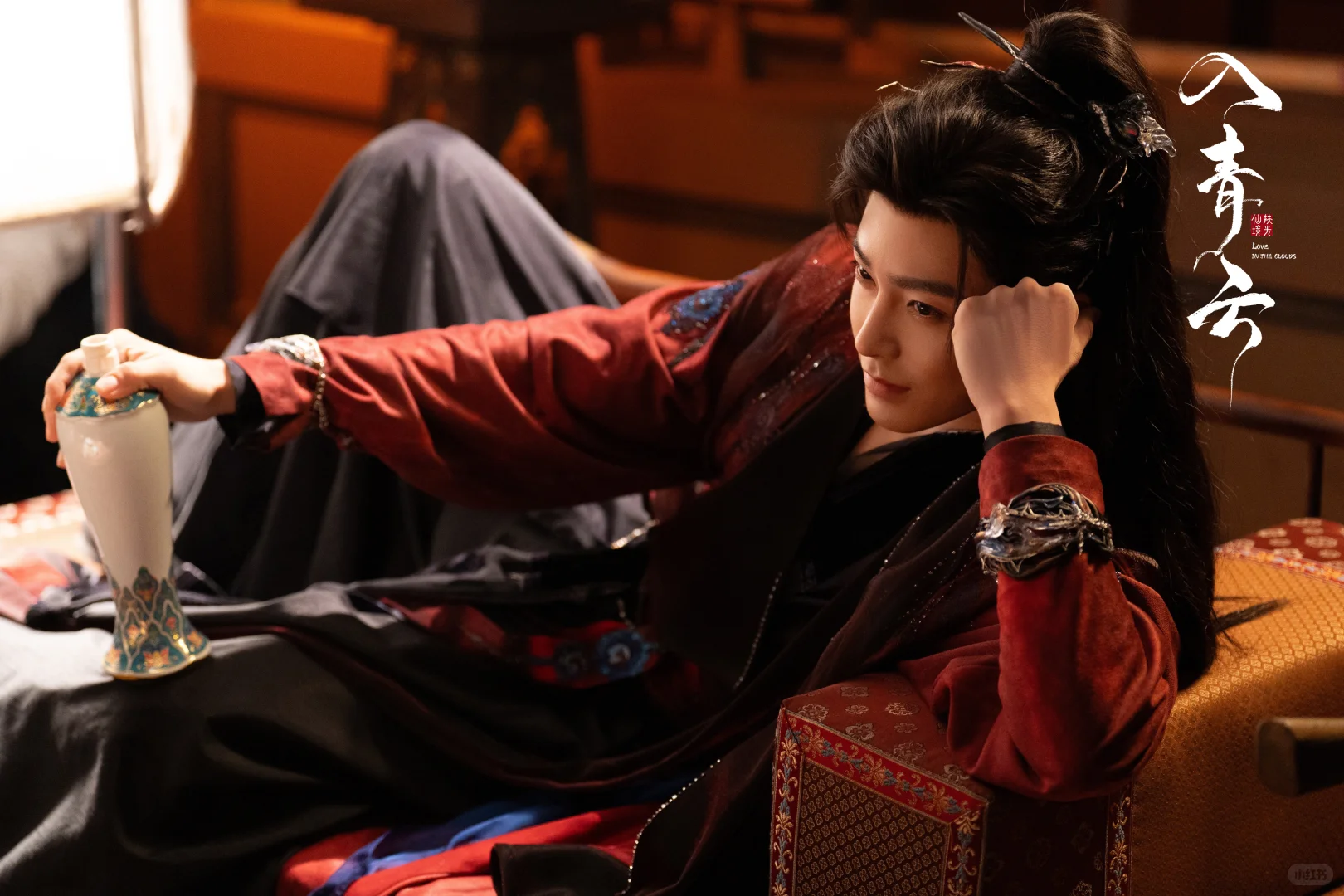
The official iQIYI page for Fangs of Fortune confirms the title and Hou Minghao's role in the production. The official YOUKU stills reproduced below identify his newer Love in the Clouds costume role. These sources identify works and characters. They cannot prove complete acting quality. That judgment belongs to full scenes, especially what happens after the attractive reaction shot ends.
Hou Minghao actor: a quick face is not yet a complete performance
The phrase 反应型演员, or “reaction-led actor,” is useful in Chinese drama discussion but easy to misunderstand. It does not mean an actor who can widen his eyes, cry quickly or change expression on cue. It means information visibly enters the body before the character has finished preparing a public answer.
Hou Minghao has that first instinct. News lands and the face moves. The jaw tightens, the breath catches, the eyes locate the person who must not see too much. That speed can make a subtitle-heavy scene legible to overseas viewers because the body is carrying social information that translation cannot fully explain.
But I do not accept “he can cry” or “he can look shocked” as a complete acting argument. The difficult part starts after the close-up:
- What information entered the character?
- Who is allowed to notice the first reaction?
- What must be concealed to preserve status, love or safety?
- Which decision follows from the concealment?
- What changes when the character enters the next scene?
My private shorthand is information → body → concealment → decision → consequence. If the chain stops at the body, the scene has produced a clip. If the reaction alters a lie, a relationship, an allegiance or the next entrance, it has produced a character.
This is the central reason I am interested in Hou Minghao. His face gives the scene a quick ignition. His best work begins when he does not let that ignition become the ending.
Before the fantasy robes, Cambrian Period gives us the raw body
Cambrian Period has none of the ceremonial distance of a later immortal role. The early reaction can look frightened, immediate and slightly humiliating. It has not yet learned how to become a handsome poster.
That early work explains something viewers often feel before they can name it: Hou Minghao's emotion can look physiological. Fear reaches the neck and jaw before the character has found a sentence. Breath seems to interrupt the plan. The body tells us that the information was not merely heard; it was absorbed.
I like that instinct. I refuse to worship it. A body can produce convincing shock and still leave the person unfinished. The next question is whether the character regains control in a way that belongs to his social position. A frightened student, a powerful demon and a guarded cultivator cannot all hide pain at the same speed. The difference is not how beautiful the first reaction is. It is what the character is trying to protect.
That is also why no isolated still should be used as proof of a whole career. A single expression cannot prove private emotion, complete range or that every later performance has the same strength. A useful actor page keeps that boundary clear.
Hua Biao and Wang Ye put warmth in different social rooms
In When We Were Young, Hua Biao belongs to school corridors, bicycles, crowded homes and friendships that are allowed to be noisy. His warmth does not need a supernatural explanation. He can be clever, irritating, generous and embarrassed inside the same ordinary afternoon.
That role matters because “sunshine boy” is often a lazy conclusion. A smile is not enough to make warmth memorable. What matters is whether Hua Biao notices who has been left out, spends social capital on someone else, or lets his own pride become ridiculous. A warm character should not merely brighten the frame. He should redistribute attention inside it.
Wang Ye in I Am Nobody is almost the opposite temperature. He is loose because he does not need the room to confirm his importance. The contemporary clothes and half-asleep physicality create a useful disguise: he can appear disengaged until the situation demands precision.
This is one of my strongest entry points for Hou Minghao because an ensemble does not let him win by reacting most beautifully. He has to choose when not to react, when another performer should own the joke and when a sudden change in physical accuracy reveals that the relaxed surface was deliberate. Wang Ye's stillness is not emptiness. It is stored attention.
The contrast between Hua Biao and Wang Ye is more useful than a simple modern-versus-costume label. One moves toward people through open social involvement. The other often conserves movement and hides competence inside withdrawal. If those men feel different before the dialogue explains them, Hou Minghao is doing character work. If both become the same charming face with different hair, the production is only rotating his image.
I Am Nobody is the cleanest test of ensemble timing
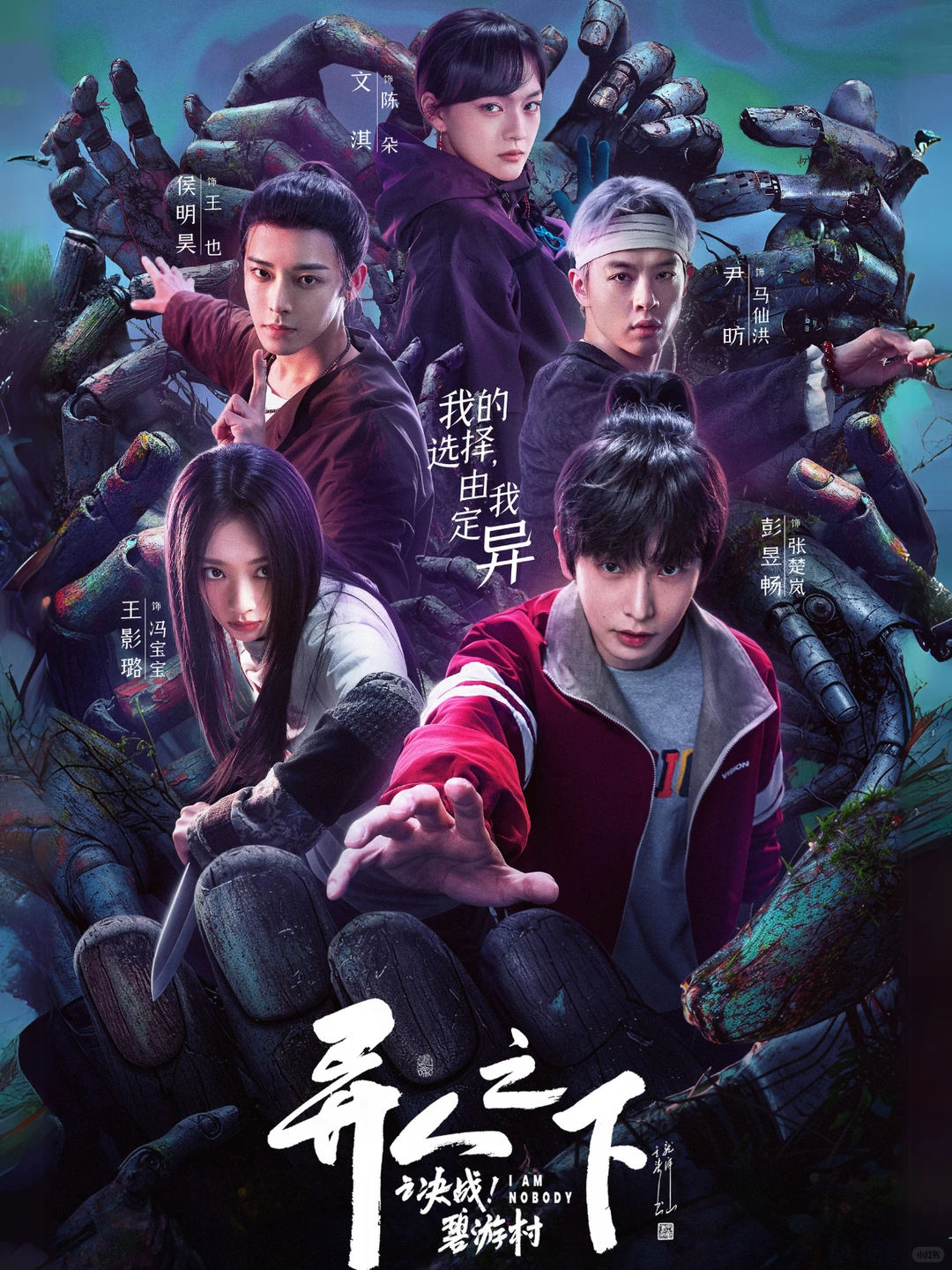
The ensemble poster identifies Wang Ye within a crowded cast. It cannot tell us whether he listens well when another performer owns the scene.
The strongest reason to put I Am Nobody near the front of the route is not that Wang Ye is cool. Chinese supernatural ensemble drama is full of cool entrances. The better question is whether a leading actor can stop treating the group as a background for his own meaning.
Wang Ye has to share comic timing, silence and danger with people who bring different energies into the scene. He can underplay a line, allow someone else to misunderstand him, then become exact when action finally matters. That change of register is more valuable than another solemn close-up because it shows a character managing information.
Watch the gaps around his dialogue. Does he answer immediately, or does he make the room wait? Does he look at the person who asked the question, or at the person who needs to be protected from the answer? When the scene becomes dangerous, does his body become larger, faster or simply more economical?
These are specifically Chinese ensemble questions. Hierarchy is often carried through address, interruption, seating, deference and who is permitted to make a joke. English subtitles can translate the words while leaving some of that social geometry invisible. Hou Minghao's physical control helps, but the viewer still needs to watch the whole room rather than freeze his face into a reaction GIF.
My criticism is equally specific: an actor with a fast, readable face can become overprotected by editing. The cut may arrive exactly when the reaction looks most attractive. That is why I prefer a complete exchange, including the awkward recovery, to a compilation of five-second highlights.
Back From the Brink makes feeling practical
Fantasy romance often talks about souls, seals, power and destiny while leaving daily trust vague. Back From the Brink is useful because Tian Yao's condition makes vulnerability practical. Power is not just a glow around the body; it is something fragmented, recovered, withheld and negotiated with another person.
Hou Minghao works best here when broken authority affects distance. Does Tian Yao stand like someone who expects obedience, or like someone who needs help and resents that need? When affection enters, does the body soften, become watchful or try to regain control? Partnership has to be built from repeated decisions rather than announced by a romantic shot.
His quick reaction style helps the early friction because suspicion and reluctant care can appear almost together. The risk is that hurt becomes too aesthetically tidy. Real betrayal should make old gestures unusable. A hand once accepted may be avoided. A familiar joke may stop working. A character's map of safety has to change.
This is the role where I watch Hou Minghao's silence more than his tears. Silence after injury can contain accusation, calculation or exhaustion. If every silence means “beautifully sad,” the mythology has swallowed the man. If the silence changes what he permits another person to do, it becomes a social fact.
Fangs of Fortune turns the smile into a countdown
In Fangs of Fortune, Hou Minghao plays Zhao Yuanzhou, also known as Zhu Yan, a powerful demon who enters a demon-hunting bureau. The premise gives his familiar screen image a sharper contradiction: the most dangerous person can also be the one smiling most gently.
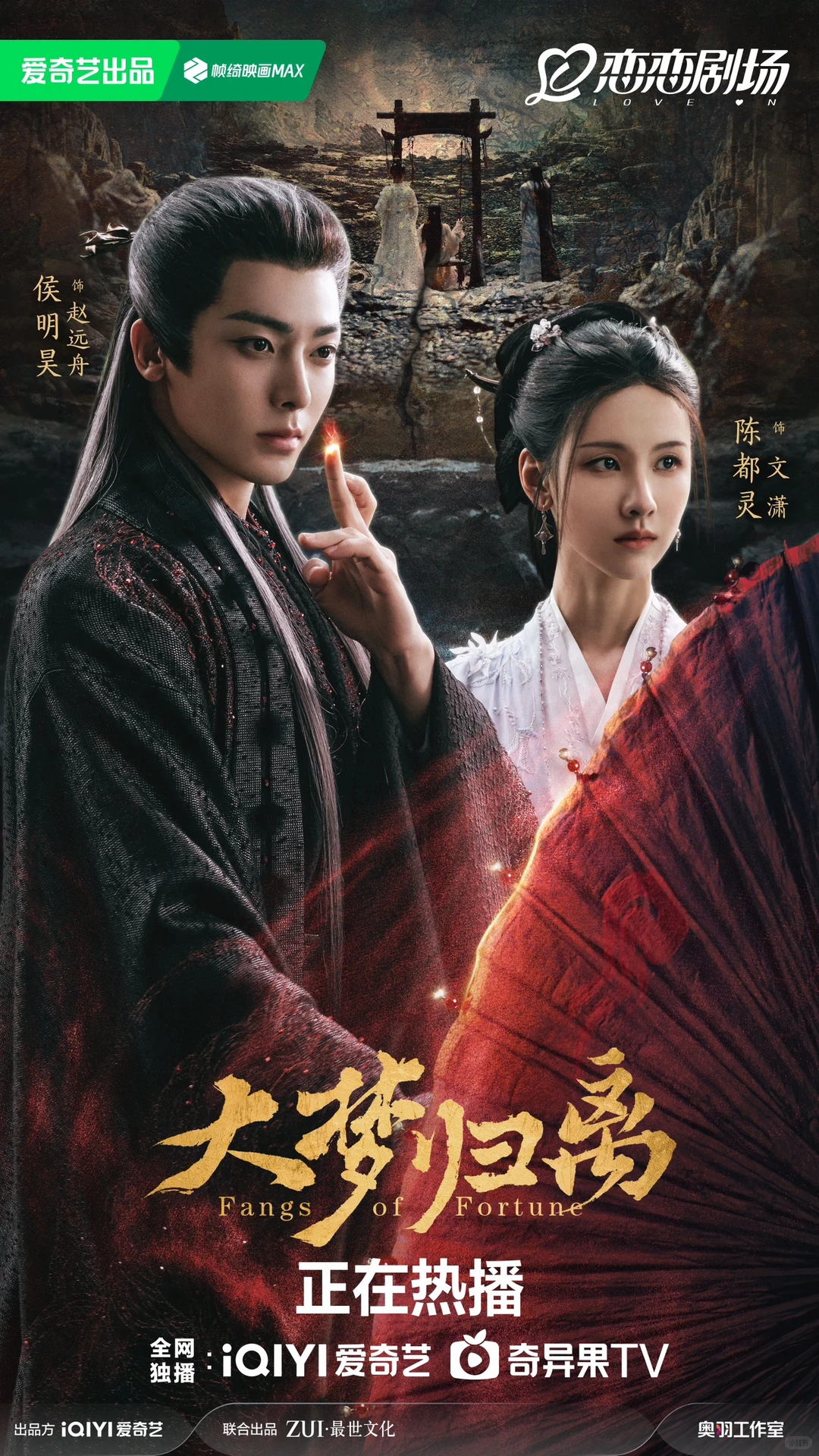
This official poster establishes the characters' visual pairing, not the emotional truth of their complete story.
I do not think the role succeeds whenever Zhao Yuanzhou looks tragic. Tragedy is already built into the lighting, music and mythology. Hou Minghao's job is to make the burden alter a social choice. Who receives the joke? Who is spared the truth? When does apparent surrender hide control? Which companion is allowed to see fear?
The role becomes specific when the smile is not decoration but a countdown. It can calm the group, provoke an opponent, conceal exhaustion or postpone a goodbye. The mouth may hold the same curve; the relationship decides its meaning.
Group scenes are essential. A reaction matters because someone caused it, someone noticed it and someone must be prevented from understanding it. Zhao Yuanzhou alone in a perfect close-up can become pure iconography. Zhao Yuanzhou managing a room becomes a character.
For a related performance that uses stillness and distance differently, compare our Chen Duling guide. The point is not to choose a winner. It is to see how the same mythic production asks one body to conceal danger and another to absorb it.
Love in the Clouds is a new costume test, not automatic proof of range
The official Love in the Clouds stills sell romantic-fantasy tension immediately. Hou Minghao's styling and gaze already belong to a genre audience fluent in coded identities, dangerous attraction and withheld truth. That fluency creates anticipation and a trap.
If this newer role reacts to suspicion, love and betrayal with the same wounded stare and the same recovery speed as Zhao Yuanzhou or Tian Yao, then costume range has become costume rotation. A new name and robe are not enough.
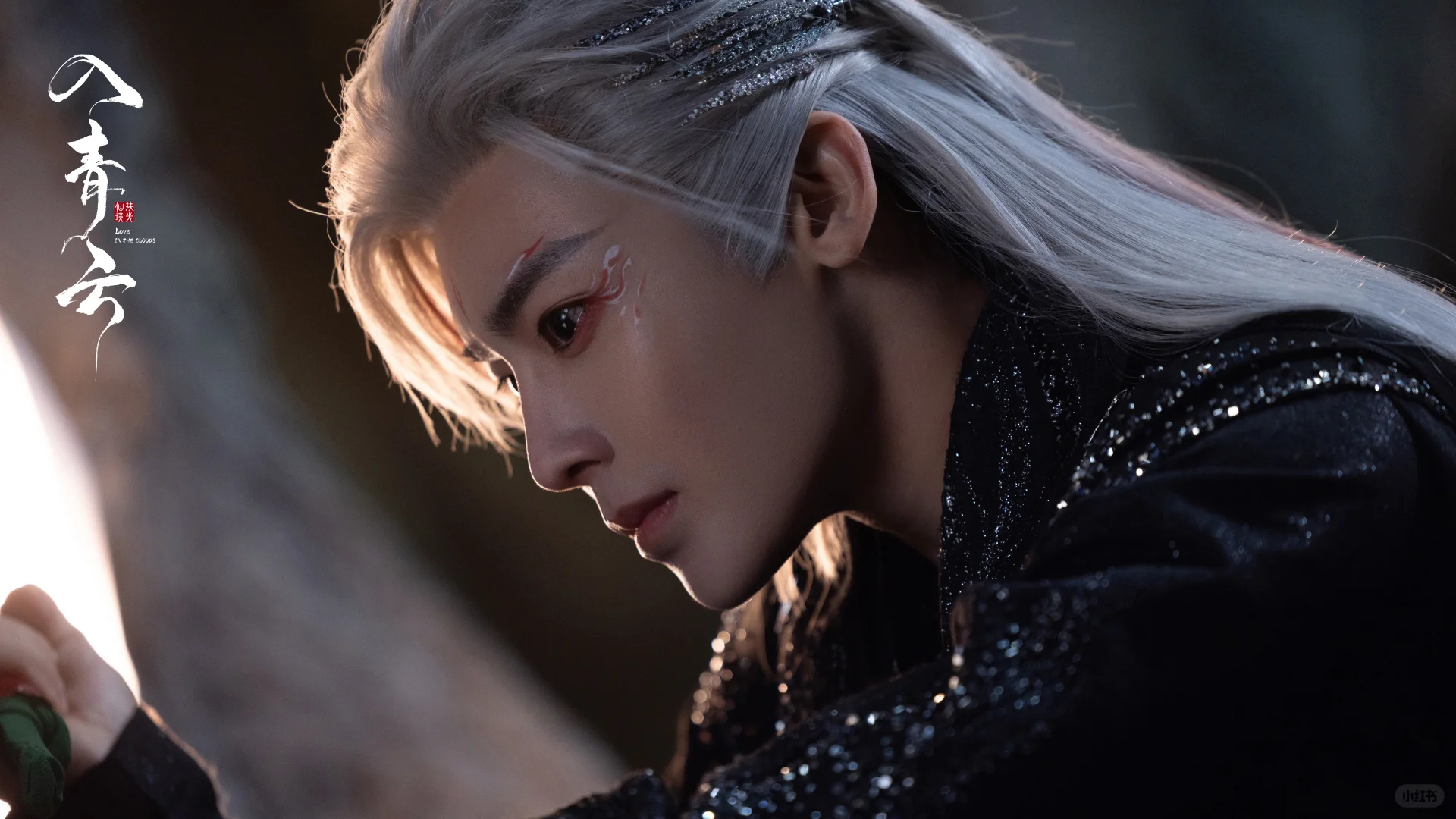
The test is rhythm. Does this man interrupt differently? Does he protect status with humor, aggression or stillness? Does attraction speed him up or make him calculate? When bad news arrives, which relationship changes first?
Official stills can identify the marketed role and atmosphere. They cannot prove a complete performance, and I will not pretend they can. The answer belongs to full episodes, especially the connective scenes after the grand emotional beat. That is where a familiar actor either finds a new recovery rhythm or returns to a well-lit version of himself.
What subtitles cannot fully carry
An English subtitle can translate a sentence accurately and still thin out the social pressure. Titles of address, seniority, formality and indirect refusal shape who has permission to ask and who must answer without appearing to resist.
Hou Minghao's fast face can help overseas viewers orient themselves, but it can also encourage overreading. A widened eye is not automatically romantic shock. A polite answer is not automatically surrender. The scene's geometry matters: who is seated, who approaches, who remains in public view and who can overhear.
That is why I insist on complete scenes. The emotion lives in the triangle between speaker, witness and hidden audience. Subtitles give you content. Bodies give you cost. The next scene tells you whether the cost was real.
My final judgment on Hou Minghao
Hou Minghao is not strongest because he suffers beautifully. He is strongest because his body can receive information before the sentence is ready. That instinct gives him unusual speed. Craft appears when he slows the reaction into concealment, decision and consequence.
Start with I Am Nobody if you want the cleanest test of ensemble timing. Go to Cambrian Period to see the unprotected early impulse. Use When We Were Young to test warmth without fantasy machinery, then Back From the Brink for practical trust, and Fangs of Fortune for mythic burden attached to a social room. Only after that should you judge a newer costume role.
For another actor who works through tiny changes in timing, read our Ding Yuxi guide, then return to the Chinese actors collection or the Chinese television hub.
In the comments, do not post “his crying was good.” Give me a chain: the information, the first bodily response, what he hid and how his next entrance changed. Bring the timestamp to Moments. I will return after the next ensemble role, because the fairest question is also the hardest: can Hou Minghao give a new man a new way to recover?