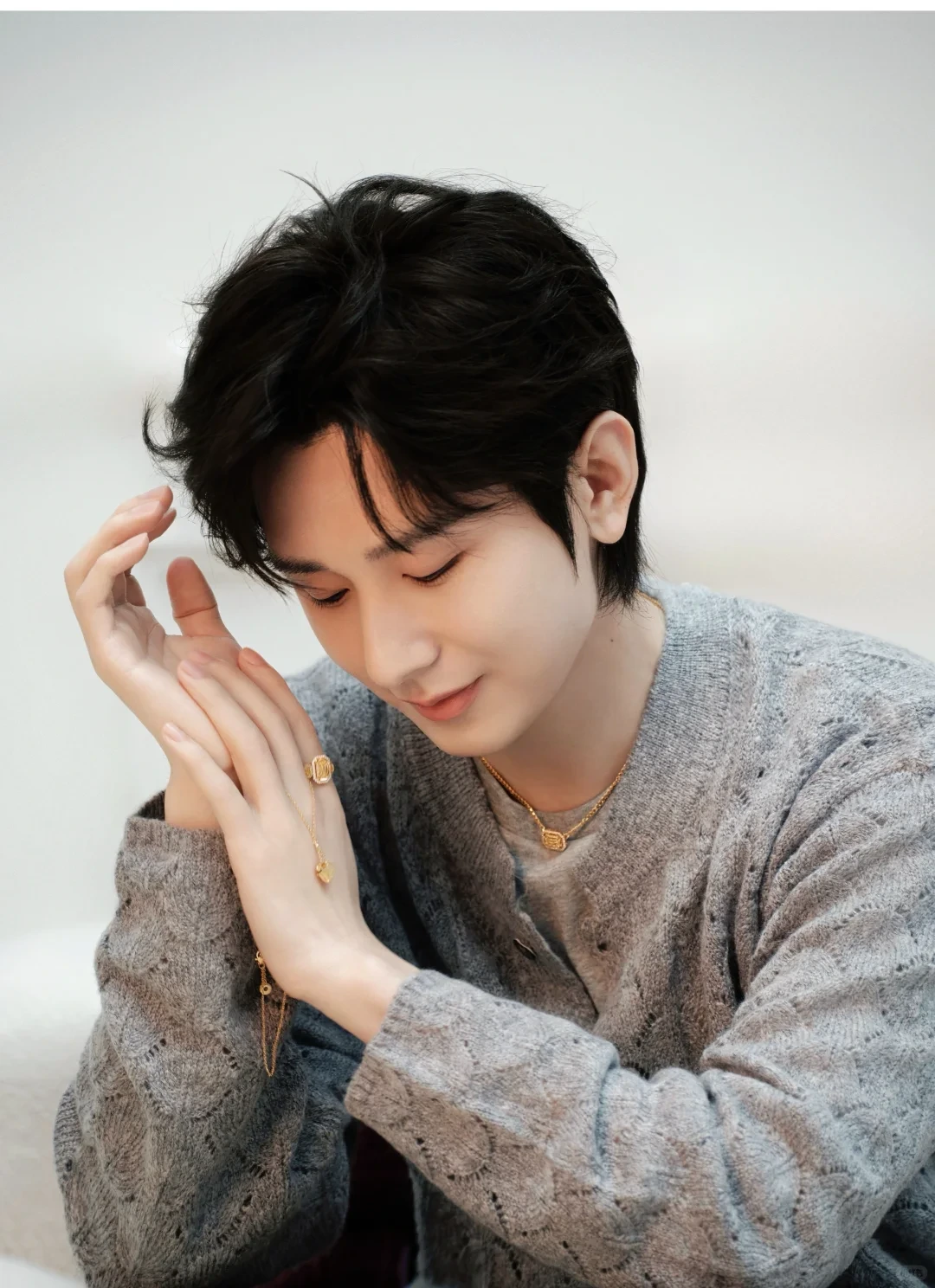
Ding Yuxi is most interesting in the half-second after a character loses control but before he admits it. The eyes register danger, the mouth almost forms a defense, and then the body chooses whether to joke, attack, protect or retreat. That interval is his real screen signature.
Ding Yuxi is easier to understand at quarter speed
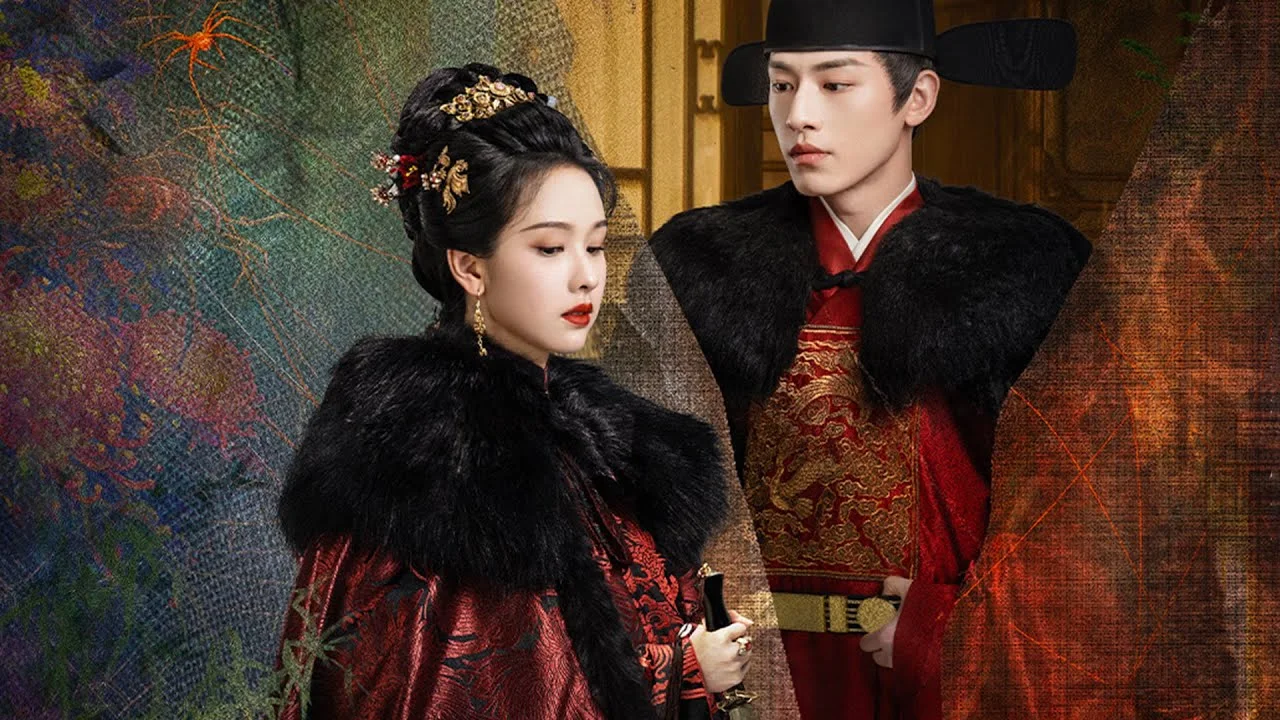
The official Viu trailer for Love Game in Eastern Fantasy identifies the fantasy-romance setting and Ding Yuxi's central role. I use it to locate the gestures below, while judging the performance from what happens between the advertised poses.
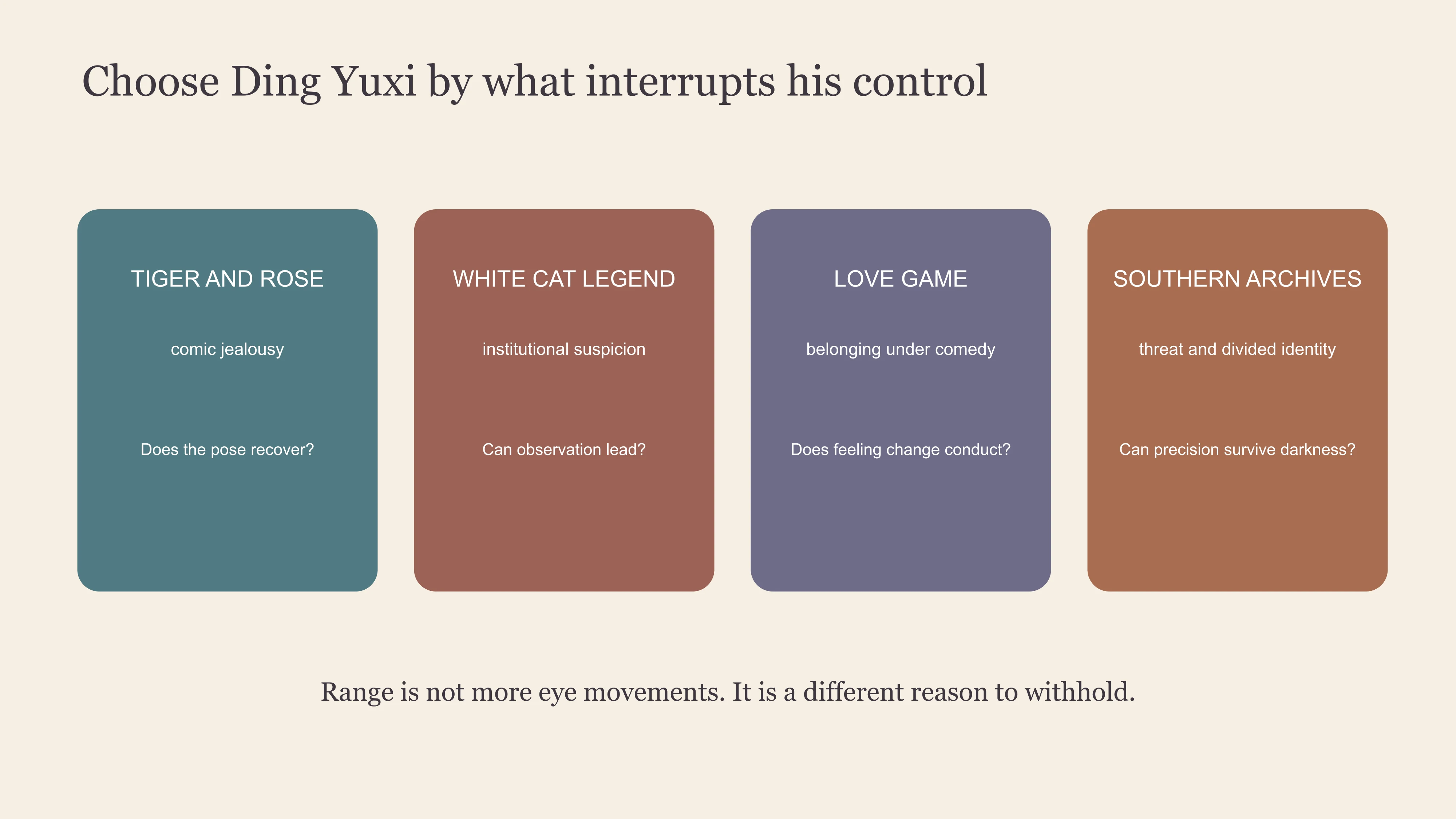
If you are deciding where to start with Ding Yuxi (丁禹兮), begin with Love Game in Eastern Fantasy (永夜星河). Then look at the official Southern Archives material for contrast. The first lets comedy keep puncturing a guarded fantasy hero. The second sells a darker, more physically alert figure whose face must react to threat before language can catch up.
That is more useful than a long filmography. Ding Yuxi is often described through still-image words: handsome, cold, sharp, fox-like. None explains why a moving scene works. His face becomes interesting when an expression is interrupted.
| Start here | Pressure on the performance | My verdict |
|---|---|---|
| The Romance of Tiger and Rose | Jealousy and authority repeatedly punctured by comedy | Best first proof that he can abandon a handsome pose |
| White Cat Legend | Observation inside an institution and ensemble | Tests whether precision can lead rather than merely attract |
| Love Game in Eastern Fantasy | Belonging, suspicion and romantic-comedy disruption | His most complete current bridge between feeling and action |
| Southern Archives | Threat, physical alertness and divided identity | The next test of whether the method survives a darker register |
The face becomes interesting when control receives bad information

The official Viu trailer identifies Ding Yuxi and Yu Shuxin inside a fantasy world built from danger and comic disruption. A polished costume image can make any performer appear controlled. The harder task begins when another character changes the terms of the scene.
Watch his first reaction to bad information. It often arrives in layers rather than one large expression: assessment, disbelief, irritation at being affected, then a decision about how much the other person is allowed to see. The pleasure is not that the face "says everything." It is that the face tries not to say everything and fails by a fraction.
This is why fan language around micro-expressions can be useful even when it becomes exaggerated. "Jinjiang-style acting" is not a technical category. I use it as shorthand for a face that seems to contain the kind of compressed menace, desire and self-restraint readers imagine from web fiction.
The phrase tells us what viewers want to feel. It does not by itself prove that the acting created it.
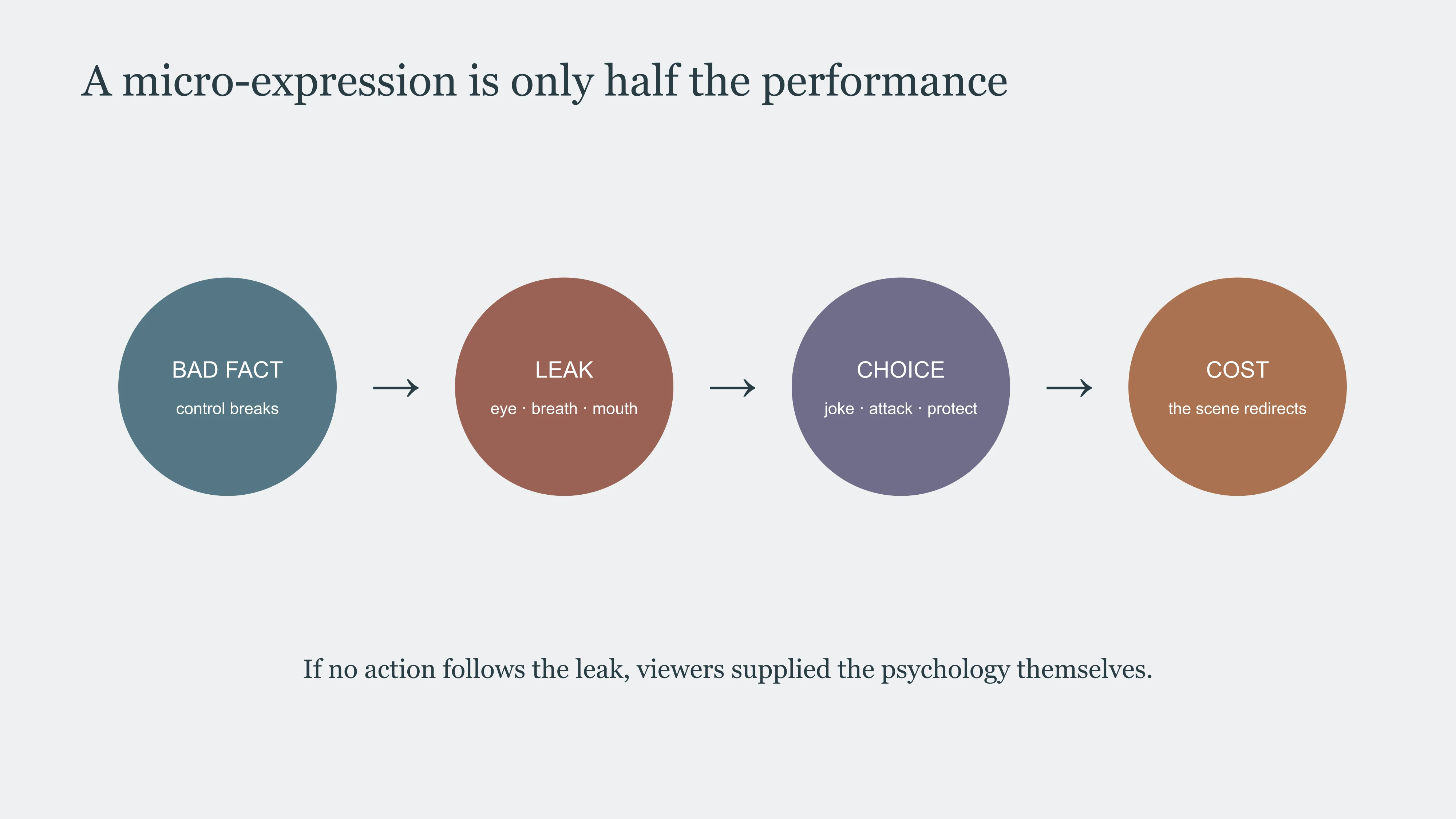
The sharpest criticism from the current discussion is also the most useful: he can give too much. A breath, lowered head and delayed answer may precisely express something unsaid; repeated across unrelated roles, the same sequence becomes a protected shorthand for complexity. The viewer recognizes “suppressed feeling” before the character has earned it.
I therefore refuse to count expressions. I count changed relationships. Did the other person receive information? Did Ding Yuxi's character surrender an advantage, alter distance or choose a risk? If the answer is no, the eyes may be active while the scene remains still.
Comedy is the enemy of a beautiful pose
In Love Game in Eastern Fantasy, Yu Shuxin's energy keeps refusing the solemn rhythm a guarded male lead might prefer. That makes comedy an acting test rather than relief from acting.
I watch what Ding Yuxi does when dignity becomes impossible. Does he cling to the pose and let the scene die? Or does he allow irritation, panic and reluctant care to pass across the face in the wrong order? His funniest moments often come from a character trying to restore control after the audience has already seen the emotional leak.
The important part comes after the laugh. If he moves toward danger, covers for someone or changes a plan, the expression was a decision forming. If the plot resets him to decorative coldness, the micro-expression was only a clip.
The Romance of Tiger and Rose revealed the method before the label existed
WeTV's official series page identifies Ding Yuxi as Han Shuo opposite Zhao Lusi in the 2020 costume comedy. The role matters because Han Shuo repeatedly imagines that he understands the genre and the woman in front of him, then has to recover when both refuse his plan.
His jealousy works when it is not a glamorous possession signal. The comic sequence is assessment, wounded certainty, an attempt to restore authority and the humiliating discovery that everyone has already seen the wound. Ding Yuxi lets those stages arrive fast enough to feel spontaneous but separately enough to remain readable.
That role created the pleasure later called “Jinjiang-style” acting: a web-fiction hero apparently carrying menace and devotion in the same look. It also created the danger. Once an audience rewards the look, a production can request it without building the contradiction underneath.
The difference between Han Shuo and Mu Sheng is therefore not costume or hairstyle. Han Shuo's control is punctured by social comedy and romantic miscalculation. Mu Sheng's control protects a deeper fear of conditional belonging. If both men withhold in exactly the same way, range collapses into branding.
White Cat Legend asks whether observation can organize an ensemble
Romance makes every eye movement easy to interpret as desire. An investigative ensemble removes that shortcut. In White Cat Legend, the useful question is whether Ding Yuxi can distribute attention across evidence, colleagues, rank and danger without turning every close-up into private suffering.
This is where his precision can become leadership. A lead does not have to dominate the room; he has to make the audience understand why different people matter to the problem. Watch who he looks at after a clue, whose reaction changes his theory and whether the body remains available to the ensemble rather than sealing itself inside mystery.
The role is also a correction to “micro-expression” praise. Investigation requires information management. A withheld reaction must preserve suspense or protect another person. If it only makes the actor look unreadable, it has stopped serving the story.
Proximity shortens the time available to hide

Physical proximity shortens the time available to compose a response. That is why cramped two-person scenes are more revealing than grand entrances. A character can prepare a public face for a hall; he cannot always prepare for another person appearing too close, asking the wrong question or noticing concern.
Overseas viewers reading subtitles may look down exactly when this adjustment occurs. Rewatch the beat after the line rather than the line itself. A short refusal can be real rejection, an attempt to hide fear or a crude form of protection. The next action decides.
The newer image: can the same precision survive without romantic comedy?

The newer iQIYI trailer material for Southern Archives (南部档案, also marketed with variant English wording) places Ding Yuxi beside Zhang Xincheng in a darker adventure-mystery register. This image proves the marketed pairing and tone, not the quality of a complete performance.
It does, however, sharpen the right question. In romantic fantasy, a half-beat delay can become flirtation or comedy. Under mystery pressure, the same delay must become threat assessment. Can he make us see a character notice danger without broadcasting the solution? Can a small expression change the power between two men rather than merely invite a romantic reading?
The official iQIYI profile confirms a much wider route than one fantasy romance, including The Romance of Tiger and Rose, Moonlight, White Cat Legend, Love Game in Eastern Fantasy and newer work. A résumé does not prove range. It supplies the cases through which the same habit can be tested under different pressure.
My demand for Southern Archives is blunt: threat assessment must alter the whole body, not only darken the eyes. Physical alertness changes weight, distance and breath. Divided loyalty changes who receives the first look. If the new role merely places familiar romantic withholding inside darker photography, the image will change while the actor's problem remains protected.
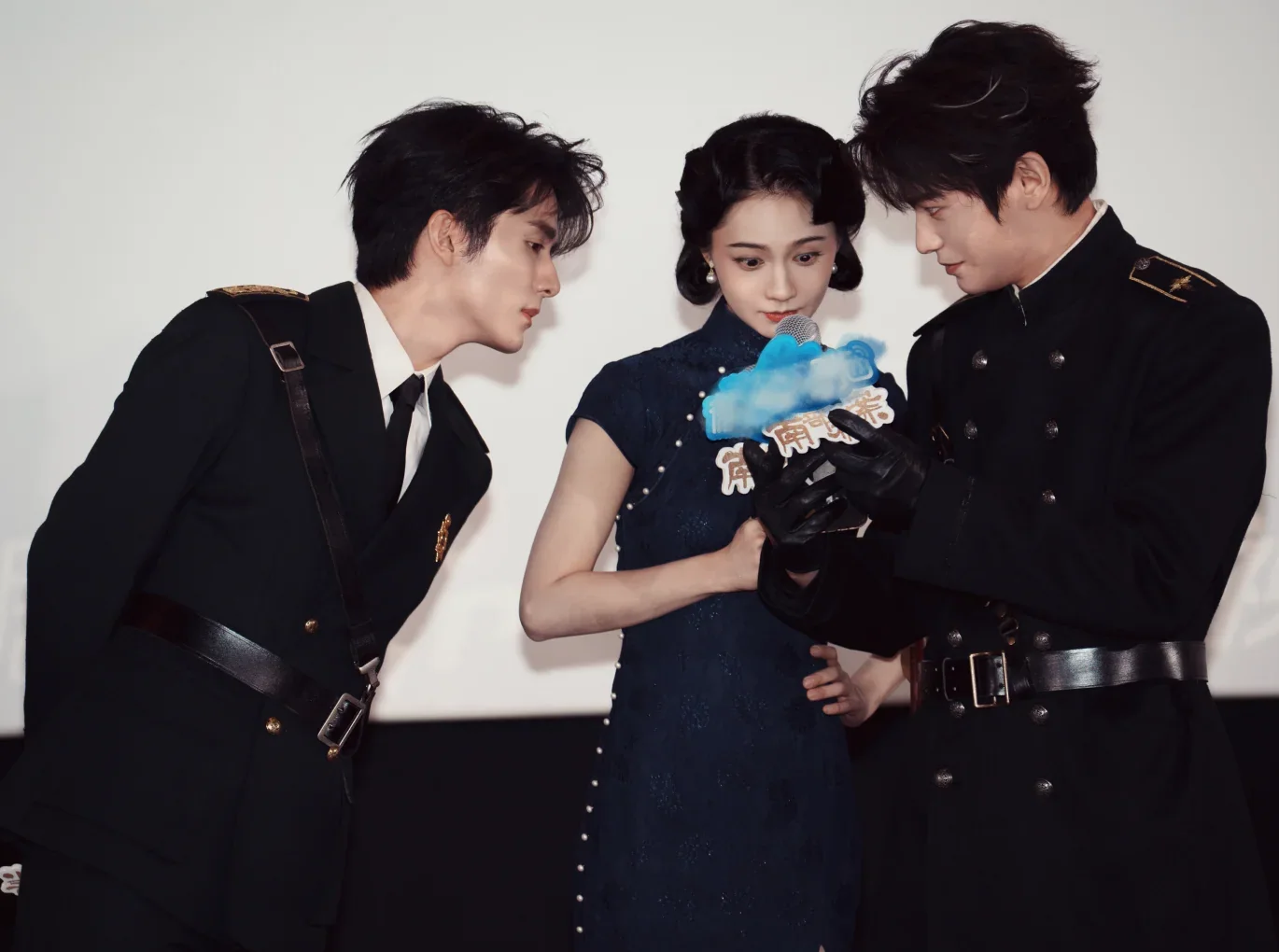
The live cast image offers a second, more ordinary test. There is no supernatural lighting and no isolated close-up. Three performers are sharing attention around a small prop, leaning toward the same object while still keeping distinct positions. Ding is not required to manufacture mystery; he has to belong to an ensemble.
That difference is important. The phrase “Jinjiang-style acting” originally feels precise because it describes a reader's pleasure: a beloved web-fiction sentence appears to have found a face, and a half-hidden feeling becomes visible without a speech. But praise can turn into a cage. Once viewers begin rewarding the familiar lowered gaze, wet eyes or restrained smile in advance, the gesture no longer has to earn its meaning from the scene.
I do not dismiss this style as inferior idol acting. That judgment is too easy and ignores how difficult it is to translate an interior sentence into behavior. I do insist on a harder second step. The body must change with genre. Mu Sheng's guarded affection can fold inward because romantic comedy will expose it. An adventure figure under physical threat cannot keep performing the same inward fold; he must scan exits, distribute trust and decide whose body he will protect first.
The cast setting also reminds me that reaction is never a solo collectible. A strong micro-expression belongs to a circuit: somebody acts, Ding receives it, the response changes another person's next move. Remove that circuit and fans can project any psychology they want onto a beautiful pause. Preserve it and the pause becomes drama.
What I admire, and what I distrust
I admire the moment when Ding Yuxi lets conflicting impulses appear in sequence. I distrust praise that treats any tiny eye movement as proof of a complete inner world. Fans can write the missing psychology for a performer they already love.
The protection against that bias is consequence. After the expression changes, does the scene change? Does another character receive new information? Does Ding Yuxi alter distance, risk or allegiance? Micro-expression has value when it redirects behavior.
That is also why Love Game in Eastern Fantasy remains the best starting point. Its comic world is rude to beautiful restraint. It keeps asking the face to recover in public.
His next development should not mean becoming expressionless. It should mean playing somebody whose withholding has a different social purpose: a leader who conceals doubt to keep a group functioning, a liar whose charm is tactical, or an ordinary adult whose shame cannot be photographed as gothic romance. Range begins when the same face obeys a different moral rule.
My verdict: the reaction is only half the performance
Start with Love Game in Eastern Fantasy for comic interruption, then use the official Southern Archives material as a current contrast in tone. Ding Yuxi's appeal is not simply that he can express a lot with very little. It is that the little expression often appears at the exact moment a character must abandon one plan and choose another.
In the comments, name the half-second that changed a Ding Yuxi scene for you, then explain what action followed. Join the East Moment community to compare slow-motion impressions against full-scene consequences. Continue through the Chinese actors collection or compare his comic timing with the Xu Kai guide.