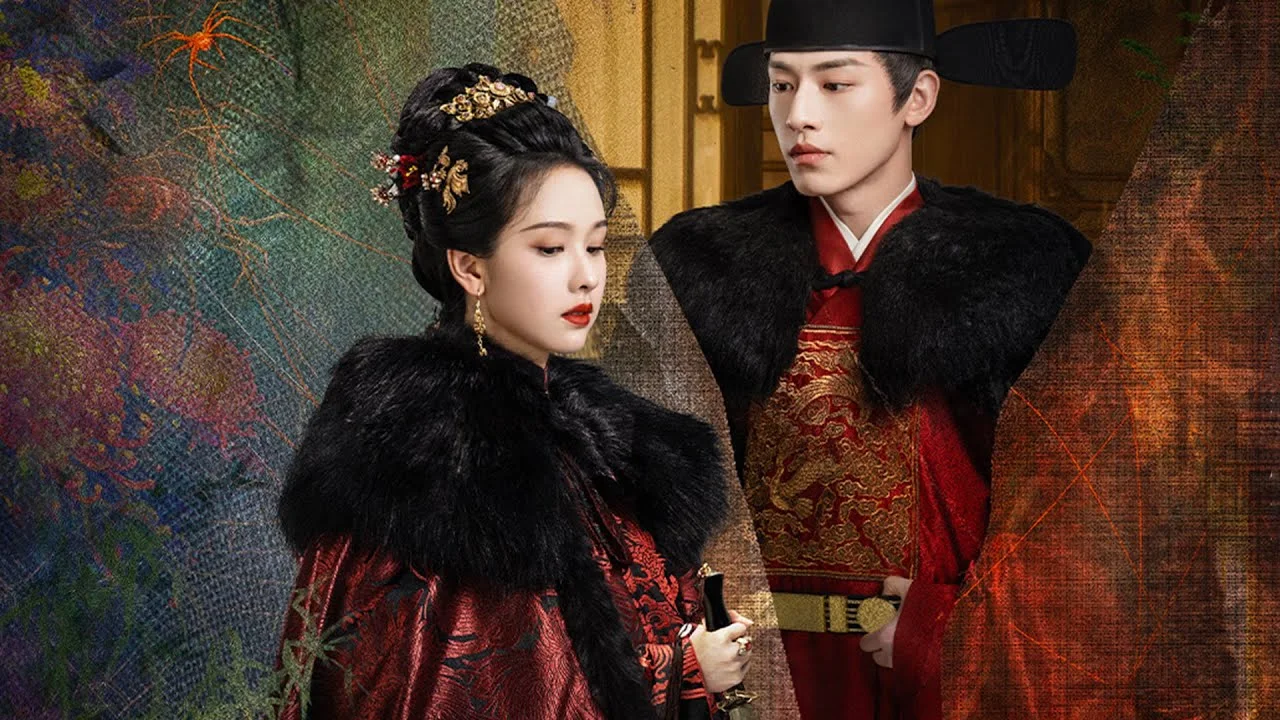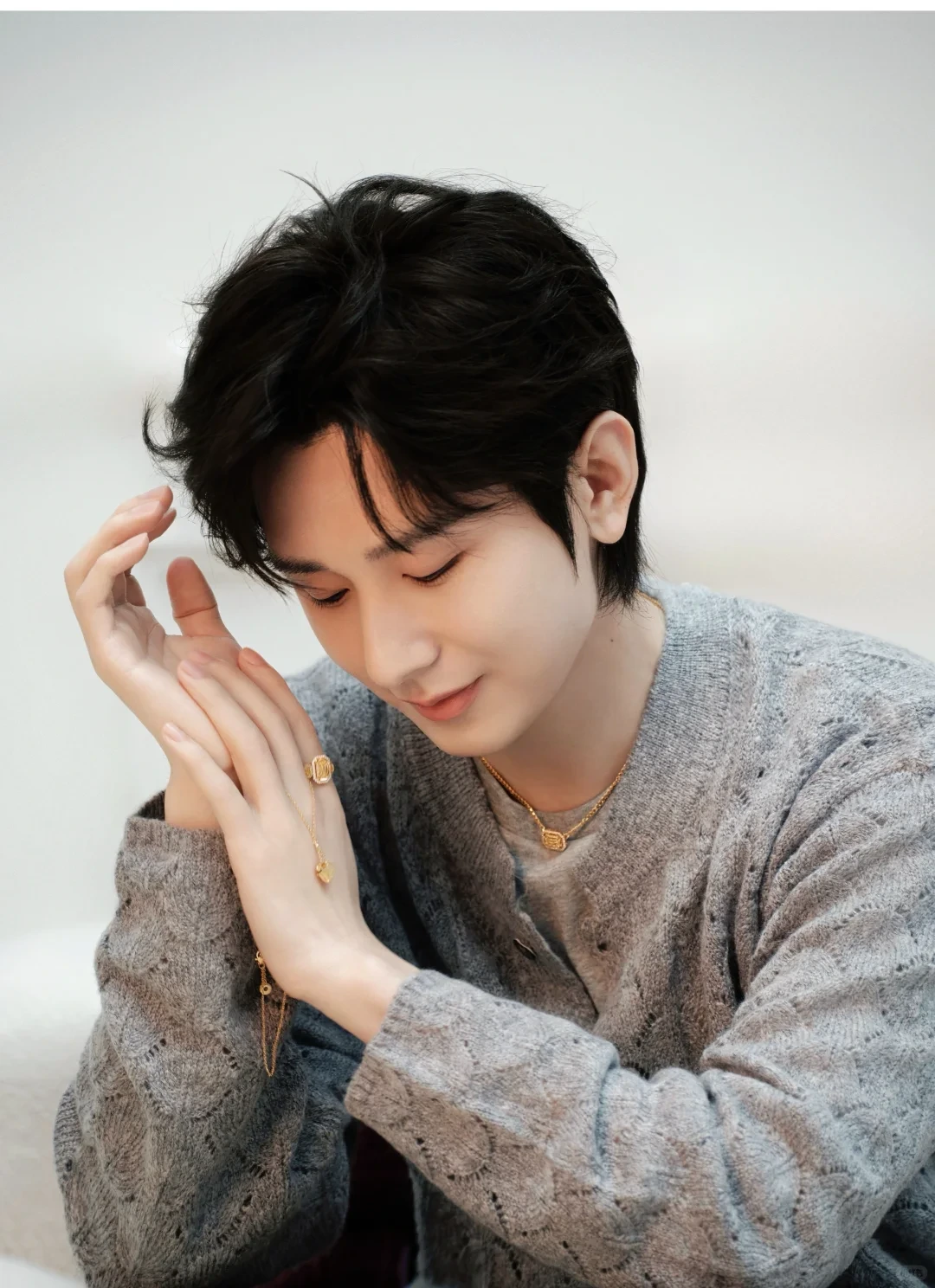
Xu Kai is easy to notice and harder to judge. The camera likes him before he has done anything. I only trust the performance after that advantage is interrupted—after the joke fails, the uniform loses its authority, or the beautiful face has to make an ugly choice.
Xu Kai dramas: where should you start?
If your search is simply Xu Kai movies and TV shows, do not begin with an undifferentiated filmography. Begin with Arsenal Military Academy (烈火军校). Not because it is the most serious Xu Kai drama, but because it refuses to let him stay serious. Gu Yanzhen enters with money, confidence and a face built for close-ups. Then the ensemble keeps puncturing him. His joke lands badly. Xie Xiang ignores the version of himself he is presenting. Rank limits what he can say. Danger makes the flirtation useless. The performance begins in the half-second when he has to rebuild himself.
Then go backward to Story of Yanxi Palace (延禧攻略) for Fucha Fuheng's ceremonial restraint, sideways to Falling Into Your Smile (你微笑时很美) for contemporary group rhythm, and forward to Wonderland of Love (乐游原) for a leader who has to flirt, bargain and command without turning those actions into the same handsome pose.
That four-stop route answers “best Xu Kai dramas” better than a ranking of every credit:
| Watch | What the role removes | What I watch for |
|---|---|---|
| Arsenal Military Academy | Untouchable leading-man dignity | How he recovers when comedy or rank knocks him off balance |
| Story of Yanxi Palace | Modern looseness | Whether stillness contains duty, desire and a forbidden answer |
| Falling Into Your Smile | Costume authority | Whether he can listen, share group focus and make arrogance change |
| Wonderland of Love | Passive romantic admiration | Whether command and attraction produce different physical decisions |
The official iQIYI pages identify Xu Kai in Story of Yanxi Palace, Arsenal Military Academy and Wonderland of Love. Those pages verify titles and casts. They cannot tell you which performance breathes. That judgment needs scenes.
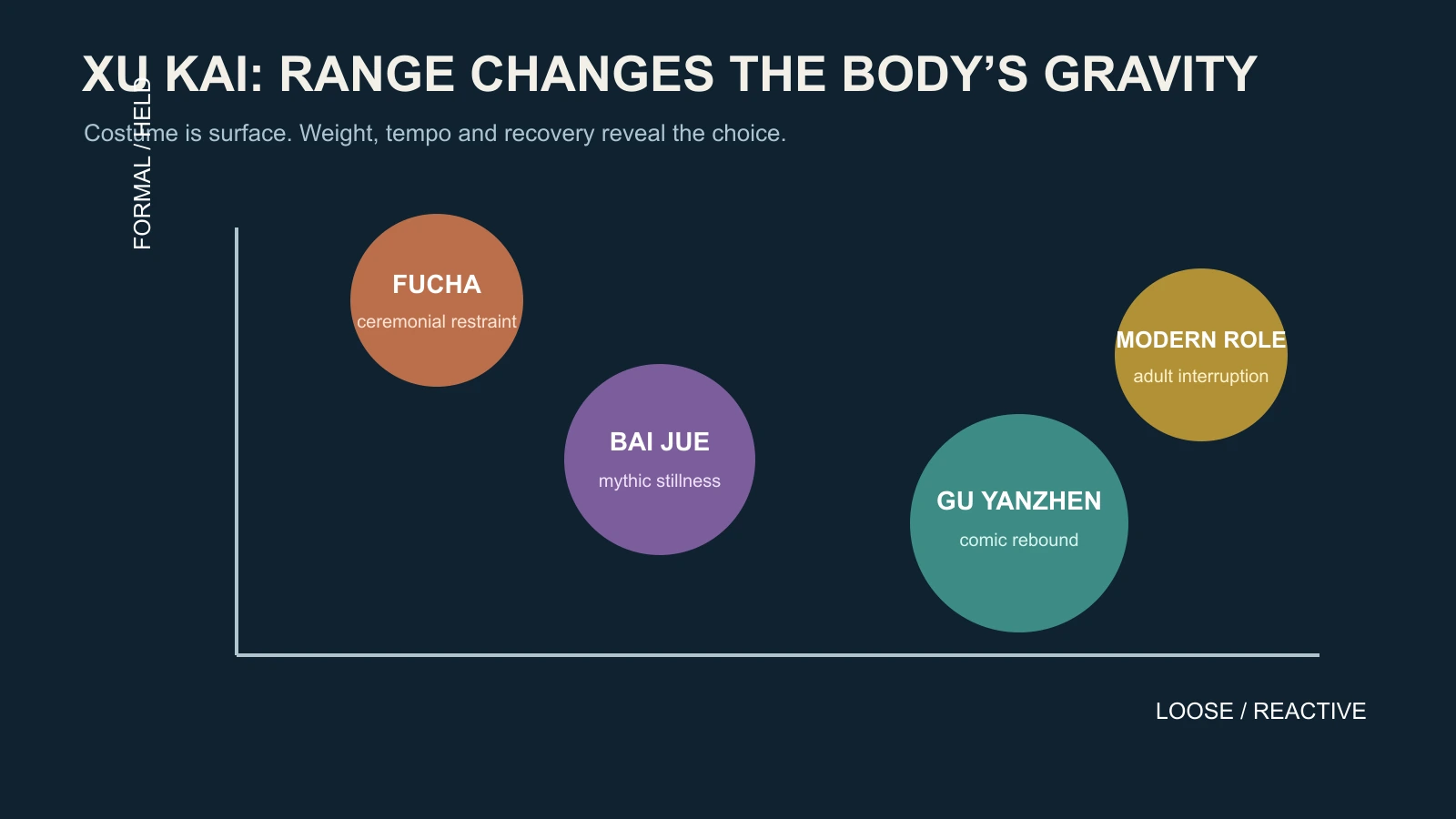
This East Moment diagram is a viewing tool, not a ranking or a claim about popularity. It asks what each role makes Xu Kai lose before the performance becomes specific.
Xu Kai actor: the career is a set of tests, not a ranking list
The phrase Xu Kai actor usually leads to a biography, a list of dramas or a gallery of handsome stills. That is useful for identification and weak for judgment. I would rather divide his screen career by the pressure placed on the image. Palace drama asks whether beauty can stay quiet. The academy asks whether charm can survive embarrassment and hierarchy. Modern team drama asks whether a leading man can listen when the room does not belong to him. Costume action asks whether flirtation can coexist with consequence.
That is why I would not put his work into a simple “best to worst” ranking. A ranking rewards the role with the strongest lighting and the easiest emotional contract. A route shows what each role removes. Story of Yanxi Palace removes casual modernity and leaves ceremonial restraint. Arsenal Military Academy removes untouchable dignity. Falling Into Your Smile removes the courtly distance that can make a beautiful actor seem profound. Wonderland of Love removes passive admiration by giving Li Ni a genuinely capable opponent.
This also explains my bias. I am less interested in whether Xu Kai can look like a hero than whether another person's action changes his next one. The face gets him into the scene. The changed behavior is what earns the scene.
One face, many costumes—and one recurring danger
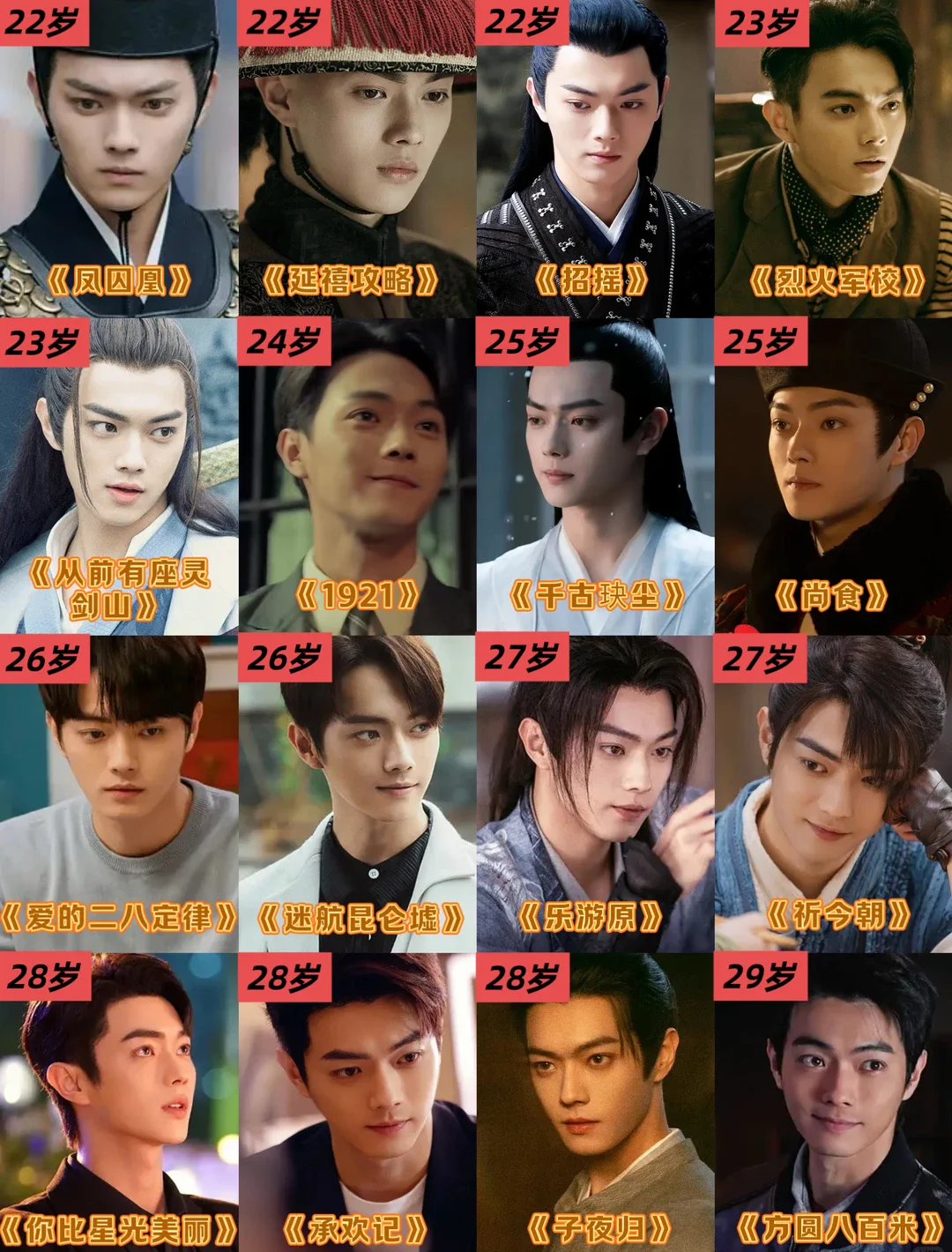
This role collage is useful precisely because it is seductive. Sixteen faces seem to promise sixteen different men. Hair, hat, uniform, lighting and period silhouette do most of the separating before Xu Kai moves. I can recognize Yanxi Palace, The Legends, Arsenal Military Academy, Ancient Love Poetry, Falling Into Your Smile and Wonderland of Love at a glance. That is visual range. It is not yet acting range.
In Chinese drama talk, 剧抛脸 means an actor seems to become a different person from one production to the next. It is a flattering phrase, but it can also be a trap: makeup, hair, costume and production design may be doing half the work. I like using the label as a question rather than a compliment. When the styling disappears, does the character still have a different rhythm of attention, a different distance from other people and a different way of losing control?
The same caution applies to 古偶, the shorthand for costume idol drama. The term often gets used as if beauty, romance and commercial appeal automatically cancel acting. That is lazy criticism. A costume romance can create difficult social rules around rank, face, marriage and loyalty. The real question is whether the actor uses those rules, or simply wears them.
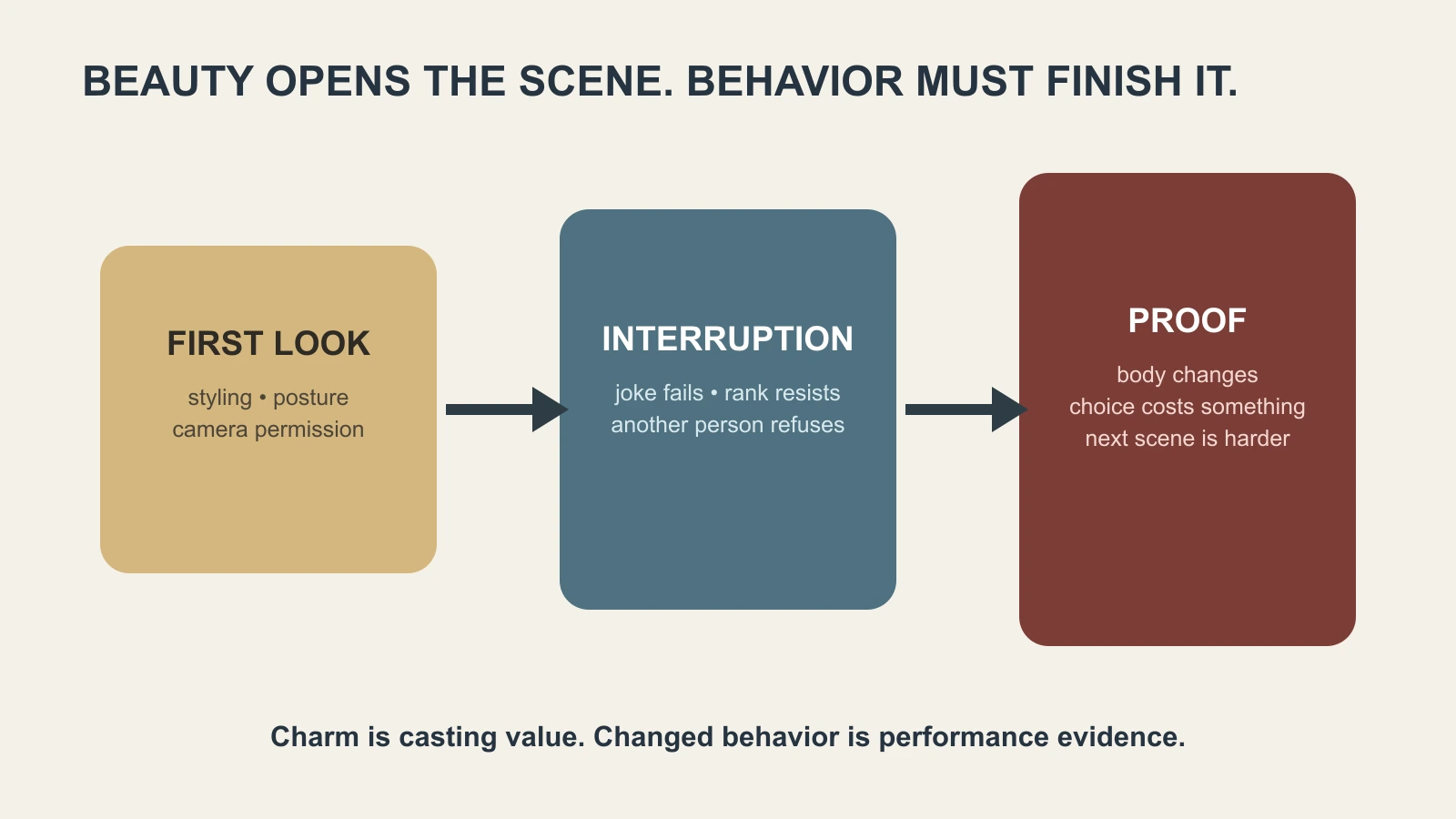
This East Moment diagram names the page's test: charm is only an opening condition; recovery, listening and choice have to carry the scene.
My harsher test is to cover the costume and watch the center of gravity. Fucha Fuheng stands as if etiquette has straightened the spine from inside. Gu Yanzhen drops his weight, invades another person's space, gets rejected and springs back. Lu Sicheng in Falling Into Your Smile sits inside a team rather than a court, so authority has to survive interruption and ordinary boredom. Li Ni in Wonderland of Love cannot merely look princely; he must decide when to lead from the front, when to conceal identity and when an opponent deserves the truth.
The recurring danger is polish. Xu Kai can look composed in almost any silhouette. A production can mistake that composure for character and ask him to repeat one cool temperature. I do not. A beautiful entrance is casting. A changed walk after humiliation is acting.
Fucha Fuheng proves that stillness can carry a prohibition
Fucha Fuheng is not the role where Xu Kai displays the most movement. It is the role that explains why restraint first worked for him. Palace etiquette turns the body into public property: where he stands, when he lowers his eyes, how long he may look at Wei Yingluo and which sentence must remain unfinished. Desire cannot simply spill out without becoming a social event.
That pressure suits Xu Kai's clean physical line. His upright posture is not merely photogenic; it gives the forbidden impulse something to push against. The viewer can feel the distance between what Fuheng wants and what the palace permits because the body keeps restoring order.
But idealization also protects the performance. Fuheng is designed to be remembered as the beautiful, principled road not taken. Pain arrives already polished. If you watch only this role, you may confuse romantic loss with range. That is why the next stop must be Gu Yanzhen, a man who is allowed to look foolish.
Arsenal Military Academy lets Xu Kai lose face—and become specific
The academy is a machine for taking away individual glamour. Everyone wears the uniform. Rank organizes space. Xie Xiang's disguise creates unequal information, but it also creates a better acting partner for Xu Kai: Gu Yanzhen is never fully in control of how his attention will be interpreted.

This is where his comedy becomes more than relief. Watch the sequence, not the punch line. He presents confidence; Bai Lu's Xie Xiang refuses to validate it; his shoulders or mouth reset; he offers a new tactic. Vanity, attraction and calculation appear in the same breath. The character is charming because charm is labor, not because the room automatically agrees with him.
Hierarchy sharpens the work. A polite answer can conceal a plan. A joke can test whether an officer is watching. A protective gesture can embarrass the person being protected if it exposes too much. Overseas subtitles deliver the words, but the social action often sits in timing: who is made to wait, who is permitted to interrupt, who lets another person preserve face.
The limit is just as clear. Gu Yanzhen's teasing rhythm is so effective that it can become a reusable product. If every later Xu Kai hero provokes, smirks and recovers at the same speed, the behavior no longer belongs to Gu Yanzhen. It belongs to the star package.
The modern Xu Kai test is not romance; it is listening
The modern frame removes the ceremonial assistance of robes, swords and palace distance. In Falling Into Your Smile, Lu Sicheng's world is a team house, training room and competition schedule. He is not interesting because he can hold a cool gaze across a desk. He is interesting only when the group changes his tempo. The drama is also the cleanest bridge from Xu Kai's costume authority to his contemporary screen identity: the Chinese television collection can tell you what the show is, but this page asks what Xu Kai does inside its shared spaces.
Team drama exposes an actor who waits for a close-up. Other people joke, fail, eat, train and occupy the room. Xu Kai has to listen without advertising that he is listening. Arrogance must become a relationship rather than a pose: who can tease him, whose mistake makes him angry, whose competence forces respect, and when responsibility overrides the pleasure of being right?
This role does not remove his visual advantage. The production knows exactly how to frame a handsome, controlled team captain. It does, however, create mundane seconds that costume fantasy often skips. A character has to sit through someone else's explanation. He has to be wrong in fluorescent light. He has to carry the awkwardness into breakfast. Those are valuable tests.
For a performer so readily cast as desirable, listening is radical. It redistributes the scene. The camera may still find Xu Kai, but the character's next action has to prove that another person's words entered him.
Wonderland of Love asks command to flirt without becoming cute
The official Wonderland of Love page identifies Xu Kai as Li Ni opposite Jing Tian's Cui Lin, two military-minded figures who conceal identity and repeatedly negotiate advantage. That setup gives him something romance alone cannot: an opponent whose competence is part of the attraction.
Li Ni works when command, play and fear do not arrive in one blended “charismatic” mode. A teasing exchange should feel different from withholding military information. A leader's decision should alter who moves first. Affection should sometimes damage tactical clarity rather than decorate it.
This is also where Xu Kai's body can carry adult consequence. Gu Yanzhen often rebounds from embarrassment. Li Ni cannot rebound from every loss. The most persuasive moments are not the immaculate horseback or battle images; they are the seconds when responsibility makes the body heavier and the familiar smile arrives too late.
I would place The Legends and Ancient Love Poetry after this route, not before it. Fantasy styling flatters him so efficiently that a new viewer may mistake distance for depth. Once you know his comic recovery and modern listening, you can ask a better question of the immortal or demonic silhouette: what actually disturbs it?
Spring of the Blade is the next public test
The official iQIYI page for Spring of the Blade (一瓯春) identifies it as a 2026, 30-episode costume romance starring Xu Kai and Zhou Ye. It describes Xu Kai's Shen Run as a strategist with many faces, moving through revenge, family power and court intrigue. That is exactly the kind of premise I want to watch him try: not another hero who is simply admired, but a man whose different faces should create different costs.
The boundary matters. An official page proves the production, cast, episode count and advertised premise. It does not prove that the drama escapes familiar costume-idol shortcuts, or that Xu Kai's new role has more inner movement than his old charm. I will not give the series a free promotion because the poster looks expensive. The real question is whether Shen Run's masks alter his body, voice and loyalties, or whether “countless faces” remains only a line in the synopsis.
Beauty is not the problem; protection is
The lazy criticism is that a handsome actor cannot be taken seriously. I reject it. Beauty is a real screen instrument: it shapes expectation, status and the reactions of other characters. Xu Kai knows how to use immediate attention.
The real problem is protection. Styling can protect him from ugliness. Editing can cut before uncertainty becomes awkward. Dubbing or a uniform vocal temperature can smooth away the friction between thought and speech. A script can call the hero brilliant while every other character steps aside to prove it.
That is why I watch for damage that survives the cut. After a joke fails, does he enter the next room differently? After loyalty costs status, does courtesy become colder or more deliberate? When a partner rejects his plan, does the body keep trying to dominate the frame, or does it genuinely reorganize around new information?
Xu Kai's eye work is often praised, and sometimes deservedly. But eyes are not a complete performance. Breath, sentence endings, spatial distance and continuity across scenes decide whether the look belongs to a person or to a GIF.
There is one more test that costume edits often hide: listen before looking. In a successful Xu Kai scene, the sentence and the body do not merely announce the same emotion twice. The voice may remain courteous while the feet prepare to leave. A light answer may arrive after a breath that exposes anger. A commander may lower volume instead of raising it because he expects obedience. When delivery stays at one polished temperature, the face has to work too hard and every role begins to sound socially equal. When breath, address and posture disagree, the contradiction gives the character an inner argument. That is the adult range I want from him—not a deeper voice or a grimmer expression, but a more exact relationship between language and action.
My final judgment on Xu Kai
Xu Kai is not merely a costume-drama face, and he is not yet an actor whose polish can be trusted in every role. His best instrument is recovery: the quick physical rewrite after a social plan stops working. Arsenal Military Academy reveals it most clearly. Story of Yanxi Palace shows the discipline underneath it. Falling Into Your Smile tests whether he can listen without costume authority. Wonderland of Love asks whether charm can carry adult command and loss.
Start with the academy. Then refuse the easy montage. Watch one complete modern episode and one complete costume episode. Compare the five seconds after Xu Kai's joke, order or beautiful entrance fails. If the next movement belongs to a different man, the range is real.
Continue through the Chinese actors collection or compare his modern control with Yang Yang. If you want to see the partner who most effectively punctures Gu Yanzhen's self-image, read our Bai Lu guide. For the full team-romance context, continue to Falling Into Your Smile, where the question changes from “Can Xu Kai be charming?” to “Can his authority share a room?”
In the comments, post a two-scene recovery test: one Xu Kai moment where charm saves the character, and one where it fails. Then bring the exact timestamps to Moments. I will return to this page after his next substantial modern role and ask the same unforgiving question: can the adult body think without a costume doing the thinking for it?