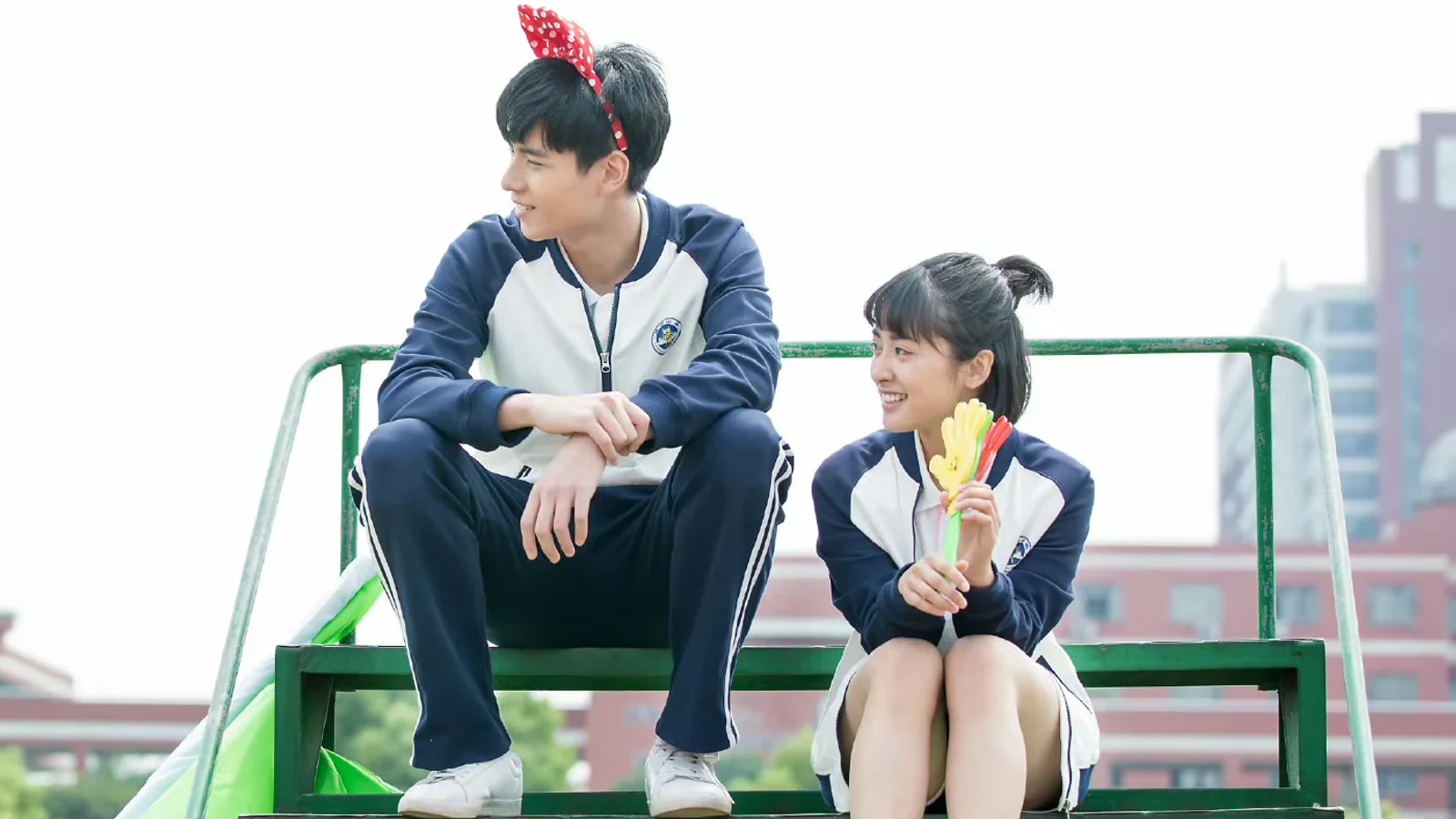
Falling Into Your Smile is not convincing as a portrait of professional esports. It remains watchable because ZGDX sometimes feels exactly like a group of people who work, eat, sulk and embarrass one another in the same house. The matches provide pressure. The memory lives in the teammates.
Falling Into Your Smile: is it worth watching?
Falling Into Your Smile (你微笑时很美) stars Cheng Xiao as Tong Yao and Xu Kai as Lu Sicheng inside the fictional ZGDX esports team. If you want a romance with team-house comedy and tournament stakes, it is an easy watch. If you want an accurate guide to professional competition, training or gender conditions in esports, it is the wrong source.
Here is my scorecard:
| Part of the drama | Verdict |
|---|---|
| Competitive realism | Frequently simplified and romanticised |
| Team-house rhythm | The strongest reason to keep watching |
| Romance | Works best when the group can interrupt it |
| Female-player premise | Valuable when Tong Yao changes team behavior, weak when it only makes her exceptional |
| Ending value | Depends more on belonging than on a final couple pose |
That separation is not a compromise. It is the only way to praise what the drama actually does well.
I came to this drama for the obvious reason: the lead pairing is attractive, the team-house setting promises constant interaction, and every match seems designed to turn professional pressure into romantic tension. I stayed for a less glamorous reason. I wanted to know whether a group of people could still feel like a group after the ship became the main marketing story. When the answer is yes, the show has a pulse. When the answer is no, the screens and jerseys are just expensive wallpaper.
What Falling Into Your Smile is really selling
I did not finish this drama because I believed every match. I finished it because the house kept producing the kind of small embarrassment that makes a fictional group feel inhabited. Someone is too proud to apologise. Someone says the honest thing at the worst possible time. Someone notices that the captain is upset and chooses a joke instead of a speech. Those moments are not glamorous, but they create the social memory that the competition scenes need.
That is my strongest personal feeling about Falling Into Your Smile: it is a workplace romance wearing an esports jersey. The jersey matters because it gives the group a shared identity, a schedule, a public stage and a reason for pressure to arrive. But the emotional object is still the team that has to eat breakfast after a bad day.
Many search results will push the Xu Kai and Cheng Xiao pairing first because that is the obvious click. I understand the appeal. Lu Sicheng and Tong Yao have the visual chemistry and the power imbalance that make the romance easy to market. I simply think the page becomes more useful when the couple is judged by what happens around them. If ZGDX disappears whenever the leads enter a romantic scene, the series loses its best evidence.
Viewers remember the quarrel, not the strategy
Rewatching this passage, Lao K's sharp judgment lands because the argument is about personality rather than drafting mechanics. He is not simply cold; he is emotionally indirect, even quietly flirtatious. His quarrel and reconciliation with Lao Mao give the team a life beyond the match.
That is what survived for me. Not a perfect match. Not a rule explanation. A quarrel whose emotional grammar remained legible years later.
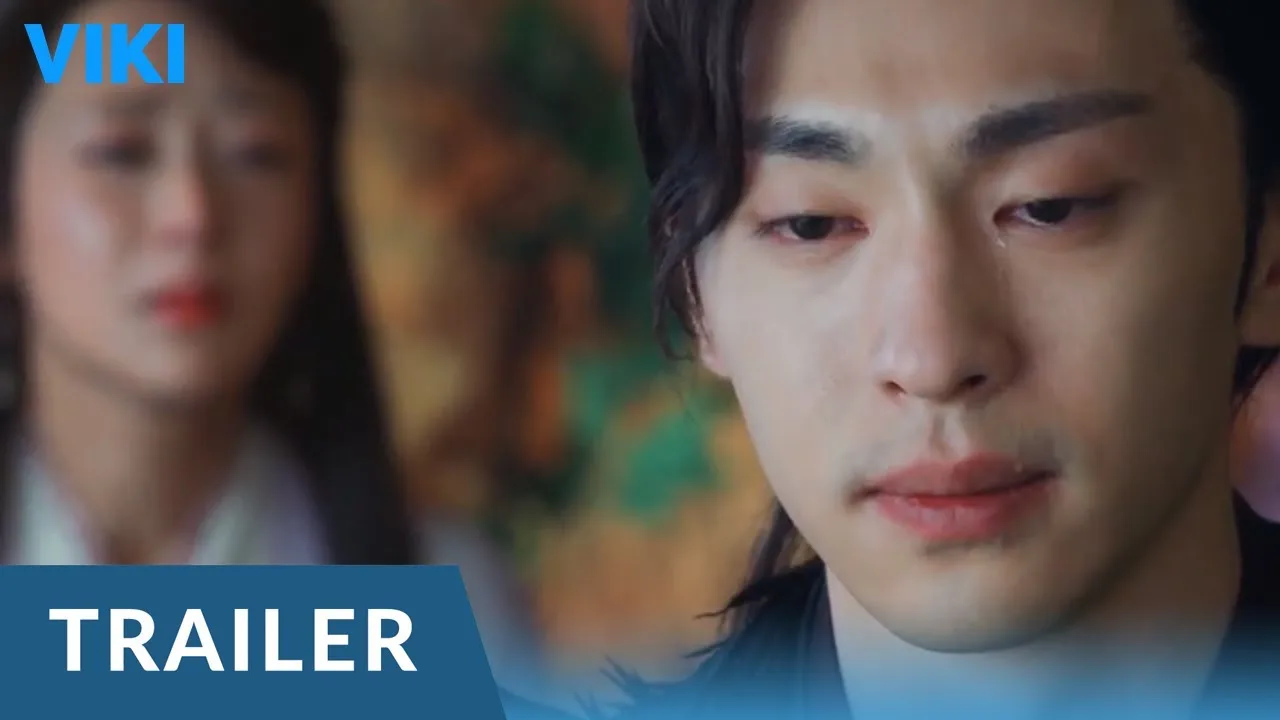
Rakuten Viki's official trailer identifies the leads and esports-romance premise. Competitive accuracy needs a different standard.
Embarrassment is how ZGDX becomes believable
The best ZGDX scenes often contain a tiny social danger: somebody has said too much, misunderstood a relationship, performed confidence badly or exposed concern before they were ready to admit it. The others notice. Nobody is allowed to recover privately.

This shared-space image matters because the romance does not occur in a sealed couple bubble. Teammates are co-workers, witnesses and an unwilling commentary track. A captain's authority is tested by whether people can tease him. Tong Yao's belonging is tested by whether she can be ridiculous without becoming a gender symbol every time.
I find these scenes more truthful than the dramatic matches. Real groups develop through repeated low-stakes exposure: who steals food, who cannot apologise, who notices a mood, who turns conflict into a joke and who keeps the joke going too long. None of that proves real esports culture. It does make the fictional team feel inhabited.

The house is the drama's real arena because every room performs a different social job. Practice establishes rank. The dining table punctures it. The sofa lets a private mood become everybody's problem. The corridor is where somebody overhears the sentence that was supposed to remain controlled. By the time ZGDX reaches a stage, the result matters only if these smaller rooms have already built a history the team can carry with them.
How much emotional work should a viewer do for Lao K?
The Lao K disagreement is valuable because viewers are not only describing a character; they are negotiating how much emotional labor an audience should perform for him. Calling someone "cold" says the behavior withholds too much. Calling him "闷骚" says the feeling is present but expressed indirectly.
Both readings can become excuses. Fans may fill an empty performance with imagined depth. Critics may reject every restrained character as emotionally absent. The scene has to settle the argument through conduct. Does Lao K notice, intervene, remember or repair? Does the later action make the earlier coldness newly legible?
This is the kind of disagreement I want East Moment to preserve. My reading is not a verdict; it is an invitation to identify the exact action that makes one interpretation stronger.
The esports problem cannot be edited away

The drama uses jerseys, screens, competition stages and public pressure to create an accessible emotional machine. That choice has a cost. Training becomes montage-friendly, professional conflict becomes legible through romance, and competitive complexity is often reduced to whatever the character arc needs. Riot Games' official competitive-operations library shows the scale of rules governing real professional competition—eligibility, rosters, conduct, contracts and event operations—that a romance cannot reproduce by borrowing jerseys and a stage.
I would not defend that by saying "it is only a drama." Genre fiction still makes claims through repetition and framing. The better position is simpler: the esports representation is limited, and the team story can still work. Viewers should not have to pretend the first is accurate in order to enjoy the second.
The female-player premise deserves the same honesty. Tong Yao matters when her presence changes ordinary group rules: who gets listened to, protected, teased and trusted after a mistake. She matters less when the script treats her as special mainly because the captain loves her.
Tong Yao must be allowed to be ordinary before she can be important
The series gives Tong Yao an attention-grabbing position: a woman entering a male professional team. That premise can produce two very different stories. One treats her as a symbol whose every action has to prove women belong. The other lets her become a colleague who can be skilled, irritating, funny, wrong and still remain part of the team. The second story is much stronger.
I distrust scenes that ask Tong Yao to carry an entire gender while the men are allowed individual weaknesses. Representation becomes thin when one person must be perfect in order to justify her seat. The team-house comedy occasionally escapes that trap. She can misread a mood, argue badly, eat, sulk and be teased without the episode converting every mistake into a referendum on female players. Ordinary belonging is the real victory.
The romance threatens that achievement whenever Lu Sicheng's attention becomes the main certificate of her value. His protection can feel satisfying, but protection is not the same as professional recognition. The sharper question is whether teammates change how they evaluate her play, accept her judgment and trust her after failure. A captain's affection may open emotional space; it cannot substitute for a credible place in the lineup.
This is also where real-world esports questions should remain separate. The drama cannot establish what women experience across professional leagues, contracts, harassment systems or development pipelines. Its fictional team can only show the choices it makes visible. My praise stops exactly there: ZGDX sometimes imagines everyday inclusion with warmth, but it does not earn the right to stand in for an industry.
Cheng Xiao's Tong Yao works when she is allowed to be a colleague
Tong Yao enters the story carrying two burdens at once. She has to prove that she can play, and she has to survive the way everyone watches her prove it. The second burden is more interesting than the first. A mistake made by a male teammate can remain a mistake. A mistake made by Tong Yao is always in danger of becoming an argument about whether women belong.
The drama is best when it lets her escape that symbolic trap. She can be competitive, stubborn, funny, insecure and occasionally wrong without the episode treating every behavior as a historic breakthrough. I like Tong Yao most when she is not performing “the female player.” She is simply trying to keep her place in a difficult team.
That is also where Cheng Xiao's performance earns my attention. The character's emotional movement is often carried by the speed at which she responds: a defensive answer, an annoyed glance, a delayed realisation that the team is teasing her because she has been accepted into the room. Those changes are more valuable than a broad declaration that she has become confident.
Lu Sicheng has the opposite problem. His authority is established immediately, so the writing has to show what he gives up when Tong Yao becomes a real colleague rather than an exception he personally protects. I prefer him when he is forced to revise a team decision, admit that his first reading was wrong or allow Tong Yao to solve a problem without turning the moment into a romantic reward.
The romance works when the team can interrupt it
Lu Sicheng and Tong Yao are most convincing when attraction has to coexist with work, witnesses and inconvenience. A couple isolated by soft lighting can perform certainty too easily. A couple surrounded by teammates has to negotiate timing. Someone needs the practice room. Somebody sees the argument. A joke arrives before the confession can become grand. The group keeps the romance from believing its own publicity.
That interruption is not comic filler. It creates accountability. Lu Sicheng cannot be only a dominant romantic lead when the people around him remember his habits and can puncture the pose. Tong Yao cannot disappear into a protected-girlfriend role when teammates need her to make decisions under pressure. The best scenes force both identities to remain active at once.
I would cut a surprising amount of romantic repetition before cutting one good team meal. The meal tells us who sits beside whom after conflict, who serves care without naming it and who still refuses to look across the table. A kiss confirms attraction. A shared room after embarrassment tells us whether two people can continue living and working inside the same social world.
A better first-watch route
Do not binge only for the couple milestones. That route magnifies the drama's weakest habits and makes the esports shell feel even thinner. Use a three-track watch instead:
- Track Tong Yao's professional belonging. Mark the moments when skill, judgment or recovery after error changes how the team treats her.
- Track the house after conflict. Notice who restores ordinary life. Repair may arrive as food, a joke, shared practice or somebody refusing to leave another person isolated.
- Track the matches as consequences. Ask whether a competitive sequence pays off something established in training and team life. If it could be moved to another episode without changing meaning, it is spectacle rather than story.
This route will not make the competition more accurate. It will show exactly why the series can remain emotionally effective despite that weakness. The durable object is not the trophy. It is the shared space people have learned, imperfectly, to inhabit.
There is one final test: after a loss, does the next ordinary scene remember it? A weak sports drama resets everyone once the scoreboard disappears. A convincing group carries defeat into breakfast, practice and the next badly timed joke. Shoulders remain tight. Authority becomes awkward. The teammate who failed needs neither instant worship nor permanent blame; the room has to discover how trust resumes. Falling Into Your Smile is strongest whenever it lets that residue remain visible. The emotional continuity is modest, but it is more valuable than another slow-motion victory because it turns a lineup into people who must still face one another when the lights are off. That is the team story worth keeping.
What the ending has to resolve
Readers looking for the Falling Into Your Smile ending often want the competition result and romantic outcome. This draft does not invent a detailed recap. The more useful question is whether ZGDX can still feel like a team after the romance becomes explicit and the competitive pressure peaks.
A satisfying ending cannot make everyone a supporting character in the lead couple's victory photo. The group needs its own repaired tensions, private loyalties and future beyond the ship.
The central romance does resolve positively, and the drama gives the team a forward-moving competitive future rather than treating the relationship as the only prize. I still find the ending more emotionally convincing when it returns to ordinary group life than when it leans on victory imagery. The couple can be happy in a final frame; the team has to prove that the happiness does not remove everyone else's work.
That distinction matters for a searcher asking whether the ending is worth the long watch. If you need a rigorous sports conclusion, the answer is no. If you want a romance whose emotional payoff is surrounded by colleagues, jokes and the possibility of continuing to work together, the answer is yes. The ending pays off belonging more successfully than it pays off professional detail.
My personal watch rule for this drama
I would recommend Falling Into Your Smile to a friend who enjoys Chinese romance dramas, but I would describe the recommendation honestly: watch it for the people who have to share a house after the episode's big feeling has passed. Do not let the glossy match montage decide whether you care. Wait for the scene after the match.
That is where the drama tells the truth it can actually support. Does the loser get mocked, comforted or avoided? Does the captain remain a captain when he is embarrassed? Does Tong Yao receive ordinary criticism instead of special protection? Does Lao K repair a quarrel without explaining his entire soul? These questions are more revealing than a fictional ranking table.
I am biased toward ensemble stories, so I will always choose one awkward breakfast over another romantic slow-motion shot. But this bias is also the page's useful distinction. Readers searching for the title deserve to know what they are buying: not a manual for esports, but a team-house melodrama with enough interpersonal observation to make the weak manual forgivable.
My verdict: remember the house, distrust the manual
Watch Falling Into Your Smile as a team-house romance with esports pressure. Do not use it to understand how professional competition actually works. Its most durable scenes are often the least prestigious: a teammate's blunt judgment, an argument that becomes affection, an outdated object someone suddenly remembers, a room full of people who know exactly who is pretending not to care.
I returned to the interpersonal replay rather than the promotional slogans. The match gives the episode a clock; embarrassment gives the team a life.
In the comments, name the ZGDX quarrel or awkward moment that made the group believable, and say where the esports fantasy broke for you. Join the East Moment community to compare both sides without forcing praise or dismissal. Continue with the Xu Kai guide, compare its fictional competition with The King's Avatar, or use our broader Chinese television collection.