The King's Avatar is not satisfying because Ye Xiu returns to the top. Plenty of competition stories can promise that. It is satisfying because a person who has been reduced to a discarded account learns that skill is only alive when it can meet a new room, a new team and a new reason to play.
The King's Avatar is a Chinese esports donghua about starting again without pretending the past vanished
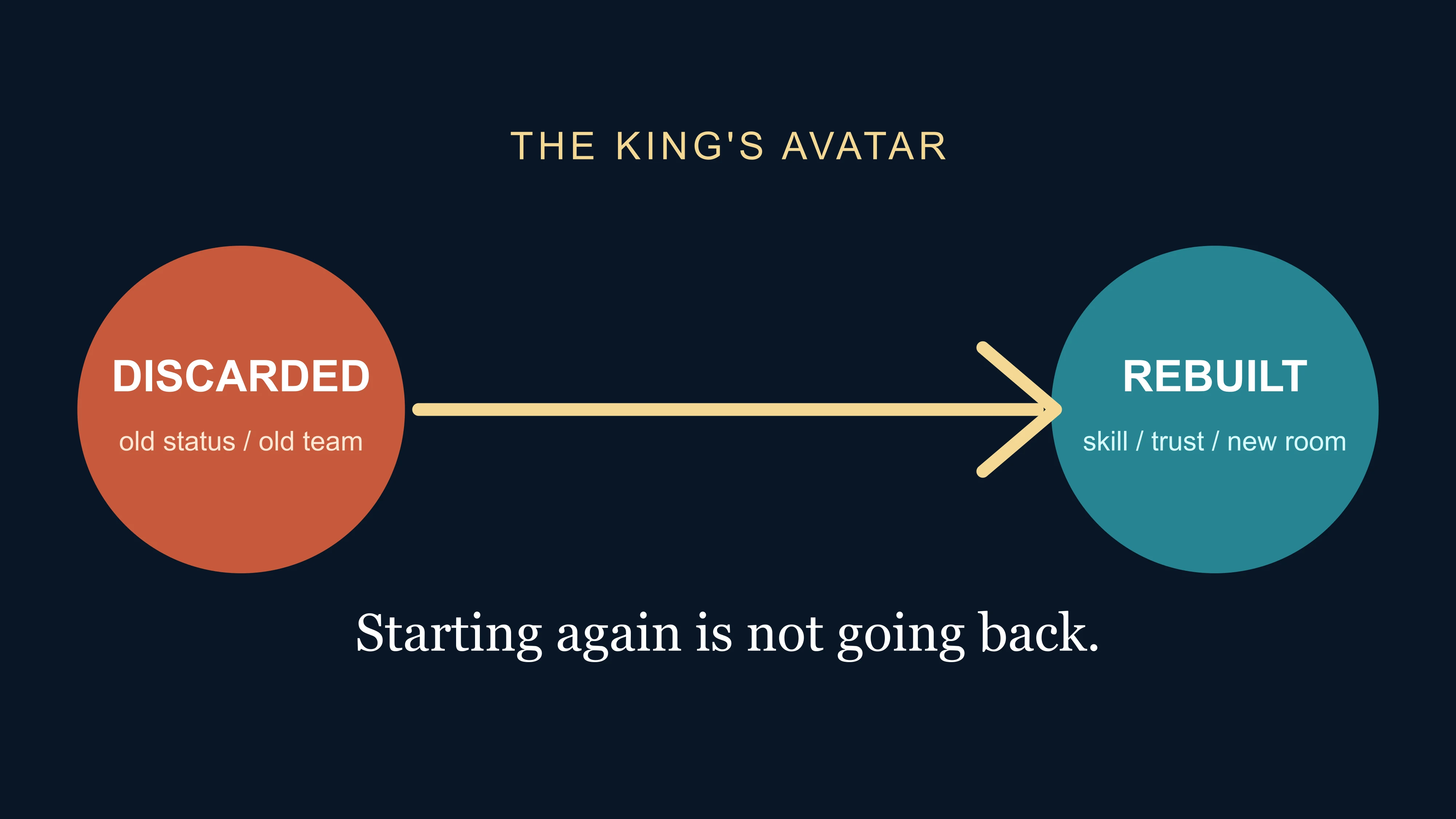
This editorial diagram maps the page's central distinction: a new account and a new room do not erase expertise, injury or reputation. It is not official series art and does not prove plot chronology or current streaming availability.
The basic setup is quick. Ye Xiu is a celebrated professional player in the online game Glory. After being pushed out of his club, he takes a night job at Xingxin Internet Cafe and enters a newly opened server with a new account, Lord Grim. He still has ten years of experience and an unfinished weapon, the Thousand Chance Umbrella. What he no longer has is a team, a public position or the protection of being indispensable.
The real shift is not from weak to strong. It is from an old public role to a new set of relationships that can make skill useful again.
Tencent Video's current English-facing WeTV page identifies the animated first season as a 12-episode mainland-Chinese competition story. Its catalogue and access conditions vary by region, so treat that page as a live official route rather than a promise that every episode is available everywhere. Tencent Video Animation's official English-subtitled episode one is the cleanest way to test the series' tone. If the route differs in your country, use the watch Chinese anime online checklist before trusting a clipped upload or an old platform list.
This distinction matters: this guide is about the animated Quan Zhi Gao Shou, not the 2019 live-action adaptation. The title is shared; the rhythm, casting and viewing experience are not.
Should you watch The King's Avatar?
| If you want… | What the show gives you | The honest caution |
|---|---|---|
| A confident lead | Ye Xiu is exceptionally capable from the opening | The tension is social and strategic more often than “can he win at all?” |
| An esports story | Team roles, replay thinking, club pressure and public reputation | Glory is fictional; do not expect a documentary about one real game |
| A workplace reset story | A night-shift cafe, small favors and a new group taking shape | Its cool-headed lead can feel emotionally distant at first |
| A fast entry to donghua | A direct premise, readable action and a compact first season | It is not the best route if you want mythic fantasy or cultivation lore |
| A team drama | Rivals, old colleagues and beginners force Ye Xiu to change his habits | Some match terminology rewards a little patience |
My answer is yes if the idea of competence under pressure interests you more than a power fantasy. Watch the first two episodes. If the cafe feels like dead space between fights, the series may not be yours. If the cafe begins to feel like the place where a player can become a person again, stay.
Ye Xiu works because expertise does not save him from being replaceable
The easy version of Ye Xiu is “the unbeatable veteran.” It is also the least interesting version. His removal from Excellent Era means his ability has become inconvenient to the institution that once advertised it. A club can display a player as a symbol, then decide the symbol is bad for business, succession or control.
That is why the internet-cafe job is not a comic punishment. It changes the scale of his life. He is no longer a person whose name fills an arena; he is working nights, handling strangers and playing beside people who know him first as an odd, capable employee. The smallness is productive. It asks whether he can build trust without the old badge.
I like that the story does not make his experience useless just to manufacture suspense. He reads timing, terrain and opponents with extraordinary clarity. But knowledge is not a team. A plan only matters when another player understands it, believes it and can carry a part of it. Ye Xiu has to learn that mastery can become isolation when it only proves that you are the smartest person in the room.
The Thousand Chance Umbrella is a refusal to become one fixed thing
The Thousand Chance Umbrella is often described as a cool multi-form weapon, which is true but incomplete. It is unfinished, adaptable and tied to a player who has also been treated as obsolete. That parallel is almost too clear, yet the show earns it by making change difficult rather than decorative.
A fixed weapon announces a role before the match begins. A changing weapon creates possibilities, but it also demands attention: what is needed now, what has been revealed, what does the team lack? The umbrella turns flexibility into a practice. It is not just Ye Xiu showing off. It is the material form of his refusal to let a club decide that the version of him they can sell is the only version that exists.
That is a useful entry point even if you do not play competitive games. We all recognize the pressure to make one skill become an entire identity. The series asks a better question: what happens when the thing you are known for must grow new uses before it can support a new life?
Xingxin matters because a team begins as a room with different stakes
The name Xingxin means “happy heart” or “joyful heart,” but the cafe is not an instant family. It has bills, work, annoyance and people who have not agreed on what they owe each other. That resistance is valuable.
Chen Guo does not meet a legend in the abstract; she meets the person sleeping at the desk and changing the atmosphere of her business. Newer players do not receive wisdom from a mountain. They have to decide whether Ye Xiu's confidence is arrogance, generosity, manipulation or some difficult mixture of all three. A team becomes believable when each member has a reason not to join before finding a reason to stay.
This is where The King's Avatar feels more adult than many school-tournament stories. Its people are not simply discovering talent. They are negotiating time, employment, pride, public failure and second chances. Winning is thrilling, but the deeper achievement is creating a place where a player can risk being inexperienced without being discarded.
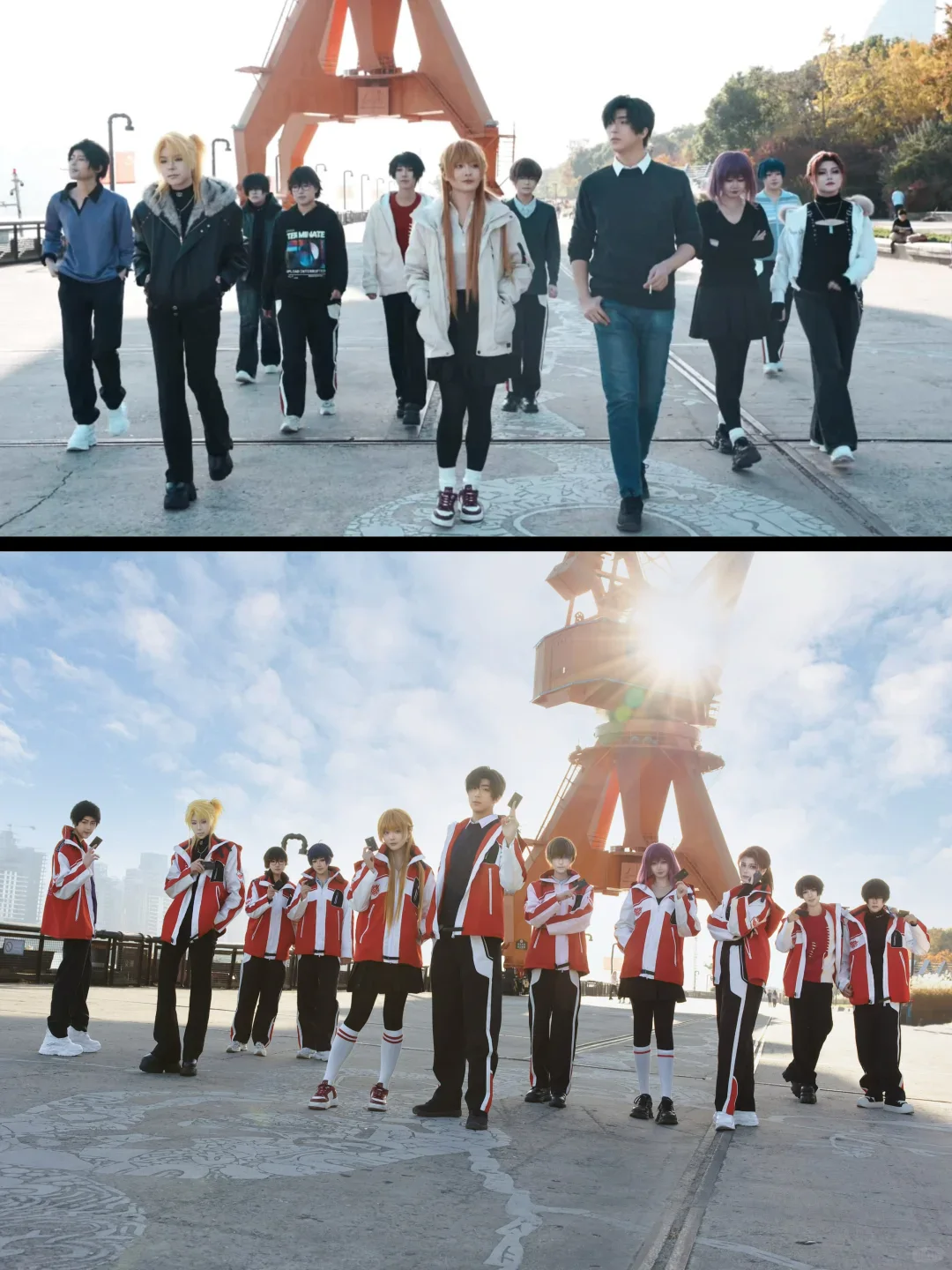
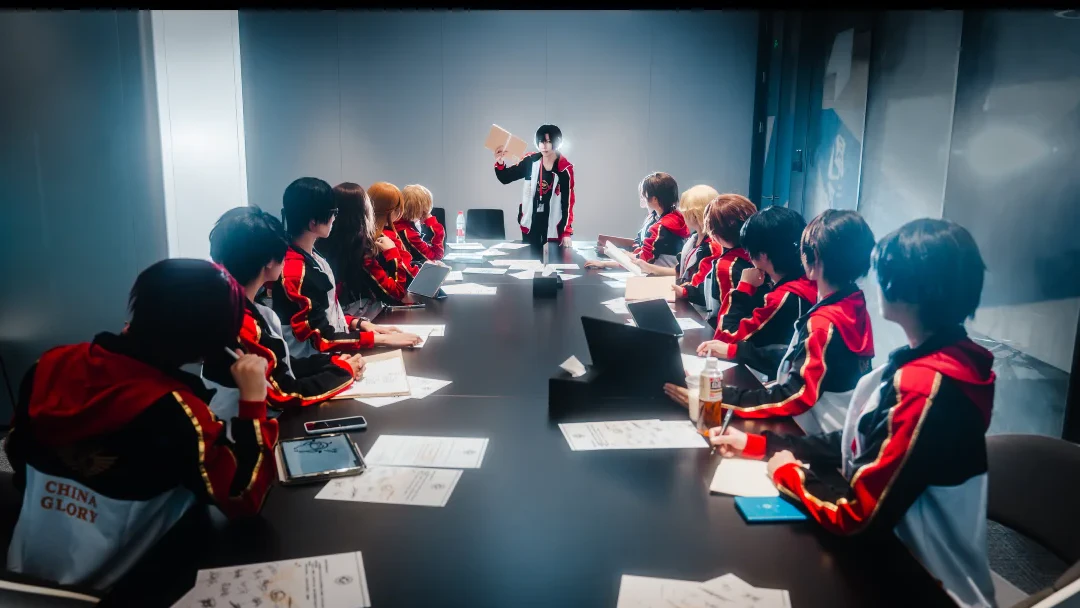
The two-panel photograph gets the sequence right: people share a road before matching clothes make them look like a team. Uniform is a visible promise, not proof that trust already exists.
The adaptation weakens whenever everybody becomes a Ye Xiu reaction shot
I enjoy Ye Xiu's competence, but I reject the lazy version of competence worship. If guild experts exist only to gasp, if Baozi is reduced to “cute,” if Tang Rou's composure is replaced by exaggerated surprise, the adaptation has not made Ye Xiu stronger. It has made the room flatter.
Tang Rou matters because confidence, education and competitiveness give her a distinct way of entering the game. Baozi matters because his unpredictability changes what a supposedly rational player can anticipate. Chen Guo matters because the internet cafe is not an empty stage waiting for a genius; it is a workplace, a social room and the beginning of an organization. Every time the camera turns those people into applause, the story loses the exact thing that makes a rebuild worth watching.
Detailed adaptation discussion helped me name the problem: “Ye Xiu is the best” is an outcome, not a dramatic structure. The structure lives in what other people misunderstand, resist, learn and contribute. A team of individually skilled players can still lose through weak coordination, management or role clarity. That is not a side lesson. It is the reason esports is a team story rather than a montage of one person's inputs.
This is why I will not excuse repeated frames or flattened game skills merely because a later season looks worse. “Better than the replacement” is not the same as good adaptation. Glory depends on class differences, timing and the legibility of a player's decision. When animation turns distinct actions into the same flash, it removes the evidence that lets a viewer understand expertise. Nostalgia cannot restore that information.
The adaptation succeeds when it translates prose into spatial intelligence: a whiteboard, a position held half a second longer, an opponent reading an old habit, or a beginner completing the dull action that allows a star move to land. It fails when character recognition and bright motion are expected to carry the scene by themselves. Fans already know the names. Animation has to show why the choice worked.

The costumes carry the IP, but the whiteboard carries the argument. A formation needs somebody to explain it, somebody to challenge it and somebody else to execute the unglamorous part.
My match test is therefore simple: could I explain why the team won without using the phrase “because Ye Xiu”? If not, the scene may be entertaining, but it has not yet proved Xingxin exists as more than a vehicle for his return.
A match plan only becomes a team plan when every player can read, question and carry part of it.
Glory is not a real game—and that freedom helps the story
Glory borrows the language of online games: classes, servers, guilds, accounts, raids, rankings and spectators. It is not an esports primer for a single title. The fictional setting lets the animation show a broad tactical imagination without claiming to reproduce a real competitive scene move for move.
Use that freedom carefully. The game action is legible when it reveals a relationship: a veteran sees a habit in an opponent, a rookie learns why positioning protects another player, a rival recognizes a move nobody else would attempt. When a fight only proves that an effect is bright or a number is large, it becomes noise.
The series understands that spectatorship is part of the sport. A public match is never only two teams inside a game client. It contains chat, reputation, old grudges, club management and people deciding in real time who deserves to be believed. That pressure makes a tactical choice emotional without forcing every scene into melodrama.
For a live-action contrast, Falling Into Your Smile moves esports into a contemporary team house where romance, gendered scrutiny and public embarrassment share the same room. Its matches are less tactically persuasive; its value is showing how visibility can damage a player before the scoreboard says anything at all.
Competition is most human when nobody is only a villain
The strongest rivalries do not ask us to hate the person on the other side. They ask us to see what the same game has demanded from two different lives. A former teammate may fear being left behind. A club manager may confuse control with responsibility. A younger player may mistake visibility for worth because visibility is the only reward he has been offered.
Ye Xiu himself can be exasperating. His calm can look like a shield; his jokes can keep people at arm's length. The story improves whenever another person refuses to orbit him automatically. Respect is more convincing when it is argued for than when it arrives as a consequence of a famous name.
That is also why the revenge reading is too small. Ye Xiu's departure matters, but the future cannot be reduced to humiliating the club that dismissed him. If every match only settles an old score, Xingxin becomes a vehicle for one man's grievance. The more generous reading is that a new team proves people can compete fiercely without making exploitation their model of success.
How to watch without turning the series into homework
Start with the animated first season and keep the original Mandarin audio for at least an episode. Esports dialogue moves quickly, but the original rhythm gives Ye Xiu's understatement, a rival's impatience and a cafe's casual interruptions their different textures. Our Chinese-language guide can help with tone and terminology without replacing the experience of listening.
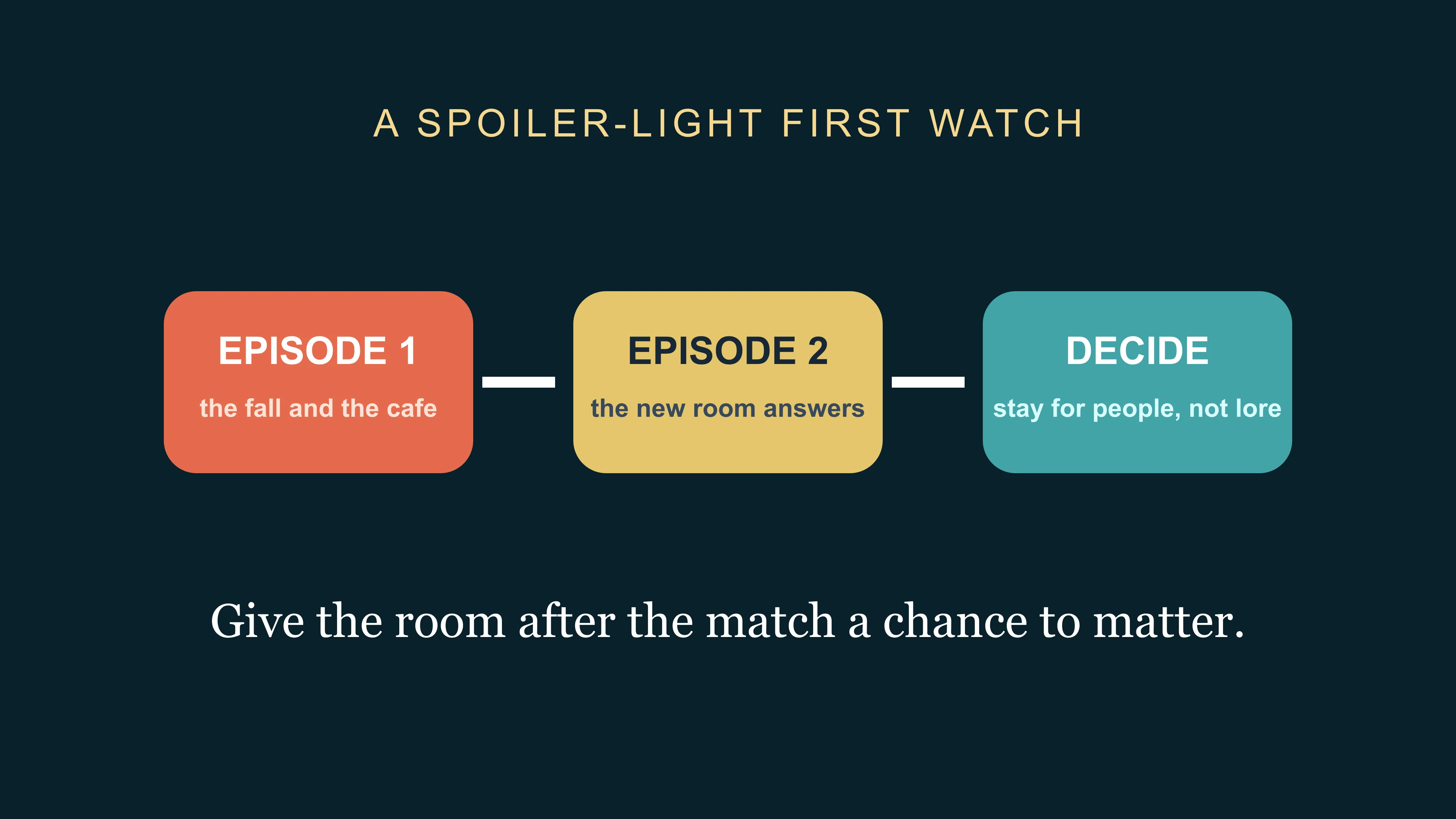
Two episodes are enough to decide whether you care about the human room around the competition—not just the result on screen.
Do not begin with a character ranking, a complete timeline or a “strongest player” video. The early pleasure is recognition: which person reads a room, which person needs to perform, which person sees a newcomer as a tool, and which person allows another player to fail safely? If a term is confusing, let the scene carry it once before searching.
For a different kind of Chinese animated intensity, compare it with Link Click, where skill becomes an ethical burden inside memory, or Scissor Seven, where comedy keeps an assassin answerable to a neighborhood. For a wider route, our Best Chinese Anime guide begins with feeling rather than a power ranking.
The East Moment verdict: watch for the room after the match
Watch The King's Avatar if you want an esports donghua that understands a return is not a rewind. Ye Xiu comes back with technique, but the series has weight only when that technique makes room for people who were not in the old story.
The best scenes will not always be the loudest victory. They are the moments after the match—at a counter, in a chat window, beside a player who is not yet sure they belong—when skill becomes an invitation rather than a wall.
Explore more through Chinese games and the Chinese anime collection. When a match made you care about someone who did not win, bring that moment to East Moment's community.