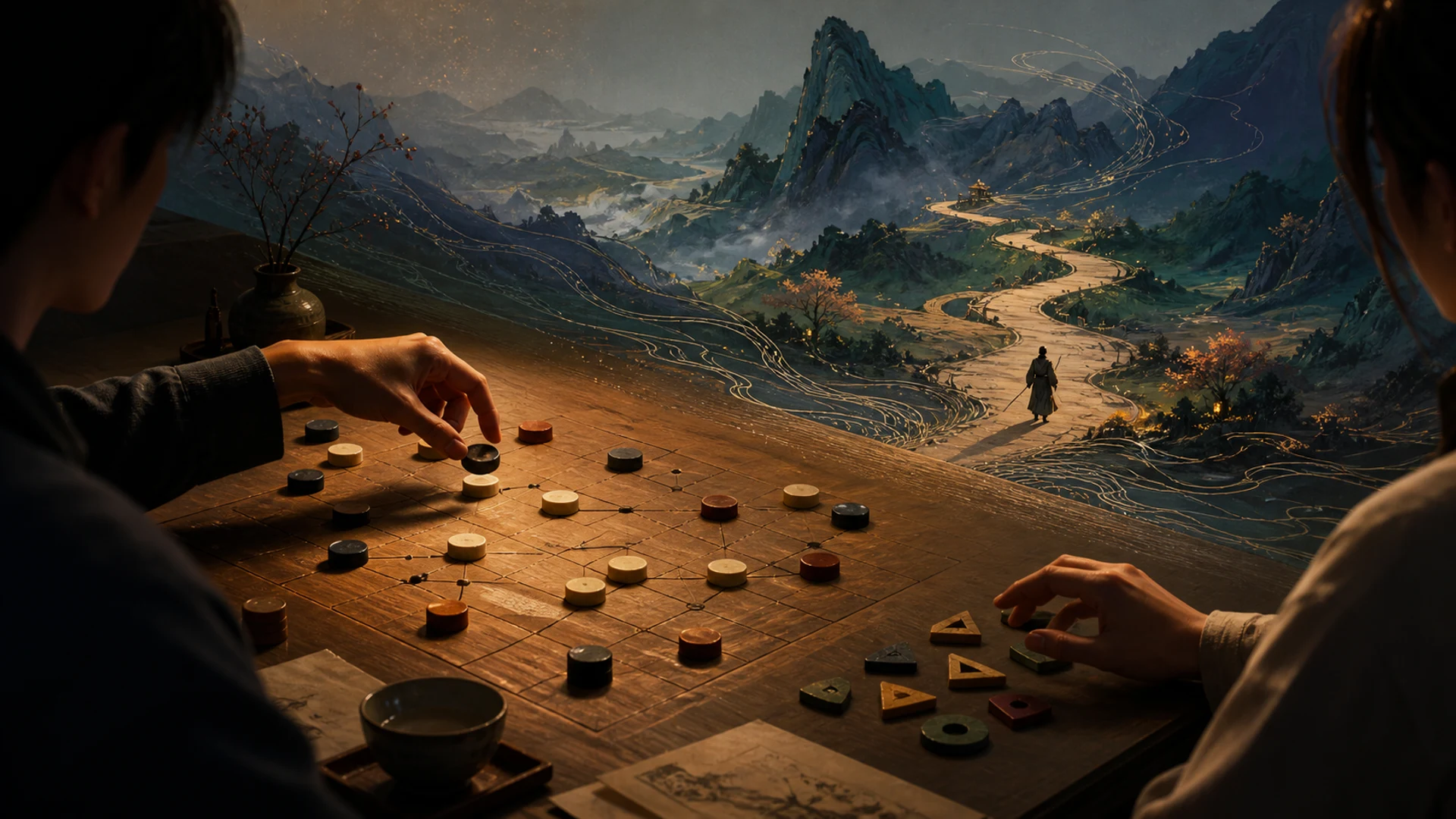
Original editorial illustration of players moving physical pieces as the table opens into a digital jianghu landscape

Move · reply · cost · changed possibility

Chinese Games

Chinese games become legible when you begin with the move a player makes, the person or system that answers and the consequence that follows. Enter through mahjong, xiangqi, Black Myth: Wukong and Where Winds Meet—not decorative mythology or a market-size chart.

Enter through the player’s move

5 published guides across 6 core paths.

A playfield, not a parade of Chinese symbols

Chinese games become cultural only when the rules change what a player does

Search for Chinese games and the results usually split into two weak answers: a list of ancient pastimes presented like museum objects, or a market report celebrating enormous mobile revenue. Neither tells you what it feels like to make a move. I begin with the hand, the opponent and the consequence. Mahjong changes the room through incomplete information and local rules. Xiangqi turns roads, a river, a palace and a cannon into visible pressure. Black Myth: Wukong and Where Winds Meet matter when inherited stories become combat, movement and moral choice—not when a temple or legendary name sits on top of familiar mechanics.

Turn 01 · The direct answer

What are Chinese games? Begin with rule traditions, player cultures and games made in China

Chinese games is a broad search term covering traditional table and mind games, regional rule cultures, Chinese-developed video games, mobile games, esports, independent productions and digital worlds built from Chinese history, literature or fantasy. Mahjong, xiangqi and weiqi belong to different rule families and social settings; they are not three visual variations of one ancient pastime. Honor of Kings, Genshin Impact, Black Myth: Wukong and Where Winds Meet belong to different business models and design traditions; they do not become one genre because their developers are Chinese. The country identifies an ecosystem. It does not replace mechanics.

For a beginner, the cleanest entrance is a choice between two experiences. Choose the table if you want another person's timing, habits and mistakes to remain physically present. Begin with xiangqi when you want fully visible strategic pressure, or mahjong when you want incomplete information, probability, memory and the social rhythm of drawing and discarding. Choose a digital world if you want movement, combat and exploration to carry the cultural argument. Begin with Black Myth: Wukong when boss encounters and transformed literary figures interest you; begin with Where Winds Meet when roaming through jianghu matters more than a tightly controlled sequence of battles.

East Moment's finished collection is deliberately honest about its current strength. We have five deep guides: one shared table entrance, dedicated mahjong and xiangqi guides, and two major action games built around mythic or wuxia worlds. We do not yet pretend to cover China's mobile industry, esports infrastructure, game studios, indie scene or every internationally popular title. Empty category cards would make the page look larger and the knowledge smaller. The routes below are complete; the missing territories are named so readers know what this collection can and cannot answer today.

Turn 02 · The player-action test

A Chinese theme is decoration until it changes the move, the reply or the cost

A dragon on a loading screen proves almost nothing. A guqin note, red gate, ink cloud or Journey to the West name can establish mood, but culture does not become interactive through art direction alone. The player must be required to behave differently. Does the level make distance, height or ritual space matter? Does a transformation alter risk rather than only appearance? Does a social rule make patience more valuable than speed? Does an opponent read your intention because the same table has made it visible? Those questions reveal where reference becomes design.

I am strict about this because games receive easy praise for visual authenticity. A scanned temple can be technically extraordinary and mechanically dead. A mythical creature can be faithfully modeled while functioning like any generic health bar. Conversely, a simple board with plain pieces can carry centuries of accumulated intelligence because the palace restricts a general, the river changes movement and a cannon captures through an intervening screen. The image may be modest; the rule makes the cultural object active every turn.

Use the three-part test. First, name the move you can make. Second, name who or what answers: another player, hidden information, terrain, enemy behavior, social convention or the economy. Third, name the path that becomes harder or impossible afterward. If the Chinese reference disappears without changing any of those answers, it is probably surface. Surface can still be beautiful, but beauty must not be allowed to impersonate cultural depth.

Turn 03 · The table is part of the game

Mahjong and xiangqi are not ancient objects; they are relationships under pressure

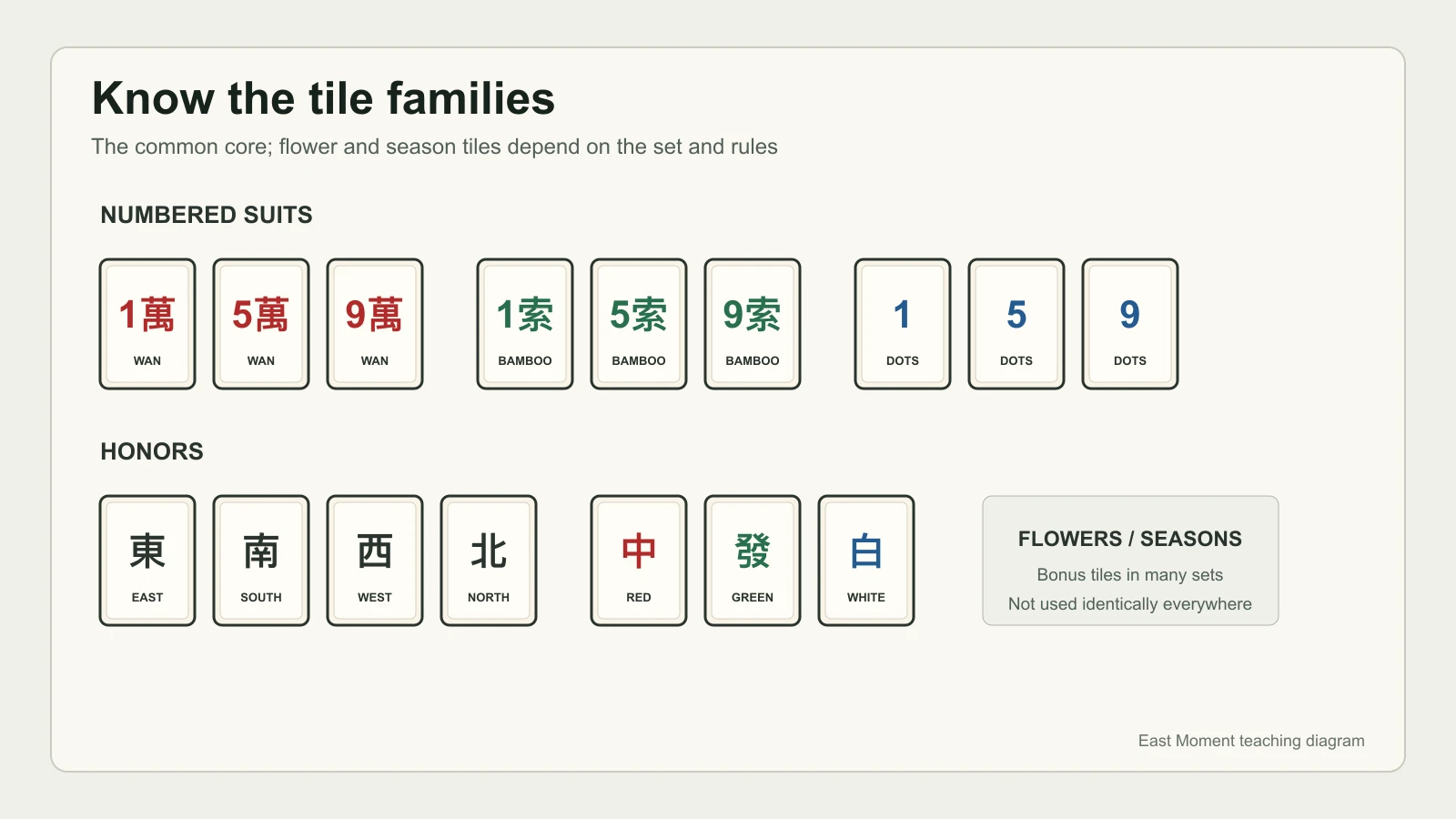
Mahjong is routinely misunderstood overseas as tile-matching solitaire because that digital form is visually familiar. The social game is fundamentally different. Players build and revise a hand while information appears through draws and discards. What matters is not only the mathematical shape of completion but what you reveal, what you remember, how quickly you act and which local rules everyone accepted before the first tile moved. Regional and household variations are not annoying corruption around one pure game. They are part of mahjong's lived geography. The shared core lets people begin; the local agreement determines what the room will reward.

Xiangqi produces another kind of tension because nearly everything is visible. Pieces begin on intersections. The palace and river are not illustrations behind the game; they restrict and enable movement. The cannon's capture requires a screen, which makes alignment and blockage behave unlike ordinary sliding force. A beginner who only memorizes translated piece names misses the board's first lesson: roads are the game. One open file can be more dangerous than a numerical advantage because the general cannot escape pressure the way a king does on an unstructured plane.

Both games also expose the fantasy that rules alone create play. A technically correct mahjong session can feel hostile if one experienced player weaponizes speed against a learner. A xiangqi teacher can ruin the board by solving every move before the beginner has learned to see a road. Good entry design protects dignity. Agree on the rules, explain the first irreversible mistake, let the new player complete a real turn and discuss one decision afterward. The goal is not to imitate expertise. It is to make another person's thought visible enough that they want a second game.

The federation documents an international competitive rule framework for xiangqi. It cannot prove the teaching style, house etiquette or everyday experience at every Chinese table. World Xiangqi Federation rules

Turn 04 · Myth after the input

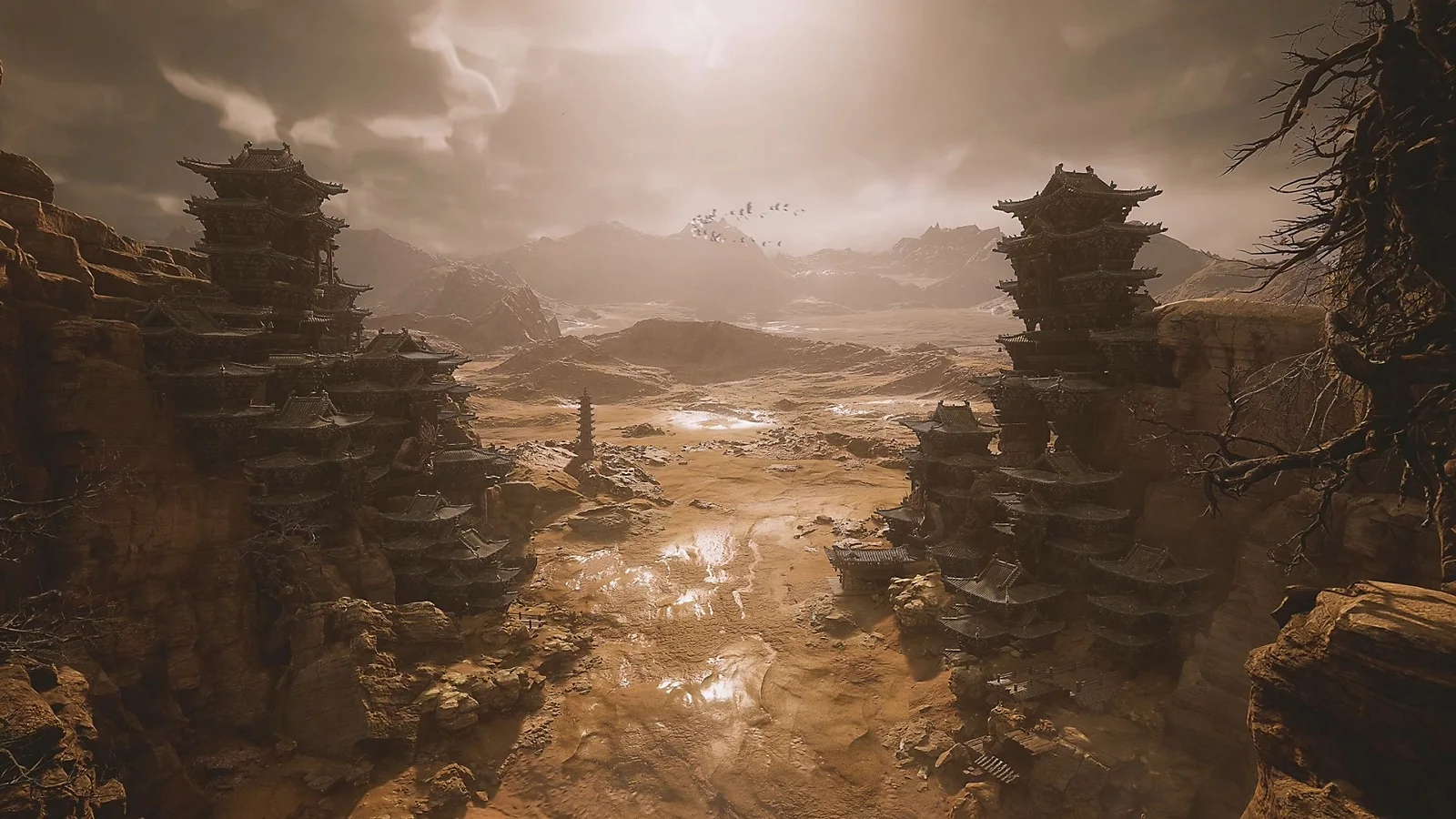
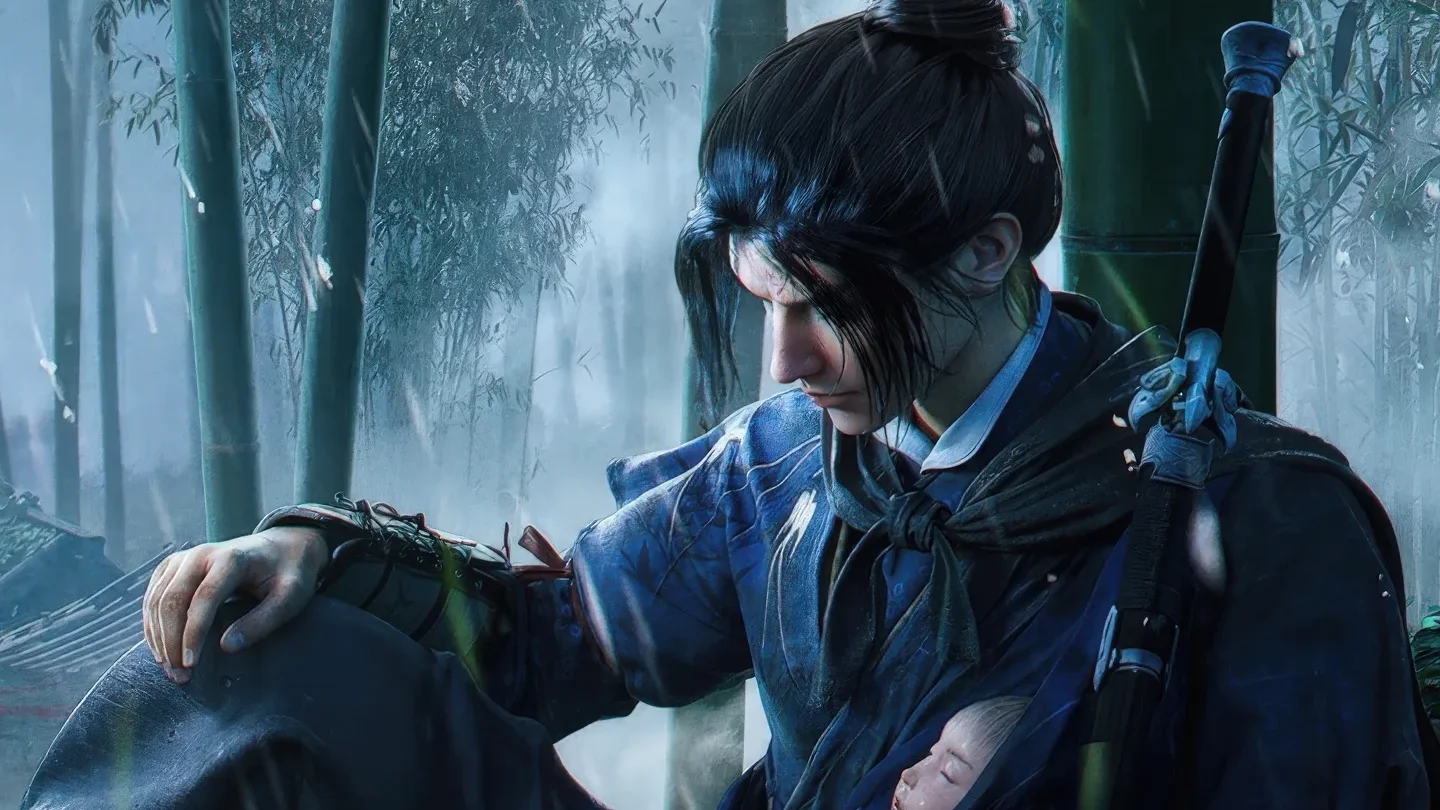
Black Myth: Wukong matters when the staff, transformation and encounter rewrite the legend

Journey to the West is not valuable game material simply because it supplies famous monsters. Its figures have been retold through opera, illustration, television, film, animation, advertising and childhood play for generations. That familiarity creates freedom as well as risk. A developer can rely on recognition and deliver a museum of references, or can make the player discover how a legend changes when success depends on timing, evasion, aggression, transformation and repeated failure. Black Myth: Wukong becomes interesting at that second point.

The game should not be used as a replacement for the novel. Its Destined One, bosses, environments and transformed stories are an interpretation built for action role-playing. The player's relationship with a figure is shaped by encounter design: distance closes, patterns become legible, a missed input has weight and victory changes the emotional scale of the creature. This is why a reference guide that only identifies every deity and monster remains incomplete. Recognition answers where an image came from. Mechanics answer what this version makes you do with it.

My own standard is blunt: difficulty does not create depth by itself. Repeating a boss can sharpen attention, but repetition becomes empty when the move set teaches nothing new or the camera turns failure into confusion. The best encounters make the player's body understand the character before a lore entry explains it. The worst use spectacular cultural design as compensation for weak readability. Admiration for the art and criticism of the fight can coexist; refusing that distinction turns cultural pride into free marketing.

The creator's official site identifies the work's Journey to the West relationship and presents its game world and concept art. It cannot establish literary fidelity, cultural authority, combat quality or a player's experience. Game Science's official Black Myth: Wukong site

Turn 05 · Jianghu must be playable

Where Winds Meet succeeds when the road creates freedom—not when the map merely becomes huge

Wuxia is often translated as martial-arts fantasy, but jianghu is not simply a historical-looking open world where everyone owns a sword. It is a social imagination built around reputation, obligation, teachers, rivals, wandering, unofficial justice and the unstable distance between institutions and personal codes. A game has to turn that structure into decisions. Who may be helped? Which skill changes access rather than damage numbers? What does wandering allow that a formal role would forbid? When does another player's presence create community, performance or interference?

Where Winds Meet makes a strong promise because the road itself is central. Movement through towns, landscapes, martial systems and encounters can let the player compose a life rather than complete a decorated checklist. Yet open-world scale is not freedom. A map can be enormous while every marker produces the same labor. A live-service structure can offer social possibility while dividing attention through currencies, menus and timed incentives. The right question is not ‘How big is ancient China?’ It is ‘Which choices make my version of the wanderer different?’

I value the game most when a detour changes tone: a small encounter interrupts heroic momentum, a landscape alters movement, an odd skill creates social comedy or a local obligation makes the efficient route morally thin. Those moments make jianghu more than an art package. When the world becomes an inventory of activities, I feel the machinery immediately. Beauty can invite the first hour; only consequence can hold the fiftieth.

The official route identifies the live game, developer and current notices. NetEase describes it as an open-world wuxia action-adventure RPG; those labels cannot prove meaningful freedom, historical accuracy, long-term balance or player satisfaction. Where Winds Meet official site

Turn 06 · The missing map

Chinese mobile games, esports and studios deserve pages built from systems—not placeholder cards

A serious Chinese games collection cannot stop with three table guides and two visually ambitious action titles. Mobile games shape daily play, payment behavior, social identity and international business at a scale this page does not yet explain. Competitive titles connect clubs, livestreams, commentary, fandom and youth aspiration. Studios such as Tencent, NetEase, miHoYo and independent teams make different bets about platforms, art, monetization and global distribution. Those subjects belong here, but only after each has an owner, evidence and a real player question.

The next expansions should not be generic company profiles. Honor of Kings needs a page about short-session team obligation, hero familiarity and the mobile social graph—not only revenue. Genshin Impact needs a page that separates world design, character attachment and gacha economics instead of arguing whether it looks Chinese enough. Chinese esports needs a scene map connecting game, league, city, venue, stream and fan labor. Independent games need attention to production constraint and creative risk, not a consoling list called hidden gems.

Naming the gap matters because collection pages often lie through interface. Six empty categories suggest authority that the body has not earned. East Moment will add a route only when the page beneath it can solve a search task at full depth. Until then, the published grid stays smaller and truthful. If you came for mobile, esports or studio analysis, save this page and tell us the decision you need to make; that demand will shape the next finished branch rather than another decorative tile.

Turn 07 · Choose by friction

Your first Chinese game should match the kind of difficulty you want to enjoy

Choose xiangqi if visible strategy attracts you and losing because you failed to see one road sounds instructive rather than humiliating. Learn the palace, river, piece movement and cannon screen; then play a short untimed game. Choose mahjong if incomplete information, probability and a four-person table appeal to you. Learn one shared hand structure, agree on the rules before play and refuse any teacher who introduces five scoring exceptions before you have completed a hand. The first session should create recognition, not dependence on the expert.

Choose Black Myth: Wukong if precise action, boss repetition and a dense reinterpretation of Journey to the West are worth the learning cost. Do not choose it only because you want an encyclopedia of Chinese mythology. Choose Where Winds Meet if exploration, wuxia atmosphere and a broader mixture of solo and connected systems interest you. Do not choose it because an enormous map sounds automatically generous. Verify the current platform, hardware requirements, regional account route and monetization conditions on the official pages before committing.

Then write one sentence after your first meaningful session: ‘The game made me notice __ because I had to __.’ If the blank holds only scenery, celebrity voice acting or a cultural name, keep looking for the mechanic. If it holds timing, memory, reading another person, accepting a loss, choosing a road or changing your relationship with risk, you have found the real entrance. A good Chinese game does not merely show you China. It makes a rule press against your habits until you notice yourself playing differently.

East Moment Community

Bring one rule that changed the room—or changed your hands.

Submit a move record: name the game, the exact rule or mechanic, what you tried, who or what answered and which path became impossible afterward. Screenshots without the decision are not enough.

Why return: We will group strong records by table tension, hidden information, spatial strategy, boss learning and open-world freedom—then use recurring gaps to decide which mobile, esports or studio guide must be built next.

What should East Moment send you?

Find the Chinese Games story you are looking for

Chinese Games: choose the path that matches your question

Start with chinese games, then move into the names, related questions and search intents that belong to each focused theme. Every visible path leads to a published East Moment page. A game is not meaningfully Chinese because it places a dragon, temple or Journey to the West name on the screen. The rule must make the player behave differently; culture begins where the mechanic changes the hand, the route or the relationship across the table.

IMSA's official membership record places both the World Xiangqi Federation and Mahjong International League inside international mind-sport governance; it does not collapse their distinct rules or social lives. International Mind Sports Association

Choose the kind of friction you want

Enter at a real table—or follow mythology after it becomes a playable world

East Moment’s five finished Chinese games guides cover two honest strengths: the social and strategic table, then mythology and wuxia as playable digital worlds. Every card opens a complete, indexable guide. Mobile games, esports and studio systems will appear only when their full pages are ready.

Collection 01 · Chinese board games, mahjong and Chinese chess

Chinese table games

3 published guides

Begin with games people teach across a real table: compare the shared logic first, then learn the rules and social rhythm of mahjong and xiangqi separately.

Collection 02 · Chinese video games

Mythic and wuxia video games

2 published guides

These games turn mythology and jianghu into systems the player must inhabit. East Moment follows the road, architecture, combat and human choices—not mythology pasted onto a review.